
Aquarium exhibit descriptions
Media kit
Explore habitat by habitat from the ocean's edge to the open sea, and meet all the amazing and awe-inspiring creatures that call the ocean home. Featuring our permanent exhibits below.
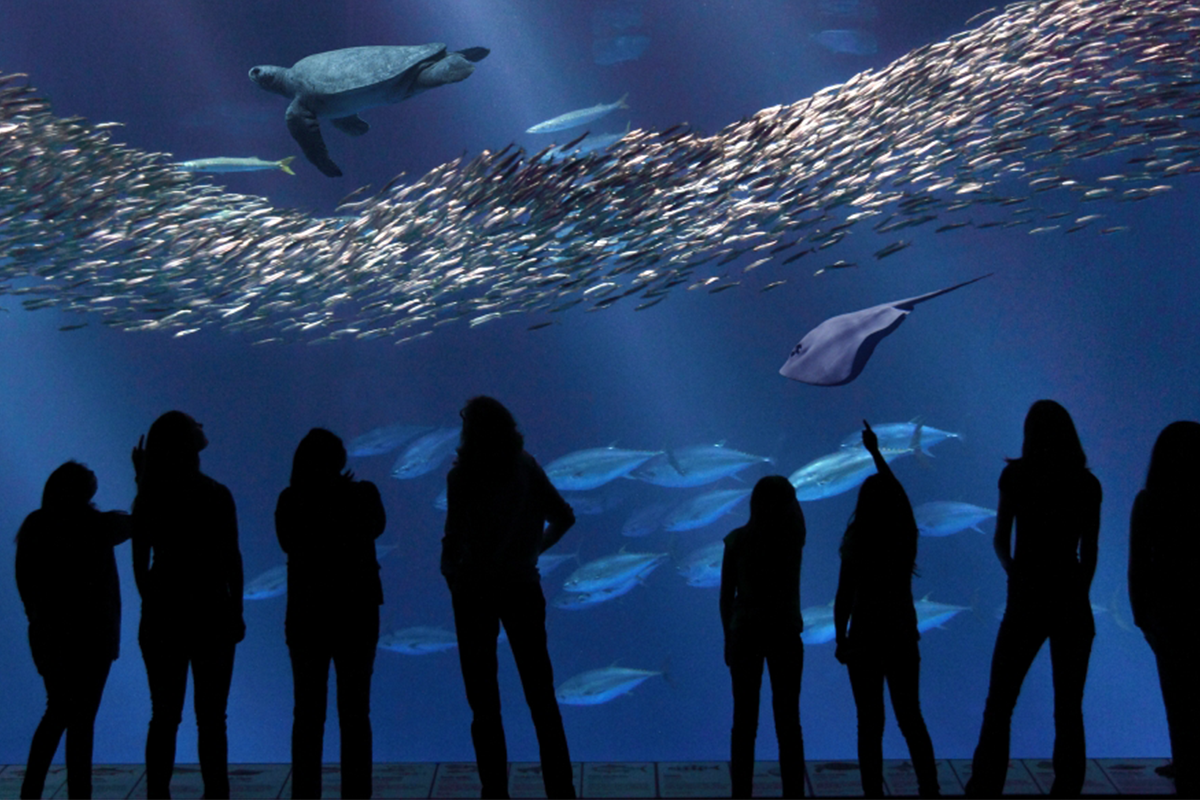
Open sea
The largest exhibit at the Monterey Bay Aquarium introduces visitors to the mystique of the vast blue world that lies offshore of land and is seemingly the last true wild place on Earth. The 1.2 million-gallon Open Sea exhibit is home to some of the ocean’s most impressive long-distance swimmers, including green sea turtles and hammerhead sharks, a massive school of Pacific sardines, the elusive ocean sunfish (Mola mola), and flashing mahi mahi, or dolphinfish. Exhibits within the 12,643 square-foot Open Sea galleries connect visitors with marine animals and birds of the Pacific through stories of their epic migrations. Exiting the Open Sea, visitors encounter innovative environmental art installations and sculptures to explore the impacts of single-use plastic on ocean wildlife, paired alongside artists’ stories.
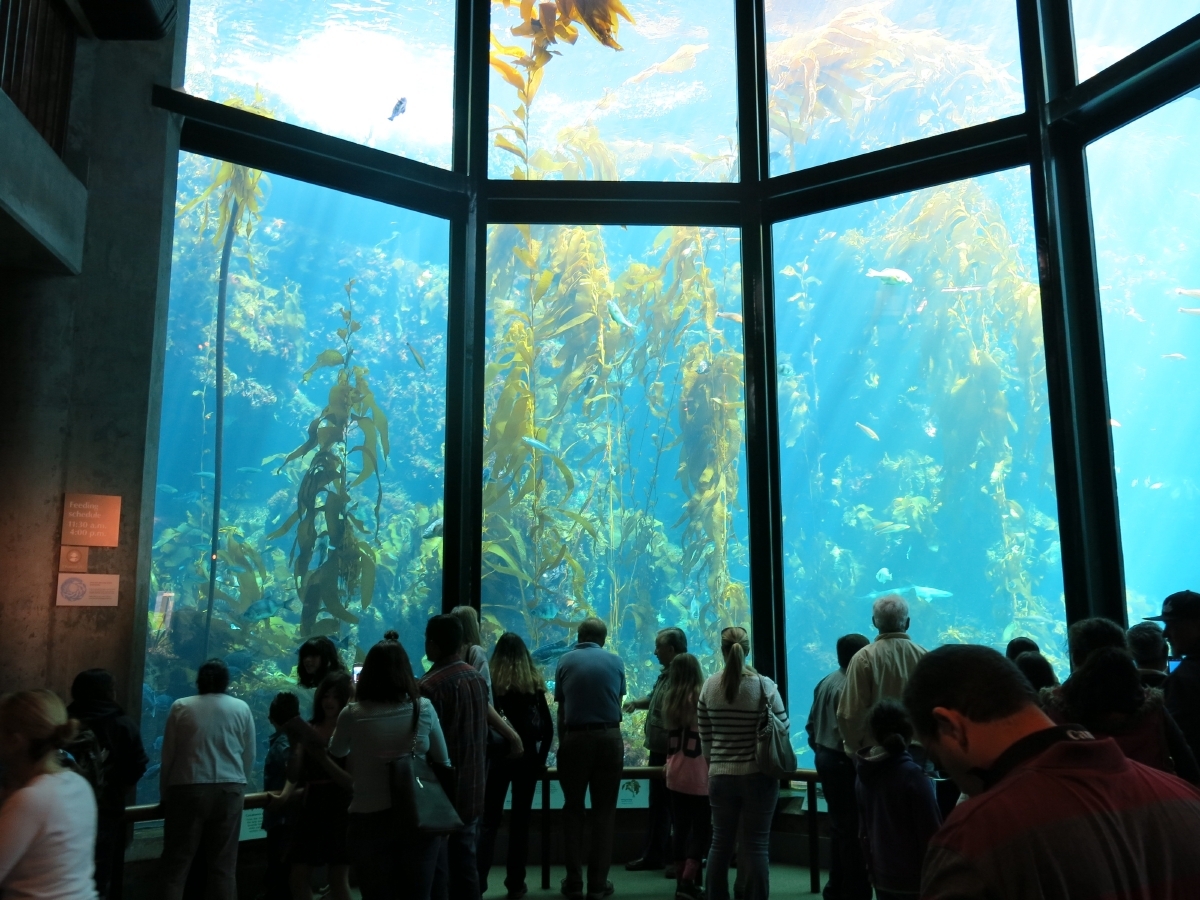
Kelp forest
The Aquarium’s signature three-story exhibit, the Kelp Forest, is the first, largest, and most successful living kelp forest outside the wild. The ecosystem-based exhibit is home to hundreds of species of fish, invertebrates, and algae, many of which arrive via seawater pumped directly from Monterey Bay. At 28 feet tall, the Kelp Forest was designed as a portal to transport visitors into the cold, nutrient-rich waters of Monterey Bay. The majestic giant of the kelp forest (Macrocystis pyrifera) grows faster than tropical bamboo, about 3–5 inches each day in the exhibit and 10–12 inches in the bay. The towering marine algae, iconic to the bay, is the inspiration for the Aquarium’s logo, which represents the tip of a growing giant kelp frond. The Kelp Forest exhibit is the gateway to the 14,810-square-foot Ocean’s Edge galleries.
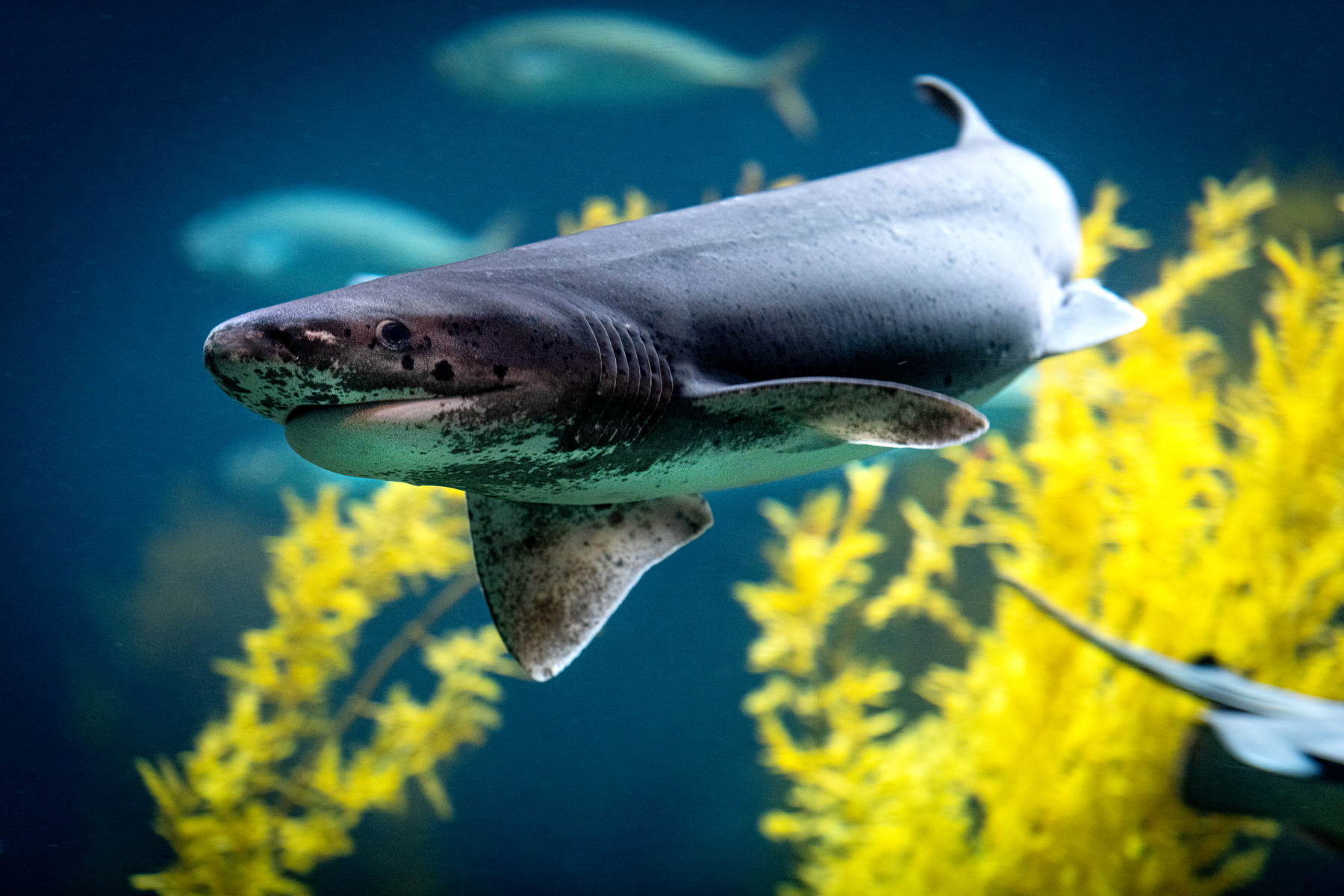
Monterey Bay Habitats
More than 90 feet long, the hourglass-shaped Monterey Bay Habitats exhibit highlights five different habitats within Monterey Bay. The exhibit is home to a colorful and complex array of marine creatures that live in the sandy seafloor, shale reefs, deep rocky reefs, and wharf pilings. They include rockfish, sevengill sharks, California halibut, prehistoric-looking white sturgeon, big skates, bat rays, and giant sea bass. Around the corner are touch pools, a wave crash passageway, a walk-through aviary, and intimate jewel case exhibits that invite visitors to take a closer look at wildlife found along the Central California coastline.
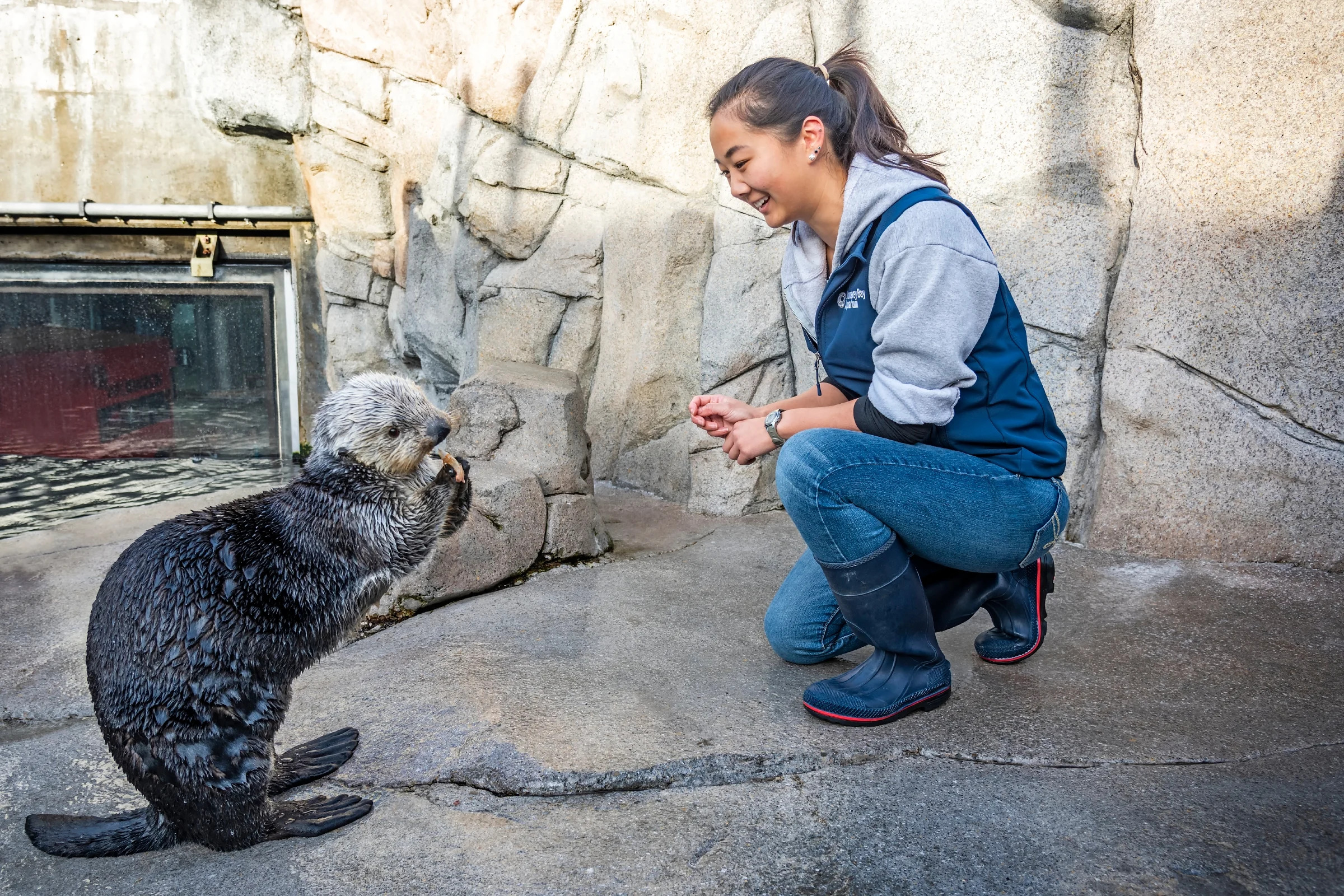
Sea otters
The two-story Sea Otter exhibit is home to the only marine mammal residents at the Monterey Bay Aquarium. Each was rescued by the Aquarium’s Sea Otter Program as an abandoned, injured, or ill animal and deemed non-releasable by the U.S. Fish and Wildlife Service. Over time, they have become more than engaging ambassadors for their threatened species. The Aquarium's otters are all female and also serve as surrogate moms for stranded sea otter pups. In that capacity, they play a vital role in sea otter recovery and nearshore ecosystems restoration efforts. Behind the scenes, the resident sea otters and their predecessors have raised scores of orphaned pups, which are now back in the wild, having babies of their own. The sea otters rotate through the exhibit when they are not serving as surrogate mothers to stranded pups. At the Sea Otter exhibit, visitors have the opportunity to watch them swim at the surface, including during feeding and training sessions. First-floor windows offer an underwater view of the most aquatic of the 13 global otter species.
Contact us
To contact the Media Relations team, please e-mail your needs and deadline to media@mbayaq.org.
Explore more of the media kit
About us
Aquarium introduction & history
Learn more about the mission, vision, and history of the Aquarium in this introduction.
About us
Aquarium facts & figures
Facts and figures about the Monterey Bay Aquarium
Dive into our Into the Deep media kit
About us
Into the Deep introduction & background
Discover the wonders of the ocean’s depths in our Into the Deep exhibit.
Read more – Into the Deep introduction & background