

Two years ago, the excitement was palpable when 175 nations voted at the UN Environmental Assembly in Nairobi, Kenya to negotiate a global agreement to end plastic pollution. Given the urgency, countries aimed to approve a legally binding treaty by 2025.
Since then, I’ve attended four negotiating meetings, including the latest in April 2024 in Canada, where I represented Monterey Bay Aquarium and the International Science Council. Despite some nail-biting moments, we’re making progress. Many countries and a coalition of allies are pressing for a strong treaty despite opposition.
In the coming months, we’ll be busy preparing for the final round of negotiations in South Korea this November. Success is crucial for a healthy, sustainable future.
New opportunities, new allies
Although the discussions were challenging, the fourth negotiating meeting in Ottawa produced many positive developments. The forces seeking a weaker treaty couldn’t delay progress. Country delegates discussed key points we’ll need to secure an effective treaty. Negotiators now have a mandate to convene with experts before the November round to explore options for financing the treaty's implementation and to address chemicals of concern in plastic products, problematic plastic products, and product design.
The call for change is growing. There’s a robust demand for science-based strategies and solutions to address plastic pollution. I was both inspired and moved by the heartbreaking testimonies from people living in small island developing states, waste pickers, Native peoples, youth, and others whose lives are directly impacted by plastic waste. Encouragingly, a new coalition of sub-national leaders has emerged, advocating for the strongest possible treaty. California is a key player in the coalition. Our successes in tackling plastic pollution in California are a beacon of hope for global action.
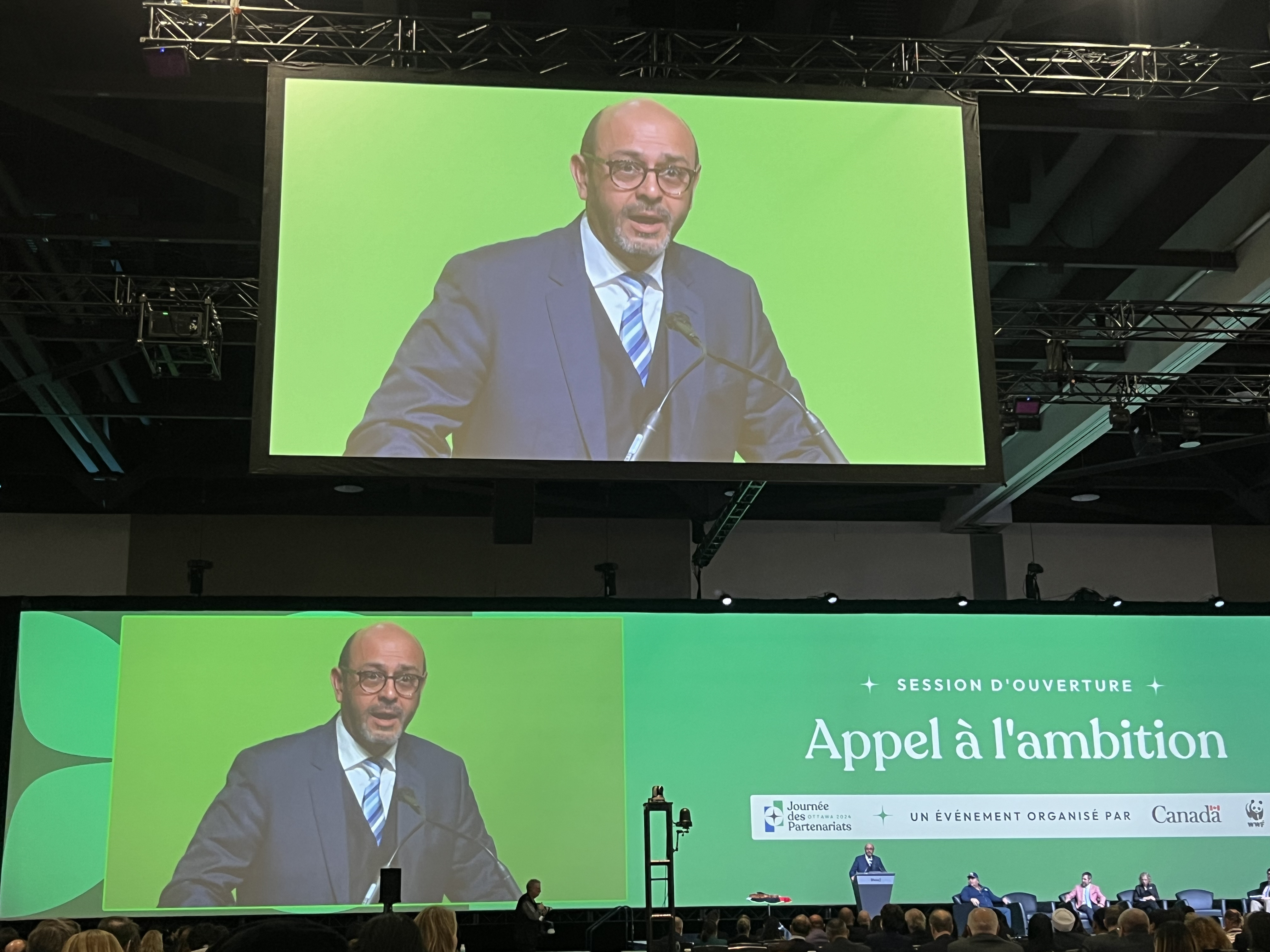
Chair Luis Vayas Valdivieso of Ecuador urged negotiators to advance an ambitious treaty. While the world is addressing the climate and biodiversity crises, "we have no legislation, no global agreement on plastic pollution.”
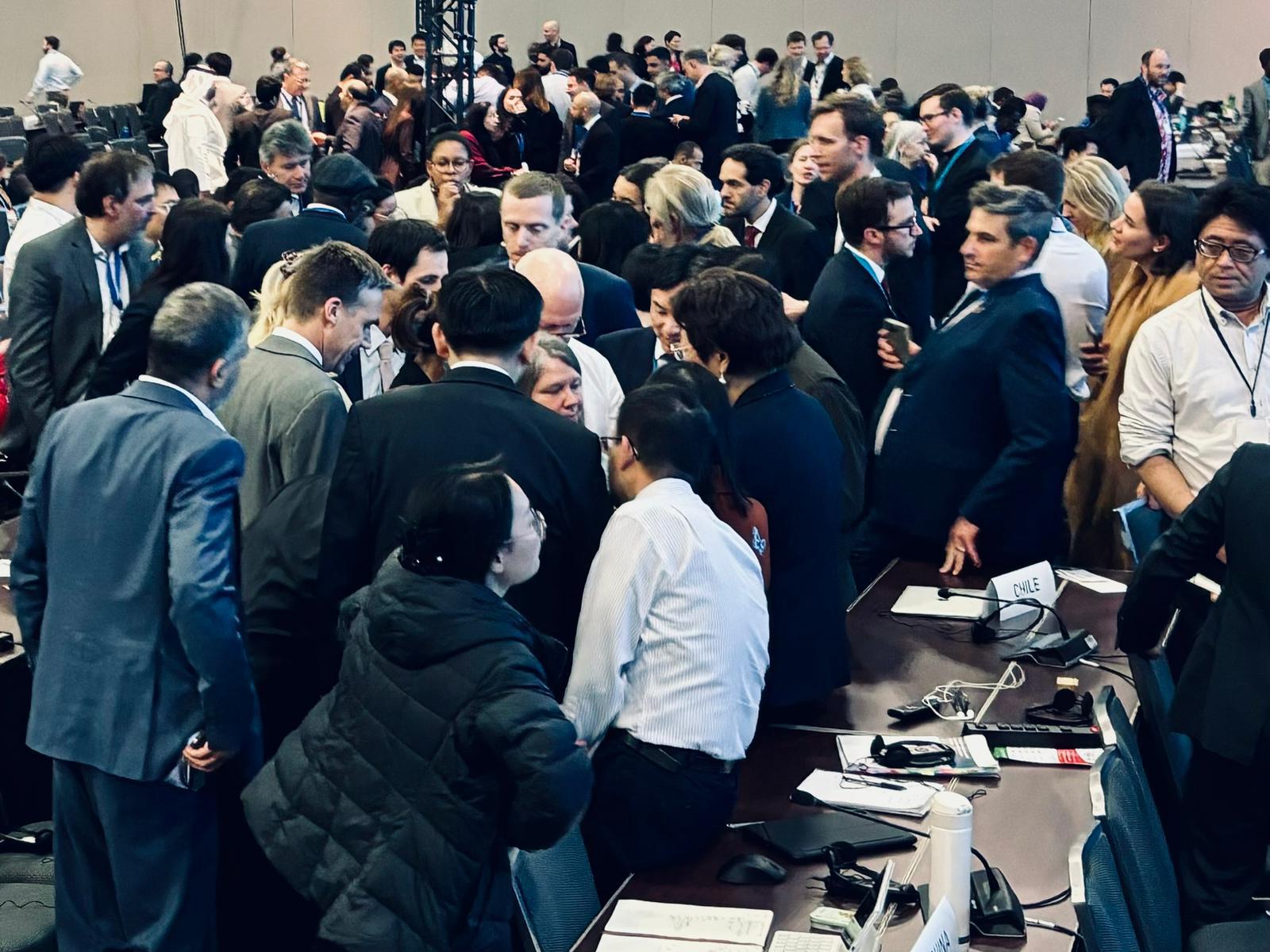
Late-night sessions to hammer out key provisions were somewhat chaotic as the negotiating round drew to a close.
Plastic is part of a 'triple crisis'
Public health officials, medical experts, and healthcare professionals are speaking out about the human and environmental impacts of plastics and the 16,000-plus chemicals used in their production. This is gaining attention from countries worldwide. Luis Vayas Valdivieso, Ecuador’s ambassador to the United Kingdom, who chairs the treaty negotiations, supports a strong treaty. He is listening closely to member states, communities, and, most importantly, the science, in his critical quest.
“The world is in a triple crisis of climate change, biodiversity loss, and pollution,” he told The Guardian in an interview before the Ottawa talks opened. “But while there are agreements in place for the first two, we have no legislation, no global agreement on plastic pollution.”
The low-ambition opponents to action
Not everyone supports strong action. Some advocated in Ottawa for a treaty focusing just on recycling and waste management rather than comprehensive solutions. I was struck by how many attendees were lobbying for the global plastics industry, far outnumbering the official country members and backed by significant financial resources.
A number of countries are also interested in securing a “downstream” focused treaty that just addresses waste management, but not the elephant in the room: unsustainable plastic production. The approach of these countries in Ottawa was to push for having no language in the draft to address critical issues like the production of primary plastic polymers or the toxic chemicals used in plastics production. We often stayed in session late into the night as delegates debated these critical issues.
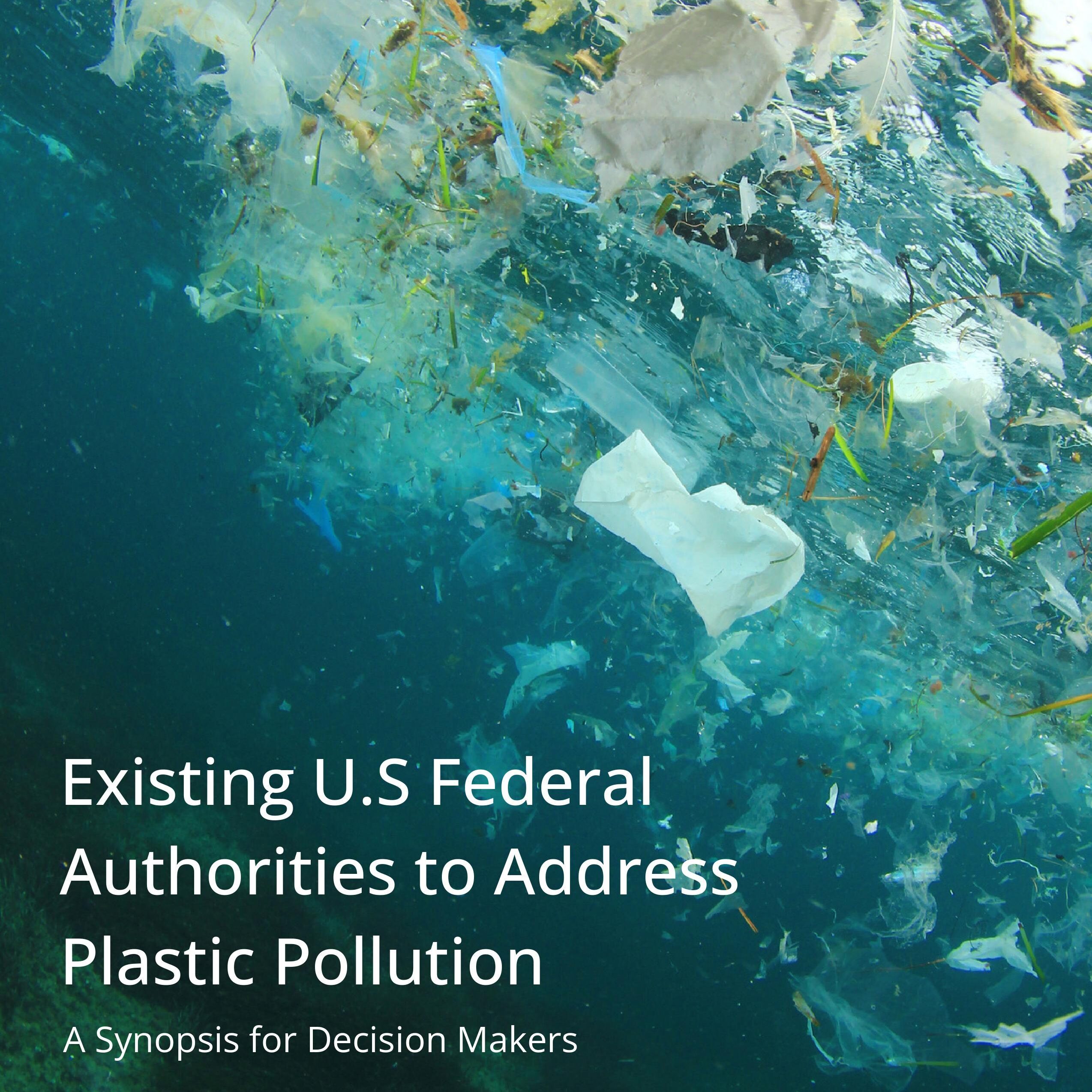
Then Environmental Law Institute and the Aquarium produced a report early in 2024 detailing U.S. government authority to regulate plastics under current law. The principles could apply globally.
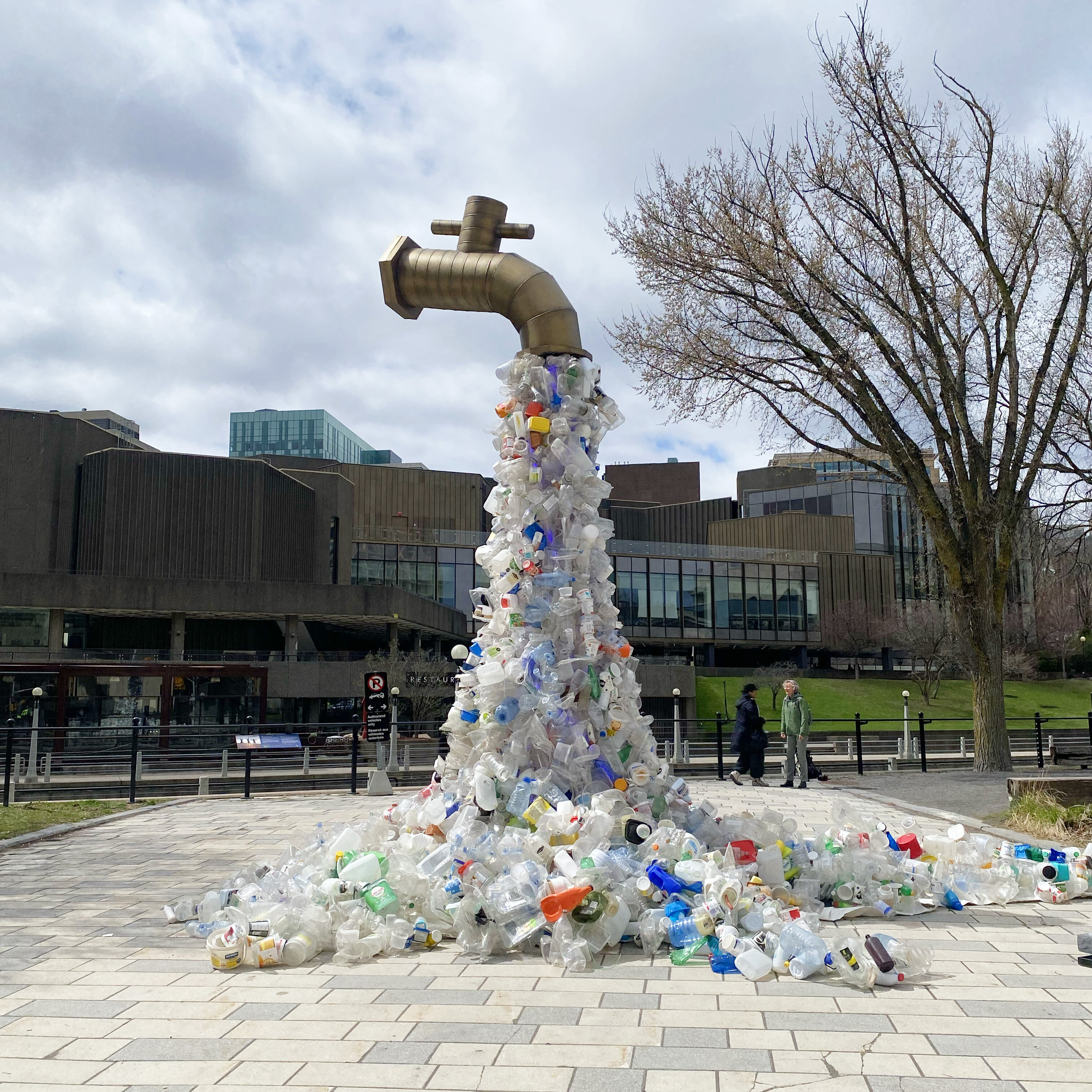
Delegates to the treaty negotiations passed by a giant spigot outside the conference hall, reminding them to "turn off the tap" on plastic pollution. Sculpture by Benjamin Von Wong
Speaking up for science
Through a new "Bridge to Busan Declaration," member states and other voices for progress are pushing back, advocating to include primary plastic production in the treaty. Monterey Bay Aquarium has joined as a signatory, and groups calling for strong action to “turn off the plastic tap” can sign on to register their support.
Independent science will play a crucial role, notably through expert input that can inform how chemicals of concern in plastics are addressed in the treaty and shape requirements for safe and sustainable plastic product design. We must also confront the million-dollar question: What is a sustainable level of plastic production? Establishing scientific and technical expert bodies will help integrate new scientific information into the treaty, similar to the successful 1987 Montréal Protocol that phased out ozone-depleting substances.
Next steps and a path to progress
So, how do we mobilize the global majority that wants a strong treaty in the face of these well-financed opposition forces? One key will be for the United States to step up as a leader in the movement, using as its touchstone the growing scientific consensus that there must be a major change in direction on plastics. The US has long been a leader in science-based global action. This isn't the time to shrink from that position. A range of independent scientific experts, from waste reduction modelers to health experts have emphasized this opportunity.
The Aquarium has been pressing the Biden-Harris Administration to do more on plastics, at home and in the international arena – including through the “No Time To Waste” campaign. While California is acting boldly to curb plastic pollution, the United States has yet to adopt a national plastics strategy and plan, as we called for in the Congressionally mandated report from the National Academies of Sciences, Engineering, and Medicine on the US role in the plastics problem. The recent report we issued with the Environmental Law Institute details how federal agencies have full authority to act under existing law.
By doing so, the US could model the approaches we need to incorporate in the Global Plastic Treaty.
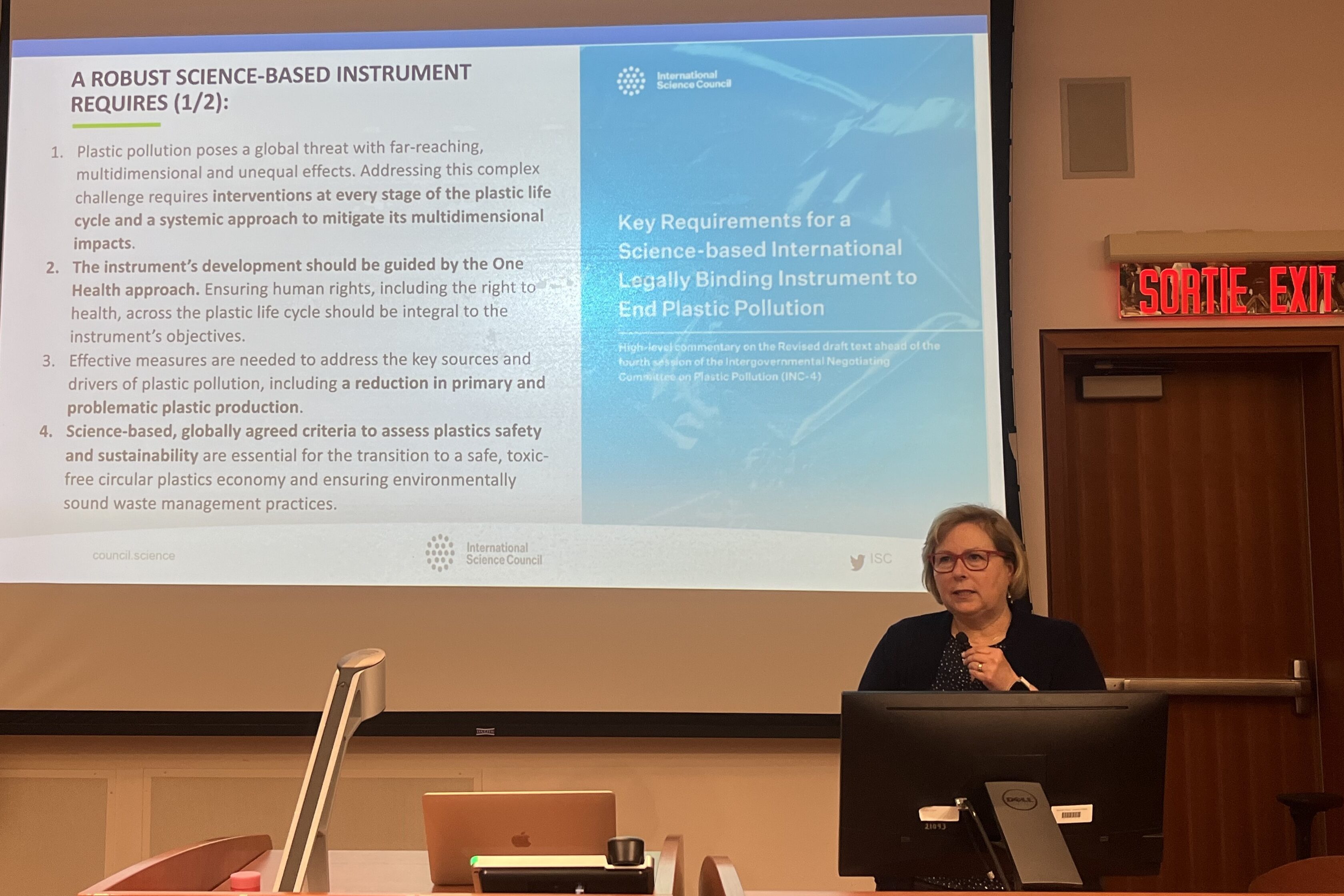
Margaret Spring represented the International Science Council in presentations that underscored the need to incorporate the best-available science to shape the final treaty.
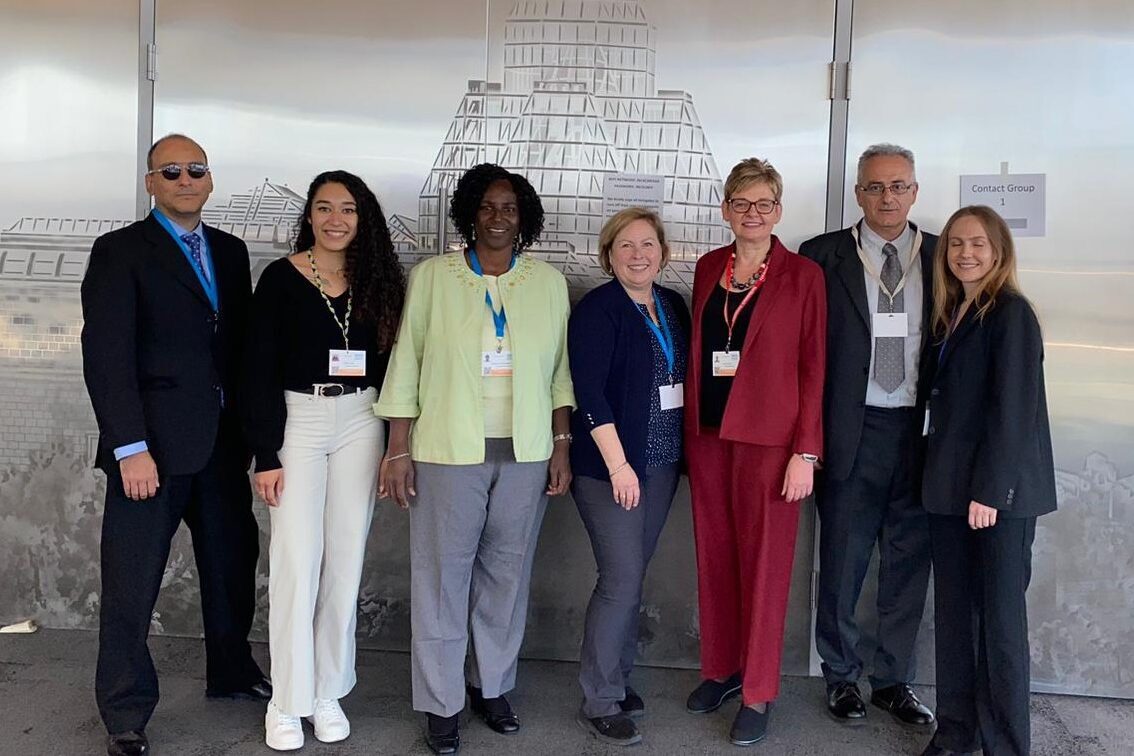
International Science Council (ISC) members had a strong presence from (left to right) Dr. Alex Godoy (Chile), Cindy Matuch (Aquarium), Dr. Adetoun Mustapha (Nigeria), Margaret Spring (Aquarium), Prof. Maria Ivanova (United States), Dr. Stefano Aliani (Italy), and Anda Popovici, the Paris-based science director for the ISC.
Many voices—including yours
We’ll be supporting other voices, too. Environmental justice organizations like Azul have made clear—as in their joint report with the UN Environment Programme that plastics are causing disproportionate harm to the health of historically marginalized people and communities. A strong treaty would address this inequity.
If you want to stay on top of the issue, you can connect with us at the Aquarium as we prepare for the final round of negotiations in November. We’ll keep you updated on progress—and on ways to use your voice and make a difference.
Keep exploring
Story
Reducing plastic packaging: How partnerships help keep plastic out of the ocean
We work with partners to reimagine processes and packaging to reduce ocean-bound plastic and protect ocean…
Read story – Reducing plastic packaging: How partnerships help keep plastic out of the ocean
Story
From Vietnam to California
From farms to CA schools, your food choices help wildlife, fishers, and global coastal food systems thrive.
Read story – From Vietnam to California
Story
Earth Month 2026
This Earth Month, embrace wonder. Ask questions, dive in, and join our community caring for the ocean.
Read story – Earth Month 2026