

Christy Varga adjusts a dial on the microscope.
On the wall above, twelve white circles on a screen lock into focus.
“These look good,” Christy explains, pointing at the screen with a green glove. “See how the surface of the yolk is all wrinkly? That’s a good sign.” Each little dot is a sand dollar egg.
Our aquarist Christy has been breeding sand dollars like these for over a year—it's the first time we’ve cultured sand dollars here at the Aquarium. Thanks to this behind-the-scenes work, visitors can now see cultured sand dollars on display.
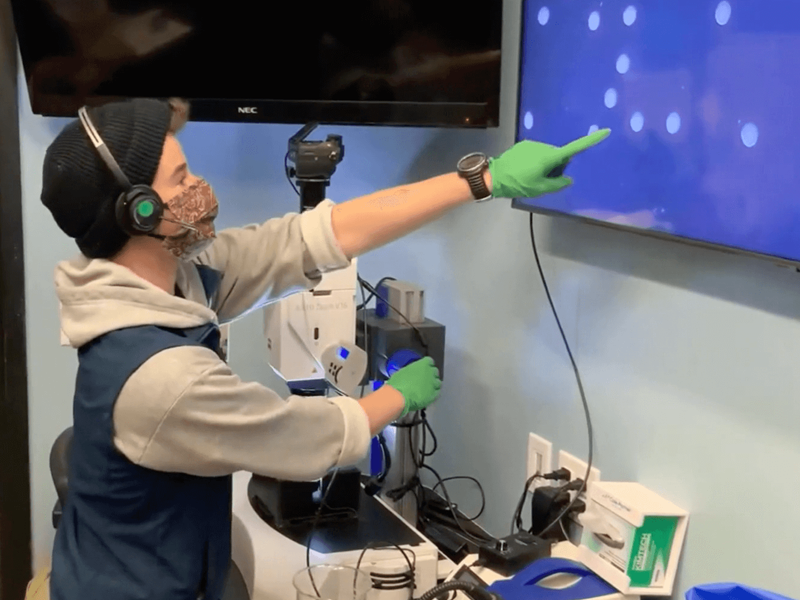
Christy Varga, an aquarist at the Monterey Bay Aquarium, displays sand dollar eggs from under a microscope during an Aquarium Live virtual member night event.
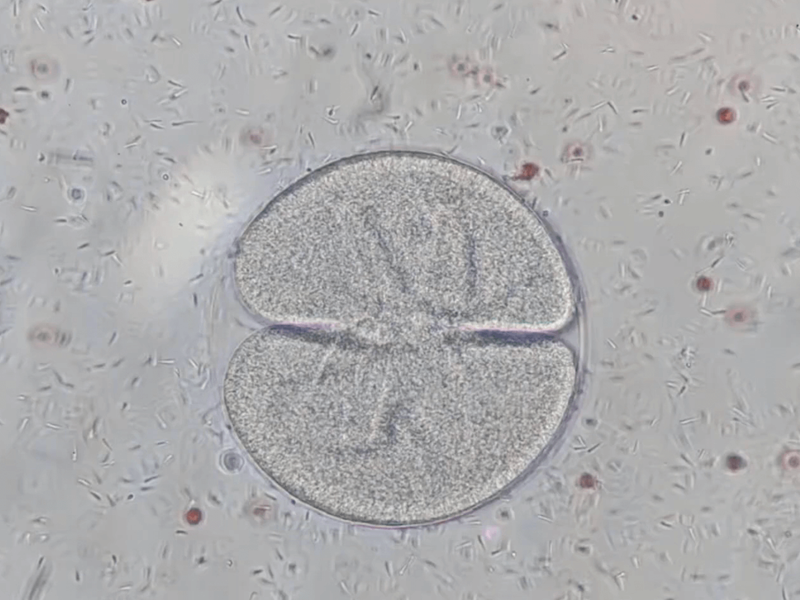
A look under the microscope at a sand dollar egg an hour after fertilization. The cell has divided in two. In half an hour, the cell will have divided into four.
A sand dollar (Dendraster excentricus) looks nothing like the smooth, white discs often found at the beach. (That’s actually a sand dollar’s skeleton!) A live sand dollar doesn’t look like money. A type of flattened sea urchin, it sports shades of purple and grey and moves around with hairlike spines.
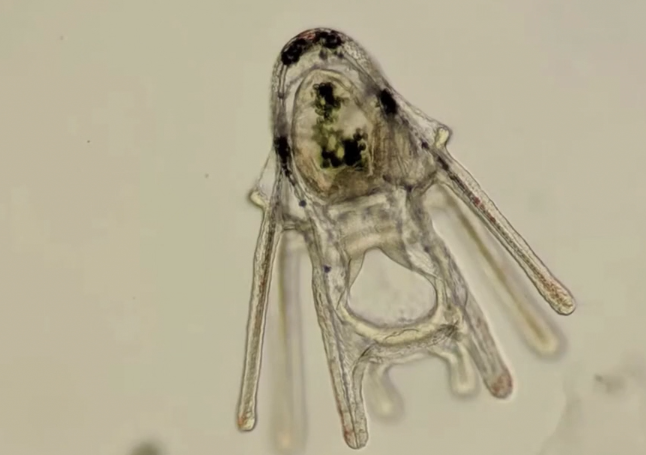
A juvenile sand dollar with eight arms. The juvenile floats through the water in this stage for about one to two weeks. Then, it will settle into the sand.
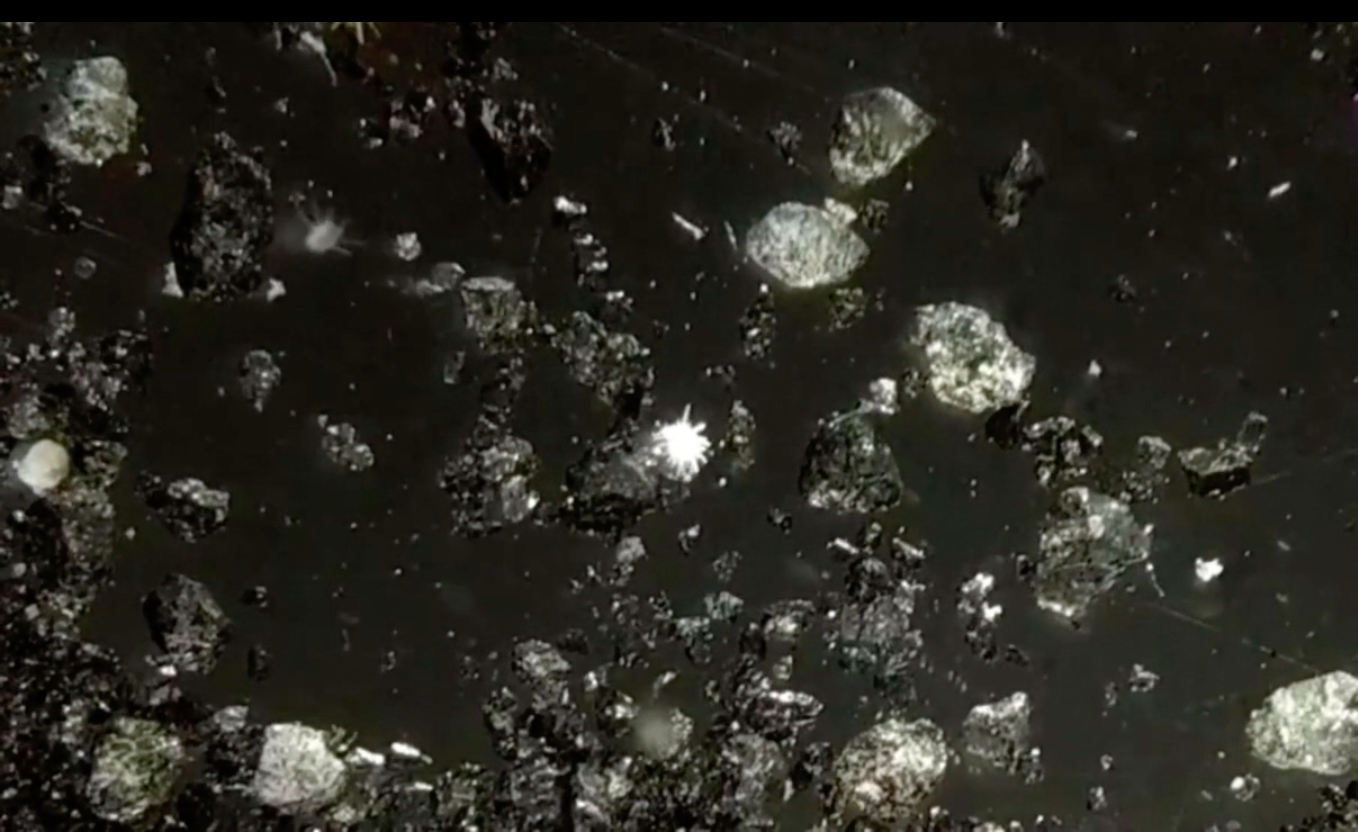
A planktonic sand dollar receives a signal (called a settling cue) from an adult sand dollar, then settles in the sand (pictured, white). No other animal can provide a settling cue for sand dollar. That's why, in the wild, thousands of sand dollars pile together—they signal each other to settle where they are.
Breeding these invertebrates requires time, careful work, and gentle care. First, the eggs need to get fertilized. But with virtually indistinguishable males and females, how do you pair them? Encouraging adult sand dollars to spawn (release their eggs and sperm) allows us to see who’s who—eggs come out red and sperm comes out white. After spawning, Christy collects sperm and fertilizes eggs.
A fertilized egg quickly begins to divide and grow. Over the course of several weeks, it sprouts arms: first two, then four, six, and finally eight arms. At this stage, this planktonic (floating) sand dollar baby is called a pluteus. It floats and drifts for about two weeks, then settles and makes its home in the sand.
In total, the time between when an egg is fertilized and when it starts to look like an adult sand dollar is about three months. Though at three months old, the young sand dollar is still small—barely bigger than a grain of sand!
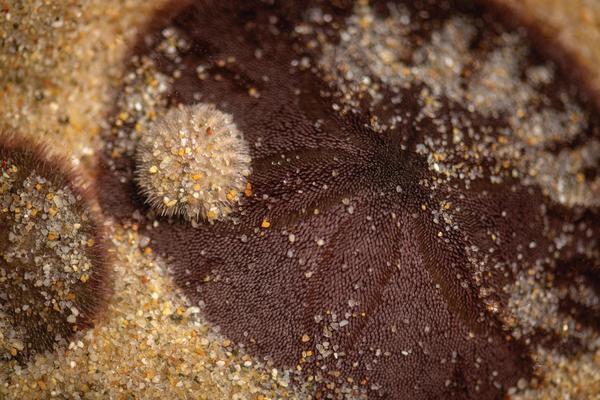
A sand-covered juvenile sand dollar atop an adult. A sand dollar can keep itself on the seafloor during strong currents by carrying sand as an anchor.
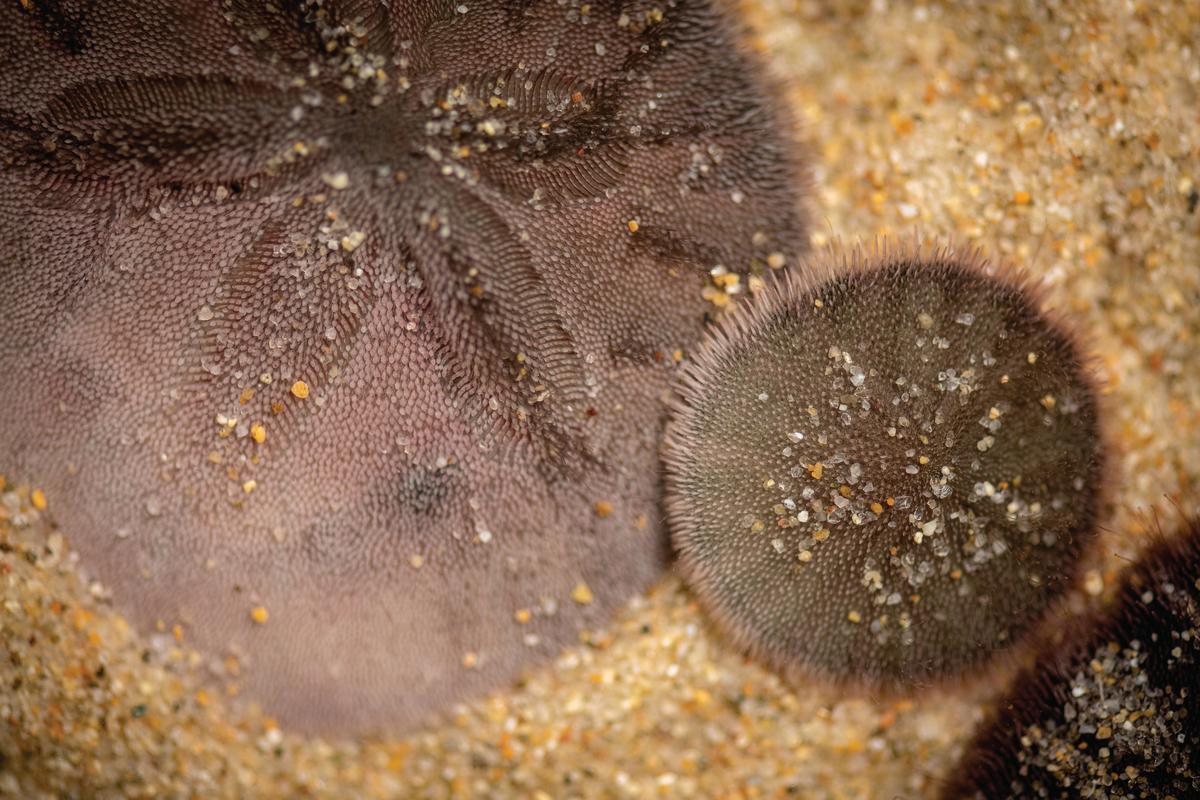
A sand dollar has a “flower” pattern created by tiny openings. Tube feet poke through these holes, helping the animal breathe, access fresh seawater, and nab food out of the passing current.
Visitors can see Christy’s baby sand dollars—now about one year old—on display at the Aquarium. “I actually call them sand dimes because they're so small,” Christy says.
To see the sand dollars for yourself, head over to our Monterey Bay Habitats exhibit. You’ll come across a glass dome glowing like a moon in the dark hall. Inside, you can see over 300 juvenile sand dollars wave their tube feet and half-bury themselves in sand with hairy-looking spines.
Look closely and notice the sand dollar’s interesting anatomy. It has a beautiful “flower” pattern created by tiny openings. Tube feet poke through these holes, helping the animal breathe, access fresh seawater, and nab food out of the passing current. In turbulent waters, a sand dollar stands vertically to help direct goodies to its mouth.
By breeding and culturing animals instead of collecting them in the wild, we can reduce pressures on the environment. Christy’s work culturing them here at the Aquarium marks an exciting step that will help showcase these animals and protect their marine ecosystems.
Related videos
Sand dollar deposits in the sand bank
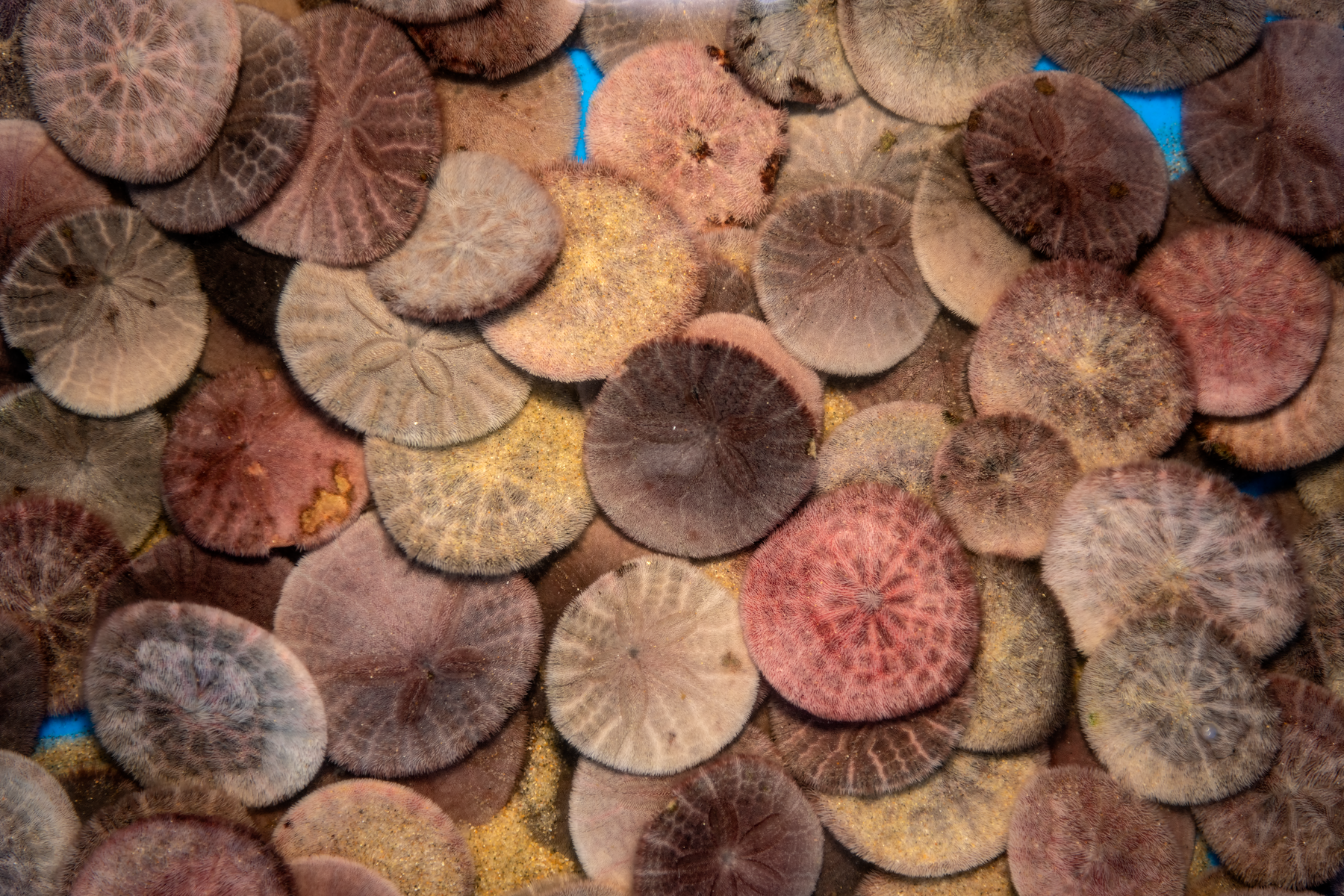
Don't short-change sand dollars—life in the sand bank is bustling with activity! One second of this video represents about two minutes in the life the sand dollars in our exhibit!
Keep exploring
Story
Nature is queer
We’re excited to sea-lebrate the queerness of nature!
Read story – Nature is queer
Story
2026 Lucile S. Packard Memorial Award and Youth Award recipients
We’re proud to announce the 2026 Lucile S. Packard Memorial and Youth Awards for outstanding volunteers!
Read story – 2026 Lucile S. Packard Memorial Award and Youth Award recipients
Story
Birdwatching tips: A guide to enjoying and identifying local birds
Here are our best tips to help keep you and the birds safe and healthy during a birdwatching adventure.
Read story – Birdwatching tips: A guide to enjoying and identifying local birds