

Sand dollar
Dendraster excentricus
- On view
- Monterey Bay Habitats
- Animal type
- Invertebrates
- Ecosystem
- Sandy seafloor
- Relatives
- Sea urchins, sea stars, sea cucumbers; Phylum: Echinodermata
- Diet
- Crustacean larvae, small copepods, detritus, diatoms, algae
- Range
- Low intertidal to about 130 feet (40 m) from Alaska to Baja California
- Size
- Up to 3.5 inches across (9 cm)
Meet the sand dollar
The familiar exoskeleton of a sand dollar—often found washed up on a beach—is white, with a five-pointed shape on the back that looks similar to flower petals. This design mirrors the internal structure of the sand dollar and is called petaloid ambulacra. However, a live sand dollar has a different look: densely packed, tiny spines that are gray-to-purple in color cover live sand dollars and hide the star design.
Natural history
In its sandy seafloor habitat, a sand dollar uses its spines, aided by tiny hairs (cilia), to ferry food particles along its body to a central mouth on its bottom side. It captures plankton with spines and pincers (pedicellariae) on its body surface. When these spines bunch up into tiny triangular-shaped cones, they mark a spot where captive amphipods or crab larvae are being held for transport to the sand dollar’s mouth. Unlike sea stars that use tube feet for locomotion, a sand dollar uses its spines to move along the sand, or to drive edgewise into the sand. On the upper half of the sand dollar’s body, spines also serve as gills.
Standing up or weighted down
In quiet waters, this flattened animal stands on end, partially buried in the sand. When waters are rough, the sand dollar holds its ground by lying flat—or burrowing under. In fast-moving waters, a young sand dollar ingests heavy sand grains to weigh itself down.
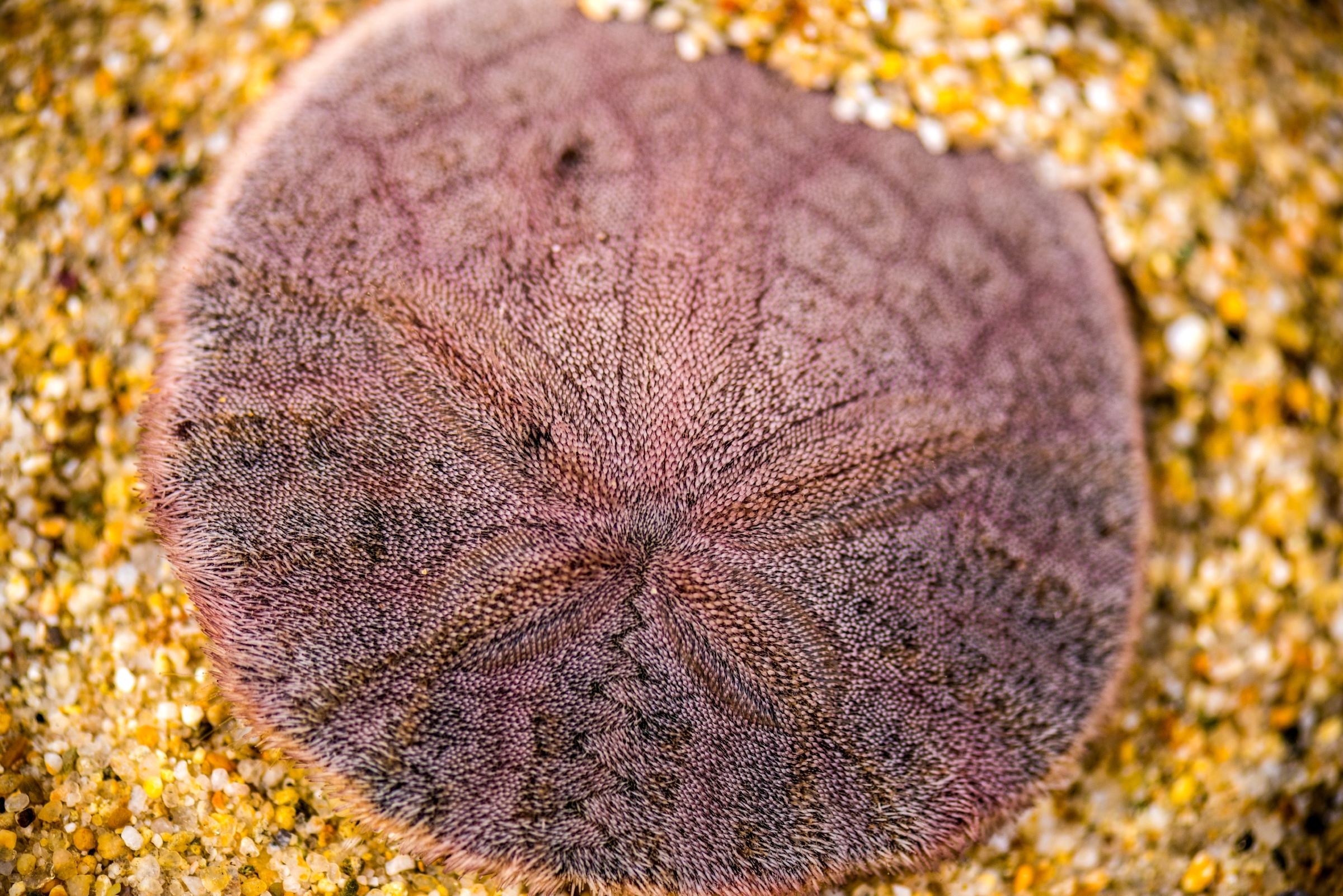
A close-up of a sand dollar cultured by Monterey Bay Aquarium
Conservation
The sandy seafloor is a valuable resource and needs protection. Unregulated bottom trawling causes damage to seafloor habitats, and by-catch kills tons of marine life every year. The good news is that some states have enacted laws regulating trawling. Visit SeafoodWatch.org to learn more about trawling and how to choose seafood wisely.
Cool facts
- The sand dollar's mouth has a jaw with five teethlike sections to grind up tiny plants and animals. Sometimes a sand dollar "chews" its food for 15 minutes before swallowing. It can take two days for the food to be digested.
- Scientists can age a sand dollar by counting the growth rings on the plates of the exoskeleton. Sand dollars usually live six to 10 years.
- Sand dollars usually crowd together over an area. As many as 625 sand dollars can live in one square yard (.85 sq m).
- California sheephead, starry flounders and large pink sea stars prey on the sand dollar. When threatened by pink sea stars, a sand dollar buries itself under the sand. Observers have seen a pink sea star leave a wide path of buried sand dollars as it moves across a sand dollar bed.
Related videos
Watch a sand dollar bury itself
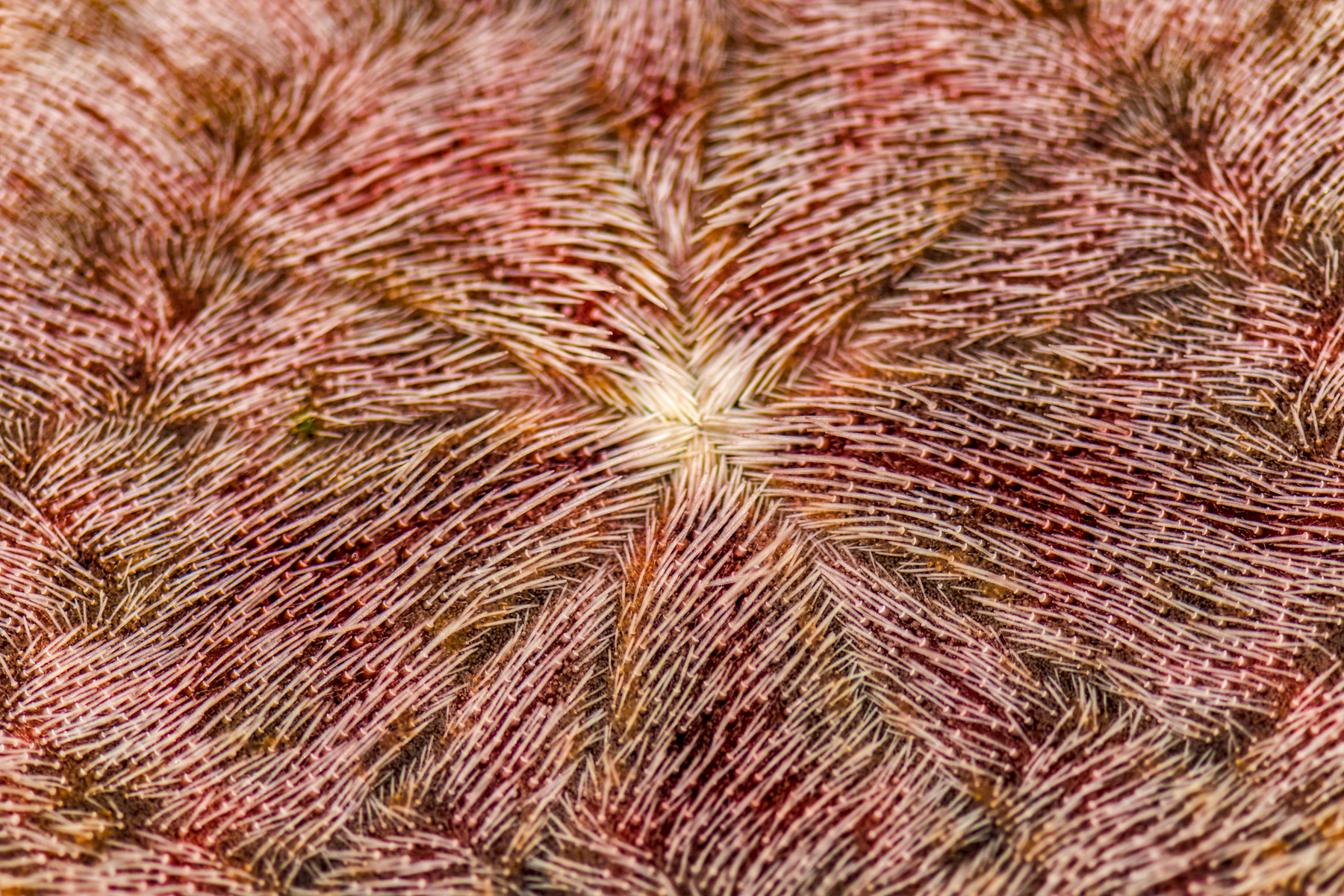
Sand dollars—flattened sea urchins adapted to life on the shifting sand—use thousands of tiny spines to move about and burrow into the seafloor. One second of this video represents about two and half minutes in the life of these animals!
Up next in sandy seafloor
Animal
Globe crab
When they're not hiding in the seabed, the globe crab scuttles this way and that, leading pursuers on a merry…
Keep exploring
Animal
Bat ray
A bat ray flaps its batlike wings to swim through the water to help it uncover prey hiding in the sand.