

The alienesque appearance of cephalopods—a group of animals that include squid, octopuses, nautiluses and cuttlefishes—make them some of the most fascinating animals to observe.
But many cephalopods live relatively short lives—the lifespan of a bigfin reef squid is only between 7 and 11 months, which makes it a challenge to keep these animals on exhibit long term. When our exhibits are filled with impossibly adorable striped pyjama squid and colorful flamboyant cuttlefish, we rely on an amazing team of cephalopod aquarists to keep them healthy.
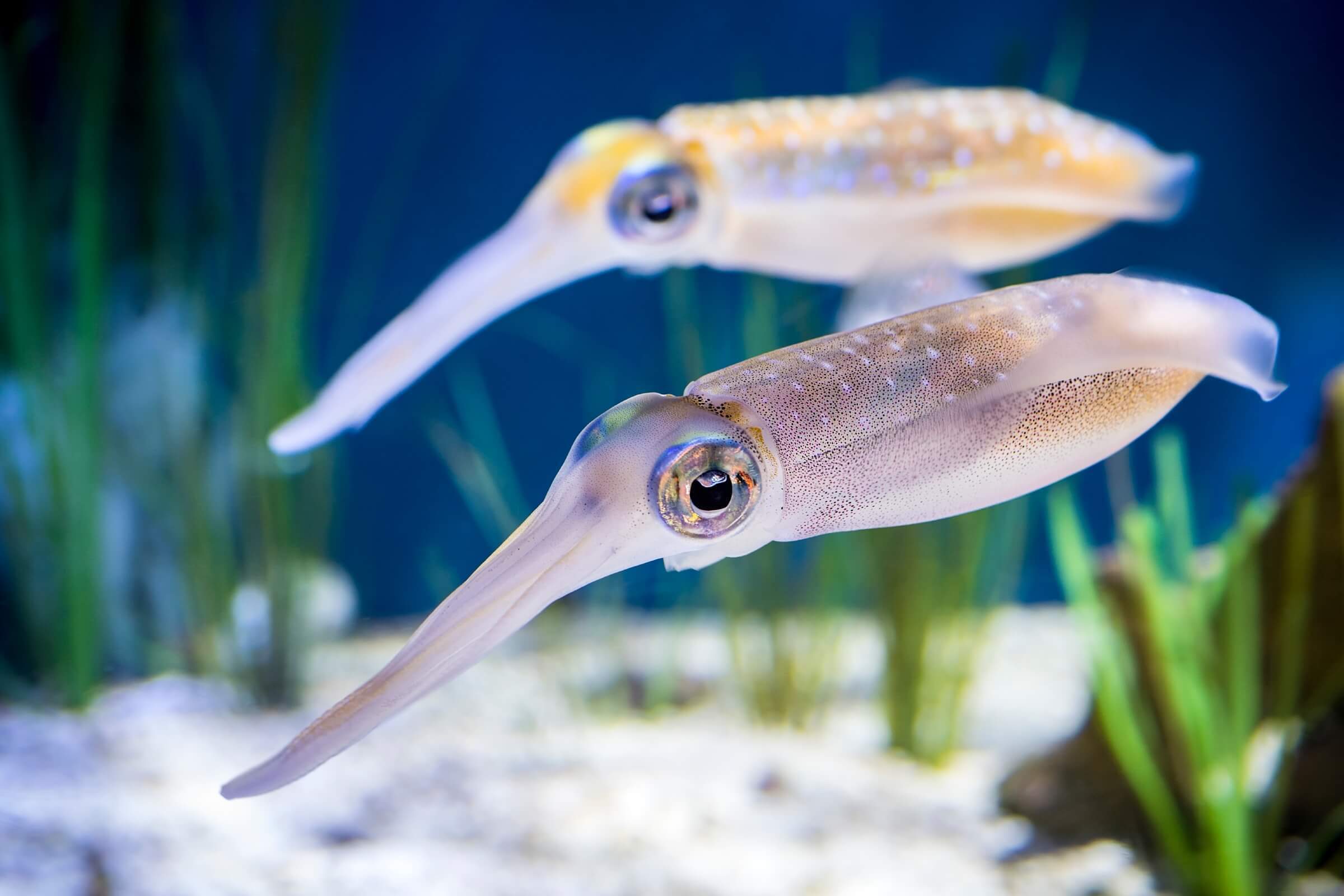
Bigfin reef squid
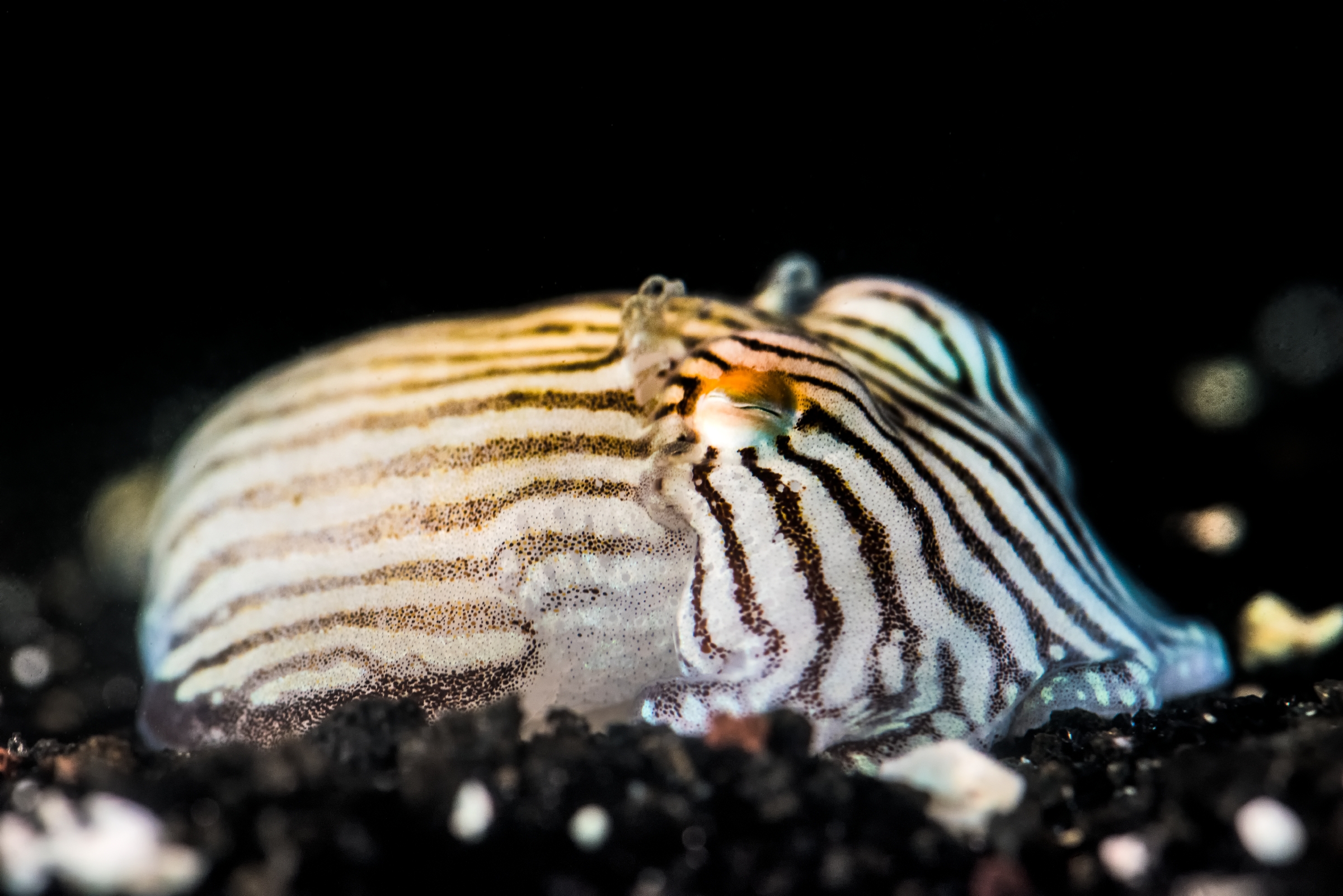
Striped pyjama squid
Instead of collecting new animals from the wild every few months, the aquarists collect fertilized eggs laid by our exhibit animals and raise the next generation up to get them ready for their debut.
No species is the same
At a glance, the general principles of raising cephalopods are straightforward—wait for the adults to mate, collect the eggs, care for the eggs until they hatch and feed the hatchlings until they grow into adults. In reality, it's anything but simple. And to complicate things, each species has its own unique requirements and idiosyncrasies.
The high metabolism and fast growth rate of the bigfin reef squid means they require enormous quantities of food. They also happen to be picky—and messy—eaters. Catherine Traub, an aquarist who cares for the bigfin reef squid, spends much of her time feeding and cleaning up after these voracious eaters.
The bigfin reef squid eat so much and grow so fast, that sometimes it seems they’ve grown overnight when I come into the lab in the morning.
Catherine TraubAquarist
To keep her flamboyant cuttlefish hatchlings healthy, aquarist Elizabeth Lambert must maintain a calm and controlled environment. These sensitive cephalopods respond poorly to excessive light, loud noises, or too much activity outside their tank (like other aquarists walking by). Even the subtle vibrations of a nearby water pump can cause them stress.
Aquarist Mary McCarthy admits that compared to some of the other cephalopods, the stumpy cuttlefish she cares for are relatively easy going. In fact, these squat, purple colored cuttlefish even tell her when they are hungry—they school at the side of their tank waiting to be fed.
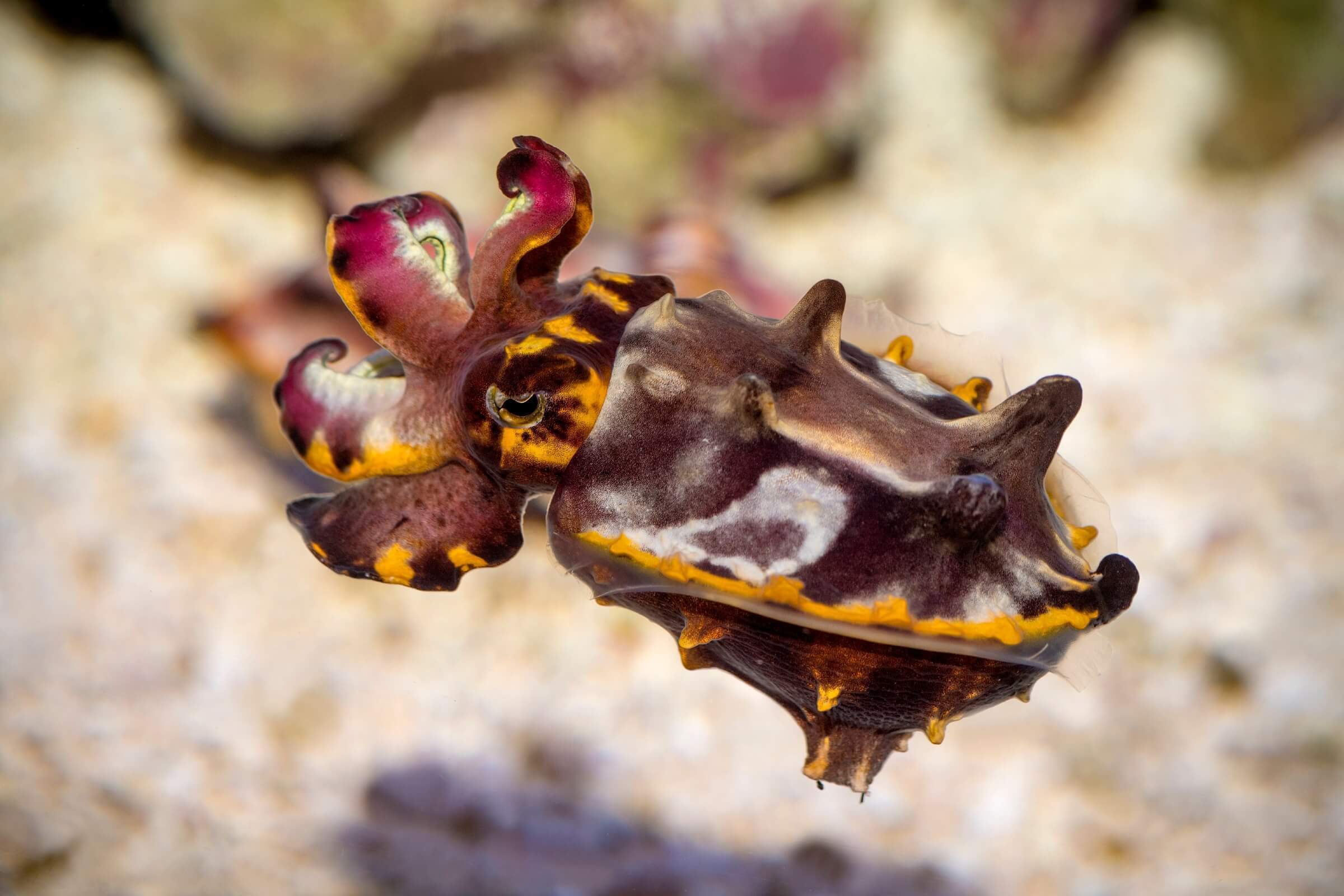
Flamboyant cuttlefish
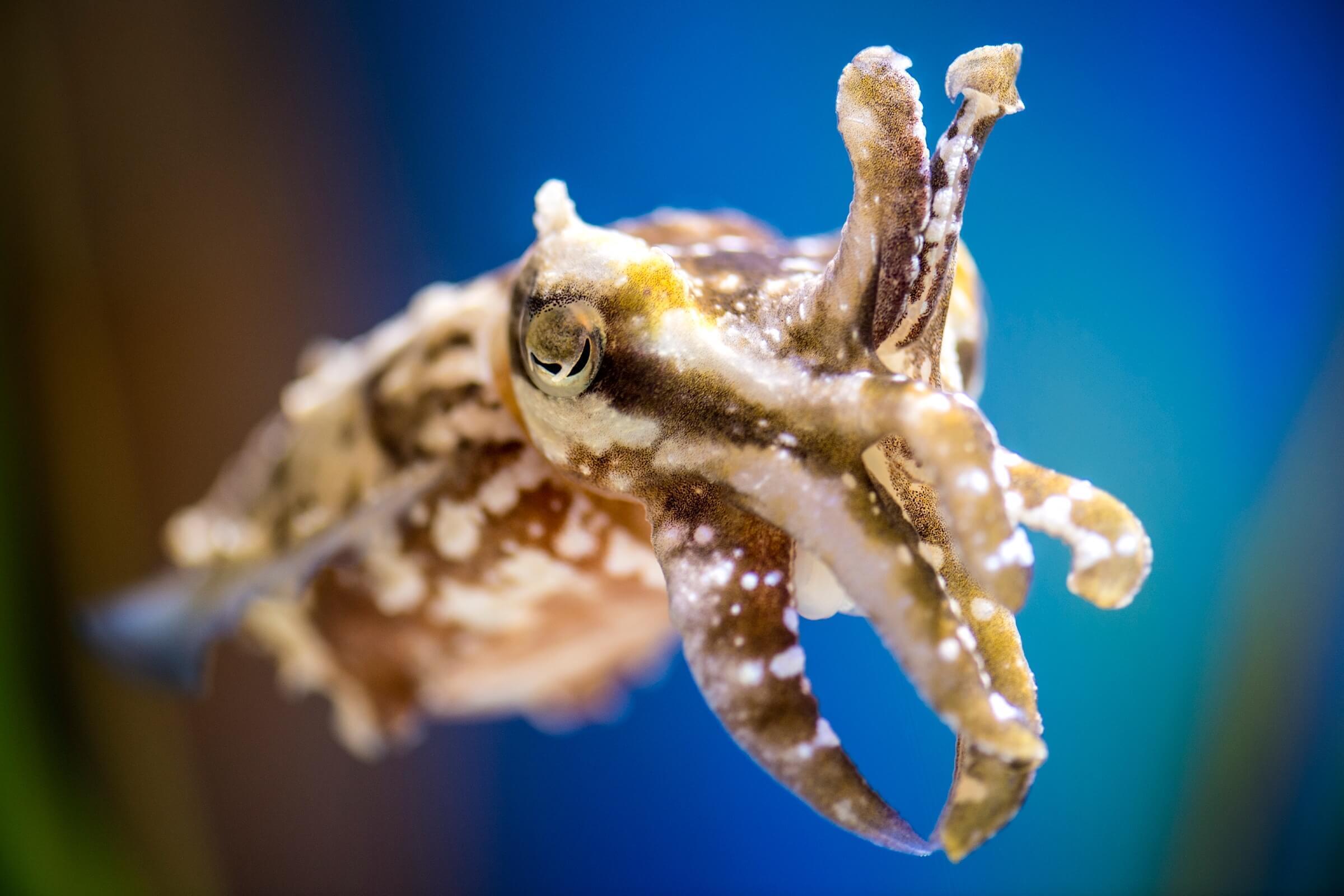
Stumpy cuttlefish
Counting eggs before they hatch
You’ll often see cephalopod aquarists hunched over a petri dish, wearing a headlamp with a pair of forceps in hand. Among aquarists, this is known as the egg-picking stance. They spend hours in this position, carefully examining and caring for each new batch of eggs.
Most cephalopod eggs are transparent, making it possible to see the developing embryo inside. As the aquarists pick through the eggs, they remove any they can see that are nonviable and separate out different developmental stages. It requires a steady hand—if handled too roughly, the stress can cause the eggs to hatch prematurely.
After being sorted, the eggs are placed in a series of baths to remove any bacteria or copepods that would otherwise eat away at the egg casing. Once clean, the eggs are put into different chambers where they will stay for several weeks until they hatch.
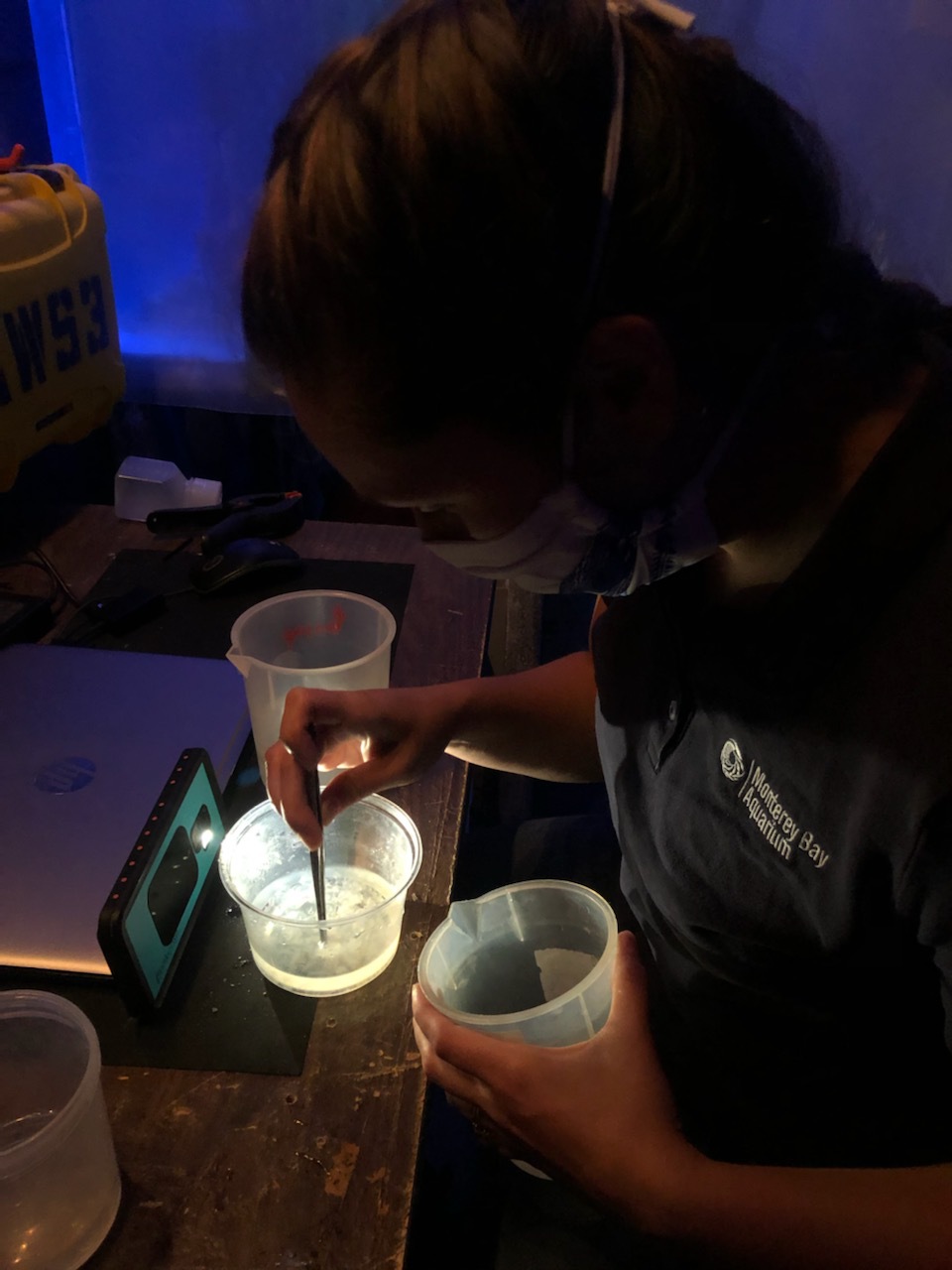
An aquarist picks through newly laid cephalopod eggs to remove nonviable embryos and separate the eggs by their developmental stage.
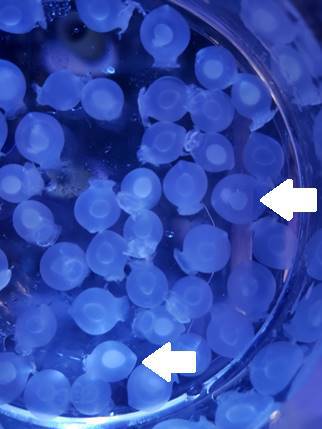
A developing embryo is visible inside flamboyant cuttlefish eggs.
Unlike most cephalopods, stumpy cuttlefish eggs are black, making it impossible to see if the embryos are progressing as they should. Mary, the aquarist that cares for the stumpy cuttlefish, separates the eggs and sets them up with some water flowing over them. Then she crosses her fingers and waits. It will be a while before they are transparent enough to see what’s going on inside the eggs.
First foods
Within a few days of hatching, cephalopods are ready to start eating. But feeding these animals is more involved than tossing them a few fish each day. Our aquarists start by feeding the newly hatched cephalopods small crustaceans called mysid shrimp. As the animals grow bigger, they transition to eating larger mysids and even fish.
Elizabeth says one of the most rewarding parts of her job is watching the flamboyant cuttlefish hatchlings transition to the next size class of food.
It’s incredible to watch them hunt. I take a chance offering them a slightly bigger shrimp and when they take it, I know they’re growing up! It is such a proud mom moment.
Elizabeth LambertCephalopod aquarist
While all the cephalopods follow the same pattern of transitioning from small to larger food items, that’s where the similarities in feeding end.
Flamboyant cuttlefish will eat shrimp their entire life, but they demand live shrimp. Frozen shrimp just won’t do. The live shrimp are ordered—sometimes from as far away as Florida or Arkansas—and delivered via FedEx to the Aquarium. The live food diet of the cuttlefish can be expensive and is susceptible to delays in shipping. It also requires a lot of space. In fact, 40 percent of the cephalopod lab space is used to hold the live food items.
As bigfin reef squid grow they develop a huge appetite for protein. So much so that feeding them live food is no longer practical, and the staff must transition them to frozen foods. But like a picky toddler that prefers macaroni to vegetables, our aquarists must methodically—and somewhat sneakily—phase them over to eating frozen fish.
The trick is to start by offering the squid frozen fish at the morning feeding. After fasting overnight, the squid are hungry and more likely to accept the novel frozen food items. If that goes well, the aquarists will offer frozen fish for the first two meals, then the first three meals, and so on. After a period of weeks, the bigfin reef squid are eating frozen fish at all six feedings.
That’s right, the high metabolism of the bigfin reef squid means they must be fed six times a day. And keeping these voracious squid satiated is important—otherwise they may start to prey upon each other.
A science and an art
Raising cephalopods is as much a science as it is an art. Keeping these beautiful animals happy and thriving is an ever-evolving science, especially since each species is so different.
Food levels must be right—too much or too little and the animals become stressed. Some, like the bigfin reef squid, are even picky about how quickly they are fed. Fish must be placed into their tank at just the right pace to keep them eating.
The light levels must be just right. Flamboyant cuttlefish prefer the lights as dim as possible. They get blue lights at night so that they can feed. The white lights come back on gradually in the morning to allow the animals to adjust. Conversely, the stumpy cuttlefish and bigfin reef squid tolerate brighter light (as they live in shallow coastal habitats). The pyjama squid don’t seem to care much about the light, as they spend their days buried in the sand.
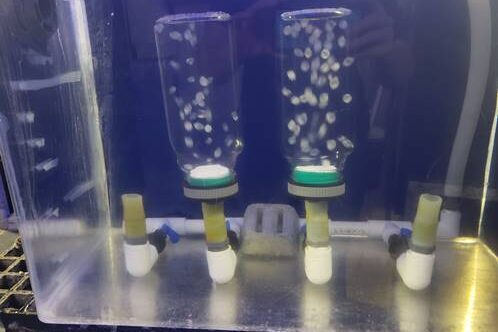
Flamboyant cuttlefish eggs are placed in a tumbler, where they continue to develop for several weeks.
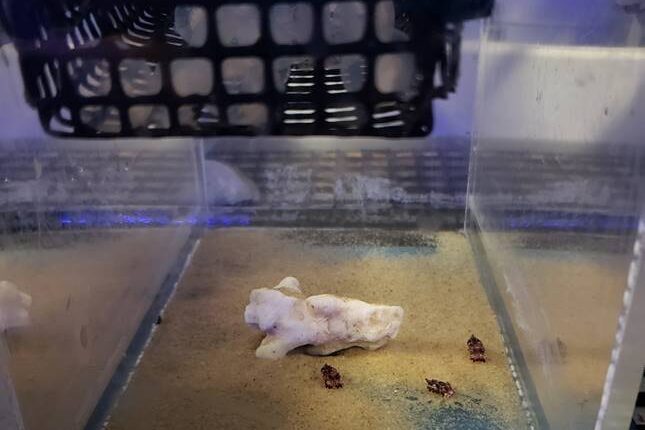
Once the flamboyant cuttlefish eggs are more developed, they are moved from the tumbler to mesh baskets in the hatching tank.
The water temperature, amount of bubbling, even the angle at which the bubbler is placed in the water are all factors that the aquarists must get right. And much of this knowledge has come about through trial and error over the years, gleaned from previous aquarists and built upon by every new staff member.
“Each aquarist adds a new layer to the methods of culture which builds upon each other. Every aquarist has brought their own developments and layer to the knowledge,” says Catherine.
Ready for exhibit
After three to five months, the cephalopods have grown enough to go on exhibit. Even when they are on exhibit, each species has its idiosyncrasies. Striped pyjama squid burrow into the sand, leaving little for guests to look at except some eyes poking out. To solve this problem, the exhibit is designed with shallow sand and is angled so that the squid are closer to the window.
Each exhibit is also designed with the females’ preferred egg-laying surface—striped pyjama squid prefer laying their eggs on the smooth underside of shells, the bigfin reef squid prefer artificial seagrass, and the easygoing stumpy cuttlefish will lay its eggs on just about anything.
In a few more months, this group of cephalopods will mate and lay their eggs, ensuring that the exhibit will continue. Meanwhile, our aquarists are already behind the scenes raising the next generation.
Related videos
Bigfin and chill

Take a deep breath and relax as you watch the soothing, shimmering movements of the bigfin reef squid.
Keep exploring
Story
Nature is queer
We’re excited to sea-lebrate the queerness of nature!
Read story – Nature is queer
Story
Q&A: Julie Packard and Dr. Jenny Gray
Get to know incoming Chief Executive Officer Jenny Gray in this Q&A with Julie Packard.
Read the Q&A – Q&A: Julie Packard and Dr. Jenny Gray
Story
2026 Lucile S. Packard Memorial Award and Youth Award recipients
We’re proud to announce the 2026 Lucile S. Packard Memorial and Youth Awards for outstanding volunteers!
Read story – 2026 Lucile S. Packard Memorial Award and Youth Award recipients