

Our scientists want to understand why sea otter populations are growing so slowly—and what can be done to help them thrive. The Aquarium has dozens of team members focused on sea otters. Our scientists study how sea otters live, the risks they face and how they become sick or injured—while our Animal Care team rescues, raises and releases stranded pups. You can read about some of the ways we study this endangered mammal here.
1. Studying sea otters in the wild
The Aquarium partners with state, federal and academic researchers to study otters in the wild. The more we learn about sea otter behavior, biology and health, the better we can protect these endangered animals. We focus on sea otters along the California coast. For example, we're currently studying how sea otters are using estuarine habitat in Elkhorn Slough.
2. Taking sea otter census
Every spring and fall, our scientists and colleagues fan out across 400 miles of California coast to count sea otters as part of the U.S. Geological Survey annual census. These counts provide a critical measure of whether the struggling population is rebounding or declining. See USGS sea otter survey results.
3. Tagging and tracking
We capture and tag dozens of sea otters in the wild, then track and monitor them—some from birth to death—in an effort to understand how they live and what's causing their sluggish recovery.
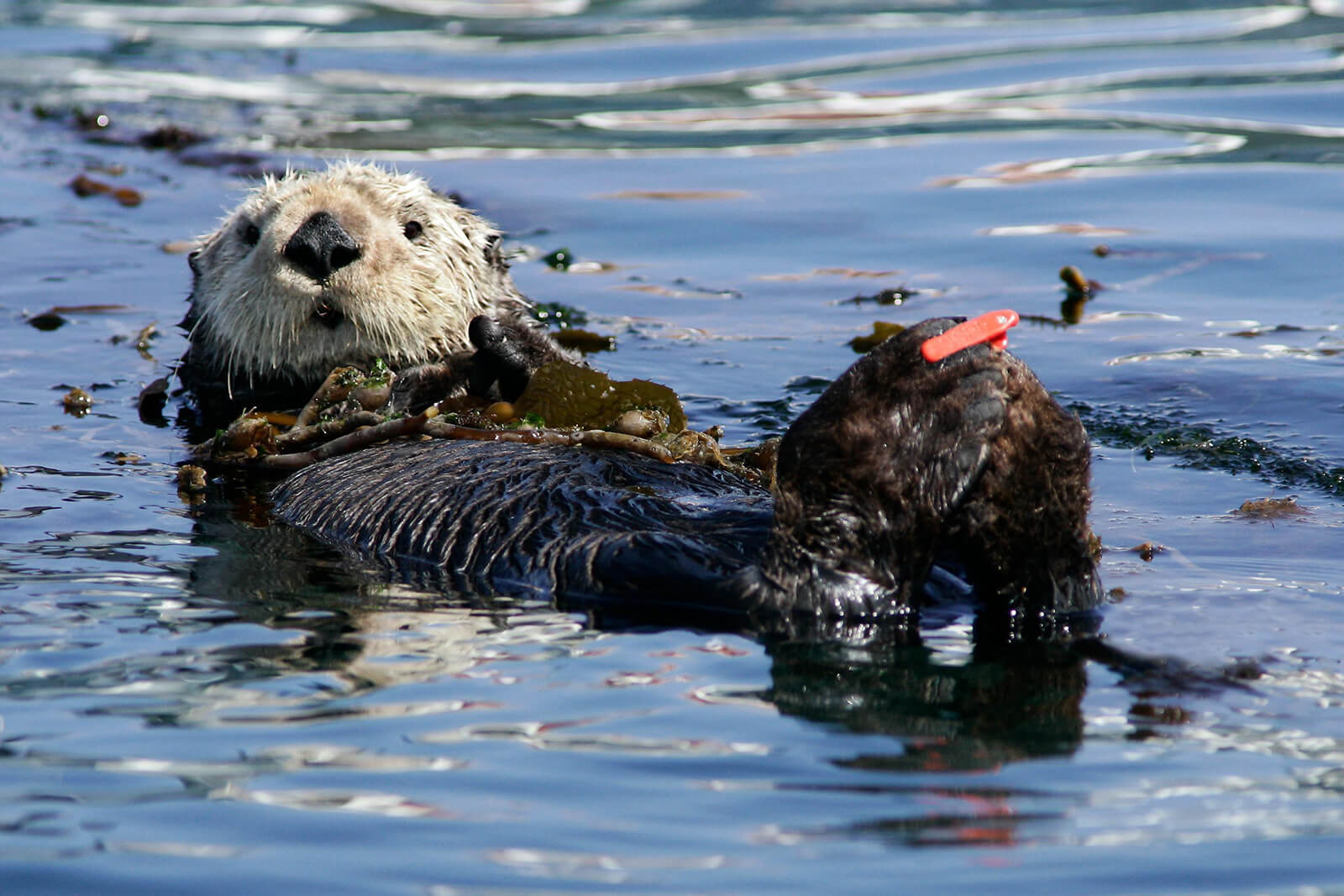
4. Making better research tools
We work with medical and engineering experts to develop ways to track and monitor sea otters that cause less stress to the animals and provide us with better information. New technologies under development include smaller implantable transmitters and time-depth recorders, new physiological sensors, improved data-retrieval systems and improved surgical techniques.
5. Studying healthy sea otters
After rescuing otters that have been stranded along the shore, we perform many of the same diagnostic tests used by human doctors, and we keep extensive medical records for each animal. Tracking sea otter health helps us understand what a "normal" sea otter looks like so we can determine when one in our exhibit or in the stranding program is ill, and how to treat it. We also conduct various behavioral and physiological studies with the animals during their time at the Aquarium.
6. Understanding cause of death
Of all the southern sea otters that die, an extraordinarily high percentage die from shark bites or succumb to some form of infectious disease. To keep track of these trends, we respond to calls about dead sea otters and collect these animals for post-mortem analysis by pathologists with the California Department of Fish and Wildlife in Santa Cruz. We take blood and other samples from each dead sea otter to use in research projects on disease, contaminants, physiology, metabolism and genetics, and we store some of these samples for future research.
© Jim Capwell
7. Raising and releasing stranded pups
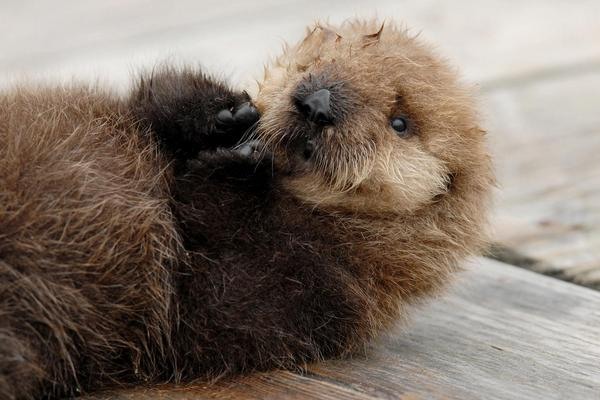
Since 2005, our Sea Otter Program has used the Aquarium's female exhibit otters to rear stranded pups. The females bond with the pups and provide maternal care while the pups grow and develop survival skills. We then track and monitor these pups in the wild, from release through adulthood, to observe their survival and reproduction. Our data has shown that surrogacy is a viable way to raise and release stranded sea otter pups.
8. Collaborating with other institutions
Although we focus on the southern sea otter, our Sea Otter Program staff and volunteers collaborate with research colleagues at the U.S. Geological Survey, the California Department of Fish and Wildlife, and the University of California. Together, we are able to study sea otters from Russia and Alaska to southern California.
Want to hear more about our research?
As we continue to study the sea otter population and discover tactics to support its population growth, we publish articles in scientific journals—and share the news with our email subscribers.
Keep exploring
Story
2026 Lucile S. Packard Memorial Award and Youth Award recipients
We’re proud to announce the 2026 Lucile S. Packard Memorial and Youth Awards for outstanding volunteers!
Read story – 2026 Lucile S. Packard Memorial Award and Youth Award recipients
Story
Chumash Heritage National Marine Sanctuary is almost here
Chumash Heritage National Marine Sanctuary protects marine life and cultural resources on California’s coast.
Read story – Chumash Heritage National Marine Sanctuary is almost here
Story
From krill shakes to salmon steaks: A peek into our food room
Step into our food room—the hub where 75,000+ animals and plants get sustainable diets year-round.
Read story – From krill shakes to salmon steaks: A peek into our food room