

In the United States, national marine sanctuaries play a critical role in helping to sustain a healthy and productive ocean. They reflect and help build enduring community support for safeguarding the benefits these areas bring: healthy ecosystems, thriving wildlife, and inspiring natural and cultural resources.
At Monterey Bay Aquarium, we draw inspiration from marine sanctuaries every day. After all, our biggest and best exhibit is the waters of the Monterey Bay National Marine Sanctuary, right off our back deck!
California has long been a leader in ocean protection and climate resilience, and we’re thrilled that the Chumash Heritage National Marine Sanctuary will soon be part of that legacy.
As proposed, the sanctuary boundaries stretch across more than 4,500 square miles of coastal waters, from just south of Morro Bay, past Point Conception, and south as far as the northern boundary of the Channel Islands National Marine Sanctuary near Santa Barbara.
The sanctuary reaches nearly 60 miles offshore, protecting deep undersea canyons and towering seamounts.
Once designation is final, it will be the third-largest in the national marine sanctuary system and the fifth in California, joining Cordell Bank, Greater Farallones, Monterey Bay, and Channel Islands national marine sanctuaries.
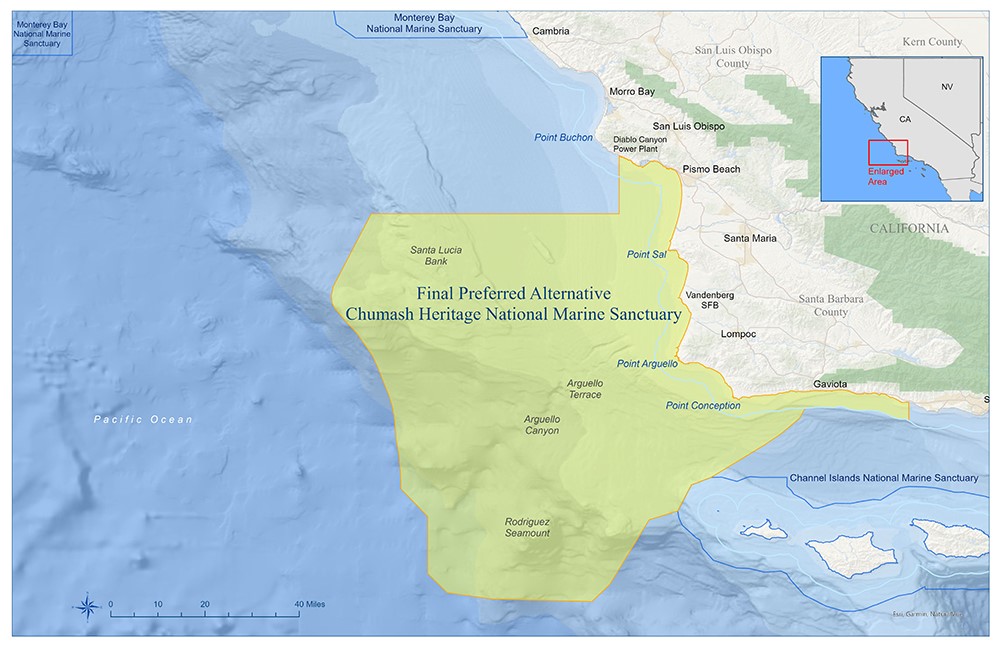
The proposed boundaries of the Chumash Heritage National Marine Sanctuary stretch from just south of Morro Bay, around Point Conception, and down the Santa Barbara coast. The sanctuary touches the northern boundary of Channel Islands National Marine Sanctuary.
Courtesy NOAA
New protection, new opportunities
When Monterey Bay National Marine Sanctuary was designated in 1992, the greatest threat to ocean life off California was offshore oil and gas development. Designating a sanctuary in 2024 still provides protection from oil and gas extraction, but now includes much more. With new concerns about the impacts of climate change and other human activities, sanctuary management can help safeguard the ecological, historical, and cultural ocean resources off Central California.
As with the Monterey Bay sanctuary, the Chumash Heritage National Marine Sanctuary will be protected from oil and gas exploration and extraction—and from deep-sea mining, pollution and discharge, seabed disturbance, and new industries like offshore renewable energy. Alongside these protective measures, sanctuary management will help support sustainable coastal tourism and healthy fisheries as well as Tribal priorities.
Indigenous stewardship
The area proposed for the Chumash Heritage National Marine Sanctuary has been home to coastal, oceangoing Indigenous communities since time immemorial. Indigenous leaders sought recognition of this special part of the marine environment, and their resolve has created an opportunity for the new sanctuary to benefit from the meaningful involvement of Indigenous communities and Tribes.
The Biden-Harris Administration’s commitment to including Indigenous values, knowledge, and traditions in the stewardship of the sanctuary is a firm step toward better inclusion of Indigenous Peoples in the care of their ancestral lands and waters. It recognizes and honors their deep cultural connections to this ocean region. And it creates a path to build community connections and recognize the expertise of Indigenous people in safeguarding the environmental and cultural resources of the sanctuary.
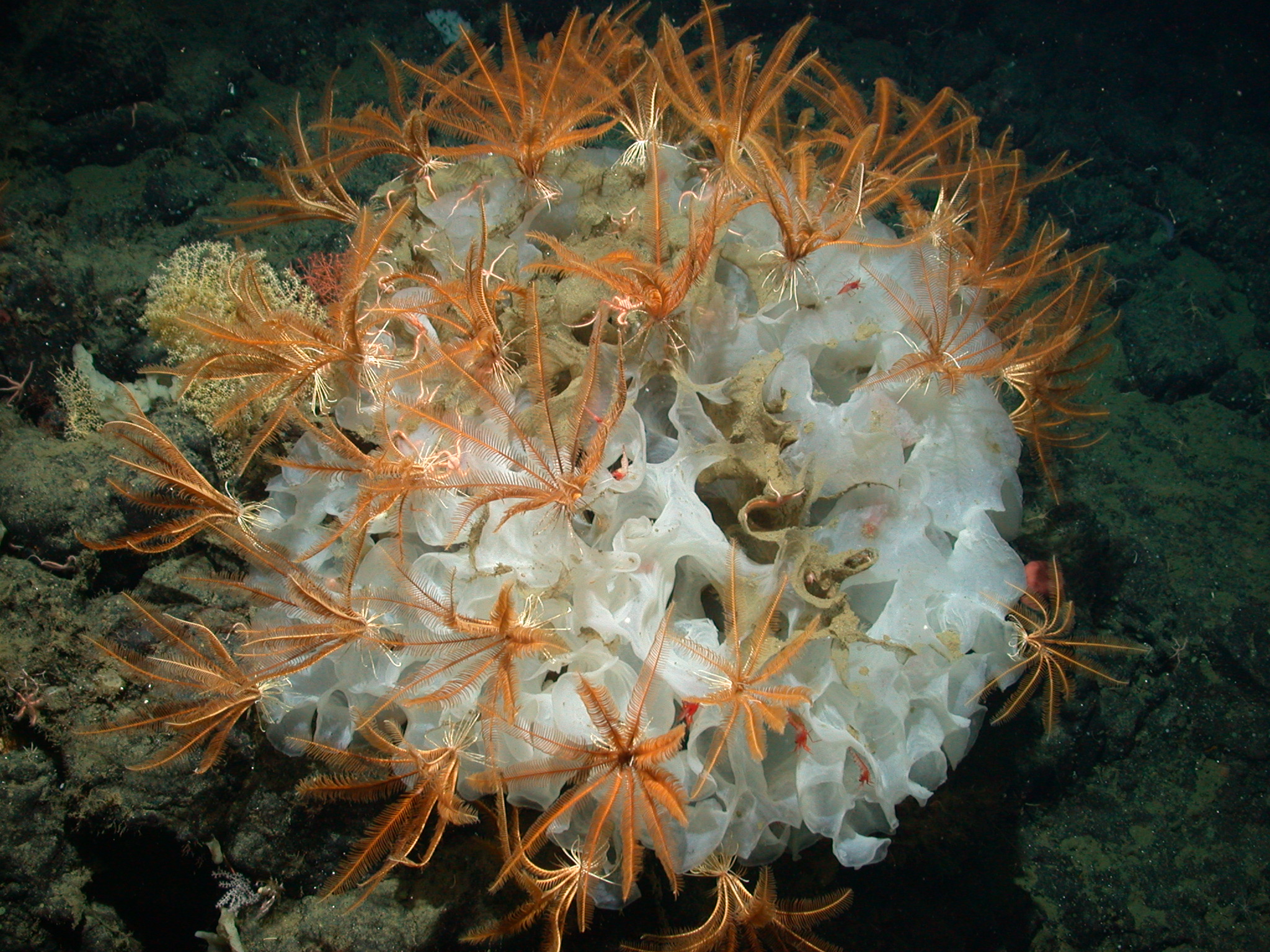
A white glass sponge, Farrea sp., is covered with crinoids, also known as feather stars, in the deep waters of the Chumash Heritage National Marine Sanctuary.
© MBARI
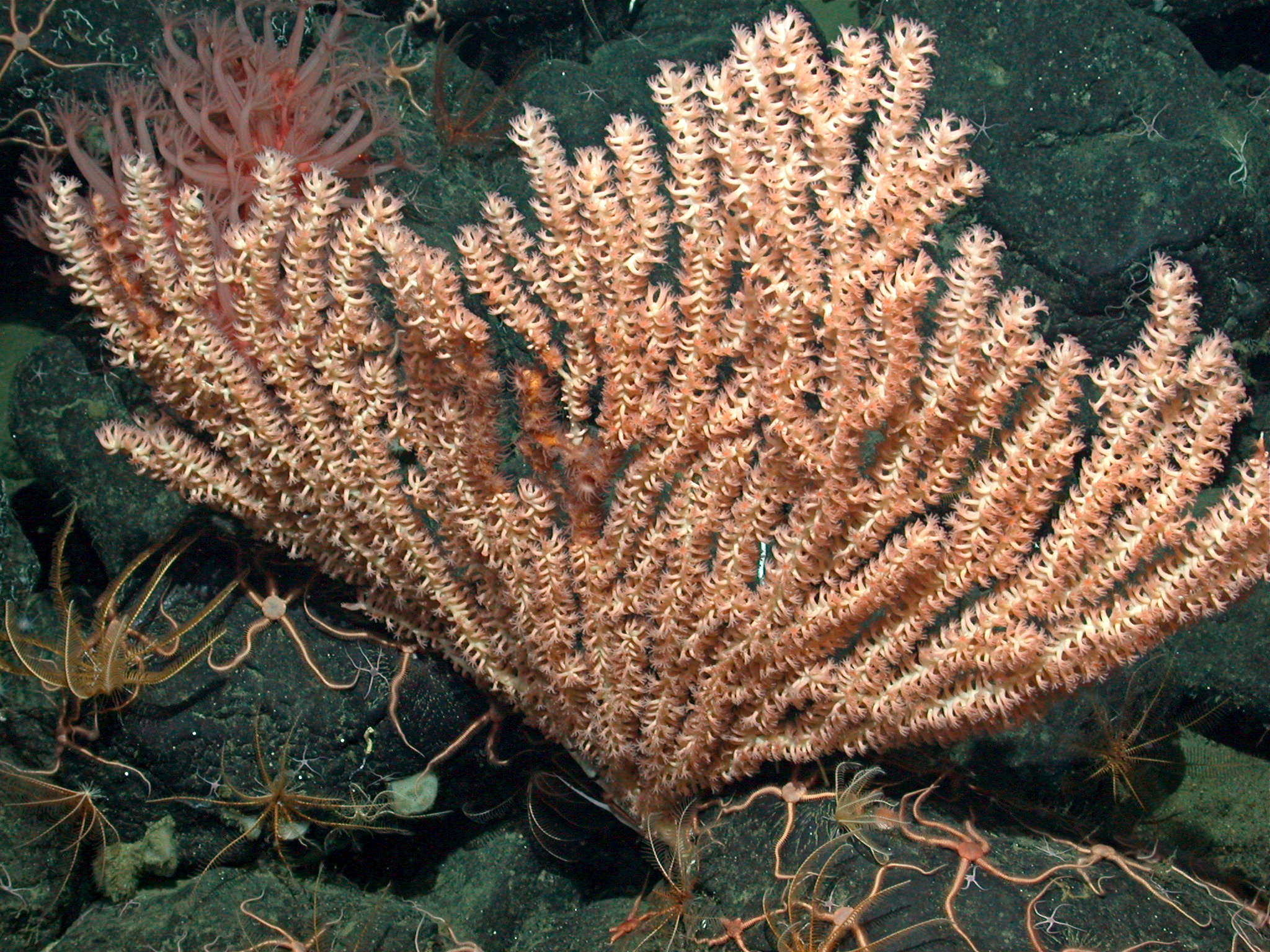
A whitish pink fan of bamboo coral, Keratoisis sp., sits on dark rocks in the deep waters of the Chumash Heritage sanctuary. Marine life and habitats from the seafloor to surface waters, including in submarine canyons and seamounts, is part of the nation's newest marine sanctuary.
© MBARI
From kelp forests to the deep sea
The waters of this sanctuary are home to remarkable environmental resources that have supported Indigenous communities for thousands of years. As an ecological transition zone where cold and warm currents collide, it is a rich and productive ocean area. This creates a hotspot of productivity and biodiversity that supports an incredible array of marine life.
A range of marine wildlife and habitats will benefit from this proposed designation. Threatened and vulnerable species like whales, seabirds, and sea turtles forage and migrate through the area. Diverse nearshore habitats including kelp forests, seagrass beds, and wetlands provide food and shelter for many species. The sanctuary will benefit coastal communities in many ways, including helping to maintain healthy ecosystems that support climate resiliency along California’s Central Coast.
Remarkable deep-sea features like the Rodriguez Seamount, Santa Lucia Bank, and Arguello Canyon are also part of the proposed sanctuary. They’re home to deep-sea coral and sponge colonies that are foundational habitats for the ocean ecosystem. The Aquarium’s research and technology partner, MBARI—the Monterey Bay Aquarium Research Institute—has collaborated with NOAA and others to expand our understanding of this mysterious environment. They have discovered forests of deep-sea corals that may be thousands of years old—and even named a recently discovered species after our founder, Julie Packard!
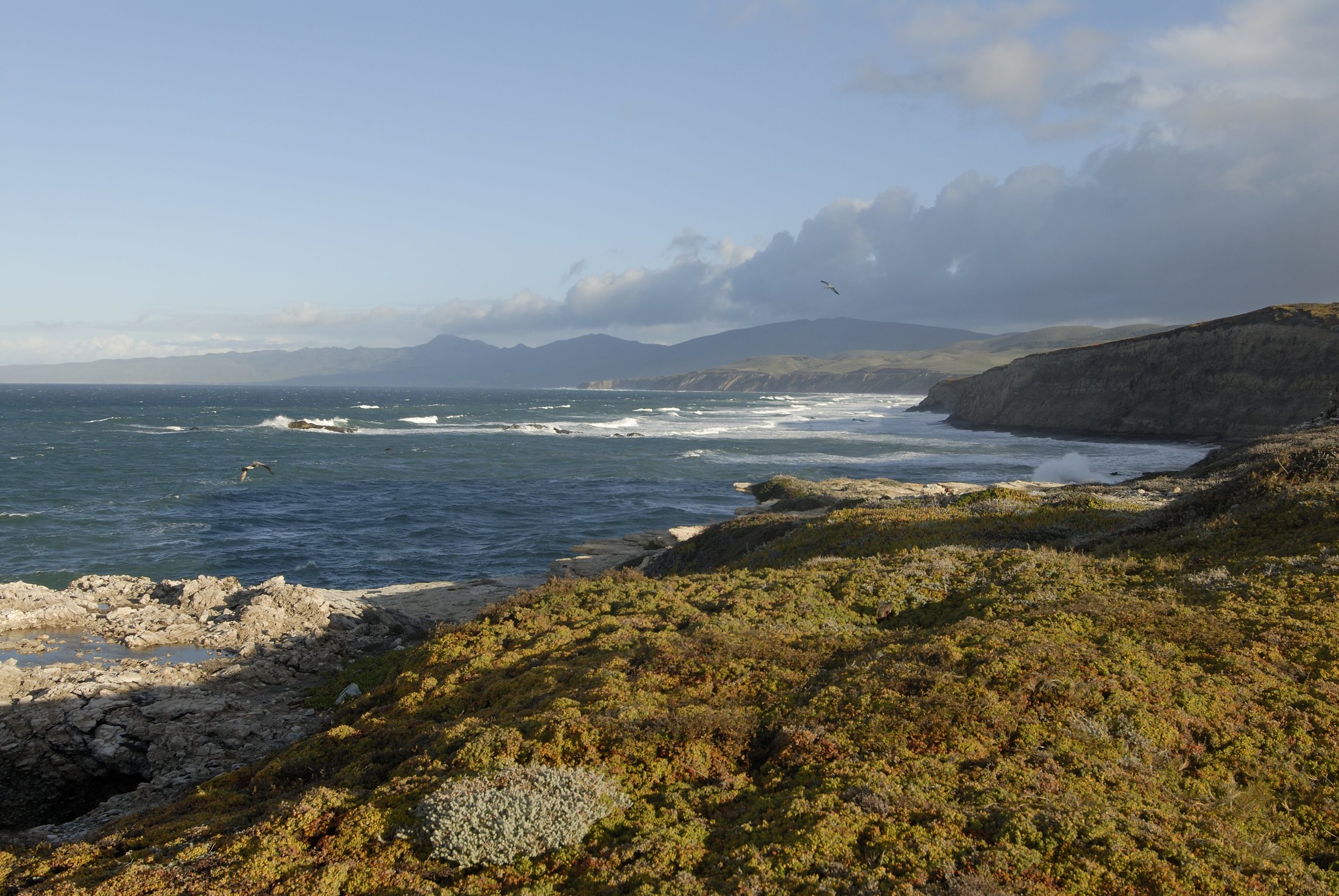
Federal ocean waters north and south of the coastal bluffs at Point Conception lie at the heart of the new national marine sanctuary. It covers nearly 4,500 square miles and stretches 60 miles offshore.
© NOAA
The sanctuary system is growing
We recently celebrated the 50th anniversary of the National Marine Sanctuary Act. Now we’re thrilled to see this continuation of decades of California and U.S. leadership to protect special places in the ocean.
The Chumash Heritage National Marine Sanctuary, sparked by a grassroots movement led by Indigenous communities, is an encouraging evolution in how sanctuaries are developed and managed. We welcome this progress as we celebrate the Aquarium’s 40th anniversary and the inspiration we find every day off our back deck. We look forward to officially welcoming the Chumash Heritage National Marine Sanctuary as our new neighbor in the not-too-distant future.
Keep exploring
Story
From Vietnam to California
From farms to CA schools, your food choices help wildlife, fishers, and global coastal food systems thrive.
Read story – From Vietnam to California
Story
Earth Month 2026
This Earth Month, embrace wonder. Ask questions, dive in, and join our community caring for the ocean.
Read story – Earth Month 2026
Story
From bridges to better seafood: investing in coastal communities
Projects we finance aim to improve the overall quality of life in small-scale fishing and farming communities.
Read story – From bridges to better seafood: investing in coastal communities