

Rescued pups gone wild
In September, Aquarium scientists published a long-awaited study confirming how our unique sea otter surrogacy program bolsters the wild otter population.
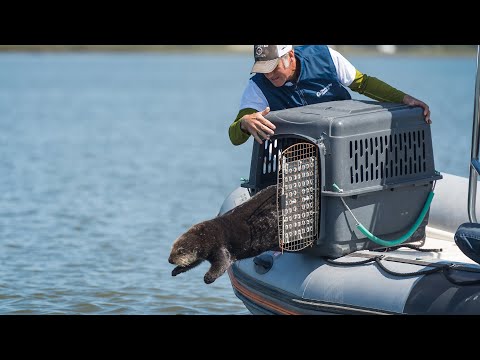
From 2002-2016, our team released 37 rehabilitated otter pups into Elkhorn Slough, a degraded estuary that flows into Monterey Bay. This study concludes that surrogate-reared otters and their offspring accounted for more than half of Elkhorn Slough’s otter population growth, and shows that surrogate-reared pups are surviving as well as their wild kin.
These animals have transformed what was a virtually all-male, non-breeding population in Elkhorn Slough to a robust and thriving community replete with mothers and pups.
But sea otters still face a multitude of threats on their way to recovery.
Related videos
Rescue and release: The Monterey Bay Aquarium's Sea Otter Program
In sharky waters, sea otters need kelp
Sometimes, white sharks mistake furry sea otters for a blubbery seal meal. These “experimental” white shark bites threaten sea otter recovery and inhibit the greater ecosystem restoration these otters provide.
Our scientists compared sea otter strandings and white shark tracking data to analyze these bites of mistaken identity. They discovered that most bites occurred in regions where kelp canopy cover had declined, with male otters seeking new territory the most frequent victims.
As we learn how our ocean is changing, our cutting-edge field research will help us advocate for all species as essential parts of a healthy ocean.
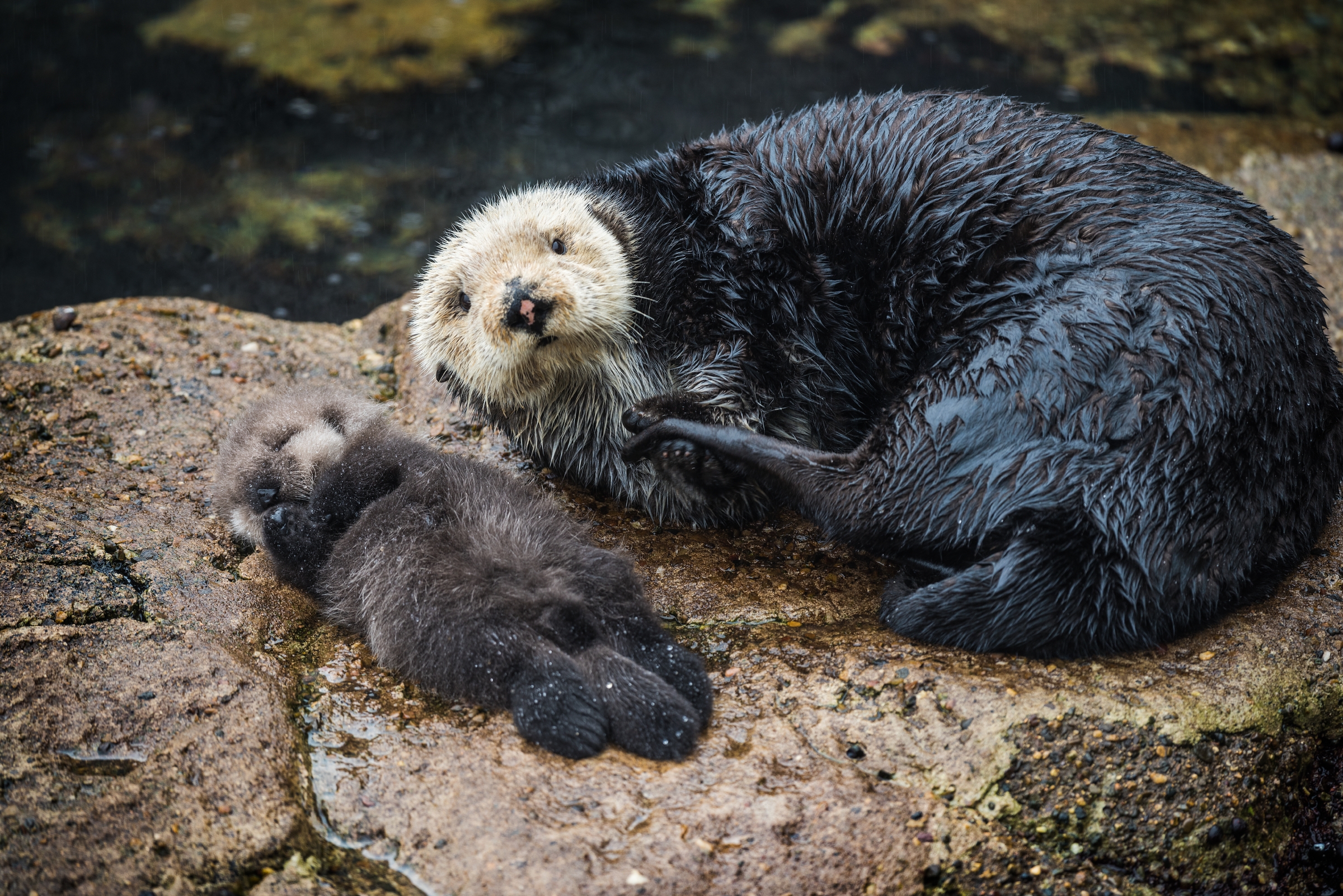
For decades, Aquarium researchers collected tracking data on ocean animals including sea otters and white sharks. Now, leveraging these data, we’re exploring how these species are interacting in a changing ocean.
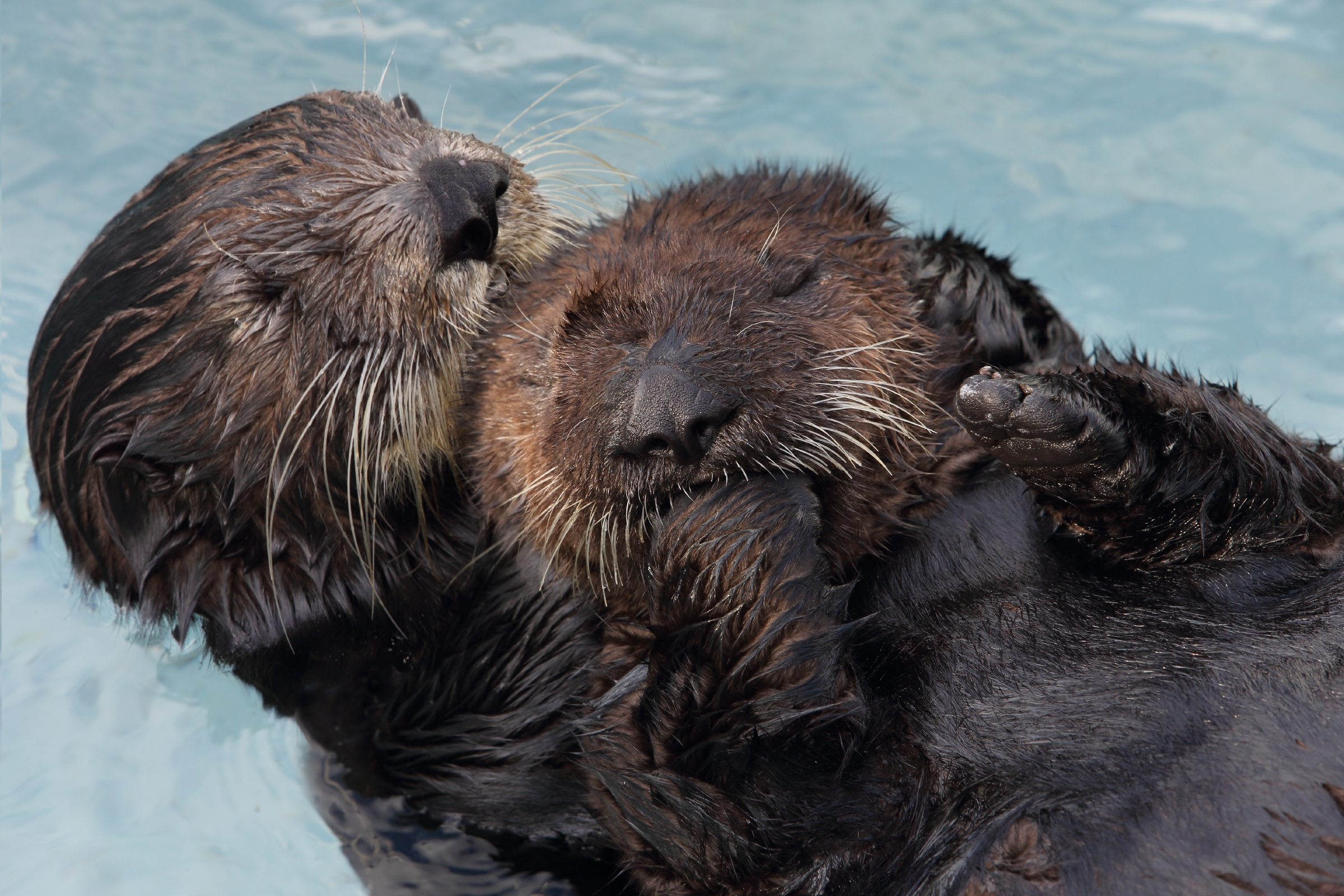
Surrogate sea otter Abby cares for a wild born pup behind the scenes in 2012.
Sharing our expertise in sea otter surrogacy
As we continue to advocate for sea otter population recovery and explore the complex threats otters face in the wild, we’ve developed a two-pronged approach: We’ll work closely with the Association of Zoos and Aquariums (AZA) to find homes at additional AZA institutions for non-releasable stranded sea otters.
We’ll also export our best practices in sea otter surrogacy to other accredited institutions as part of AZA’s Species Survival Plan program for sea otters. These collaborations will help establish a network of experts helping sea otters return to more of their historical range along California’s coast.
Working together, we plan to rescue, rehabilitate and release more sea otters than ever before in support of population recovery.
Keep exploring
Story
Nature is queer
We’re excited to sea-lebrate the queerness of nature!
Read story – Nature is queer
Story
2026 Lucile S. Packard Memorial Award and Youth Award recipients
We’re proud to announce the 2026 Lucile S. Packard Memorial and Youth Awards for outstanding volunteers!
Read story – 2026 Lucile S. Packard Memorial Award and Youth Award recipients
Story
Birdwatching tips: A guide to enjoying and identifying local birds
Here are our best tips to help keep you and the birds safe and healthy during a birdwatching adventure.
Read story – Birdwatching tips: A guide to enjoying and identifying local birds