

Sea lemon
Peltodoris nobilis
- Not on exhibit
- Animal type
- Invertebrates
- Relatives
- Snails, octopuses, bivalves; Phylum: Mollusca; Class: Gastropoda; Sub-class: Nudibranchia
- Diet
- Sponges, detritus
- Range
- Vancouver Island to Baja California, low intertidal to 300 feet (91 m)
- Size
- 4 to 4.5 inches (10–11.5 cm)
Meet the sea lemon
While most nudibranchs sport bright colors, sea lemons are deep yellow to burnt orange. Black spots mingle with protruding bumps called tubercles on the sea lemon's back. Fleshy antennae and a rosette of gills protrude from the back of a sea lemon's slim, flat body.
Did you know?
A nudibranch's bright colors are usually a warning—eat me at your own risk. Predators scorn the sea lemon's penetrating, fruity odor and acidic taste. Observers have even seen fish spit out nudibranchs they'd accidentally ingested.
To feed, sea lemons use a file-like tongue called a radula to rasp at sponges. They usually concentrate on one species of food. A favorite prey is the breadcrumb sponge.
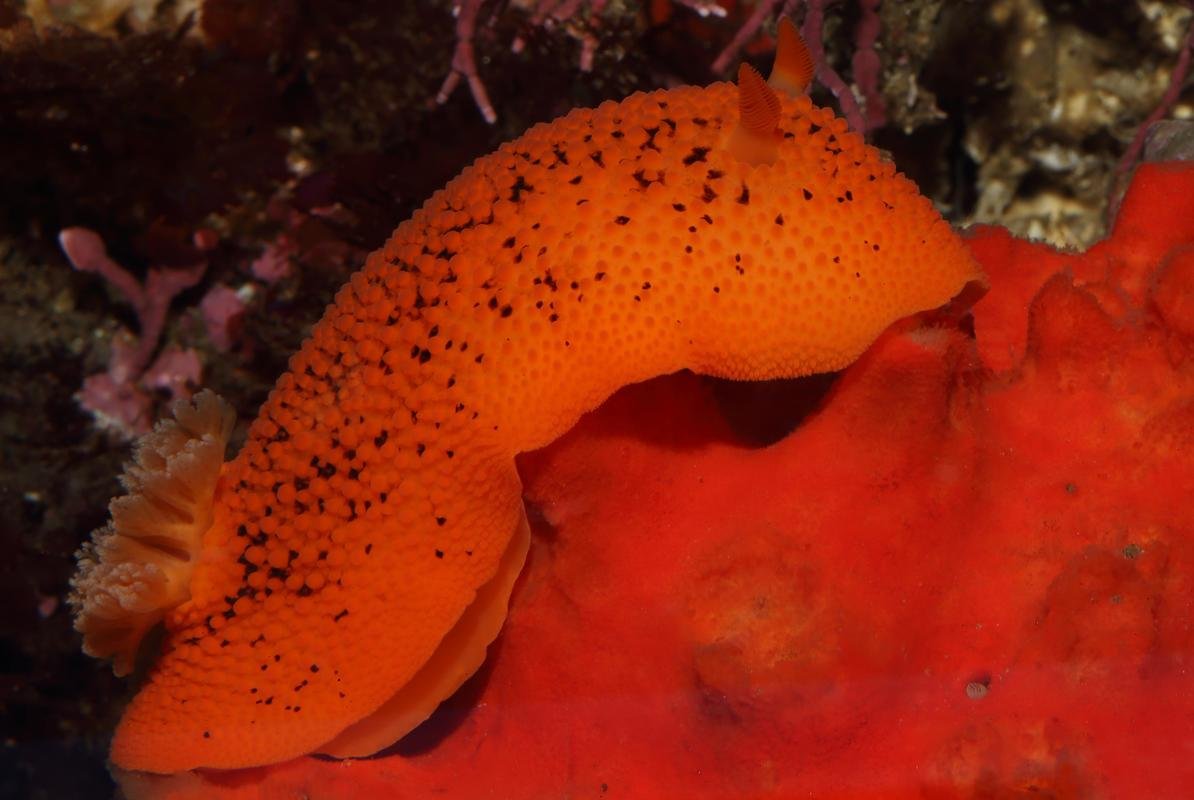
Not all sea lemons are yellow! This one gets its orange color from the red volcano sponge they feast on.
Conservation
Sea lemons are abundant now and will stay abundant if we protect their ecosystem. The main environmental dangers to sea life like nudibranchs are pollution and habitat destruction. We can help limit pollution by decreasing our use of pesticides, recycling motor oil, and keeping other chemicals out of storm drains, rivers, and lakes. Whatever goes into these waters eventually finds its way to the ocean.
Cool facts
- Like all nudibranchs, sea lemons are hermaphroditic and can produce both sperm and eggs. Since nudibranchs live only about one year, the ability to mate with any other nudibranch increases their chances of reproducing.
- In Monterey Bay, sea lemon spawning season is from November to March. Circular, light yellow ribbons contain as many as 2,000,000 eggs, but less than 1% of the resulting larvae survive
- Sea lemons breathe through the rosette of gills on their backs. Nudibranchs with this arrangement of gills belong to a family called dorids.
- Because the neurons of sea lemons are larger and easier to access than human neurons, researchers find sea lemons useful in their studies of nerve cells. In addition, the abundance of sea lemons makes their collection for research feasible.
- A nudibranch's color often matches the color of the sponge they eat.