
Press release
Seafood Watch™ assigns red ratings to Canadian and U.S. fisheries that pose dire risk to the endangered North Atlantic right whale
Following its rigorous assessment process, Monterey Bay Aquarium’s Seafood Watch program assigns red ratings to certain Canadian and U.S. fisheries. The updated assessments highlight significant risks of entanglement in pot, trap, and gillnet fisheries to the endangered North Atlantic right whale and the lack of timely, effective management necessary to mitigate entanglement risks and promote recovery of the species.
Monterey Bay Aquarium’s Seafood Watch program released today the final assessments for a number of Canadian and U.S. fisheries. Some of the fisheries included in these assessments use gear with vertical lines that are known to entangle the endangered North Atlantic right whale.
After reviewing all available scientific data, as well as existing legal requirements and regulations, Seafood Watch determined that current Canadian and U.S. management measures do not go far enough to mitigate entanglement risks and promote recovery of the North Atlantic right whale. As a result, Seafood Watch assigned a red rating to those fisheries using pots, traps, and gillnets.
The North Atlantic right whale is in danger of extinction and has experienced a 25 percent decline in numbers over the past decade (Hayes et al. 2022; Pettis HM, Pace RM, Hamilton PK 2022). Data show that entanglement in fishing gear is the leading cause of injury and death to this endangered species:
- Fewer than 340 North Atlantic right whales exist today—and their numbers are decreasing every year (Pettis HM, Pace RM, Hamilton PK 2022).
- For the North Atlantic right whale population to recover, the average number of whales injured or killed by human-related activity must be less than one whale per year (Hayes et al. 2022). This number has been exceeded almost every year since 1995 (NOAA).
- U.S. and Canadian fisheries, combined, deploy up to one million vertical lines throughout North Atlantic right whale migratory routes, calving, and foraging areas (Hayes SA, Gardner S, Garrison L, Henry A, Leandro L 2018).
- Over 80 percent of North Atlantic right whales have been entangled in fishing gear at least once (Knowlton AR, Hamilton PK, Marx MK, Pettis HM, Kraus SD 2012).
- More than 90 percent of entanglements cannot be linked to a specific gear type, and only 12 percent of entanglements can be linked to a specific location (Knowlton et al. 2012; Knowlton et al. 2019; Kraus et al. 2019). Until there is more evidence, all of the fisheries using this gear are considered a risk (NMFS 2021).
Seafood Watch reviewed all available data, including the latest stock assessments as well as state, federal, and provincial management measures. The program also gathered input from scientific, government, industry, and conservation experts and through a public comment period. These sources show that current Canadian and U.S. approaches would allow cumulative impacts from fishing entanglement to continue at levels at least five times higher than the species could withstand (Hayes et al. 2022; NMFS 2021; NOAA 2022). In the U.S., a June 2022 court decision determined NOAA violated the Endangered Species Act and the Marine Mammal Protection Act by failing to quickly reduce impacts to the North Atlantic right whale.
Seafood Watch is committed to reviewing new, relevant information that indicates reduced entanglement risks to the North Atlantic right whale.
More resources
- Access the assessments on SeafoodWatch.org
- Read the assessment for U.S. American lobster (PDF)
- Read answers to frequently asked questions about the assessments
About Seafood Watch
Seafood Watch, a program of Monterey Bay Aquarium, is helping to transform how seafood is fished and farmed so that people and the planet can thrive for the long-term. The 14 assessments released today are part of Seafood Watch’s rigorous, transparent, science-based process to evaluate the current environmental performance of a fishery. Visit SeafoodWatch.org to learn more about our assessment process and preview the list of open and upcoming reviews.
More from the newsroom
Press release
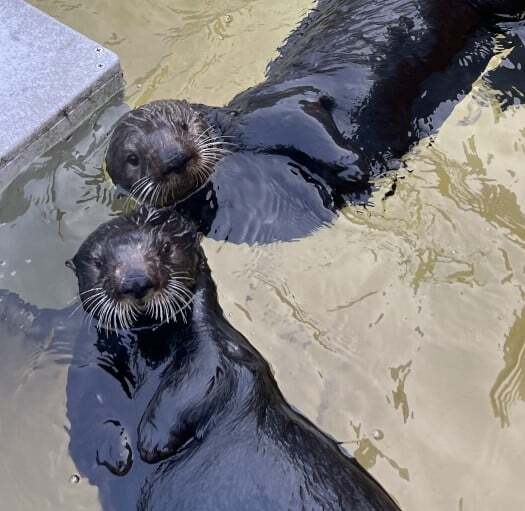
Meet Suri and Willow: Monterey Bay Aquarium’s newest sea otters
Monterey Bay Aquarium's new southern sea ottes, Suri and Willow, made their public debut April 14, 2026
Read press release – Meet Suri and Willow: Monterey Bay Aquarium’s newest sea otters
Press release
Dr. Jenny Gray named Monterey Bay Aquarium CEO
Gray will join the Aquarium in May, and founding director Julie Packard will stay on as a board member.
Read press release – Dr. Jenny Gray named Monterey Bay Aquarium CEO
Statement
Response from Monterey Bay Aquarium on calls to reverse recent Seafood Watch red ratings
The Maine Congressional Delegation and Governor of Maine issued a letter calling on Seafood Watch to reverse …
Read statement – Response from Monterey Bay Aquarium on calls to reverse recent Seafood Watch red ratings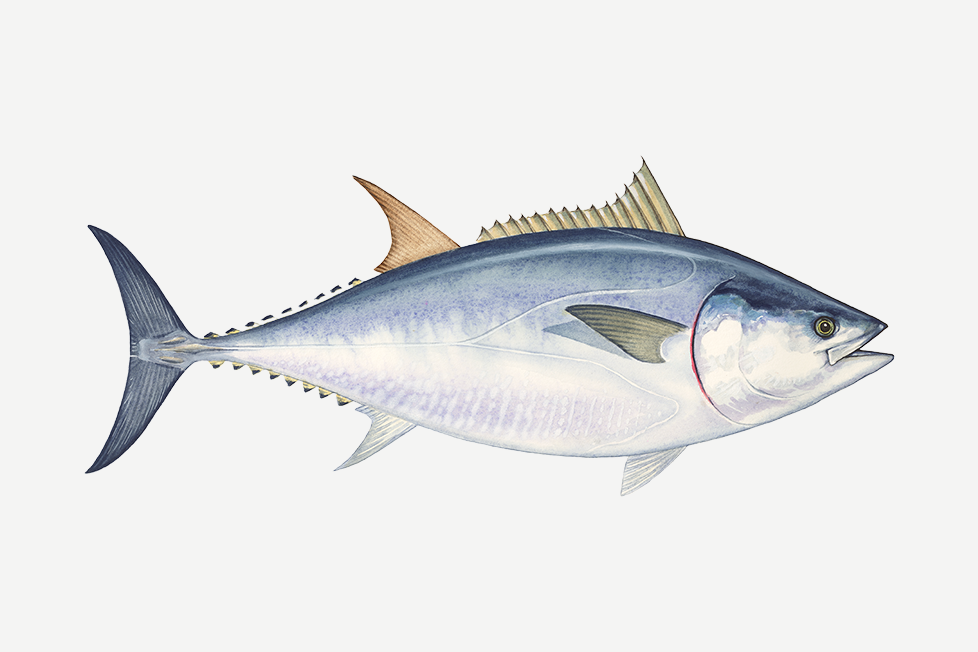
Press release
Bluefin tuna achieves first yellow rating in 25 years
Science-based fisheries management is helping Pacific bluefin tuna populations recover in key fisheries.
Read press release – Bluefin tuna achieves first yellow rating in 25 years