

Boats on the bay
Looking out to sea from the Aquarium’s back deck, it’s easy to spot commercial fishing boats on Monterey Bay. Sometimes they’re part of the squid fleet, in other seasons you’ll see crews fishing for salmon, sea bass, and rockfish. The bay has a long and rich fishing history that has sustained people from every culture that has lived on the Monterey Peninsula.
Summer visitors have a new way to connect with that history, through two handcrafted boats like those used by Rumsen and Ohlone people, and by Chinese immigrants who brought their fishing methods to the bay. When you step outside, you’ll see a tule reed boat like those crafted by Ohlone and other coastal people, and a sampan that fishing families used to catch squid in the 19th century after they sailed across the Pacific from China.
In years past, we’ve featured the boats in our summer deck program, “Turning the Tide”, which told the story of the many people who made their living fishing Monterey Bay, and of the evolution toward sustainable management of the bay’s wildlife in the 20th and 21st centuries, so both fishing and a rich tapestry of ocean wildlife can thrive. The tule boat and sampan offer a way to get a close-up look at these innovative crafts and the bay’s history.
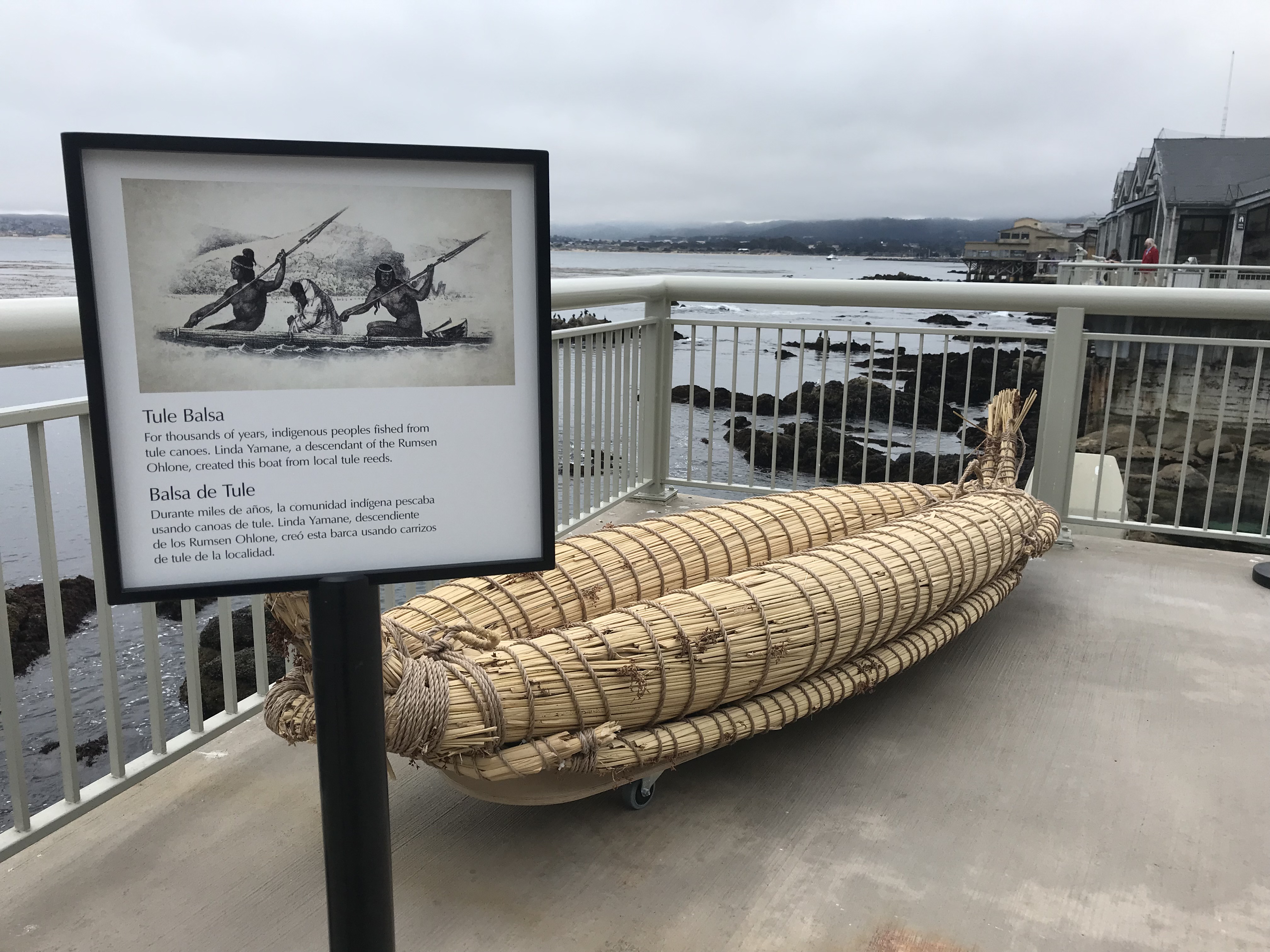
Aquarium guests can learn, through signs and conversations with staff and volunteers, how the Rumsen and Ohlone people used tule canoes to fish along the Monterey coast.
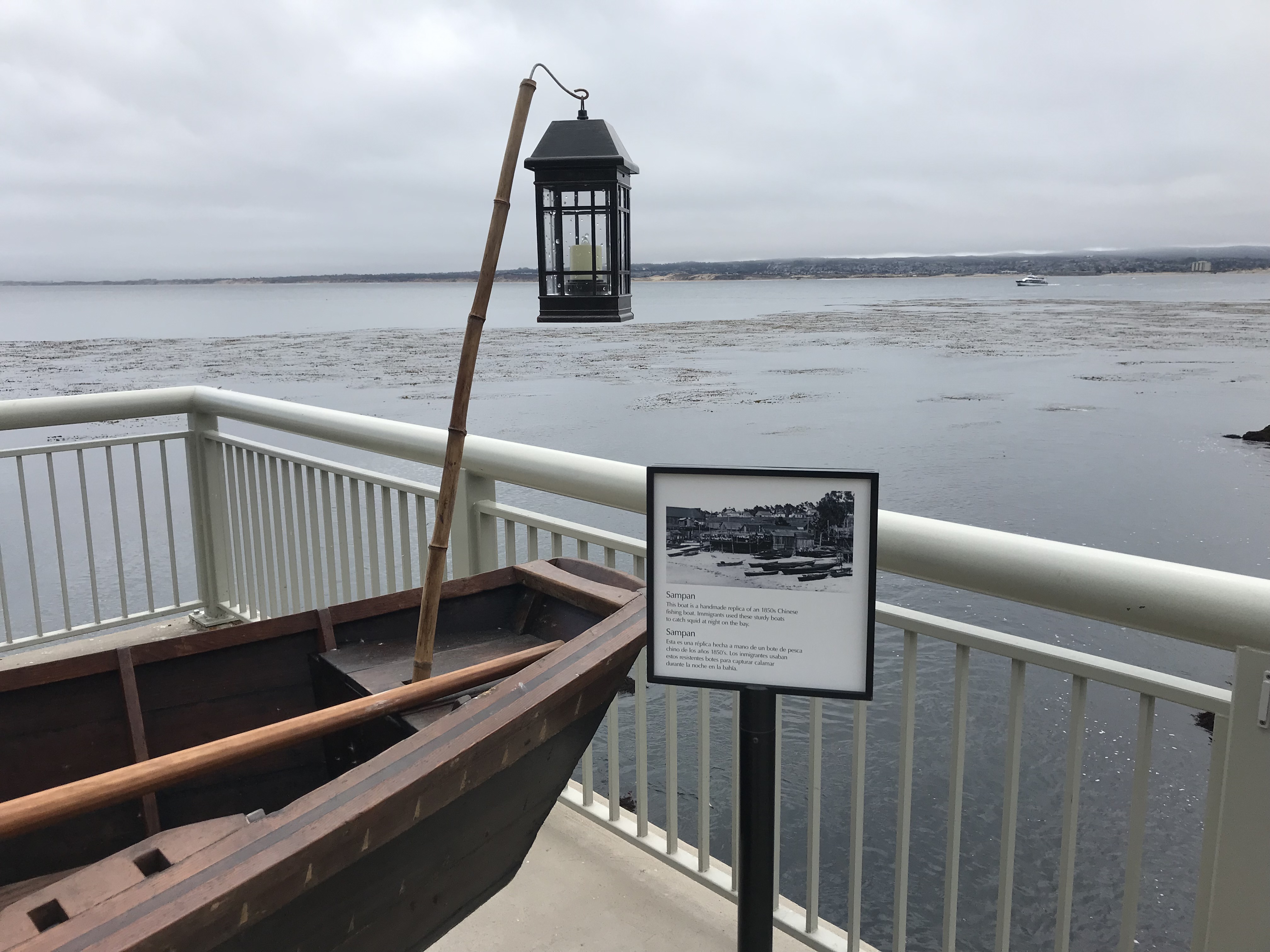
Also on the back deck, we're displaying a replica of a sampan used by Chinese fishing families to catch squid in the 19th and early 20th centuries on Monterey Bay.
A hand-built tule kónon
The tule boat, called kónon in the Rumsen-Ohlone language, was created for the Aquarium by Ohlone scholar Linda Yamane (she/her), using the abundant tule reeds that grow in California’s coastal wetlands.
Before Spain colonized California beginning in 1769, Indigenous people along the Central Coast used tule boats as part of a way of life that involved hunting, fishing, and gathering food from the wild, including wetlands, rivers, and coastal waters. Colonizers stole the lands of Native peoples, introduced diseases that decimated Native communities and their populations, and pressured them to move to missions. At the missions, they faced forced labor, and Spanish missionaries and soldiers discouraged them from practicing their languages and traditions. The catastrophic decline of the Ohlone people and the repression of their traditional culture continued after the Gold Rush, and when California became a state in 1850.
The Rumsen and other Ohlone people did not vanish. They remain vibrant and engaged members of our larger community. They are working today to revitalize their languages and traditions, including functional craft like tule fishing boats. For decades, Native families have organized themselves politically to promote their concerns, such as federal tribal acknowledgment, and the protection of their ancestral sites and remains.
Yamane, a Seaside resident, constructs these boats. She’s built more than 30 over the past 20 years—one of many ways she has, over more than three decades, helped keep alive the culture of her ancestors and their ways of living sustainably from the land and sea.
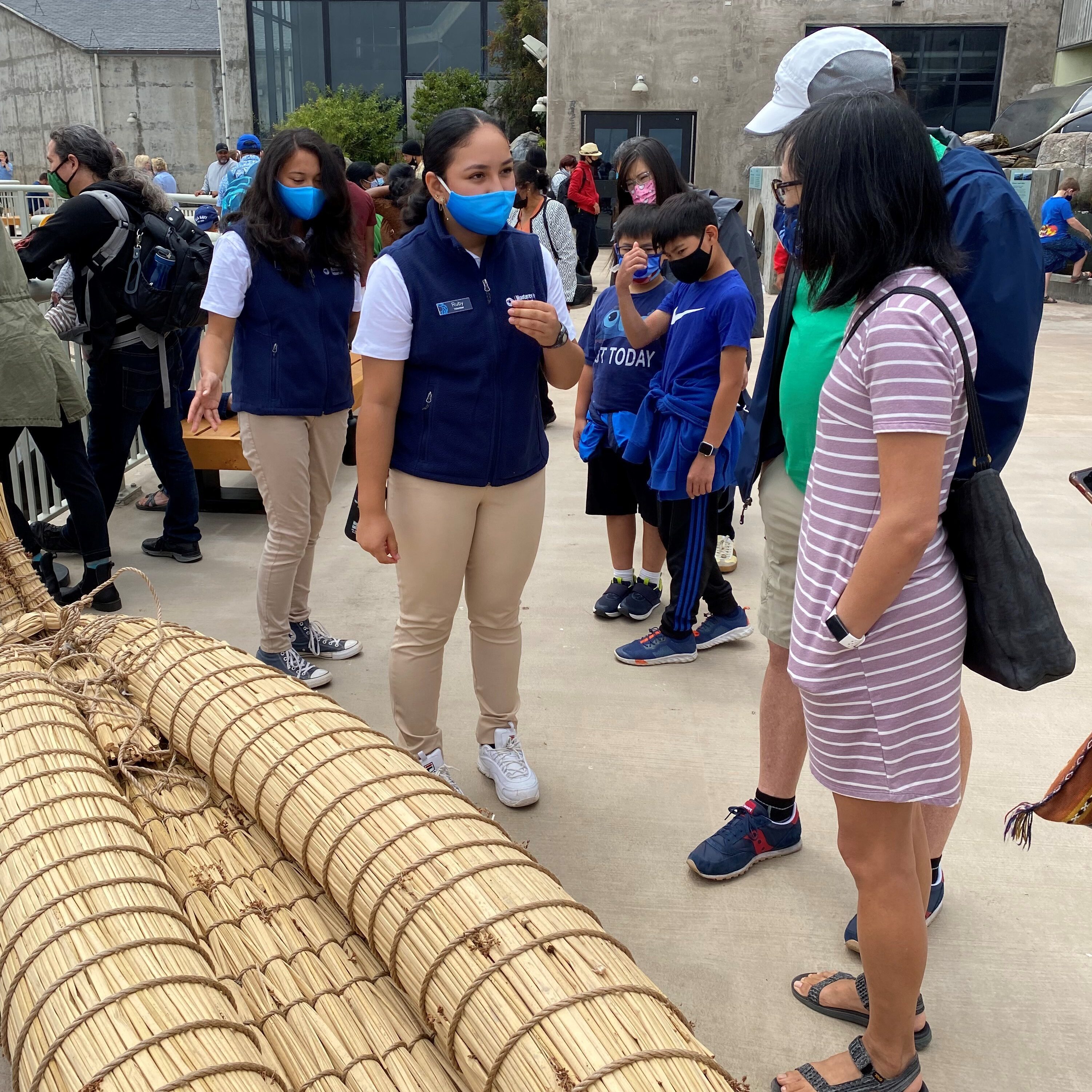
Aquarium staff and volunteers, like these Teen Conservation Leaders, chat with guests about the people and cultures who fished Monterey Bay. They're finding visitors are keen to learn more about the bay's multicultural fishing history.
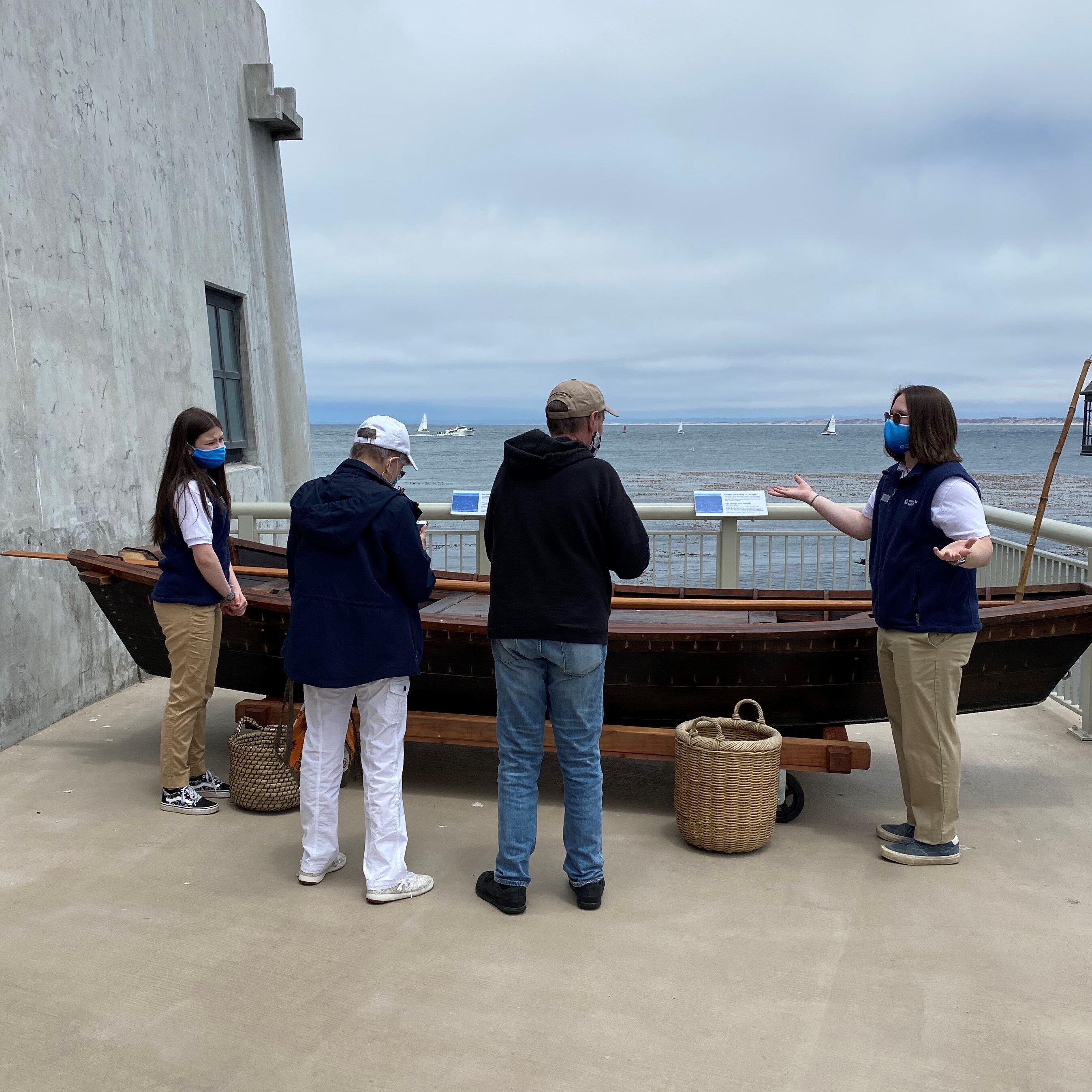
Aquarium guests can learn more about innovations introduced by Chinese fishing families, like projecting light from charcoal braziers to lure squid to the surface. Staff and volunteers share these and other stories of Monterey Bay's fishing history.
Chinese persevered despite discrimination
The Aquarium partnered with Gerry Low-Sabado, the great-granddaughter of Quock Mui, born in 1859 to some of the first Chinese settlers in Monterey County, to tell the story of the people who helped establish the commercial fishing industry in California.
It wasn’t easy, as they faced discrimination, including laws forbidding Chinese from fishing during daylight hours. So, they found ways to make a living that followed the law and didn’t put them into direct conflict with White fishermen.
One innovation was building fires in small braziers that hung off the bow of their sampans to attract schools of squid to the surface. They caught, dried and salted the squid in the villages where they lived — including Point Alones, which was located next door to the Aquarium, where Stanford University’s Hopkins Marine Station now stands.
In 1906, the village was burned to the ground—likely by arsonists—and the population scattered, at a time of rising anti-Chinese sentiment.
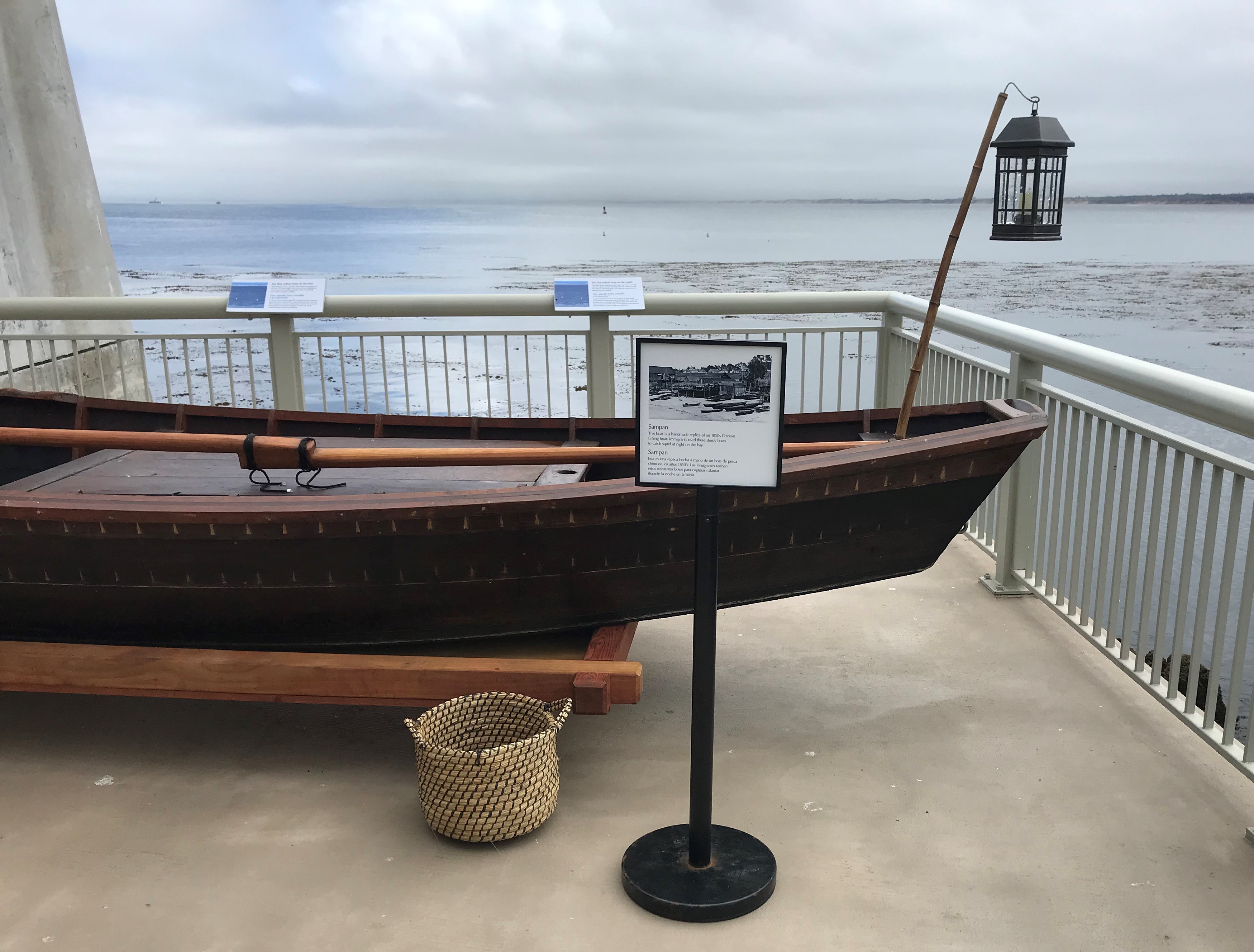
A replica of a sampan helps illuminate the rich fishing history of Monterey Bay. A Chinese fishing village was located above the beach next to the Aquarium, at what is now Hopkins Marine Station. It burned to the ground at a time of rising anti-Chinese sentiment.
The bay's multicultural fishing history
The Rumsen, Ohlone, Chinese, Japanese and many other cultures have deep connections with Monterey’s fishing history, and have done so much to shape the culture of the community. As the Aquarium works to build a diverse constituency for the ocean, we’re doing more to share the stories of all the people who have lived here — and to recognize both the sustainable fishing practices they introduced that have preserved the health of the bay, and the oppression they faced.
We’re sharing the story of the people behind the boats with our guests, with the help of staff and volunteers, such as the young people in the Aquarium’s Teen Conservation Leader program. They’ve discovered that visitors are keen to learn more, says McKenzie Miller, who works with the teens.
“Our teens have had some great conversations,” she says. “One was able to talk in Spanish with a gentleman who wanted to know more about the tule canoe. Another found it rewarding to be able to share that the Rumsen and Ohlone people not only have a rich past but that they’re still here and keeping their culture alive today.”
You can learn more about the cultures that contributed to Monterey Bay’s vibrant fishing history by chatting with staff and volunteers who are stationed by the two boats. They have many stories to share!