

What's an ice enrichment?
Clever, dexterous, active, hungry. Pair these attributes with a sea otter's natural curiosity, and you get a world-class expert at banging things open.
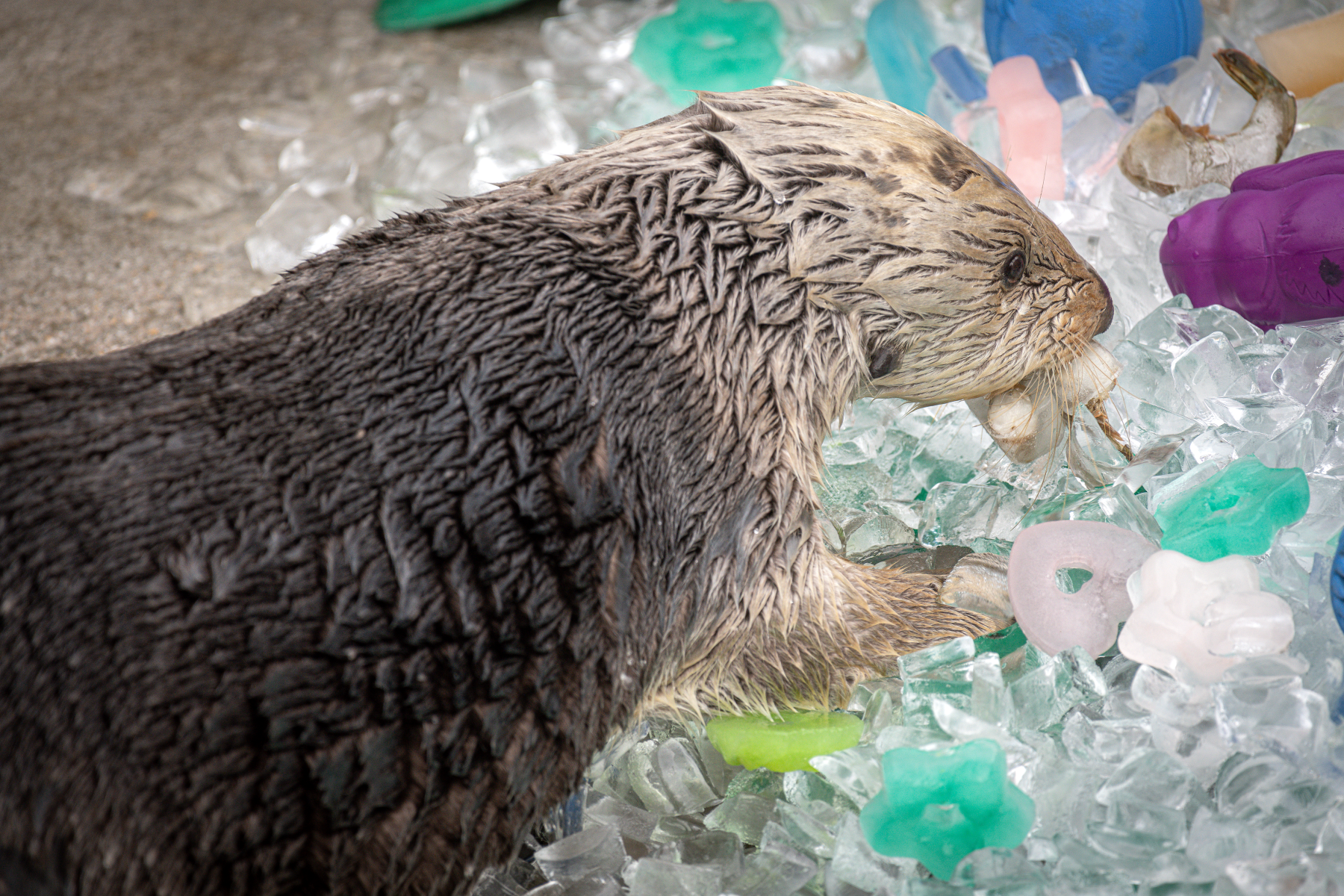
That's why our exhibit sea otter team is constantly designing "enrichments"—sometimes dog toys, sometimes objects made of ice—that present interesting opportunities for interaction so the otters are always active and learning something new.
Ice enrichments are particularly effective because they let otters perform natural behaviors. Offered food items frozen in ice, our exhibit otters pound the frozen treats against rocks and windows in the exhibit to release the goodies inside, just like they crack open shelled prey like clams and oysters in the wild by bashing them against other solid surfaces.
Courtney's discovery
One day, when Senior Sea Otter Aquarist Courtney Ribeiro-French met with our aviculture team, she discovered something amazing.
The bird team had recently purchased a silicone mold to create ice balls the size of a large orange. They were using these for a bird enrichment that would help keep oystercatcher beaks trimmed.
Immediately, Courtney began thinking of ways she could use the molds for sea otters. Soon, a unique and very specific idea began to brew in her mind: What if we filled a kiddie pool full of these huge ice balls and made a ball pit for our sea otters?
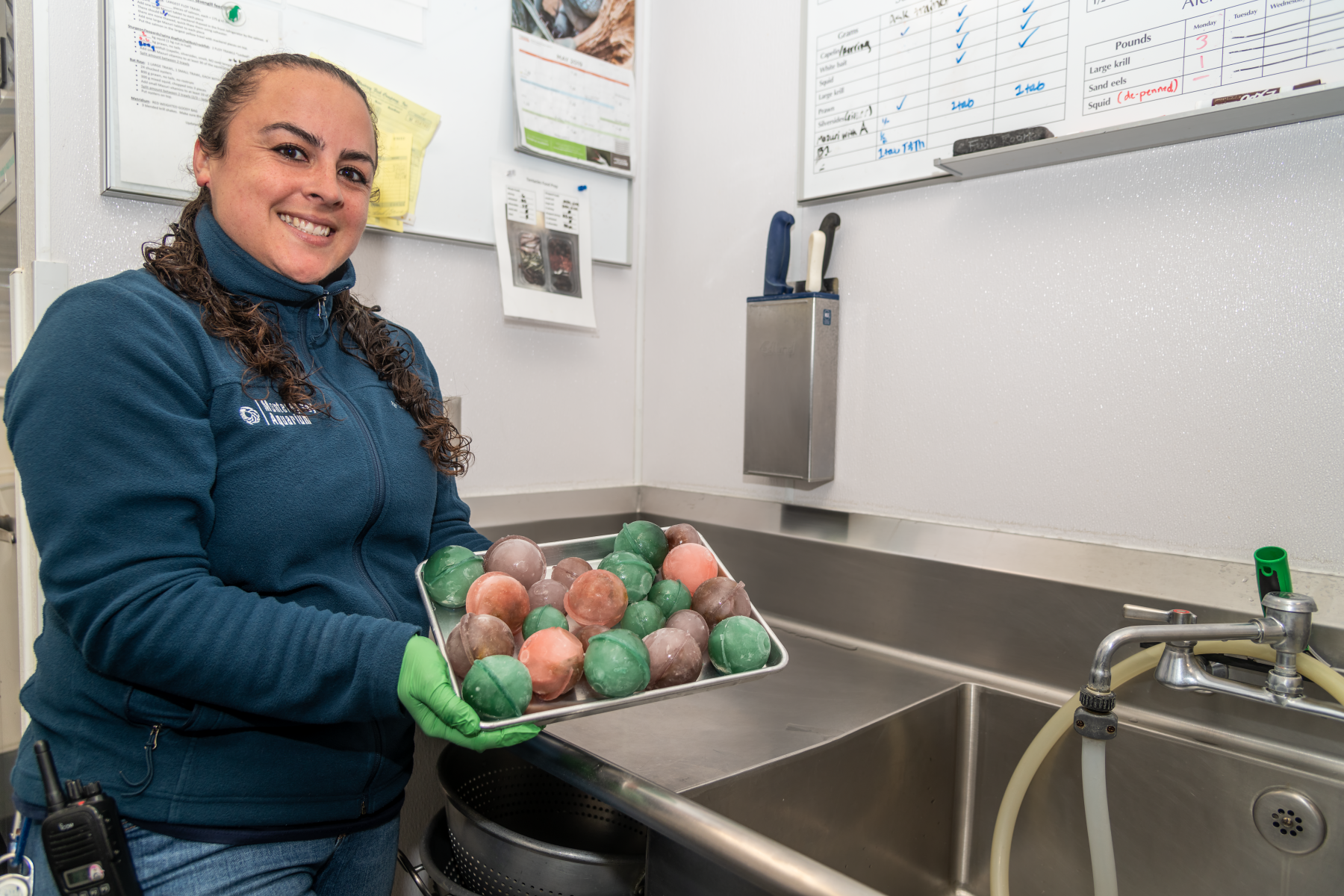
Senior Sea Otter Aquarist Courtney Ribeiro-French
Bringing the idea to life
These silicone molds were something special—different from what the otter team had used before. They were, Courtney observed, big enough to fit entire pieces of shrimp inside. She decided to mix food-filled balls with others filled with only water or only clam juice so the otters would have to sort through them to find the ones with morsels inside.
She wasted no time in realizing her vision of a sea otter ball pit. There was only one problem—there was only one ice tray and it made only eight balls. This wasn't going to be a quick undertaking.
That's how her project turned into a labor of love. Every day, Courtney found a few extra minutes in her busy schedule to create a ball tray in the Food Room. There were many considerations to keep in mind—the ratio of shrimp balls, clam juice balls and plain ice balls for optimal stimulation, and the selection of animal-safe food dye to keep the color mix coordinated.
Two months and nearly 300 balls later, the big day arrived.
The big day
The sea otter aquarists set up a castle-shaped kiddie pool in the exhibit and filled it with the colorful balls as the otters waited in a nearby holding area. Soon the otters—one, two, three—popped into the water and made a beeline to the ball pit to investigate.
The sea otters sorted and selected the balls. Then, returning to the water, they banged the ice open and ate the treats inside.
They repeated this cycle for about two hours.
The results
Generally speaking, an enrichment is considered successful if the sea otters spend time interacting with the item at all. Usually, otters go through them quickly—about 15 to 20 minutes, max. In this case, the otters interacted with the ball pit for hours, so it was a very successful special enrichment.
What does Courtney think?
"It was really exciting to make this enrichment and watch the otters interact with it for such a long period of time," she says. "I loved making these balls—I'm still making them. I'll definitely use them in other types of enrichments...the ball pit was just one vision."
Keep exploring
Story
Nature is queer
We’re excited to sea-lebrate the queerness of nature!
Read story – Nature is queer
Story
2026 Lucile S. Packard Memorial Award and Youth Award recipients
We’re proud to announce the 2026 Lucile S. Packard Memorial and Youth Awards for outstanding volunteers!
Read story – 2026 Lucile S. Packard Memorial Award and Youth Award recipients
Story
Birdwatching tips: A guide to enjoying and identifying local birds
Here are our best tips to help keep you and the birds safe and healthy during a birdwatching adventure.
Read story – Birdwatching tips: A guide to enjoying and identifying local birds