

White sharks are among the largest sharks found in Monterey Bay, but they don’t stay in one place for long! They migrate and are found throughout the world's ocean. These apex predators play a critical role in maintaining healthy ocean ecosystems. Along the California coast, including Monterey Bay, white sharks influence marine food webs by shaping the behavior and distribution of their prey species, such as seals and sea lions. After decades of scientific research, we now know more about how white sharks live, eat, and breed, but these large fish (that’s right, they’re fish!) remain elusive in many ways.
For many years, the Aquarium helped to demystify white sharks through scientific research. Today, scientists around the world continue to study white sharks to find out more about how they live and where they travel. For adult white sharks in the eastern Pacific, there are two areas of the ocean that we know are important to white sharks: the White Shark Café and the Farallon Islands.
What is the White Shark Café?
Adult white sharks living off California and Mexico annually converge in an area called "the White Shark Café." Once considered the desert of the Pacific, this vast expanse halfway between California and Hawaii was discovered by scientists in 2018, when sharks fitted with electronic data tags led them there. The White Shark Café is still a mystery in many ways. We know that sharks gather there, but we don’t know exactly why.
Related videos
White Shark Café Cam
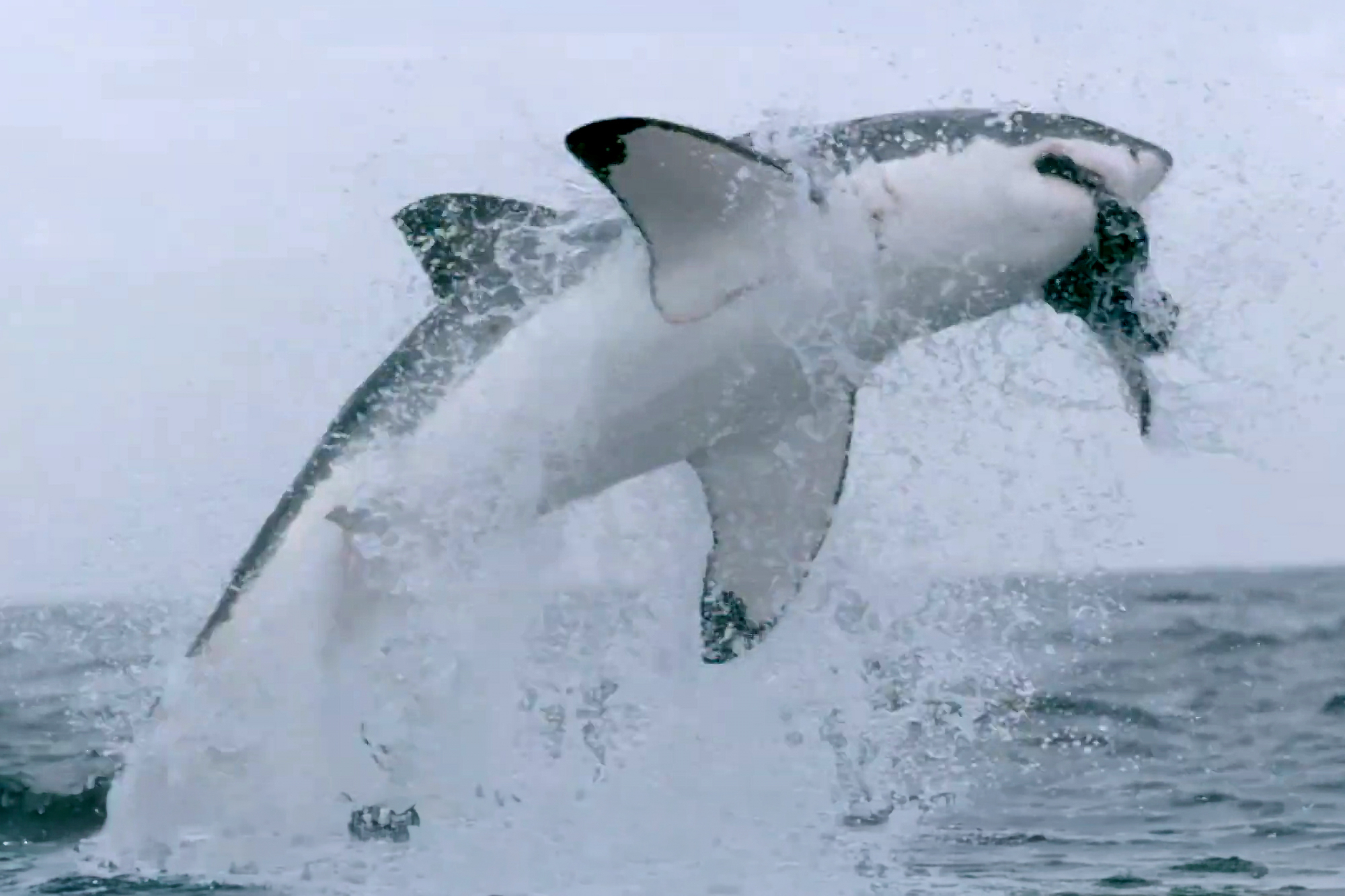

A team of scientists embarked on a month-long expedition to the White Shark Café, in hopes of unraveling why sharks make an epic annual migration 1,200 miles offshore each year.
Why do white sharks go to the Farallon Islands?
More elephant seals and sea lions than people visit the Farallon Islands, located just 25 miles off the coast of San Francisco. The abundance of blubbery pinnipeds attracts some of the largest white sharks in the world, who hang around the islands looking for a meal. The islands, their surrounding waters, and their plant and animal inhabitants are protected in the Farallon National Wildlife Refuge, within the Greater Farallones National Marine Sanctuary.
For decades, the Aquarium’s white shark research team and colleagues from Stanford University headed out to the Farallon Islands to tag, track, and identify white sharks as they fed on elephant seals and sea lions. The team observed behavior, captured underwater video, and deployed electronic tracking tags that relayed information about white shark migrations and habitat preferences. Pop-up satellite archival tags (PSATs) are shark-tagging devices that record depth, temperature, and movement as sharks travel through the ocean. After a fixed time, the tag detaches, floats to the surface, and transmits its stored data via satellite. PSATs have made it possible to track white sharks across thousands of miles, providing insights into behavior and habitat use that can’t be observed directly.
Related videos
Project white shark—the Farallon Islands

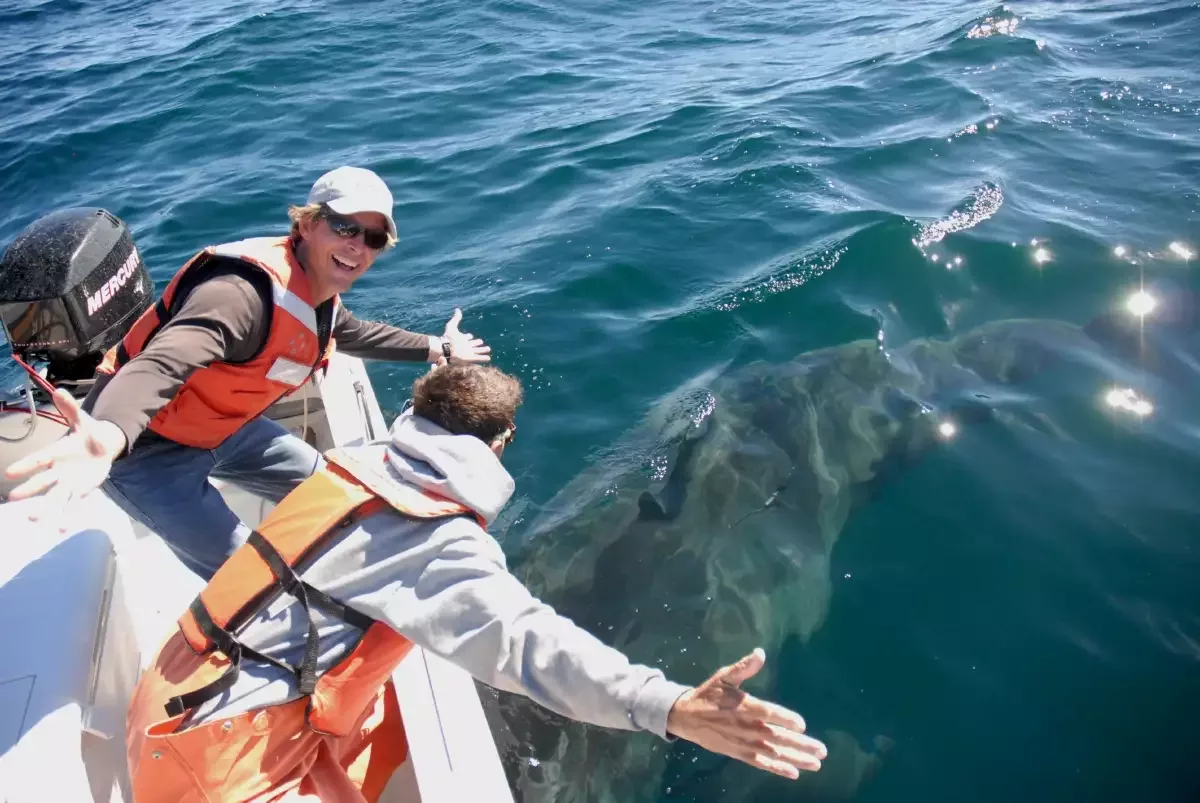
White shark biologists Salvador Jorgensen (left) and Scot Anderson use their arms to demonstrate the girth of a large white shark cruising beneath their 19 foot skiff, Farallon Islands, California.
©TOPP
How scientists use dorsal fin identification to track sharks
In addition to electronic shark tagging, researchers use dorsal fin identification to track individual white sharks. A shark’s dorsal fin has unique shapes, scars, and markings that remain consistent over time, making it possible to identify individuals without physical contact.
Dorsal fin identification plays a key role in estimating population size, monitoring physical condition, and confirming repeat sightings. Combined with shark-tracking data from electronic tags, this method has helped build one of the most detailed records of white shark presence along the California coast.
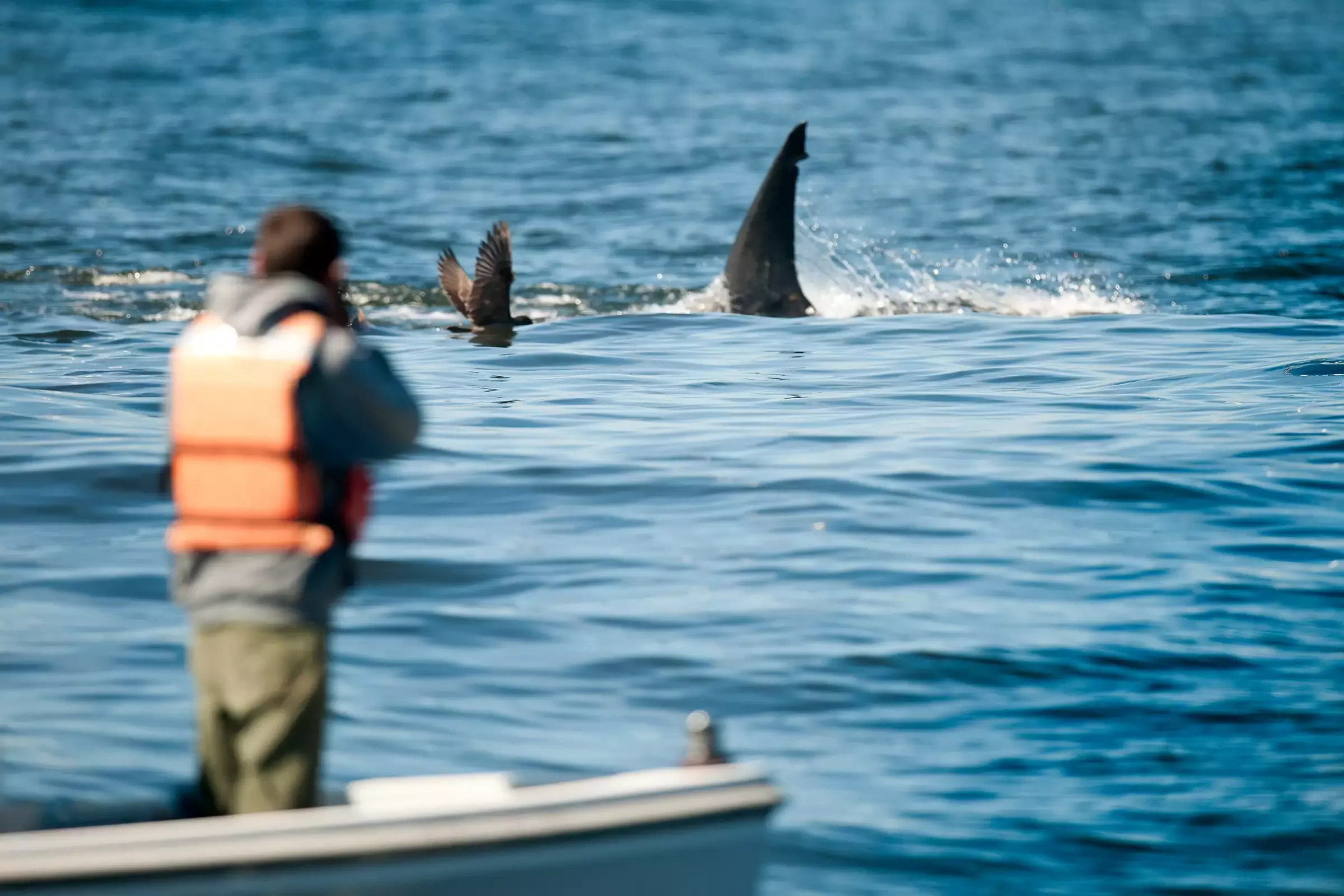
Shark biologist Scot Anderson watches a large adult white shark feeding at the Farallon Islands.
What we’ve learned about white sharks
Back in the lab, researchers analyze data from the Farallon Islands and the White Shark Café to better understand white shark populations and their role in maintaining the healthy ocean ecosystems that ultimately support all life on Earth.
Long-term white shark research at the Farallones has documented strong site fidelity, with many sharks returning to the same coastal hunting grounds year after year. Additionally, data show that California’s white shark population is relatively small—about 300 individuals—but stable. Researchers have documented multiple age classes, from juveniles to mature adults, suggesting a functioning population. These findings support science-based shark conservation policies and highlight the importance of protecting critical habitats like the Farallon Islands and Monterey Bay.
Shark-tracking data reveal that many adult white sharks follow a predictable annual migration pattern. In spring and summer, white sharks travel far offshore to the White Shark Café. In the late summer and early fall, they return to coastal feeding areas near Monterey Bay and the Farallon Islands to hunt elephant seals. This predictable seasonal movement highlights the importance of protecting both nearshore and offshore habitats as part of comprehensive shark conservation strategies.
Starting in 2000, the Aquarium collaborated on research with the Shark Lab at California State University at Long Beach and the Center for Scientific Research and Higher Education at Ensenada in Mexico. This research identified seasonal movements and survival rates of young sharks between waters in the U.S. and Mexico; led to identification of a shark pupping lagoon in Baja; and led to new restrictions on gillnet fishing in southern California—a major source of mortality for young white sharks.

Sophisticated oceanographic monitoring tools like these Saildrones collect data to document the presence of white sharks and their prey species in the Café.
Photo courtesy Schmidt Ocean Institute.
Shark tracking tells us how white sharks behave
While at the White Shark Café, tagged sharks display repeated deep dives and vertical movements through the water column. These behaviors differ from coastal hunting patterns and may be linked to feeding or reproduction. Although mating has not been directly observed, the consistency of shark-tracking data suggests the Café plays a vital role in the white shark life cycle.
Related videos
How shark tags work

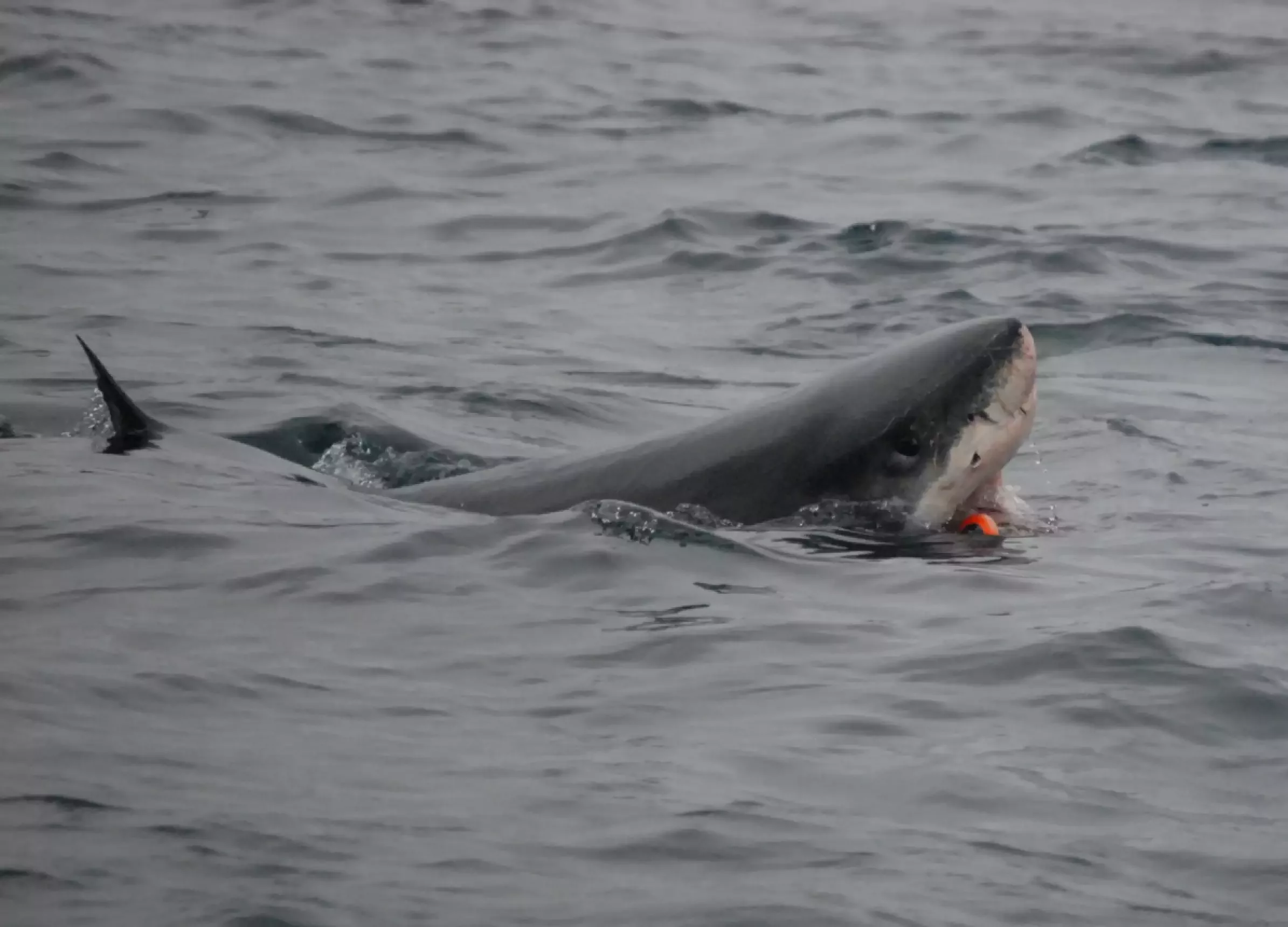
White shark swallows a tag that will measure changes in stomach temperature after it feeds.
Expedition to the White Shark Café
To better understand the White Shark Café, Monterey Bay Aquarium partnered with the Monterey Bay Aquarium Research Institute (MBARI), Schmidt Ocean Institute, and Stanford University on a dedicated offshore expedition in 2018. This collaboration combined expertise in oceanography, robotics, and shark research.
Scientists used remotely operated vehicles (ROVs), deep-water sampling equipment, and environmental DNA (eDNA) analysis. eDNA allows researchers to detect genetic material left behind by marine organisms, helping identify species present in the region.
Research revealed that the White Shark Café is not an empty stretch of ocean but a biologically active area with phytoplankton layers and diverse deep-sea life. These findings suggest the Café provides important feeding opportunities and may function as a reproductive habitat, reinforcing its significance for shark conservation.
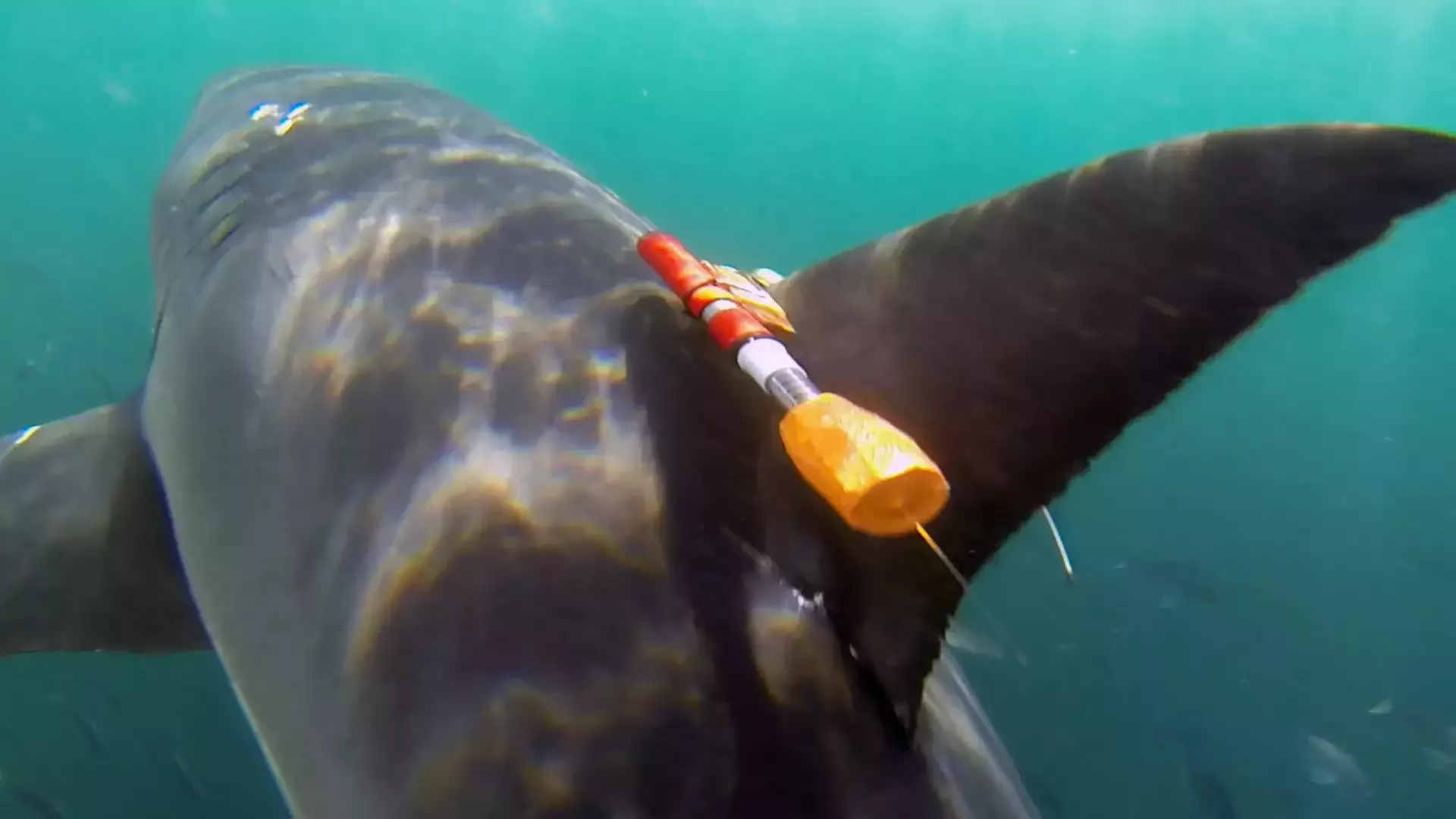
A great white shark takes a Café Cam tag for a spin along the Central California coast—a prelude to deploying these tags on sharks that will head west to the White Shark Café.
White shark conservation
White shark research supports science-based policy decisions, including the design of marine protected areas and the management of migration corridors that connect coastal habitats to offshore regions like the White Shark Café.
Long-term shark tracking allows scientists to monitor how white sharks respond to changes in ocean temperature, productivity, and prey distribution. This information is critical for understanding the impacts of climate change on apex predators and ocean ecosystems.
Through research, storytelling, and public education, the Aquarium works to replace fear with understanding and support for shark conservation. Public awareness is essential for protecting these apex predators and the ecosystems they depend on.
Keep exploring
Story
Nature is queer
We’re excited to sea-lebrate the queerness of nature!
Read story – Nature is queer
Story
Birdwatching tips: A guide to enjoying and identifying local birds
Here are our best tips to help keep you and the birds safe and healthy during a birdwatching adventure.
Read story – Birdwatching tips: A guide to enjoying and identifying local birds
Story
Chumash Heritage National Marine Sanctuary is almost here
Chumash Heritage National Marine Sanctuary protects marine life and cultural resources on California’s coast.
Read story – Chumash Heritage National Marine Sanctuary is almost here