

Day octopus
Octopus cyanea
- Not on exhibit
- Animal type
- Octopus & kin
- Ecosystem
- Coral reefs
- Relatives
- Squid, cuttlefish, and nautilus; Phylum: Mollusca; Class: Cephalopoda
- Diet
- Small crabs and other crustaceans; molluscs and fishes
- Range
- Indo-Pacific, Hawaii
- Size
- Up to 31.5 inches (80 cm)
Meet the day octopus
While most octopuses hunt at night, this species forages during daylight. The day octopus has exceptional camouflage skills and can transform its skin into long, lumpy ridges to mimic nearby corals, rocks, or algae.
Natural history
The day octopus roams the reefs in tropical waters from Hawaii to East Africa. The large, almost three-foot-long predator is short-lived, surviving just one year and breeding only once.
While most octopuses hunt at night, this species spends its days stalking crabs, clams, and fishes. Because it forages during daylight, it has exceptional camouflage skills and can transform its skin into long, lumpy ridges to mimic nearby corals, rocks, or algae.
After foraging, an octopus usually retreats to its den to eat at leisure. It kills its prey (crabs are a favorite food) with venom secreted from its salivary glands, then cracks the shell with its sharp beak. It can also drill a hole in the snail's shell with its radula and inject a chemical that separates the snail's flesh from its shell. An octopus deposits empty shells outside its den in a pile—commonly called an "octopus's garden."
Conservation
This species is fished commercially and recreationally throughout its range. As with other sea life, pollution, overfishing, and habitat destruction pose serious threats to cephalopods.
Cool facts
- The octopus is a highly developed marine mollusc. It has three hearts—one pumps blood through the body and the other two pump blood through the gills.
- Researchers consider octopuses to be the most intelligent invertebrates—maybe as intelligent as a house cat.
- Although it has excellent eyesight, an octopus uses touch and smell to find food. Thousands of chemical receptors and millions of texture receptors line the rims of its suckers. It scours the sandy seafloor to flush out small prey, or crawls in and out of rocky areas to hunt crabs and shrimp.
- The octopus begins life as larvae in the intertidal and shallow subtidal zones, spending a short time drifting as plankton in early stages of development.
Related videos
Más sobre el pulpo
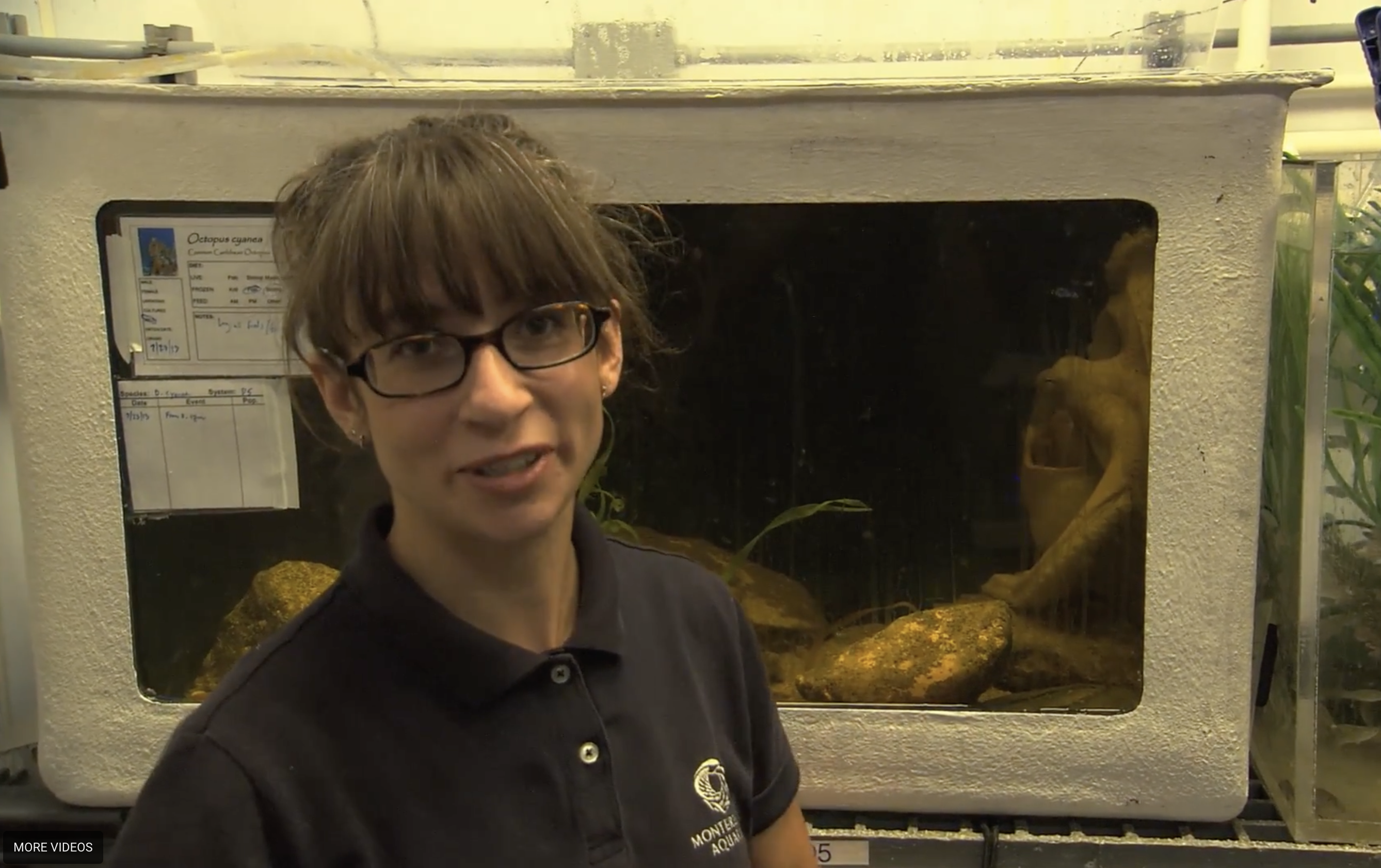
La acuarista Alicia cuida de los pulpos en el Acuario. Pero, ¿podrá mantenerse seca cuando llegue el momento de alimentar a nuestro pulpo diurno hawaiano?
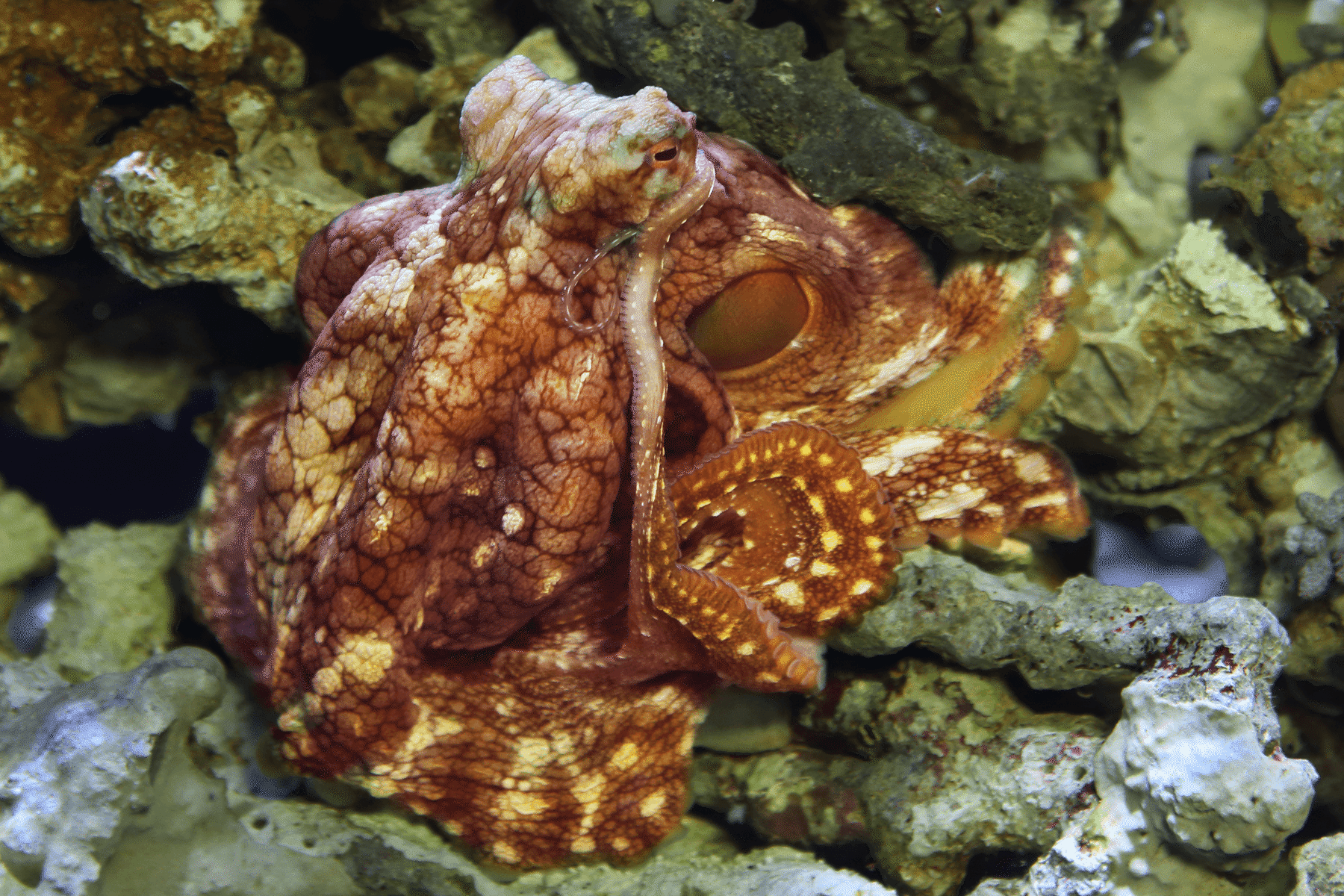
La mayoría de los pulpos cazan de noche, pero el pulpo diurno acecha cangrejos, almejas y peces a la luz del día utilizando habilidades excepcionales de camuflaje. Este impresionante cambiaformas puede transformar rápidamente su piel en largas crestas irregulares, imitando corales, rocas o algas cercanas.
Up next in coral reefs
Animal
Clownfish
A clownfish stays close to an anemone for protection. The anemone’s stinging tentacles keep predators at bay.
Keep exploring
Animal
Brain coral
These corals get their common name from the grooves and channels on their surfaces that look like the folds…