

Long-billed curlew
Numenius americanus
- Not on exhibit
- Animal type
- Birds
- Ecosystem
- Beaches & dunes
- Relatives
- Whimbrel, marbled godwit; Family: Scolopacidae (sandpipers)
- Diet
- Insects, fly larvae, aquatic insects, molluscs, crustaceans, small amphibians
- Range
- Summer: moist meadows, grasslands, and prairies in the western United States and southern Canada; Winter: coastal mudflats and marshes from northern California to Guatemala
- Size
- 23 inches (58 cm) from tip of tail to tip of bill; 24 inches (65 cm) tall, wing span 35 inches (90 cm)
Meet the long-billed curlew
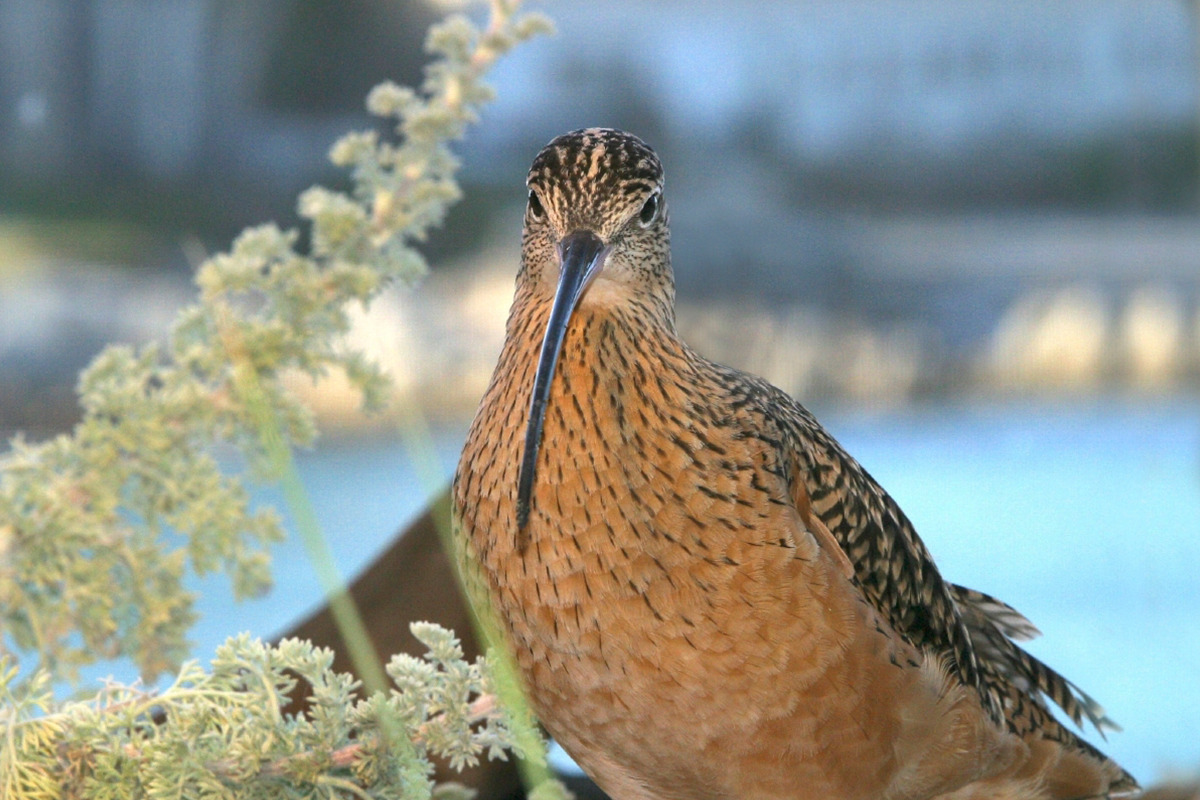
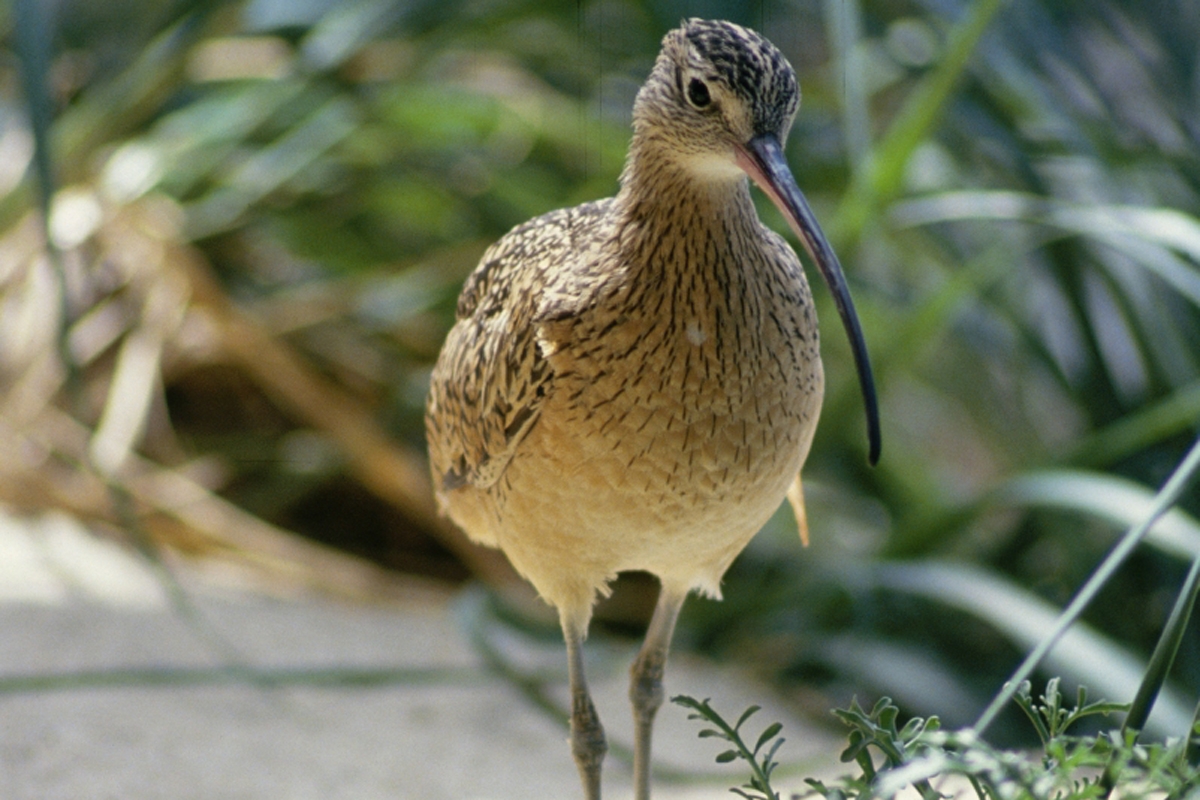
You can identify these birds by their long, downward-curving bills and their large size—they're the largest sandpipers and the largest shorebirds in North America. Curlews use their long bills to probe deeply under soil and mud for insects, worms and burrowing spiders. Their dark, earthy-colored backs, speckled with buff and white, camouflage curlews on grassland breeding grounds. Their underparts are cinnamon colored.
Did you know?
Curlews breed in grasslands and dry open prairies in the western United States and southern Canada. The nest is a scrape in the ground lined with grass, weeds and plant stems. Their clutch size is about four eggs. After the chicks hatch, the adults lead them to areas of denser grass, where they feed mostly on grasshoppers.
Conservation
Because the number of long-billed curlews in the United States is declining, the U.S. Fish and Wildlife Service has declared these birds a highly imperiled species. Cultivation of native grassland breeding habitats and commercial development of curlews' wintering grounds have contributed to the population decline of long-billed curlews.
Cool facts
- Long-billed curlew chicks hatch after about four weeks. Even though they're able to walk and feed themselves shortly after hatching, their parents care for them until the chicks can fend for themselves—usually about 45 days later. Long-billed curlews mature late, and since the female has only one clutch of four eggs per season, their population growth is slow.
- To defend their nests, curlews feign injuries to lead predators away from their eggs and chicks. Sometimes curlew neighbors assist them by calling and diving at predators.
- The curlew's call—cur-lee—not its bill shape, gives this bird its common name.
Up next in beaches & dunes
Animal
Topsmelt
Called "topsmelt" for their habit of swimming up near the surface, these fish school near shore.
Keep exploring
Animal
Sand crab
No bigger than a thumb, a sand crab spends most of its time buried in shifting sand.