

“Verified Green” shrimp, assessed for environmental sustainability by Monterey Bay Aquarium, is now being served in University of California (UC) dining halls at UC Davis, UC Santa Cruz, and UC Merced.
This milestone reflects a powerful collaboration between small-scale shrimp farmers in Vietnam and UC campuses—one that shows how sustainable practices can be recognized, rewarded, and connected to seafood purveyors (and eaters!) willing to buy their products.
For chefs and diners, Verified Green shrimp brings something the seafood marketplace has lacked: confidence that a delicious meal can also support healthy oceans and thriving communities.
A family farm rooted in sustainable practices
In Vietnam’s southern Mekong Delta, shrimp farmer Phạm Thanh Tuấn is helping change how shrimp from his region is sold. On his small family farm, shaded by protected mangroves that shelter his village from storms, Tuấn raises shrimp the way his father and grandfather did. That means without chemicals or other inputs like feed, in balance with nature. But for years, farmers like Tuấn faced a major challenge—how to show buyers that their shrimp were raised responsibly.
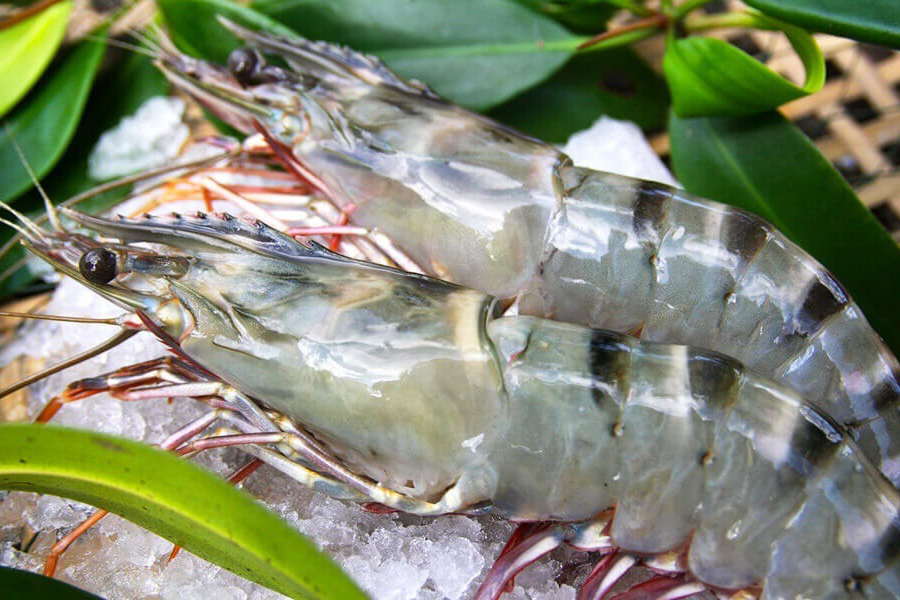
Black tiger shrimp from small-scale farms in Vietnam, Verified Green for environmental sustainability.
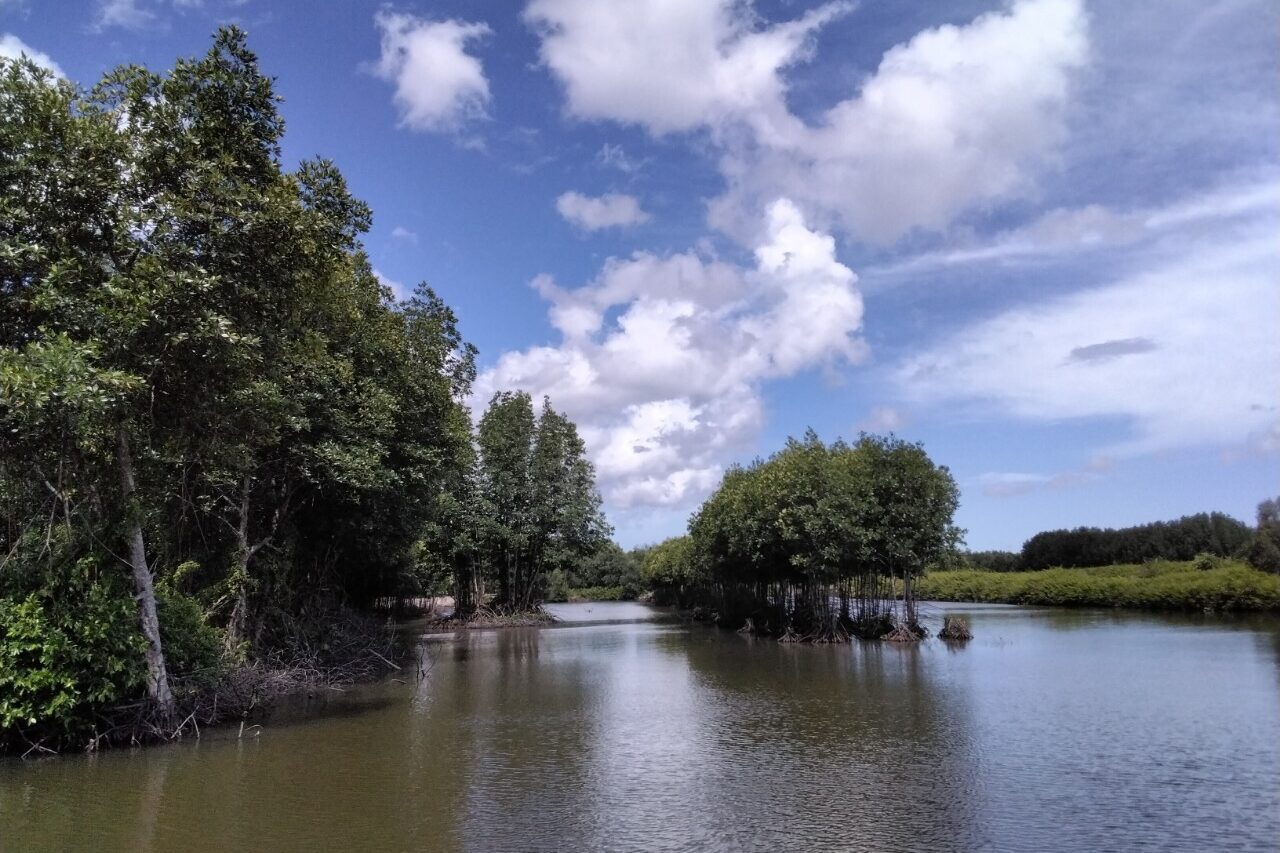
Shrimp farming among mangrove trees in Vietnam.
Why seafood choices matter for ocean health
Seafood is farmed, caught, sold, bought, traded, and internationally shipped at a huge scale, and billions of people rely on it for nutrition, income, and cultural identity. When seafood is produced responsibly, it can support healthy ecosystems, resilient coastal communities, and long-term food security.
Shrimp is the most popular seafood in America, yet most of the shrimp eaten in the United States is fished or farmed overseas by people like Tuấn who haven’t had a way to show if their practices have a negative impact on the environment—or not. Vietnam is the world’s largest producer of black tiger shrimp and a top exporter to the U.S.
By rewarding farming practices that work with nature to protect wildlife, coastal communities, and the future of our ocean, large-scale buyers like the University of California can radically change how shrimp is farmed in Vietnam and beyond.
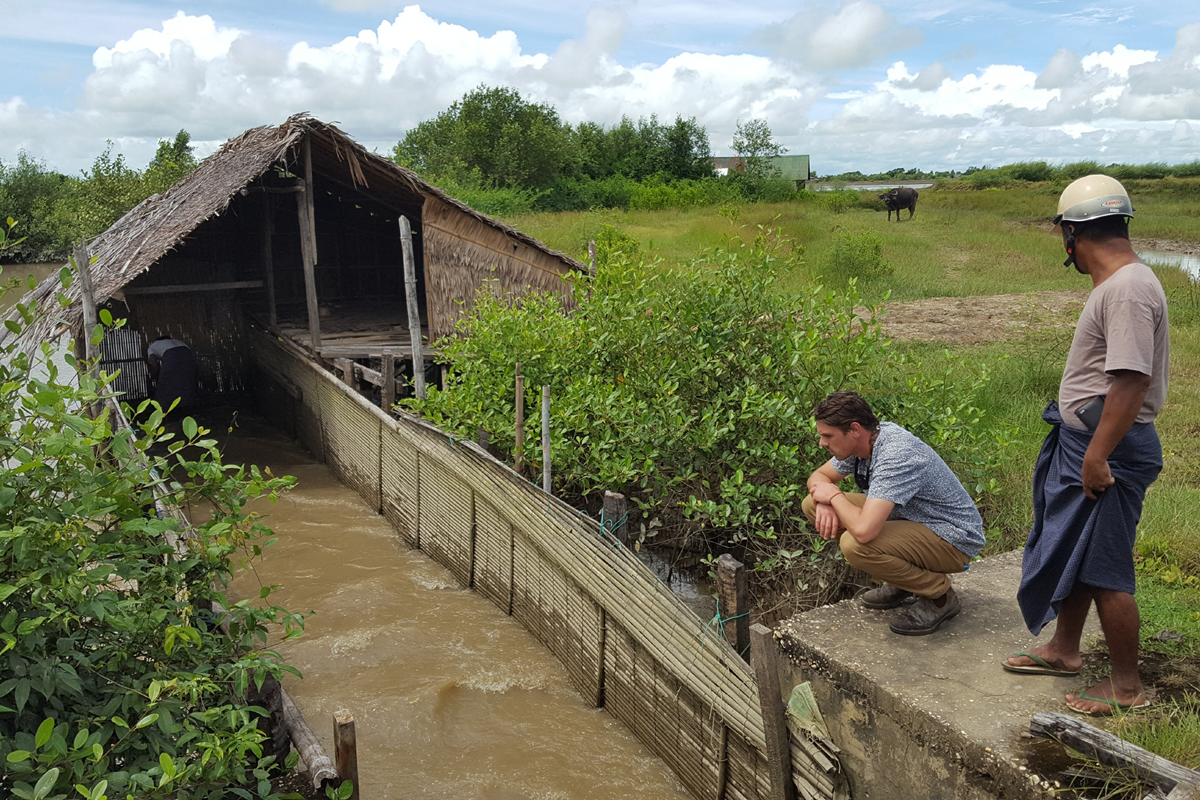
Monterey Bay Aquarium staff observe a shrimp farm in Vietnam.
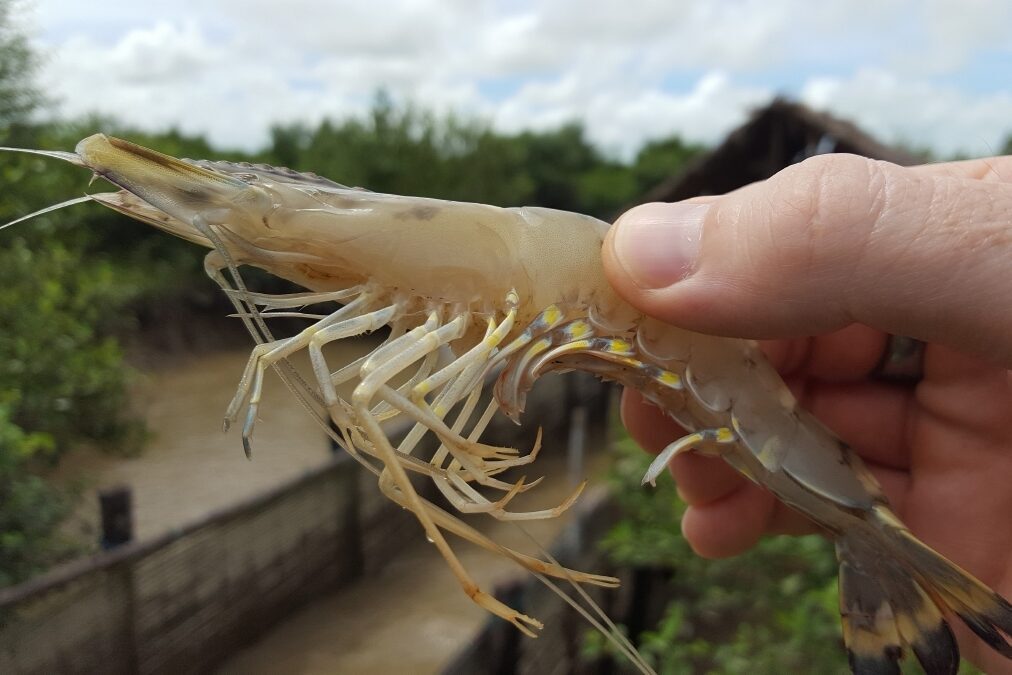
Black tiger shrimp being held in front of a Vietnamese small-scale shrimp farm, now Verified Green for environmental sustainability.
Monterey Bay Aquarium creates opportunities for small-scale farmers
For most small-scale farmers, traditional eco-certifications are too costly and complex. But without a way to prove their methods caused little environmental harm, farmers practicing sustainability were often locked out of global markets and unable to earn better prices for their work.
Enter Do Vu Linh, Monterey Bay Aquarium global fellow and Vietnam program manager, who is sharing Monterey Bay Aquarium’s Verification Platform with farmers like Tuấn. This new tool allows farmers to share information about the environmentally responsible practices used at their farm and in their region, opening doors for farmers who were previously excluded. Equipped with this information, Monterey Bay Aquarium can then inform buyers that the shrimp being sold is Verified Green for environmental sustainability.
"When farms are Verified Green, small-scale farmers can gain a higher voice in the supply chain, access opportunities in international markets, offer added value to consumers, and achieve better income. It’s been incredible to connect environmentally sustainable small-scale shrimp farmers with responsible consumers."
Do Vu Linh
Global Fellow and Vietnam Program Manager, Monterey Bay Aquarium
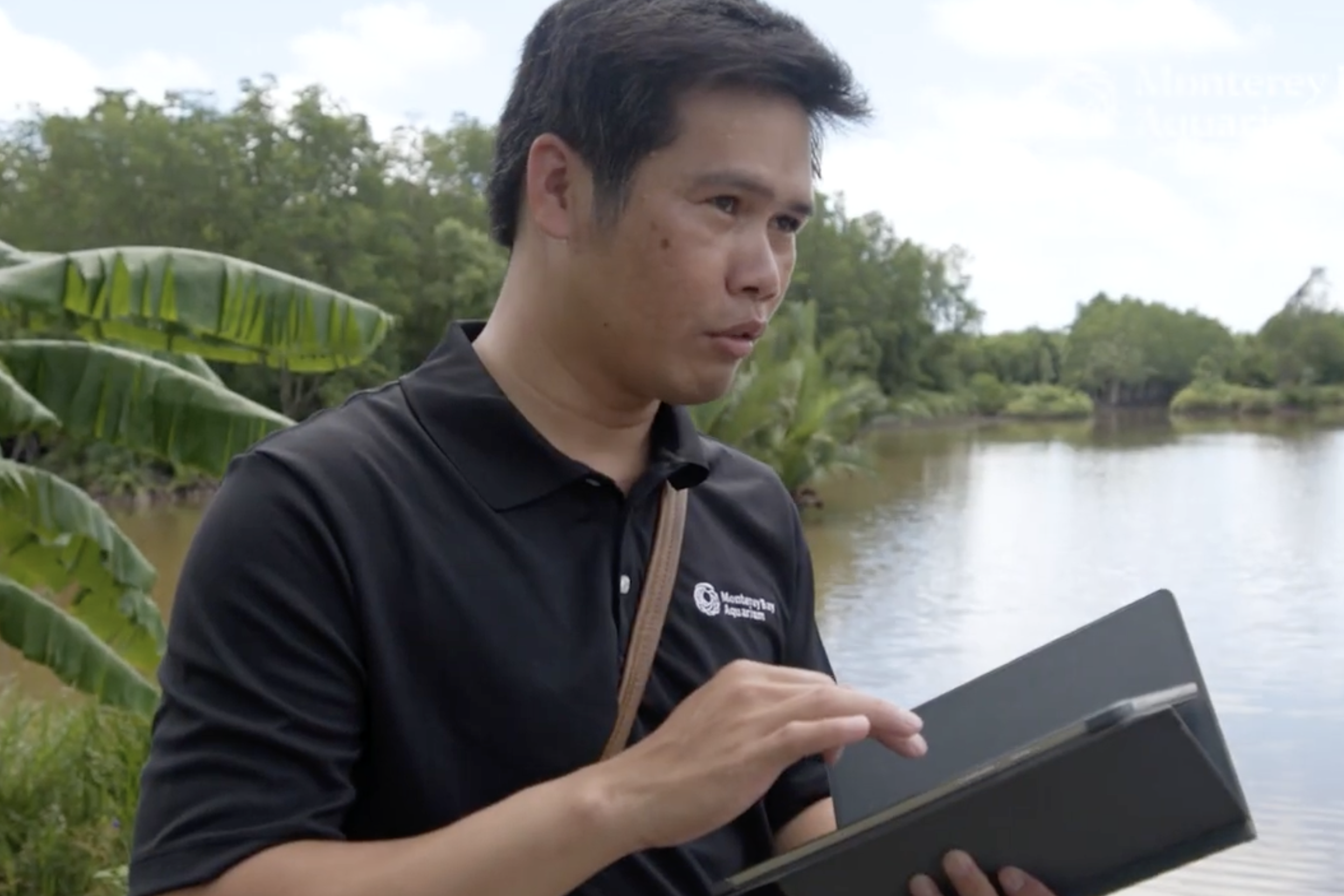
Monterey Bay Aquarium Global Fellow and Vietnam Program Manager Do Vu Linh talks to small-scale shrimp farmers about verifying their farms as environmentally sustainable.

Do Vu Linh walks with community members and shrimp farmers in Vietnam during a field visit.
From coastal farms to campus kitchens
Today, Tuấn’s shrimp are being served in UC Davis, UC Santa Cruz, and UC Merced dining halls—marking the first time U.S. institutions can confidently purchase shrimp Verified Green for environmental sustainability by Monterey Bay Aquarium. For the UC system, this sourcing decision reflects a commitment to ocean health, responsible coastal food systems, and values-aligned purchasing.
"When I learned my shrimp would be served in California, I felt proud. It means my children’s future is tied to a healthier ocean and stronger communities."
Phạm Thanh Tuấn
Shrimp farmer in the southern Mekong Delta, Vietnam
The purchase helps UC meet its goal of procuring 25 percent sustainable food. UC has been recognized and ranked highly for its sustainability accomplishments by many organizations and rating tools. For example, UI GreenMetric has ranked UC Davis the most sustainable campus in North America for 10 years in a row and in the world's top 10 for 13 consecutive years.
For Tuấn, verification confirmed what he already knew: his shrimp are raised with methods that safeguard mangroves, protect water quality, strengthen his community’s resilience, and support his family’s future.
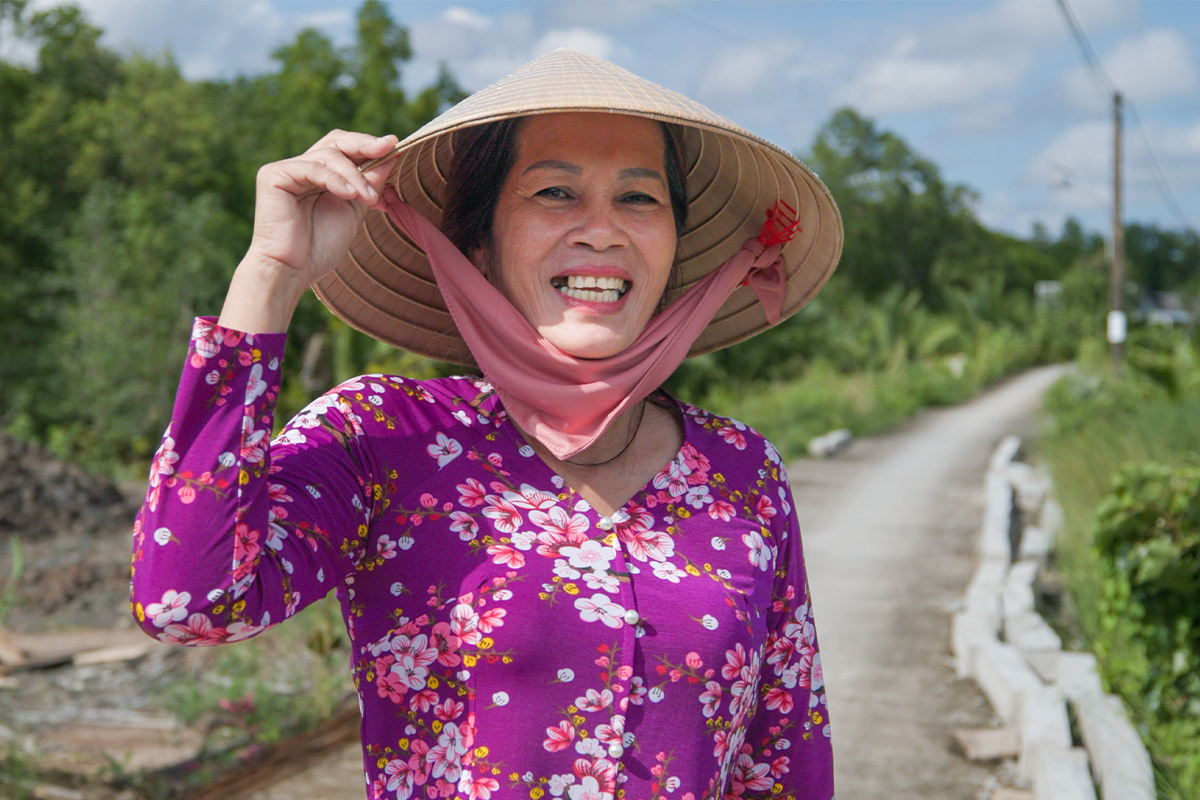
Small-scale shrimp farmer in Vietnam.
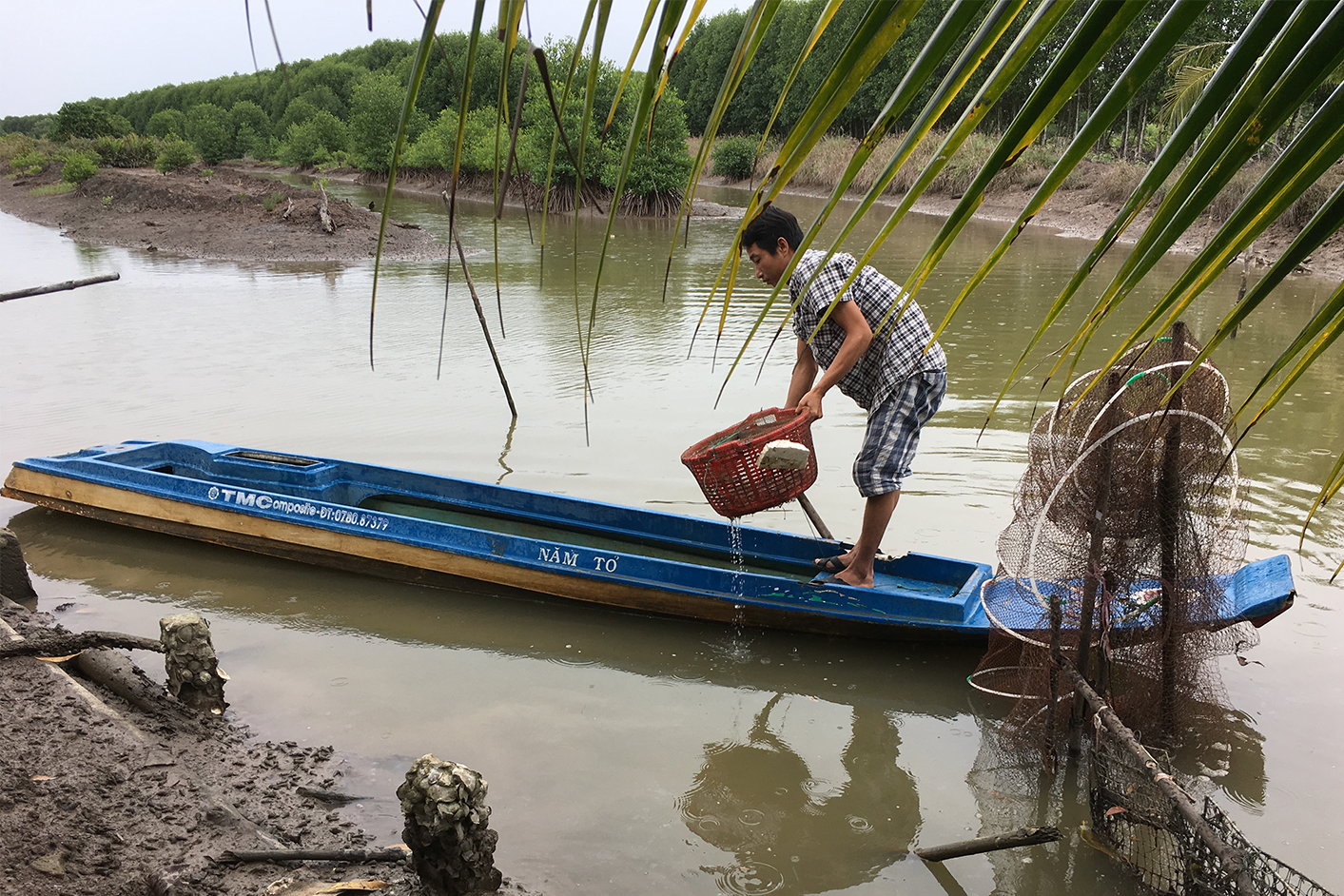
Small-scale shrimp farmer working on his boat in Vietnam.
Exceptional taste, trusted impact
For chefs and diners, Verified Green shrimp offers something long missing from the seafood aisle: confidence—and exceptional quality. Chefs consistently say this shrimp stands apart, with clean flavor and firm texture that reflects careful farming and healthy ecosystems.
"When we put Verified Green shrimp on the menu, we know we’re serving a dish that's better for people, for the planet, and for the communities producing it."
Chef Justin Robarge
Executive Chef, Monterey Bay Aquarium
Knowing where your food comes from—and how it was produced—adds meaning to every meal. It means the shrimp on your plate helps coastal wildlife flourish, supports small-scale farmers, and strengthens communities thousands of miles away.
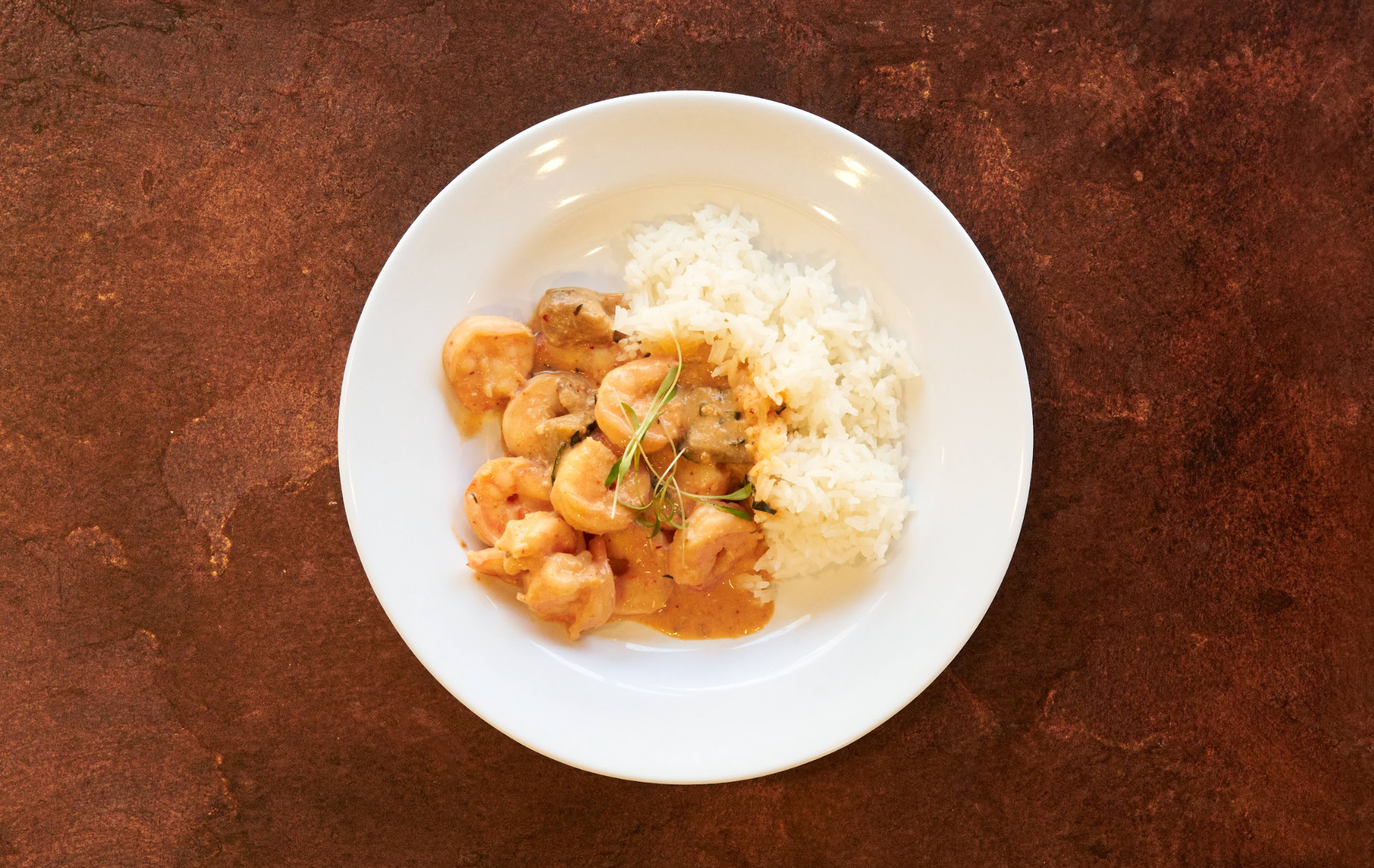
Shrimp and rice in a bowl
© University of California, Davis
A model for the future of seafood farming and dining
The journey from a mangrove-shaded farm in Vietnam to UC campuses in Northern California shows what’s possible when farmers, institutions, and conservation leaders work together. By asking where your shrimp comes from—and choosing Verified Green products—you become part of a movement that protects oceans, supports fishers, and builds a food system that works for people and nature.
Keep exploring
Story
Earth Month 2026
This Earth Month, embrace wonder. Ask questions, dive in, and join our community caring for the ocean.
Read story – Earth Month 2026
Story
From bridges to better seafood: investing in coastal communities
Projects we finance aim to improve the overall quality of life in small-scale fishing and farming communities.
Read story – From bridges to better seafood: investing in coastal communities
Story
Intergenerational connection in Ocean Learning Adventures
Aquarium content creator Lilianna Watson taught a science communications curriculum. Here's what they learned.
Read story – Intergenerational connection in Ocean Learning Adventures