

Where do penguins live?
Where's the snow and ice in our penguin exhibit? Visitors to the Aquarium may be surprised to see penguins on exhibit because they assume all penguins live in the snow or ice. But in fact, African penguins—the type we have on exhibit—live in an environment very similar to that of Monterey.
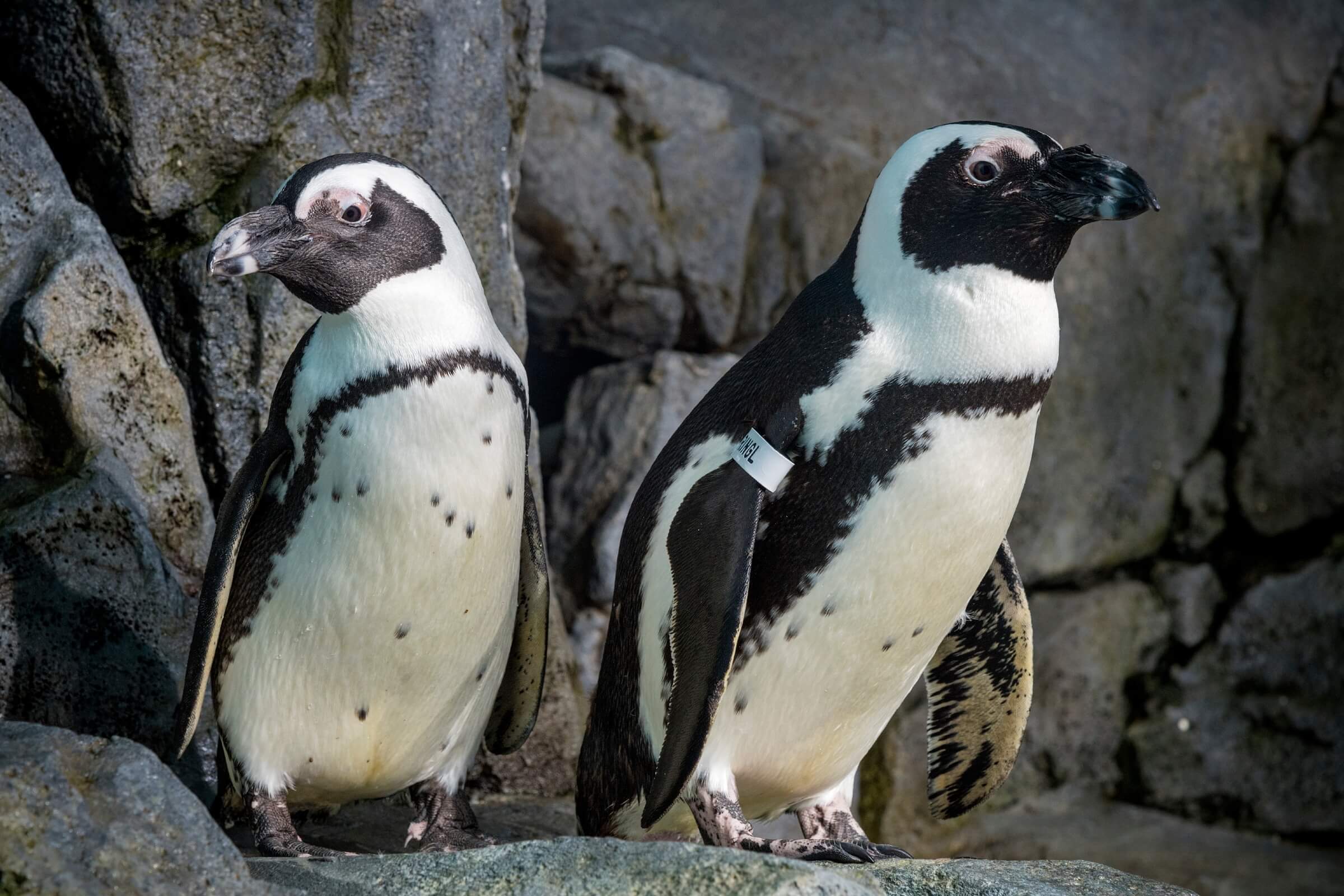
Where's the snow and ice in our penguin exhibit? Visitors to the Aquarium may be surprised to see penguins on exhibit because they assume all penguins live in the snow or ice. But in fact, African penguins—the type we have on exhibit—live in an environment very similar to that of Monterey.
These birds are expert swimmers
Visitors often ask, "Do penguins fly? They're a bird, right?" And the answer is: "Yes, penguins fly—but not through the air!"
Penguins are expert swimmers and use their paddle-like wings to fly through the water. Penguins are shaped like a football and extremely hydrodynamic, allowing them to slip through the sea fast enough to catch their fishy prey.
For a penguin, almost 75 percent of its life can be spent in the water—and that means having adaptations to do so successfully. Because these birds feed mainly on slippery schooling fish, they need to be faster than the food they're trying to catch. Rigid front flippers are a penguin's powerhouse, forcefully propelling them through the water like little tuxedoed torpedoes. A streamlined, fusiform body shape reduces drag, and keeps penguins hydrodynamic.
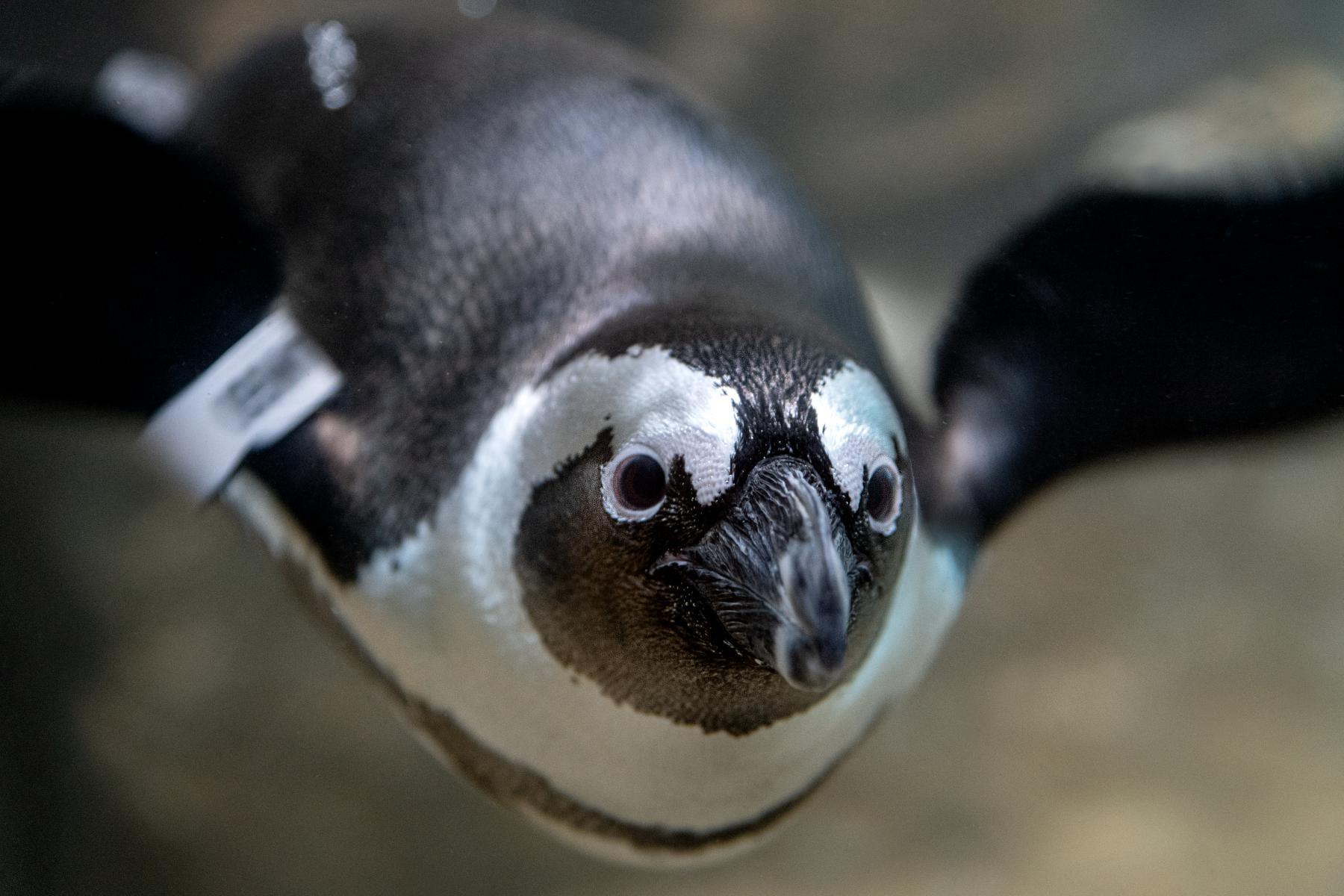
Penguins are a bird but spend most of their life in the water. So do they fly? Aviculturist Kim breaks down their adaptations for an aquatic life.
What does it take to care for penguins?
Join us for a conversation with Aviculturist Kayla in this interview. We talk about a day in the life of a penguin caretaker, why African penguins are critically endangered and how our team helps them thrive at the Aquarium.
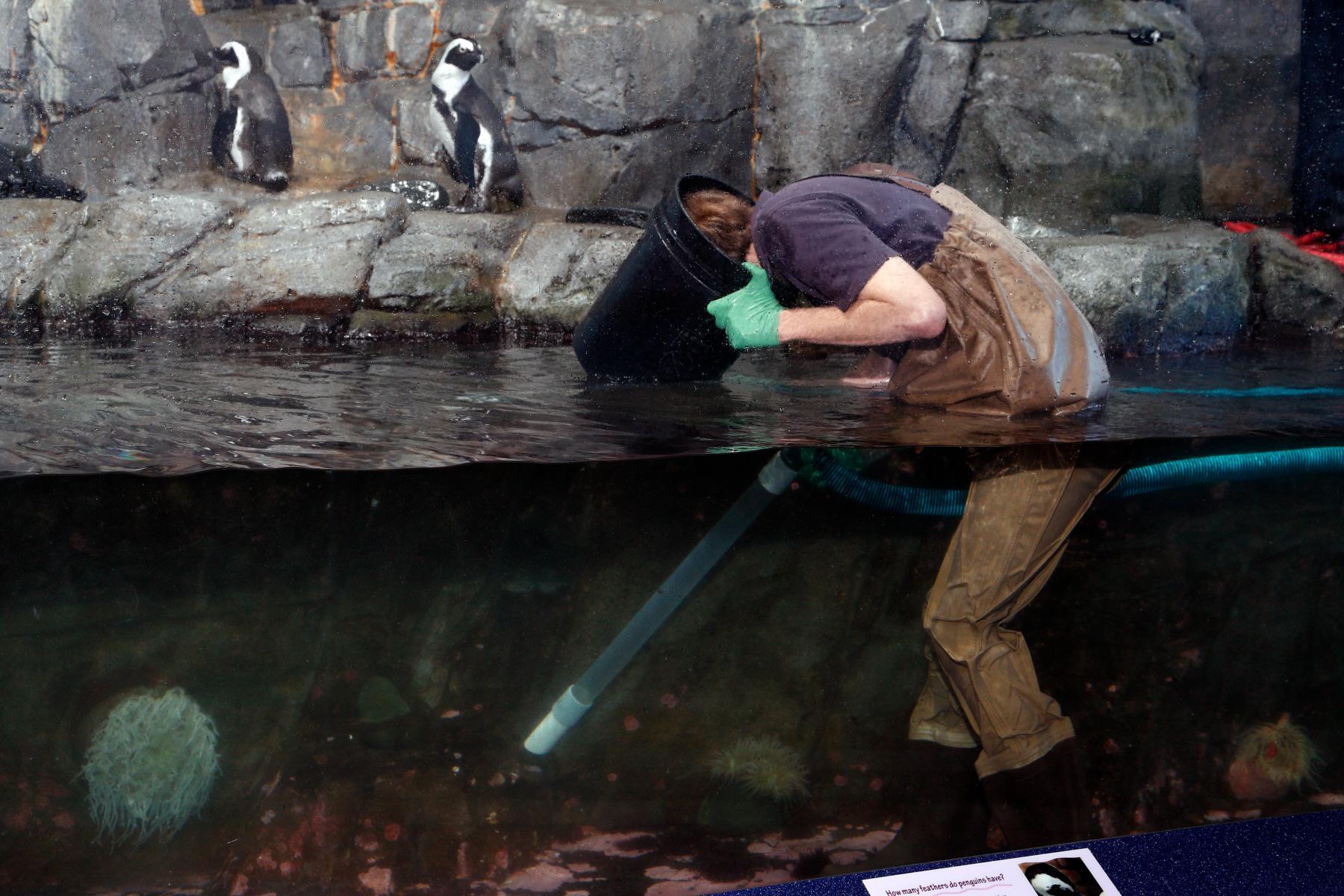
Join us for a conversation with Aviculturist Kayla in this interview. We talk about a day in the life of a penguin caretaker, why African penguins are critically endangered and how our team helps them thrive at the Aquarium.
Penguins need protecting
The wild African penguin population has declined over 95 percent in the last 100 years. In 2015, it was estimated that only around 25,000 breeding pairs remained in the wild. This steep population decline has resulted in African penguins being listed as endangered by the International Union for the Conservation of Nature and Natural Resources (IUCN).
Some of the threats that penguins face include overfishing, oil pollution, habitat loss, and introduced predators. Learn more about African penguins and the Aquarium's efforts to protect wild penguin populations.
Keep exploring
Live cam
Penguin Cam
Our Penguin Cam is currently offline as we renovate our exhibits. Thank you for your patience.
Watch cam – Penguin Cam
Story
All about our animal training and enrichment
We use training and enrichment with birds, sea otters, sharks, and fishes to support health and enrich life.
Read story – All about our animal training and enrichment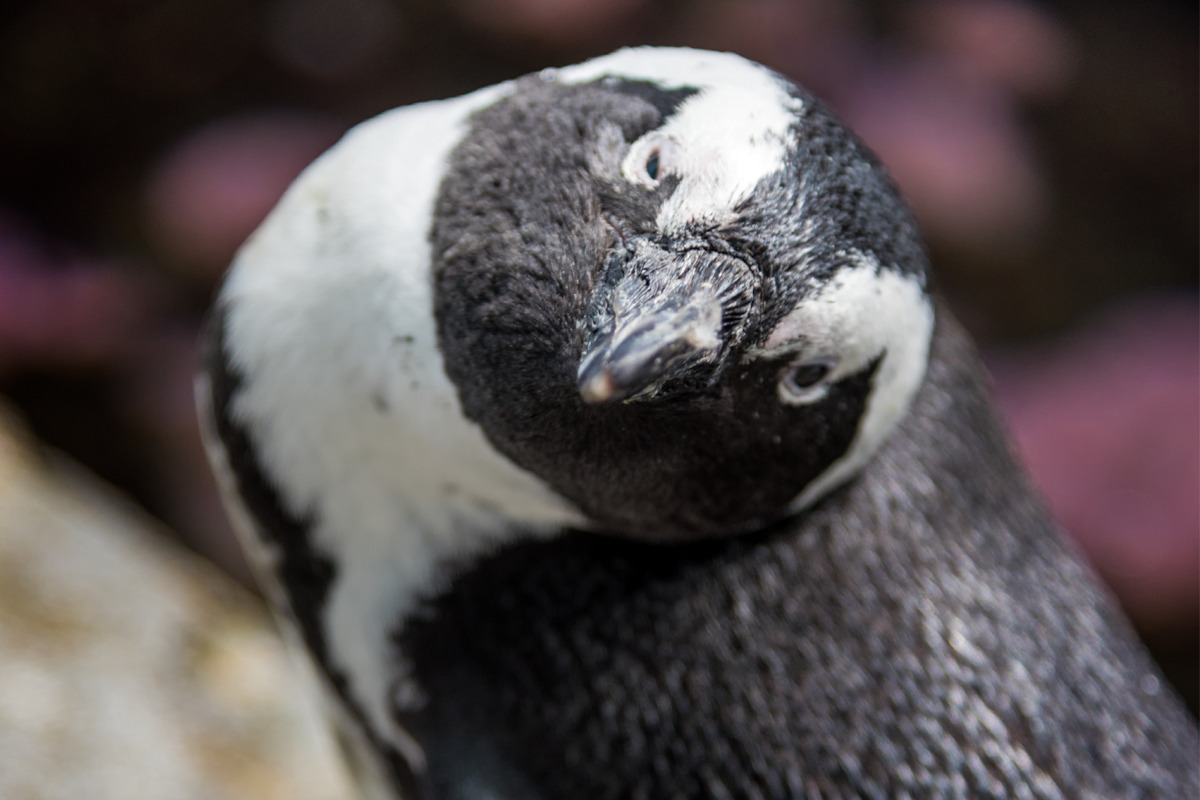
Story
Rey makes a splash
With a little help from her friends, Rey learned a new way to eat — and showed us her peng-winning self.
Read story – Rey makes a splash