

African penguin
Spheniscus demersus
- Not on exhibit
- Animal type
- Birds
- Ecosystem
- Rocky shore
- Relatives
- Humboldt penguin, Magellanic penguin, Galápagos penguin and other penguins; Order Sphenisciformes
- Diet
- Cape anchovy, other small fishes
- Range
- South African coastal waters
- Size
- Up to 27 inches (68 cm); average weight 6.8 pounds (3.1 kg)
Meet the African penguin
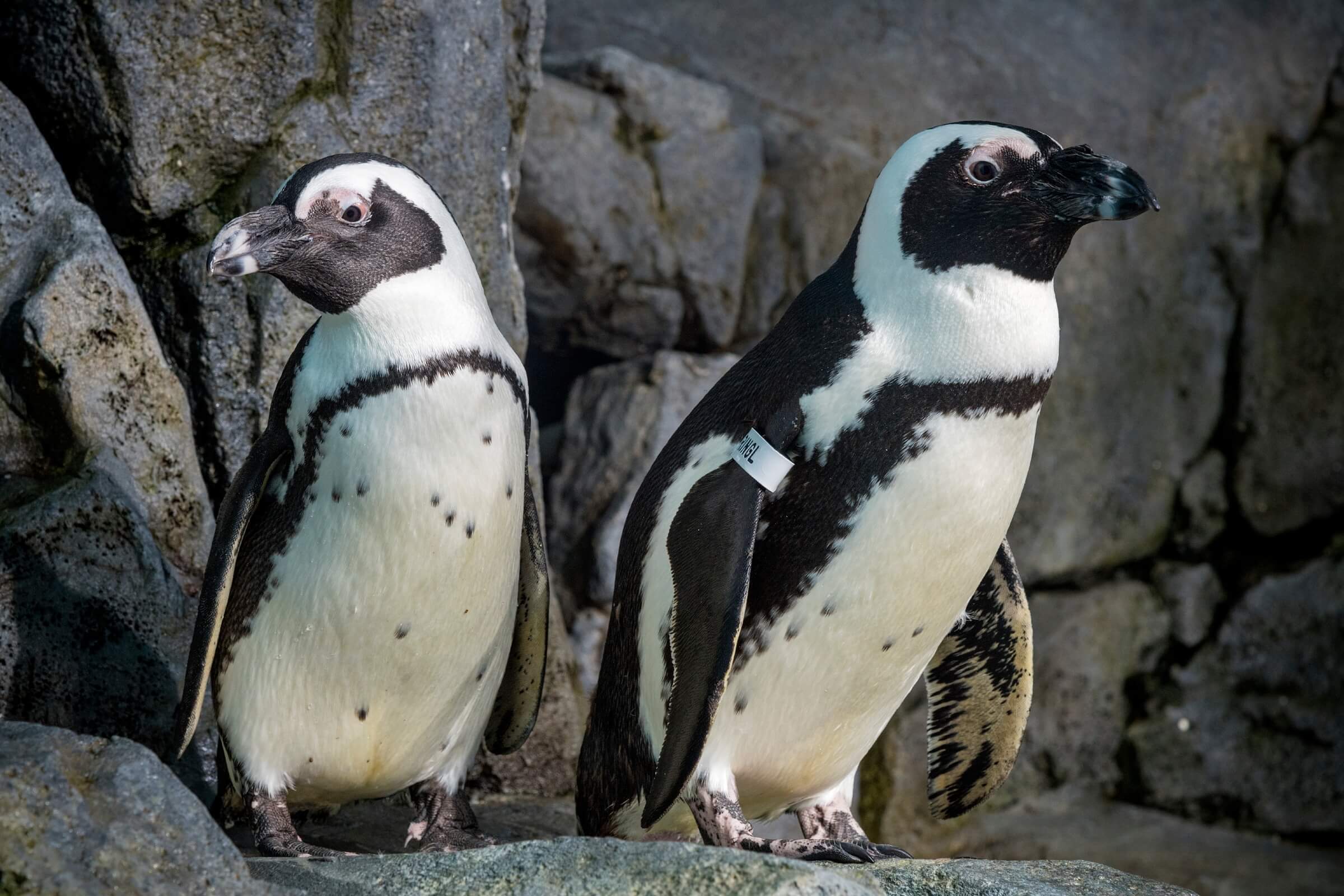
Not every penguin lives in snow and ice—African penguins live in cold currents along the coast of South Africa in a climate similar to that of Monterey. They’re agile and graceful under water. Using wings as flippers and feet as rudders, they "fly" through the water fast enough to chase down schools of Cape anchovy and other small fishes.
Watch in real time
Penguin Cam
Check out this live cam – Penguin CamEndangered Species Act (ESA)
The ESA is a U.S. law that protects plants and animals at risk of extinction by classifying them as either Threatened or Endangered.
Threatened
Endangered(active)
International Union for the Conservation of Nature (IUCN)
The IUCN Red List is a global system that evaluates the conservation status of species and classifies them based on their risk of extinction.
Least concern
Near threatened
Vulnerable
Endangered
Critical(active)
Extinct in wild
Extinct
Natural history
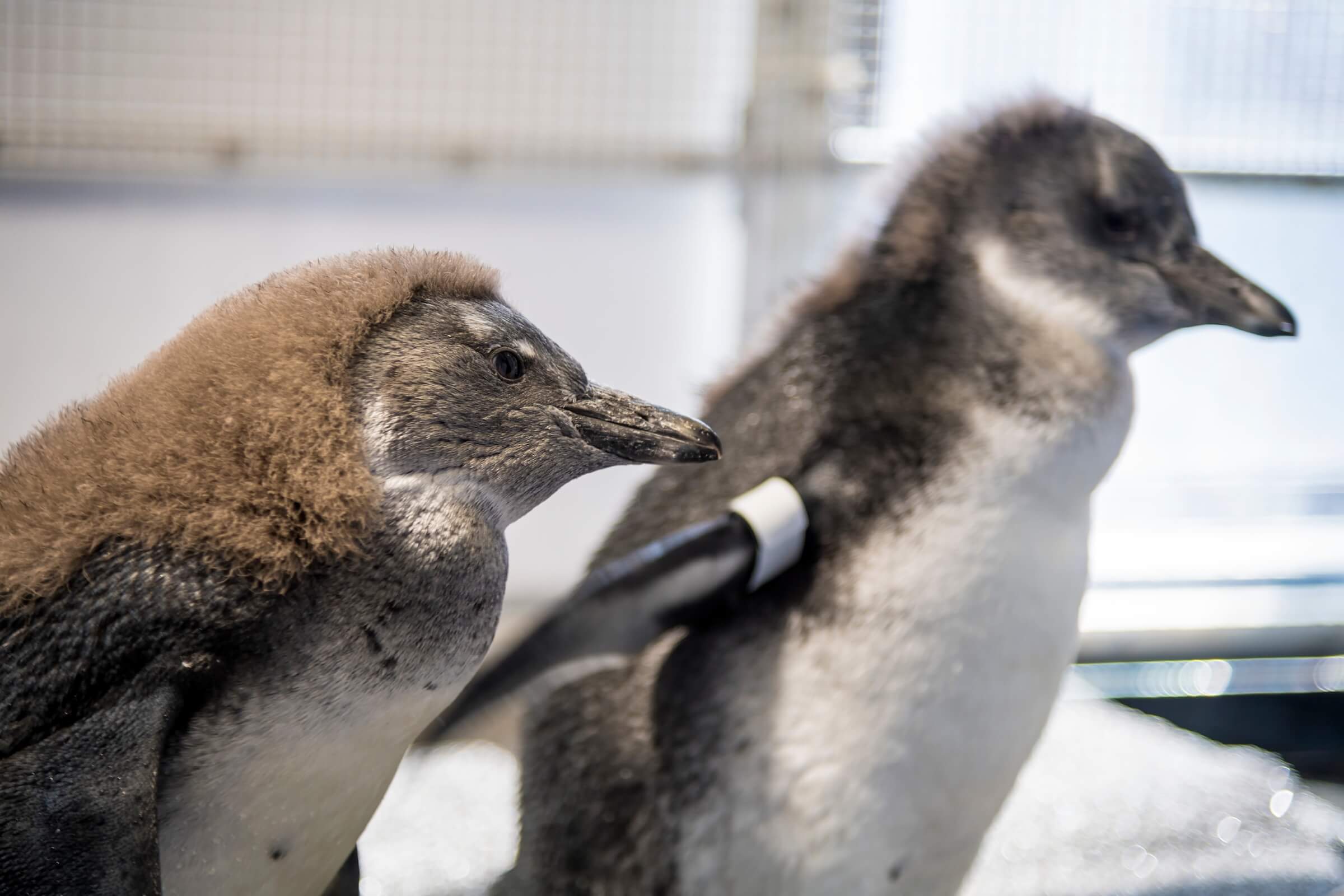
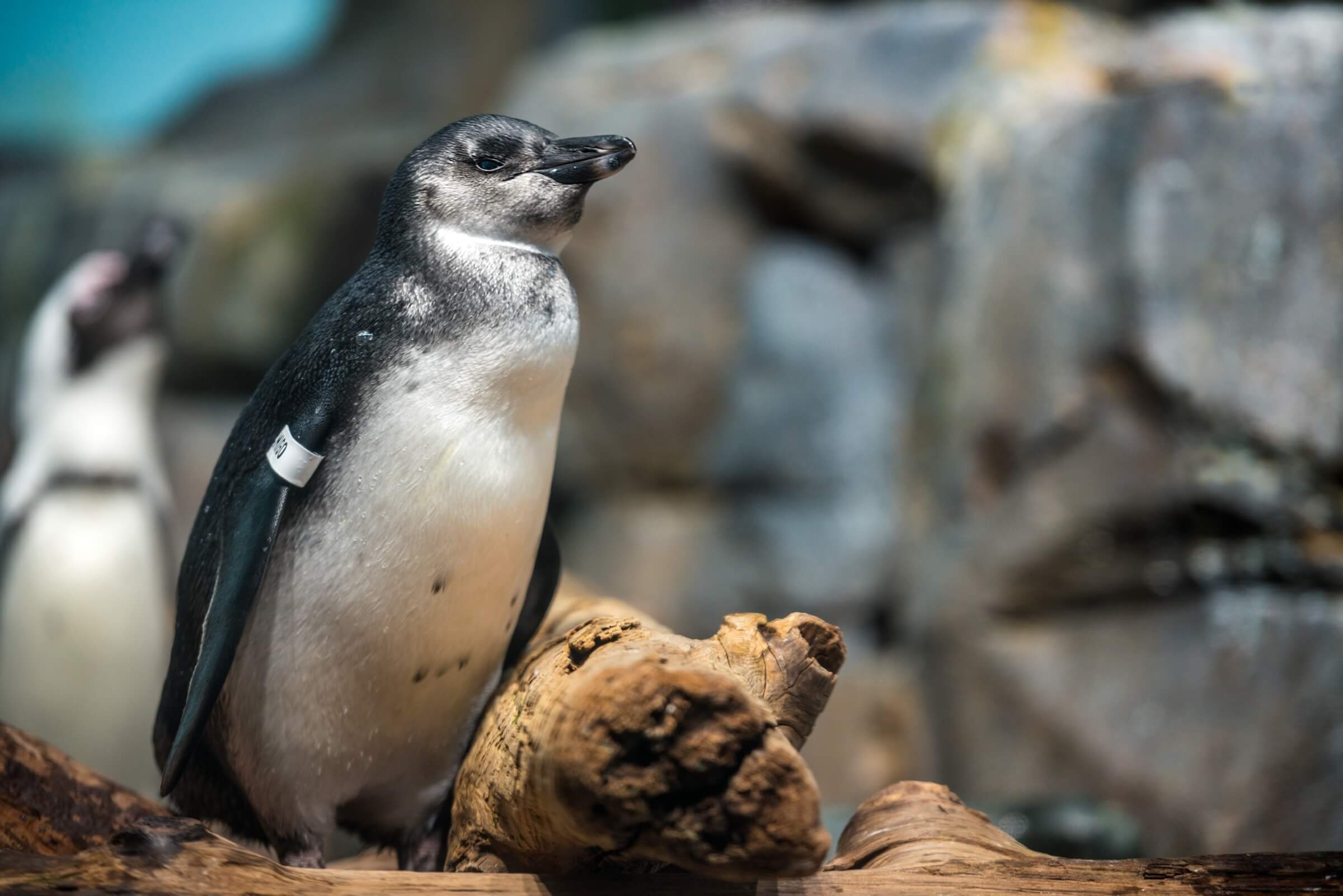
To keep warm in the cold water, African penguins have a double layer of insulation: densely packed feathers over a soft layer of down. On land, they face the opposite problem and can overheat in hot sun. To keep cool, they pant and pump blood to parts of their bodies with less insulation—wings, faces and feet—where excess heat can escape.
Conservation
The wild African penguin population has declined over 97 percent in the last 100 years. As recently as the early twentieth century, breeding pairs numbered nearly one million. But in 2024, it was estimated that only around 9,900 breeding pairs remained in the wild. African penguins are now listed as critically endangered by the International Union for the Conservation of Nature and Natural Resources (IUCN) due to this steep population decline. If additional conservation actions aren't taken, the penguin population is likely to continue to decline at this alarming rate.
We can help African penguins in the wild by protecting the ocean habitats these animals depend upon—and by choosing ocean-friendly seafood. All penguins are protected from hunting and egg collecting. But many, including the African penguin, also face threats from oil pollution, habitat loss, and introduced predators. Overfishing seems to be the biggest culprit.
You can help African penguins by supporting penguin conservation groups like the Southern African Foundation for the Conservation of Coastal Birds (SAANCOB, a partner of the Monterey Bay Aquarium) and by using the Seafood Watch website to make sustainable seafood choices at restaurants and grocery stores.
Cool facts
- Penguins make good parents. They often keep the same mate for life and both parents take turns incubating the eggs and feeding and protecting chicks.
- A wild penguin eats close to 14 percent of its body weight each day. For a 150 pound (68 kg) person, that would be like eating 21 pounds (9.5 kg) of food a day!
- Penguins can shoot their poop up to 3 feet! Projectile defecation allows them to keep their nest clean while incubating eggs and raising chicks.
- African penguins can swim up to 12 miles per hour while hunting. That is more than twice as fast as Michael Phelps!
Wallpaper
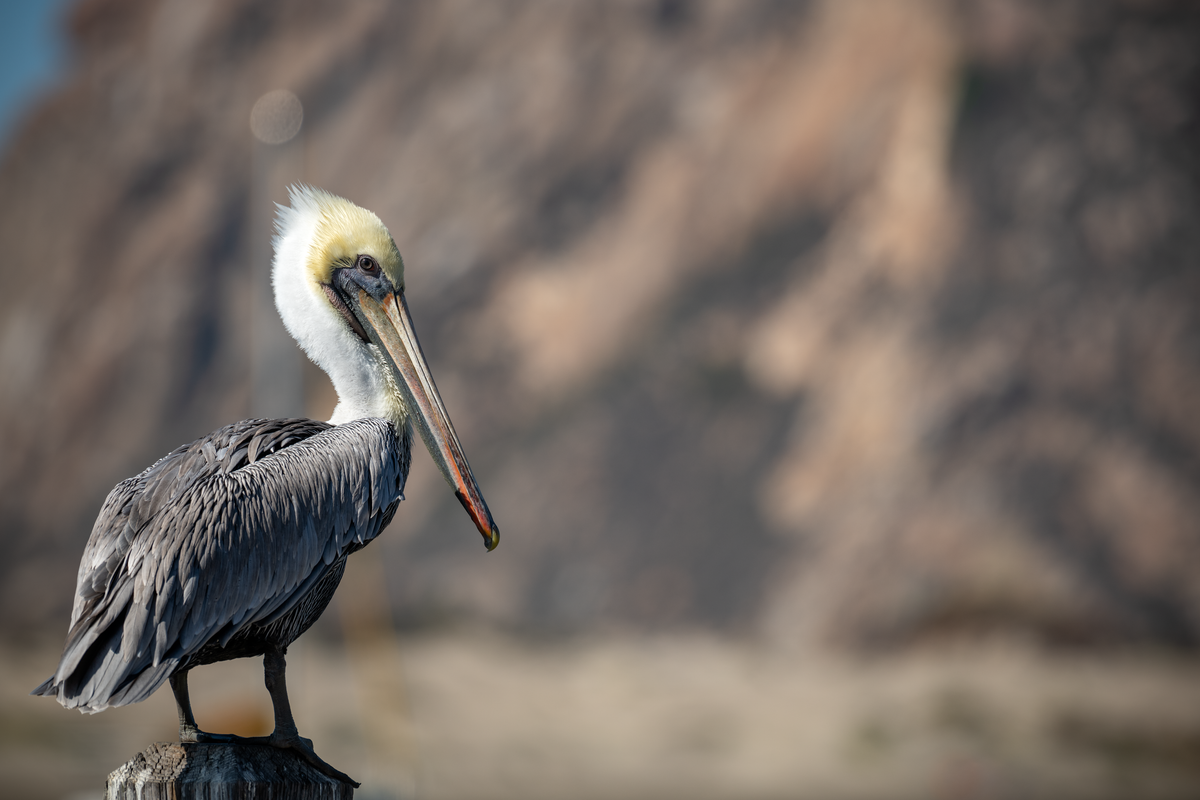
Brown pelican wallpaper
Download a beautiful brown pelican wallpaper for your desktop or mobile device.
Get wallpaper – Brown pelican wallpaperUp next in rocky shore
Animal
Black oystercatcher
Despite its name, this brownish-black bird with large feet seldom eats oysters.
Keep exploring
Animal
Hopkin's rose
This pink nudibranch seasonally brightens local tide pools. Its vibrant color may ward off predators.