

Training vs. enrichment
Both training and enrichment provide animals with mental stimulation, let them think for themselves, and give them a little control over their environment. They are also both designed to solicit or stimulate certain behaviors.
But there’s a key distinction between training and enrichment—enrichment's main focus is to promote natural behaviors, while training is aimed towards a particular goal, like stepping onto a scale.
Why training matters
Most of our training encourages activities that let our animals assist us in their health care—like checking their weight—so the activities are easier and safer to them and us.
Behavioral training is a collaboration between a human and animal to reach a certain goal, like stepping onto a scale. It’s better to train a sea otter or penguin to willingly go onto a scale than to pick them up, put them on the scale, and expect them to remain there.
Target training is the heart of our repertoire. Asking an animal to “target” means we want it to use its mouth, beak, nose or paw to touch an object, such as a geometric shape or a short pole with a buoy-like tip. Target training helps focus and prepare that animal for the next action, like offering food with tongs, or a vocal cue, such as “crate” to get into a crate.
We reward the animal for each successful response with food. We sometimes use verbal praise, especially with our birds and sea otters.
Training can be fun, too, but relies on trust, patience, and positive reinforcement. We never punish or reprimand our animals for not doing something we asked them to do. Rather, we reward them with food or praise for completing the behavior we asked of them.
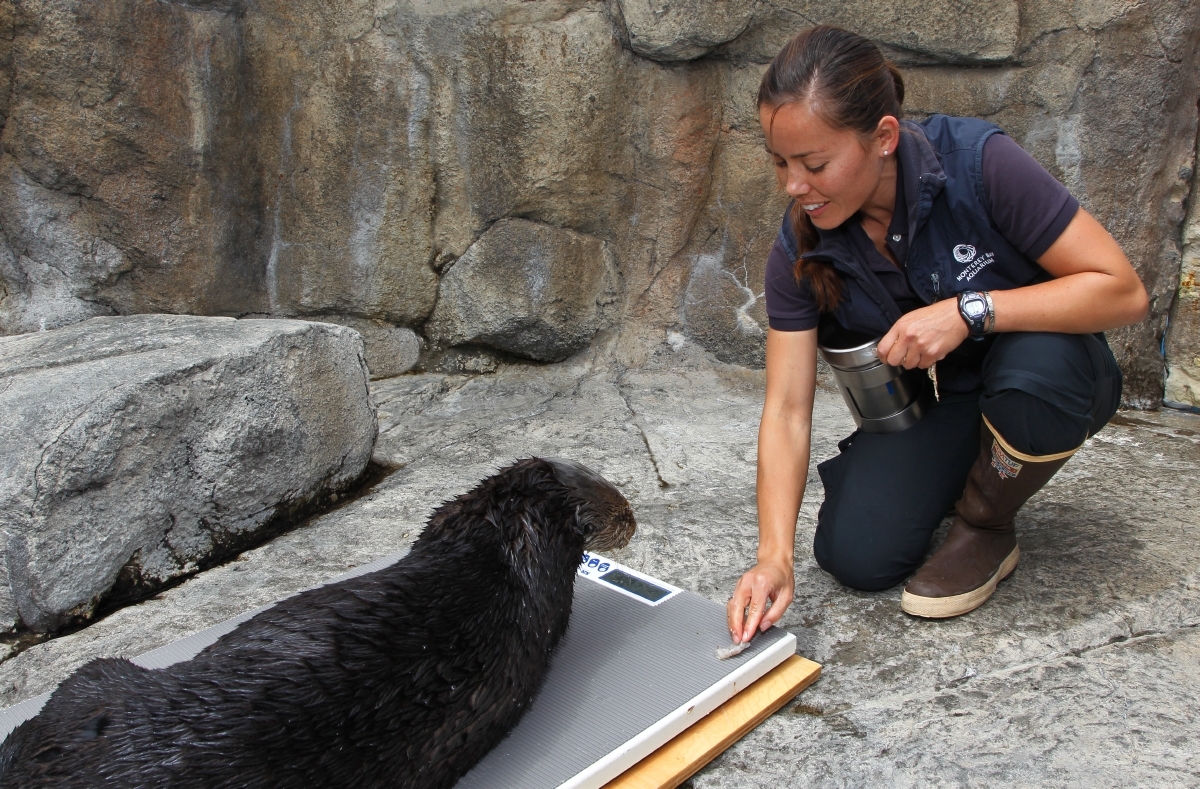
We train sea otters to get onto a scale.
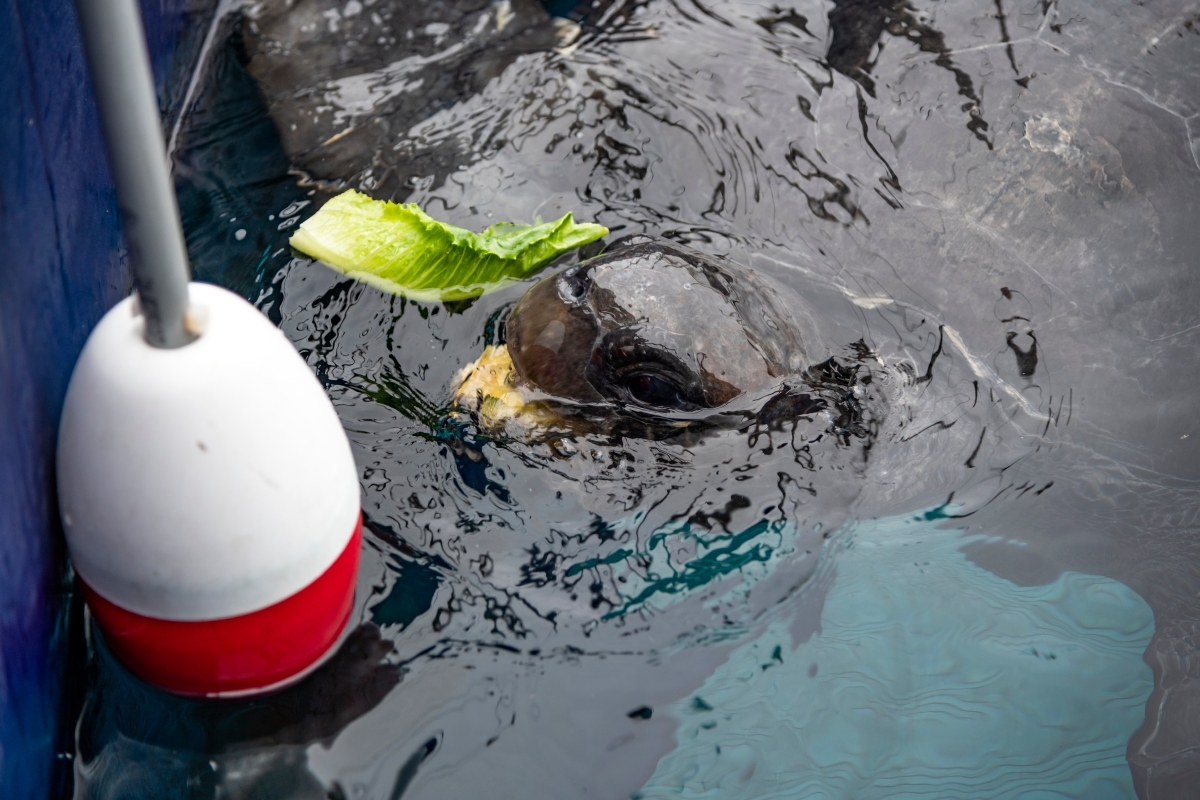
We use target poles to focus a sea turtle's attention on us.
Seabird training
Seabirds and shorebirds can experience foot and leg problems if they stand on poor quality sand or other surfaces. Our birds don’t have those problems because our dedicated aviculture staff meticulously cleans each exhibit. (It’s just part of the overall extraordinary care for our birds, which has helped extend the life span of our animals.)
To make sure our birds’ feet stay in the pink, the aviculture team uses a simple technique—a mirrored foot box. Using food as a motivator, the team trained the common murres, tufted puffins, horned puffins, Laysan albatross, and pigeon guillemots to step onto a clear acrylic box that contains an angled mirror. The bird stays on the box while an aviculturist gives them more food—and checks the underside of the bird’s feet at the same time.
Training and enrichment is all about promoting the best physical and mental wellness in our birds. We want to encourage natural behaviors—from shorebirds probing in the sand to the penguins, puffins and other seabirds swimming after their food. This keeps them healthy and active—and also provides a better experience for our visitors.
Aimee GreenebaumCurator of Aviculture
Eye drops for a penguin and sea otter
Because of problems with her eyesight, Rey the African penguin had issues with swimming. That’s unusual for a penguin, and presented a big challenge for our aviculture team to help Rey overcome her hesitancy. Slowly and steadily, we trained her to be comfortable feeding in the water like the rest of the penguin colony.
The aviculturists also trained Rey to accept daily eye drops from them as part of her special health care. Rey already had good relationships with some staff and was comfortable with them handling her. Senior Aviculturist Kim Fukuda says the team built on those bonds to get Rey used to receiving the eye drops.
“She knows the routine,” Kim says. “I usually give her the eye drops in one area of the exhibit after all the penguins get their vitamins. When that happens, she runs over there and waits for me.”
Rosa, was one of our oldest sea otters and had very limited eyesight, among other health issues. The sea otter team had already trained Rosa so they could examine her eyes, and built on that trust to include administering the eye drops she needs.
Transparent transportation
Just like us, tufted puffins and common murres get annual physical exams. But we need to transfer them from their exhibit to our Animal Care Center. To that end, our aviculturists set a goal of training our seabirds to calmly enter a transport crate on cue. The puffins learned this behavior quickly, but the murres showed hesitancy and refused—why?
Our team looked at the natural history of both species, and quickly formed a hypothesis: Puffins in the wild nest in burrows, but murres nest out in the open on rocky cliffs and ledges. Therefore it made sense that the murres showed apprehension entering a dark, enclosed space.
The team got to work designing a clear crate with a wide, accommodating doorway and a feeding port on the back to help us provide positive reinforcement for the desired behavior. After three months of patient training, all eight of our murres now readily enter the non-threatening transparent crate. It works so well that we’ve shared this innovation with our colleagues in the zoo and aquarium world.
Makana steps out
We’ve trained our largest seabird, the Laysan albatross Makana, to do many things that guests can see when she appears in front of the Kelp Forest exhibit for her Albatross Encounter program. To get her from her behind-the-scenes home to the exhibit, we’ve trained her to ride on a utility cart tricked out just for her. She’s target trained to keep her focused on us during the show, and responds to verbal plus clicker cues. The most impressive of these is when she demonstrates her nearly 6-foot-wide wing span.
Makana is an engaging bird that appears to enjoy seeing new things. As such, we take her on a walk through the Aquarium from time to time as part of her enrichment activities.
Related videos
A day in the life of Makana
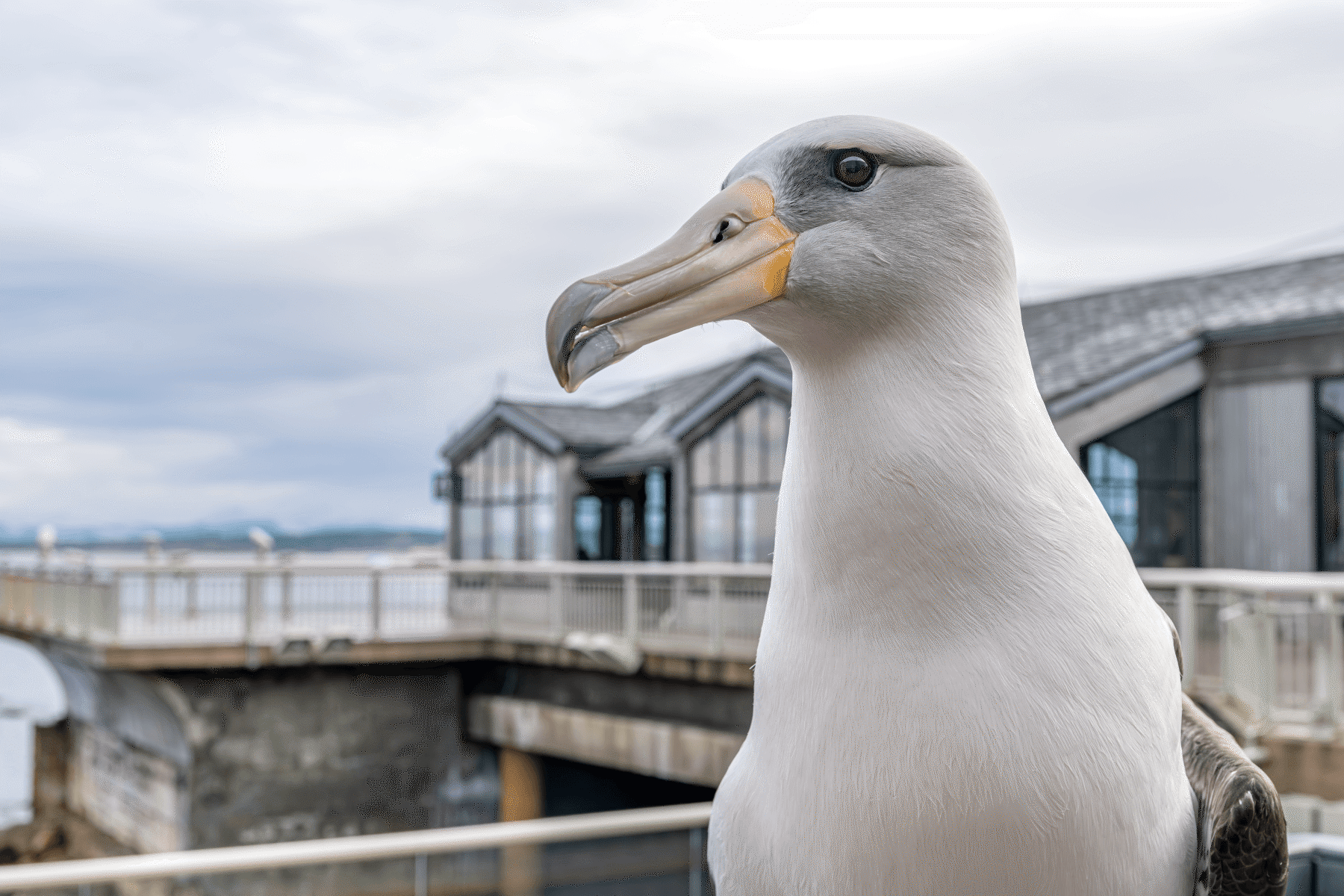
Come along for the ride with a rescued Laysan albatross that calls the Aquarium home
Fur, food and fun
Sea otters are curious, resourceful marine mammals that—lucky for us—love to eat. Our resident animals have learned and understand their names, plus well over a dozen vocal cues. Combine those factors and we have a recipe for many successful training activities.
Sea otters are high energy, inquisitive, quick and super smart. We need to keep on our toes when working with them, but all the time we put in pays off with calmer and more responsive and receptive animals.
Chris DeAngeloCurator of Marine Mammals
Sea otter aquarists use target training (with a target pole) to focus and settle a sea otter to await their next cue. This can include asking it to get on a scale or into a crate, open its mouth to inspect its teeth, or letting us touch its abdomen or inspect its flippers. We reward the otter for each successful response with a tasty morsel, such as a yummy shrimp.
The relationship between a sea otter aquarist and an animal is like a friendship—it can take a little time to trust and respect each other, it must be nurtured to thrive and it’s incredibly rewarding. A strong bond between the two makes it easier to introduce and complete new training behaviors or activities.
Where the rubber meets the... sea turtle
Our Animal Care staff target trained our green sea turtles to swim onto stacked car tires for veterinary exams. This has reduced stress in preparation for and improved the safety of exams for both staff and sea turtles alike. It also gives Dr. Mike, our director of veterinary services, a lot more access to examine the sea turtle.
We knew other facilities transported large sea turtles on tractor tires. Ours were already trained to come to and follow a target, so we built upon that. We use a target and food to guide a sea turtle over two stacked tires set up in the Open Sea exhibit’s outdoor holding pool. Then we raise the hydraulic floor until the floor (with tires and sea turtle) is raised above the waterline.
Our sea turtles voluntarily come to the tires and wait while we lift the floor. This new method makes exams go more smoothly. In particular, it has muted the force of a sea turtle’s powerful flippers, which can bruise caretakers if they get whacked.
Bath time for sea bass
Aquarists have made freshwater baths for our giant sea bass easier on both fish and staff using behavioral training. The baths, which we give a few times a year, effectively remove parasites.
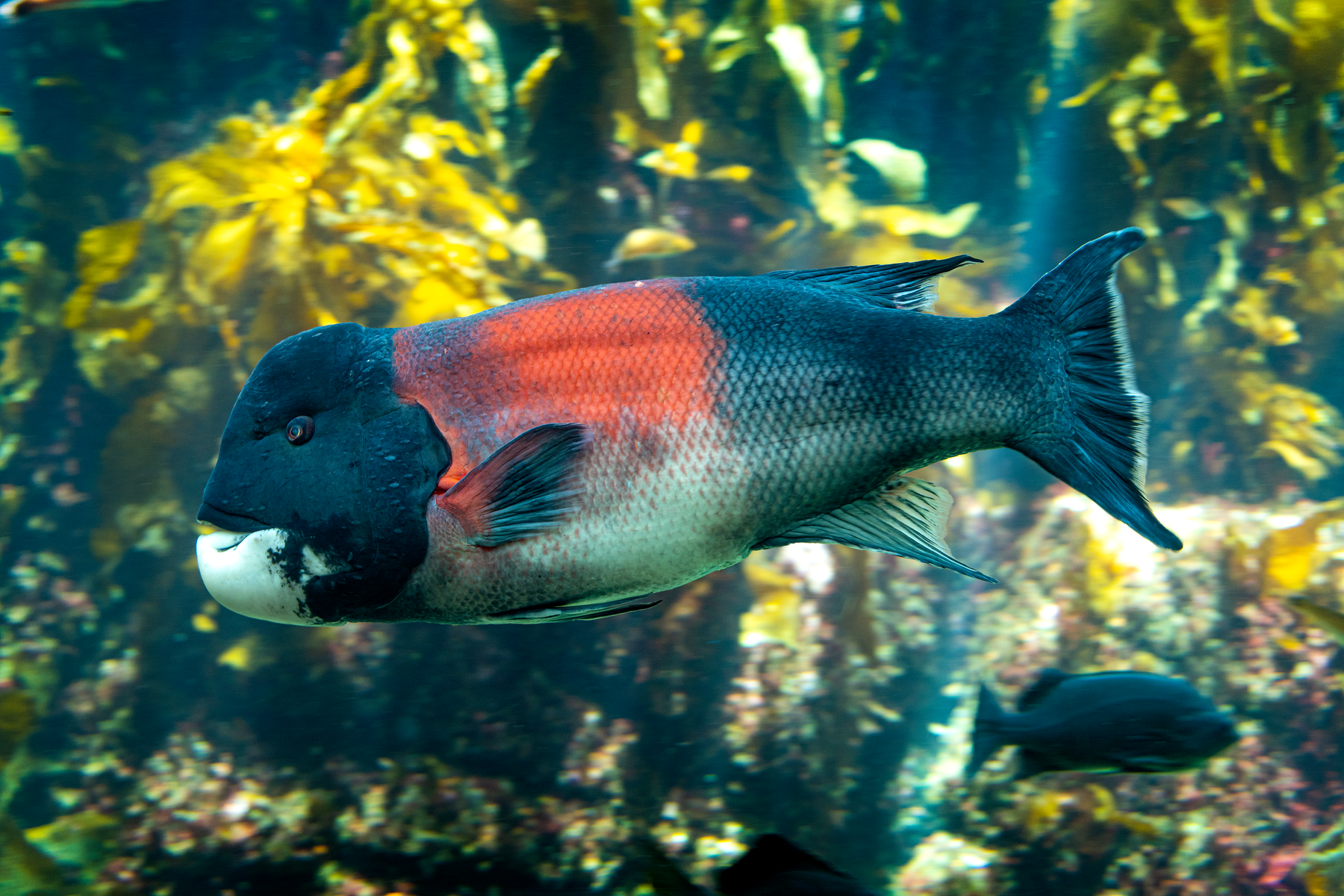
But it’s challenging to get these large, powerful fish into the stretcher we use to hoist them into the fresh water. So aquarists are target-training all our sea bass—large and small—to enter a stretcher on their own to receive a food reward, therefore making this part of the procedure a lot easier for all parties. We even use a wee stretcher for the bitty ones!
“We need to pull our fish out every three months for freshwater baths,” says Senior Aquarist Kelsey Barker. “If we can get the fish more comfortable with the stretcher, they are less stressed during the procedure. The ultimate goal is to have them swim in the stretcher 100 percent on their own.”
Kelsey adds that a strong base in training gives the staff flexibility to train the sea bass for different procedures in the future. Ultimately, she hopes to use the training to prep the sea bass for yearly exams, and take measurements underwater.
Some people are surprised that you can train fish, but you can train them just as easily as mammals. The trick is to find what motivates them and use that as a reward-based system in positive reinforcement training.
Kelsey BarkerSenior Aquarist
Molas on the move
Our staff also target trains ocean sunfish or mola molas, primarily for feeding purposes. This ensures they eat amid the hubbub of the large community exhibit that is the Open Sea, and we get an accurate account of what and how much.
The target training helps us keep molas out of the way when we toss 60 pounds of food into the exhibit that the fast-moving tunas and other fishes gobble up. Since molas are pretty slow, we don’t want them to get hit when the tuna are darting around for food.
This training is also useful for exams. We maneuver a mola close to where we need to gently lift it out of the water on a stretcher for veterinary exams and to measure their size and shape.
We start target training molas behind the scenes, first in a quarantine area and then the Open Sea holding pool. We make sure they consistently come to a target in those smaller spaces before we transfer them into the million-gallon Open Sea exhibit. And when we do that for the first time we target the molas immediately to reinforce the training and set the stage for future feedings inside the vast exhibit.
Molas are disc-shaped, not streamlined like most fishes. Aquarists have seen some amusing maneuvers by molas during feedings as they attempt to turn around and return to the target for more food. Most make big, slow circles but one actually did somersaults!
Related videos
Mola mealtime
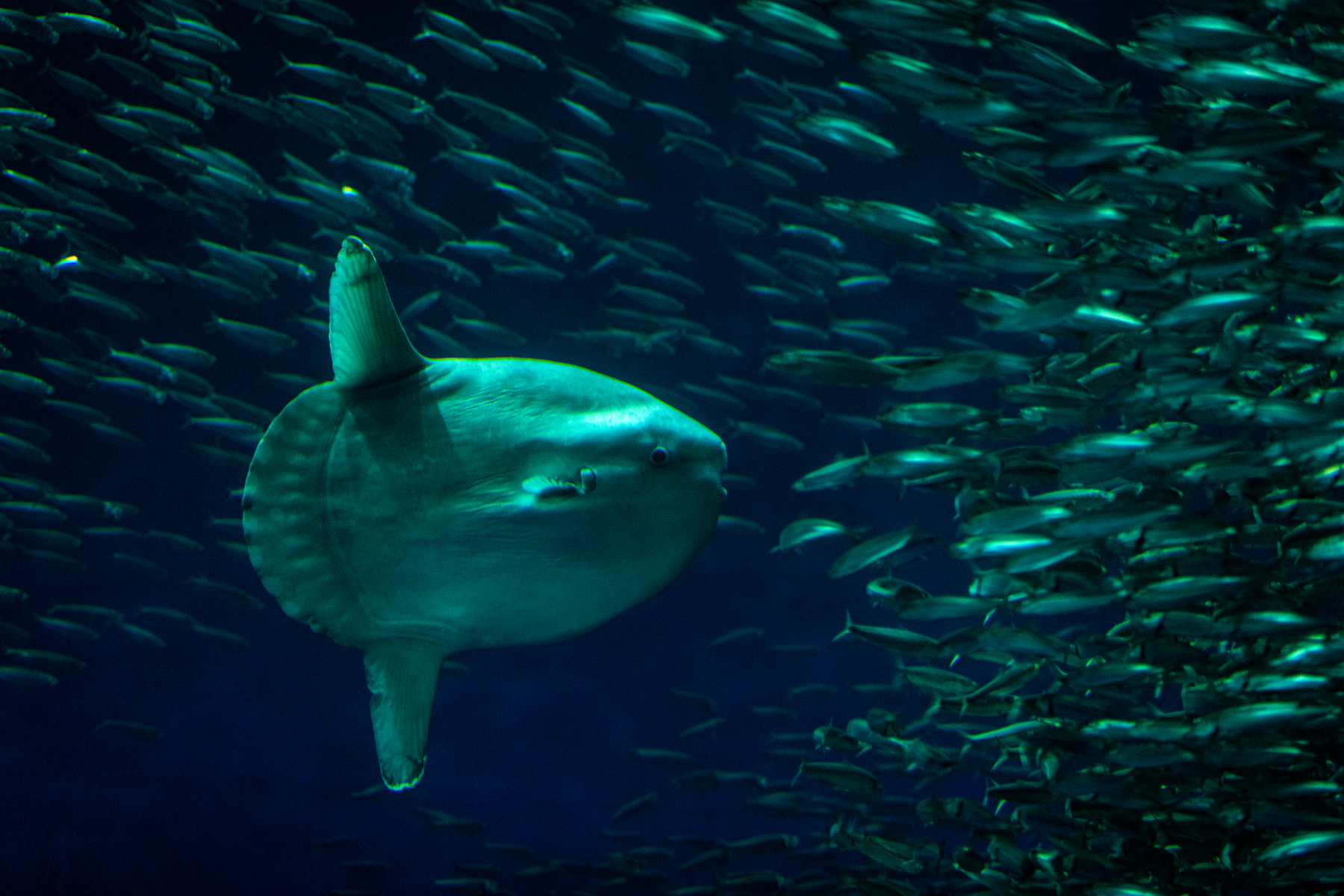
Nom nom—it's feeding time for a young mola
Two points for the octopus!
The giant Pacific octopus is considered to be one of the most intelligent animals in the ocean. We do know they can solve puzzles—such as getting a live crab out of a sealed jar by unscrewing the top—and remember the solutions!
As with our sea otters and birds, aquarists have personal relationships with the GPOs (as we fondly call them) they say vary in expression depending on who’s feeding them. Sound incredulous? Octopuses can smell with the suckers on their arms. We believe they can tell who’s who when they touch a hand or arm—and possibly remember and anticipate subtleties in how different people feed them.
To assist in their care, we’ve trained the GPOs to pour themselves into a basket so we can weigh them. This doesn’t happen overnight, however. Aquarist Kyndace Safa says training for this behavior involves a series of steps toward reaching the goal of the GPO going inside the basket. Each positive behavior along the way is rewarded with a yummy snack.
If at any point during a training session the GPO goes into the basket on its own accord, we reward the animal with a jackpot—all the yummy food at once. This training makes monthly weigh days a lot easier on both the GPO and the aquarist.
Kyndace SafaAquarist
Salmon on a stick
Our shark team target trains all our elasmobranchs for feeding purposes. We train the sharks to accept food from tongs at the end of a large grabber tool, which puts a safe distance between an aquarist’s hands and a shark’s teeth. Their varied diet includes a mix of salmon, mackerel, sardines and squid. All that seafood is sustainably sourced, of course!
To feed the sevengill sharks in the Monterey Bay Habitats exhibit, two aquarists—a feeder and a tender—wetsuit up and jump into the water. While the tender keeps an eye out for and gently steers away other hungry fishes and sharks, the feeder puts a fish fillet in the tongs and offers it to a specific shark. The big sevengills — which we think already know what’s going on when divers enter the water—have learned to grab the fillet and swim away to enjoy their meal.
The team also uses tongs to feed our scalloped hammerheads in the Open Sea exhibit, but this time they stay on land. An aquarist places a visual target underwater—for the hammerheads it’s a large flat blue rectangle with diagonal white stripes across it—and uses the tongs to create a clacking noise.
The auditory cue combined with the visual target gets the attention of the hammerheads, as does the smell of the fish we dangle from the tongs just under the water’s surface.
Theresa NietfeldSenior Aquarist
A shark must keep swimming, so as the shark approaches the target and tongs, the aquarist moves the meal through the water until the shark grabs it and gobbles it up.
You might be wondering if our sharks ever eat their exhibit mates. The answer is usually no. While we can’t control the strong hunting instincts of any of our sharks, by feeding them regularly we keep their bellies full. Sharks are sporadic eaters, so if they’re satiated they generally won’t waste the energy to chase a fish for another meal.
Related videos
Hand-feeding sevengill sharks
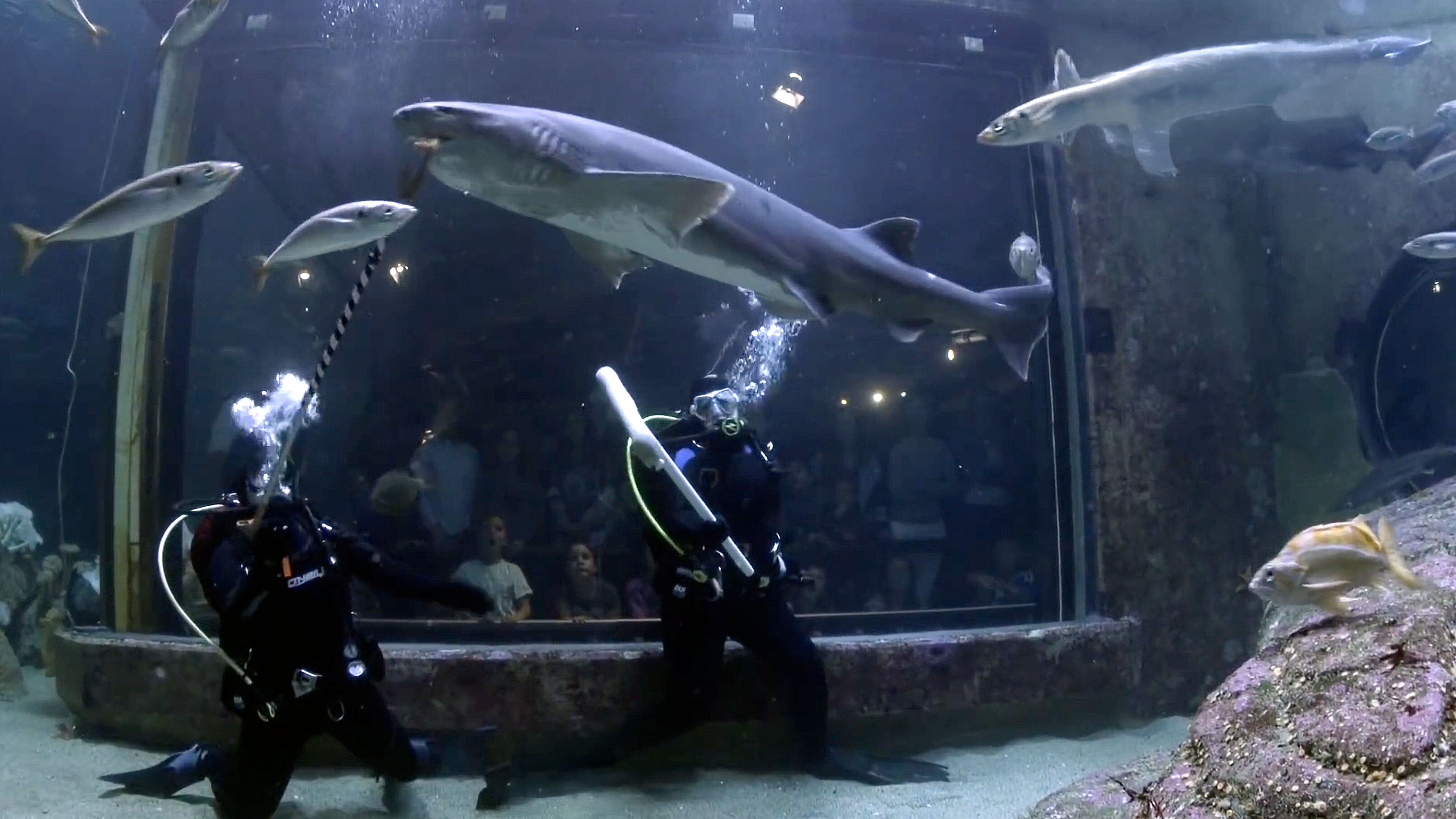
Dive in and watch what it takes to feed our sevengill sharks
It takes a village to feed a community exhibit
The million-gallon Open Sea exhibit houses numerous species, including sea turtles, tunas, sharks, pelagic stingrays, ocean sunfish and swirling schools of sardines. To make sure everyone gets fed, Senior Aquarist Ann Greening says the animal care team had to create different targets for different species.
“We tried to come up with targets that the animals could see in contrast to the dark blue walls of the exhibit,” she says.
Each of our two sea turtles has its own flat circular disc target. One is half red/half white, and the other yellow with black stripes.The pelagic stingrays have a large flat white rectangle with a red X, and the hammerheads a large flat blue rectangle with diagonal white stripes. When we have ocean sunfish on exhibit, they’re trained to come to white PVC pipes in various shapes that we hang from the catwalk above the center of exhibit.
The team always places the targets at the same area of the exhibit, which during mealtime then function as feeding stations. But feeding everyone in the exhibit at the same time takes a big team and a lot of coordination. Usually things go smoothly, but sometimes the animals have ideas of their own...
“Though we train the animals to come to their specific targets, they do sometimes pick up on the other animals’ targets and food,” Ann says. “They may prefer that different food and know how to try and get it.”
For example, the hammerheads may hang out below a pelagic ray feeding station to catch a dropped or rejected piece of food. Likewise, sometimes the rays linger at the hammerhead station if they want that meal instead.
Ann says the sea turtles seem to prefer everyone’s else's food over their own lettuce and bell peppers. Therefore, the team puts the turtles’ targets in the water first. When they’re distracted, we add the pelagic rays’ targets, and so on and so forth with the hammerheads and finally the mola.
It’s all choreographed in such a way that it works, or chaos would surely ensue in this multispecies exhibit.
Ann GreeningSenior Aquarist
Related videos
Open Sea feeding takes teamwork
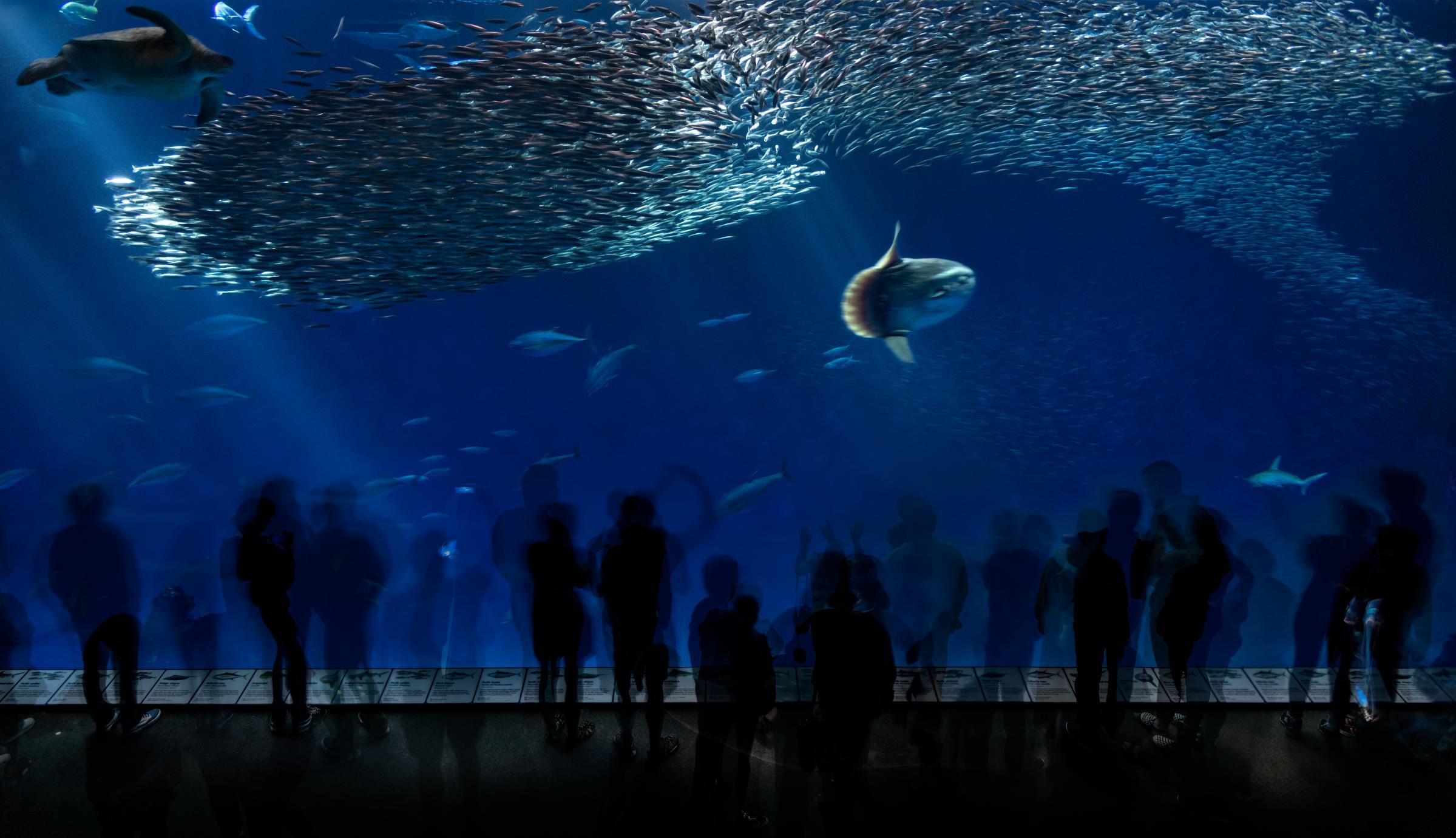
Go behind the scenes while we feed everyone in the Open Sea exhibit
The importance of enrichment
Enrichment engages animals in activities that stimulate and expand on natural behaviors. It can increase their social skills, and usually involves something playful and fun for both humans and animals.
Sea otter enrichment
Our sea otter aquarists are always creating fun enrichments for our active, curious sea otters. Frozen icy toys filled with food stimulate natural behaviors such as pounding the “prey” against rocks (or the exhibit window!) to crack open the treats, much like they would do with shellfish in the wild. After the otters have dismantled the toys and devoured their treats—which doesn’t take long—we sometimes ask them to retrieve the toys from the water. That engages their natural foraging skills.
Topping the list of favorite treats are “otter pops”—large tubes filled with frozen shrimp and water. Sea otter team leader Chris says the otters each have their own way of working them to get to the tasty tidbits inside.
“Kit, Selka, and Ivy immediately take them to the windows and start pounding them against the acrylic to the point that you can hear it all the way to the main entrance of the Aquarium,” she says. “Rosa just drops it to the bottom of the exhibit and lets it thaw in the water before picking it up and then just eating the shrimp out. Our 21-year-old knows how to do this enrichment with minimum effort expended. And Abby, who prefers other types of enrichment activities, just drops it to the bottom and lets the other otters steal it. It's just not worth her time or effort to get the shrimp out.”
Our sea otters love to crunch on things with their powerful jaws, especially ice. They even have their own ice maker the aquarists put to good use by spreading ice on the exhibit deck or filling big buckets or kiddie pools with ice and hiding food in the pile. Our otters can’t get enough!
Sometimes the aquarists will try extraordinary enrichment activities—properly vetted by our veterinarian, of course—as special extrasensory treats. We’ve put small play structures on the exhibit deck for the otters to explore; let them sniff such scents as rosemary, pumpkin, spice and cloves; added chalk drawings on the deck to investigate; and played them different kinds of music. Every day’s different at the sea otter exhibit!
Related videos
Fun and games with the sea otters
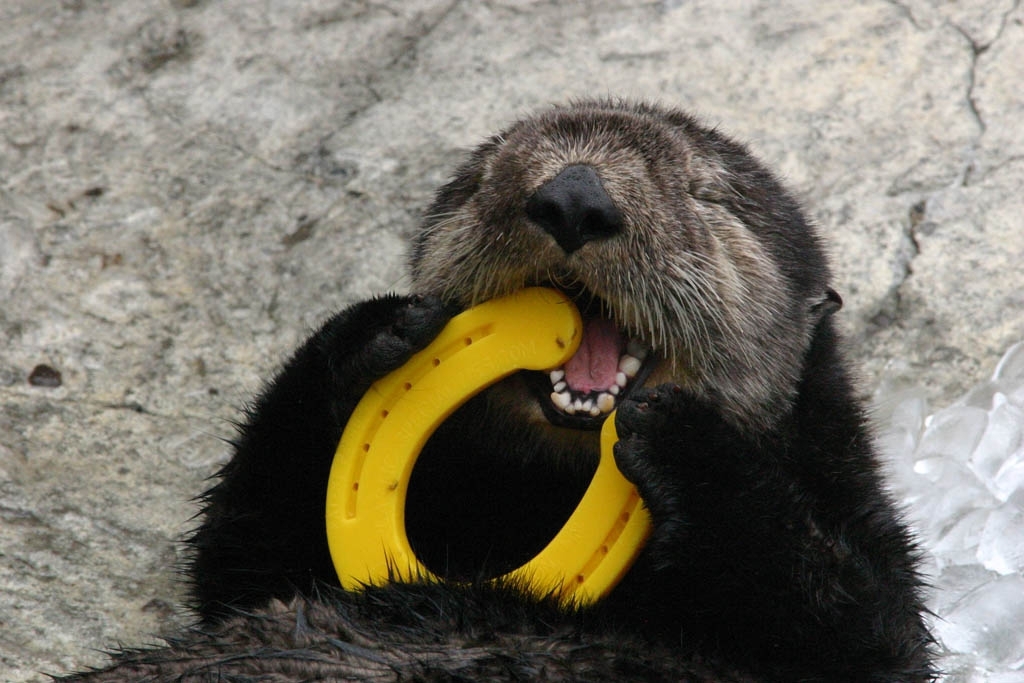
We create an ever-changing assortment of daily puzzles for our feisty otters
Enriching the lives of feathered friends
Our resident African penguins also enjoy stimulating activities. We often take one or more on walks throughout the Aquarium, where they get to watch activity in other exhibits and meet some new human friends.
We offer them different items as enrichment activities, such as hoops or frozen ice treats with pebbles or other tactile materials inside. During breeding season we scatter some nesting material into the water for them to retrieve and use to build their nest on land.
For our shorebirds, we scatter food on the sand or add some to shallow water bowls. This stimulates natural probing and catching behaviors. We also offer tactile items like rocks and plants they can manipulate and explore.
Our seabirds get enrichments too. They play with natural materials and other items, like driftwood and rocks, that we scatter around their exhibit. We also feed about half of their diet in the water so they can exercise their diving and swimming abilities.
Related videos
Join a penguin parade
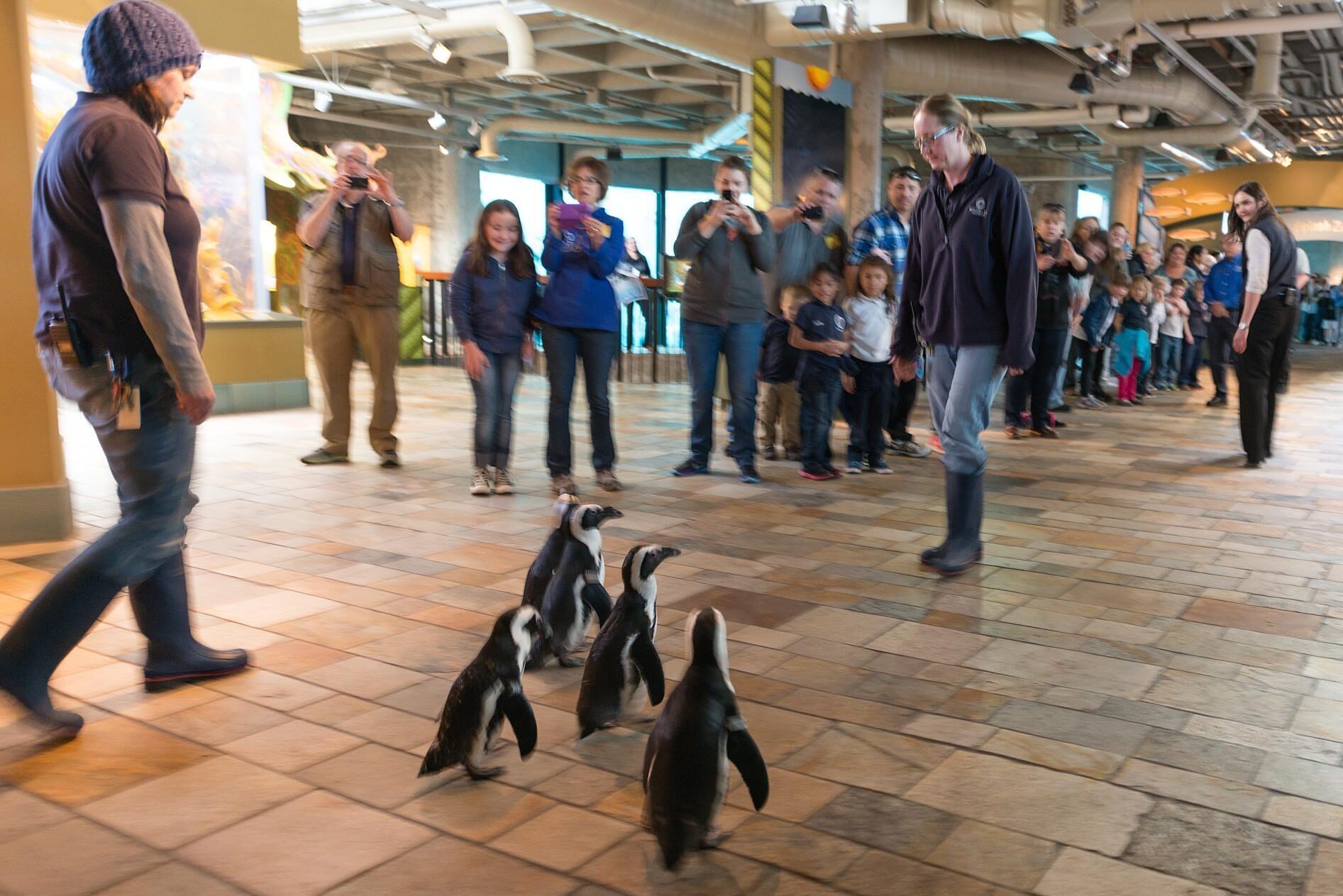
We walk our penguins around the Aquarium as an enrichment
Grab-n-go
Our giant Pacific octopuses receive a variety of enrichments, including toys with food inside, tactile interactions and ice toys. Sometimes the aquarist hand-feeding an octopus will play with it a bit, having it stretch its arms out for food or engage in a little tug of war.
Aquarist Kyndace Safa says each GPO has a different way of letting an aquarist know if they want to interact. Some GPOs gently float an arm out to touch the aquarist, while others do a full body pounce on the hand of an aquarist.
During these enrichment sessions the aquarist touches and plays with the GPO, giving the animal some mental and physical stimulation while also building or maintaining a positive relationship. Kyndace says the aquarist can tell when these sessions are over when the GPO leaves or when the animal gently (but strongly) pushes the aquarist’s hand away.
Occasionally, these tactile interactions result in a big hug! What’s that like? Sort of like being hugged by a bath mat!
If you’re lucky enough to receive a big hug from a GPO, there's nothing else like it! These hugs are slimy, sticky and cold. GPOs are very strong, and use their suction cups to attach themselves to any exposed skin, such as our hands or arms. Detaching those suckers sounds sort of like popping a sheet of bubble wrap. And, if you’re super lucky, you might be left with suction spots, or what we lovingly refer to as ‘octopus hickeys.’
Kyndace SafaAquarist
Related videos
Octopus feeding — with a twist
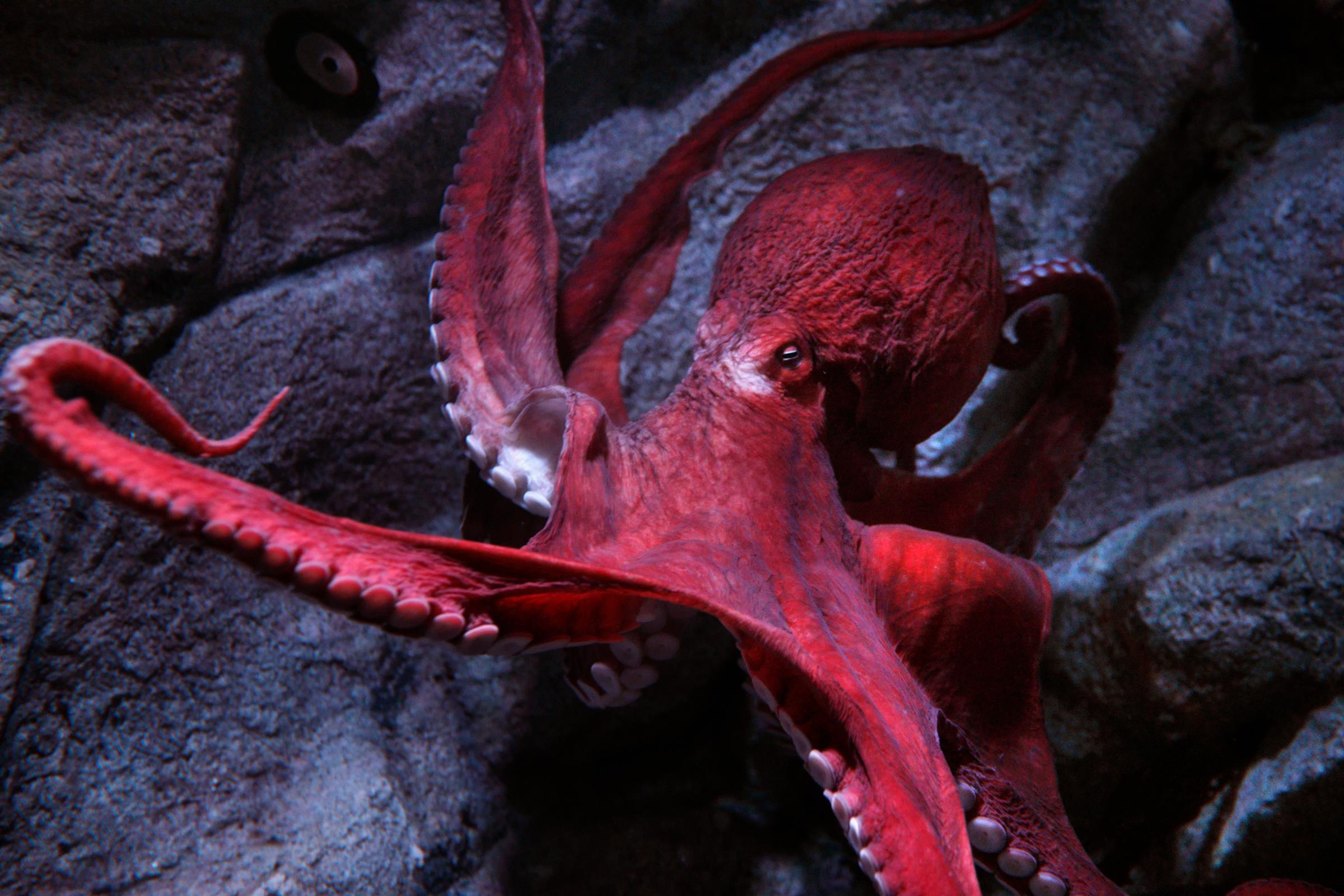
We keep an octopus entertained by making its meal a puzzle
Keep exploring
Story
Nature is queer
We’re excited to sea-lebrate the queerness of nature!
Read story – Nature is queer
Story
2026 Lucile S. Packard Memorial Award and Youth Award recipients
We’re proud to announce the 2026 Lucile S. Packard Memorial and Youth Awards for outstanding volunteers!
Read story – 2026 Lucile S. Packard Memorial Award and Youth Award recipients
Story
Birdwatching tips: A guide to enjoying and identifying local birds
Here are our best tips to help keep you and the birds safe and healthy during a birdwatching adventure.
Read story – Birdwatching tips: A guide to enjoying and identifying local birds