

© Wildlife Conservation Society, reproduced by permission of the WCS Archives
Bathysphere explorers: Jocelyn Griffin, Gloria Anable and Else Bostelmann
When William Beebe and Otis Barton brought their bathysphere to Bermuda in 1930 to dive into the deep sea, three women were central to their success: Jocelyn Crane Griffin, Gloria Hollister Anable, and Else Bostelmann. In addition to their essential work on the surface, Griffin and Anable descended in the bathysphere, to depths as great as 1,200 feet.
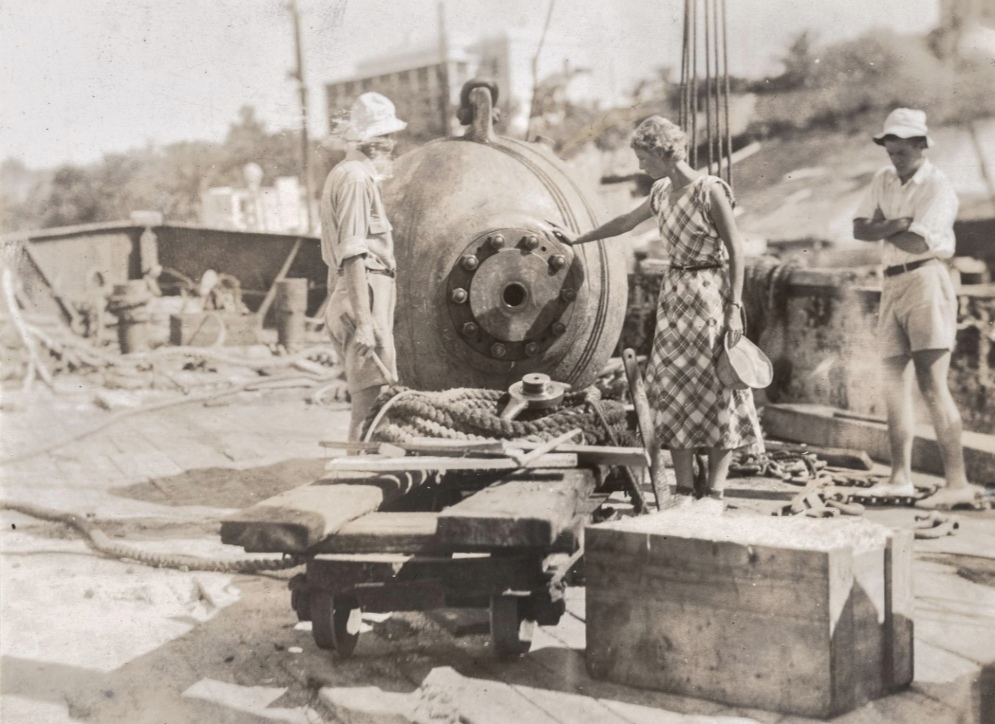
In the 1930s the boldest attempt at crewed deep-sea exploration was conducted in a steel contraption called the bathysphere. Here, technical officer Gloria Hollister Anable inspects the vessel after its arrival to St. George, Bermuda. Anable was in charge of keeping a constant line of communication with the crew as they descended underwater.
© Wildlife Conservation Society, reproduced by permission of the WCS Archives
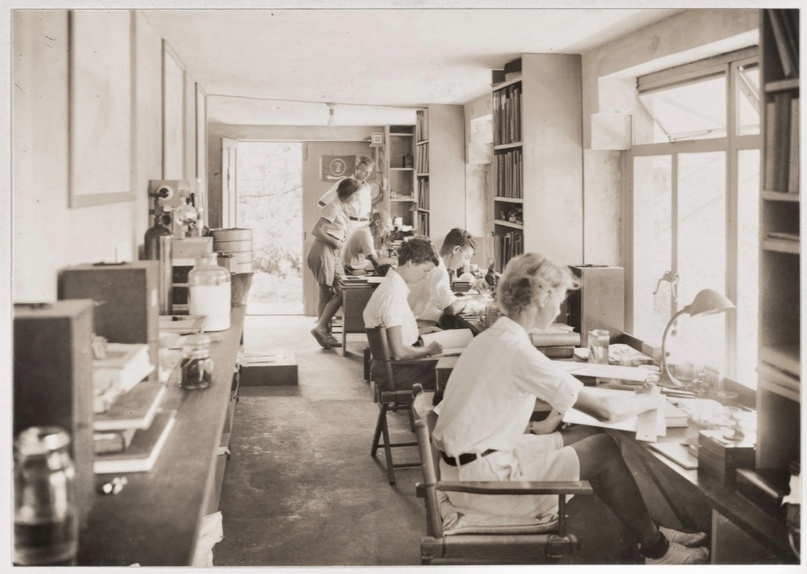
From thousands of feet under the sea, William Beebe described what he saw via telephone to Gloria Hollister Anable (seen at right, in bathysphere headquarters in Bermuda). On the ship, Jocelyn Crane Griffin (at center) helped identify the marine life. Later, Else Bostelmann (standing next to the door) made fantastical drawings of the creatures.
© Wildlife Conservation Society, reproduced by permission of the WCS Archives
Aboard the support ship, Griffin, a laboratory assistant, helped identify the animals observed by Beebe and Barton, and collected in net trawls. Anable, the chief technical associate for what is now the Wildlife Conservation Society, maintained a phone connection, via cable, between the bathysphere and the ship—their lifeline to the surface. Artist Bostelmann created fantastical color illustrations of the remarkable animals, illustrations that brought them to life for scientists and for the public, on the pages of National Geographic magazine.
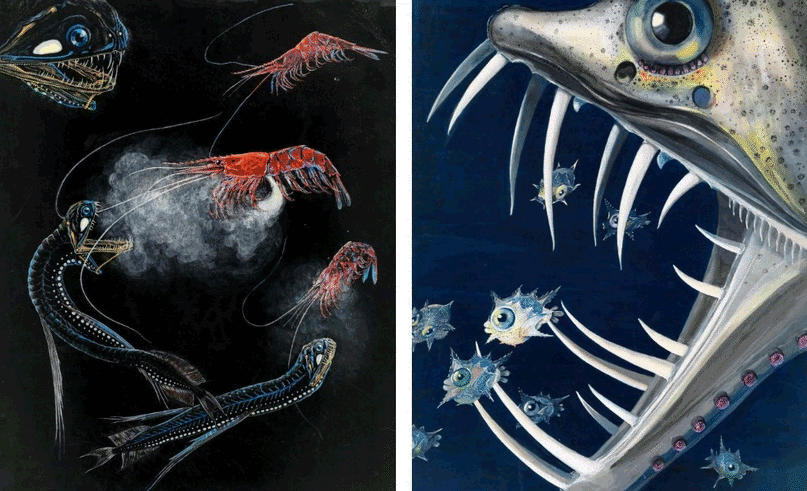
Left: Shrimp and fish swim in the deep waters of the Atlantic. Right: A saber-toothed viperfish attacks young ocean sunfish.
© Wildlife Conservation Society, reproduced by permission of the WCS Archives
Beebe was criticized for bringing women on this pioneering field expedition by men who—according to environmental historian and anthropologist Katherine McLeod—considered this to be “a de-professionalization of the field." Beebe dismissed the critics, saying he’d added women to the bathysphere team on merit, because of their “sound ideas and scientific research.”
Seafloor revolutionary: Marie Tharp
German scientist Alfred Wegener was ridiculed by the research community when he first proposed the theory of continental drift in 1912. When cartographer Marie Tharp used sonar readings of the seafloor taken during World War II to map the seafloor, she concluded that the data supported Wegener’s theory. Her ideas were initially dismissed as “girl talk”—even by her research partner.
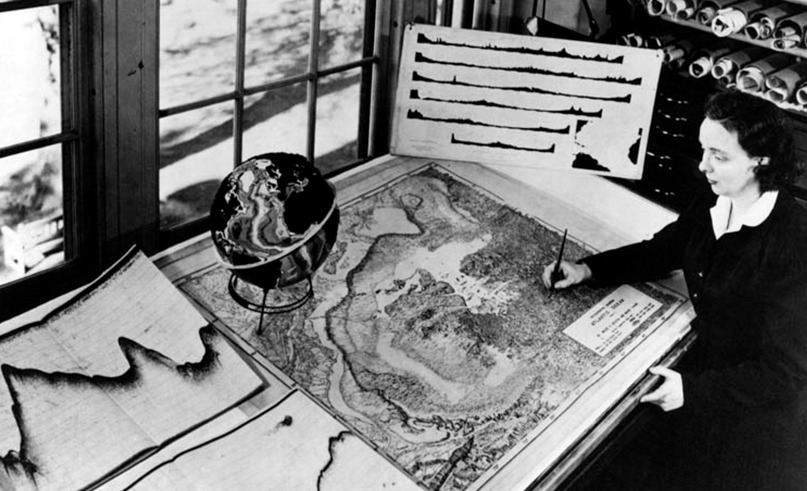
Marie Tharp at her drafting table in Lamont Hall, circa 1961.
© Lamont-Doherty Earth Observatory and the estate of Marie Tharp
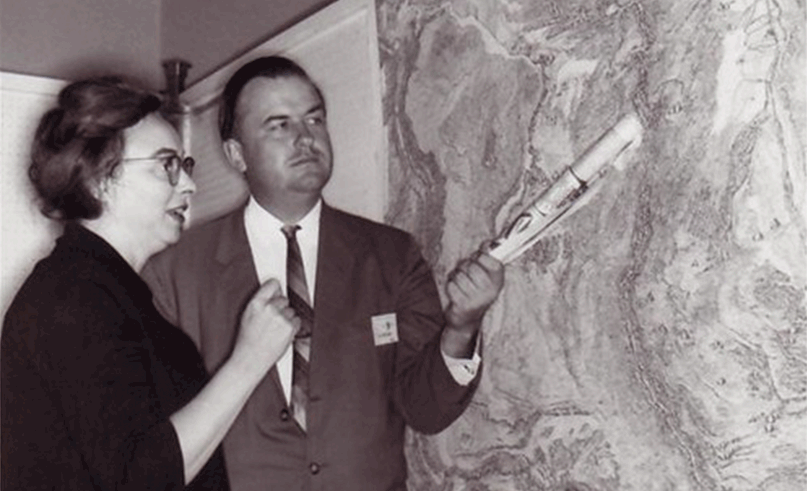
Marie Tharp and Bruce Heezen with the first-ever scientific map they created of the Atlantic Ocean floor.
© Marie Tharp Maps and licensed under CC BY 2.00
Though it took decades before she was allowed to join at-sea expeditions studying the seafloor (men in the 1940s thought women on ships were bad luck) she persisted, won over her colleagues, and pioneered what became the science of plate tectonics. The final validation came when a skeptical Jacques Cousteau took his research vessel, Calypso, to sea, crossing the mid-Atlantic Ridge, where he lowered an underwater movie camera expecting to discredit Tharp and her co-authors. Instead, he found the rift valley she had mapped.
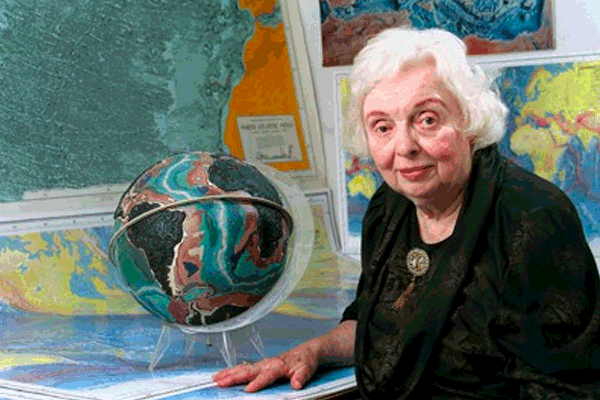
Maria Tharp in 2001 with a globe of the ocean floor.
© Bruce Gilbert (Source WP:NFCC#4, Fair use)
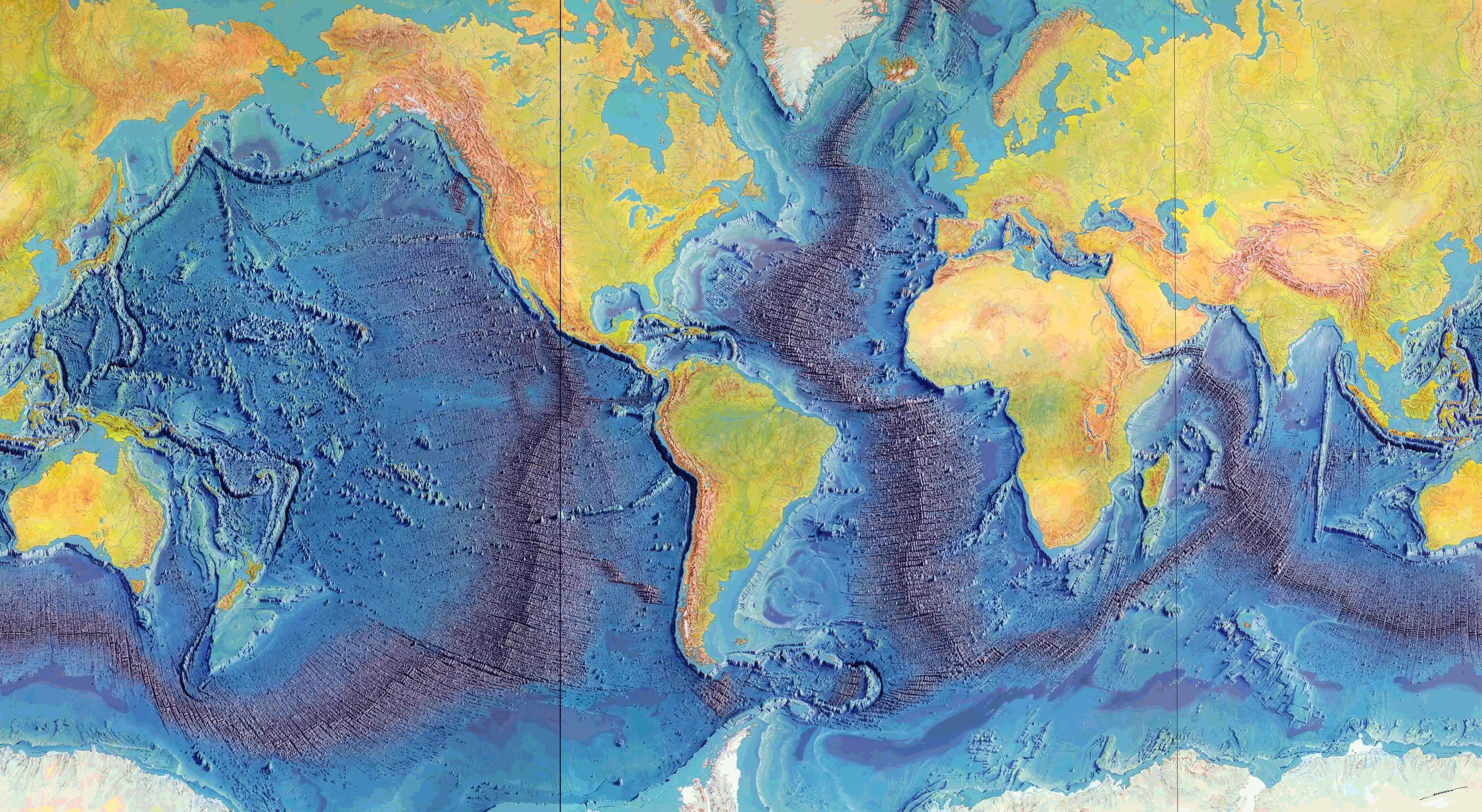
Marie Tharp and Bruce Heezen completed several maps of the ocean floor. World Ocean Floor Panorama, 1977. The map was painted by Austrian painter Heinrich Berann.
© Library of Congress
“There’s truth to the old cliché that a picture is worth a thousand words and that seeing is believing,” Tharp observed in a 1999 essay. She received well-deserved honors late in life, including recognition by the Library of Congress as one of the four greatest cartographers of the 20th century.
“The whole world was spread out before me (or at least, the 70 percent of it covered by oceans),“ Tharp wrote. “I had a blank canvas to fill with extraordinary possibilities, a fascinating jigsaw puzzle to piece together: mapping the world’s vast hidden seafloor. It was a once-in-a-lifetime—a once-in-the-history-of-the-world—opportunity for anyone, but especially for a woman in the 1940s.”
“Her Deepness”: Dr. Sylvia Earle
Sylvia Earle’s love of the natural world grew out of the time she spent outdoors as a child—in the New Jersey woods near her family’s farm, and the salt marshes and seagrass beds of Florida’s Gulf Coast. Her fascination became an avocation, a career and a mission: to understand and explore the ocean, and to inspire others to protect it.
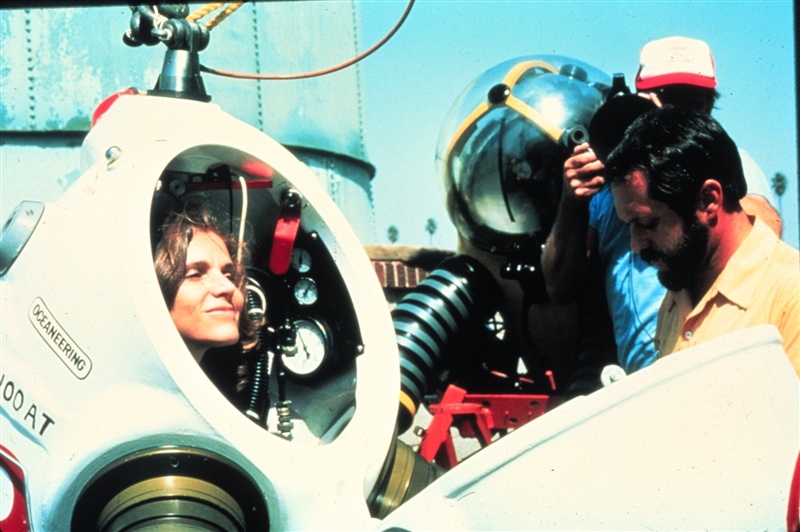
Dr. Sylvia Earle prepares to dive in a JIM suit.
© OAR/National Undersea Research Program
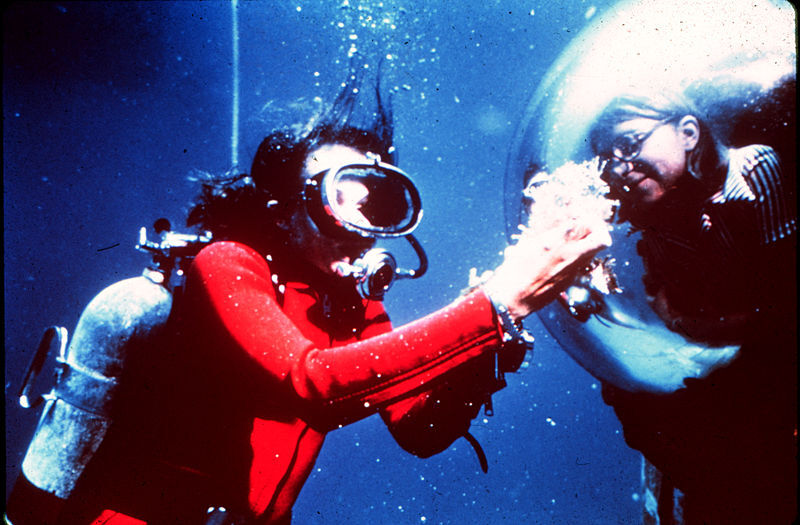
Dr. Sylvia Earle displays samples to aquanaut inside TEKTITE in 1971.
© OAR/National Undersea Research Program
Along the way, she’s excelled as an ocean scientist, explorer, author, filmmaker, and lecturer. She’s conducted and published research (earning a doctorate for her studies of marine algae), spent more than 7,000 hours underwater including when she walked on the seafloor (1250 feet below the surface), and spent weeks living and working 50 feet underwater as captain of a first-ever all-woman science crew.
Earle was the first woman to serve as chief scientist for the National Oceanic and Atmospheric Administration, is a National Geographic Explorer-in-Residence, and was TIME magazine’s first Hero for the Planet. It’s one of more than 100 national and international honors she’s received.
Dubbed “Her Deepness,” when she isn’t underwater herself, she champions or leads expeditions to explore the ocean, and helped create vehicles others have used to explore the deep.
Earle’s passion for protecting the ocean is bottomless. It’s “the blue heart of the planet,” she says. “We need to respect the ocean and take care of it as if our lives depended on it. Because they do.”
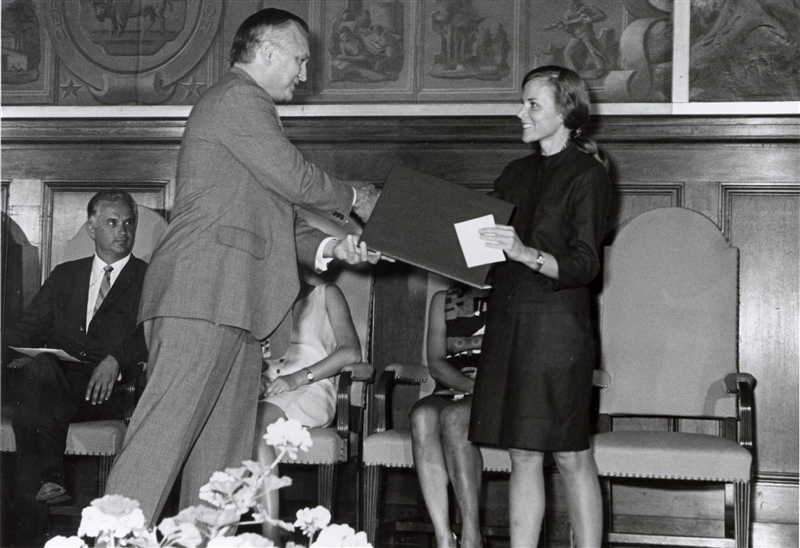
Sylvia Earle receives an award from Interior Secretary Walter Hickel when he honored the all-woman TEKTITE aquanaut crew she led in 1970.
© NOAA Central Library Historical Fisheries Collection
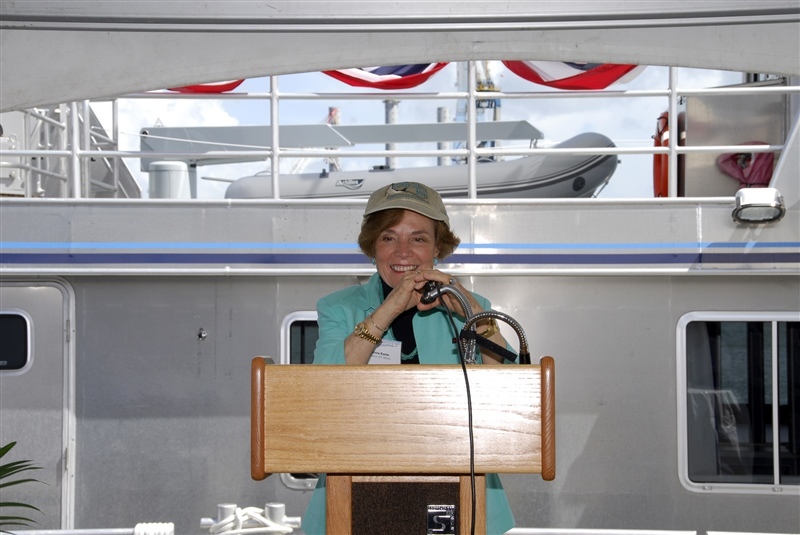
Dr. Sylvia Earle speaking during the dedication of R/V Manta, a state-of-the-art research vessel she sponsored for Flower Garden Banks National Marine Sanctuary in Texas.
© NOAA
When she received the 2009 TED Prize, her wish was simple: “Use all means at your disposal... to ignite public support for a global network of marine protected areas, Hope Spots large enough to save and restore the ocean.”
Since Earle issued her call, nearly 150 Hope Spots have been designated around the world.
A passion for exploration: Dr. Cindy Lee Van Dover
A childhood chasing crabs on the New Jersey shore and an early fascination with Captain Nemo from Jules Verne’s 20,000 Leagues under the Sea sparked a lifelong interest in Dr. Cindy Lee Van Dover to explore the deep sea. She was especially drawn to hydrothermal vents populated by almost extraterrestrial forms of life. She was fortunate to be part of one of the first cruises studying vents on the East Pacific Rise, in 1982, and made her first dive aboard the submersible Alvin before she’d completed her PhD. She went on to become the first—and still the only—woman to pilot Alvin during 48 dives totaling 96 days on the seafloor.
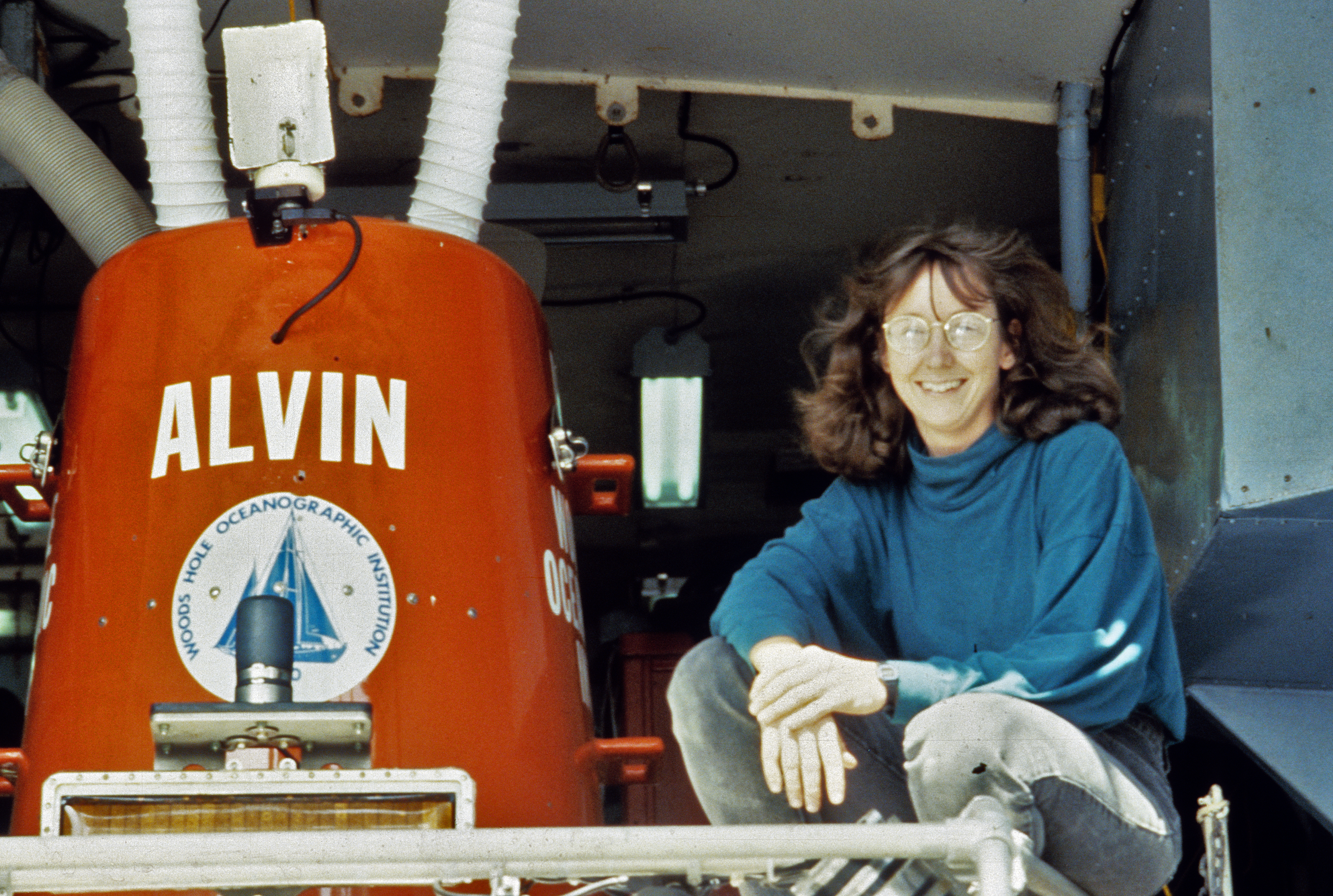
Dr. Cindy Lee Van Dover and the submersible Alvin. She took Alvin on 48 dives as its first, and still only, woman pilot.
© Woods Hole Oceanographic Institution
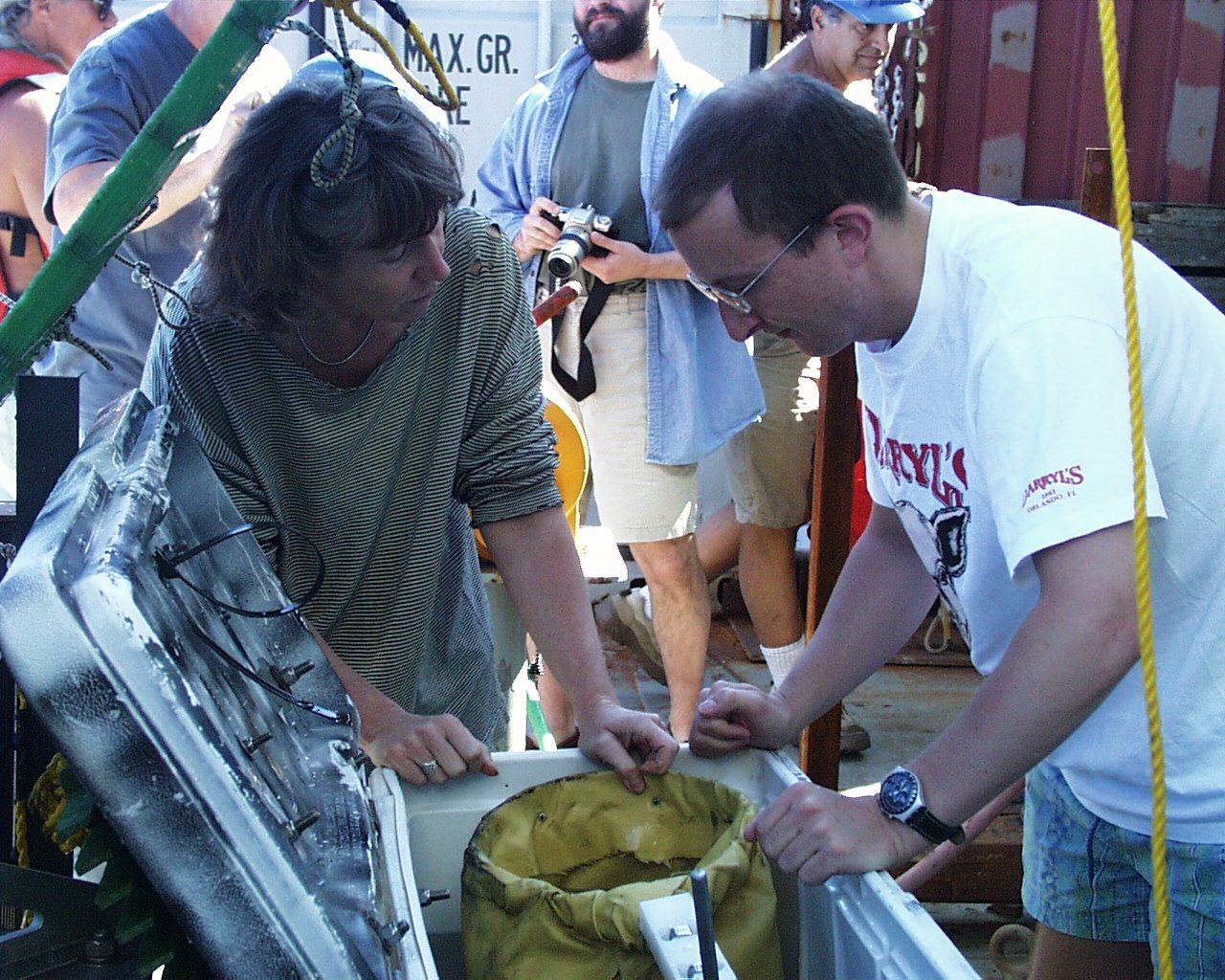
Van Dover and a colleague with specimens collected by Alvin during a research trip.
© Woods Hole Oceanographic Institution
It wasn’t easy, but she embraced the challenge. During Alvin research trips, she quickly realized scientists might join an expedition or two each year, ferried to locations specific to their research interest. Pilots, on the other hand, got to cruise the seafloor much more often, over a wide range of habitats—perfect for an ecologist like her. So, she set out to become a pilot.
Van Dover began volunteering before dawn, to help the crew prepare Alvin for its daily dives. She learned the technical and mechanical skills pilots needed to master, all while writing her doctoral thesis on benthic invertebrate communities of hydrothermal vents. She had to overcome at times not-so-gentle hazing by the men who trained her because, she says, “I felt an obligation to my gender.” It was, she says, “The hardest thing I’ve ever done in my life.”
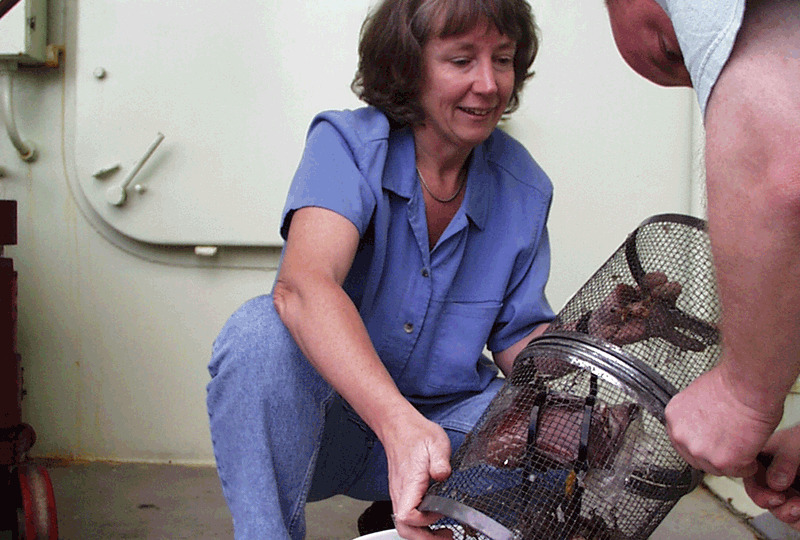
Her research focused on the ecology and organisms found in deep-sea hydrothermal vent communities.
© Woods Hole Oceanographic Institution
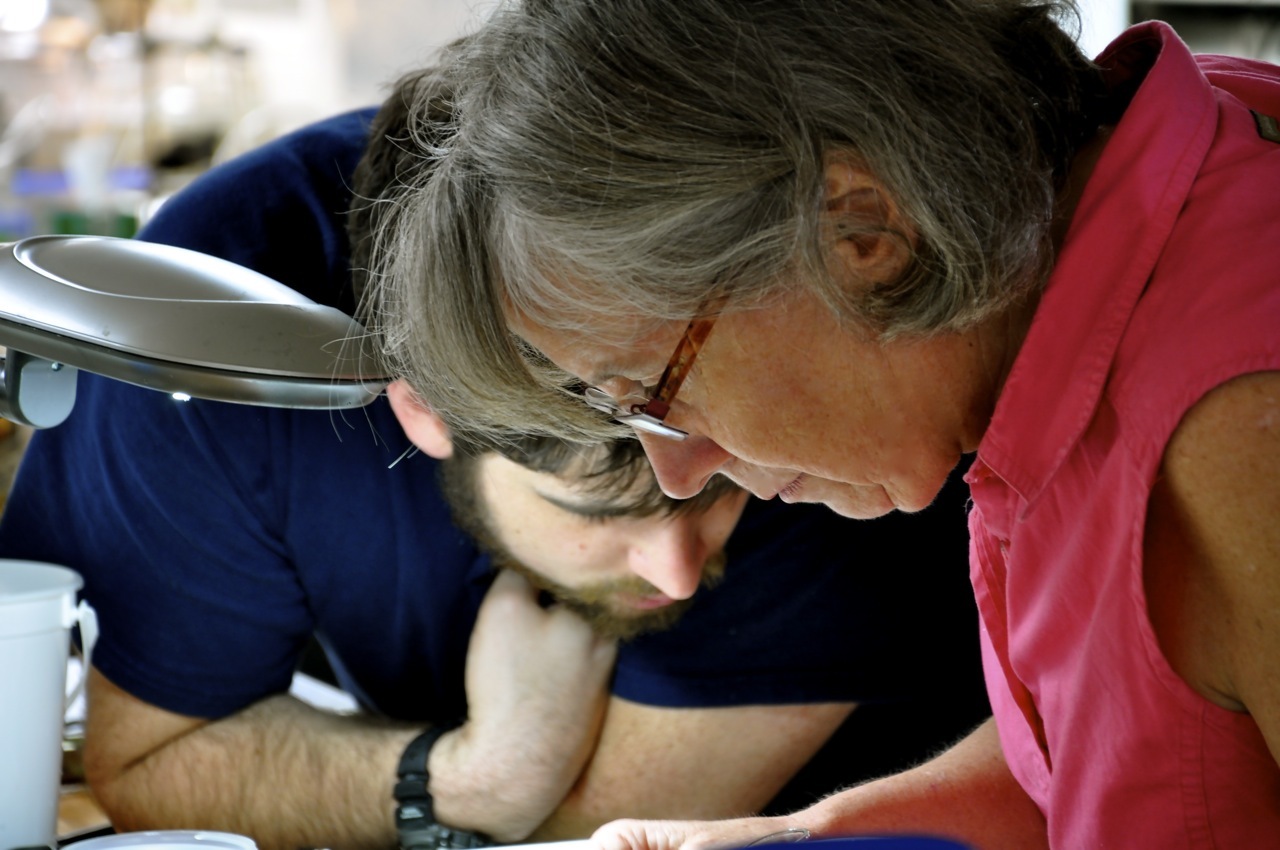
In addition to conducting scientific research and piloting the Alvin submersible, Dr. Cindy Lee Van Dover served on the scientific advisory team that helped redesign the venerable submersible.
© Woods Hole Oceanographic Institution
In addition to studying the ecology of chemosynthetic ecosystems, she wrote the first maintenance manual for Alvin. She later was named chief scientist for the oversight committee that redesigned Alvin. She became the first woman to head the marine laboratory at Duke University, where she's now director of graduate studies in marine science and conservation.
Related videos
First and only woman to pilot the famous Alvin submarine

Cindy Lee Van Dover Ph.D. is the first and only woman to pilot the famous Alvin submarine. The Duke University marine ecologist talks about why and how she went through the arduous training and some of the things she has seen on the bottom of the ocean. (Video by Duke University)
The rising generation
Women have made their mark in deep ocean research for nearly a century. In doing so, they’ve inspired new generations and made it easier for other women to find their place as engineers, scientists, and in other essential roles. Many are making important contributions to projects at both the Aquarium and at the Monterey Bay Aquarium Research Institute (MBARI).
- Engineer Kakani Katija leads the Bioinspiration Lab at MBARI, where she is developing underwater technologies to better observe biological and physical processes where they happen in the ocean. One of her latest breakthroughs: 3D imaging of giant larvaceans, a deep-ocean animal that plays a key role in the global carbon cycle.
- Senior Aquarist Alicia Bitondo works to bring deep-sea animals and other rarely-seen species to the public at the Aquarium. She’s been on the team that created the “Tentacles” special exhibition of squids, octopuses, and other cephalopods—including deep-sea species like the vampire squid—and is now learning to raise deep-sea snailfish and other animals for “Into the Deep,” which opens in 2022.
- Biological oceanographer Anela Choy helped document the extent of microplastic pollution in the deep ocean in a research collaboration between the Aquarium and MBARI. Now at UC San Diego, she studies open the food web structure of deep-sea and water column animals—how organic matter flows through and connects species and assemblages, and the impacts of global environmental change and commercial fishing pressure on these ecosystems.
Keep exploring
Story
Nature is queer
We’re excited to sea-lebrate the queerness of nature!
Read story – Nature is queer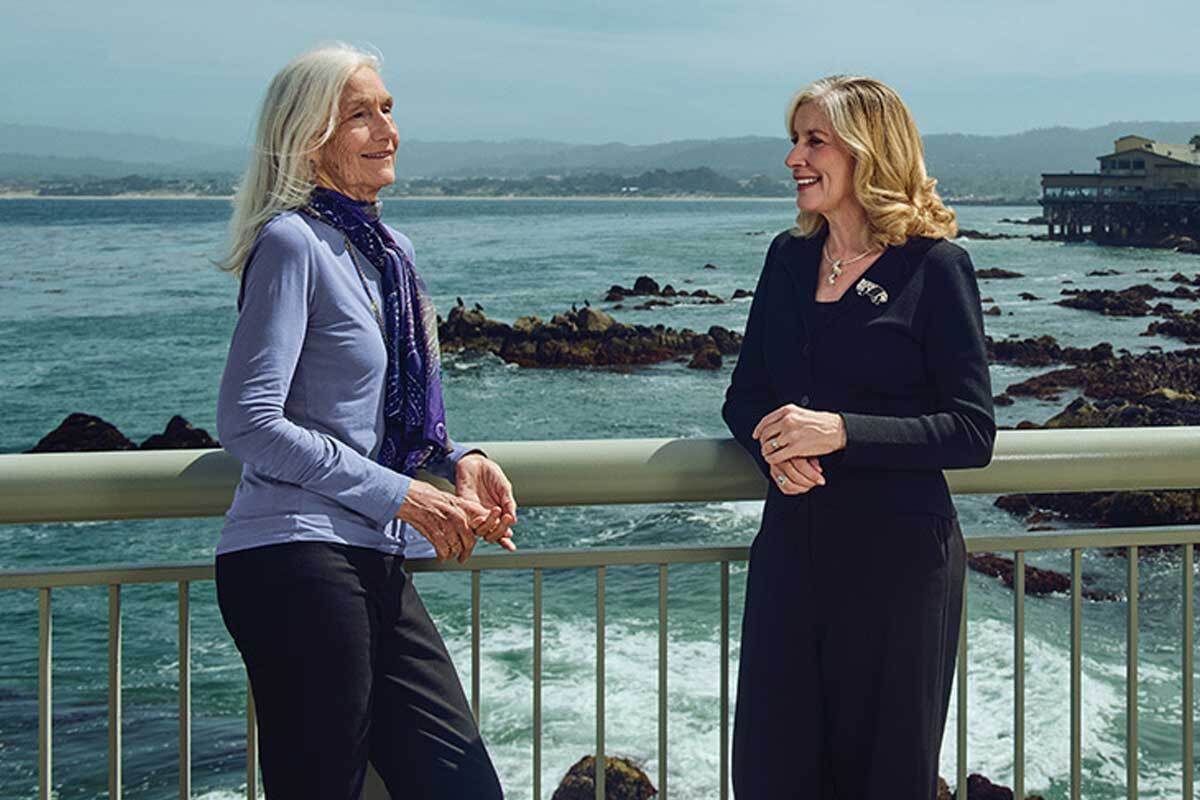
Story
Q&A: Julie Packard and Dr. Jenny Gray
Get to know incoming Chief Executive Officer Jenny Gray in this Q&A with Julie Packard.
Read the Q&A – Q&A: Julie Packard and Dr. Jenny Gray
Story
Elevating Black voices in ocean science and conservation
Why representation in ocean science matters.
Read story – Elevating Black voices in ocean science and conservation