

Horn shark
Heterodontus francisci
- On view
- Kelp Forest
- Animal type
- Sharks & rays
- Ecosystem
- Kelp forest
- Relatives
- Bullhead sharks
- Diet
- Crustaceans, sea urchins, small fishes, molluscs
- Range
- Central California to Baja California
- Size
- To 4 feet (1.2 m)
Meet the horn shark
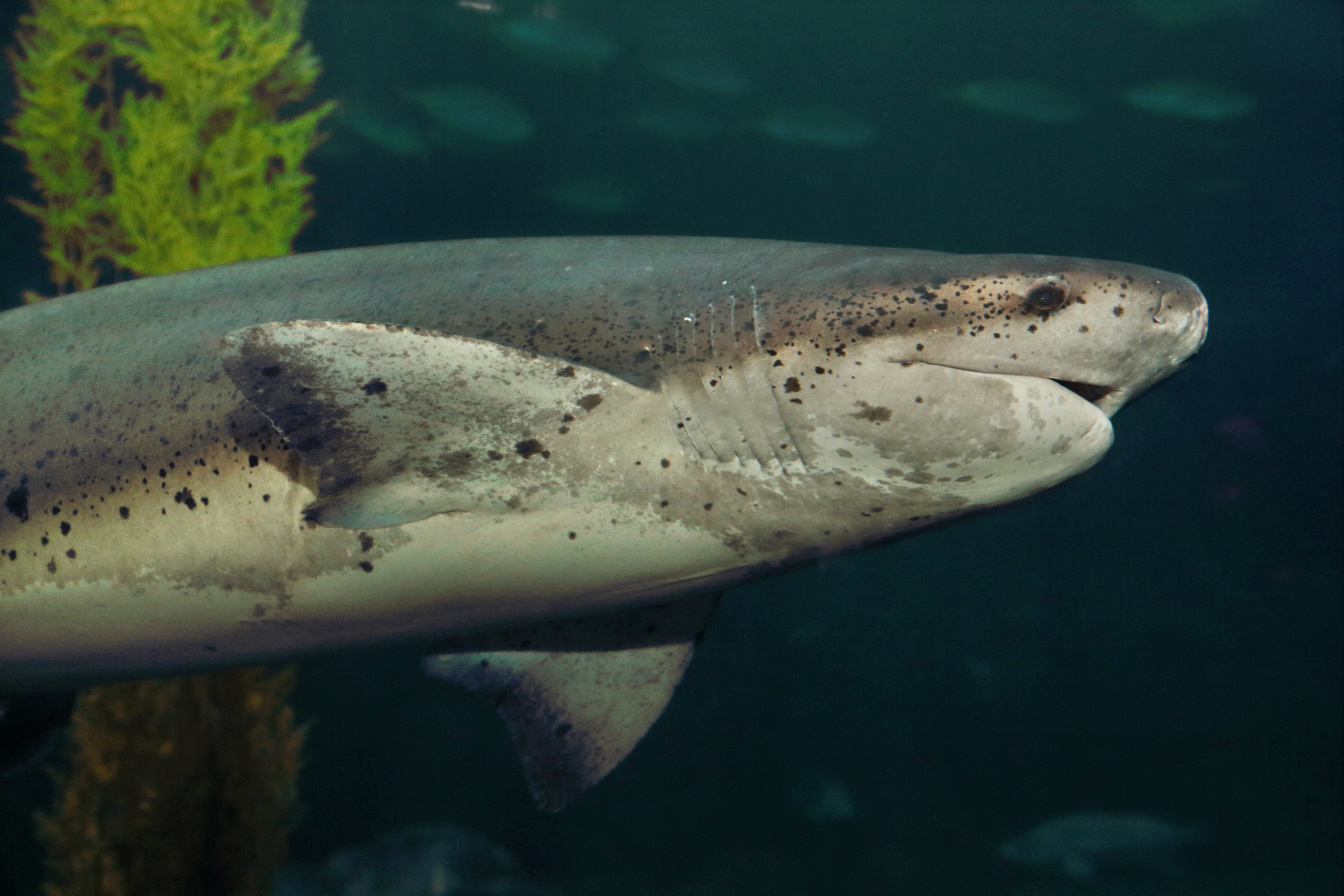
While sleeker sharks rule the open waters, the horn shark hides out in the shadows of the seafloor. It is not a graceful swimmer and doesn't move around like its streamlined kin—in fact, sometimes the horn shark uses its strong pectoral fins to crawl along rocks.
Watch in real time
Shark Cam
Check out this live cam – Shark CamConservation
Caught by divers for sport and for their spines, horn shark populations have declined in southern California in areas with intense diver activity. Their spines are made into jewelry. Although there's no commercial market for horn sharks, they're accidentally caught as bycatch, usually in crab traps, gillnets or trawling nets.
Cool facts
- This small, elusive shark prefers shallow waters less than 40 feet deep. It spends its days hiding under ledges, in caves or among kelp and other seaweeds; it hunts at night. The horn shark feeds on seafloor invertebrates, especially sea urchins and crabs, and occasionally on small fishes.
- Females lay spiral egg cases, which they wedge into crevices. This makes the egg cases stay put. Each egg case contains one pup, which takes between six and nine months to hatch.
- Slow and sluggish, horn sharks spend their days hidden in crevices or among rocks—unseen for the most part since their coloration matches the muddy browns and greens of their surroundings.
- The scientific name Heterodontus is the Greek word for "different teeth." The teeth lining the front of the horn shark's jaws are sharp and used for grasping prey. The teeth in the back are flat and molarlike, useful for crushing shellfishes. The common name "horn" refers to the spines in front of each dorsal fin.
Up next in kelp forest
Animal
Brown turban snail
With its smooth, conical shell, a brown turban snail looks like a "foot" wearing a large hat.
Keep exploring
Animal
Leopard shark
Leopard sharks live in shallow waters of bays and estuaries and occasionally patrol the kelp forest.