

Kelp forest
Towering underwater forests that support marine life and protect our coasts
Beneath the waves, giant kelp grows into lush underwater forests, home to sea otters, fish, and countless tiny creatures. These forests are not only beautiful—they’re bustling hubs of life that keep the ocean healthy and vibrant.
Related exhibits and live cams
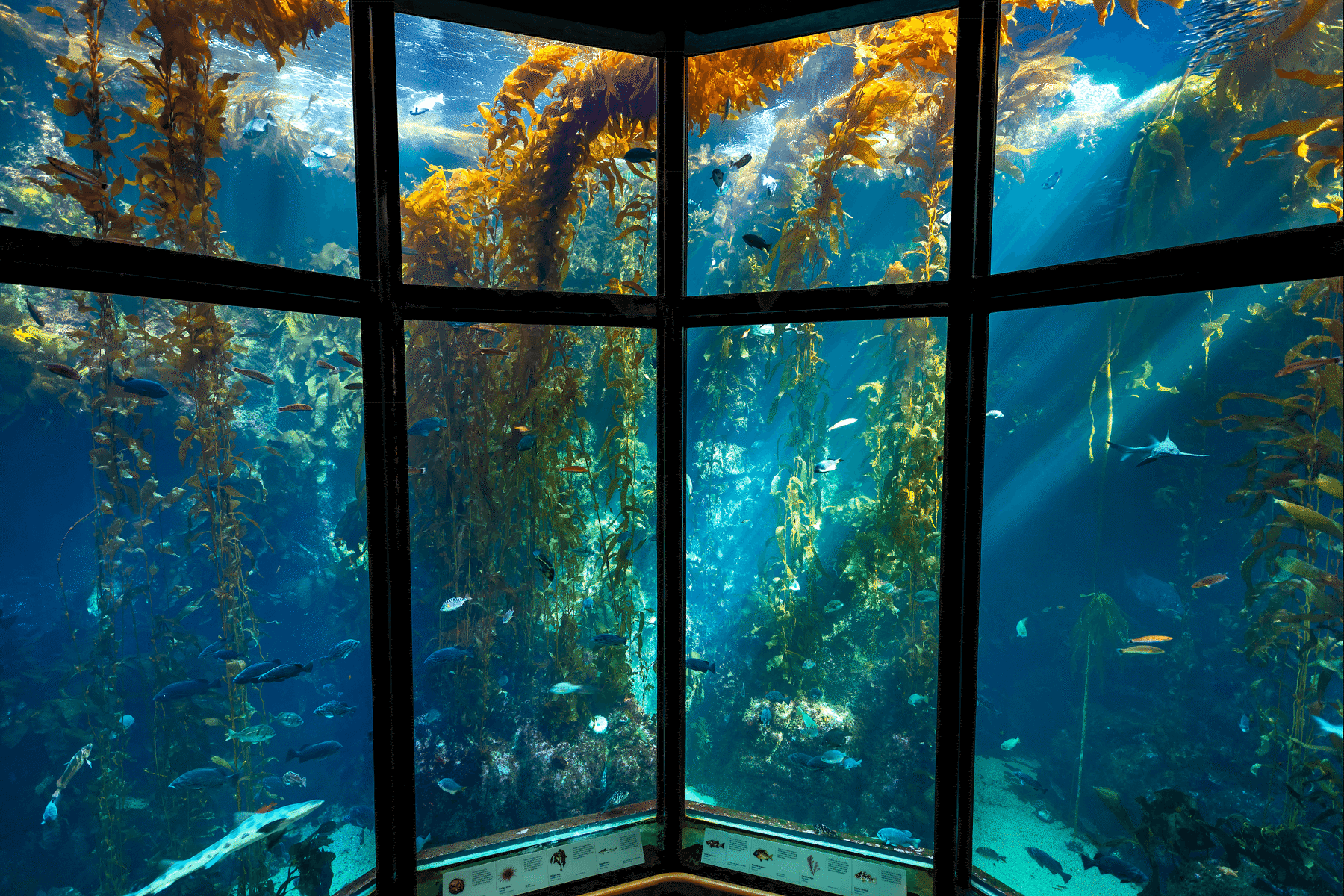
Exhibit
Kelp Forest
Enjoy a diver's-eye view of sunlit kelp, sardines, leopard sharks, wolf-eels, and a host of other fishes.
Explore exhibit – Kelp Forest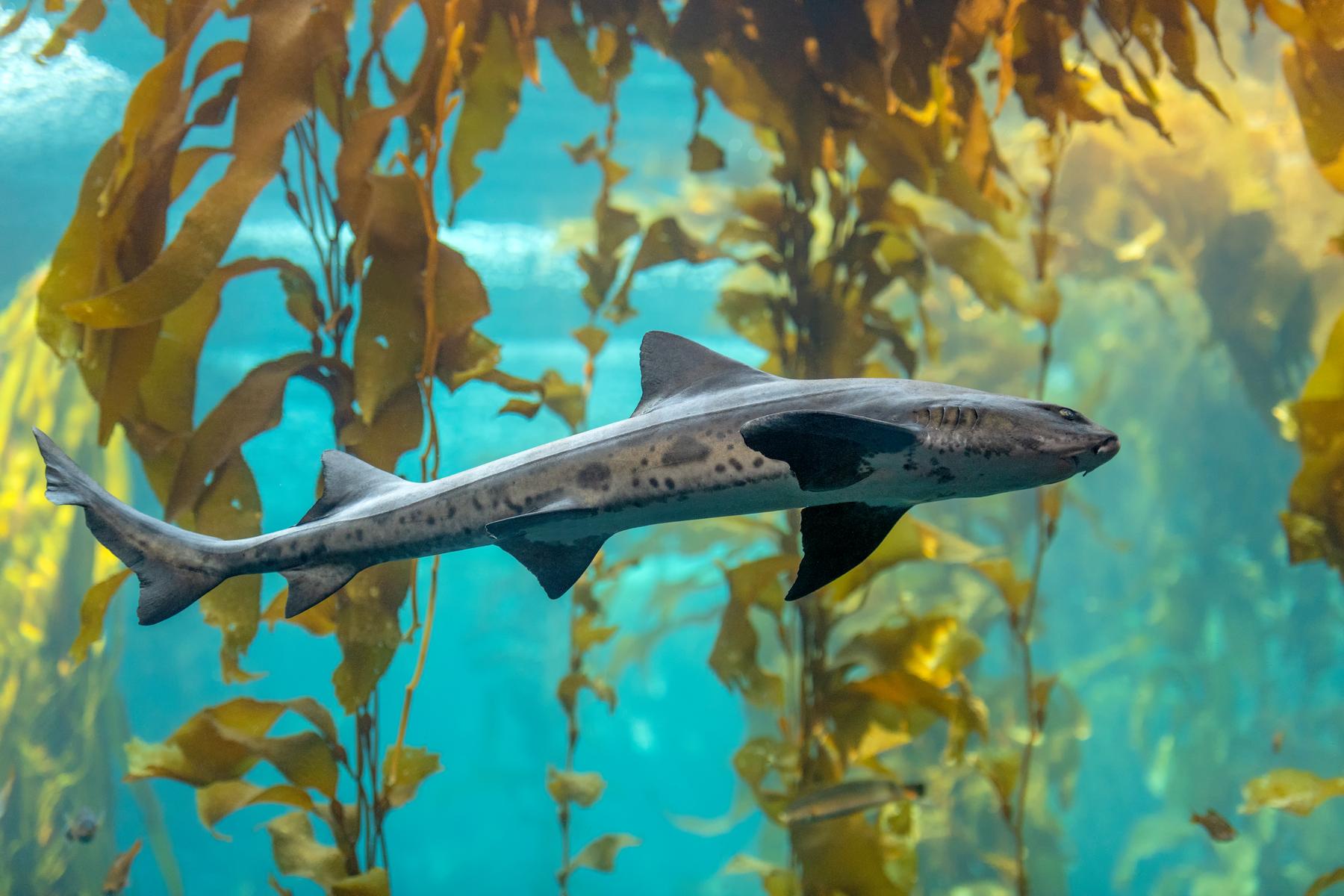
Live cam
Kelp Forest Cam
Watch the live Kelp Forest Cam at the Monterey Bay Aquarium and watch a feeding show.
Watch cam – Kelp Forest CamWhat is a kelp forest?
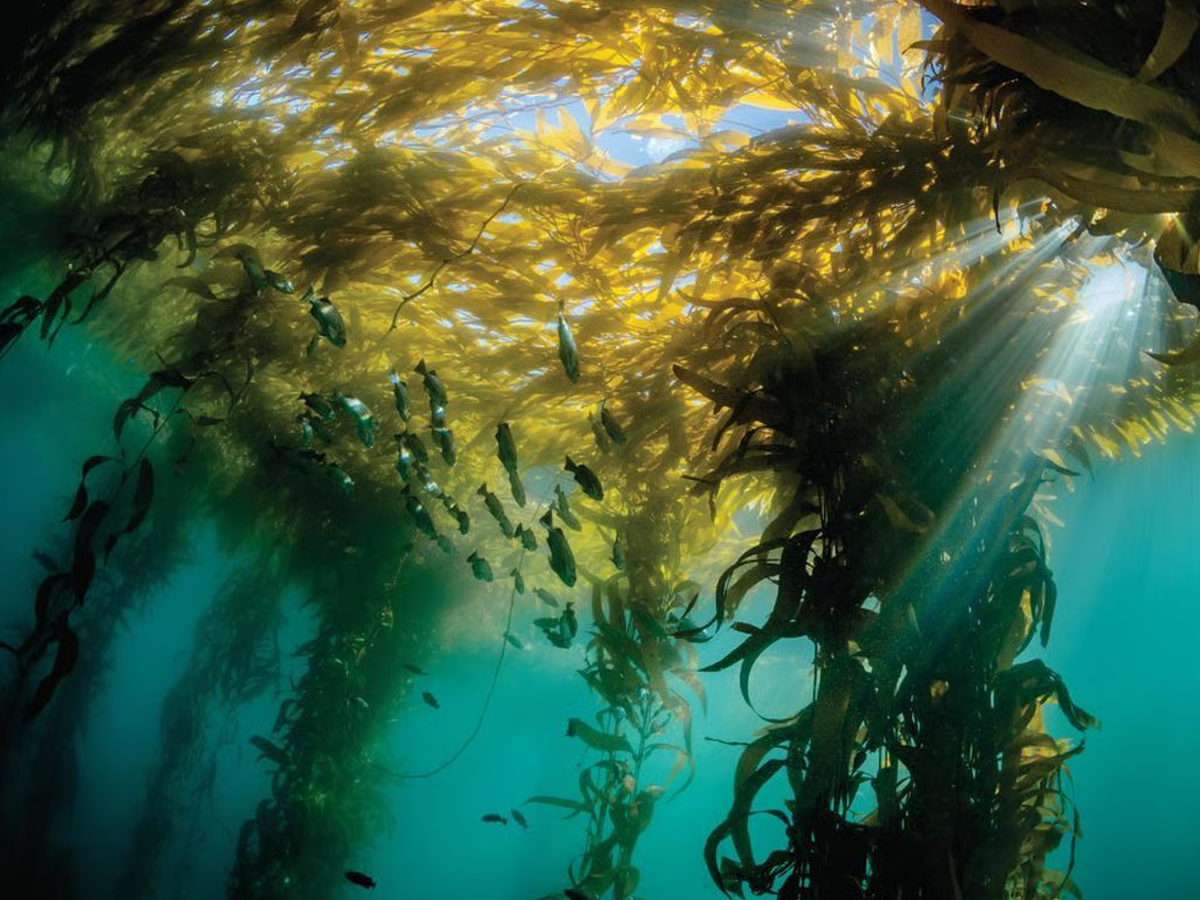
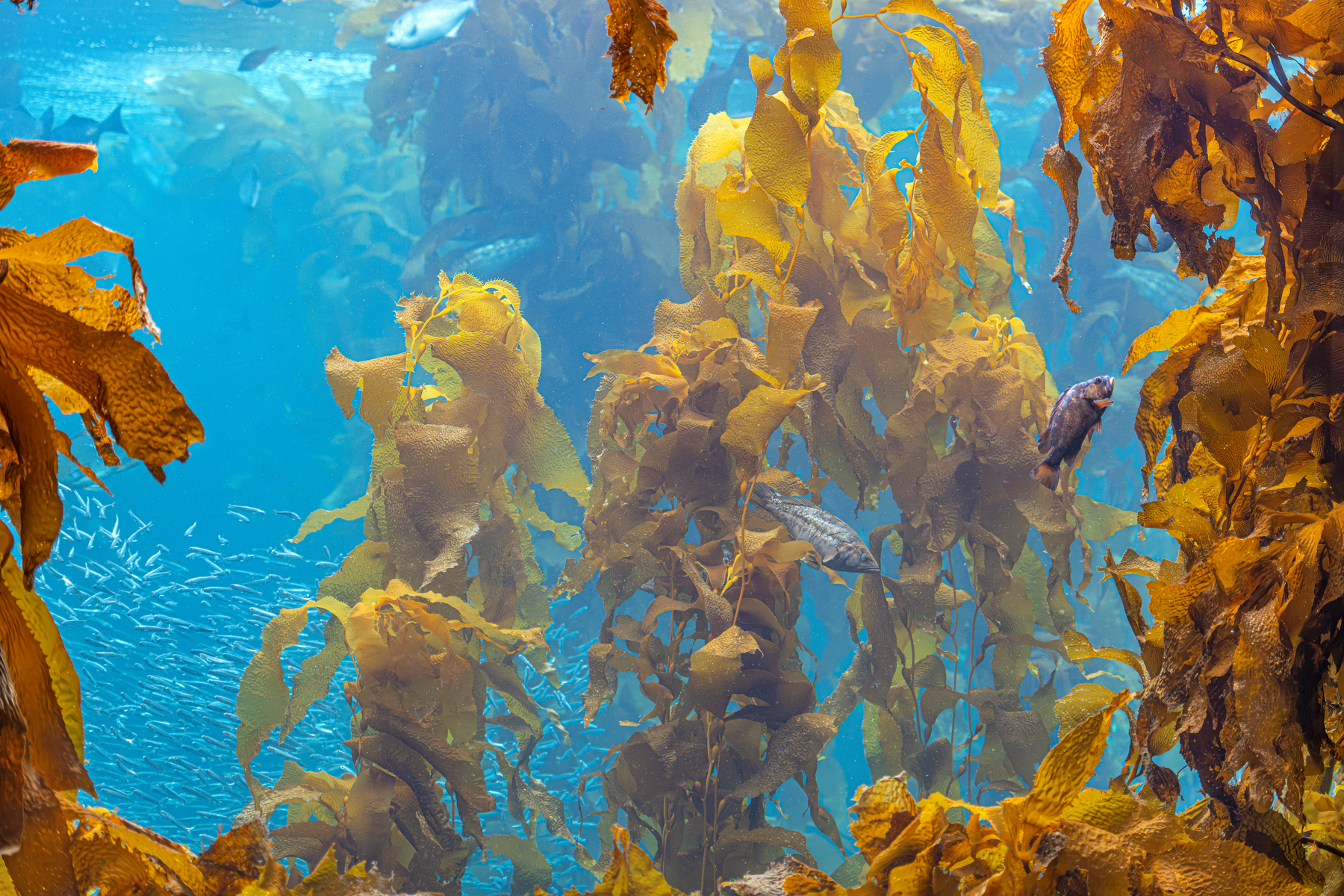
Kelp forests are towering underwater ecosystems formed by large brown algae—most famously, giant kelp. These submarine forests grow along the Pacific coast of North America, where kelp can reach up to 175 feet tall, creating a sunlight-dappled, swaying canopy beneath the waves.
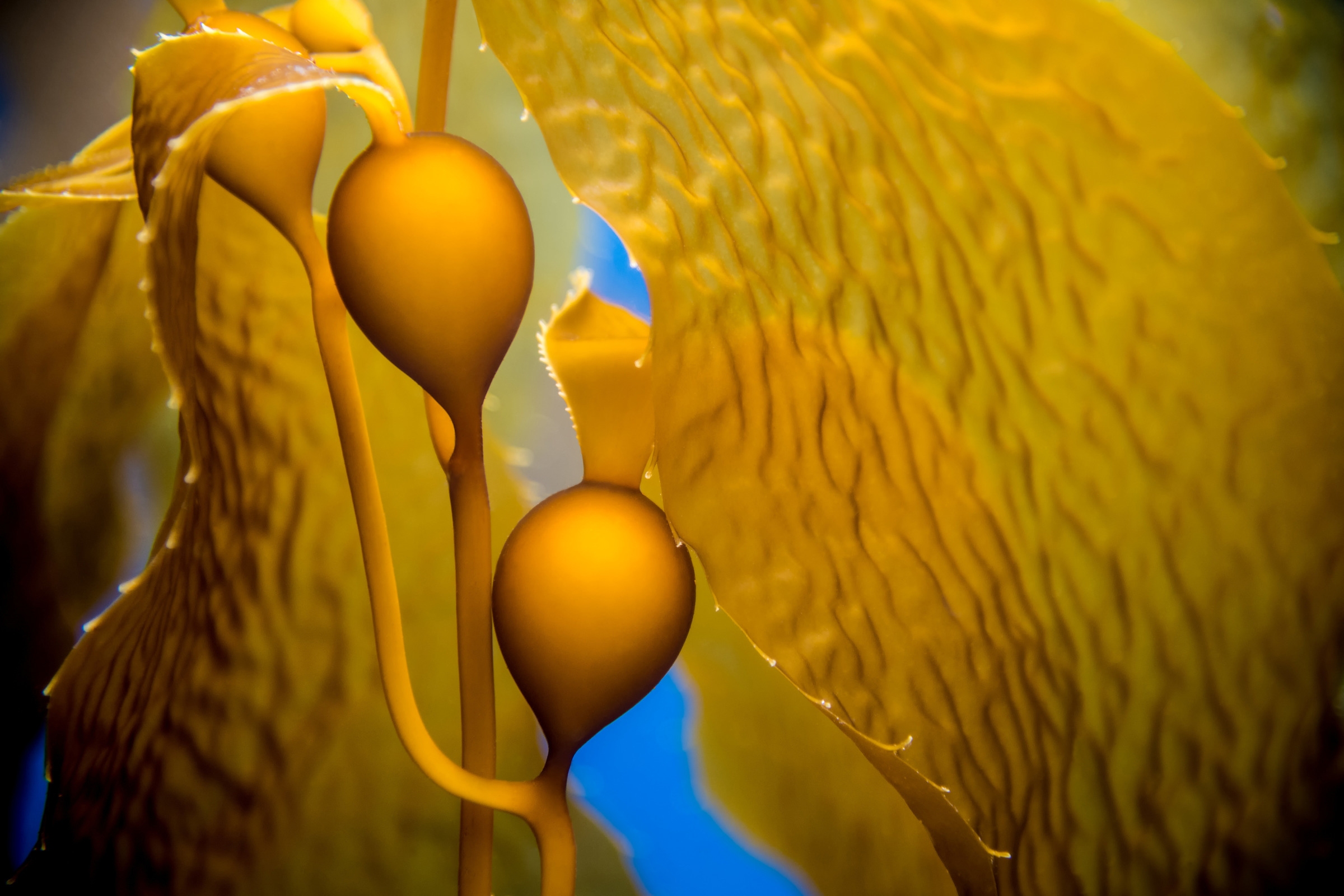
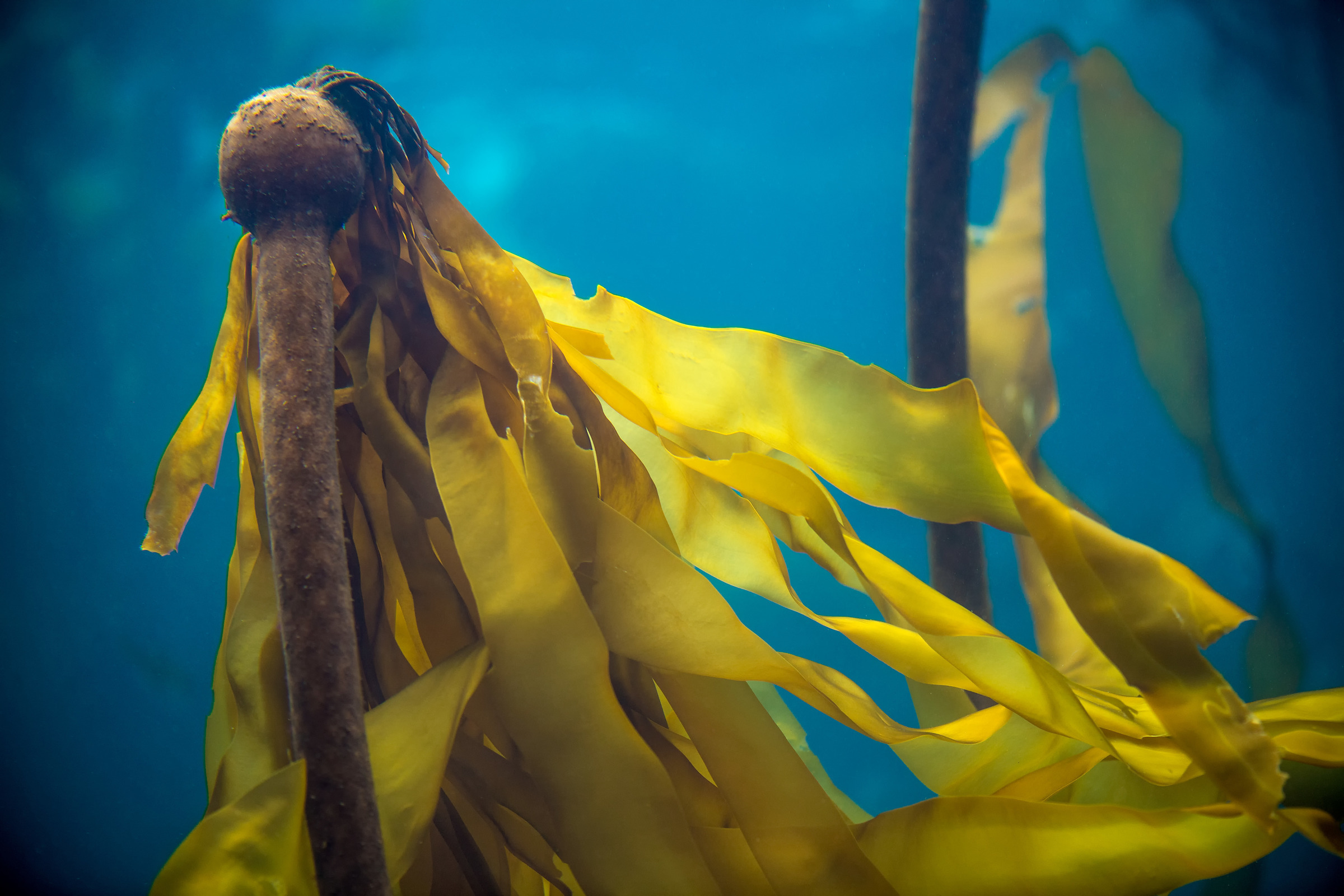
Kelp has no true roots, stems, or leaves. Instead, it anchors to rocky seafloors with a holdfast, grows upward on a flexible stipe, and floats at the surface with the help of gas-filled bladders called pneumatocysts. The result is a dynamic, beautiful, and biologically rich habitat that shelters hundreds of species.
Where do kelp forests grow?
Kelp forests thrive in cold, nutrient-rich water with plenty of sunlight and a rocky seafloor to anchor to. Globally, they grow along the coasts of the northeastern and northwestern Pacific, as well as in cool-water regions of the Southern Hemisphere—including Chile, South Africa, Australia, and New Zealand. In the United States, giant kelp forests stretch along the Pacific coast from Alaska to Baja California.
They typically grow in shallow coastal areas where sunlight can reach the seafloor—rarely in deep, open water—because kelp depends on photosynthesis to survive. Water motion is also essential: currents help deliver nutrients that fuel kelp’s rapid growth.
Who lives in the kelp forest?
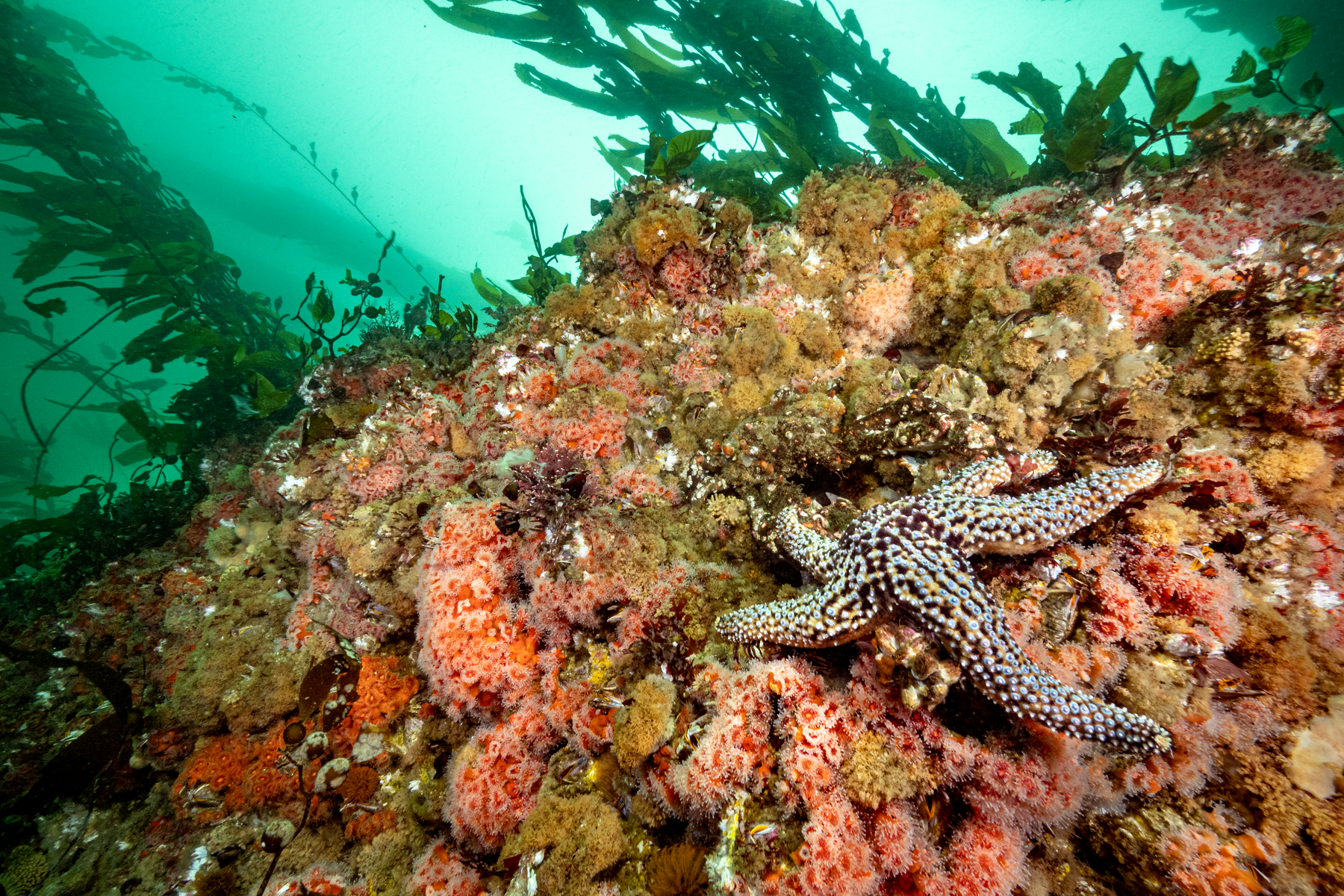
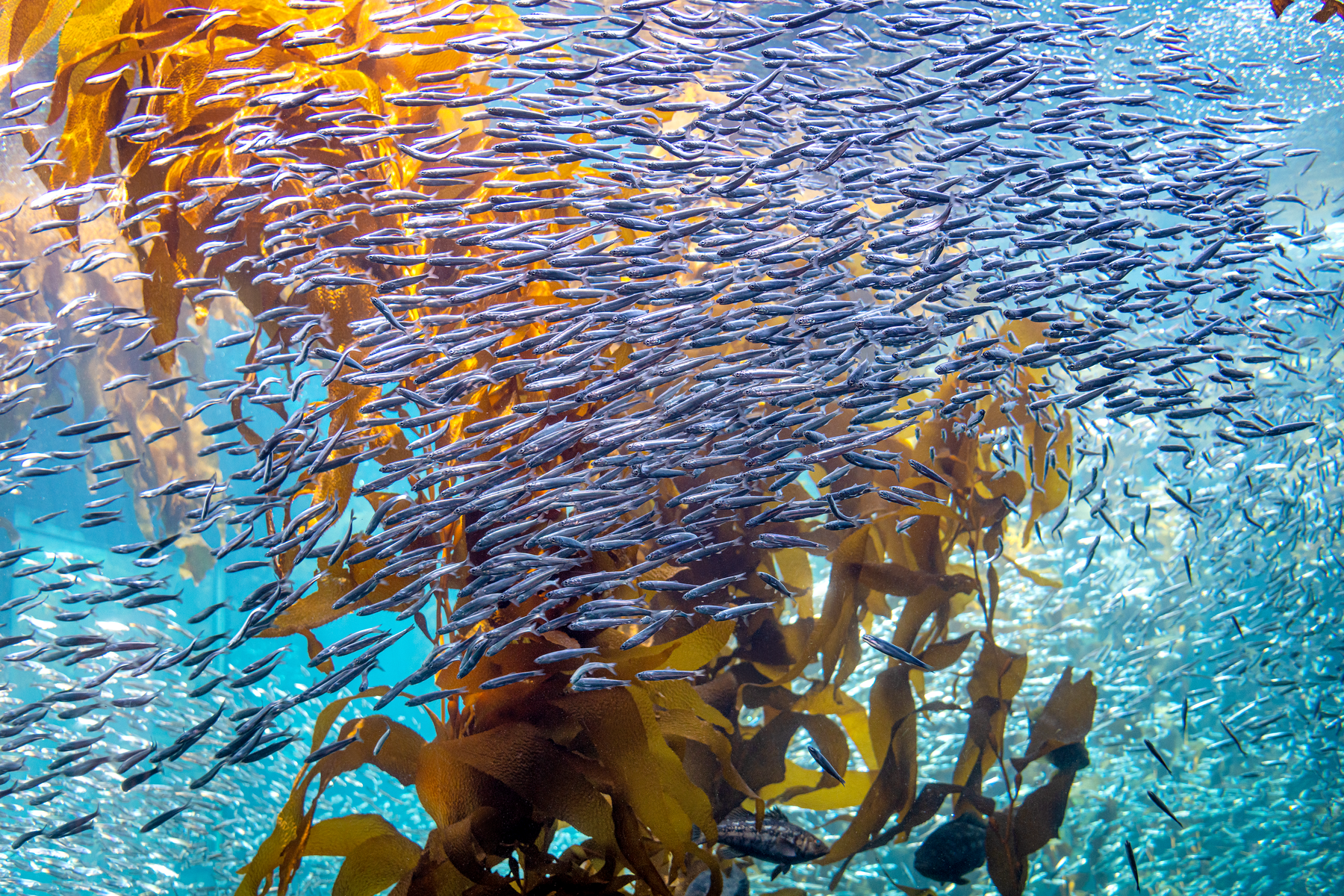
Kelp creates a three-dimensional underwater forest—much like trees on land—providing structure, shelter, and food for an entire community.
How kelp forests grow and change over time
Astonishing growth
Kelp forests grow quickly—about three to five inches each day in our exhibit. Giant kelp is capable of growing up to two feet a day under ideal conditions. In Monterey Bay, it typically grows 10–12 inches daily. Kelp forests can grow to be 175 feet tall.
Seasonal cycles
Like trees on land, kelp forests change with the seasons. Spring signals the start of the kelp’s growing season, when sunlight can more easily reach the bottom layers of the kelp forest. It's growing season peaks in early autumn when the forest’s luxuriant fronds carpet the bay.
In winter, storm waves and wind can tear and rip kelp fronds and uproot entire kelp forests from the rocky seafloor, leaving a bedraggled and less dense canopy.
Competition for space and light
Interactions with other organisms affect where kelp grows. First, kelp must compete with plants and animals for space to settle and grow. Then, as it grows toward the surface, kelp competes with nearby plants for light. At all stages of its life, kelp must survive being grazed by sea urchins, abalones, other invertebrates, and some fishes.
Why kelp forests need sea otters
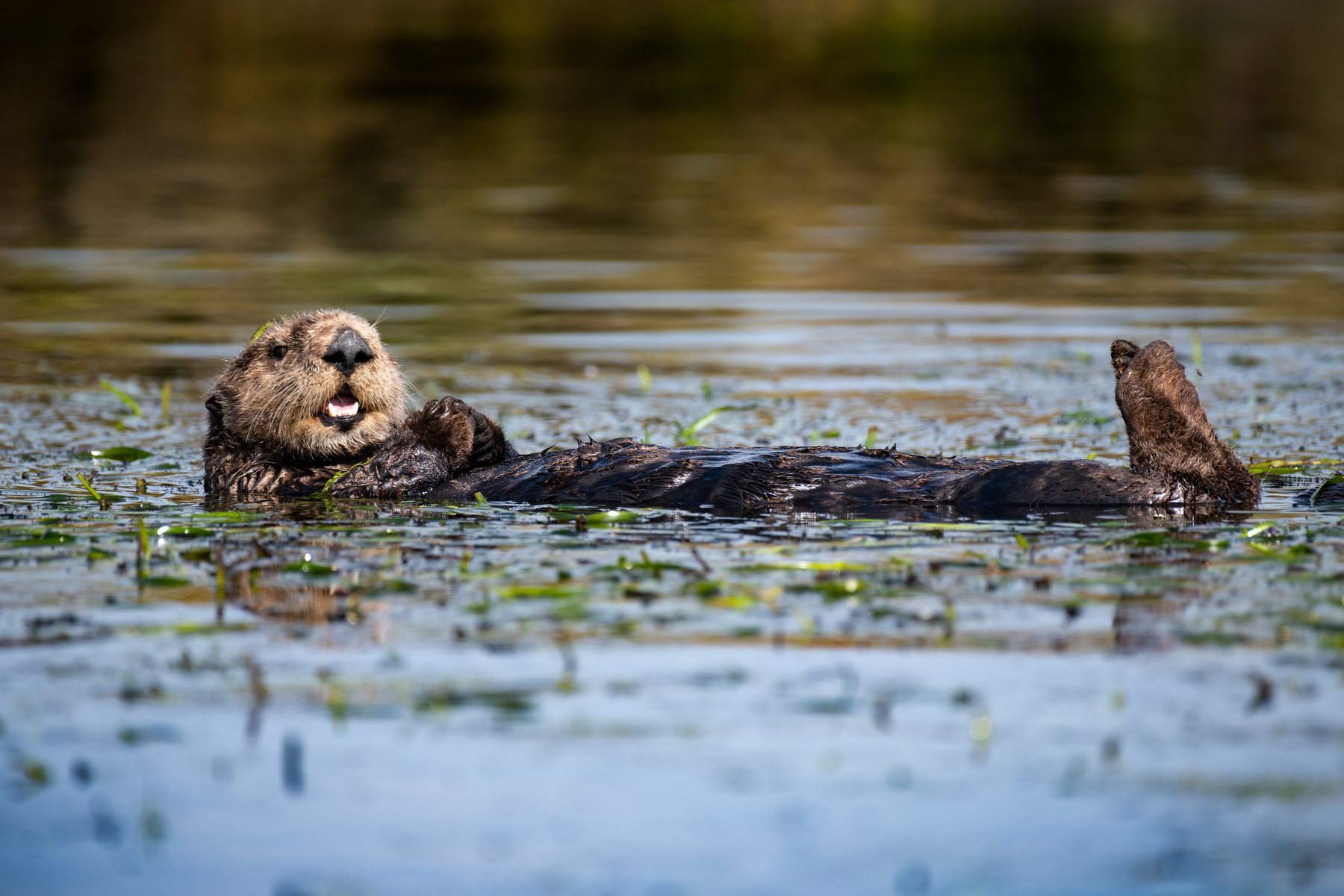
Sea otters are considered a keystone species in the kelp forest—their presence makes the entire ecosystem more resilient. Sea urchins can overgraze kelp, especially when their populations explode. Otters eat urchins, keeping their numbers in check. Where otters are abundant, kelp forests flourish. Without otters, urchin populations can boom, devouring kelp until only a barren, rocky seafloor remains.
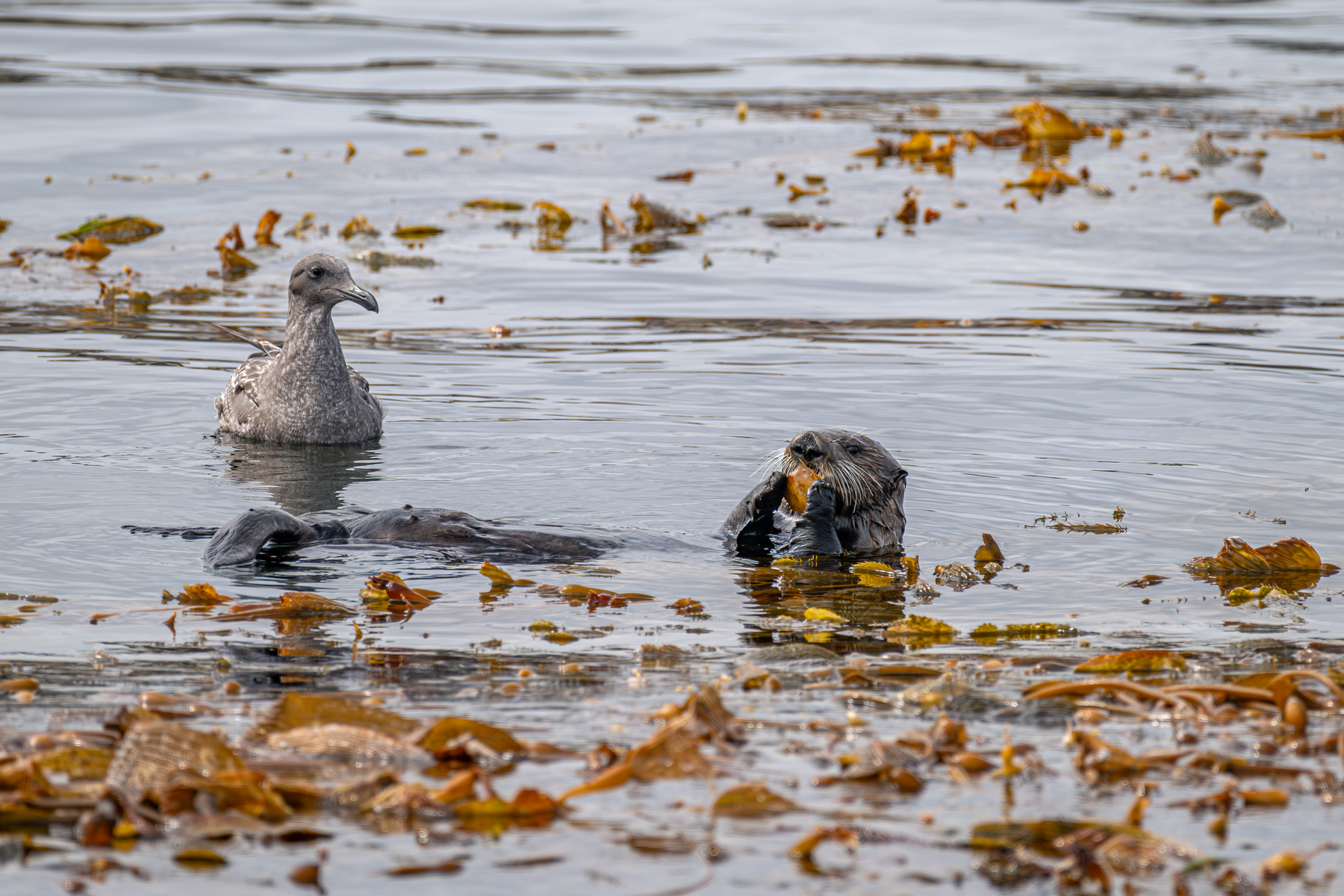
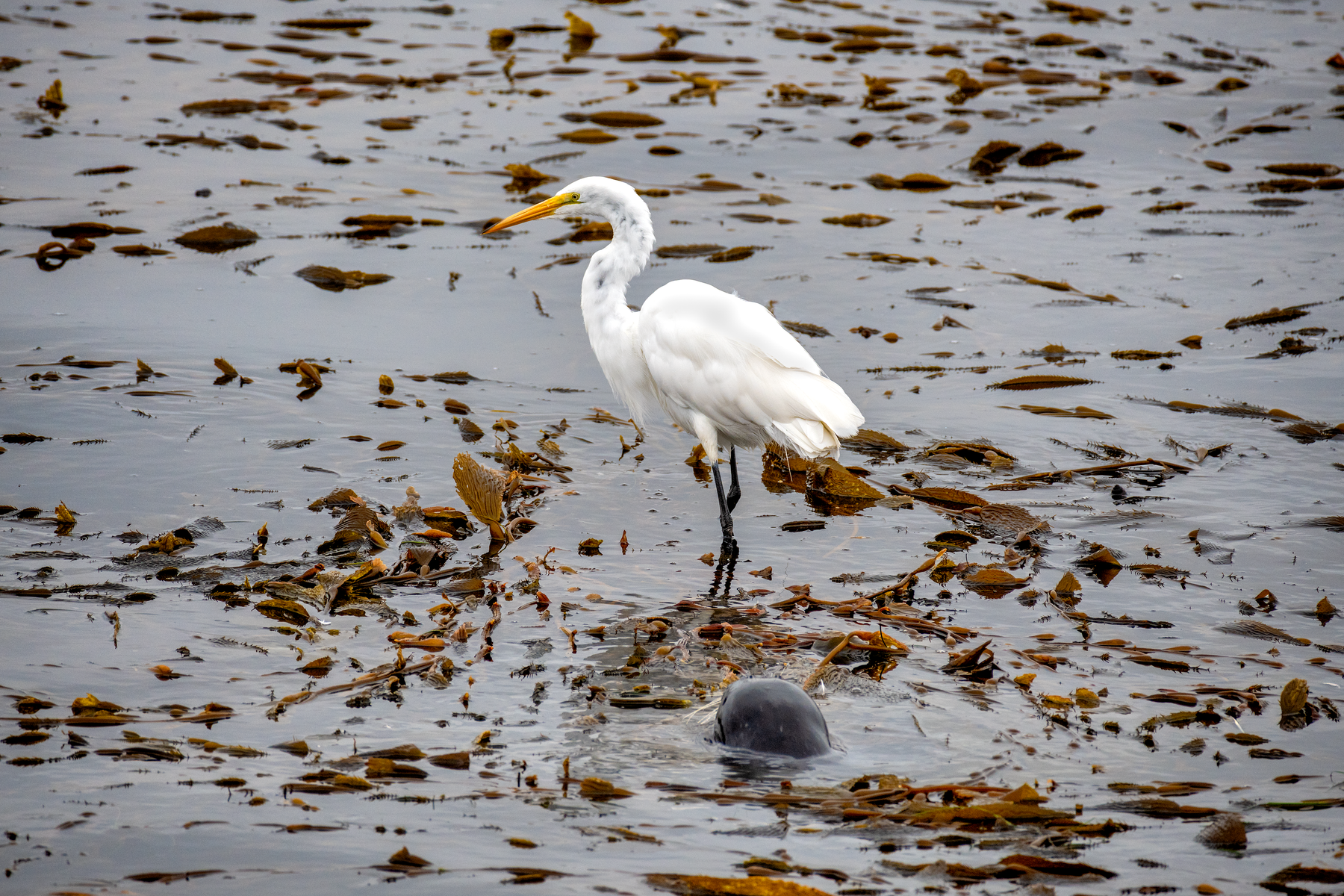
A sea otter and a gull float on top of the kelp forest.
Why kelp forests matter
Kelp forests are among the most productive ecosystems on Earth, providing benefits far beyond their boundaries.
Support for biodiversity
Kelp forests shelter hundreds of species and act as nurseries for fish and invertebrates.
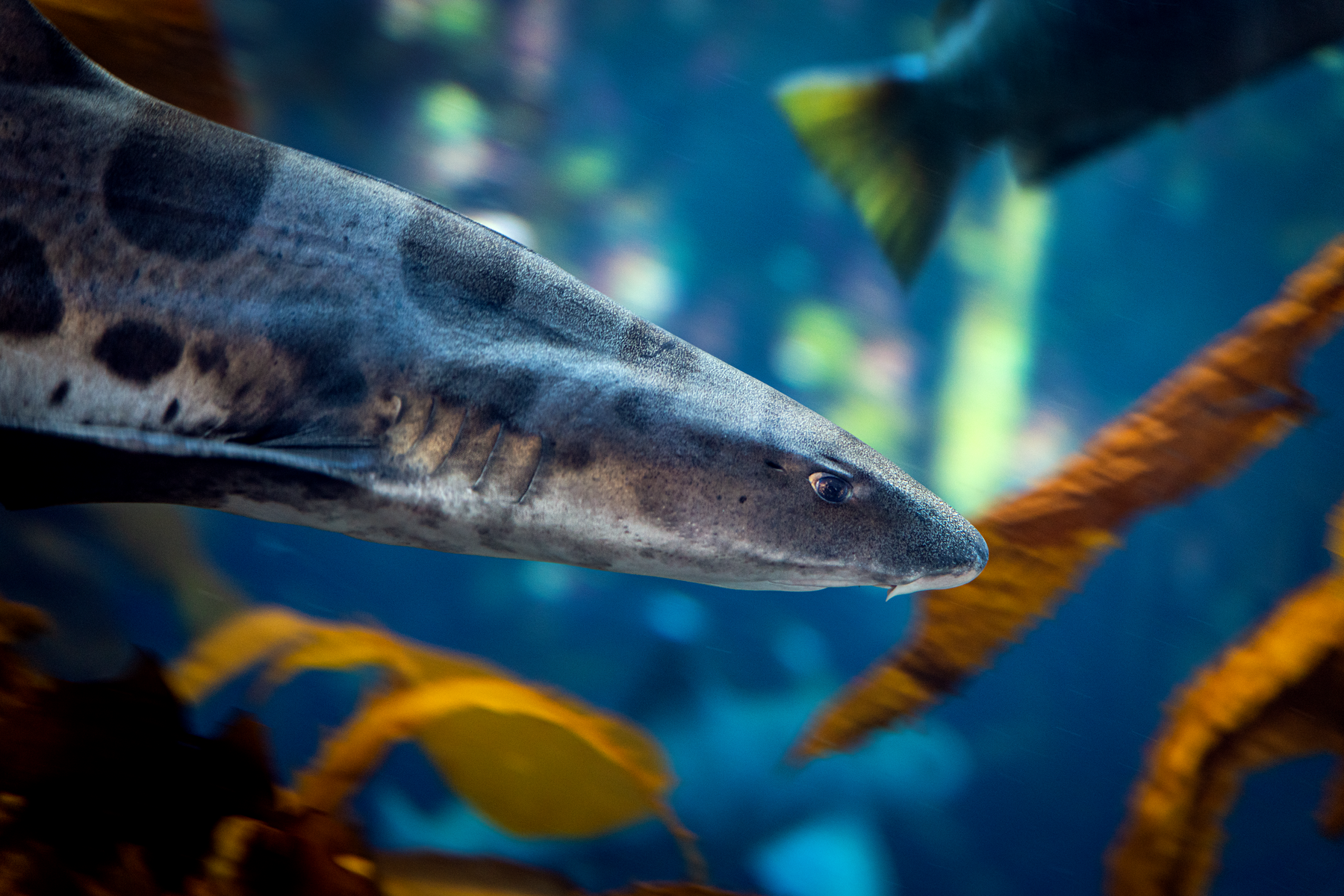
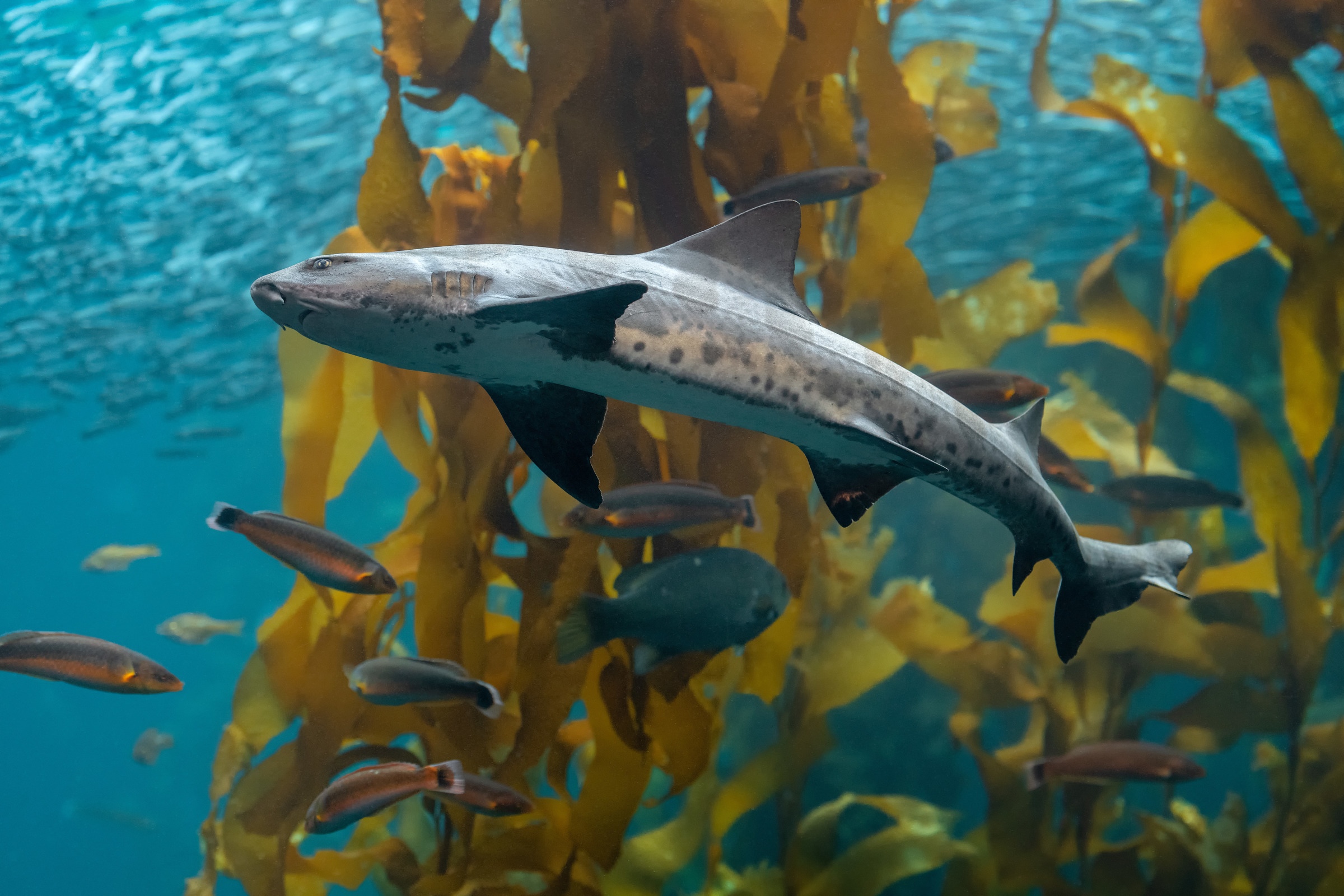
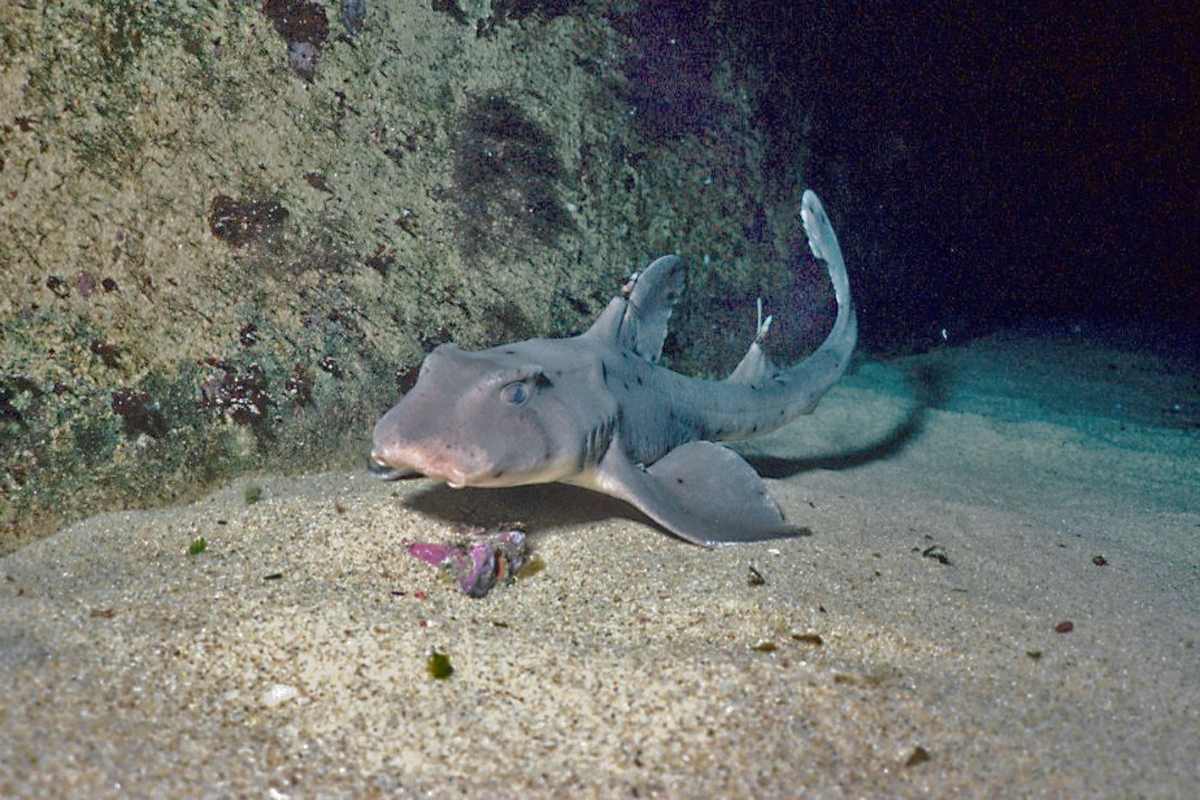
A leopard shark glides between the golden blades of the kelp forest.
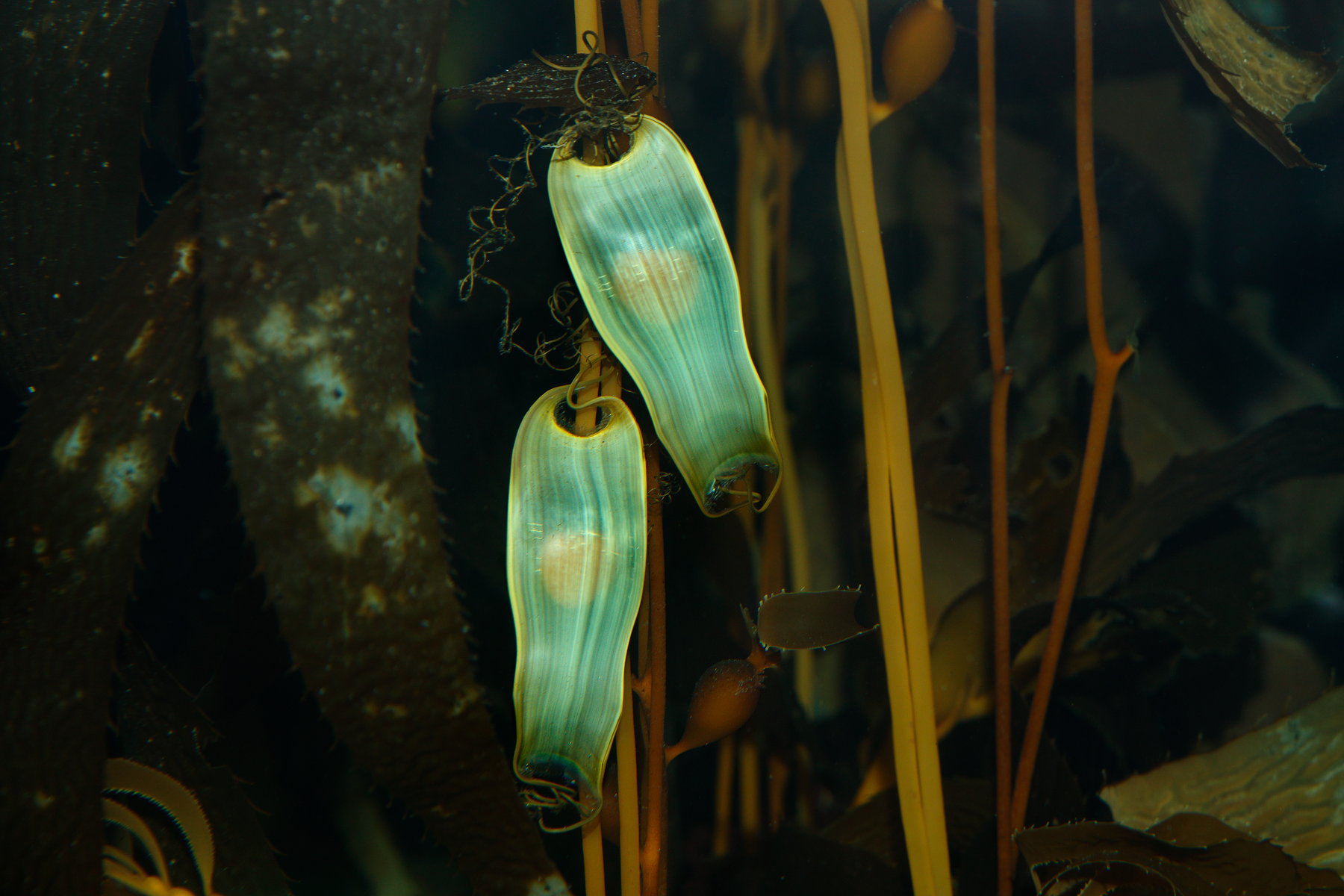
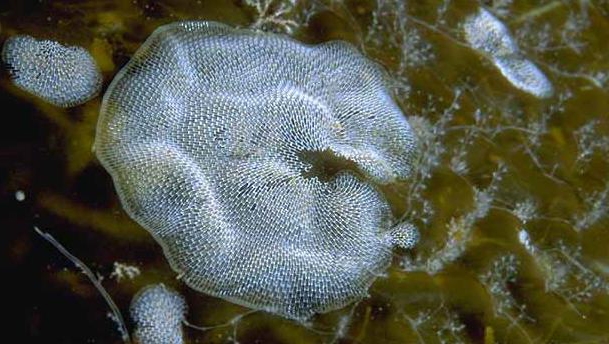
Swell shark egg cases cling to the blades of giant kelp.
Food webs
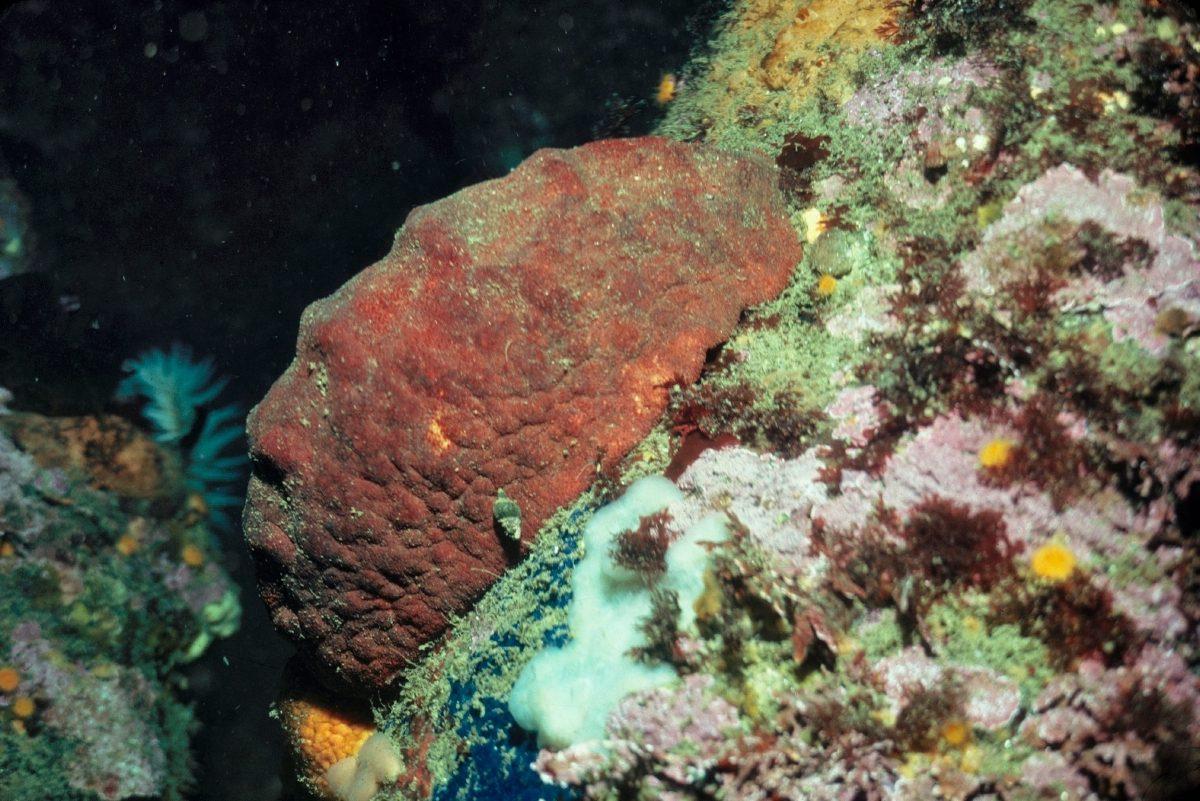
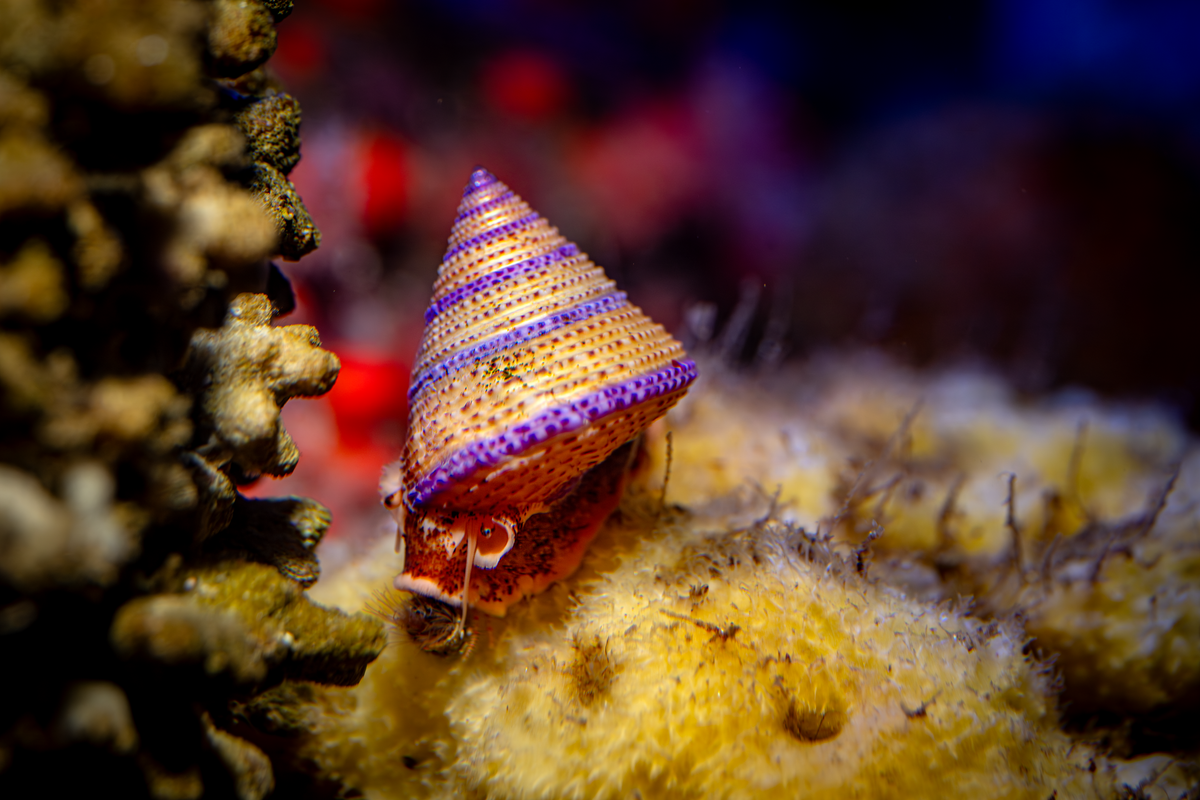
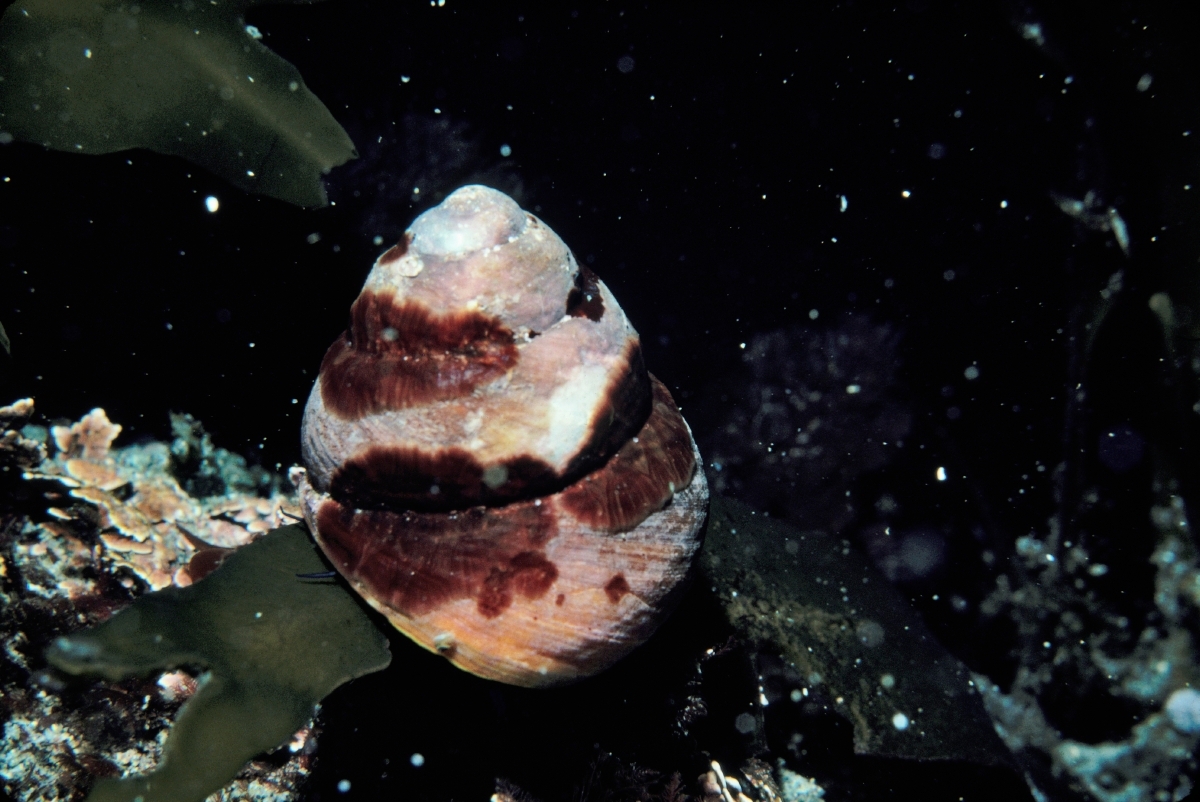
Some animals, like turban snails, graze directly on the growing algae, but many animals (like abalones, sea urchins and bat stars) feed on detached fronds that drift to the bottom. Drift kelp that isn’t eaten is decomposed by bacteria into small particles called detritus. The detritus is filtered from the water by filter-feeders, like sponges, or ingested from the sediment by deposit-feeders, like some sea cucumbers. In turn, many of these animals are eaten by predators including crabs, rockfishes, and sea stars.
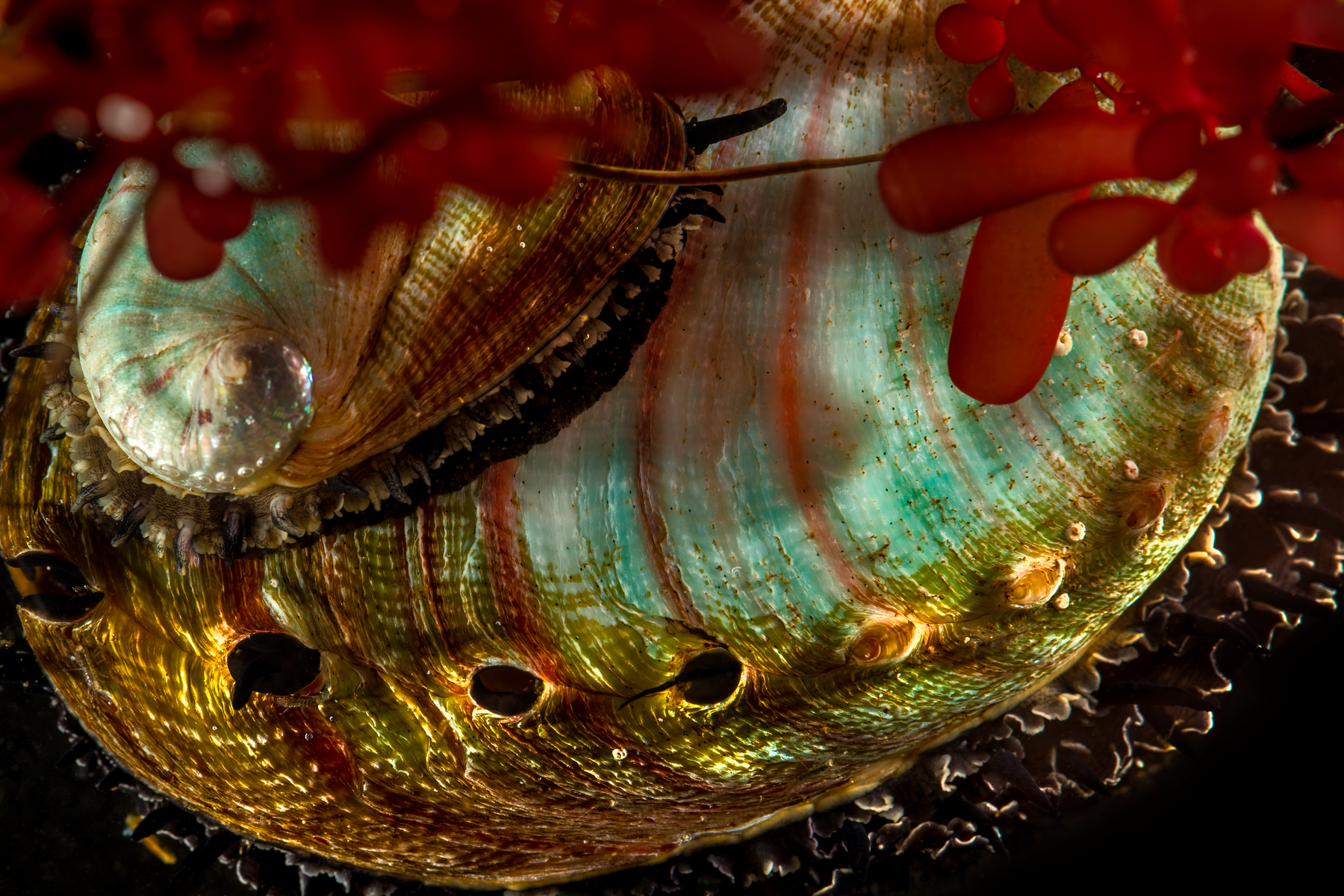
Two red abalones and sea grapes
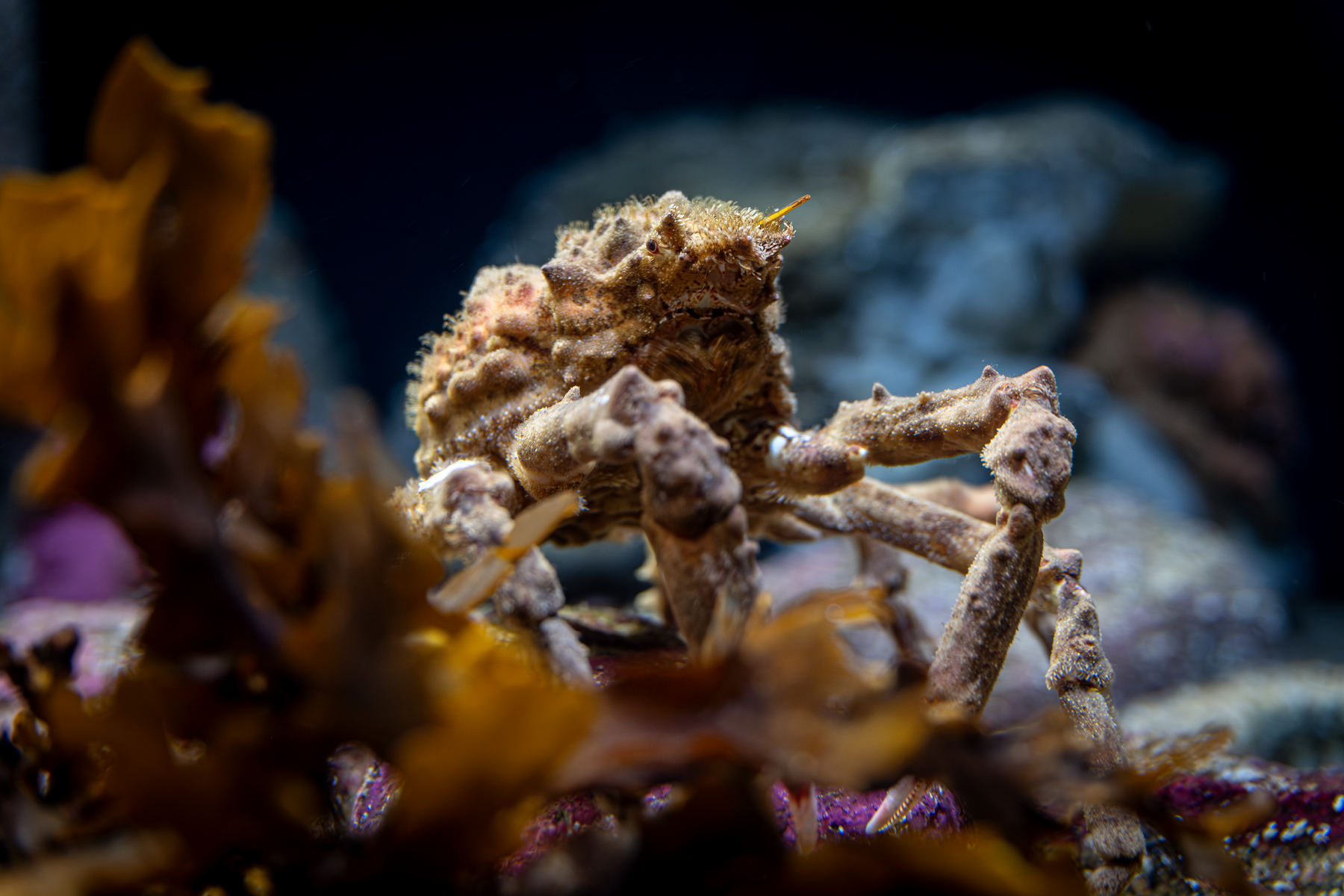
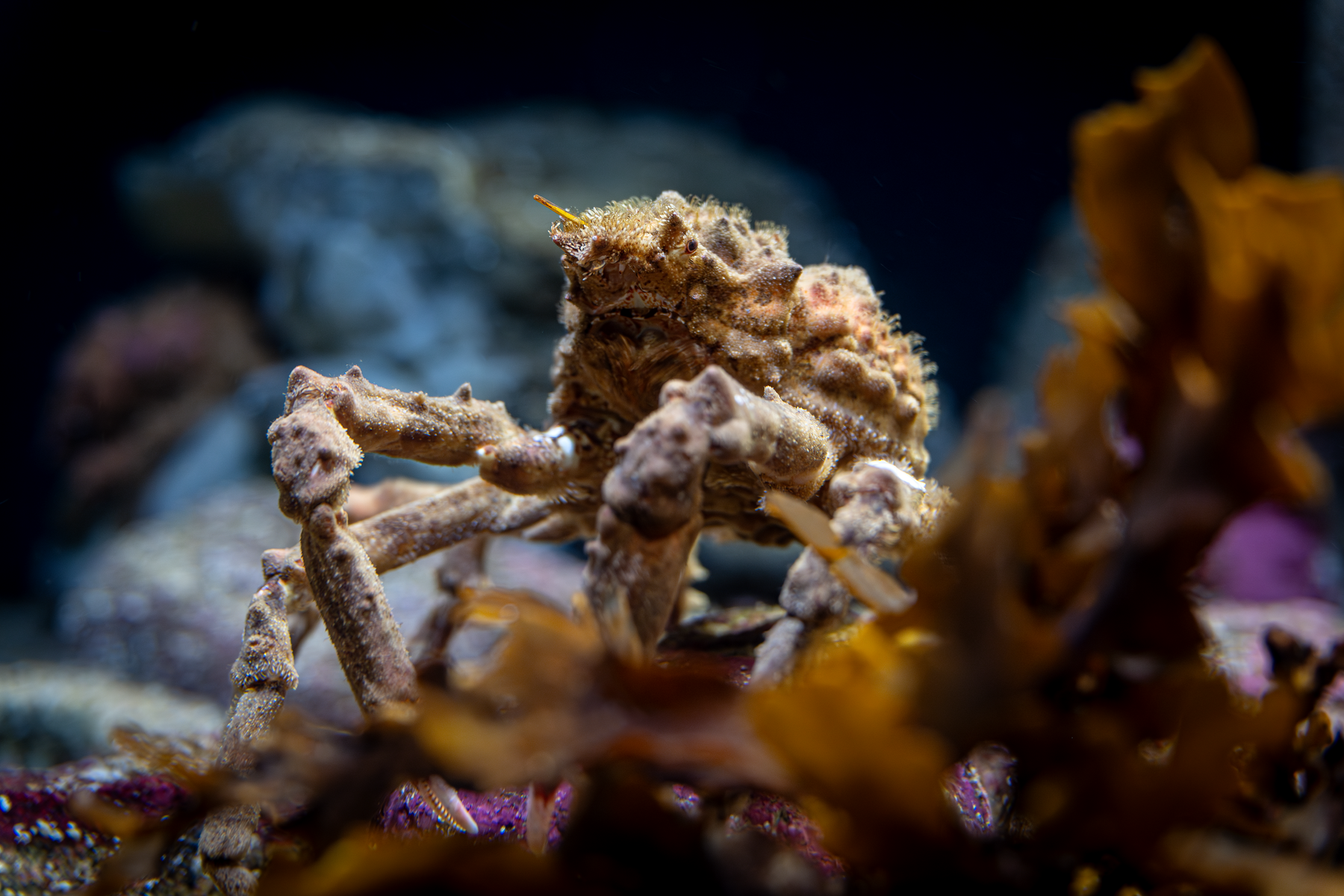
Decorator crab
Coastal protection
Dense kelp canopies help buffer coasts from storms and erosion by reducing wave energy before it reaches shore.
Cultural and economic value
Kelp forests support fisheries, recreation, and tourism.
Support fisheries economically
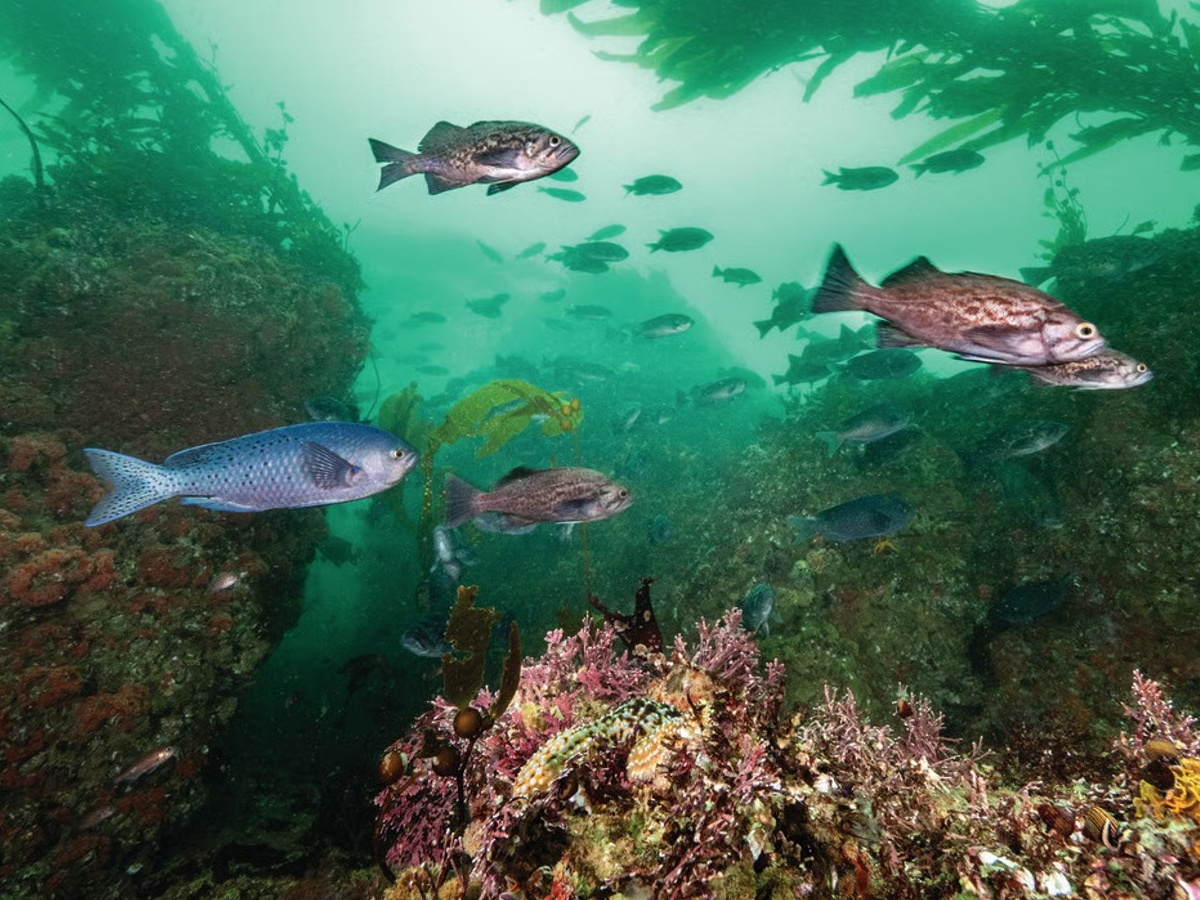
Numerous commercially fished species, like rockfish, crab, and lobster, live in the kelp forest. So a thriving kelp forest community supports fishermen.
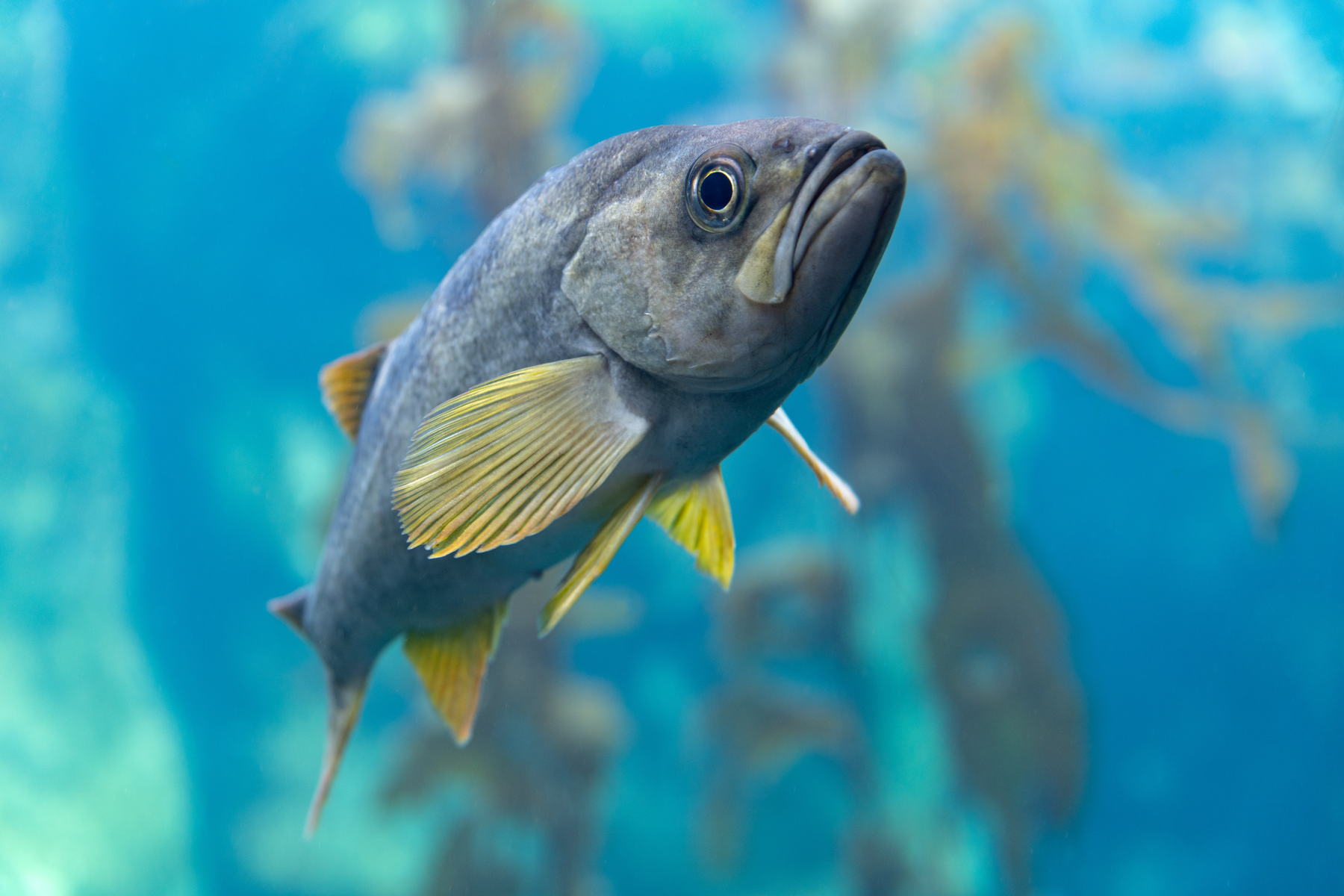
Yellowtail rockfish
Threats to kelp forests and why they are disappearing
Overgrazing by sea urchins
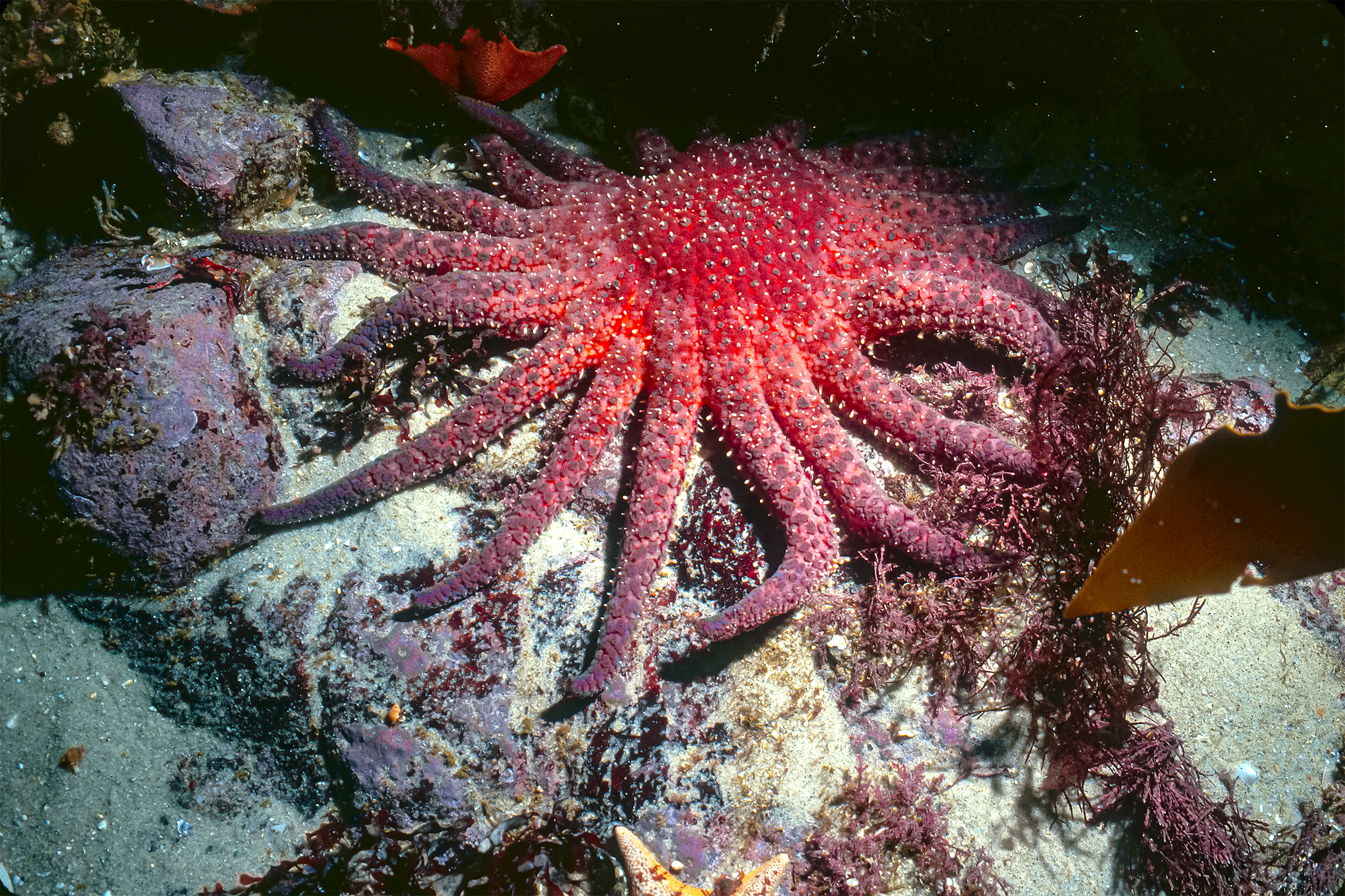
Unchecked urchin populations can strip entire forests, creating “urchin barrens.” Sea otters and sunflower sea stars help keep urchins in balance—but both have declined in many regions.
Marine heatwaves and climate change
Warming oceans reduce nutrient availability and stress kelp. The 2014 marine heatwave, combined with a surge in purple urchins, caused a dramatic kelp collapse in Northern California—where roughly 95% of kelp forests disappeared.
Pollution and runoff
Sediment, sewage, and polluted runoff can smother young kelp or fuel harmful algal growth that outcompetes kelp. Urban and agricultural runoff also introduces contaminants harmful to animals in the ecosystem.
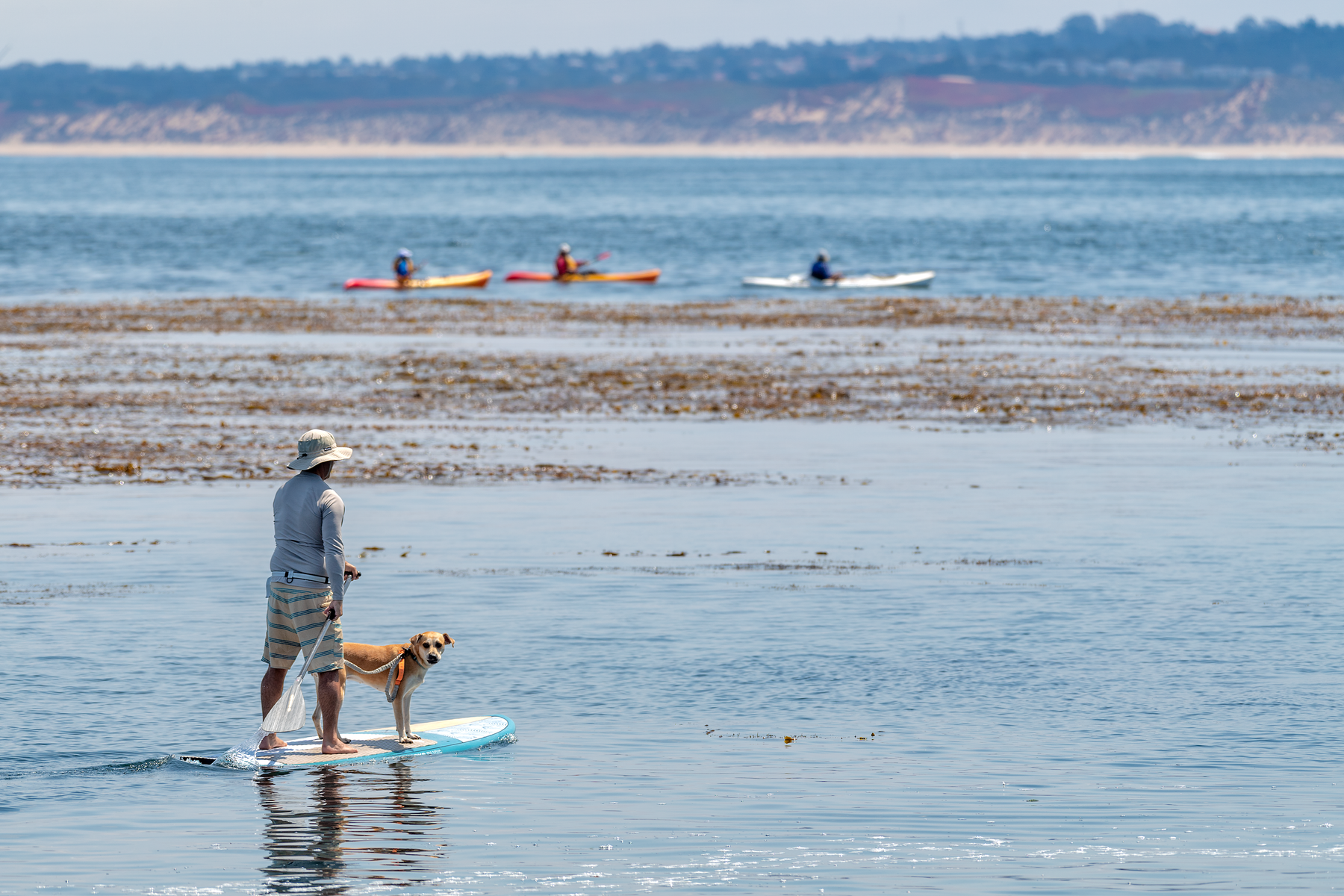
A paddleboarder and their dog drift across the calm waters of Monterey Bay.
How to enjoy and protect this habitat
Kelp forests are found off coastal shores, which leaves them vulnerable to pollution from land. Sludge, silt or sewage dumped near kelp forests can cover and destroy microscopic young kelp. Runoff from agriculture, storm drains and urban wastewater carry contaminants that damage kelp populations and encourage the growth of invasive algae that displaces the kelp.
Reduce runoff
You can help curb pollution from urban runoff by making sure your vehicle isn’t leaking oil onto surface streets, where rainwater can easily wash residual oil into storm drains and out to the ocean. You can also make a difference by keeping sidewalks, yards and driveways clear of pet waste, trash, pesticides and fertilizers.
Use less plastic
Plastic waste and discarded fishing gear also harm animals in this habitat. Birds and marine life are easily tangled in fishing nets, and often mistake floating plastic objects for food. Animals that eat the plastic trash can get sick or die. You can help by properly disposing of single-use plastic items, and by reducing your overall use of plastic.
Support sea otter conservation
Sea otters are vital contributors to the health of this habitat, eating the sea urchins that can overgraze on kelp. But southern sea otters are critically endangered. You can help protect this habitat by supporting local sea otter conservation efforts.
Explore more of the ocean
Ecosystem
Open ocean
The open ocean is a vast, hypnotic world with seemingly no end.