

Meet our African penguins
Get to know our waddling African penguins; they are remarkable ambassadors to their critically endangered counterparts in the wild.
Our penguins are part of a Species Survival Plan (SSP), a program operated by the Association of Zoos and Aquariums. The plan helps keep penguin populations healthy and genetically diverse at accredited zoos and aquariums.
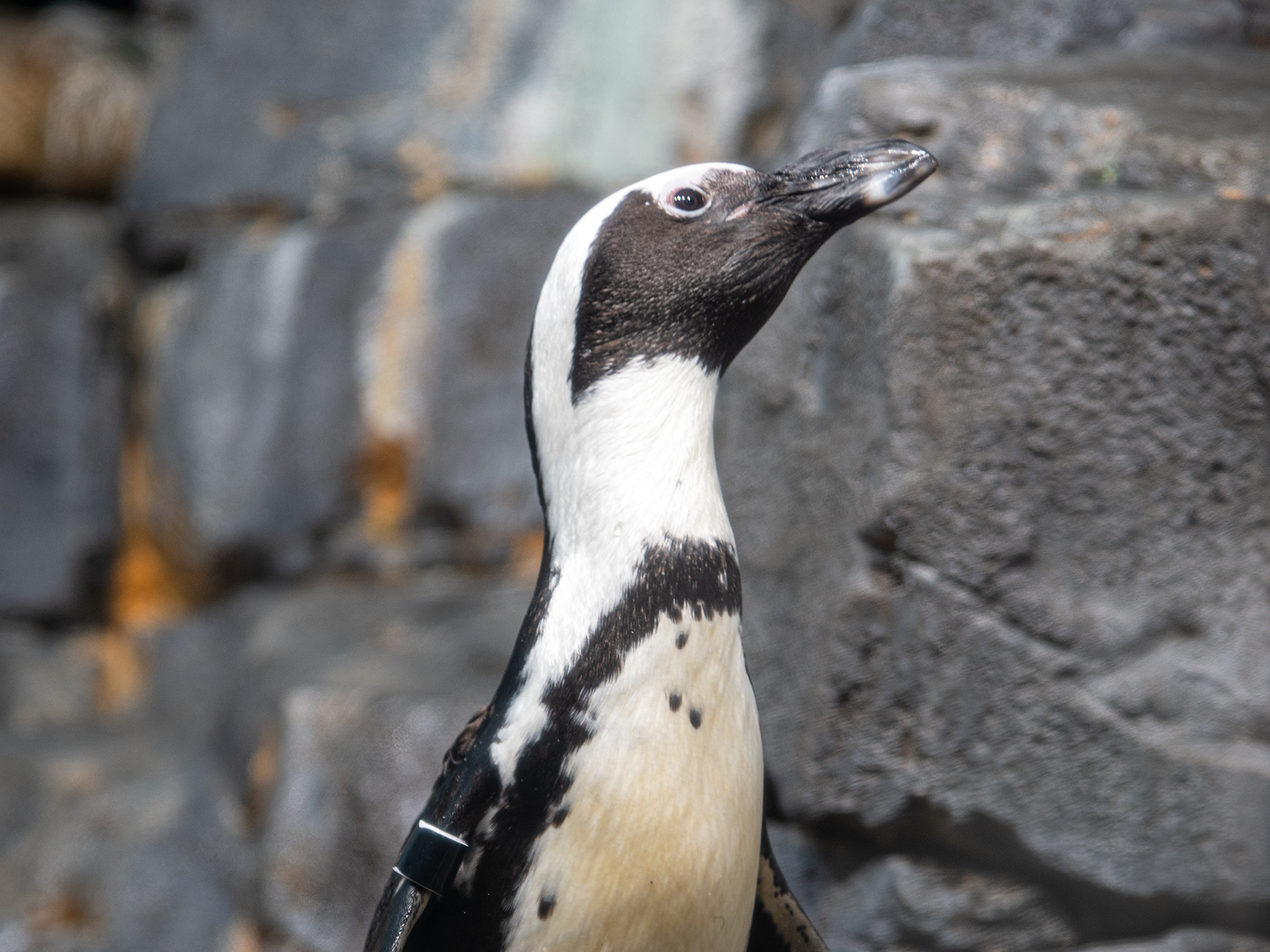
Bee
March 23, 1999
Paired with Seekoei
Bee is named after the bumble bees of South Africa.
Bee likes to dart through the water at feeding time looking for silversides. This penguin is also very good at protecting her nesting area.
How to spot Bee: Has a few noticeable white feathers on her otherwise black back.
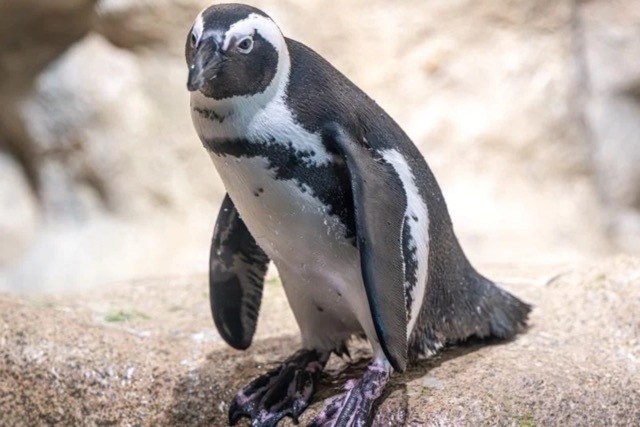
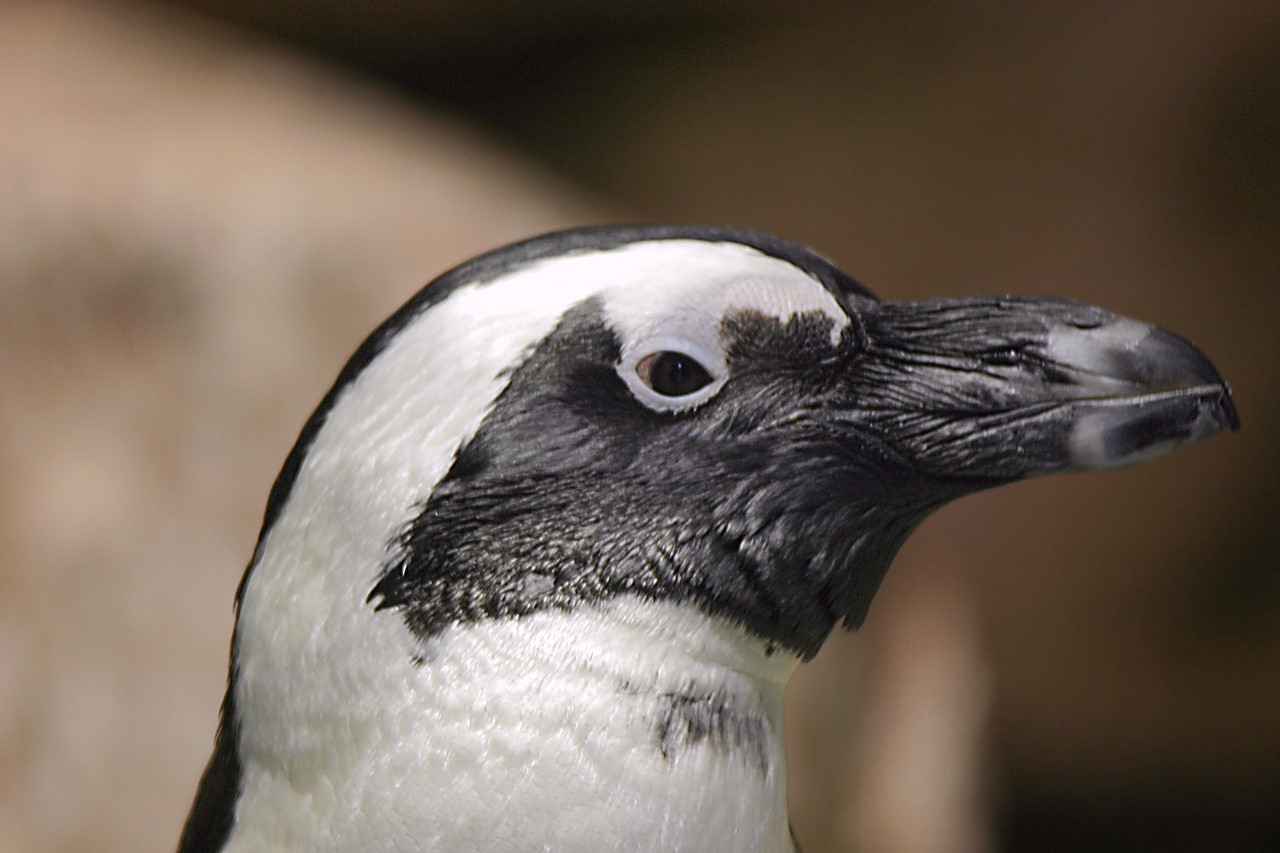
Dassen
December 29, 1998
Paired with Rey
Dassen has one of the loudest brays (calls) in the whole colony! When hungry, he opens his mouth wide so staff can toss a fish inside.
Dassen’s family includes brother, Seekoei, and two uncles, Durban and Karoo.
How to spot Dassen: Has an almost straight line of black feathers crossing his neck.
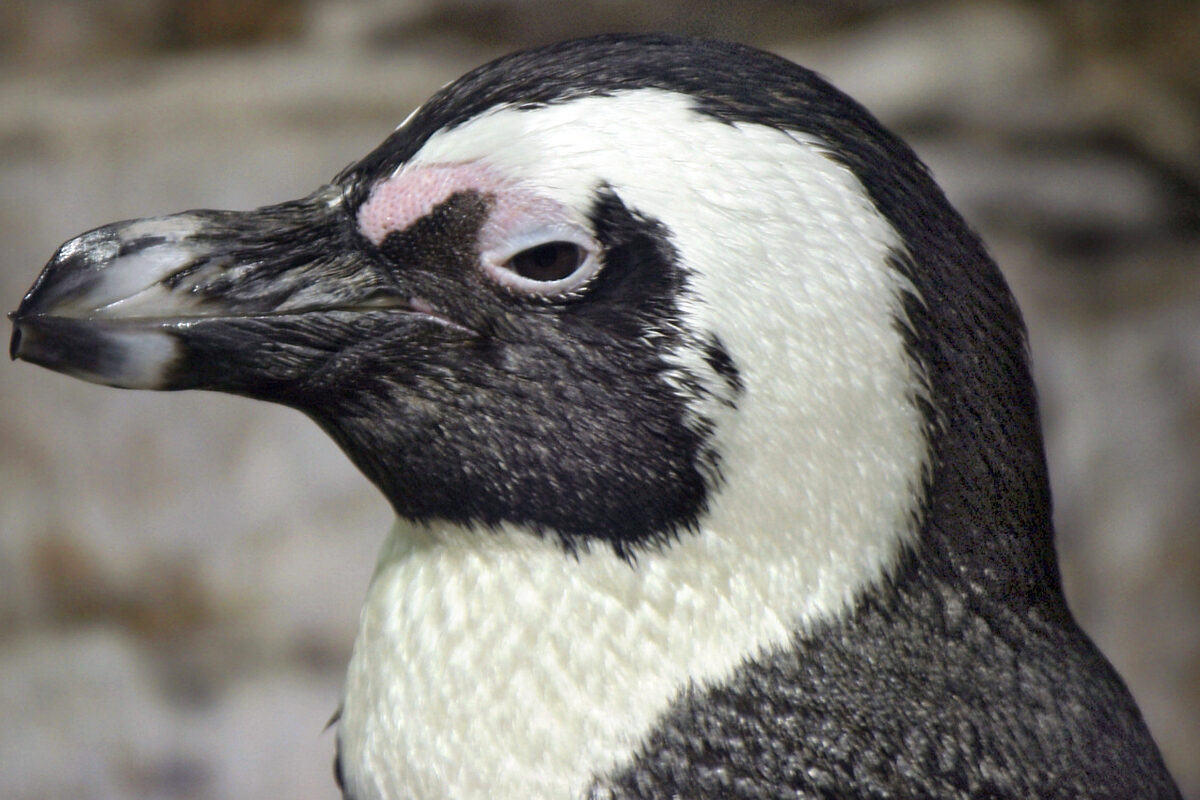
Durban
February 7, 1992
Durban has the softest bray in the colony. He swims in circles, waiting for staff to hand-feed him his favorite fish, capelin! Durban is great at collecting rocks for a nest.
Durban’s family includes his brother, Karoo, and two nephews, Seekoei and Dassen.
How to spot Durban: A black line on his left cheek makes it look like he’s wearing white earmuffs.
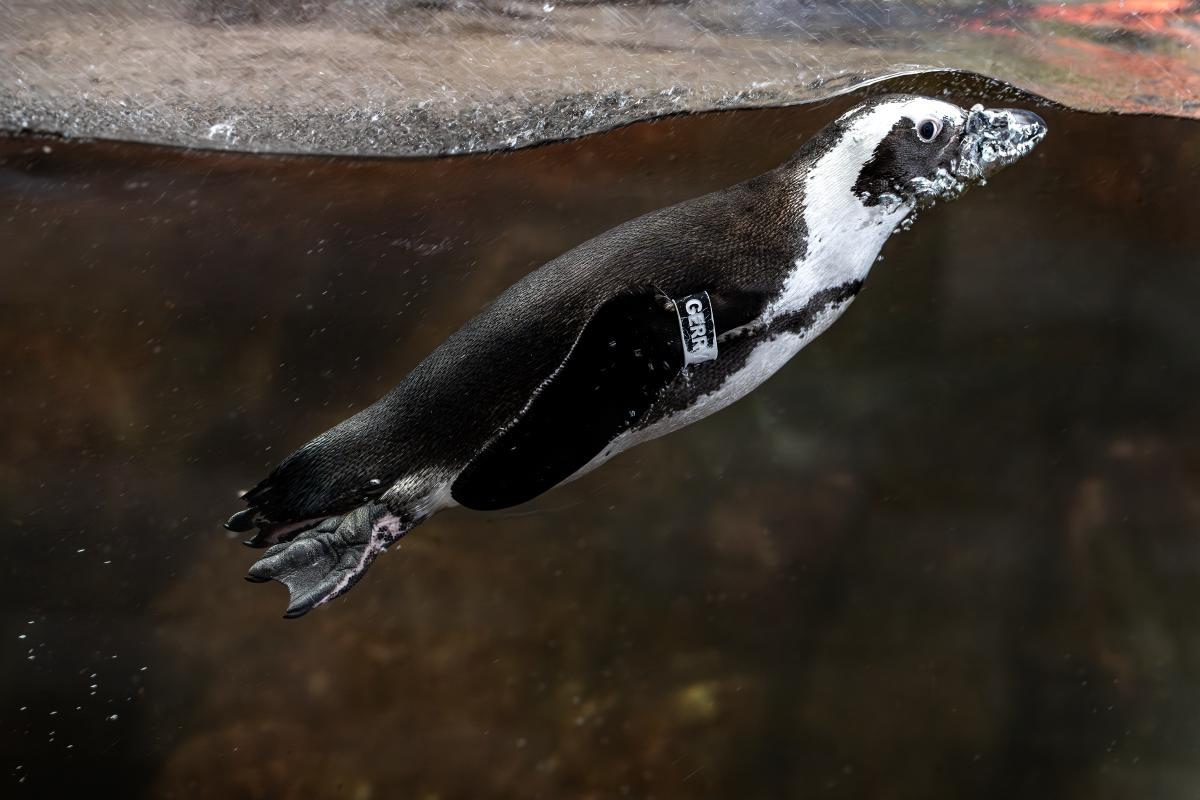
Gerry
November 30, 2022
Paired with Obsidian
Gerry hatched right here at the Monterey Bay Aquarium! As a juvenile penguin, Gerry was relocated to another facility where she met her mate, Obsidian. Now they are both at our Ocean in Motion/La Danza del Mar exhibit.
Gerry and Obsidian spend a lot of time together, and you can often find them preening each other.
How to spot Gerry: Look for smaller black feathers on her neck.
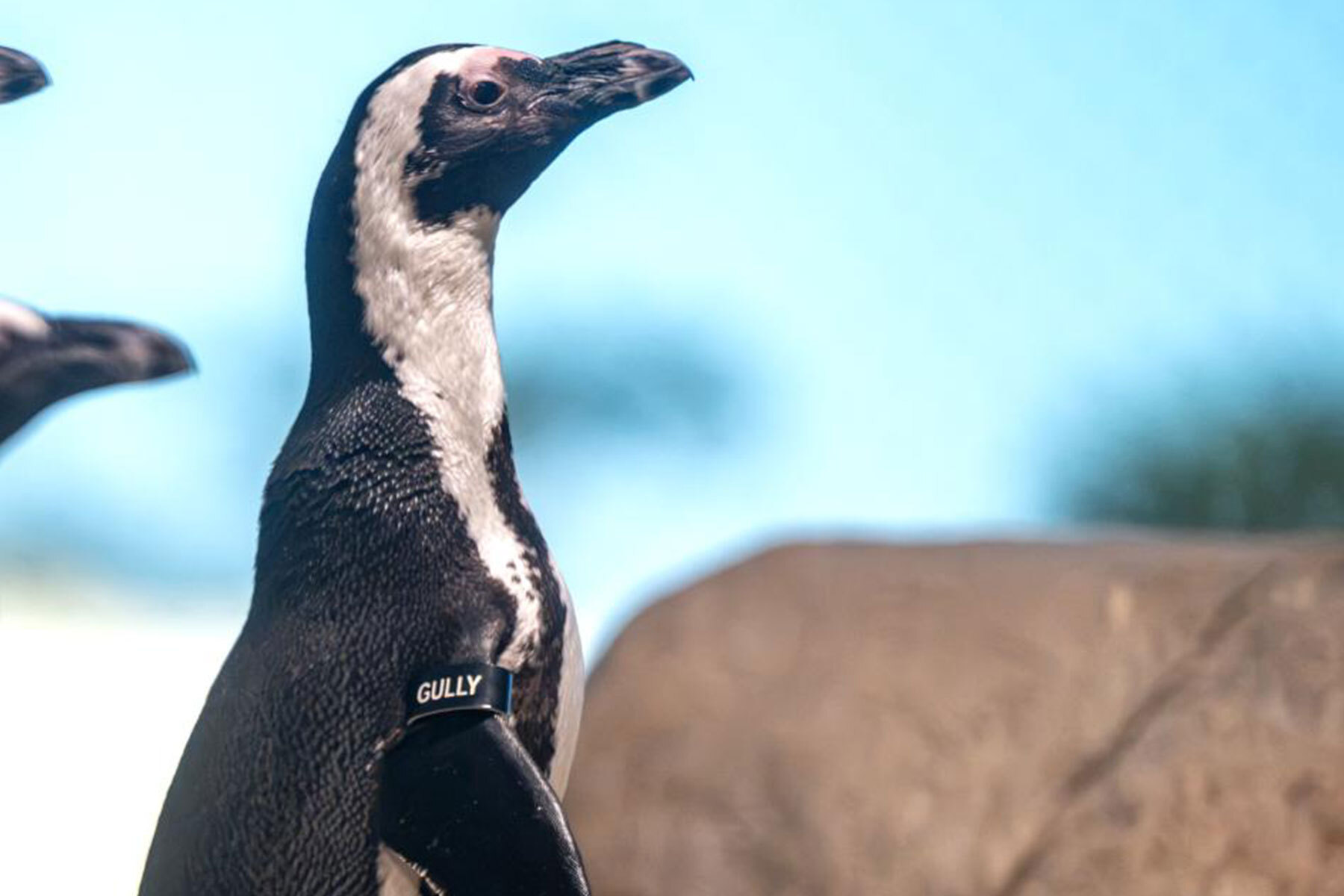
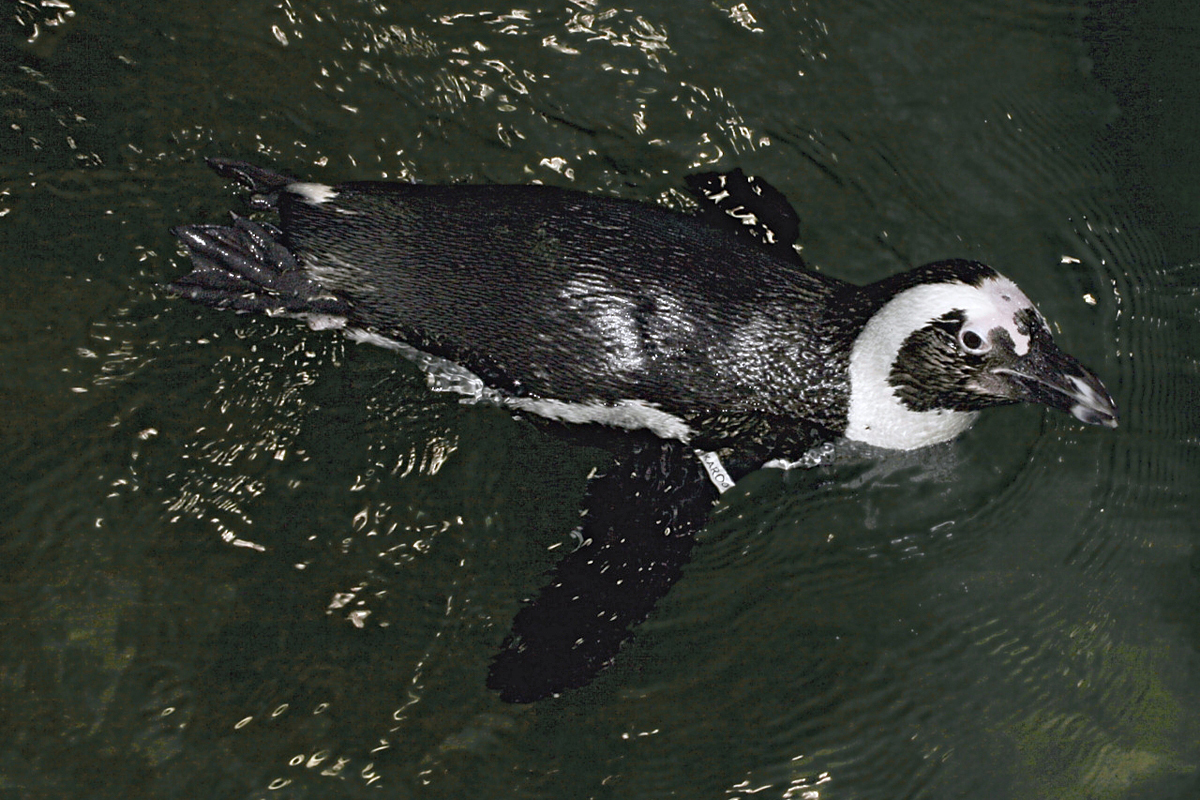
Karoo
November 2, 1998
Paired with Molopo
Karoo loves to tug on things like toys, plants, and cleaning tools. If it isn’t tied down, Karoo will take it! During nesting season, he likes to collect an enrichment item known as "carwash kelp."
Karoo’s family includes a brother, Durban; two nephews, Seekoei and Dassen; and a daughter, Rey.
How to spot Karoo: Look for an X-shaped spot pattern across the chest.
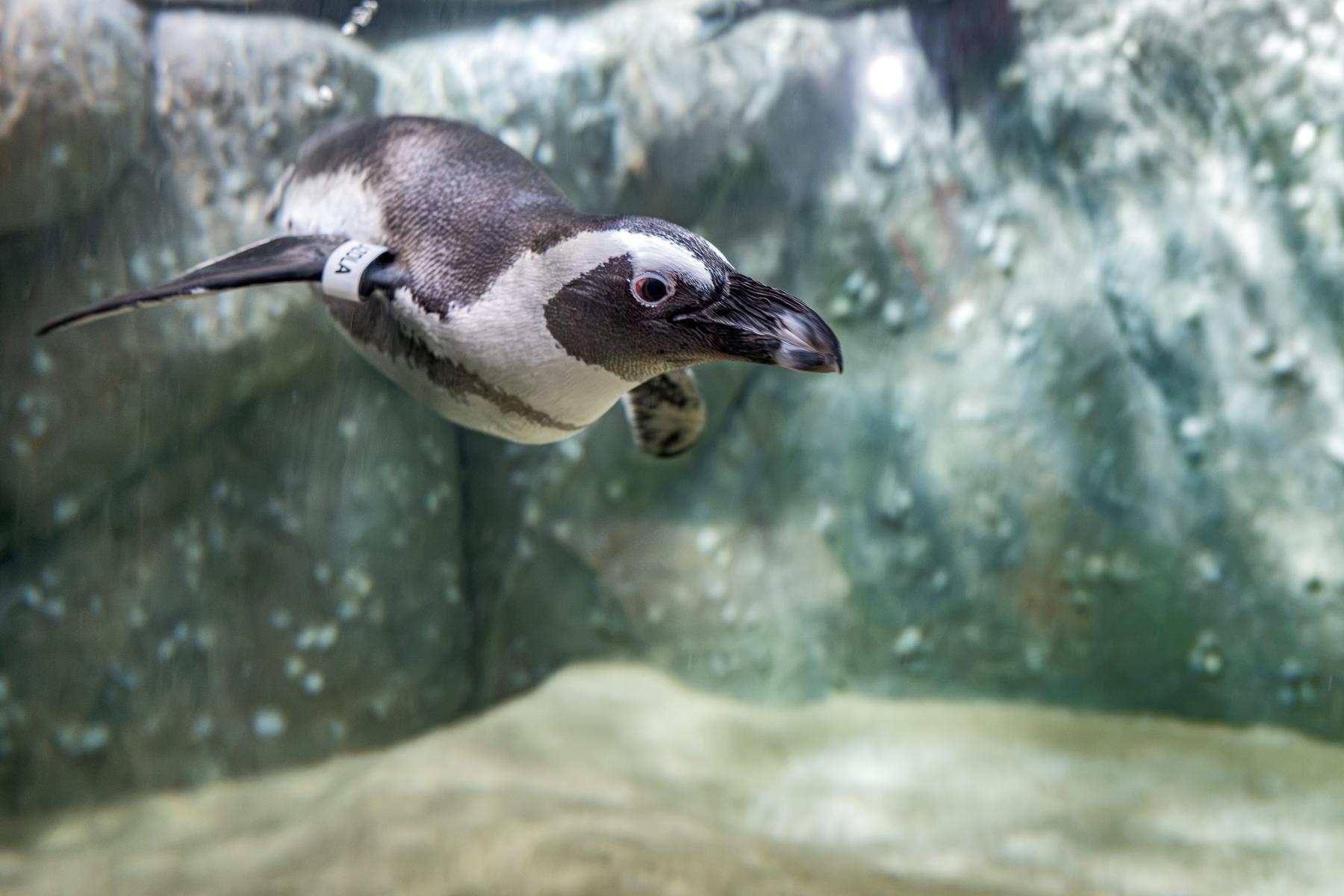
Molopo
May 25, 1994
Paired with Karoo
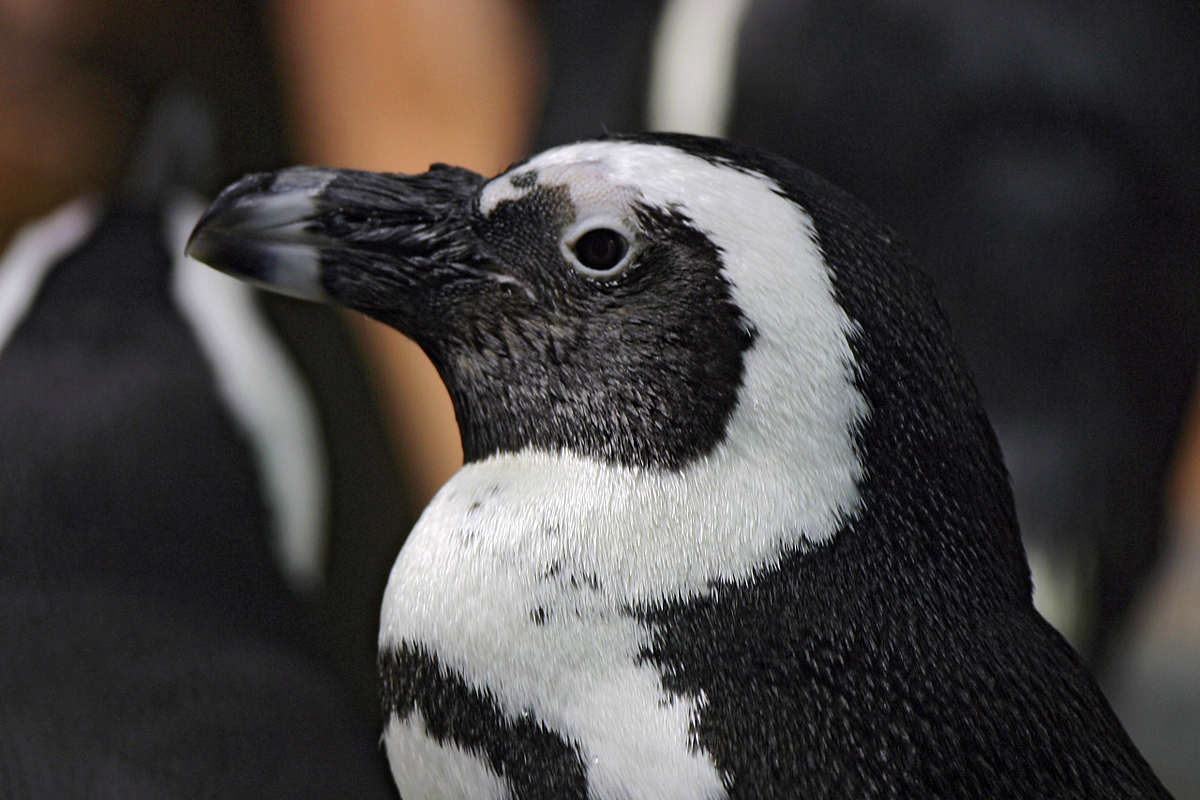
Molopo is shy and patient. This penguin tends to be wary of people and prefers plenty of space. She likes to catch fish from staff while swimming in the water.
Molopo’s relatives are her cousin, Pringle, and her second cousin, Walvis.
How to spot Molopo: A line of small spots on the neck looks like a necklace.

Pringle
October 31, 1998
Paired with Walvis
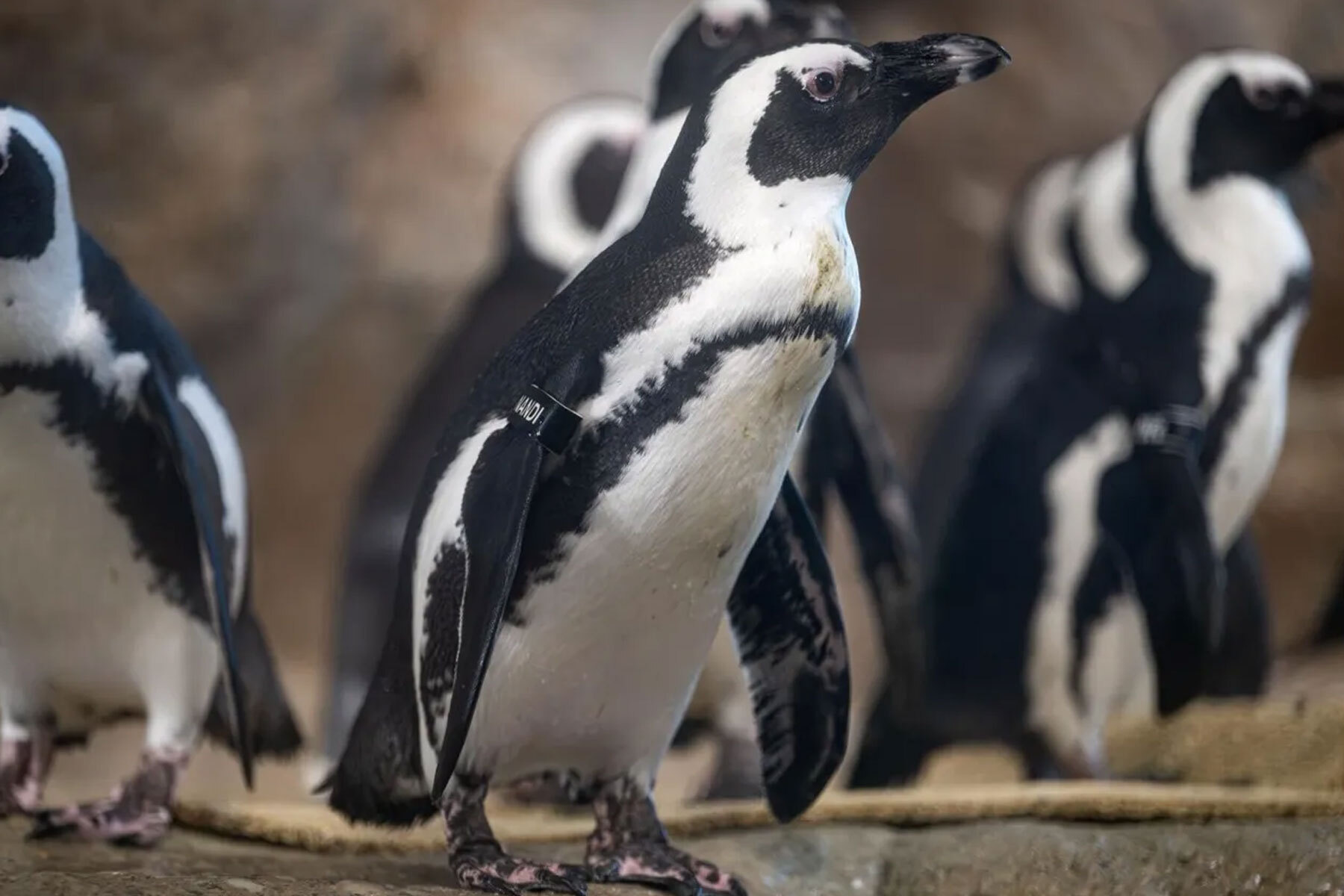
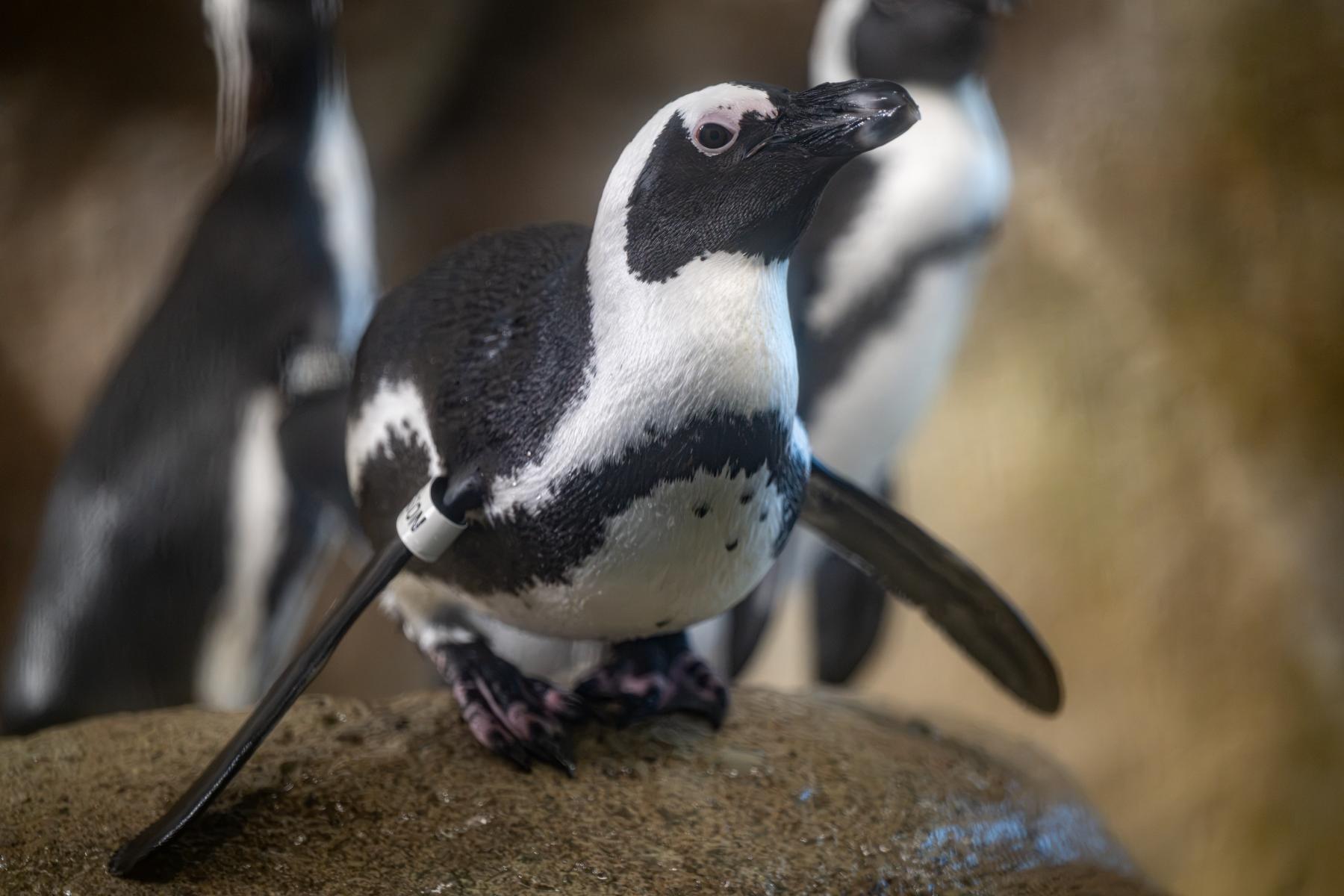
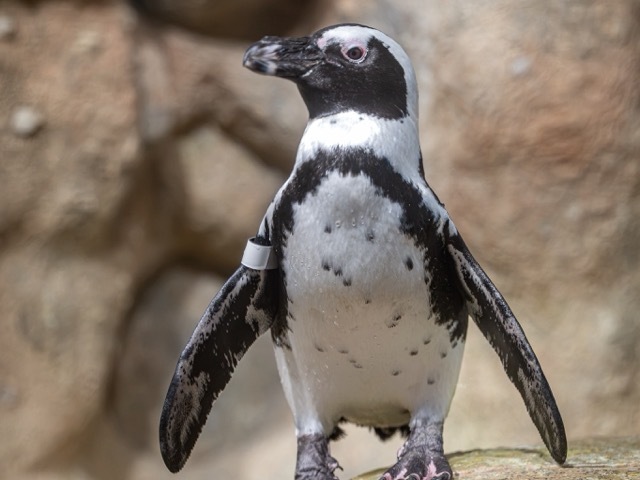
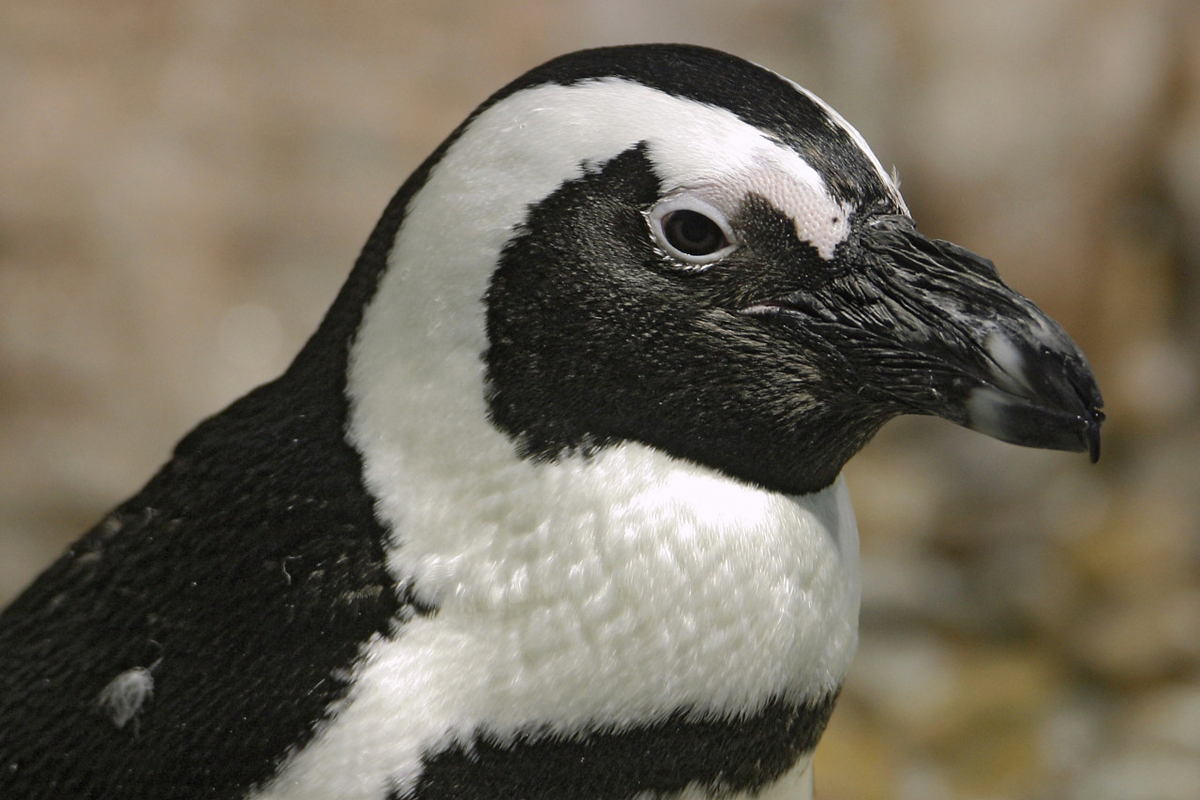
Pringle is the explorer of the group! This penguin hops down rocks instead of walking, and loves checking out new areas. During nesting season, Pringle even skips meals to swipe rocks from other nests.
Pringle is Molopo's cousin, and Lazola's grandfather.
How to spot Pringle: One of the largest penguins in our colony, Pringle has a mostly white chest with a few markings near the bottom.
Rey
June 4, 2014
Paired with Dassen
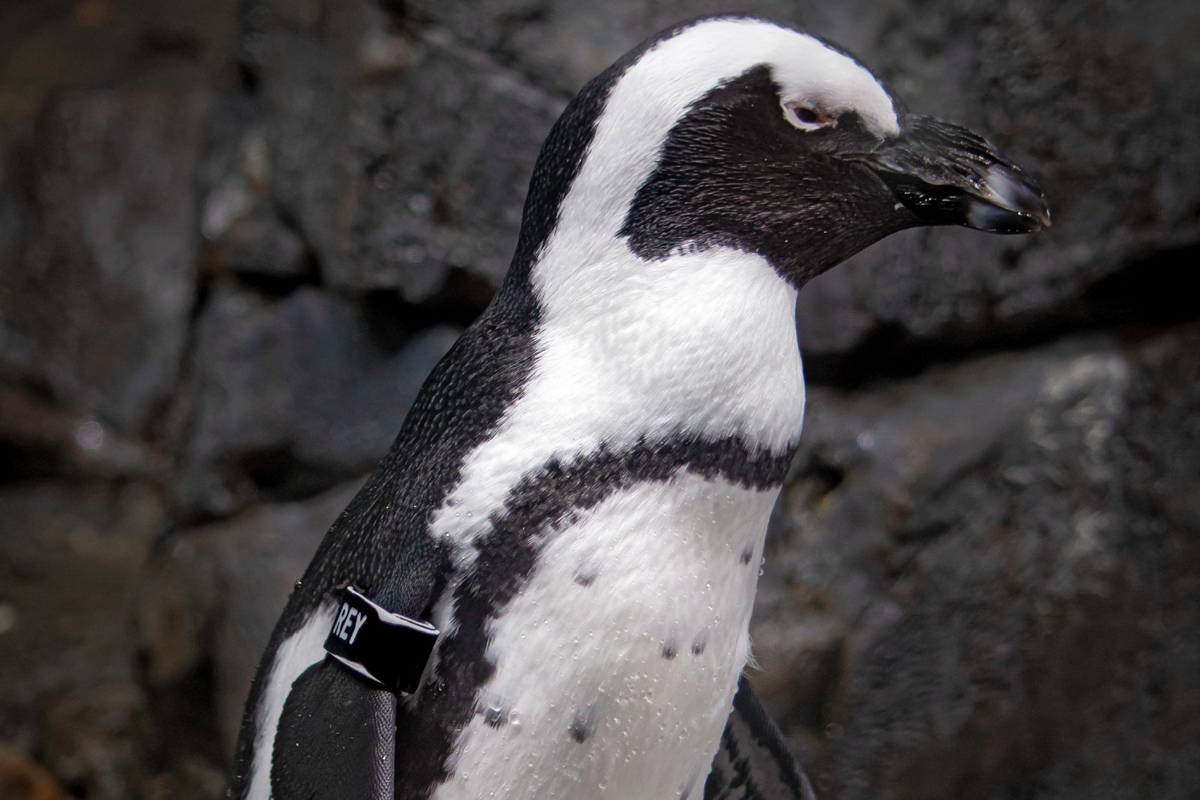
Rey hatched right here at the Monterey Bay Aquarium, and the name honors our home, Monterey.
This penguin is very social. Rey joins guests during special programs and sometimes tries to follow staff outside the exhibit.
Rey is Karoo’s daughter.
How to spot Rey: One of the smallest penguins in the colony.
Seekoei
September 20, 1998
Paired with Bee
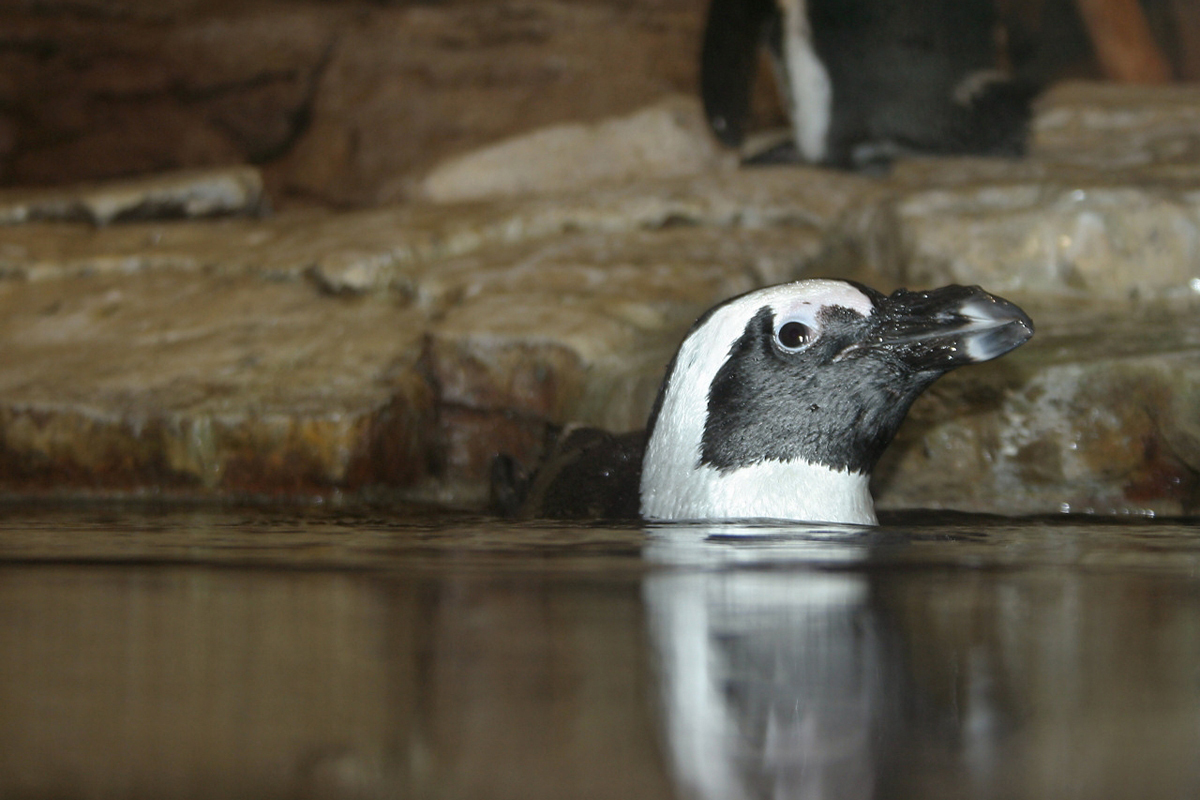
Seekoei is one of the friendliest penguins in the colony and interacts with guests during special programs. He will gently tug on staff's pant legs to communicate he's ready for his fish.
Seekoei’s family includes his brother, Dassen, and two uncles, Durban and Karoo.
How to spot Seekoei: Has a backward S-shaped spot pattern on his chest.
Walvis
December 29, 1994
Paired with Pringle
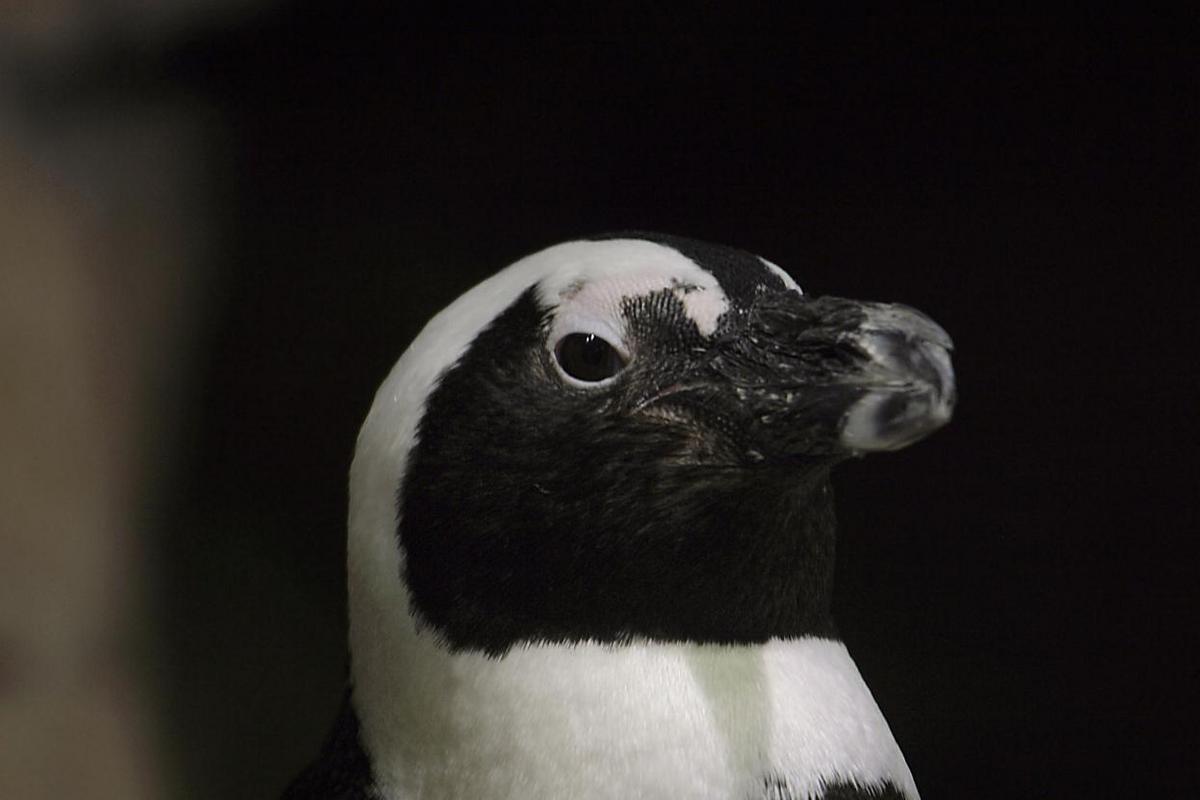
Walvis is a great surrogate mom who has raised most of the chicks at the Monterey Bay Aquarium. This penguin waits patiently at mealtime, even when silversides, a favorite snack, are on the menu.
Walvis’s relatives are uncles Durban and Karoo and cousins Pringle, Seekoei, and Dassen.
How to spot Walvis: Black spots on the chest form an upside-down W (or an M).