
U.S. animal care organizations unite to defend the integrity of the Coastal Zone Management Act
Monterey Bay Aquarium coordinated national zoos, aquariums, and stranding response partners to submit the following official comments regarding the federal government directed review of California’s coastal management program.
RE: Evaluation of the California Coastal Management Program, Docket No. 260623-0150
August 21, 2026
Dear Acting Chief Lott,
On behalf of the undersigned wildlife care and conservation organizations, we appreciate the opportunity to comment on the National Oceanic and Atmospheric Administration (NOAA) evaluation of the federally approved California Coastal Management Program. We are deeply concerned that the administration is conducting this new evaluation out of the normal sequence for Coastal Zone Management Act (CZMA) reviews and only two years after the last regularly scheduled review for California’s coastal management program. Initiating another review, for reasons unrelated to coastal resource protection, is unwarranted, adds unneeded confusion, and sets the precedent that even previously approved coastal management programs can be subject to arbitrary challenges from the federal government. We urge NOAA to withdraw this evaluation and release the final report from the 2024 evaluation of California’s program.
As leading U.S. aquariums, zoos, and animal care organizations, we welcome millions of visitors each year and serve our communities as trusted and science-led institutions with unique perspectives on the crucial value of wildlife, environmental health, and sustaining vibrant communities. Each of our institutions is dedicated to conservation, research, and education for public benefit and committed to the health of our ocean, rivers, lakes, and coasts, recognizing the benefits they provide to all Americans. We help share the vision of the connection between healthy coasts and thriving communities.
The CZMA was enacted with bipartisan support in 1972, establishing a thoughtful framework for federal-state partnership and enabling coastal states to apply their unique knowledge and local expertise to the management and protection of their coastal resources. Today, 35 states and territories across the nation, from the Great Lakes region to the Gulf States, implement federally approved, state-run coastal management programs that facilitate meaningful participation in federal agency activities and federally permitted projects that can impact coastal resources. States review proposed activities to ensure that decisions impacting the economies, ecosystems, and resources of the coastal zone are consistent with each state’s requirements for coastal protections. For decades, coastal states have used the CZMA to provide local expertise and oversight on projects ranging from oil pipelines and dredging operations to port construction and natural gas terminals. State guidance strengthens safeguards for coastal resources like wetlands and estuaries, protects public beach access, and minimizes adverse impacts on other maritime activities and industries.
The CZMA has been incredibly effective in its goal of recognizing and supporting the rights and responsibilities of states to balance responsible development and robust coastal economies with protection of nationally significant coastal resources. Coastal economies contribute billions of dollars to U.S. economic activity and represent a range of coastal industries.3 Over half of the employment in the $133 billion ocean economy of the Gulf region is in the Tourism and Recreation sector. Ship and boat building is the third-largest industry in the Northeast region’s $23.7 billion ocean economy. The state coastal management programs in these regions are an essential part of maintaining the natural resources that these industries and communities depend on.
Under the CZMA, NOAA reviews the performance of coastal states on the implementation and enforcement of their programs. Typically, state programs are reviewed every 5-10 years in a transparent, collaborative process between NOAA and the state. The CZMA already provides mechanisms for the federal government to seek resolution when a state objects to a consistency determination for a federal agency activity or federally permitted project.
NOAA conducted California’s most recent evaluation cycle in 2024 and concluded in its draft report that California’s Coastal Management Program was operating successfully and addressing the coastal management needs identified in the CZMA. In nearly 50 years of implementing the California Coastal Management Program, California has demonstrated that protecting and maintaining a healthy ocean and coast can coexist with thriving coastal communities and economically valuable coastal industries. California’s CZMA concurrence assessments have significantly improved proposed federal projects by enhancing environmental regulations, providing local information on siting to safeguard sensitive habitats, protecting local industries like fishing and tourism, and strengthening measures that safeguard coastal resources.6 California’s $51 billion ocean economy depends on protecting the natural resources that support coastal communities and industries as well as marine and coastal life.
Notably, California has built one of the nation’s strongest coastal planning systems, led by science, guided by collaboration, and built on public transparency. It is an internationally recognized model for coastal management and has consistently received strong evaluations. NOAA guidance and support through the federal-state partnership established by the CZMA has helped California build this successful program through these regular evaluations. There have been no substantive changes in the California coastal management program since the 2024 evaluation that would warrant a new review.
The successful stewardship of coastal resources while supporting thriving coastal economies is contingent on continued partnership and collaboration between states and NOAA. If NOAA proceeds with this evaluation, many states’ and territories’ coastal management programs are at risk. The consequences extend beyond the ocean ecosystem and coastal habitats. The CZMA and coastal management programs allow states and local communities to apply local knowledge to protect their unique economic, cultural, and natural resources to have a voice in federal planning. Coastal management programs support public transparency and enable the public to engage with federal actions affecting their local regions. Upholding the integrity of the CZMA is essential to safeguard the rights of coastal states to review federal actions and engage their local communities, businesses, and others.
We urge you to withdraw this evaluation and publish the final report from the recently completed, comprehensive 2024 evaluation. Thank you very much for your attention to this important matter.
Monterey Bay Aquarium
Monterey, California
San Diego Zoo Wildlife Alliance
San Diego, California
Santa Barbara Zoo
Santa Barbara, California
Oakland Zoo/Conservation Society of California
Oakland, California
Sacramento Zoo
Sacramento, California
The Living Desert Zoo and Gardens
Palm Desert, California
The Marine Mammal Center
Sausalito, California
Ocean Animal Response and Research Alliance
Los Angeles, California
Central Florida Zoo & Botanical Gardens
Sanford, Florida
Lincoln Park Zoo
Chicago, Illinois
National Aquarium
Baltimore, Maryland
Riverside Discovery Center
Scottsbluff, Nebraska
Shedd Aquarium
Chicago, Illinois
Aquarium of the Pacific
Long Beach, California
California Academy of Sciences
San Francisco, California
Fresno Chaffee Zoo
Fresno, California
SEA LIFE North America
Carlsbad, California
Channel Islands Marine & Wildlife Institute
Santa Barbara, California
Marine Mammal Care Center
Los Angeles, California
Cincinnati Zoo & Botanical Garden
Cincinnati, Ohio
Mystic Aquarium
Mystic, Connecticut
National Mississippi River Museum & Aquarium
Dubuque, Iowa
Seattle Aquarium
Seattle, Washington
Tennessee Aquarium
Chattanooga, Tennessee
More from the newsroom

Press release
Ocean in Motion / La Danza del Mar opens November 7, 2026
The exhibit features an expanded African penguin habitat, big-bellied seahorses, and colorful coral reefs.
Read press release – Ocean in Motion / La Danza del Mar opens November 7, 2026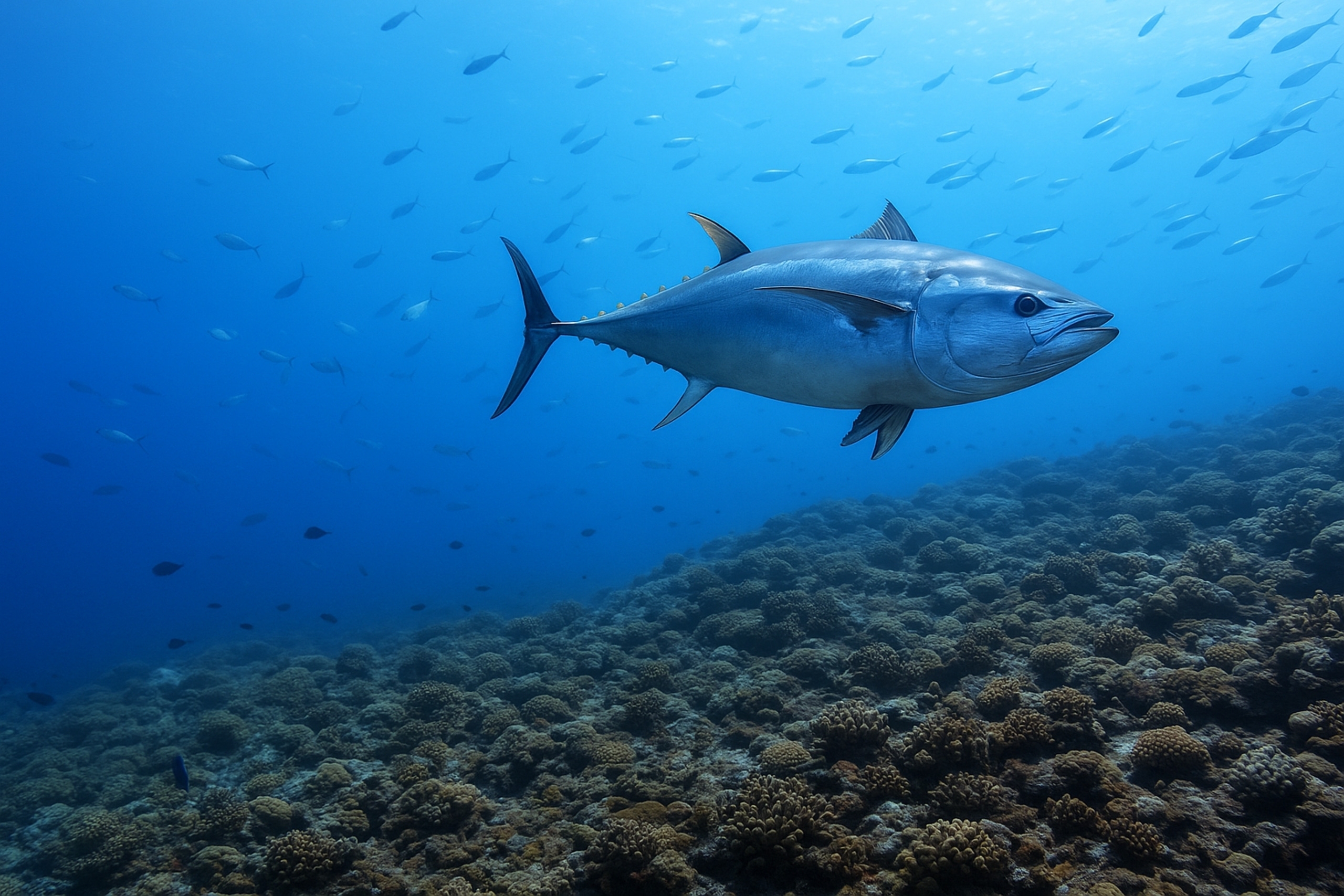
Statement
Nations advance landmark harvest strategy for Pacific bluefin tuna
Last-minute negotiations result in historic deal supporting science-based recovery.
Read statement – Nations advance landmark harvest strategy for Pacific bluefin tuna
Press release
Sandy Trautwein joins as Vice President of Animal Care
Trautwein joins the Aquarium beginning September 21, 2026, following a nationwide search.
Read press release – Sandy Trautwein joins as Vice President of Animal Care
Story
Reducing plastic packaging: How partnerships help keep plastic out of the ocean
We work with partners to reimagine processes and packaging to reduce ocean-bound plastic and protect ocean…
Read story – Reducing plastic packaging: How partnerships help keep plastic out of the ocean