

If you want your little ones to grow up caring for the natural world around them, Monterey Bay Aquarium is here to help. Our exhibit and companion website, Ocean in Motion / La Danza del Mar, engages young minds and bodies through research-backed methods that are developmentally appropriate, evidence-based, and a whole lot of fun! By inviting children ages two to six to waddle, hop, hide-and-peek, and flap their arms just like the animals they’re seeing, the Aquarium is helping families lay the foundation for a lifelong love of nature.

Building empathy for animals: a research-backed approach
A body of research has shown that experiencing “empathy” for wildlife leads people to be more willing to take action to protect nature, and that children who experience empathy at an early age are more likely to take pro-environmental action when they grow up.
But what do we mean by empathy? Simply put, having empathy means understanding what someone or something else is going through, and feeling a bit of the feelings someone else is having yourself. The fancy, academic definition is “an emotional state that relies on the ability to engage in one or more of the following: perception, understanding, feeling, and/or action in response to the experiences or perspectives of another living being” Whitley et al., 2026).
Brain scans have shown that associated regions of the brain light up when we observe others' emotions and actions through a network of “mirror neurons.” These mirror neurons are the biological engine of empathy—and they can fire when observing animals as well as people.
The research goes further, explaining that empathy is both an experience one can have, and a skill that can be fostered and developed. It can be strengthened over time and reinforced through our interactions with the world. And, empathy is good for us as well as the beings we have empathy for. It’s linked to developing a moral framework to determine right from wrong, being able to identify and regulate our own mental state, and fostering positive relationships and strong communities—all of which lead to better health outcomes. Who wouldn’t want a little more empathy in their life?
How does Ocean in Motion / La Danza del Mar foster empathy for animals?
The exhibit uses several research-backed sources from the ACE for Wildlife Network, a network of 31 zoos and aquariums accredited by the Association of Zoos and Aquariums who work together to create, use, and evaluate practices that foster empathy for animals and people.
Moving like animals builds connection
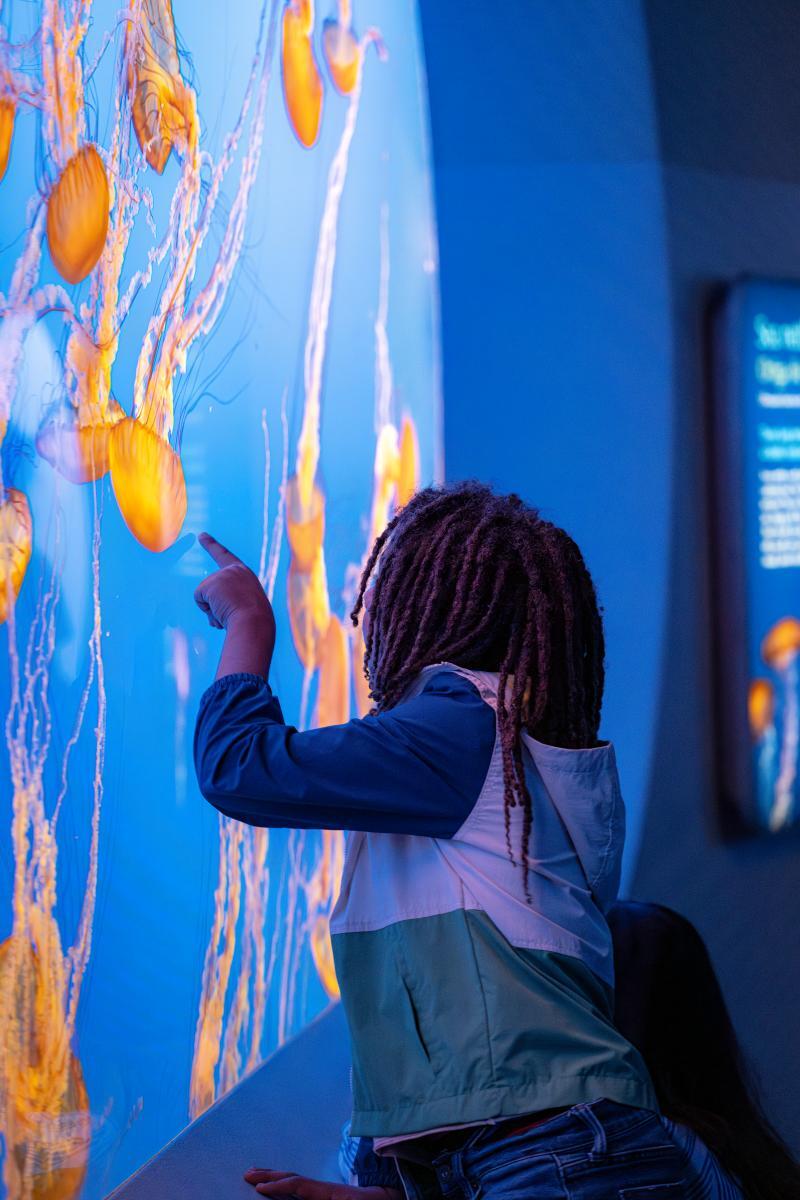
The exhibit uses role play and mimicry throughout to create memorable connection and give your child the animals’ perspectives. Mimicry of movement specifically, is developmentally appropriate and intuitive for this age group—they love to move! And bodies of all abilities will each move differently. For example, a stepping-stone pattern on the floor invites kids to leap, skip, hop, roll, crawl, or simply move from rock to rock. However your kid goes from one rock to another, they are tapping into their intuition and coordination, practicing their large motor skills, using their mind to judge trajectory and distance, and discovering they’re moving like a leaping blenny. They may even feel joy or a sense of accomplishment when they notice the connection. You would, too, if you joined in! (You can also practice a similar empathy-inspiring activity by playing the blenny hop game on our website.) When your child observes that the blennies in the habitat nearby are moving just like them, they’ll begin to form a deeper connection to, and appreciation for, that animal. That’s empathy!
Storybook labels make animals the main character
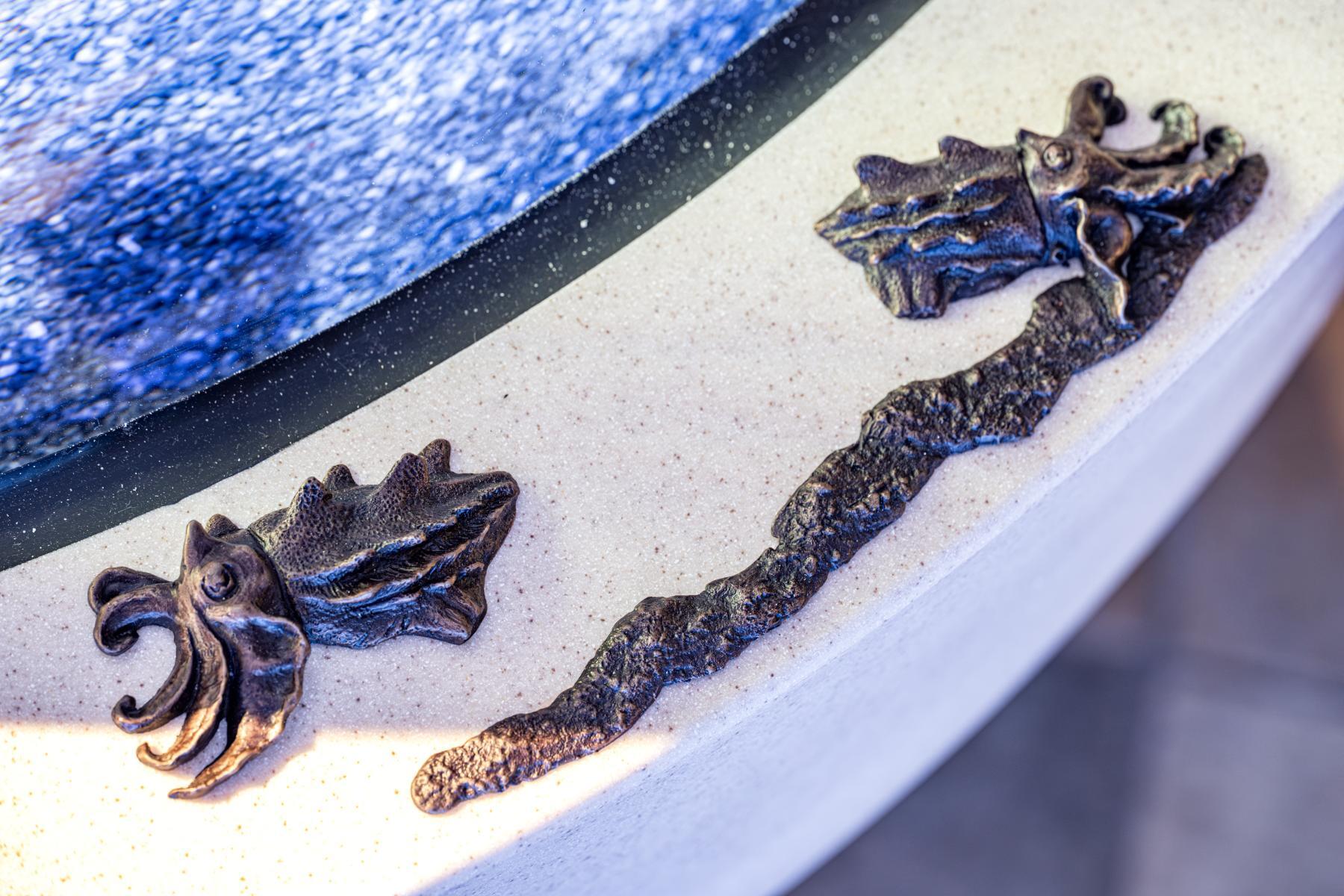
Read the poetic prompts and short labels written from the animals' perspective aloud to your child, or have your early reader read them aloud to you. Labels and live animals are paired with bronze models and storybook-style illustrations to help you identify them. Near the African penguin’s newly expanded habitat, labels introduce each penguin in the colony by name and highlight their various personalities and movements. You and your child might notice how the penguins’ personalities may be similar or different from yourselves or other people you know. We call this comparison “critical anthropomorphism,” or showing both the similarities and differences between people and animals without over-humanizing the animal—another strategy for building empathy.
Play areas with live animals
While observing the coral reef display, with dozens of brightly colored fish and blue-spotted ribbontail rays swimming through a rainbow of corals, your child can move up, down, over, and through a coral-themed play area, nestling, hiding, and peeking just like the fish while practicing balance and engaging a variety of senses through textured surfaces, engraved letters and patterns, squishy “sand” flooring, illuminated bubble coral, and soft, larger-than-life anemone tentacles that line the walls of an undulating wooden pathway that weaves through the play area. These features encourage more perspective-taking and mimicry. They also stimulate your child’s tactile and spatial awareness, provide opportunities to build vocabulary by identifying sensations like “smooth” or “bumpy,” and build balance and coordination, all of which contribute to memories that stick.

Raising an ocean-loving kid starts with play
Play is important work for children! And in this context, it can help them develop empathy for animals, leading to a lifelong appreciation and care for nature and wildlife. By observing live animals up close, supporting intuitive movement and multi-sensory play in young children, imagining an animals’ perspective, and simply having fun together in nature, you’ll foster positive connections that can last a lifetime. As your child grows, you can introduce other activities, like practicing tidepooling together respectfully or participating in a beach clean up. The most important action you can take as an ocean-loving family is to offer fun, age-appropriate, opportunities to connect with animals and nature together!
A caregiver’s guide to visiting Ocean in Motion / La Danza del Mar
Before your visit
Be sure to check out our live Penguin Cam and Coral Reef Cam to preview what you’ll see. Buy your tickets online in advance for a smooth entry, or consider becoming a member so you can come back as often as you’d like with unlimited admission all year.
During your visit
Ocean in Motion / La Danza del Mar is located on the second floor of the Ocean’s Edge wing of Monterey Bay Aquarium. From the main entrance, head to the left, toward the Kelp Forest exhibit. Before reaching the windows to the swaying, underwater forest, take the stairs or elevator to your right. When you reach the second floor, head right again, until you see the wall labeled Ocean in Motion / La Danza del Mar. Penguin and seahorse projections below the sign lead you toward either of the exhibit’s two entrances. Tip: there’s also a family-friendly bathroom just before you reach the exhibit entry.
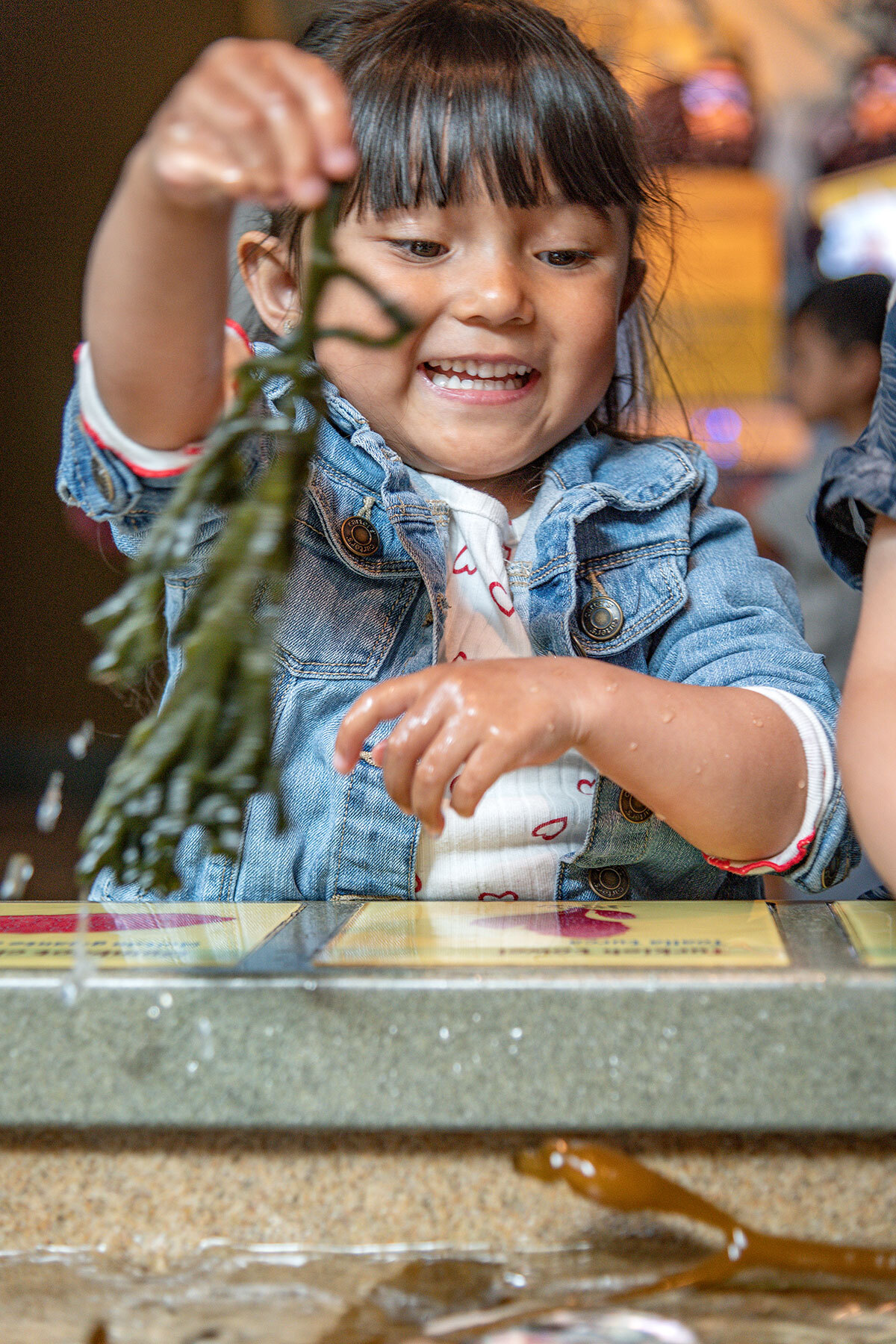
Plan to spend at least 30 minutes taking in all the animals, exploring the coral play area, and having fun with a unique water-play station that features a swirling tide pool, clacking lava rocks, tumbling waterfalls, squirting streams, bubblers, and models of sea creatures to discover hidden below clumps of sea grass.
Weekdays or late afternoons are less popular, making them a great time to visit with little ones.
After your visit
Spend some time exploring the Ocean in Motion / La Danza del Mar pages on the Aquarium website. You’ll find games, at-home activities, and episodes of Monterey Bay Aquarium Kids, a YouTube series made for children that draws from the same empathy-building research that inspired the exhibit. Sign up for our Aquarium Updates email newsletter to keep in touch and find out when new episodes and activities come out.
Frequently asked questions
Where is Ocean in Motion / La Danza del Mar in the Aquarium?
It’s on the second floor of the Ocean’s Edge wing—the same side of the Aquarium as the Kelp Forest.
What ages is Ocean in Motion / La Danza del Mar designed for?
It was designed for children ages two to six, but it is welcoming to guests of all ages. We say it's for the young and young at heart.
How long should we plan to spend in Ocean in Motion / La Danza del Mar?
Plan to spend 30-45 minutes. You’ll want time to see all the animals, enjoy the water play station, and explore the coral reef play area. Check the Aquarium’s hours and schedule to see when the Penguin Feeding program takes place—this live program presented by Aquarium naturalists is a must for penguin lovers.
Is the exhibit accessible?
Yes, Ocean in Motion / La Danza del Mar offers a number of features that make it accessible for people of all ages and abilities. The animal displays feature roll-unders that make it easier for visitors who use a wheelchair or walking device to get a good look up close, as well as step-ups so young children can be eye-to-eye with the animals. Guests will find plenty of seating at various heights with stand-assist dividers, backrests, and adjacent wheelchair seating. Exhibit labels are paired with touchable bronze to-scale models to help guests identify animals by touch. The coral play area has transfer platforms for children who use wheelchairs or walking devices to transition to crawling, climbing, or moving through the play area. See our accessibility and inclusion guide for more information.
Is the exhibit in Spanish?
Yes. All exhibit labels are in both English and Spanish. The online exhibit website is also bilingual.
Which animals will we see?
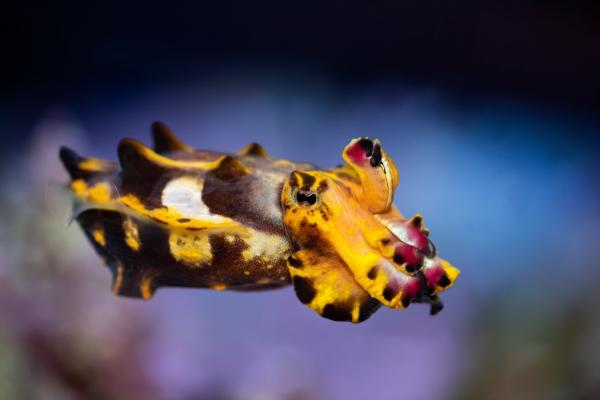
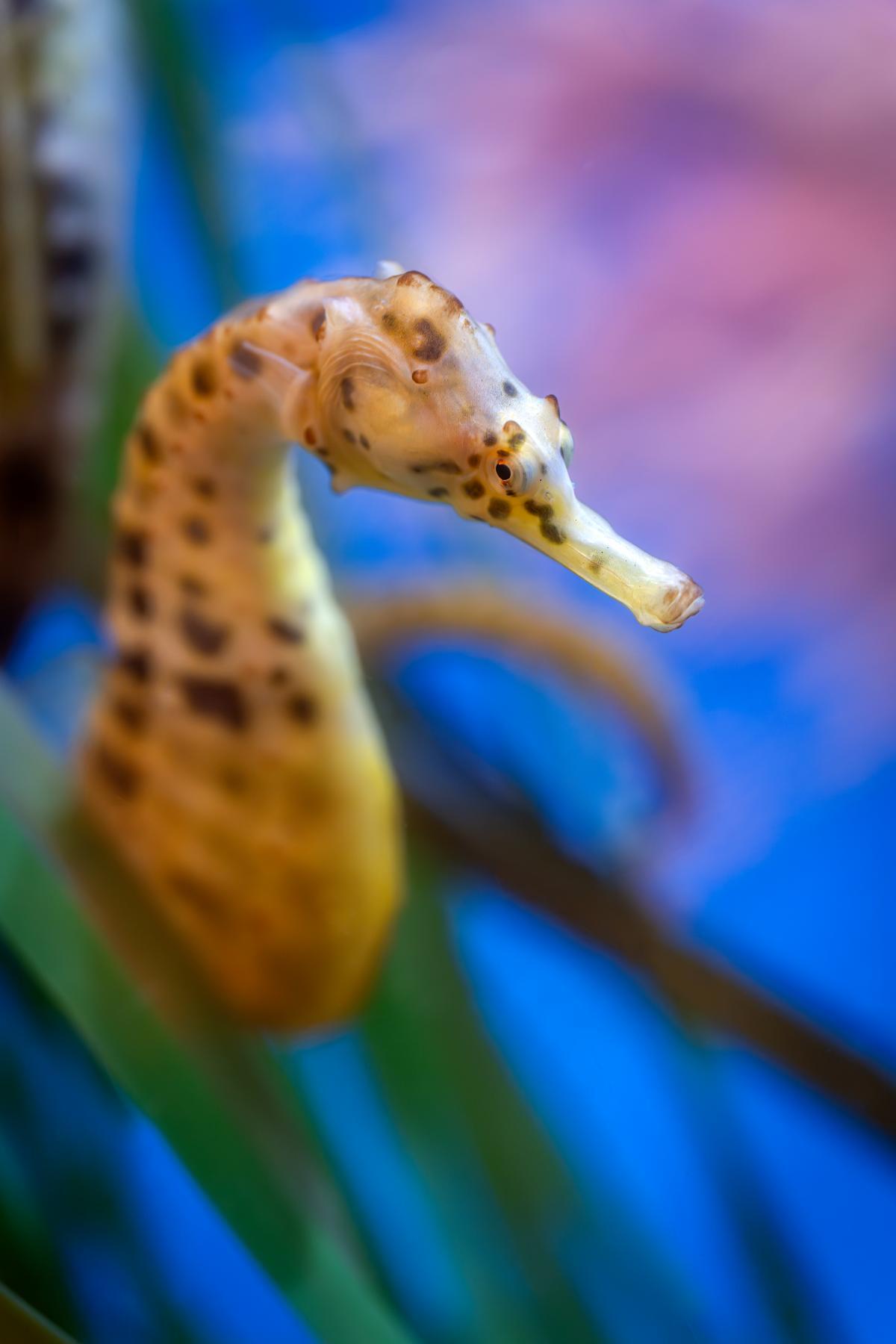
You will find big-belly seahorses, leaping blennies, flamboyant cuttlefish, clownfish, bluespotted ribbontail rays, a variety of coral reef fish including blue tangs, garden eels and African penguins in Ocean in Motion / La Danza del Mar.
How can I teach my toddler empathy for animals at home?
Encourage mimicry of animal movements and imagining life from the animal’s perspective. Kids ages two to six learn through play. Explore the games and at-home activities on our website inspired by the exhibit. Be sure to check out Monterey Bay Aquarium Kids, a YouTube channel for kids that uses the same empathy-building principles as the exhibit.
Is it included with general admission?
Yes, access to Ocean in Motion / La Danza del Mar and the Penguin Feeding program are included with general admission. Consider becoming a member to come back as often as you’d like, with unlimited admission for the entire year.
Keep exploring
Exhibit
Ocean in Motion
Our newest exhibit invites the young and young at heart to play, move, and connect with ocean animals.
Explore exhibit – Ocean in Motion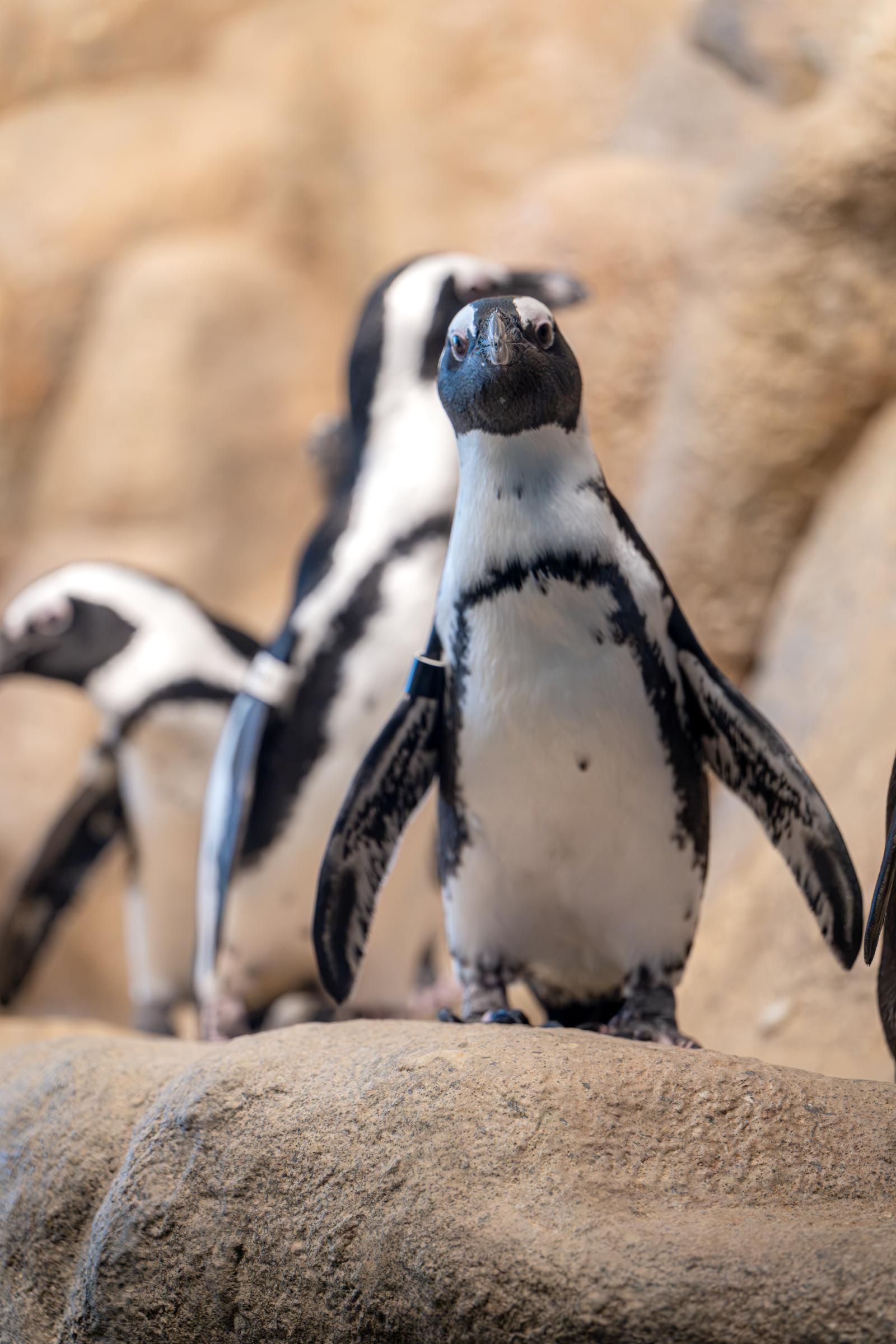
Live cam
Penguin Cam
Our Penguin Cam is currently offline as we renovate our exhibits. Thank you for your patience.
Watch cam – Penguin Cam