

California has enacted the Seabed Mining Prevention Act (AB 1832), after the bill received unanimous and bipartisan support in the state legislature and Governor Gavin Newsom’s signature. AB 1832 prevents seabed mining for hard minerals in state waters that extend from shore to three nautical miles out.
With this bill, California protects over 2,500 square miles of seafloor from the potentially devastating impacts of seabed mining.
“Seabed mining is not just an ecological danger, it is also an economic threat to our communities,” says Assemblymember Luz Rivas of North Hollywood, who authored AB 1832 with the support of the Aquarium and Surfrider Foundation. “Thanks to the advocacy of our cosponsors, California stands out as a leader and is showing the nation and world the importance of protecting our oceans. California is taking an important, science-based, precautionary step to protect the health of our ocean now and for future generations.”
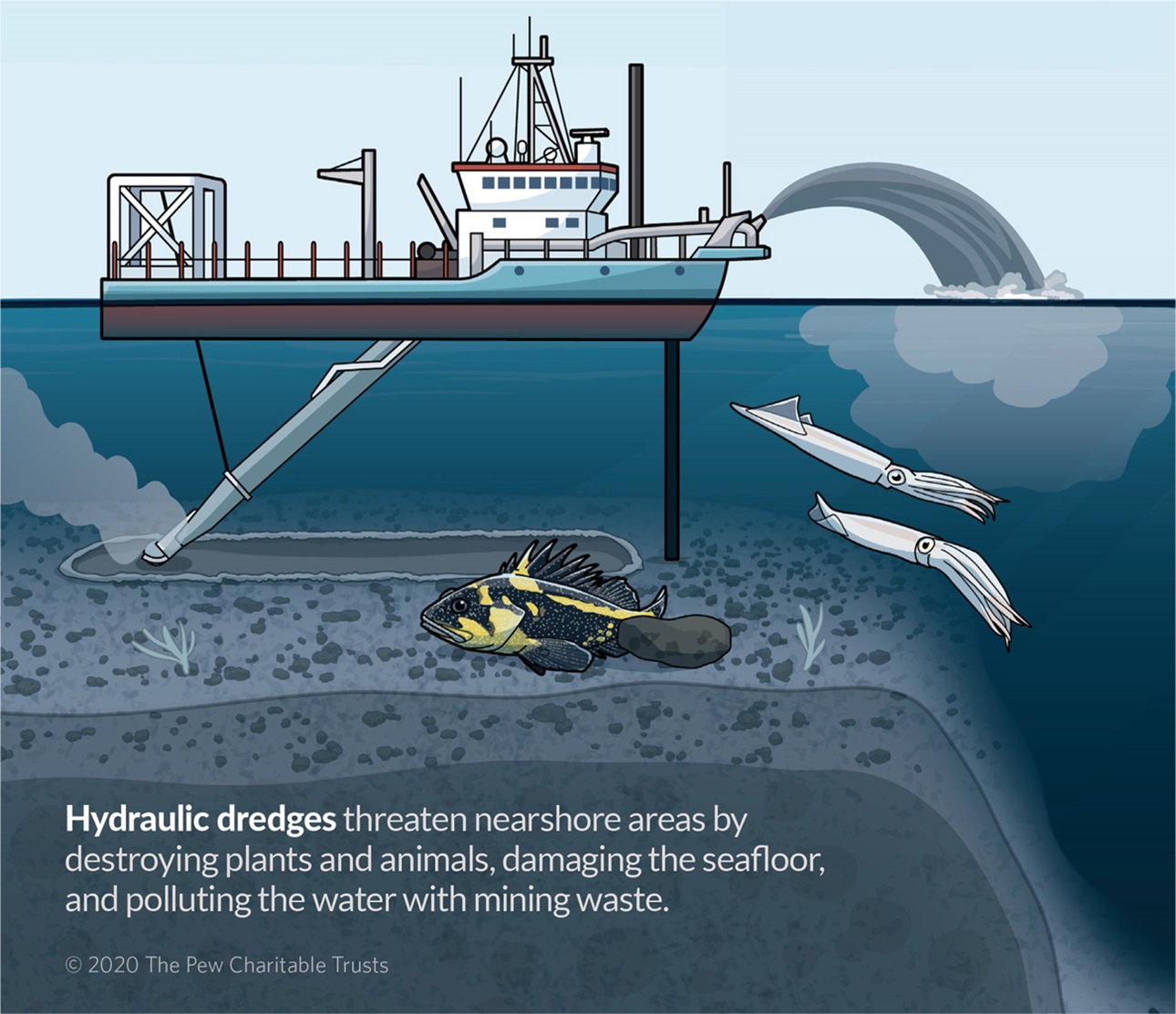
Seabed mining involves doesn't only disturb the seafloor. Disposal of mining waste in the water column also affects midwater animals as plumes of sediment spread through the water column.
© The Pew Charitable Trusts
West Coast states ban seabed mining
By enacting Rivas' legislation, California joins Oregon and Washington in banning seabed mining. Around the world, there is growing pressure to mine the ocean floor for minerals including silver, gold, copper, manganese, cobalt, nickel, and zinc.
Some of the minerals are used to manufacture components for electric cars, wind turbines, and other clean-energy technologies. But the mining comes with an environmental cost: destruction of sensitive seafloor habitats whose ecosystems have not been studied, and potential impacts on animals in the water column from the plumes of sediment that mining vessels would pump overboard.
“We obviously need to meet the growing demand for technology we depend on,” says Aquarium Executive Director Julie Packard. “But we need to do it without the damaging extraction of raw minerals. California is a leader in developing innovative solutions to big challenges. I know we can find less destructive ways to support these technologies.”
Seabed mining, like the deep sea itself, is full of unknowns. We can’t risk it.
Executive Director Julie Packard
That’s the conclusion of an international research team, led by Dr. Diva Amon, a marine biologist and executive of the Deep-Ocean Stewardship Initiative. In a new peer-reviewed study published in Marine Policy, she and 30 other scientists found there are significant gaps in basic understanding of the deep-sea habitats that would be affected by mining. They argue that it would be reckless to forge ahead with mining until we know about the impacts.
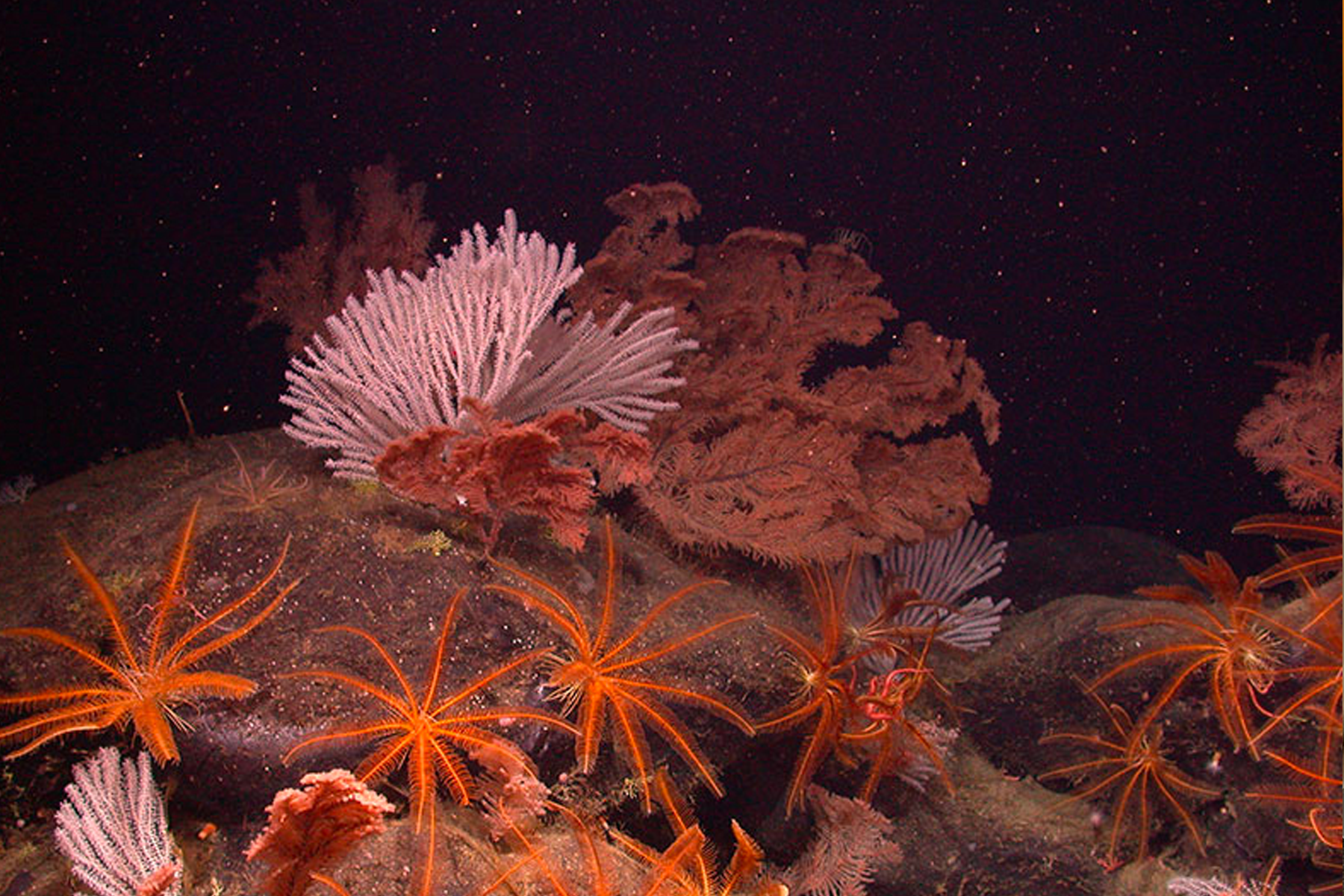
The seafloor is home to diverse communities of animals, like these at Davidson Seamount, whose life histories are poorly understood.
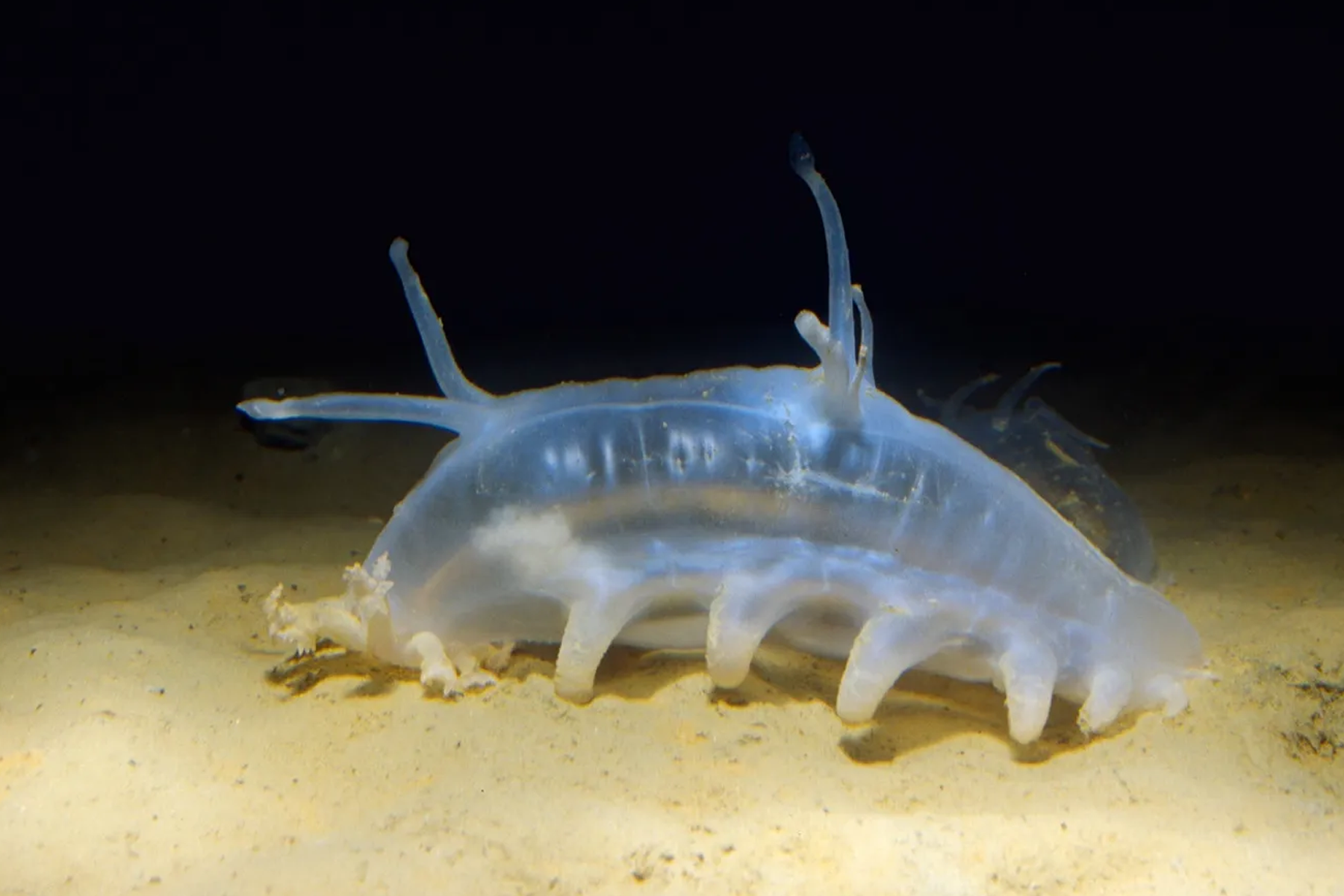
Animals like sea pigs are common on the deep seafloor. Destruction of seafloor habitats by mining would have consequences for the living communities that thrive there.
Science to protect the deep sea
“The publicly available science in areas targeted for deep-sea mining is grossly insufficient, and we still have a lot to learn,” Amon says. “It will likely take decades to gather the research needed to understand—and protect—the deep sea.
“We can’t effectively manage and protect what we don’t know, understand, and value.”
The researchers offer a path to acquire that essential knowledge, involving greater coordination and data sharing among scientists studying the deep seabed; better communication among stakeholders, including mining companies; and a renewed focus on supporting foundational deep-sea research.
Filling the knowledge gaps
Our colleagues at the Monterey Bay Aquarium Research Institute (MBARI) are working with other research centers around the world to fill those knowledge gaps. And they’re providing the public with an unprecedented look at the beauty and diversity of life that’s found in abundance in the deep sea. We’ll share some of those animals, and stories about cutting-edge deep-sea research, in our new exhibition, "Into the Deep: Exploring Our Undiscovered Ocean."
“We’ve seen, through the work of our colleagues at MBARI, how rich and diverse seafloor life is along the California coast,” Packard says. “MBARI’s scientists and engineers have found incredible forests of ancient cold-water corals, nurseries where deep-sea octopuses breed and care for their young, and rich, rocky habitats that support populations of important commercial fishes.
“Those seafloor habitats and animals will be imperiled if we allow seabed mining.”
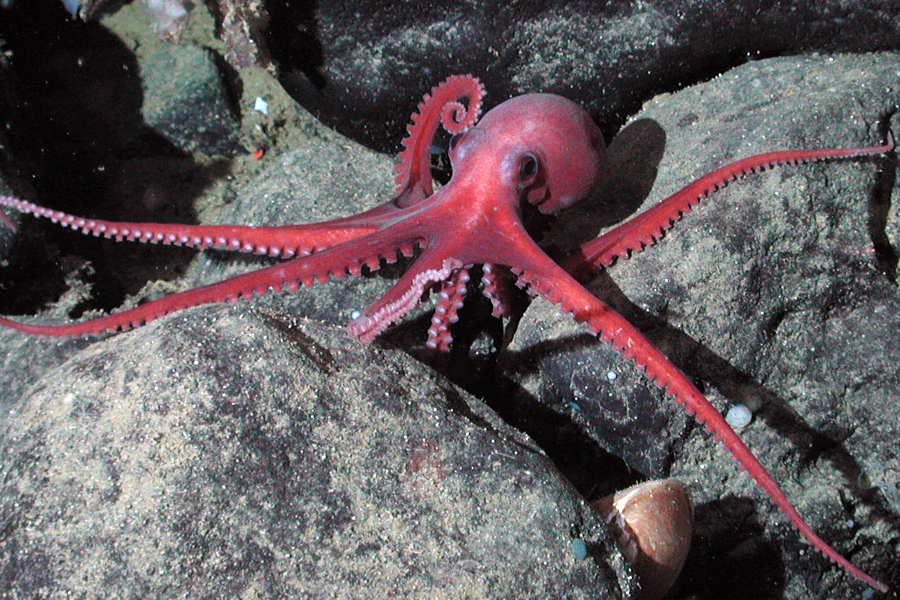
Many animals, like this benthic octopus at Davidson Seamount, make their homes on the ocean floor. The seabed also supports rockfish and other commercially important species.
@ NOAA
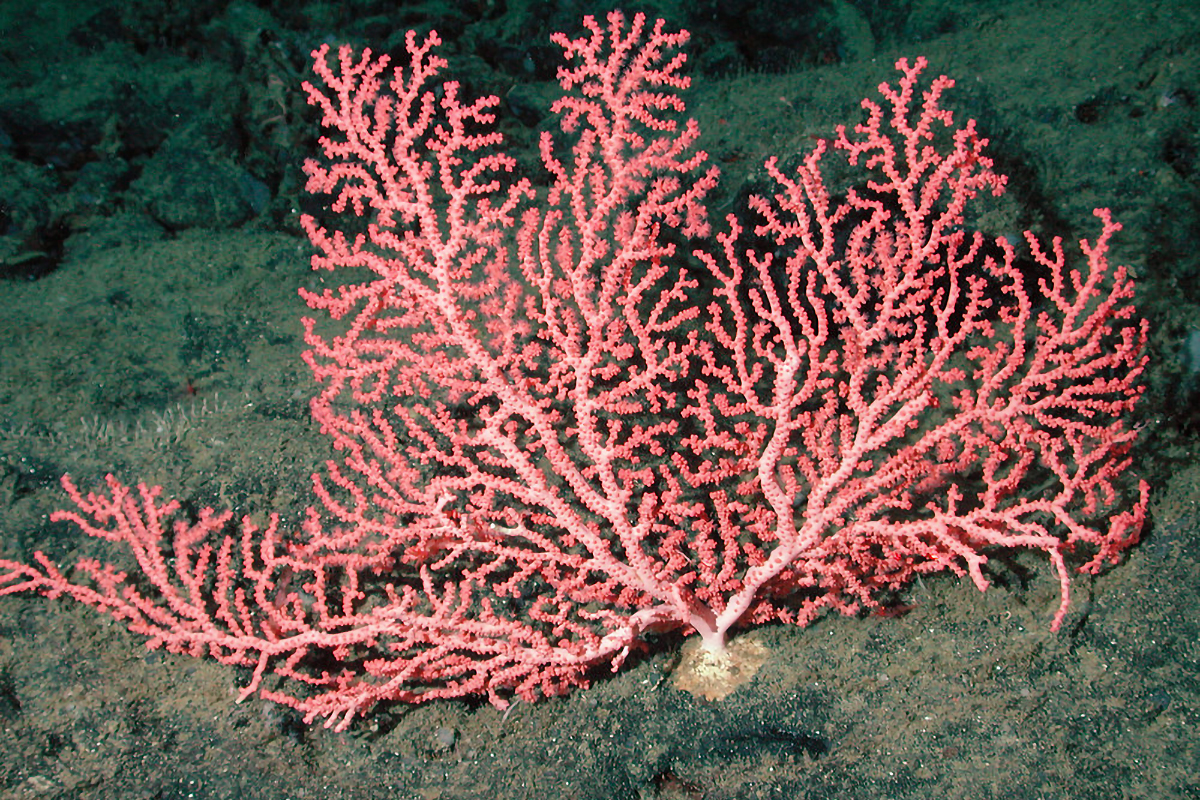
Delicate bubblegum corals are filter-feeding animals found only on the deep seafloor.
© MBARI/NOAA
Other unknown impacts of seabed mining
The impact of sediment disposal from mining in the water column remains a big unknown at a time when marine life is already under extraordinary stress. Ocean waters are warming, becoming more acidic, and losing their capacity to hold oxygen—all because of the unchecked carbon pollution that is driving global climate change.
In addition to being home to extraordinary living creatures, the deep sea helps sequester carbon, supports food webs that feed billions of people, and offers a reservoir of life forms that could contribute to medical breakthroughs. All that could be lost if we rush to exploit mineral resources without understanding the consequences of our actions.
“The stakes are incredibly high,” Packard says. “To prevent a catastrophic free-for-all, we need to make decisions that are informed by data, and not just the potential for short-term profit.”
Keep exploring
Story
From Vietnam to California
From farms to CA schools, your food choices help wildlife, fishers, and global coastal food systems thrive.
Read story – From Vietnam to California
Story
Earth Month 2026
This Earth Month, embrace wonder. Ask questions, dive in, and join our community caring for the ocean.
Read story – Earth Month 2026
Story
From bridges to better seafood: investing in coastal communities
Projects we finance aim to improve the overall quality of life in small-scale fishing and farming communities.
Read story – From bridges to better seafood: investing in coastal communities