

Who are you calling weird?
The deep sea is practically a world of its own—it’s cold, it’s pitch black, and the water pressure is so intense, human bodies would not survive it. This extreme environment has forced deep-sea animals to evolve in order to survive. And some of those adaptations make deep-sea animals appear strange to our human eyes.
But aquarist Tommy Knowles begs to differ. “They’re not weird. They’re perfectly adapted for their environment,” Tommy says. He and fellow Aquarium biologists Mackenzie, Alicia, and Ellen share more about the adaptations these incredible creatures use to survive in the deep sea and answer the question: Why do deep-sea animals look so different?
Related videos
Weird and wonderful

Watch as our aquarists explain why deep-sea creatures look the way they do.
Color me amazed
In the pitch black darkness of the deep sea, color plays a vital role in animals’ survival. Many animals in the deep sea are transparent, which helps them remain hidden from their predators. Others are bright red. This works as excellent camouflage for these creatures, as most deep-sea animals cannot see the color red. Without red light, one cannot see the color red. Since red light doesn’t reach the deep sea, red animals like these look black and are invisible to most predators.
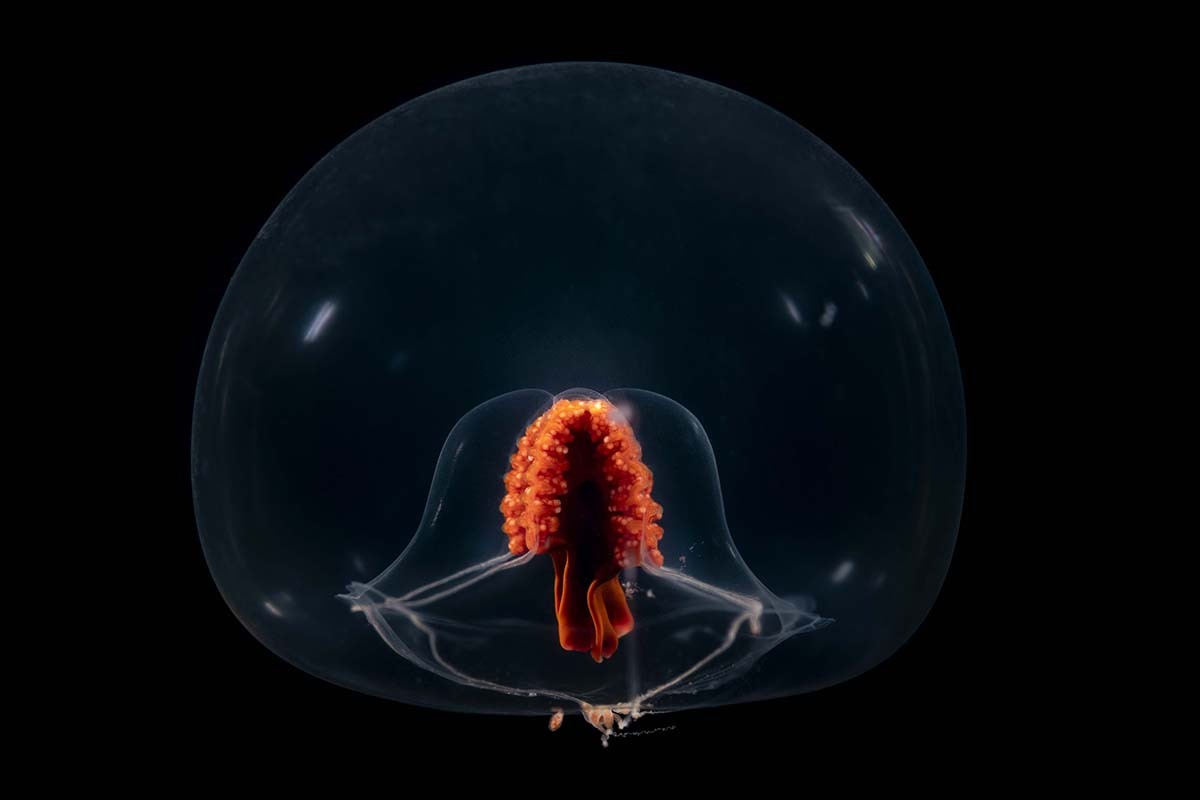
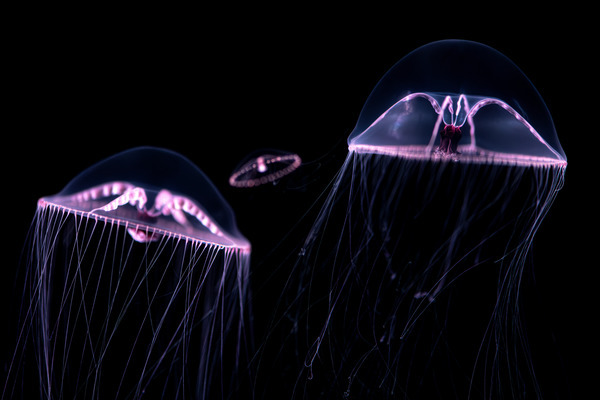
The snow globe jelly's red gut helps it stay camouflaged in the deep sea by obscuring any bioluminescent prey it may eat.
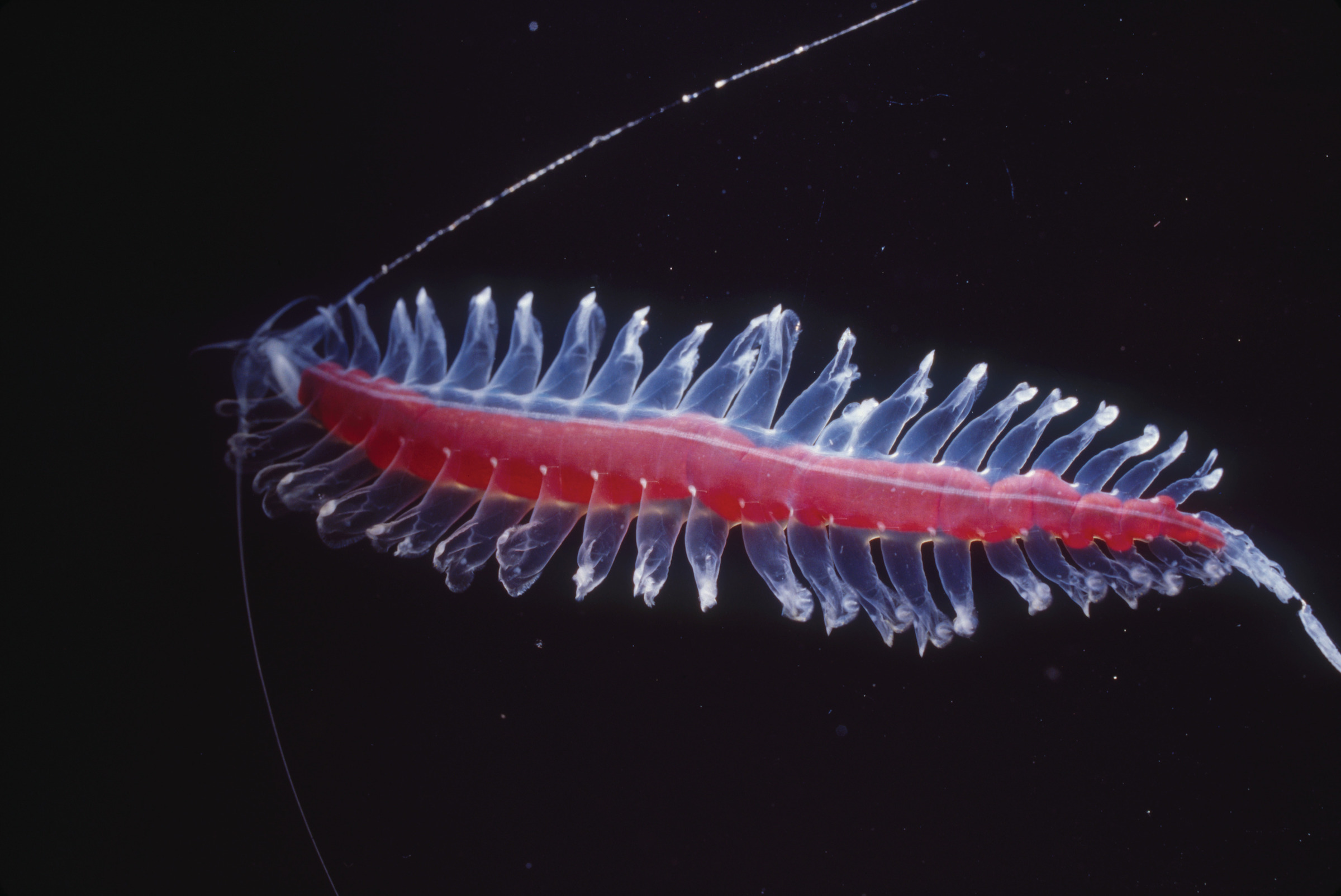
The gossamer worm (Tomopteris sp.) is one of the few deep-sea species that make yellow light.
Eye see you
It is vital for some animals to be able to see in the deep sea. Some predators, such as the owlfish, have really big eyes, and are able to pick up little bits of visible light that make it down to the deep sea. These eyes are vital in helping deep-sea creatures find prey, search for mates, and be on the lookout for predators.
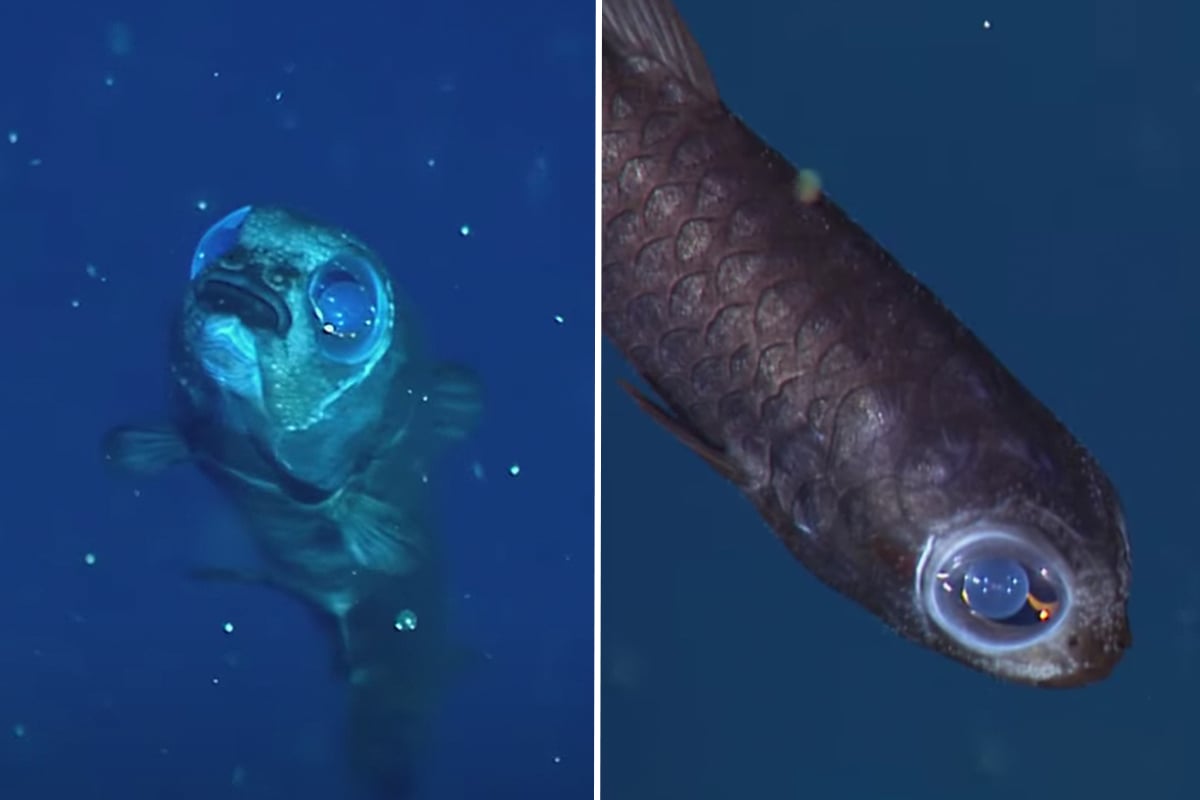
Big eyes make the most of what little light reaches the deep sea. Faint glimmers in the dark guide the owlfish to prey like small shrimp and jellies.
© MBARI
Hunt or be hunted
We all have to eat to survive. The creatures that live in the deep sea will eat a wide variety of prey—often, they have to eat what they can find! Since food is often scarce, some deep-sea animals are able to expand their stomachs to store food, which digests for about a month. These creatures consume very large prey, and therefore do not have to hunt as often. Other fish, such as the anglerfish, have a lure to attract prey to them.
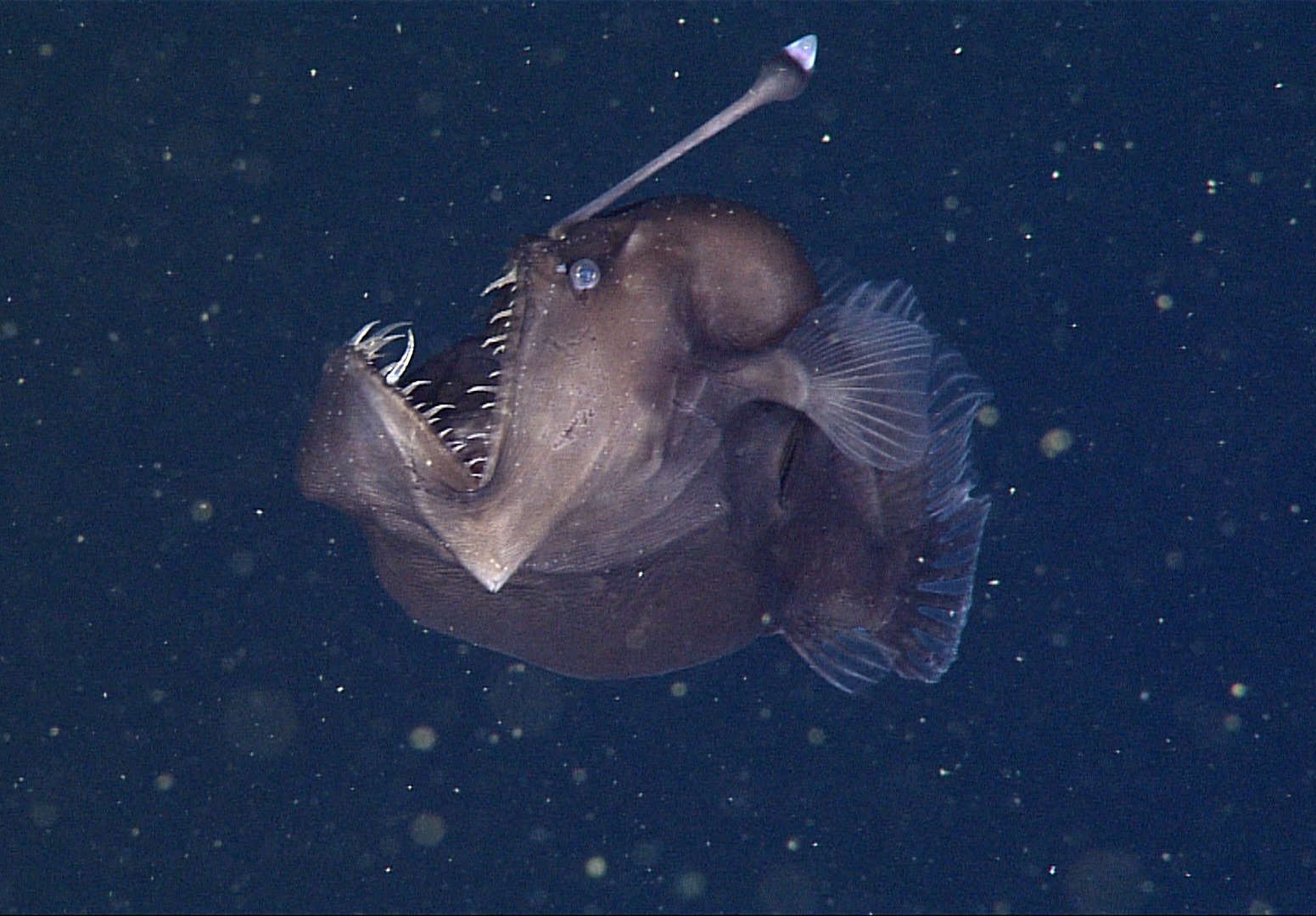
© MBARI
“For us, we think, woah, those animals are so weird looking, like why do they look like that? But I’m sure they would look at us and be like, ‘why do they look so weird?’” Ellen Umeda states. After learning about these amazing adaptations it begs the question: What if we’re the weird ones?
Can't get enough of deep-sea creatures? Learn more about the fascinating animals featured in this video from our colleagues at MBARI.
Keep exploring
Story
2026 Lucile S. Packard Memorial Award and Youth Award recipients
We’re proud to announce the 2026 Lucile S. Packard Memorial and Youth Awards for outstanding volunteers!
Read story – 2026 Lucile S. Packard Memorial Award and Youth Award recipients
Story
Chumash Heritage National Marine Sanctuary is almost here
Chumash Heritage National Marine Sanctuary protects marine life and cultural resources on California’s coast.
Read story – Chumash Heritage National Marine Sanctuary is almost here
Story
From krill shakes to salmon steaks: A peek into our food room
Step into our food room—the hub where 75,000+ animals and plants get sustainable diets year-round.
Read story – From krill shakes to salmon steaks: A peek into our food room