

Deep-sea anglerfish
Order Lophiiformes
- Not on exhibit
- Animal type
- Fishes
- Ecosystem
- Deep sea
- Relatives
- Other anglerfishes (200 species)
- Diet
- Crustaceans, small fish
- Range
- Midwater and seafloor
- Size
- Up to 4 feet (1.2 m)
Meet the deep-sea anglerfish
Anglerfish have perfected the art of deep-sea fishing. Although different species vary in size and shape, they all lure prey towards them with their fishing rod-like appendages. Once an unsuspecting prey swims too close, the anglerfish snaps it up.
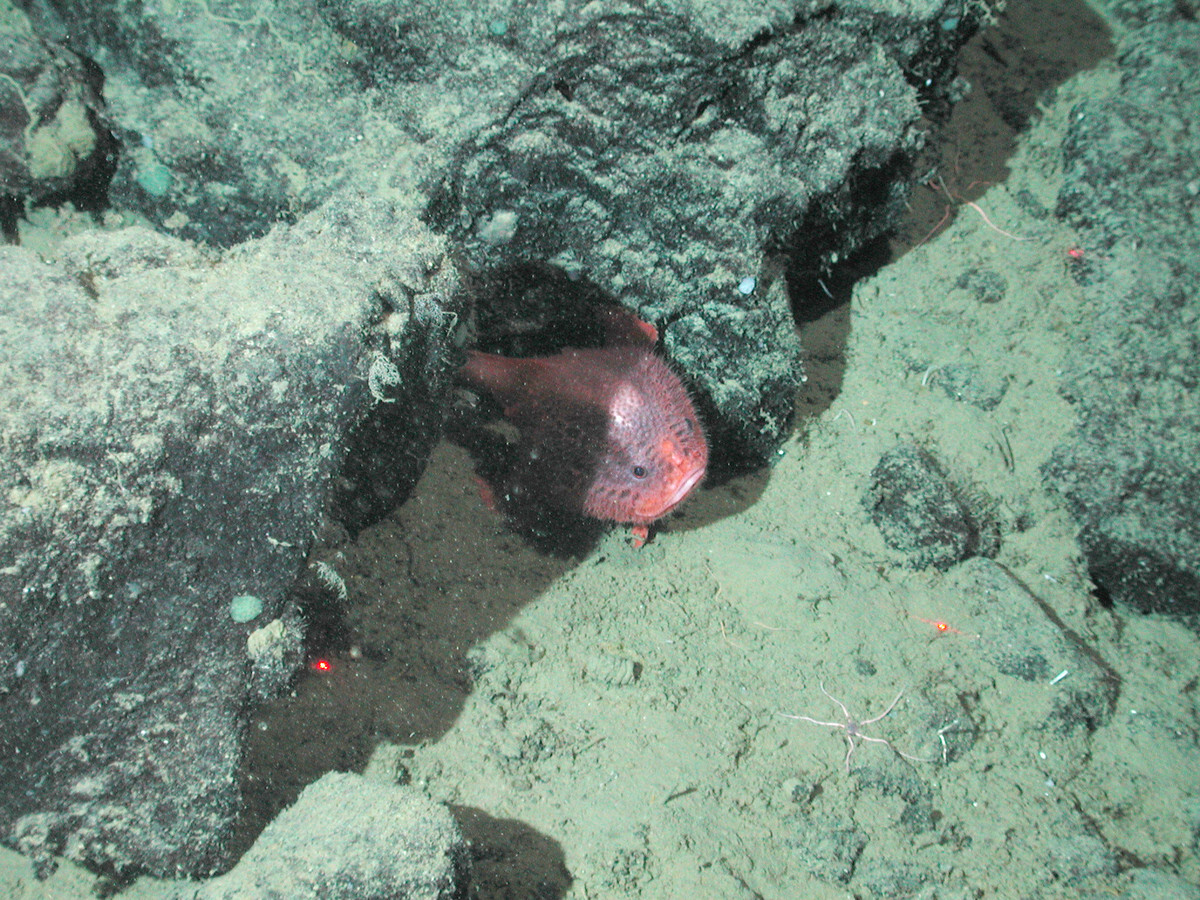
Sea toads are often found in very deep water where they dwell on the seafloor.
© MBARI/NOAA
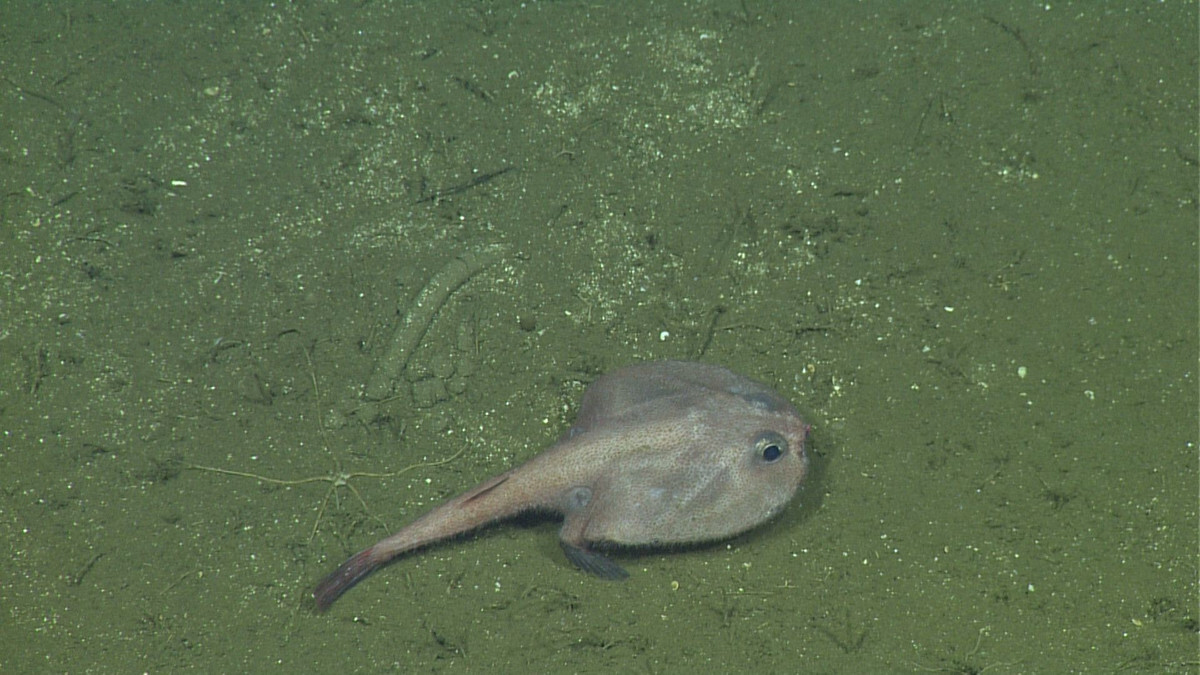
With a distinctively flat and disc-shaped body, batfishes are poor swimmers and use their large pectoral fins to “walk” along the seafloor.
© MBARI
Natural history
There are over 200 species of deep-sea anglerfish. From the recognizable toothy jaws of the black seadevil to the bottom-dwelling sea toads, deep-sea anglerfish come in all sorts of shapes and sizes.
Meals in the deep sea may be few and far between, but the anglerfish have adopted a unique strategy to find their next meal. Instead of expending energy to hunt their prey, deep-sea anglerfish have developed a fishing pole-like rod that projects from their head. At the end of the rod is a sac of bioluminescent bacteria that glows brightly in the dark. The light attracts prey towards the anglerfish’s waiting mouth — acting like the anglerfish’s own meal delivery service. Learn more about bioluminescence in the deep sea.
Related videos
Meet the many faces of deep-sea anglerfish

These deep-sea residents catch their meals using a fishing pole-like appendage to lure prey to them. But no two are alike.
Conservation
Because deep-sea animals are seldom seen, it’s easy to think of them as being relatively immune to effects of human activities. But overfishing, ocean acidification, and expanding low-oxygen zones in the ocean could wipe out key organisms and cause irreversible changes in deep-sea food webs. Such shifts in deep-sea biodiversity could directly impact marine mammals, human fisheries, or even Earth’s climate.
Cool facts
- The "fishing rod" growing from the female anglerfish's snout ends in a glowing blob of light. At the tip of this modified fin ray is a small organ (esca) that contains millions of light-producing bacteria.
- In some species of anglerfish, the males are tiny, with simplified body features, and they live as parasites on the females. This is thought to be an adaptation to save energy, allowing the females to feed on whatever food is available. The males seem to have evolved for one purpose only: to find a female and deliver sperm.
Up next in deep sea
Animal
Giant isopod
The giant isopod roams the deep seafloor feasting on fish carcasses and other debris that fall from above.
Keep exploring
Animal
Giant siphonophore
When startled, the giant siphonophore glows with bright blue light.