

Jumping in the deep end
The floor-to-ceiling windows framed a beautiful view of the Monterey Bay outside. Waves crashed on the sheltered McAbee beach just across historic Cannery Row, and a group of southern sea otters floated together in a raft just offshore. I listened to the chatter of the middle schoolers who filtered into the labs of the Bechtel Education Center.
Our educators drew the attention of the participants to the front of the room, switching deftly between both English and Spanish. The students mostly quieted down. I took a deep breath and walked to the front of the room.
“We met this morning, but in case you forgot, my name is Lilianna, my pronouns are she/they, and I’m here to share my art project about the deep sea.”
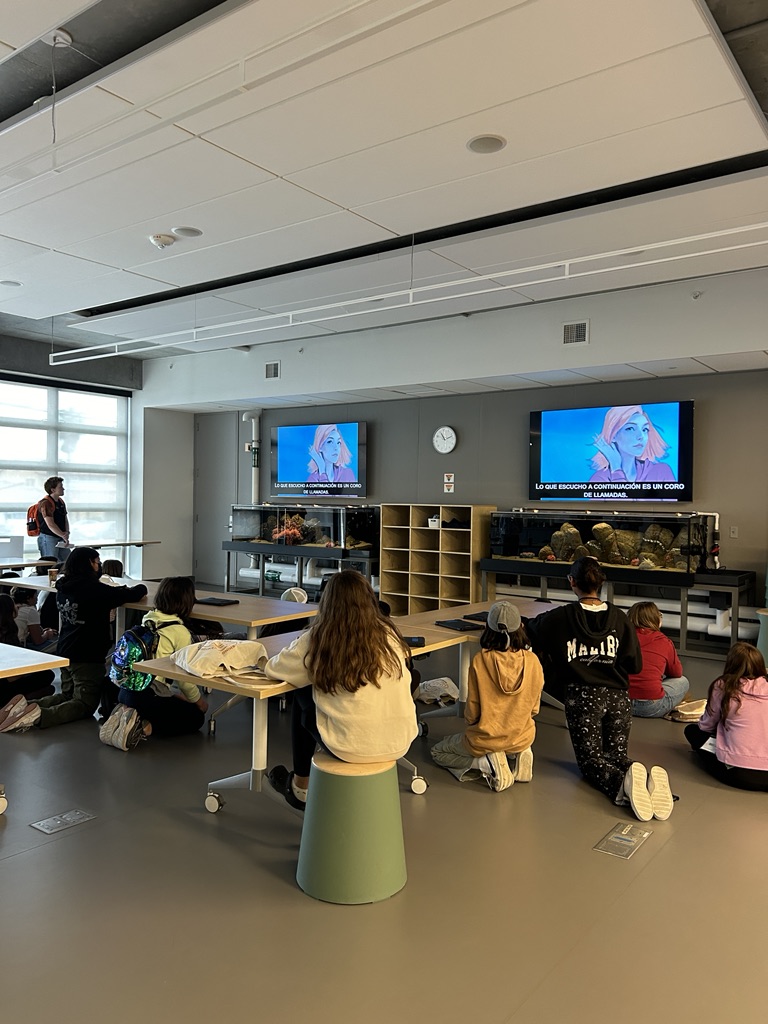
OLAs participants watching Swim Down in the Bechtel Learning Labs.
“This project can be a little hard for me to talk about in front of new people at first because it’s really personal,” I admitted. “Does anyone know what it means to be neurodivergent?”
Most students raised their hands, and some nodded enthusiastically. One smiled at me. They wore noise-canceling headphones and clutched a soft plushie of a deep-sea isopod—one of the animals we’d seen that morning in the Aquarium’s exhibit, Into the Deep/En Lo Profundo.
“A neurodiverse person might have a different way of experiencing the world for many different reasons,” I said as I glanced up at the group in the back of the room who continued to talk to each other. “For me, as an autistic person, that means my hearing is sensitive, so I have a really hard time speaking when other people are talking.”
The whispering group immediately quieted down, looking at me guiltily. I smiled at them in appreciation.
“This is an art project I made last year to get my master’s degree in marine science. It’s called Swim Down,” I said. “While you watch it, I want you to think about the deep sea. You can also think about some of the things that make you different from other people, too.”
My heart pounded as my fellow educators dimmed the lights and hit play on the video. In middle school, I didn’t like to think about the things that made me different. But the students quieted down, and they watched. And, to my surprise, they really listened.
Related videos
Preview Swim Down

This graphic novel was created by Lilianna Watson as their final Capstone project for the master of advanced studies in marine biodiversity and conservation at Scripps Institution of Oceanography, UC San Diego.
About Ocean Learning Adventures
Ocean Learning Adventures (OLAs) is a week-long day camp for middle schoolers conducted in both English and Spanish. Camps are free, and transportation is provided from community locations in Watsonville, Salinas, Marina, and Seaside. This bilingual summer program is thoughtfully designed from the big picture down to smallest details; even the acronym olas translates to ocean waves in Spanish.
The camp’s curriculum delves into different coastal ecosystems in the Monterey Bay, from the kelp forest, to the brackish coastal wetlands, to the deep sea submarine canyon. In addition, OLAs offers exciting hands-on learning experiences like kayaking and snorkeling. This summer program intentionally focuses on building community, connection, and fostering the emotional wellbeing of its participants using trauma-informed educational techniques.
The education team at the Monterey Bay Aquarium has been on an ever-evolving journey to meet the complex and shifting needs of its participants. In today’s world—shaped by the lasting COVID-19 impacts and emotional weight of climate change—many students arrive carrying some form of trauma or experience that influences how they engage, learn, and connect with our world.
Historically, we’ve tried to ‘empower’ youth in our programs. We did a lot well. And looking back with today’s frame, we also realize that we can do better. For years, we told teens that they would be the ones to save us, without realizing the immense burden that placed on them.
Katy Scott
Education Programs Director
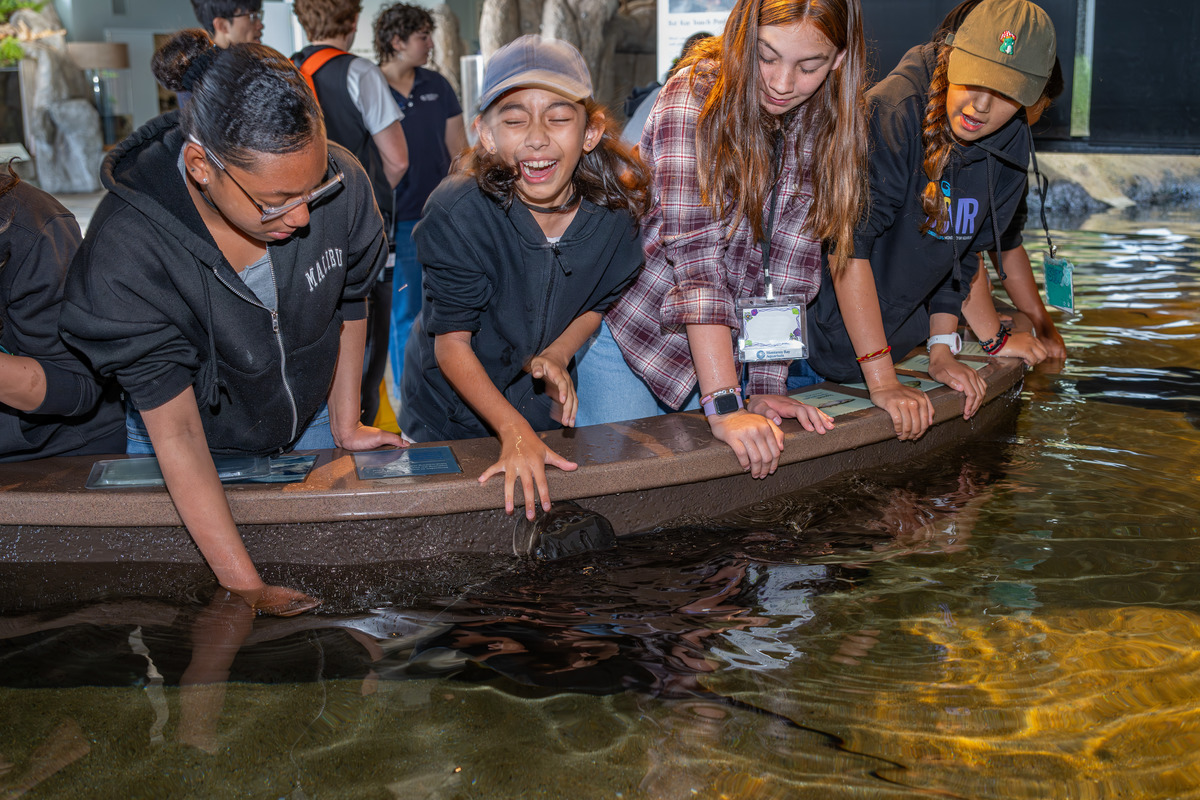
OLAs participants enjoy interacting with bat rays in the touch pool at the Sandy Shore & Aviary exhibit.
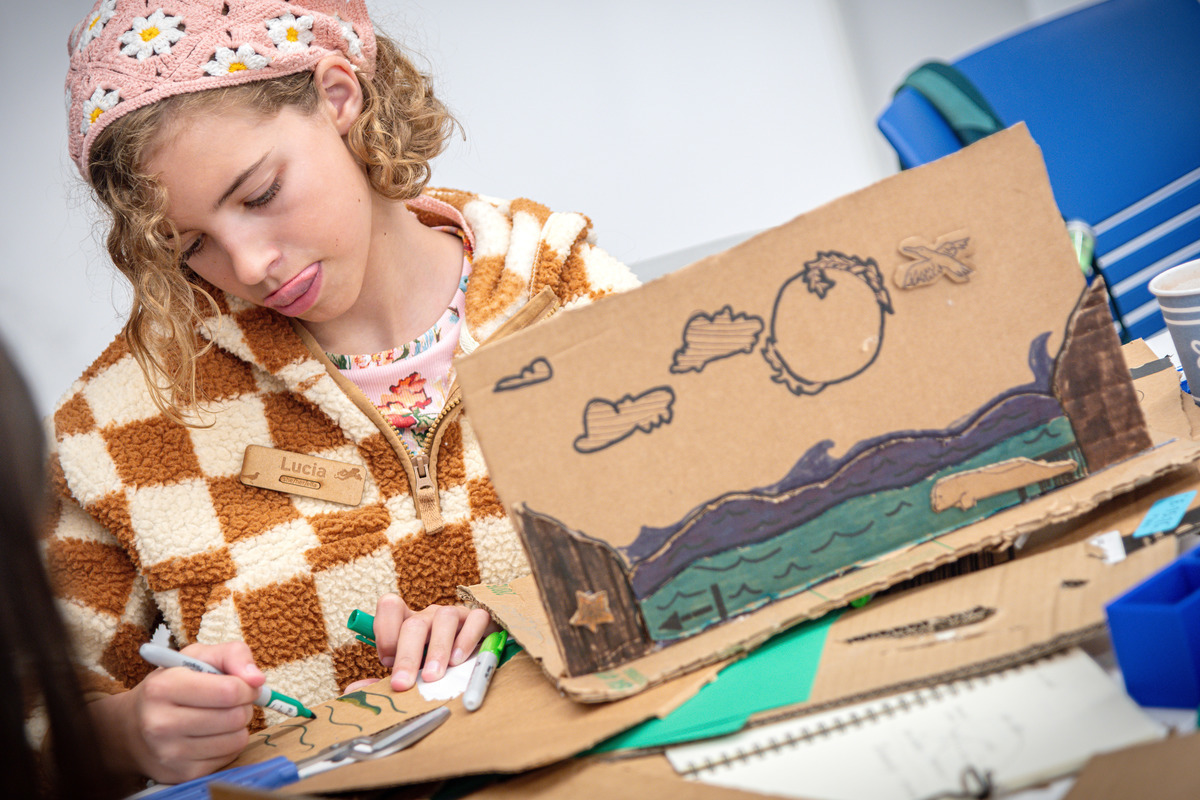
An OLAs student works on an engineering project in the Innovation Labs at the Bechtel Family Center for Ocean Education and Leadership.
Trauma, technology, and trust
The Aquarium’s youth development programs, including OLAs, use a daily mental health check-in software that allows educators to provide real-time support and assess the needs of participants. Students are asked to set aside ten minutes to fill out a short iPad survey each morning to share their moods and needs.
Some of the self-reported struggles of our participants included academic pressure, anxiety, hunger, illness, loneliness, low self-worth, stress, social life, and tiredness. By gaining insights into participants’ moods and feelings, educators were able to adapt their approaches to cultivate a sense of both physical and psychological safety. Kristy Markowitz, a former bilingual education specialist and OLAs staff member, found that this practice helped her address individual student needs, and eventually helped students feel more comfortable approaching adults about their needs face-to-face.
Middle schoolers aren’t always the best at sharing their feelings with adults they barely know, or may not know how to express what they need. Giving the kids a private space to share their feelings made them feel more comfortable, not just in the Aquarium, but around our educators and volunteers.
Kristy Markowitz
Former bilingual education specialist and OLAs staff member
In a world where the majority of Californian youth have experienced a devastating natural disaster of some kind—from wildfires, to floods, to the compounding impacts of ocean and climate warming—feelings of helplessness and abandonment are heavier than ever. Volunteers and educators alike remarked on how being more aware of students’ needs in a format that was tailored to their wellbeing allowed participants to be more open and vulnerable with the adults running the program. The security and confidence of the students was immediately apparent and impressive to me as I stood nervously before this room of thirty students.
Courage in vulnerability
When my video ended, the students broke into applause, turning to me with wide-eyed looks of focus. I made my way back to the front of the room, encouraged by the reaction. I asked, “I hope you enjoyed the video. Does anyone have any questions?”
The room was quiet for a moment before the first student raised her hand.
“It’s not a question,” she said. “I just want to say I’m amazed. It’s really cool that you got to make an art project like that in school.”
I smiled at her and thanked her for her comment. I received several thoughtful questions—How long did it take to make this? What video software did you use? How did you even come up with this idea?
And my favorite, that I would be asked consistently across all of the OLAs camps I presented to:
“What’s your favorite ocean animal?”
My answer was the same every week: Jellyfish.
After this short question and answer session, my coworkers and I led the students in an activity where everyone made their own videos using footage they took on iPads in Into the Deep/En lo Profundo earlier that morning. Some of the students dove into the editing activity with focus and excitement, while others chose the option to draw or journal.
“This is the quietest they’ve been all week,” one of my fellow educators, Kristy, joked in a whisper as they made their videos.
I walked around the room, watching as these students connected with deep-sea animals by editing their own footage. I was touched, humbled, and inspired by what they made. Some rushed up to play their videos for me, while others called their friends over to watch. Many of those who decided to draw brought me their sketchbooks to show me their drawings, then flipped through to show me some of their other pieces.
“Are you an artist?” I’d ask.
“Yes!” Every student replied without fail.
I thought back to my own middle school experience, and how I never would have shown an adult a sketchbook, much less a classmate. Something like that felt far too vulnerable, as expressing myself felt like an invitation for social rejection. I was moved when I saw how cultivating a safe space for teens at such a vulnerable age made a powerful difference. Their maturity, openness, and courage taught me that I ought to have more faith in others, and it will stay with me in the future as I continue to make art.
Lilianna Watson
Senior content creator
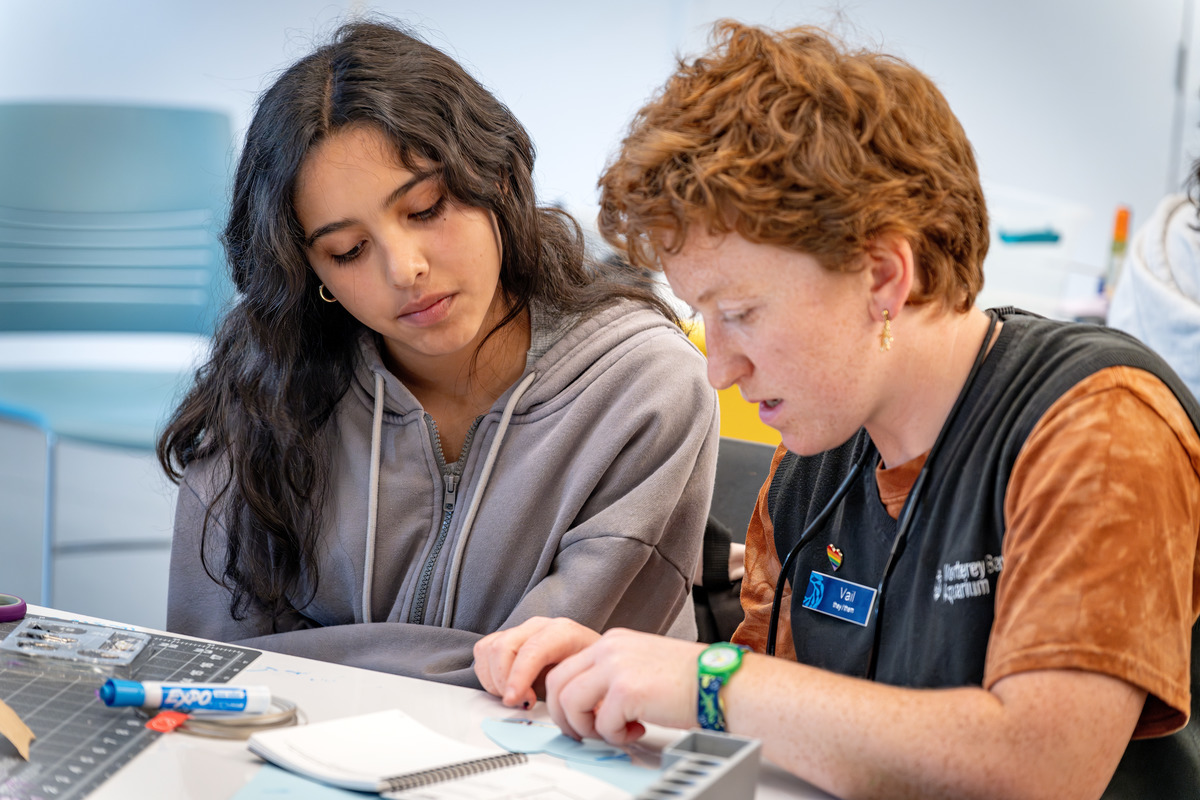
An OLAs instructor helps a participant with a design engineering project.
The safety of shared identity
According to evaluative data collected at the end of each camp, 90 percent of students felt supported by adults during the OLAs program.
The sense of safety built through that support was visible to all the staff and volunteers as we recalled inspiring moments of connection over the course of the four OLAs camps that summer. Vail Dark, an education specialist and OLAs staff member, shared a story of a student who expressed how much she appreciated the adults running the program by gifting them each hand-written thank you cards on her last day with a personal note and art.
For some of us it was about making a safe and fun space for the campers. For others it was about a special memory like playing at the beach. This student also made one for our bilingual volunteer, Héctor, and thanked him for making space for students ‘que hablan más que un idioma’ to be able to learn the same. It moved some staff to tears, as this student was also bilingual.
Vail Dark
Education specialist and OLAs staff member
I myself was particularly moved by the participants’ respect for my nonbinary identity. I noticed that, across camps, many students went out of their way to refer to me with they/them pronouns despite my feminine appearance. I only recently began sharing my nonbinary identity outside of trusted circles. Many students remarked that, when they saw staff and volunteers wearing pride accessories and pins, a practice encouraged by the education team, they felt more comfortable being open about their LGBTQ identities at camp. Similarly, when adults introduced themselves with pronouns and included them on their name tags, participants felt safer introducing themselves authentically.
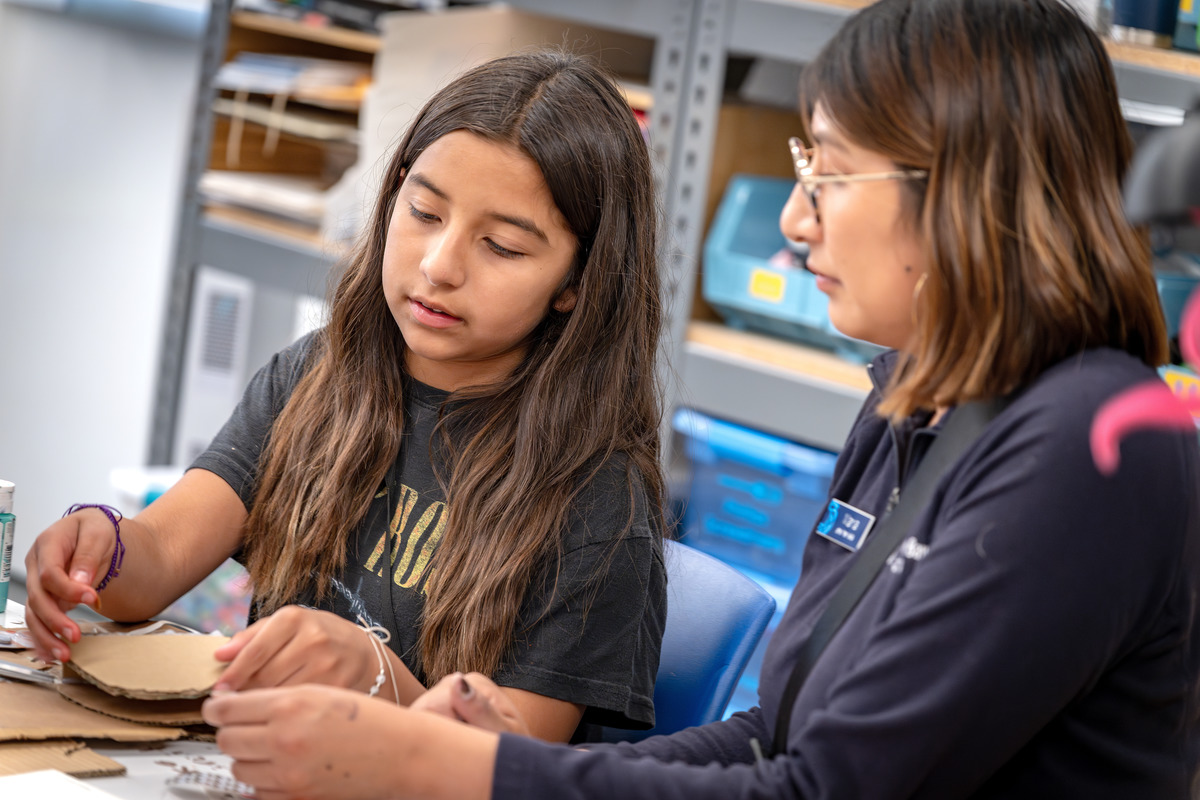
OLAs participants design and build their own engineering projects with the guidance of Aquarium educators.
Cielito Lindo: Intergenerational connection through language
When I asked Kristy about a moment that was meaningful for her during OLAs, she thought for a moment before she said, “Well, it’s not exactly something that happened because of the lessons or curriculum, but I’ll never forget it.”
It was the last day of camp, and the last week of the summer. In the light-filled atrium of the Bechtel Center for Ocean Education and Leadership, there were games, laughter, and music.
That afternoon, the students designed and built their own arcade games that integrated the marine science knowledge they’d learned during OLAs. We played them together—I tossed beanbags through the mouth of a cardboard pelagic ray for candy prizes while dodging stray ping-pong balls from other games.
At some point during the party, the educators rolled out a large speaker and karaoke machine. One student who had been very shy at the beginning of the week had gradually bonded with Kristy in particular, as she had never been in an educational space where an educator conversed with her in Spanish as well as English. She asked if she could sing a Mexican folk song called "Cielito Lindo."
She stood in the center of the room, quietly singing into the microphone. She was difficult to hear over the conversations. Then our bilingual volunteer, Héctor, stepped forward and joined her, his low tenor accompanying her and helping her raise her soft voice louder to capture the attention of the room. Educators and peers who knew the lyrics sang along, and everyone in the room applauded for them as they took their bows when the song concluded.
In a survey given to participants at the end of camp, they expressed that the bilingual experience felt inclusive, reflected their heritage or culture, and helped them learn or improve Spanish language skills. Some students also noted how it makes OLAs unique, as other camps don't use a bilingual approach. Bilingual students felt that the incorporation of Spanish helped communication feel more natural.
“I don’t think that moment ever could have happened if we hadn’t focused on helping our students feel safe and connected to us during OLAs,” Kristy said. “Usually in camps like this we hope students will connect with each other by the end of the week, but in that moment we also saw connection between this girl and myself, her teacher, and also with Héctor, a volunteer old enough to be her grandpa. Those intergenerational connections were stronger and more meaningful because of our shared language.”
Related videos
Meet Héctor!

Héctor’s a genuine and hardworking person with more than 3,000 hours of volunteer service at the Aquarium. Uncover his story in his first language, Spanish, and witness his dedication to ocean conservation. Like Héctor, you can be part of the change, too! Because the ocean needs us all (in every language) and together we can make a difference. ¡Acompáñanos!
"Don’t forget me"
I had one personal moment that stood out to me most during the last OLAs camp of the summer, too. By then we had refined our video editing activity, and I felt a lot more confident helping out and interacting with the students. I noticed one girl struggling, hunched over her sketchbook and calling her drawing ugly under her breath.
“That’s a beautiful jellyfish,” I said, peering over her shoulder.
“No it’s not. It doesn’t look realistic,” she said, frustrated.
“It doesn’t need to be realistic to be beautiful,” I said, trying to be wise, but secretly feeling lost as to what to say. “The shape you drew on top of its bell is really unique. It looks like the sun.”
She looked at me curiously, then went back to her drawing. I’d done my best. I left to walk around the room, watching proud students’ videos and helping others figure out the technology.
At the end of the activity, the girl who I’d encouraged approached me as her peers shuffled out the door for lunch. She’d finished her drawing of the jellyfish and gave it to me as a gift.
“I signed it so you don’t forget me,” She said with a smile. Then she turned and hurried to catch up with her friends.
I’ll never forget her or that summer. I have the jellyfish drawing on my desk as a reminder of how much I learned from her, and how my own words had the power to grow a teenager’s self-confidence. Agreeing to work with these middle schoolers was one of the scariest things I’d ever done because I myself felt so scared and vulnerable at that age. I’m grateful to my coworkers for inviting me into the OLAs program and for seeing that my work could make a difference.
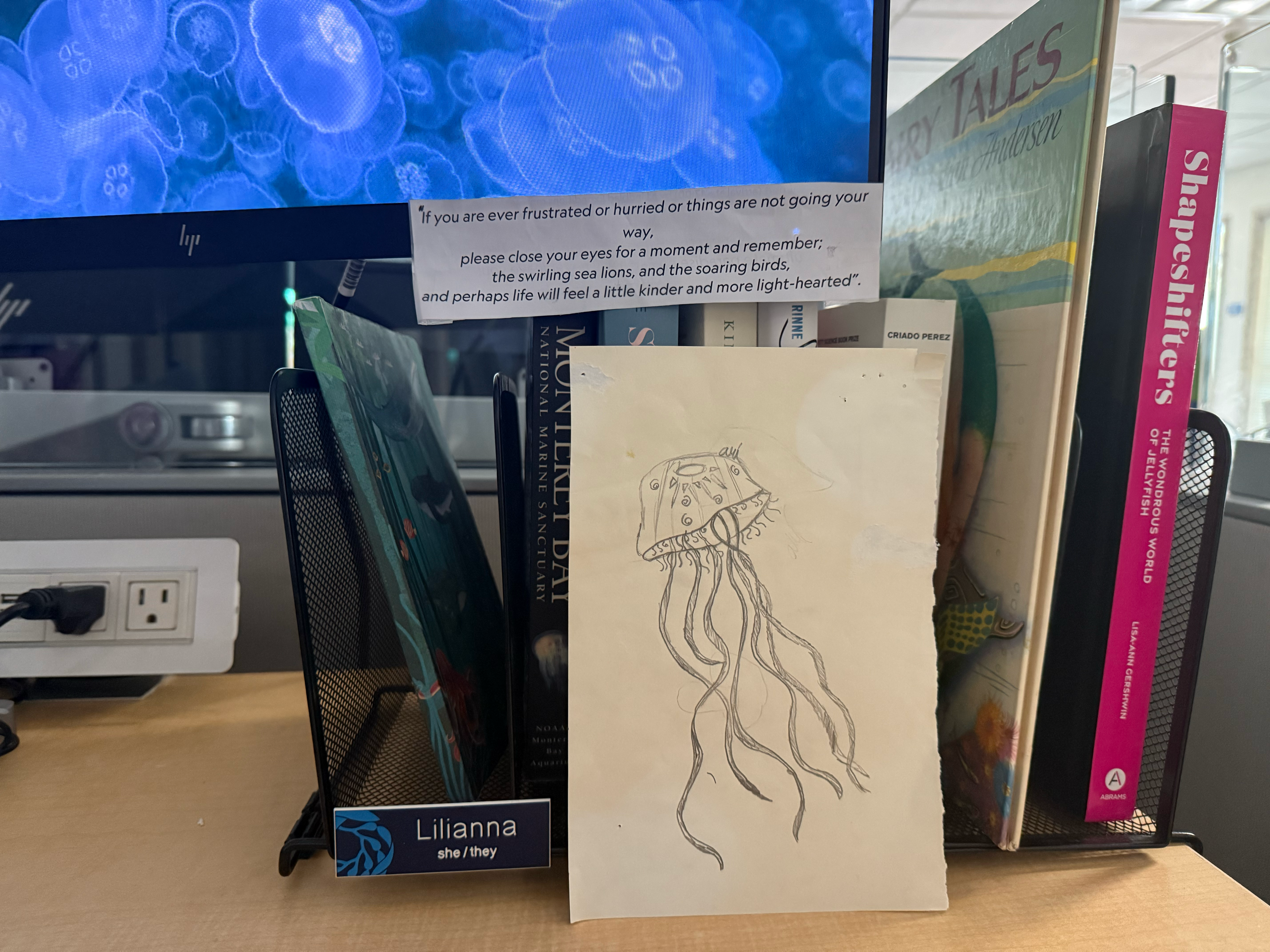
An OLAs student's jellyfish drawing lives on Lilianna's desk alongside their books, decorations, and moon jelly computer wallpaper.
During my time with OLAs, I observed how the Aquarium's education programs strive to approach science education by first building a sense of safety and community. This approach fosters students’ connection with the ocean, with each other, and across generations. Cultivating this connection had a demonstrable impact on the participants’ self-perception and agency when it comes to environmental issues. After participating in OLAs, students were significantly more likely to identify as scientists, engineers, and environmental activists.
I feel this is an antidote to the burden that well-intentioned adults can unwittingly place on our youth to save the environment that older generations have harmed. We must remember that we can all learn from each other, always, in the face of a changing world where safety hangs in the balance. Our care is particularly impactful for youth who may feel they’ve been forgotten.
Lilianna Watson
Senior content creator
Keep exploring
Story
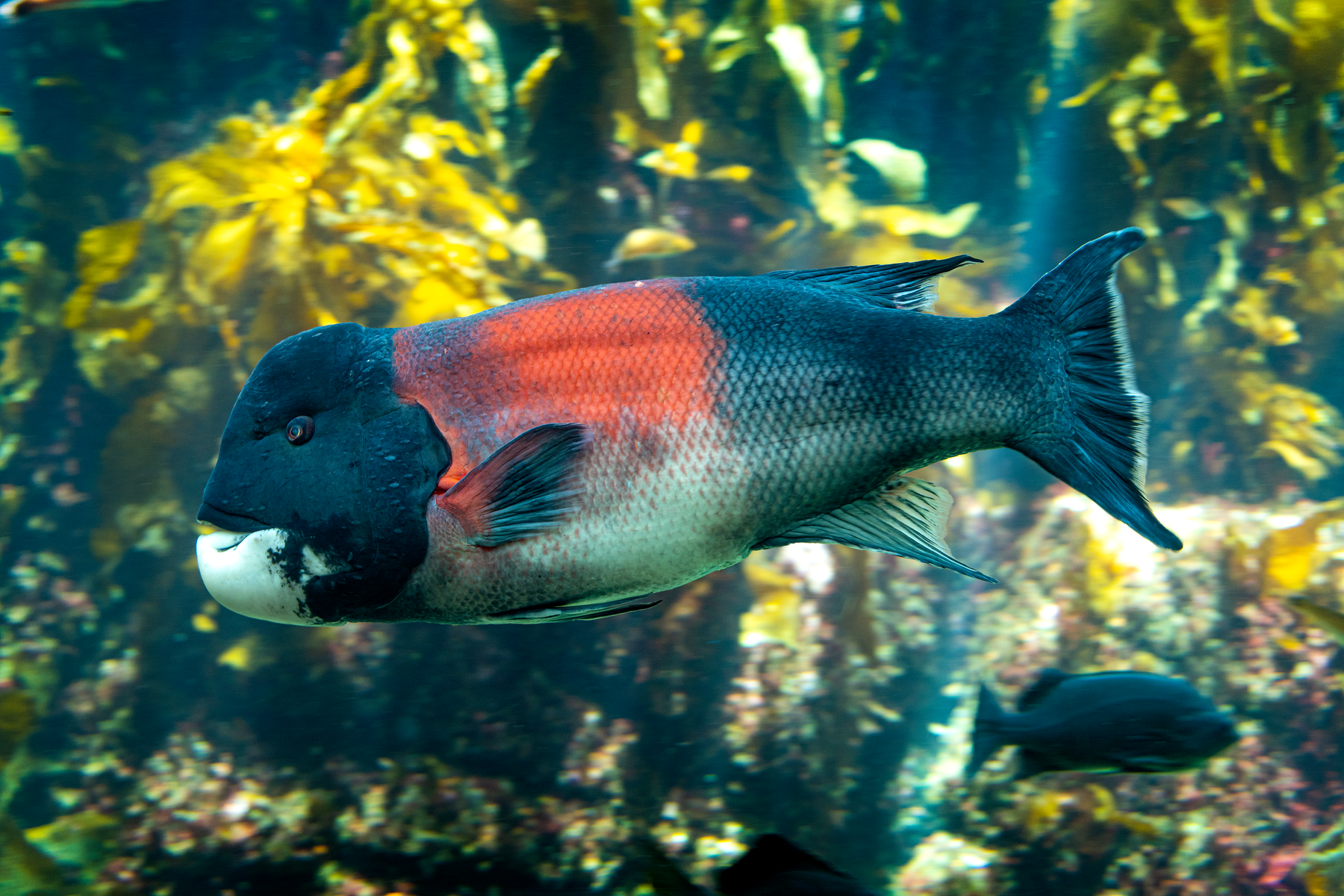
Nature is queer
We’re excited to sea-lebrate the queerness of nature!
Read story – Nature is queer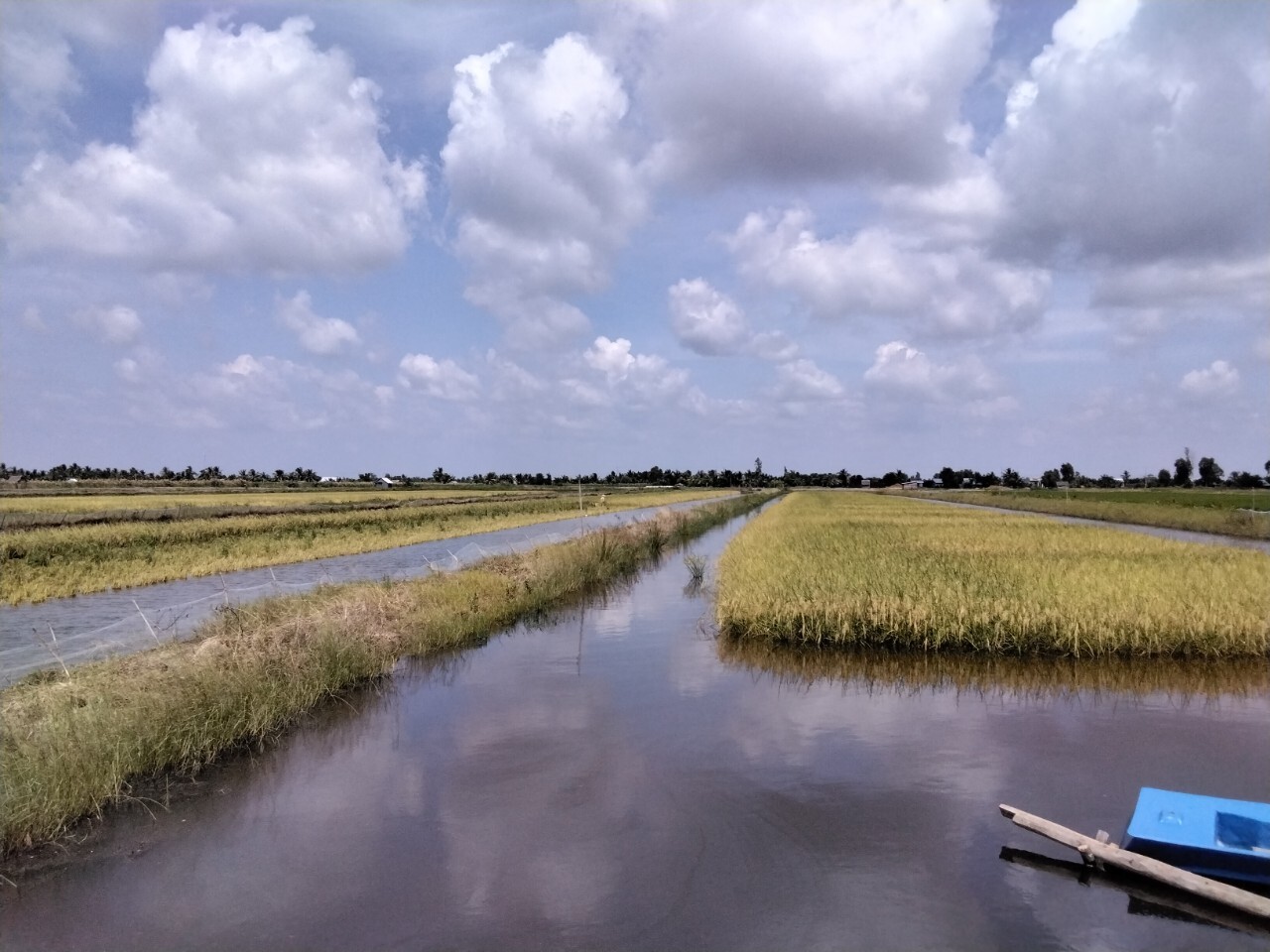
Story
From Vietnam to California
From farms to CA schools, your food choices help wildlife, fishers, and global coastal food systems thrive.
Read story – From Vietnam to California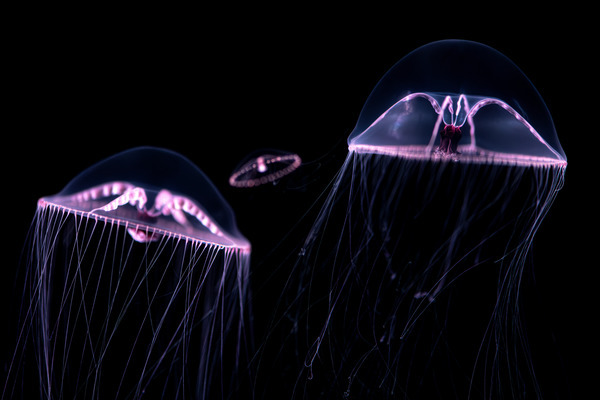
Story
2026 Lucile S. Packard Memorial Award and Youth Award recipients
We’re proud to announce the 2026 Lucile S. Packard Memorial and Youth Awards for outstanding volunteers!
Read story – 2026 Lucile S. Packard Memorial Award and Youth Award recipients