

African penguins have a unique language, but once you start identifying their most common signs, what used to sound like a messy, rocky shore becomes a colony full of social interactions.
Here are some behaviors to look for when you visit Ocean in Motion / La Danza del Mar.
A penguin’s call
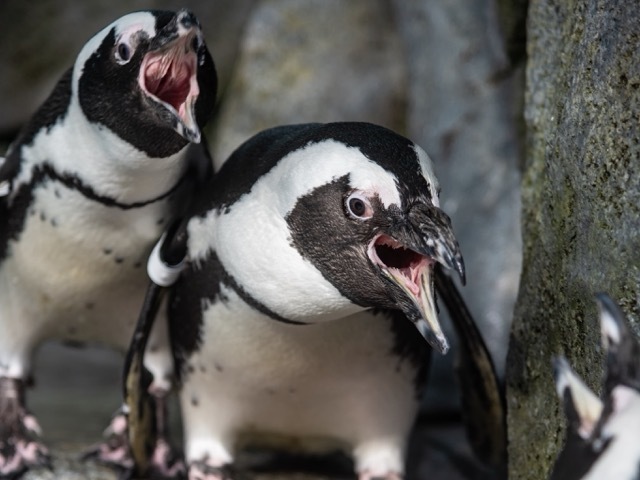
African penguins bray or use loud vocalizations to communicate with each other.
A bray is unique to each penguin, helping others identify it within the colony.
During mating season, they use a special bray. As African penguins usually keep the same mate, their vocalizations help couples reinforce their bond, often for a lifetime.
Parent penguins use specific calls to communicate with their chicks.
Finally, penguins also bray to establish dominance in a territory.
Next time you visit Monterey Bay Aquarium, listen closely to the African penguins braying. You may start to tell the difference between each vocalization.
The language of a penguin’s body
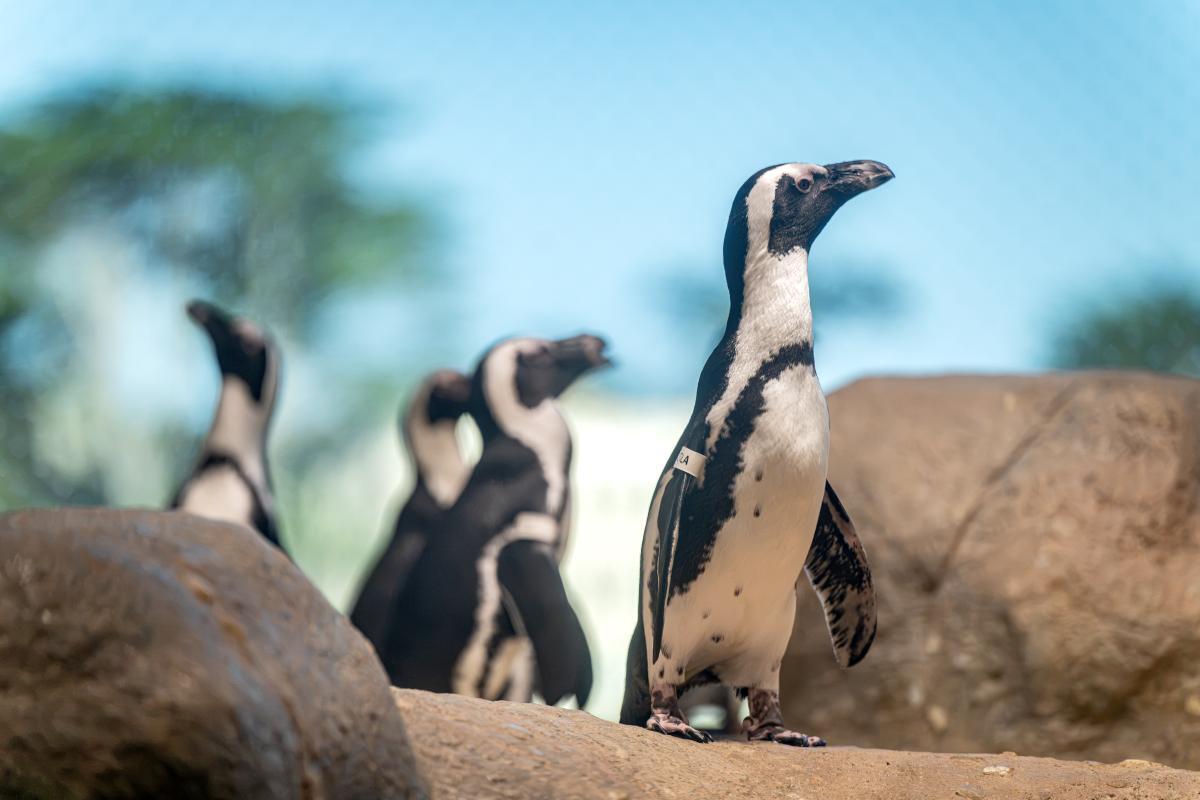
Scientists have studied and identified several physical behaviors, called displays, that African penguins use to communicate.
Here are some of their most common visual displays:
Slender posture—I come in peace
African penguins constantly interact with their colony in a shared space and often need to walk across other penguins’ territory or near their nests.
To communicate that they are not a threat, they usually adopt a slender posture, stretching their bodies and elongating their necks to avoid being pecked.
Making themselves big—stay away
African penguins use an intimidating behavior called an ecstatic display to defend their territory against intruders.
They stand tall with feet apart and beaks pointed up, letting out their loudest bray!
Head-shaking and bowing—reinforcing a long-lasting bond
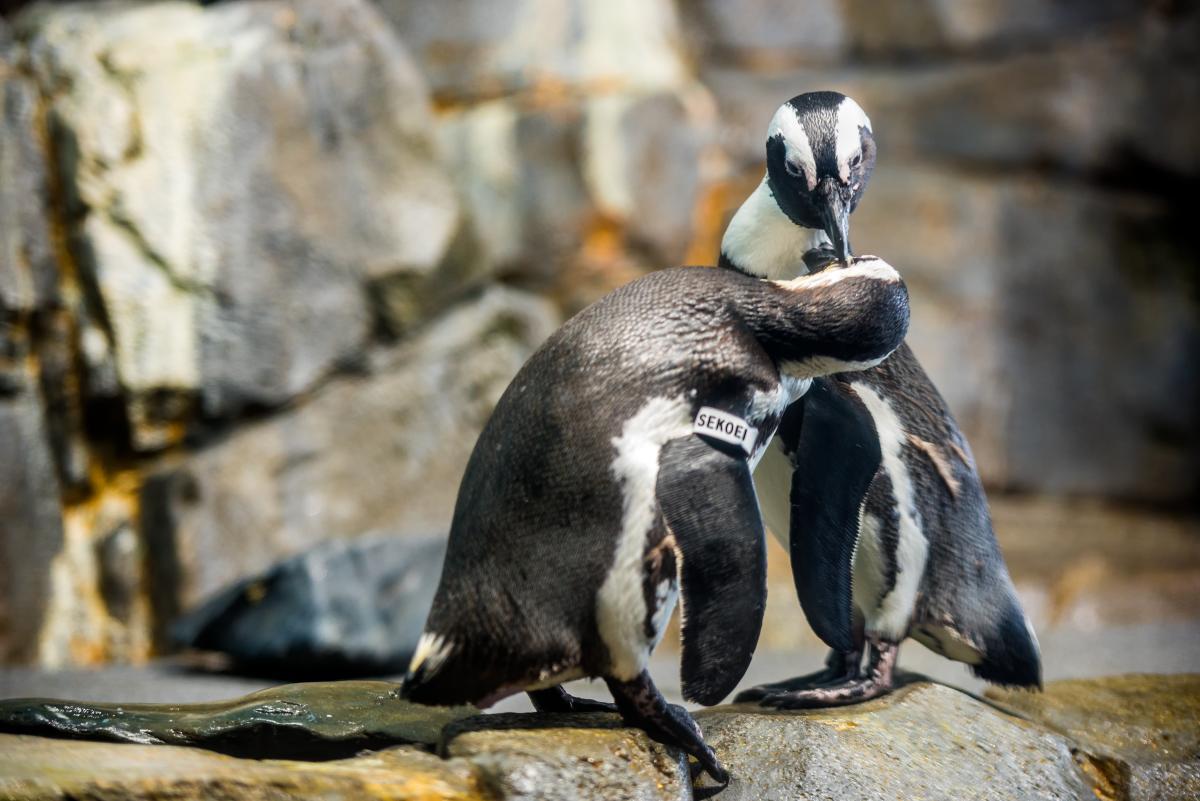
African penguins bow and shake their heads to attract a new partner. These moves help them send messages to a possible mate. Penguins also use them long after courtship to keep their bond strong.
Flipper flapping—it’s me
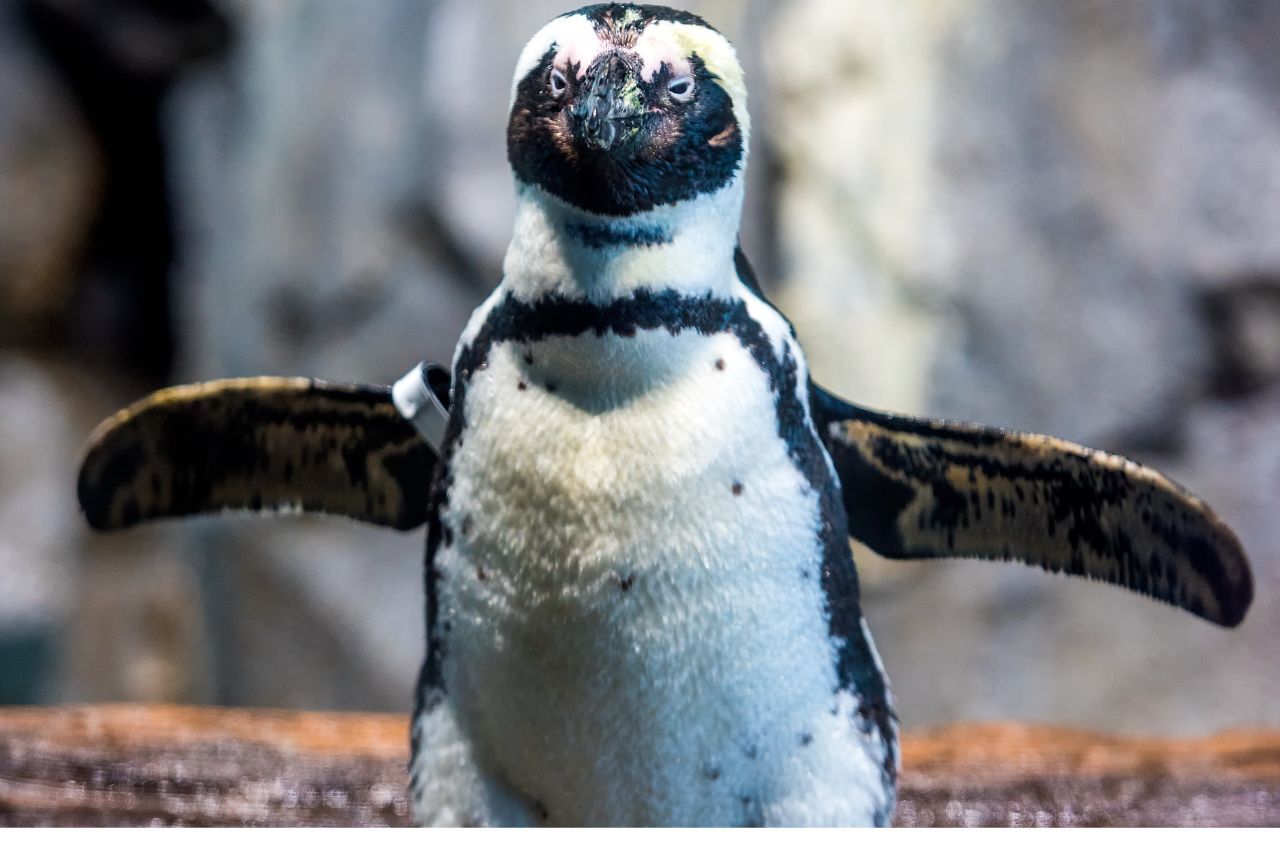
African penguins identify their mates not only by their bray but also by the way they move. Penguins flap flippers to present themselves to their mates.
Tail wiggling—time for oiling
Penguins shake their tail as part of a process called preening, which allows them to distribute oil secreted by a gland near the base of their tail to their entire body.
Penguins preen their feathers frequently. Preening keeps their bodies clean, insulated, and waterproof. Penguins can also perform mutual preening with their mates.
Now that you know more about how African penguins communicate, see how many of these behaviors you can spot in the colony at our new Ocean in Motion / La Danza del Mar exhibit.
Keep exploring
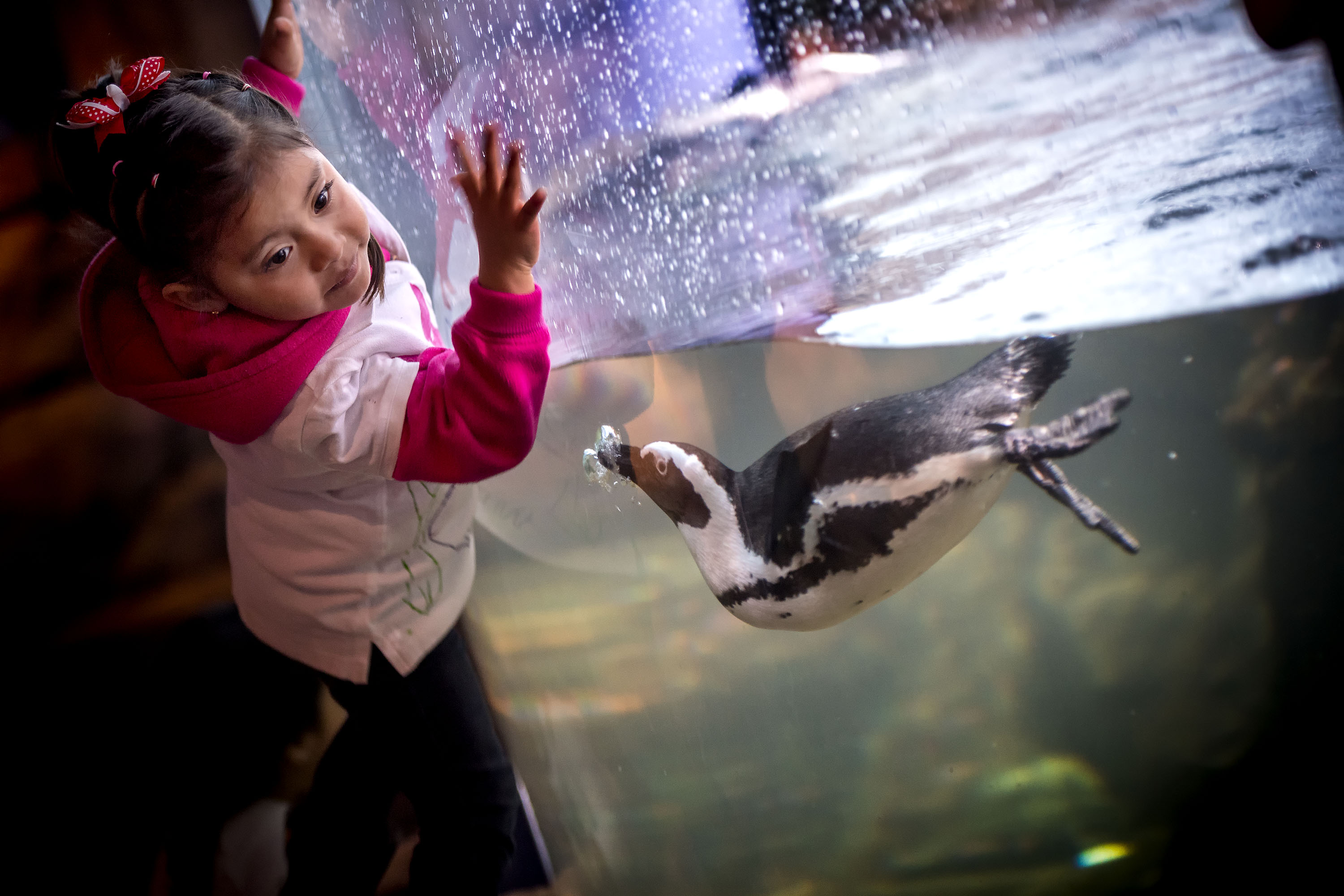
Story
Waddle, wiggle, care: The science of raising a nature-loving preschooler
Ocean in Motion engages young minds and bodies in developmentally appropriate, research-backed fun!
Read story – Waddle, wiggle, care: The science of raising a nature-loving preschooler
Story
Reducing plastic packaging: How partnerships help keep plastic out of the ocean
We work with partners to reimagine processes and packaging to reduce ocean-bound plastic and protect ocean…
Read story – Reducing plastic packaging: How partnerships help keep plastic out of the ocean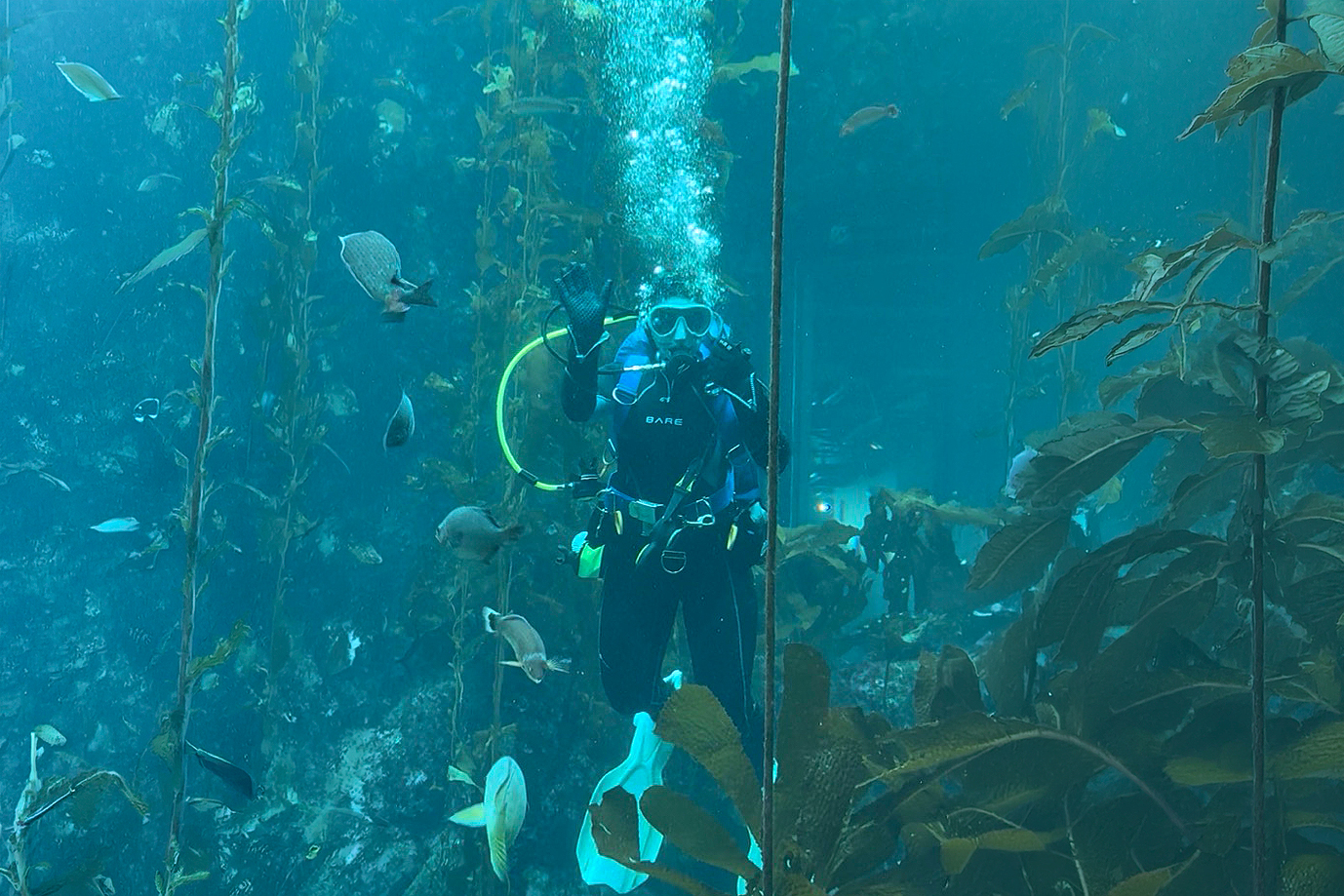
Story
What it's like to do scuba diver training at Monterey Bay Aquarium
From rigorous swim evaluations, medical examinations, First Aid certification courses, online learning classe…
Read story – What it's like to do scuba diver training at Monterey Bay Aquarium