

Bioluminescence is relatively rare on land—fireflies or glow-in-the-dark mushrooms are some well-known examples—but it’s surprisingly common in the ocean. Our research and technology partners at MBARI discovered that over 75 percent of species they found in the deep waters of Monterey Bay are bioluminescent.
Sparkles in the night
This ghostly glow has practical purposes: An anglerfish's bright lure attracts food, strawberry squids disguise themselves, and many organisms use it for self defense—from worms and shrimp to jellies and dinoflagellates—the marine algae that gave us glowing waves in 2020.
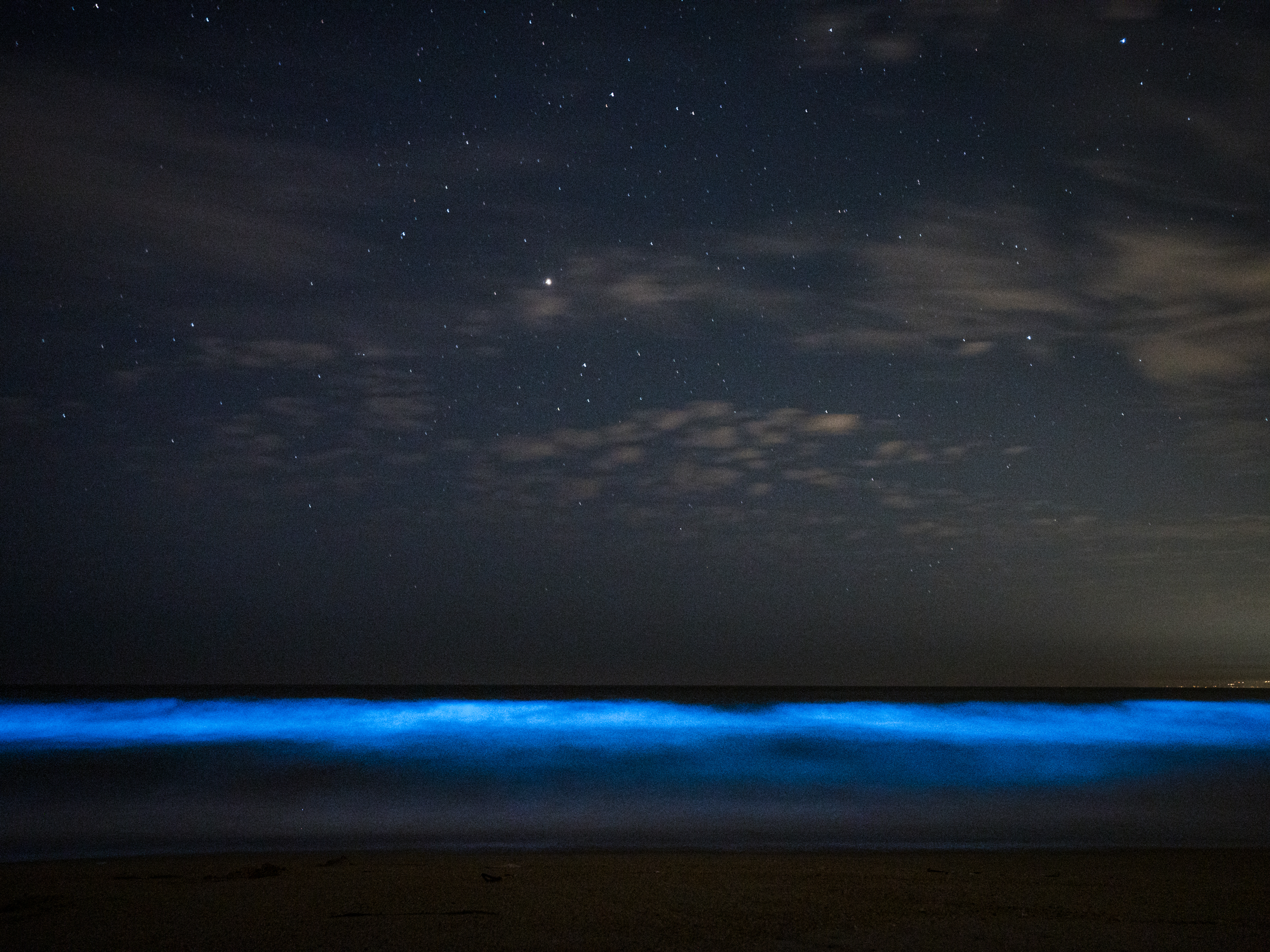
When a dinoflagellate is shaken up, a light-emitting chemical reaction inside the plankter (a single planktonic organism) produces a blue flash that startles a would-be predator, limiting their effectiveness. Imagine a strobe light going off every time you took a bite of a sandwich!
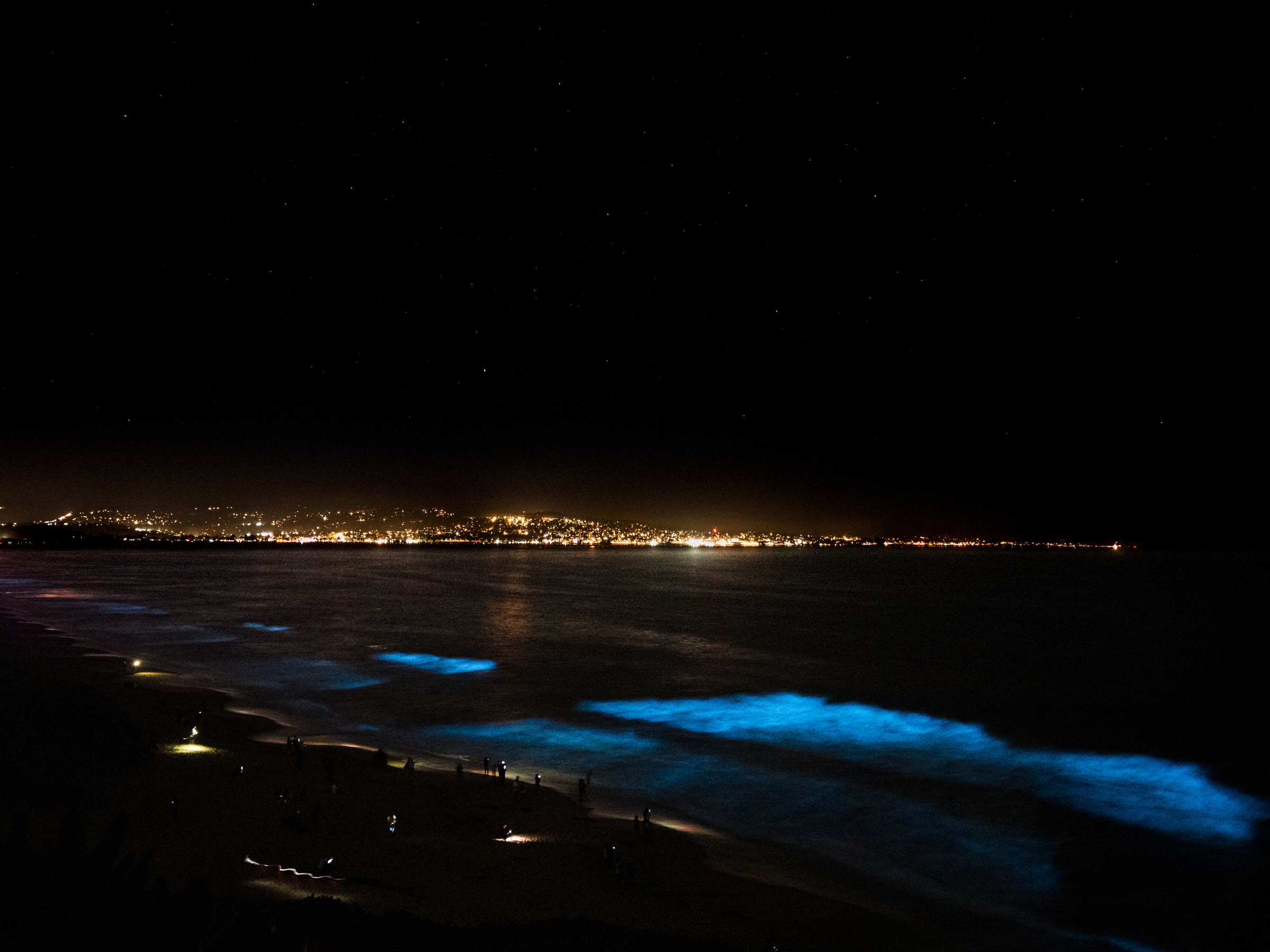
On their own, each dinoflagellate is just one sparkle in the night. But when there’s a big bloom of them—sometimes called “red tides,” although they’re not always red and have little to do with the tides—their collective trillions agitating in the waves produce the aquatic fireworks. During red tides, bioluminescence can backfire as a survival strategy, as the abundance of dinoflagellates leave a trail of light breadcrumbs for larger predators to track.

Bioluminescent waves filled with light-producing plankton ignited the surfline all around Monterey Bay.
Riding the tide
No-one can predict how long waves will be luminescent during a plankton bloom, as wind and waves and currents could soon dissipate the bloom.
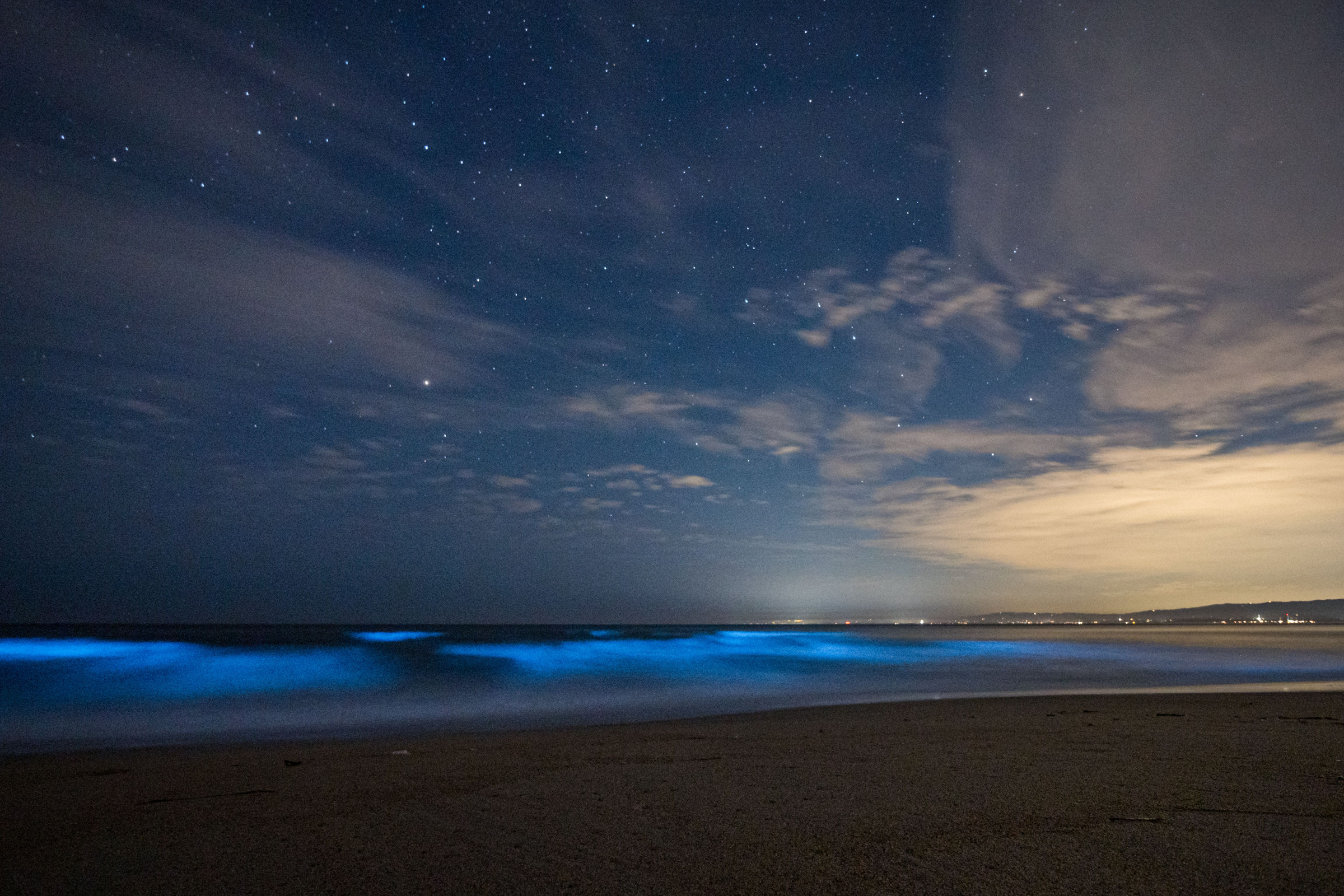
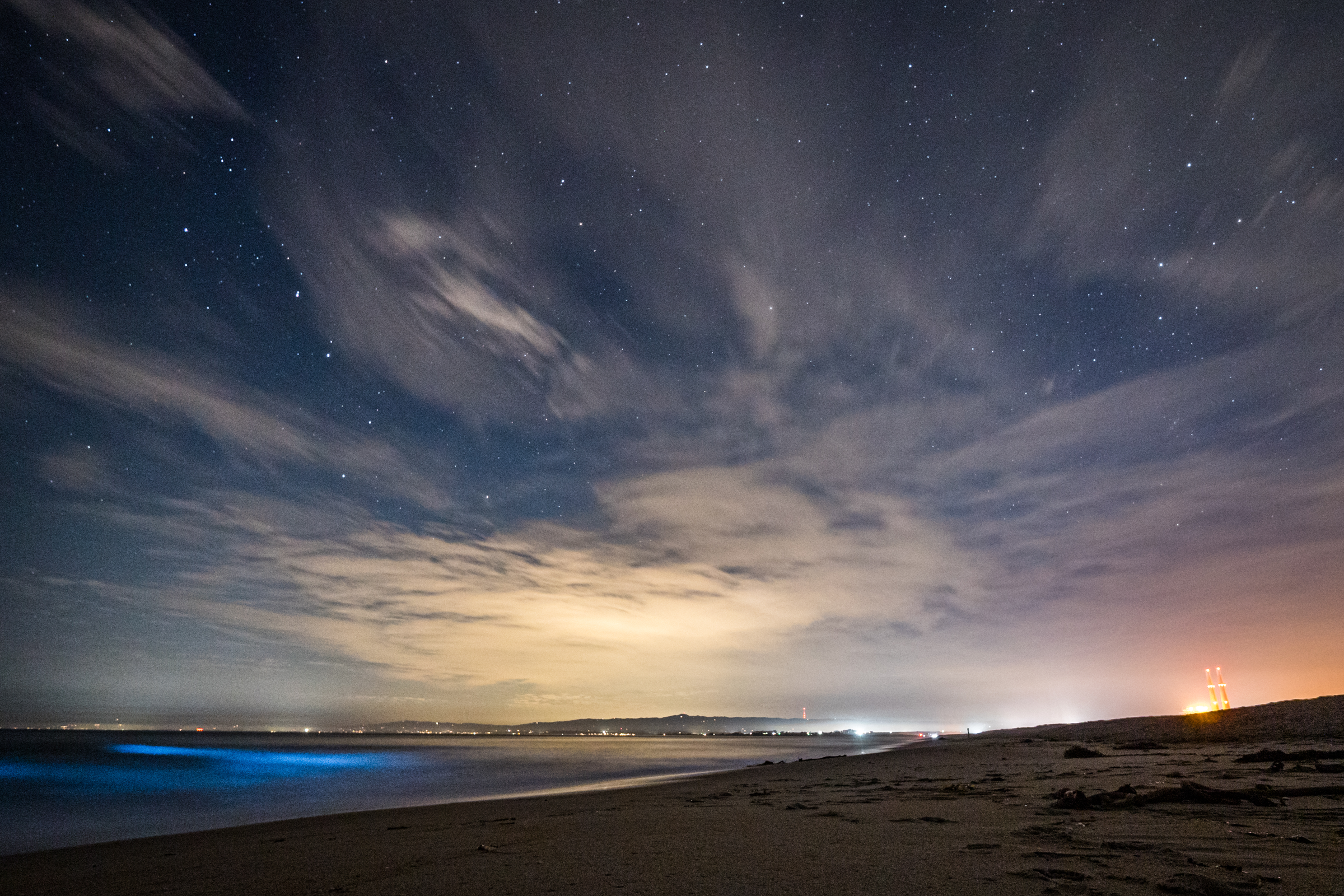
If you're lucky enough to see this fleeting but beautiful phenomenon in-person, the luminescent waves won’t look as blue in person as in photos and videos. As your eyes adjust to the dark you lose color vision, so the waves will mostly look bright white. The darker the coast, the more pronounced the luminescence.
For camera settings, keep it steady on a tripod and take a longer exposure—three to 30 seconds—bump up your ISO and you’ll capture the blue. A “live” photo from your cellphone can also be edited to show a longer exposure and some color.
Keep exploring
Story
Reducing plastic packaging: How partnerships help keep plastic out of the ocean
We work with partners to reimagine processes and packaging to reduce ocean-bound plastic and protect ocean…
Read story – Reducing plastic packaging: How partnerships help keep plastic out of the ocean
Story
Are you ready for it?
Our vintage sea otter t-shirt is back for a limited time.
I'm ready for it – Are you ready for it?
Story
Nature is queer
We’re excited to sea-lebrate the queerness of nature!
Read story – Nature is queer