

Senior Aquarist Tommy Knowles is a sea star if there ever was one. He's at the heart of the team that cares for the awesome Aquarium jellies that mesmerize millions of people―in person and on our live cams. Tommy walked us through his work with the jellies, both in front of the exhibits and behind the scenes.
The Aquarium From Home
Jellyfish Q&A with Jelly Aquarist Tommy

Jamming with the jellies
Tommy is also an accomplished musician with nearly 30 years’ experience who most recently performs around the Monterey Bay area with a band called Hovering Breadcat.
In 2020, when the Aquarium had to close to help slow the spread of the coronavirus, Tommy continued going to work to care for the jellies and other Aquarium critters. On April 3 he went to work with his guitar in tow. He set the scene for his jam using a red dive light in a water jug for lighting and minimal recording equipment. Then Tommy jammed for about 10 minutes next to the Pacific sea nettles he's helped raise for so many years–the same ones you see on our Jelly Cam.
His set list included a cover of "How Lucky" by John Prine. At the time, Prine was in the hospital and Tommy played his song as a get-well-soon message. But then John sadly passed away. Tommy wanted to share this cover as a tribute to Prine for the role his music has played in inspiring Tommy's musical adventures, and for being a soundtrack in his work with the jellies that have inspired so many.
Jammin' With The Jellies
A John Prine Tribute by Senior Aquarist Tommy Knowles
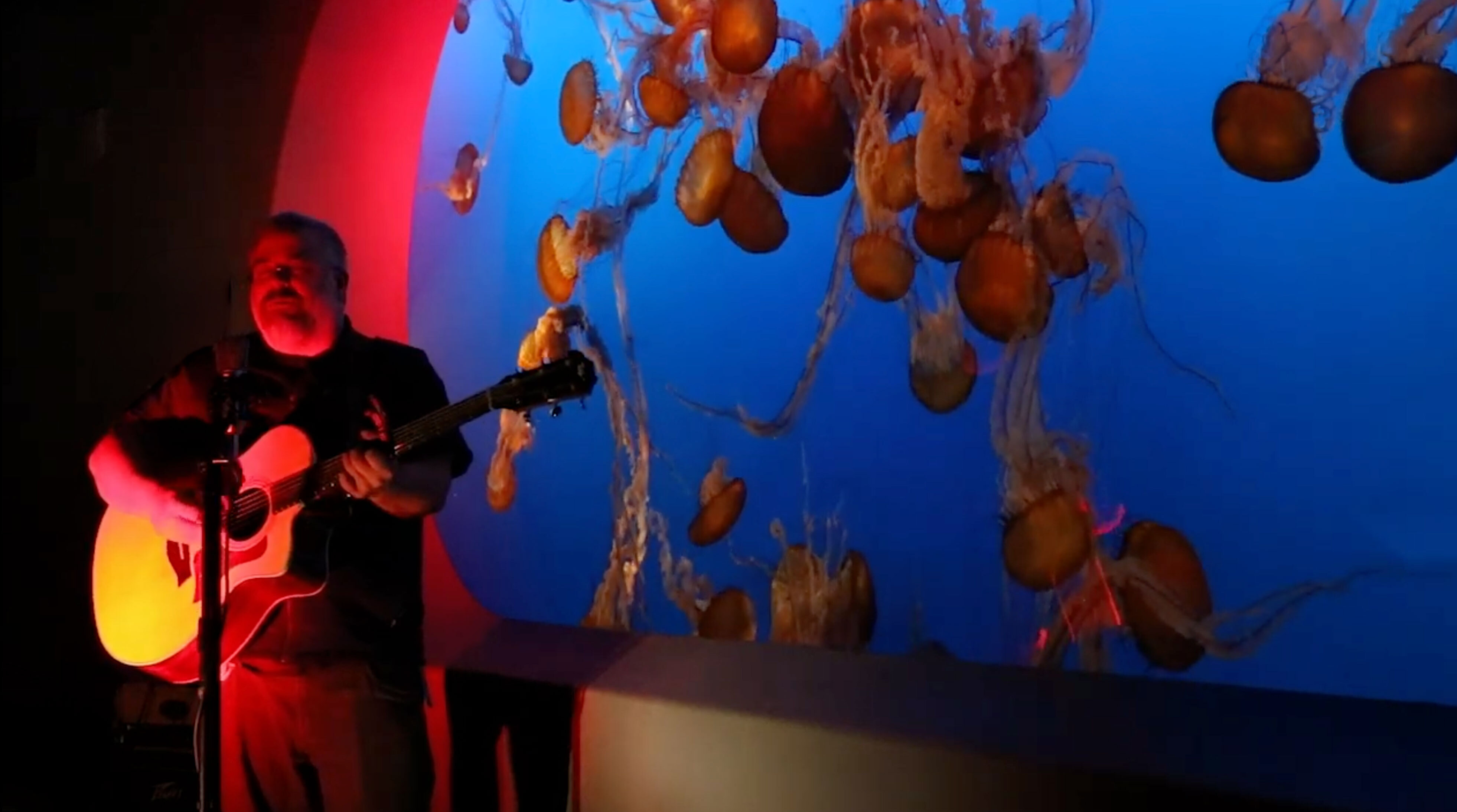
Watch Tommy perform his cover of John Prine's "How Lucky" in front of our sea nettle exhibit. Paste Magazine included Tommy in a list of top tributes alongside musical giants like Dave Matthews and Bonnie Raitt.
Art forms that cannot be rushed
“As a senior aquarist specializing in jellies, part of my job is to create living art exhibits in our Drifters gallery,” Tommy said. “The jellies can be like a song, growing and changing through time.”
Tommy noted other comparisons between jellies and music:
When I’m not culturing jellyfish I enjoy playing music, and I think there are more similarities between these two pursuits than one might expect. They’re art forms that cannot be rushed. One needs to go with the flow, listening and observing in order to cultivate something beautiful and perhaps discover something new. They both require focus and discipline as well as creativity and mental flexibility. And, painful stings aside, jellies and music can both bring people peace and joy.
Tommy also found comforting comparisons between jellies and John Prine.
“We lost a musical giant in John Prine, one of our great songwriters and an icon of Americana. Much like a jelly, his music was generally laid back with a gentle rhythm yet one that could connect deeply and emotionally. His influence on my music was massive, and his loss will be felt widely in the musical world. ‘How Lucky’ is one of my favorite John Prine songs and is especially poignant these days, as its reflective longing ultimately yields to contented happiness.”
Joyful job
Part of Tommy’s inner joy comes from caring for and growing jellies at the Aquarium, which he has done for 15 of his over 17 years with us.
Tommy and his teammates have collectively cultured tens of thousands of jellies and their relatives the ctenophores, from the iconic Pacific sea nettle to the exotic flower hat jelly and even the spectacular spotted comb jelly.
It’s not easy to grow these gelatinous beauties. In fact it takes a little sleuthing and quite a bit of trial and error. There are several stages to growing jellies from egg to adult, each with its own temperature and nutritional requirements that morph the jelly from one stage to the next. Each species also has its own set of requirements per stage that are different from other species.
And culturing comb jellies is so complicated that to explain it we had to write not one but two blog stories on this fascinating topic! Check out Part 1 and Part 2 of Cracking the Comb Jelly Code on our Tumblr.
Tommy and the jelly team are generous in sharing their hard-earned knowledge with jelly genies at other aquariums. After all, why not spread the jelly jam as far and wide as possible?
Be well everyone, go with the flow, and remember how much we have to feel lucky for.
Help support our work
We feel lucky to have your support. Help us continue to care for the jellies and all our animals by making a donation today. The jellies thank you!
Keep exploring
Story
2026 Lucile S. Packard Memorial Award and Youth Award recipients
We’re proud to announce the 2026 Lucile S. Packard Memorial and Youth Awards for outstanding volunteers!
Read story – 2026 Lucile S. Packard Memorial Award and Youth Award recipients
Story
From krill shakes to salmon steaks: A peek into our food room
Step into our food room—the hub where 75,000+ animals and plants get sustainable diets year-round.
Read story – From krill shakes to salmon steaks: A peek into our food room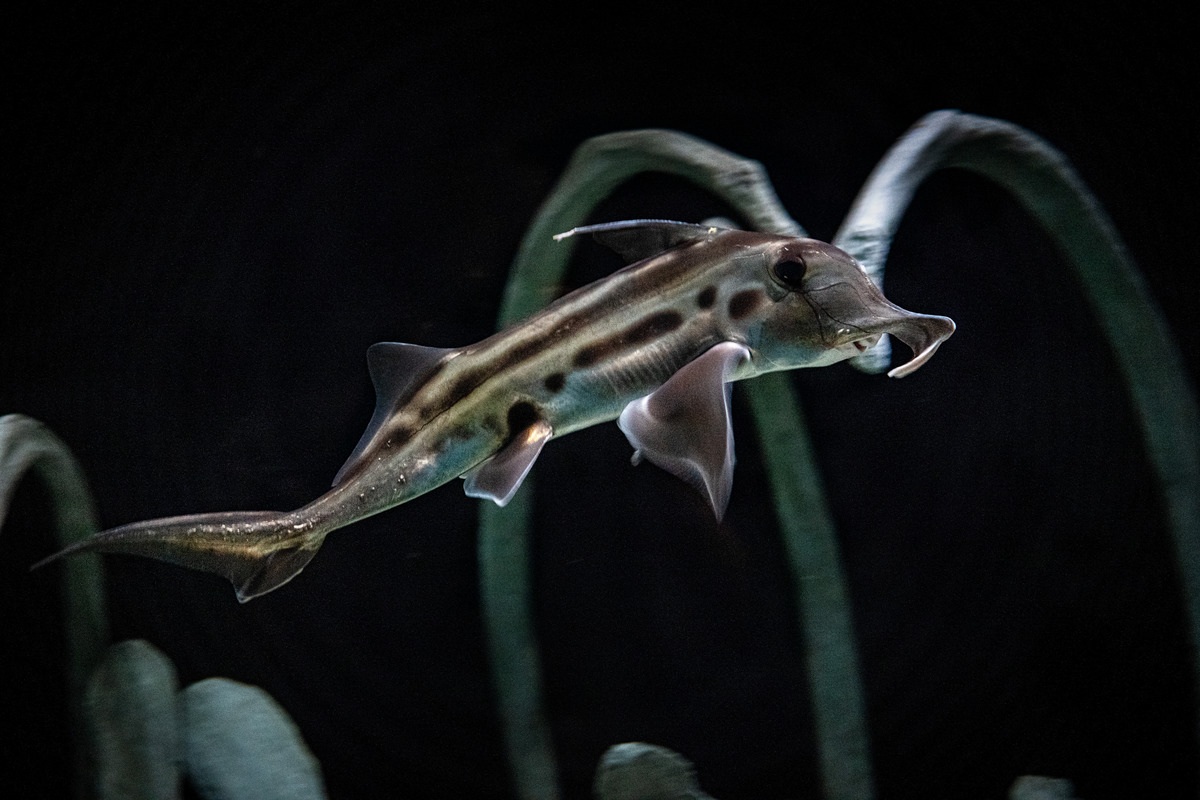
Story
The elephant (fish) in the room
Elephant fish are extraordinary animals both in the deep sea and at Monterey Bay Aquarium.
Read story – The elephant (fish) in the room