

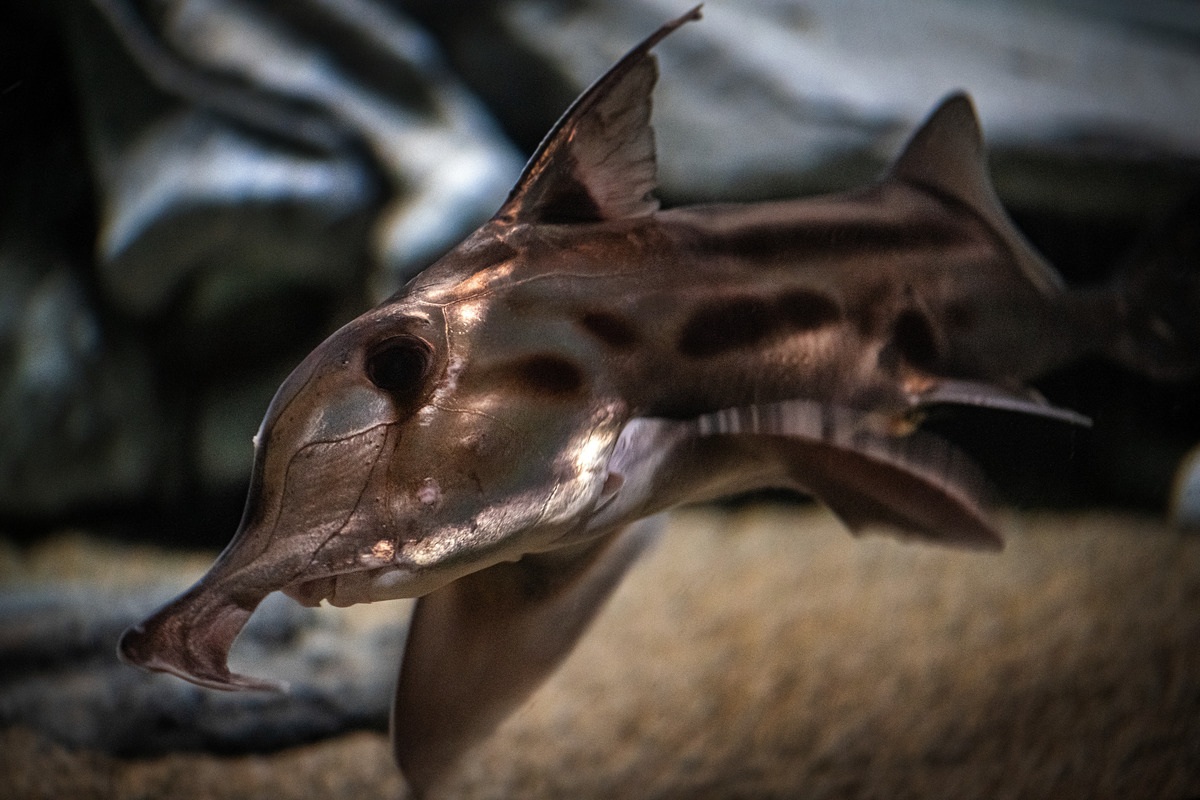
Elephant fish, Callorhinchus milii, are extraordinary both in the ocean’s depths and at Monterey Bay Aquarium. They belong to a group of cartilaginous fishes called chimaeras that branched off from their closest relatives nearly 400 million years ago. Today, we’re learning more about these distinctive deep-sea dwellers every time we work with them.
Chimaera: What's in a name?
In Greek mythology, the Chimaera was a fierce, fire-breathing hybrid creature composed of several different animals, including a lion, a goat, and a serpent. In the deep sea, fishes belonging to the order Chimaeriformes appear to be an amalgamation of animals as well. These unique cartilaginous fish cruise above the deep seafloor by flapping their wing-like pectoral fins, allowing them to glide like birds. Many also have a venomous spine at the base of their first dorsal fin for protection, similar to spiny dogfish.
The species we have on exhibit at Monterey Bay Aquarium is the elephant fish, Callorhinchus milii. They get their common name from a fleshy, curling snout that resembles an elephant's trunk. Other chimaerid species have earned common names like rabbit fish due to their visibly large eyes and teeth, ratfish for their long, tapering body like a rodent’s tail, and ghost shark for their pale appearance and similarities to their cartilaginous cousins.
Wait, ghost sharks aren't real sharks?
Chimaeras belong to the class Chondrichthyes, which also includes elasmobranchs like sharks, skates, and rays. All of these fishes have skeletons made of cartilage instead of bone. Chimaera reproduction is also similar to sharks in some ways: males use claspers for internal fertilization of females, who then lay eggs within leathery egg cases.
Despite the similarities, “ghost sharks” are neither ghosts nor sharks. In fact, chimaeras branched off from other cartilaginous fishes about 400 million years ago!
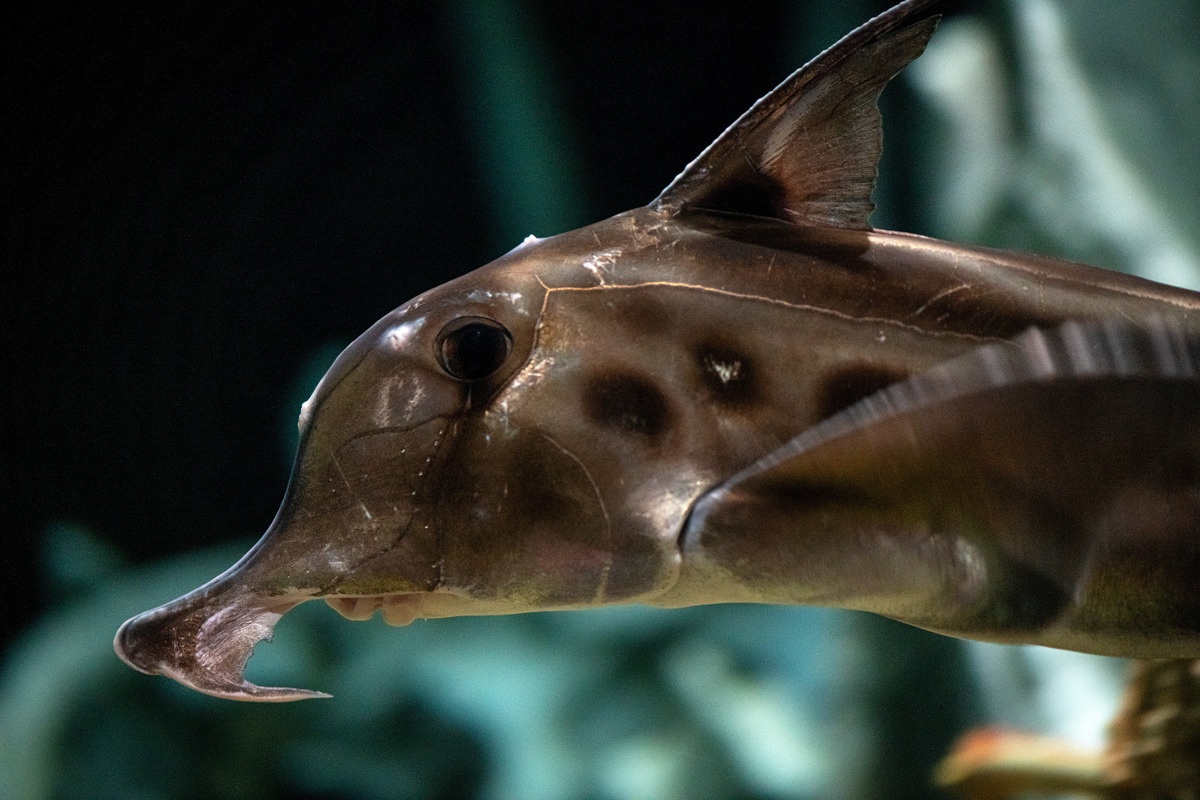
Chimaeras, like this elephant fish, have some unique characteristics, including an upper jaw fused to their skull, nostrils for respiration, and a clasping appendage on their forehead called a tenaculum.
A fish unlike any other
That early diversion has led to some interesting adaptations for these one-of-a-kind animals. Chimaeras have upper jaws fused to their skull and lack scales along their smooth bodies. They're the only known fish with true nostrils to take in water for respiration—most fish do this when they open their mouths. Chimaeras are also unique in that males have a forehead appendage called a tenaculum used to hold onto a female chimaera during mating in tandem with their genital claspers.
While these adaptations may appear peculiar to us land-dwelling air-breathers, they're perfect for the deep-sea lives of chimaeras like elephant fish.
Where do elephant fish live?
Elephant fish are most commonly found hovering just above the seafloor off the coasts of southern Australia and New Zealand, about 2,000 feet (600 m) below the surface. Large eyes allow them to take in as much light as possible in the darkest depths. Their specialized and elongated snouts are highly sensitive to electrical fields and movement—a helpful way to find prey in the muddy or sandy ocean floor.
Surprisingly, this is a deep-sea dweller that people may actually encounter in the wild. Elephant fish are vertical migrators that swim up to shallow waters to feast on mussel beds and mate before returning to the depths.
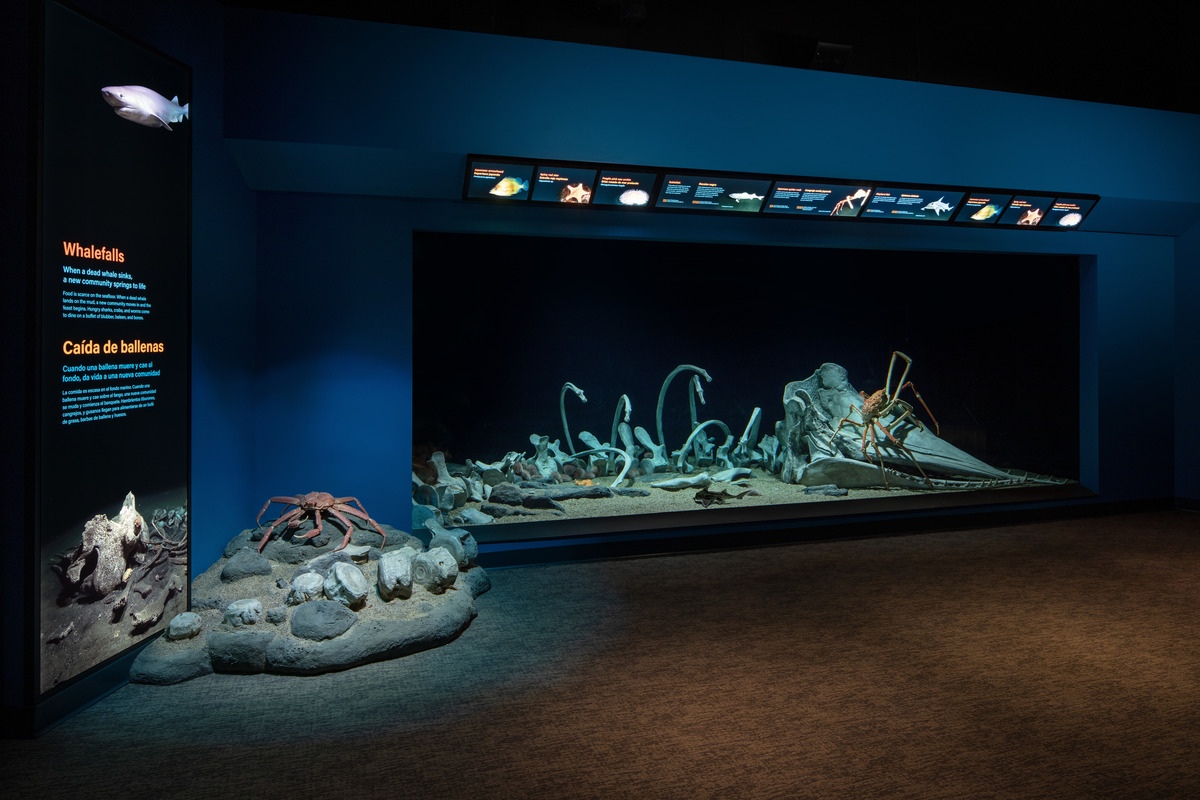
Elephant fish can be found in our whalefall community display within the Into the Deep/En lo Profundo exhibit.
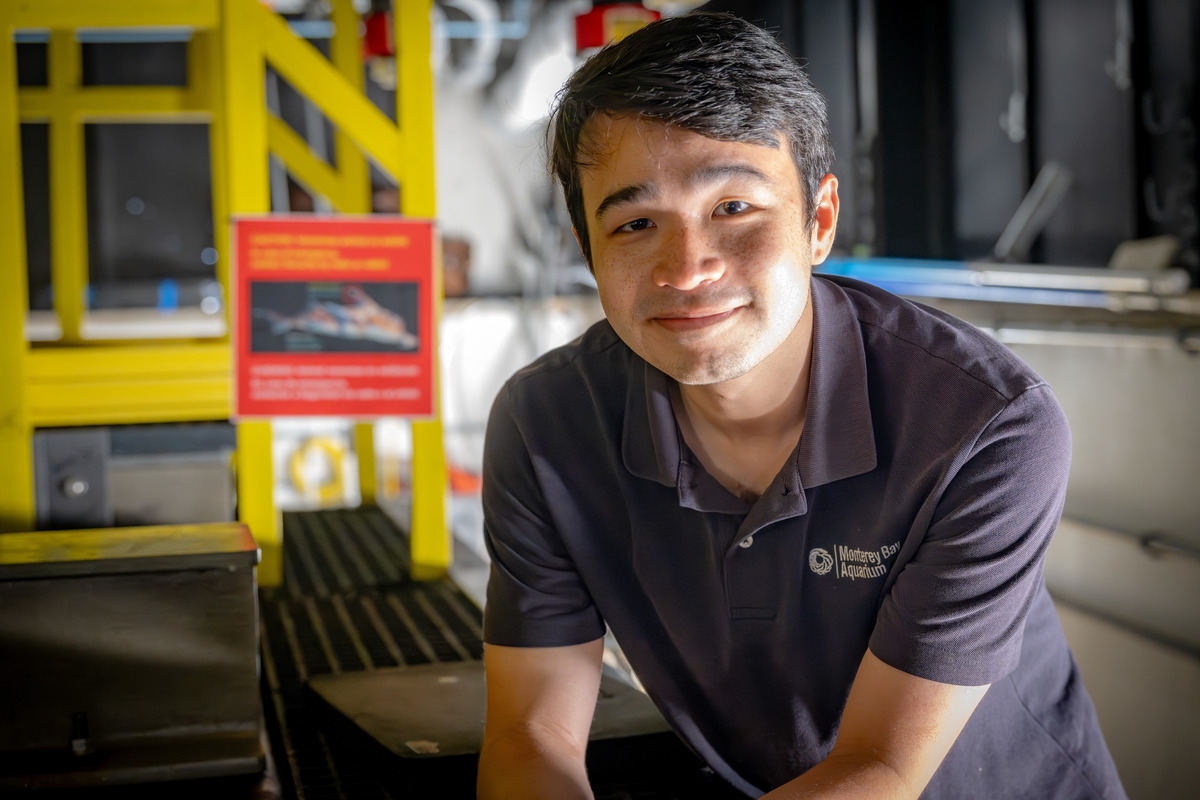
We sat down with senior aquarist Dalton Richardson to ask him what it’s like to work with these unique deep-sea fish.
Elephant fish at Monterey Bay Aquarium
Elephant fish are important members of our whalefall community exhibit, representing the active ecosystem created when a whale’s life ends and its body sinks to the seafloor. We sat down with Dalton Richardson (he/him), a senior aquarist at Monterey Bay Aquarium, and asked him about what it’s like to take care of this exhibit and these unique deep-sea animals.
Can you tell us more about what you do at the Aquarium?
Dalton: I primarily work with our deep benthic species—a scientific term for animals that live on the seafloor. Most of the animals in our Into the Deep/En lo Profundo gallery aside from jellyfish are benthic species, so I'm responsible for the feeding, maintenance, and general care of many animals. I primarily work in the whalefall display where you can find our elephant fish.
What's a normal day like taking care of elephant fish and the whalefall exhibit overall?
Dalton: When I get here in the morning around 7:30 a.m., I start out by doing rounds. I check out the exhibit to make sure that everybody's alive and healthy. I take a look at how dirty the exhibit is—whether there's any leftover food or poop or anything that needs to be cleaned out.
After rounds, I'll do maintenance on the exhibit, which can take anywhere from 30 minutes to two hours. We have to get all of it done before guests enter the building at 10 a.m., so it can be quite the task. We can use something called a blow down line, which essentially is a concentrated jet of water to help flush out stuff. I think of it a lot as flossing between the whale’s vertebrae! We'll loosen up all these leftover food particles and poop and then we'll siphon it all out into our filtered reservoir in the basement. At some point in the afternoon, we’ll go and prep food for the whalefall exhibit.
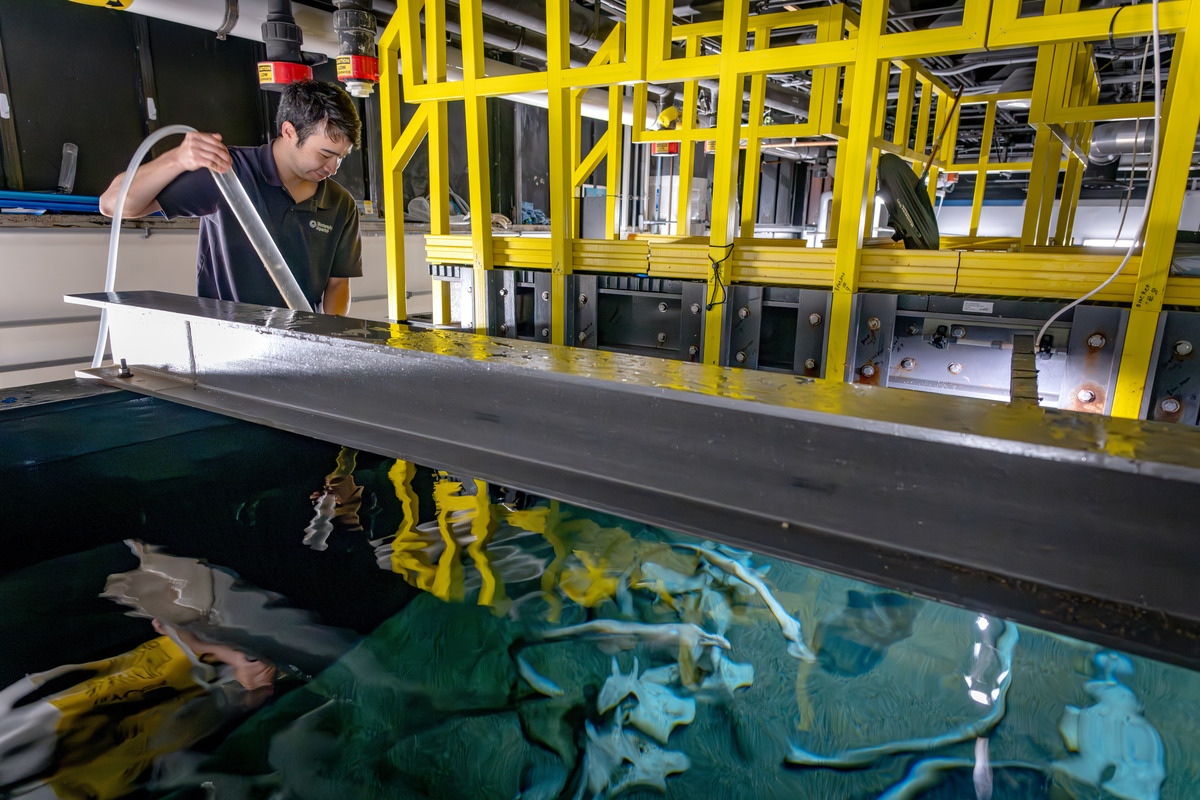
Regular care for the elephant fish and the whalefall exhibit includes daily maintenance like siphoning out any leftover food or poop, as Dalton is shown doing here.
How do you feed the elephant fish?
Dalton: We feed the elephant fish six times per week, with a diet including surf clam tongue, shrimp, squid, a special multivitamin gel, and their favorite, mussels!
We have to start with feeding the boarfish and the sablefish in the exhibit because if we don't feed them first, they’ll steal the ghost sharks’ food! Once the first animals are satiated, I'll slowly drop in the ghost sharks’ food in the same spot to give them time to pick it up and chew it.
Elephant fish got their name from this flappy little bit on their nose, also called a rostrum. It's full of all these mechano- and chemo-sensors. In the wild, they would drag this appendage over the seafloor. Whenever they find something to eat, they snap up their prey since their mouth is right behind the flap.
They do the same thing in the whalefall exhibit. They run the flap over the feeding area, and whenever they find a piece of food, they do a big inhale, also called a buccal pump. The elephant fish will chew up the food once it's in their mouth, and swallow what they want. The giant sea bass in our Kelp Forest and Monterey Bay Habitats exhibits also feed via buccal pump!
What are some considerations when taking care of them?
Dalton: Just like a lot of other animals in Into the Deep, we have to be aware of light sensitivity with the elephant fish. Wild elephant fish live in complete darkness at the bottom of the ocean, and their senses are finely tuned to their environment so that they can find prey. Most chimaeras have huge eyes that let in any tiny little trickle of light so that they can find what they want on the bottom of the ocean.
Consequently, they're very sensitive to light as well as noise. When we're working around ghost sharks, we have to be really careful about shining lights and not being too noisy, even walking around on the deck above the exhibit.
A cool fact about ghost sharks is they have a venomous dorsal spine. It's purely defensive, so they don't use it to hunt, but we still have to be mindful of where they're swimming while we work in there.
Chimaeras possess a venomous dorsal spine, so our staff must be mindful of where the elephant fish is swimming while working in the whalefall community exhibit.
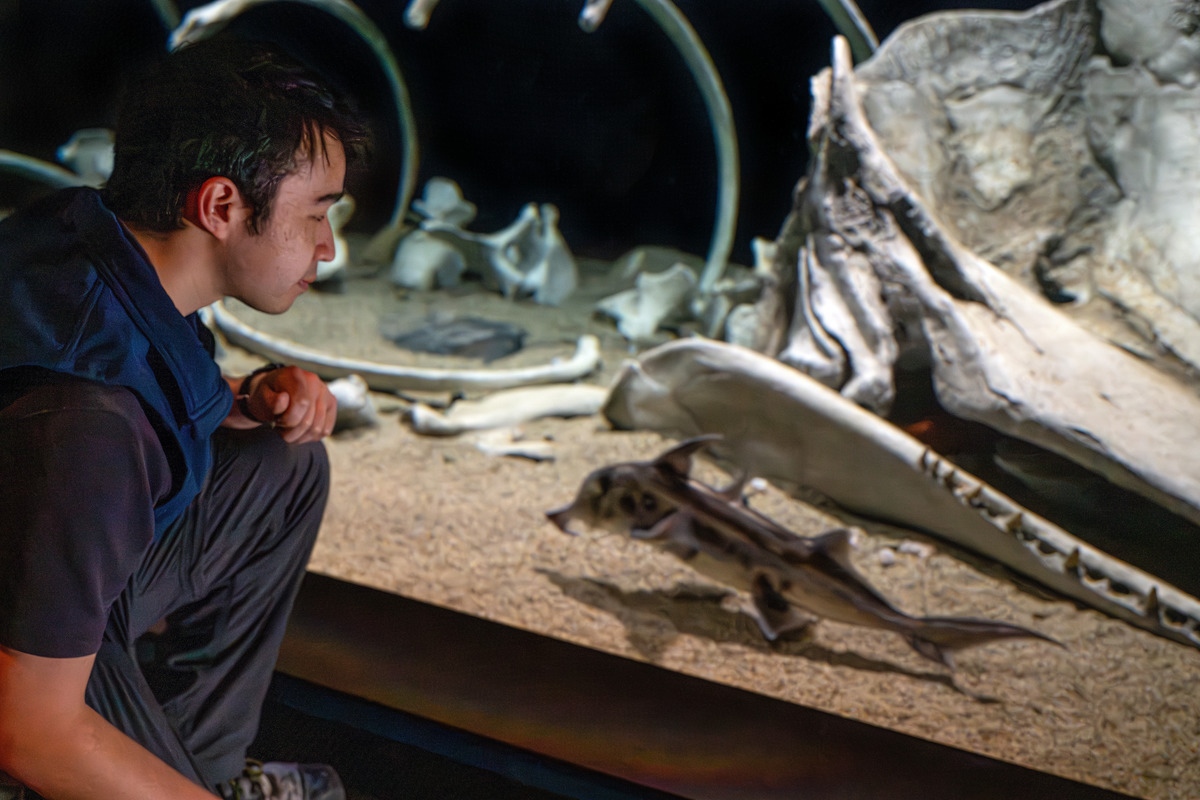
Dalton on caring for elephant fish: "I think there's a special reward in providing that solid welfare for these amazing animals."
What excites you about working with elephant fish?
Dalton: It's so hard for me to put into words how much I love working with them! Ever since the first time that I read about spotted ratfish, I thought chimaeras were just so neat! They're so interesting in the way that they’ve evolved.
They possess really unique life histories. Their vertical migration, their anatomy, the way their reproduction works, and everything else is just so—I keep coming back to this word, but it's really the only one that describes them—unique. There's really nothing else like chimaeras, on land or in the ocean.
As soon as I knew we were getting elephant fish for Into the Deep, I knew I wanted to work with these animals. It's been super rewarding to watch them grow and thrive, and to work alongside them.
What's your favorite part about working with elephant fish?
Dalton: Sometimes I'll finish my maintenance a few minutes early and, before the guests get here, I'll just sit on the bench outside the exhibit and just take it in, watch the animals swim, watch the Japanese spider crabs walk around. I think there's a special level of reward in providing that solid welfare for these amazing animals, and just allowing them to live peaceful, fulfilling lives.
What's something everyone should know about elephant fish or chimeras?
Dalton: Chimaeras are this beautiful, very deep-sea-looking animal. They're really weird—in the best way possible!
But we don't know a lot about chimaeras, and we're learning more every day. A lot of that translates into what we're doing with Into the Deep—we're trying to learn more about deep-sea habitats and environments. For everything we know, there's surely ten more things that we don't know yet.
If you appreciate these animals as much as I do, if you find them weird and cool and awesome, we should all work together to protect them and this environment that we don't know a whole lot about.
Related videos
Caring for deep-sea fish
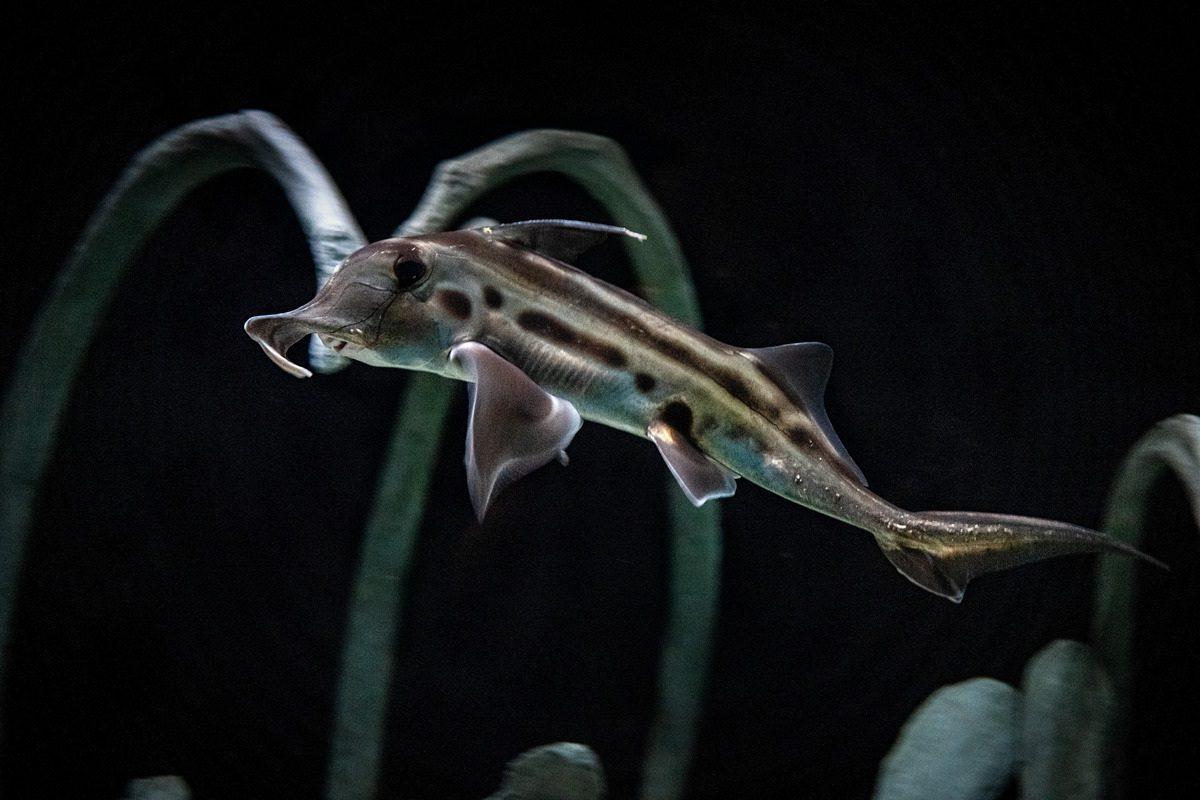
Dive a little deeper into a day in the life of Dalton as he cares for the elephant fish in the Whalefall Community exhibit at the Aquarium
Keep exploring
Story
Nature is queer
We’re excited to sea-lebrate the queerness of nature!
Read story – Nature is queer
Story
2026 Lucile S. Packard Memorial Award and Youth Award recipients
We’re proud to announce the 2026 Lucile S. Packard Memorial and Youth Awards for outstanding volunteers!
Read story – 2026 Lucile S. Packard Memorial Award and Youth Award recipients
Story
Birdwatching tips: A guide to enjoying and identifying local birds
Here are our best tips to help keep you and the birds safe and healthy during a birdwatching adventure.
Read story – Birdwatching tips: A guide to enjoying and identifying local birds