

Sea nettle
Chrysaora fuscescens
- On view
- Open Sea
- Animal type
- Invertebrates
- Ecosystem
- Open ocean
- Relatives
- Purple-striped jelly, other jellies, sea anemones, coral; Family: Pelagiidae
- Diet
- Young pollock, larval fishes, zooplankton, other jellies
- Range
- Coastal waters off Alaska to California, Japan, Kamchatka, the Aleutian Islands and the Bering Sea
- Size
- Bell to approximately 17.7 inches (45 cm) in diameter; mouth-arms 12 to 15 feet (3.6–4.6 m) long
Meet the sea nettle
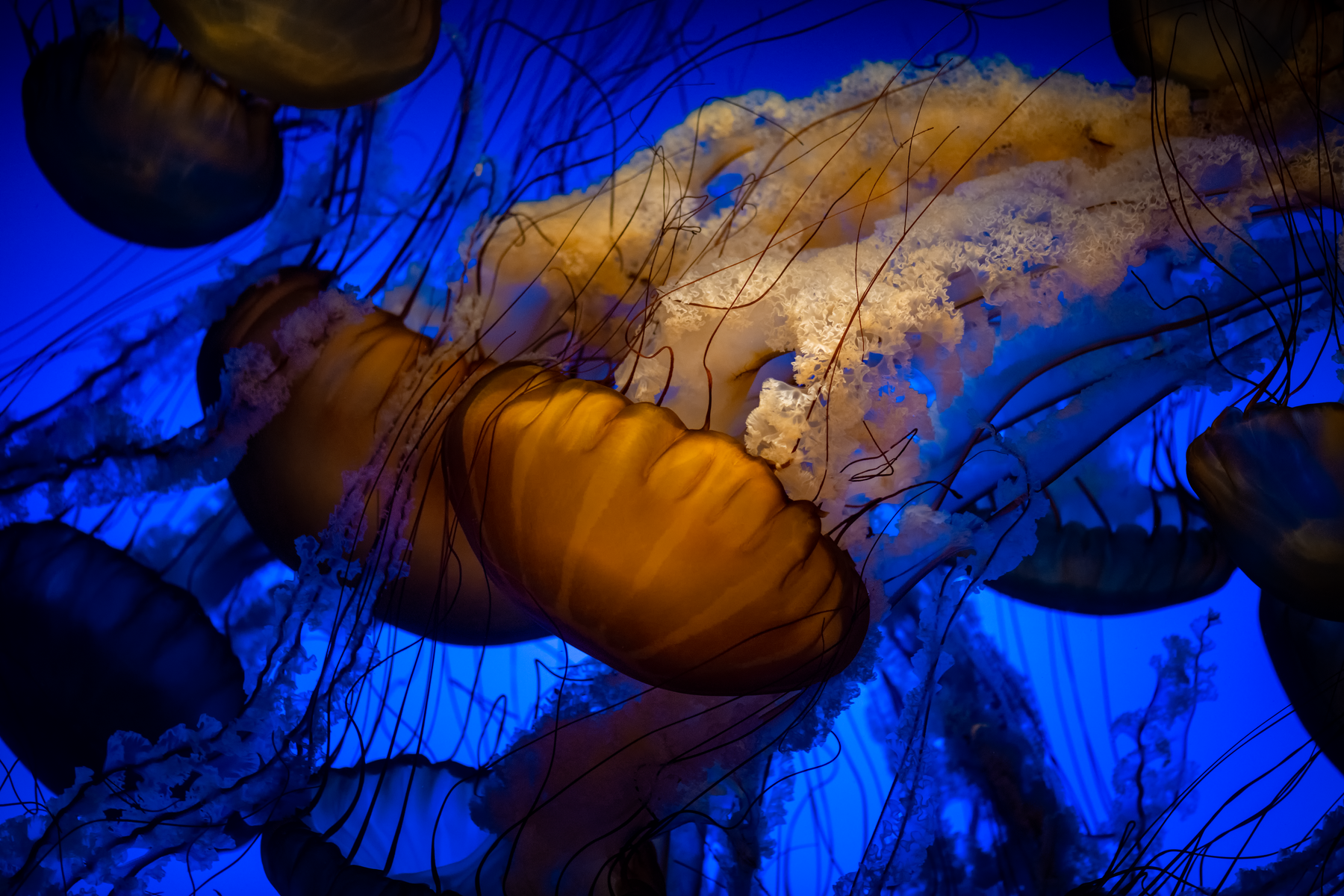
Not all jellies sting, but the sea nettle does. It hunts tiny drifting animals by trailing those long tentacles and frilly mouth-arms, all covered with stinging cells. When the tentacles touch prey, the stinging cells paralyze it and stick tight. From there, the prey is moved to the mouth-arms and finally to the mouth, where it's digested.
Watch in real time
Jelly Cam
Check out this live cam – Jelly CamConservation
There is mounting evidence that human influences in coastal habitats may be creating conditions more favorable to jellies, leading to an increased frequency of blooms and reduced populations of larval fishes. The high abundance of sea nettles makes scientists believe they play a significant role in the planktonic food chain.
Cool facts
- Some jellies commute 3,600 feet (1,097 m) up and down in the water daily—try that without a submarine!
- Larval and juvenile cancer crabs may hitch rides on the sea nettle's mouth-arms, dropping off as the jelly comes inshore. These crabs may be feeding on the jelly, as many of the jellies with crabs have been observed to be quite tattered.
Up next in open ocean
Animal
Sperm whale
The sperm whale’s bulging forehead contains spermaceti, a semi-liquid white oil.
Keep exploring
Animal
Moon jelly
This dreamy jelly is named for their translucent, moon-like bell.