

Mucus, it’s what’s for dinner
Vampyroteuthis infernalis, the vampire squid. Its name literally means “vampire squid from hell,” so it’d be reasonable to assume this fearsome-looking denizen of the deep is a vicious, blood-sucking predator. After all, most of its squid and octopus relatives hunt and consume live prey. But this myth couldn’t be further from the truth.
Our research and technology partners at MBARI found vampire squid to be “detritivores”—creatures that eat a mixture of dead bodies, poop and snot that drifts down from the surface to the inky depths this squid calls home. Scientists euphemistically call this material “marine snow.”
The snot these squid snack on comes mostly from tiny sea creatures called larvaceans. (Stay tuned, we’ll get to them later.) A vampire squid collects this material on a sticky, string-like filament it extends from its body. When it’s gathered enough snot—excuse us, snow—it pulls the filament in and scrapes off the material with its arms. Now, it turns out that vampire squid suckers also produce mucus, which according to MBARI, it uses to “collect and glue together individual particles of marine snow.” In other words, it makes mucus meatballs. And then it eats them.
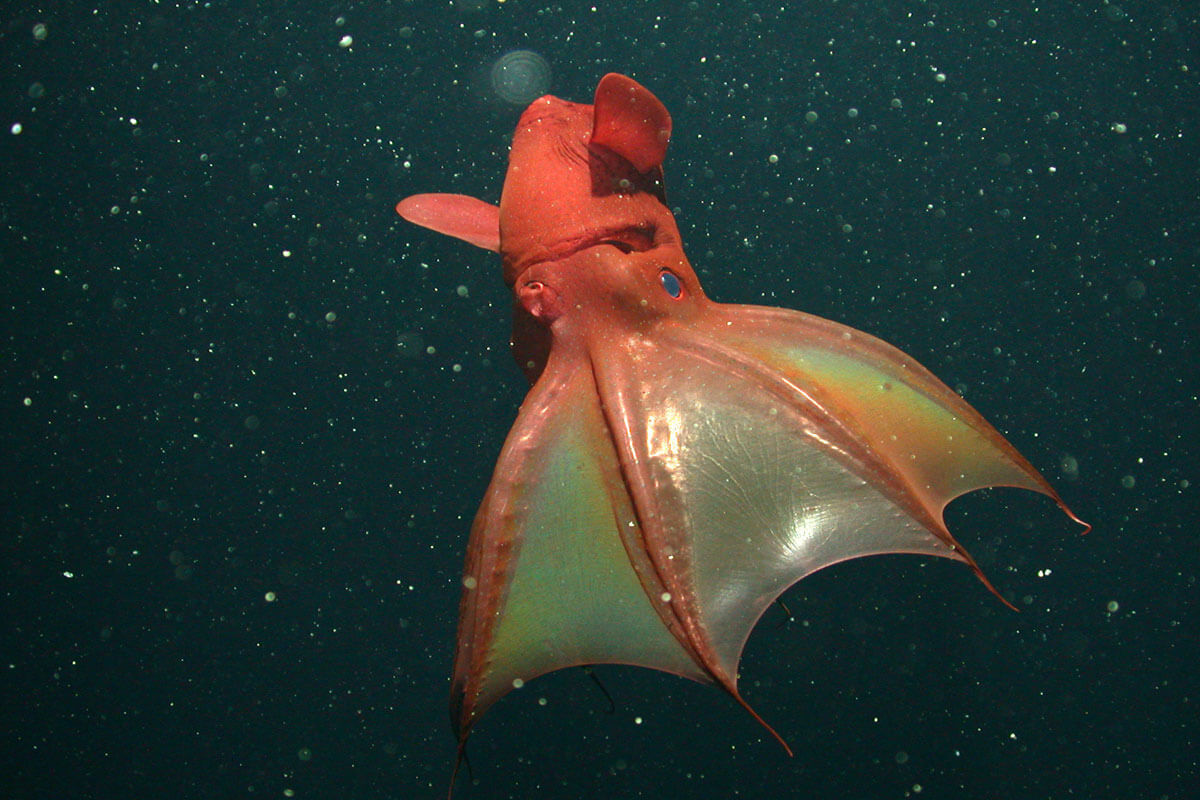
In the deep sea, the vampire squid uses filaments that extend from its body to collect marine snow.
© MBARI
Vampire squid aren’t the only creatures that depend on marine snow for food. MBARI researcher Ken Smith has been studying the array of animals that live on the abyssal plain at a deep-sea research site called Station M. Sea urchins, sea cucumbers, grenadier fish and countless other small animals and microbes call this muddy seafloor 2.5 miles (4,000 m) below the surface home. For more than two decades, Smith and his team measured the amount of marine snow that fell at this site. They discovered it’s the steadiest source of sustenance for these bottom-dwellers. And, occasionally, it blizzards when an event at the surface like an algal bloom sinks enough organic material down to carpet the seafloor, creating a stockpile of nourishment that can carry this community of detritivores for years or even decades.
Mucus, it brings home dinner
Mucus isn’t just delicious—it's handy, too. The stickiness of mucus makes it an excellent adhesive. Think of it like underwater fly paper. It's great for catching small bits of delectable drifting detritus.
Jellies are master mucus makers. They have a special organ called an endostyle that secretes sheets of mucus to help them catch a meal of particulate and plankton. Depending on the species of jelly, these mucus nets can be located either inside or outside the body and range in size from an inch (2.5 cm) to over 6 feet (1.8 m).
Another animal that makes mucus nets is the fat innkeeper worm. It gets the name “innkeeper” because other animals often take up residency in the U-shaped burrow it carves out of the mud in coastal wetlands. This animal is also sometimes known as the penis fish, and we don’t really want to explain that—you can check out our live stream if you're curious. Suffice it to say this creature might make you blush at first glance. But we digress... back to mucus. The innkeeper worm creates its mucus net at the entrance to its burrow and pumps water through it. As water flows through, plankton sticks to the net. Later, the worm consumes the entire net to digest the plankton.
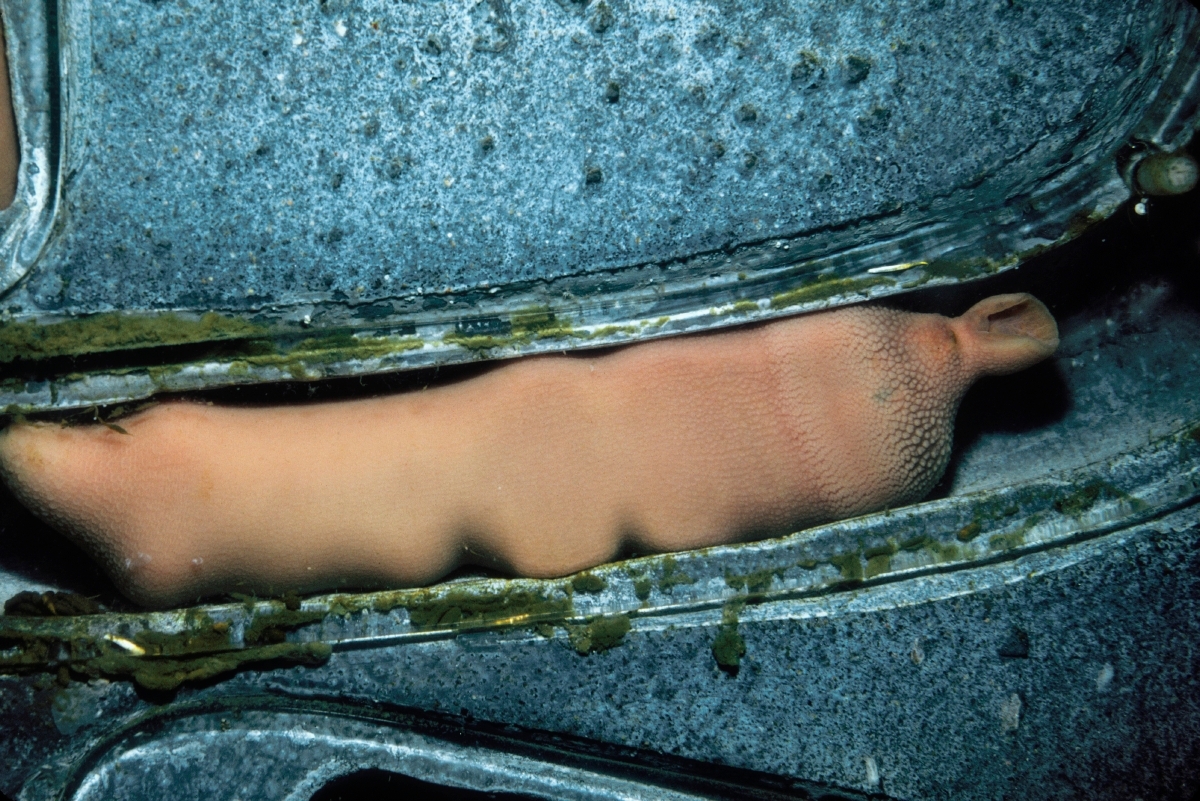
The fat innkeeper worm creates a mucus net to collect plankton that flows into its burrow.
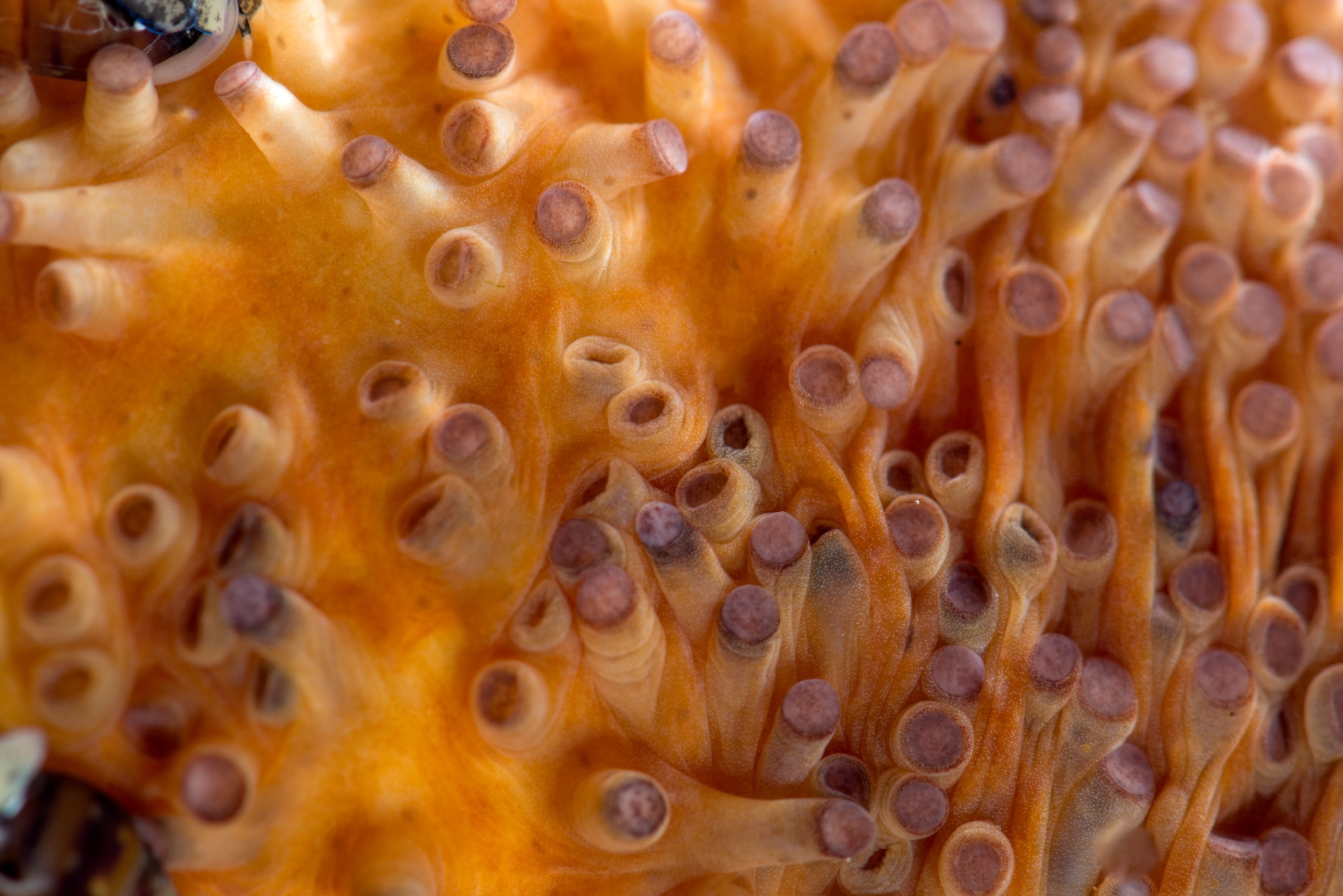
A close up of a warty sea cucumber's tube feet.
The warty sea cucumber doesn’t bother with a net. Instead, this animal has mucus-coated oral tentacles that surround its mouth. It waves the tentacles around, catching plankton like velcro picking up lint, and then sticks the tentacles into its mouth and licks them clean, so to speak.
For the señorita, mucus makes a breakfast of champions. This orange, cigar-shaped fish spends its days hard at work cleaning parasites and copepods from the skin of other fishes (by cleaning, we mean eating) and nibbling bryozoans and hydroids from the fronds of kelp. This busy fish is so on point it even gets its breakfast ready the night before. After it burrows into the sand for bed, it creates a mucous bubble that expands out of its hiding place and catches anything floating by. When the señorita gets up to start another day, boom—overnight oats, ocean style.
Snuggle up in snot
Some ocean creatures are less into eating mucus. These animals have another use for it—as a protective coating.
For example, a clownfish lives nestled among the tentacles of a stinging anemone. The anemone’s zap keeps potential predators away, but the clownfish is immune thanks to its special layer of epidermal mucus.
The California moray eel lacks scales. Instead, it is covered in a yellowish mucus that protects the skin of this crevice dweller from being abraded by rough surfaces.
At night, parrotfish and wrasses like the California sheephead wrap themselves up in a mucus cocoon. This cocoon begins at the mouth and covers the fish’s entire body. This snotty barrier keeps hunting predators from detecting the fishes’ scent and prevents parasitic isopods from gorging themselves on the fishes’ blood. (It isn’t the vampire squid who should get a bad rap.)
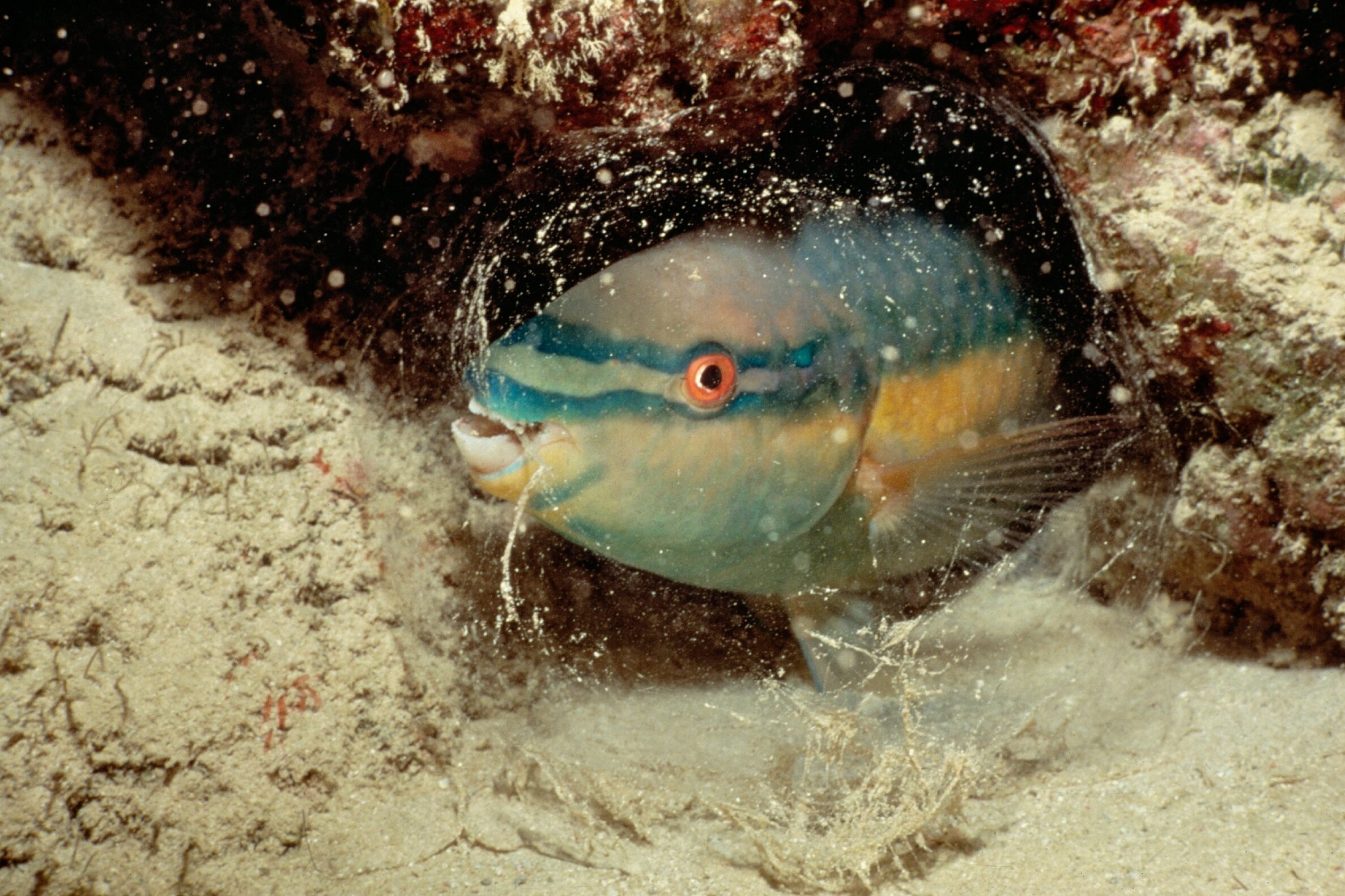
The colorful parrotfish creates its own safety blanket. Each night it wraps itself into a mucus cocoon at night—protecting it from hunting predators and parasitic isopods.
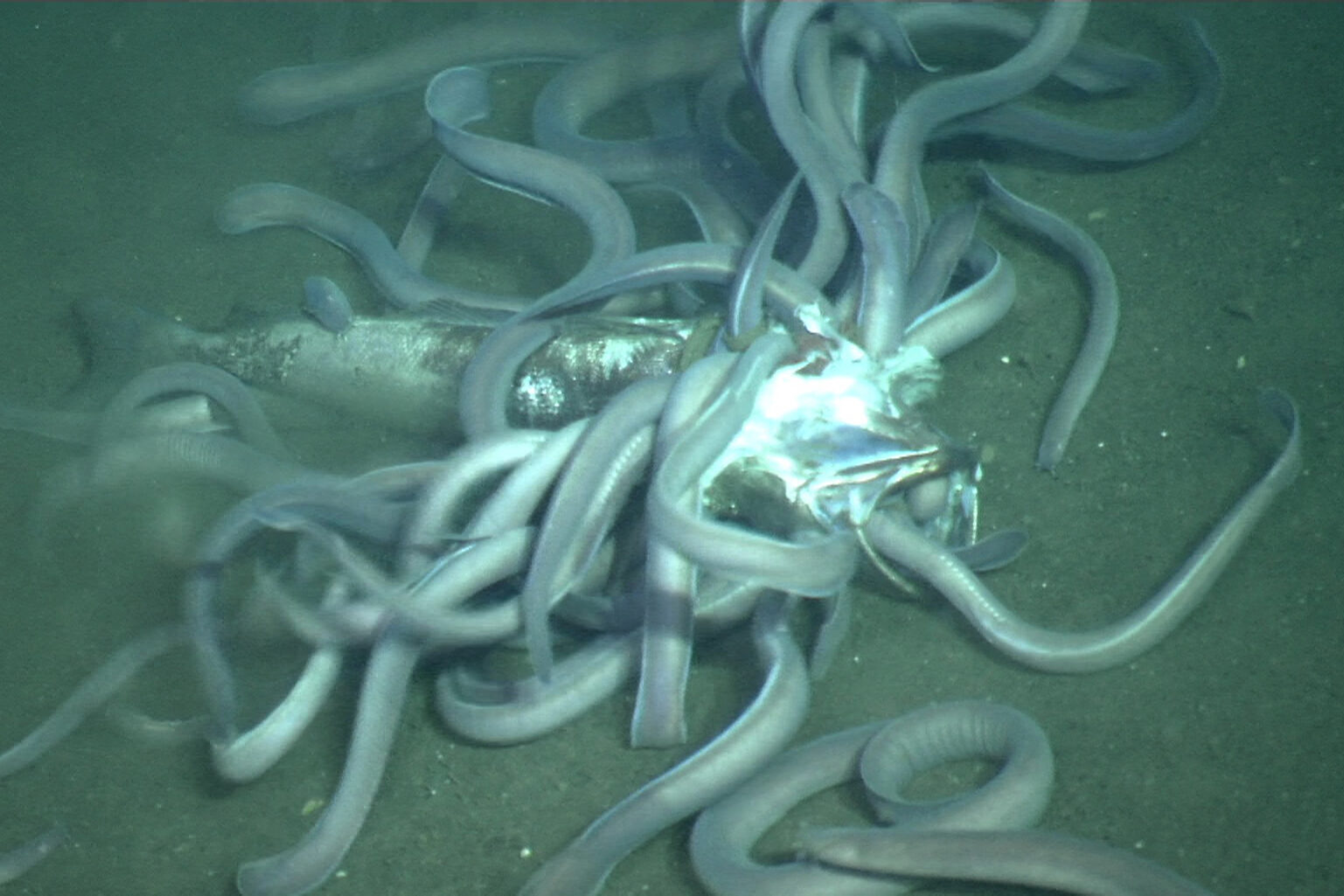
A group of hagfish feasts on a rotting fish carcass that has fallen to the seafloor.
© MBARI
Slime eel surprise
The primitive Pacific hagfish has no jaws, no true eyes and no stomach. But what it lacks in anatomy, it makes up for in slime glands. One hundred or so glands line the body of this fish, and when stressed, it secretes about a teaspoon of a sugar and protein matrix that expands into a slippery slime. As reported by the Atlantic, just a teaspoon of this substance can create enough goop to gag a shark (and enough teaspoons can shut down a highway, which happened when a truckload of hagfish overturned in 2019). Hagfish have a clever technique for removing the slime from themselves—they tie their body in a knot and move the knot from head to tail, scraping themselves clean. (They use this same technique for leverage when eating their favorite meal, rotting carcasses that have fallen to the seafloor. Underwater weathermen call this whale-sized marine hail. Just kidding.)
Home snot home
Lastly, we come to larvaceans. Remember how we mentioned these creatures as the primary source of the snot vampire squid love so much?
Well, larvaceans build mucus mansions. Snot palaces. A schloss of slime. This five-inch marine invertebrate creates an elaborate mucus structure that can be up to three feet across. To put this on a human scale, imagine blowing your nose and generating a five-story building.
Scientists at MBARI led by bioengineer Kakani Katija used an ROV mounted with laser scanners to create a 3-D flythrough of one of these snot palaces. Studying how these structures work could provide insights for people to build better filtration systems, design more advanced 3-D printers, or create inflatable structures for use underwater or in outer space.
Related videos
Inside the snot palaces of giant larvaceans
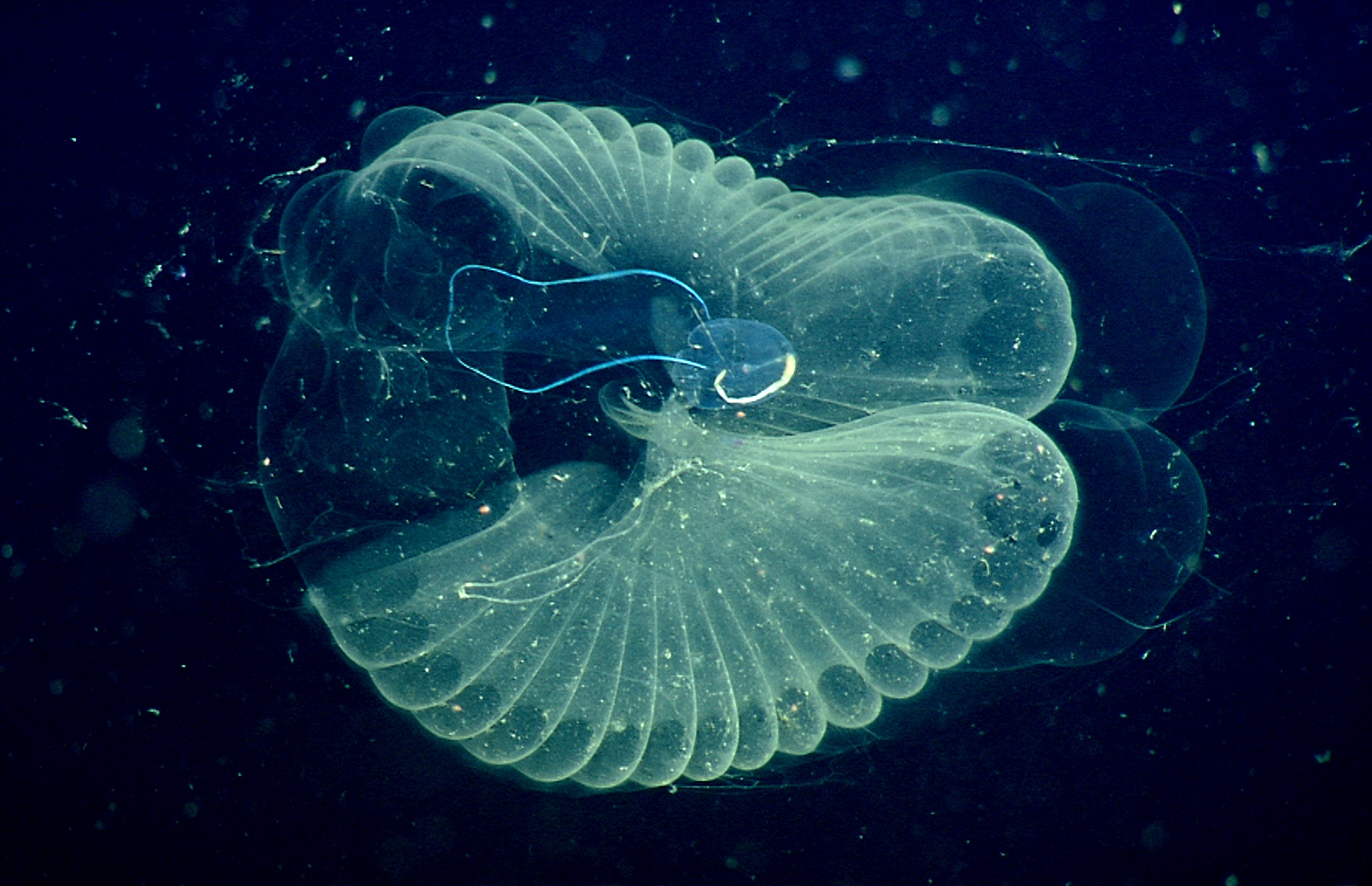
Join MBARI's Kakani Katija for a deep dive into bioengineering and the incredible mucous architects of the deep sea: Giant larvaceans!
These snot palaces function similarly to the mucus nets of jellies or fat innkeeper worms but are much more intricate, consisting of inner and outer chambers. By just beating its tiny tail, a larvacean can filter more than 20 gallons of water an hour through its mucus mansion to capture floating bits of food and funnel them to its mouth.
Though architectural marvels, the mucus does tend to get clogged after a day or so. When this happens, the larvacean releases the mansion and starts over, building itself a fancy new slime crib.
What happens to the old snot palace? Perhaps a hungry vampire squid is lucky enough to come across it.
Why mucus matters
We hope you enjoyed being schooled in snot and marveling at mucus. When it comes to the ocean, mucus matters. Some animals generate it, other animals eat it. Fish and eels sleep in it, and larvaceans build their homes with it. There’s a lot to appreciate when it comes to mucus, slime and snot. Thanks for joining us for this delightfully gross exploration!
Keep exploring
Story
Nature is queer
We’re excited to sea-lebrate the queerness of nature!
Read story – Nature is queer
Story
Birdwatching tips: A guide to enjoying and identifying local birds
Here are our best tips to help keep you and the birds safe and healthy during a birdwatching adventure.
Read story – Birdwatching tips: A guide to enjoying and identifying local birds
Story
Chumash Heritage National Marine Sanctuary is almost here
Chumash Heritage National Marine Sanctuary protects marine life and cultural resources on California’s coast.
Read story – Chumash Heritage National Marine Sanctuary is almost here