

The weather forecast was not good. Waves, wind, and fog. But when we had an opportunity to take a break from the Conservation and Science work for a day and tag along on a research cruise with the National Marine Sanctuary Foundation (NMSF) we jumped at the chance. Hoping to see some amazing wildlife despite the weather, we made the trip south to Morro Bay on California’s Central Coast and hopped aboard the National Oceanic Atmospheric Administration research vessel (NOAA R/V) Fulmar.
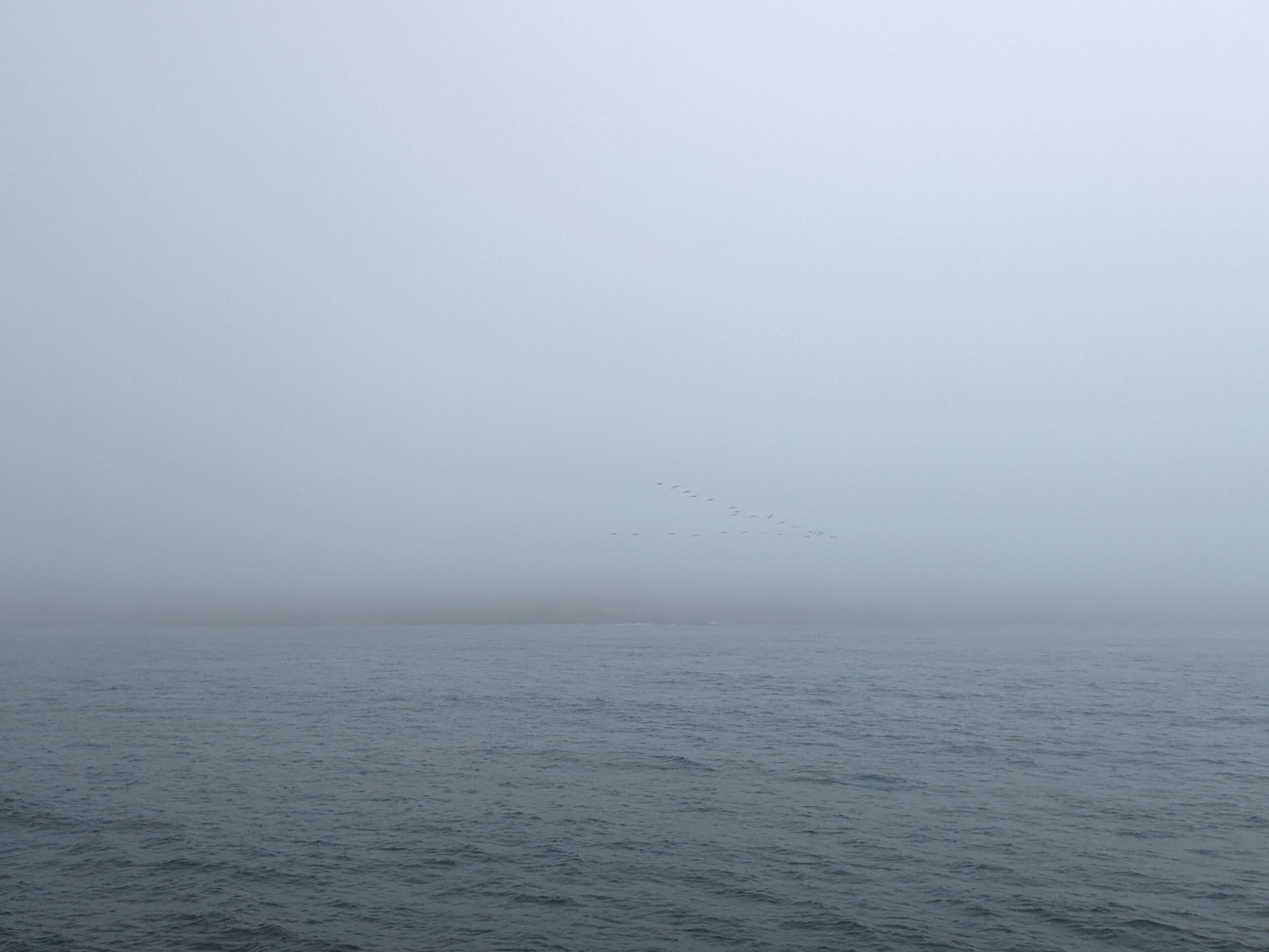
Visibility on our trip was less than ideal.
Colleen Weiler
A foggy feeling
The poor weather upended the week’s research plans and dense fog blocked our view of everything except seabirds flying close by and the occasional glimpse of Morro Rock. Fortunately, this was a cruise focused on Passive Acoustic Monitoring—listening to the ocean through acoustic devices that are either placed in key areas for long periods of time or set adrift to move with the current. As our partners at the Monterey Bay Aquarium Research Institute (MBARI) call it, “eavesdropping on the deep”.
The day we joined the cruise, the goal was to collect an anchored hydrophone and change the recorder and battery for several more months at sea. Hydrophones, or underwater microphones, listen in on the world underneath the waves. They record human-made noise, the ambient environmental sounds, and the sounds of species present—whales, fish, and even tiny crustaceans. Hydrophones are an important tool to help us understand the impacts of human-made sounds from undersea construction, sonar testing, and even vessel noise in our “backyard,” the Monterey Bay National Marine Sanctuary.
The Monterey Bay National Marine Sanctuary is a special part of the California Current Ecosystem, the coastal ocean environment defined by powerful currents that bring cool water from high latitudes southward along the coast. Along with seasonal winds, the California Current drives upwelling, the movement of deep, nutrient-rich waters to the surface. This cold water and influx of nutrients support the incredible productivity and biodiversity in the Monterey Bay National Marine Sanctuary and all the waters off the West Coast, from kelp forests to blue whales.
On this cruise, we visited a future national marine sanctuary that will soon join Monterey Bay in a system of federally managed sanctuaries off California. Though we were hoping to both see and hear the wildlife that makes this place special, the fog had other plans. Before any research activity could happen, however, we needed to do a quick safety training to prepare for the worst-case weather scenario. On the water, safety is always first!
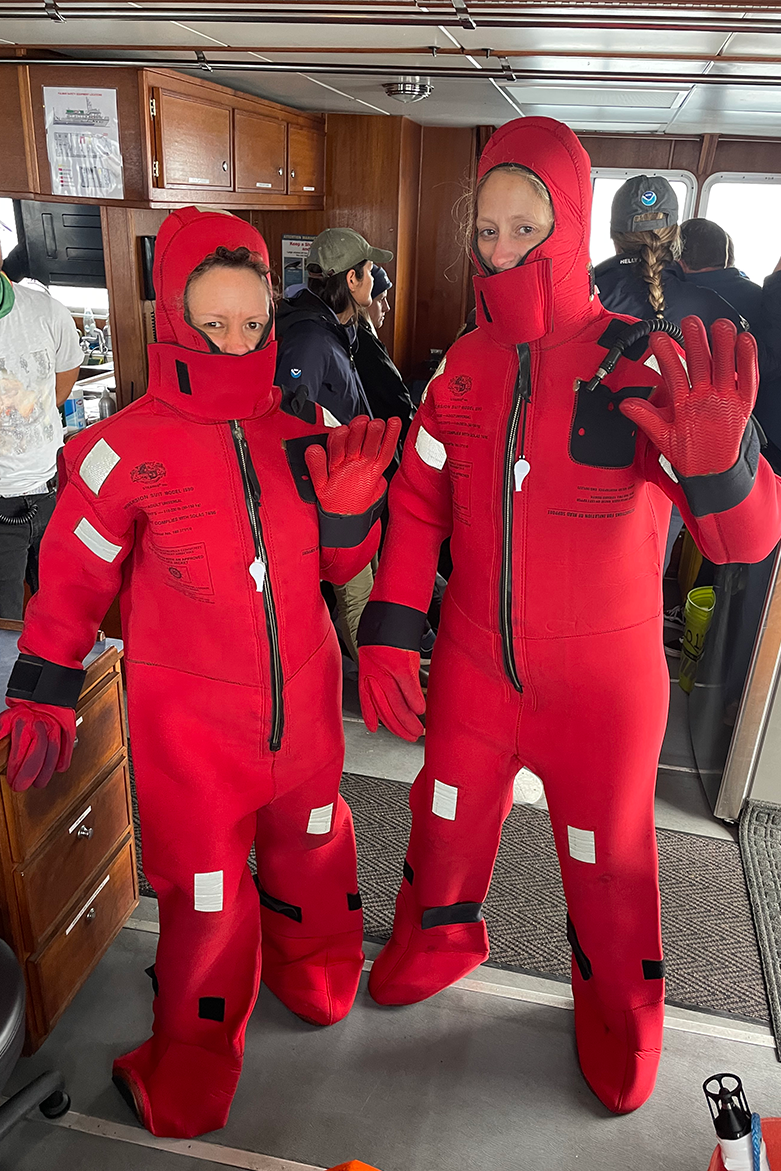
USCA team members Amy Wolfrum and Colleen Weiler don survival suits, or “gumby suits”, for on-water safety training.
© Cory Hom-Weaver
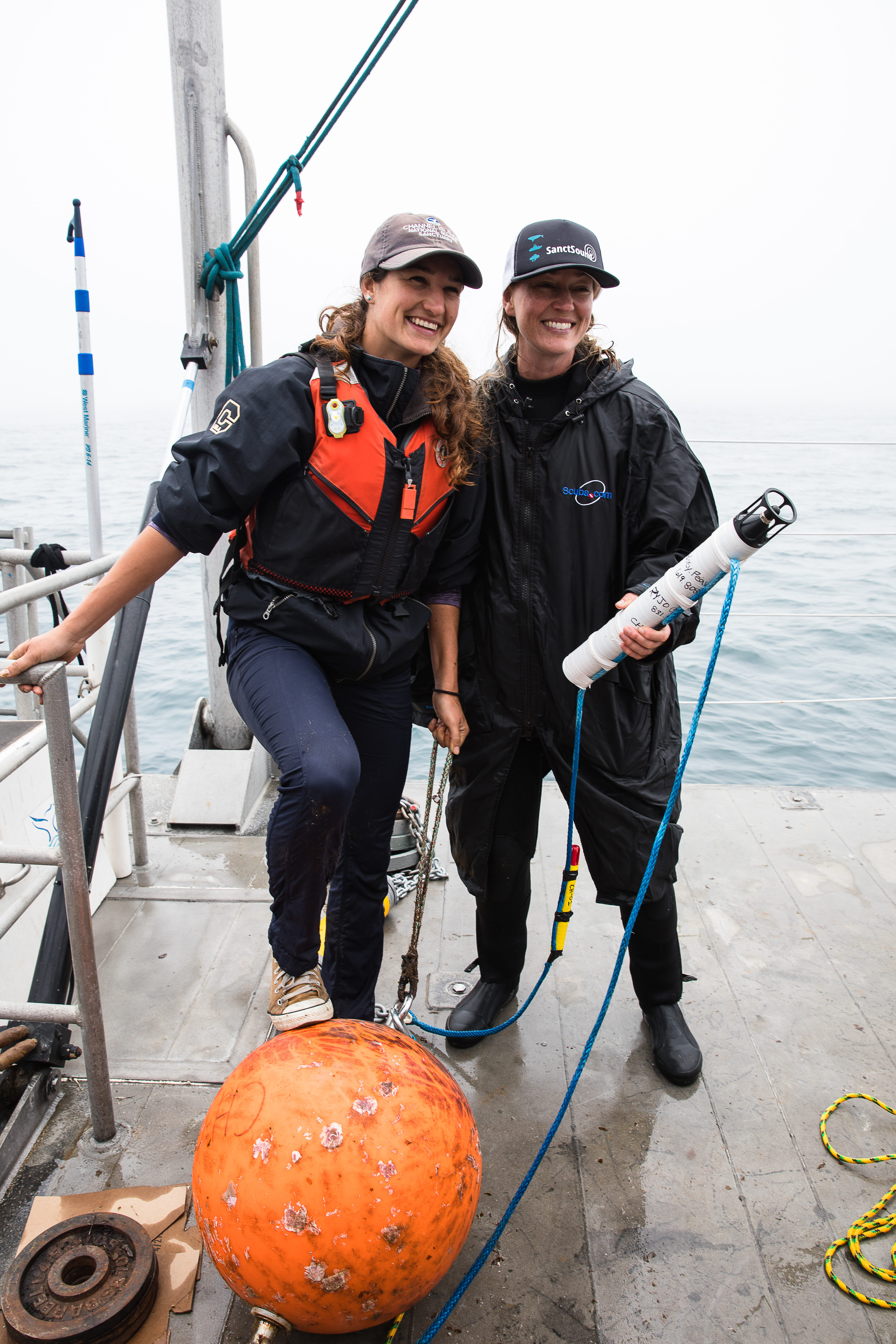
Marine researchers prepare a fresh hydrophone setup to deploy for several more months at sea. The white tube holds the hydrophone, a surprisingly small device that opens a window into a big underwater world.
© Cory Hom-Weaver
The recordings from the hydrophones, along with other research conducted on the cruise, are part of a coordinated effort to understand the present-day environmental conditions in this area of the ocean: what species are present, when they use the area, and how humans are already having an effect. Major changes are taking shape off the California coast, such as planned development of offshore wind energy and the proposed Chumash Heritage National Marine Sanctuary. Establishing the “baseline” of current conditions allows researchers to compare the environmental conditions before, during, and after these changes. Understanding the effects of these activities, both positive or negative, is important for management decisions by policymakers.
This hydrophone is dubbed “CH01” for “Chumash Heritage [National Marine Sanctuary]” and is one in a network of listening stations off the California coast. CH01 is special to the Aquarium: we were able to provide input on key sea otter habitat off Morro Bay to help choose its location. CH01 was placed in an area important to sea otters to understand the baseline conditions, changes over time, and perhaps provide some insight into what makes the area such a good home for sea otters. For example, tracking the kelp forest conditions in areas that sea otters live can help us learn more about how their presence helps the overall ecosystem.
Despite the uncooperative weather, the NMSF research team successfully brought the hydrophone to the surface for cleaning and maintenance. Their divers surveyed the site around the hydrophone to assess the kelp forest after the winter and spring storms. There was a notable disappearance of kelp after a rough season, but when researchers check on the hydrophone again in a few months, they expect to see regrowth of the forest after summer.
The work by the NMSF is an important piece of a very complicated puzzle, and their continued research contributes to the big-picture view of our ocean. Recordings from the hydrophone reveal species present (and making noise) and human-created noise. Exploring the seafloor, either by diving or using robots, creates a map showing the shape of the bottom of the ocean. Surveys for wildlife like marine mammals, seabirds, or sharks tells us what species are there and how they are using the area. Combining all of this science builds a holistic understanding of the ocean, insights into how things change over time, and helps distinguish natural variations from changes caused by people. Better knowledge leads to better protection.
Linking science and policy
In the policy world, most of our time is spent on land—in meetings, reviewing research, and developing recommendations on conservation concerns and potential solutions. We rely on that “big picture science” but we don’t often get to see it in action. An opportunity to see the work up close is a fantastic reminder of the thought and effort needed for research. For us to advocate for effective policy, it all starts with science!
The research conducted on the cruise is essential now, before big changes like offshore wind energy occur, to understand the baseline conditions and track the effects of ecosystem-wide changes such as climate change or this year’s El Niño event. The publicly supported research underway by NOAA and its local and federal partners is essential to achieve this long-term work and the “big picture” of the ocean.
Ongoing research is also critical to follow effects over time and understand the scale of the impacts. This helps develop predictions for future conditions. For example, the CH01 hydrophone can tell us how much noise from boats can be heard in the area now. Continued listening can detect increased noise from more boat traffic associated with offshore wind operations. Scientists can consider what effects changing noise could have on sea otters, and we can use that information to develop conservation measures such as boat speed limits, the use of quiet engines, or expanding protected areas. As a bonus, the species that CH01 records can help answer specific questions about marine life and the surrounding environment — even giving scientists a glimpse into the choruses of singing fish.
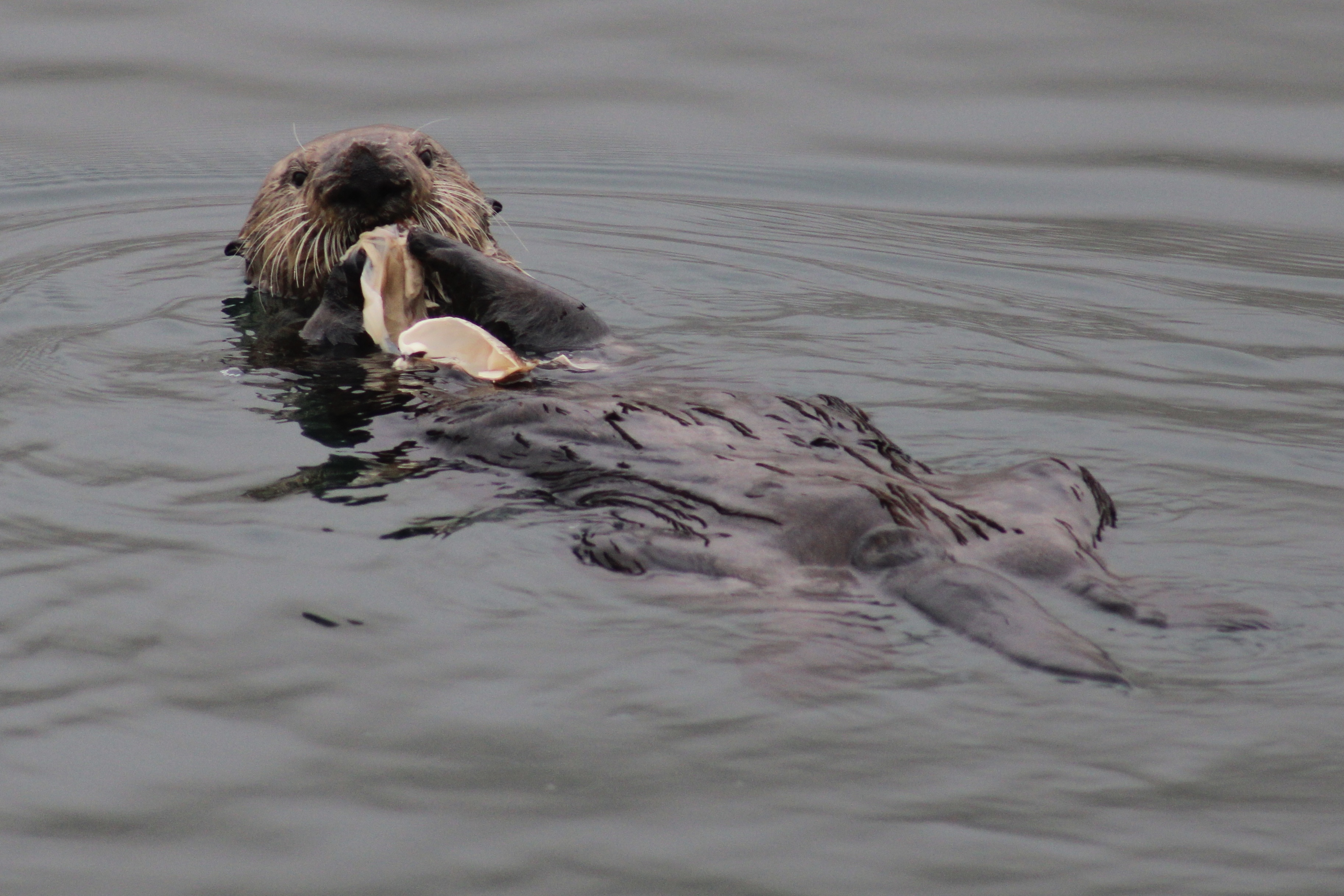
The fog cleared enough to see some otters nearby. (Photo courtesy of Rayon Carruthers)
© Rayon Carruthers
Knowing the science makes better advocates
Understanding the technical specifics and needs of the research we rely on for policy is important. It allows us to be better advocates who can describe the scientific details that support our policy objectives. It also makes us better partners to scientists. We can advocate for team resources and support for research, and be realistic about what we can learn. This ensures our conservation goals are supported, effective, and will have a measurable positive impact on habitats and marine life in the California Current Ecosystem. It’s always amazing to get out on the water and see the environment we work to protect. Despite the fog on our cruise, we did catch brief glimpses of humpback whales, Dall’s porpoises, and, of course, sea otters.
While our cruise day snapshot of the ocean was mostly fog, the team of hardworking scientists had a productive day of data collection. It all contributes to a comprehensive picture of what our California Current Ecosystem looks like at this moment in time—what species are there, what they’re doing, what the water is like, and how our human activities are already affecting the environment. A peek into the lives of the amazing inhabitants of our ocean helps us understand them, and that can inspire us all to be part of their protection.
A huge thank you goes to the research team and the multiple federal agencies involved for welcoming us on the water and sharing your knowledge with us, and to the boat crew for keeping us safe (and for the delicious coffee).
Keep exploring
Story
From Vietnam to California
From farms to CA schools, your food choices help wildlife, fishers, and global coastal food systems thrive.
Read story – From Vietnam to California
Story
Earth Month 2026
This Earth Month, embrace wonder. Ask questions, dive in, and join our community caring for the ocean.
Read story – Earth Month 2026
Story
From bridges to better seafood: investing in coastal communities
Projects we finance aim to improve the overall quality of life in small-scale fishing and farming communities.
Read story – From bridges to better seafood: investing in coastal communities