

Monterey Bay National Marine Sanctuary
Here, you'll find tide pools, coastal wetlands, kelp forests and a deep submarine canyon. A bounty of plants and animals call this special place home—including 34 species of marine mammals, more than 180 species of seabirds and shorebirds, at least 525 species of fishes and an abundance of seaweeds.
This sanctuary is the largest protected ocean area in the continental United States—it encompasses 6,094 square miles (15,783 km²) from the waters north of San Francisco all the way to the southern end of the Big Sur coast. A unique combination of geology, weather patterns and currents makes this sanctuary one of the most productive ocean ecosystems on Earth. Each year animals travel thousands of miles just to reach these rich feeding grounds. Like any popular neighborhood, it's got just the right mix of great places to live and eat.
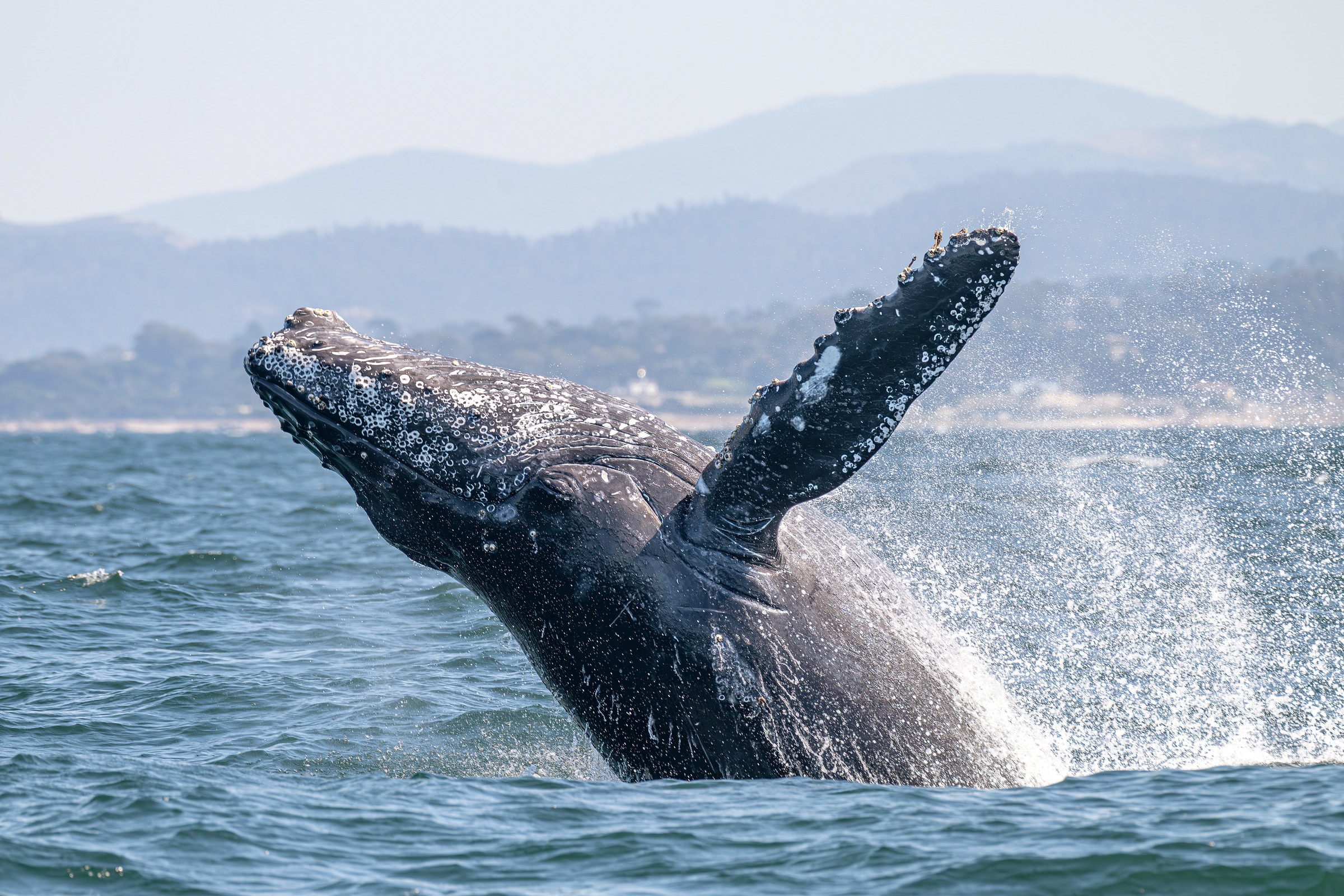
A humpback whale breaches in Monterey Bay National Marine Sanctuary.
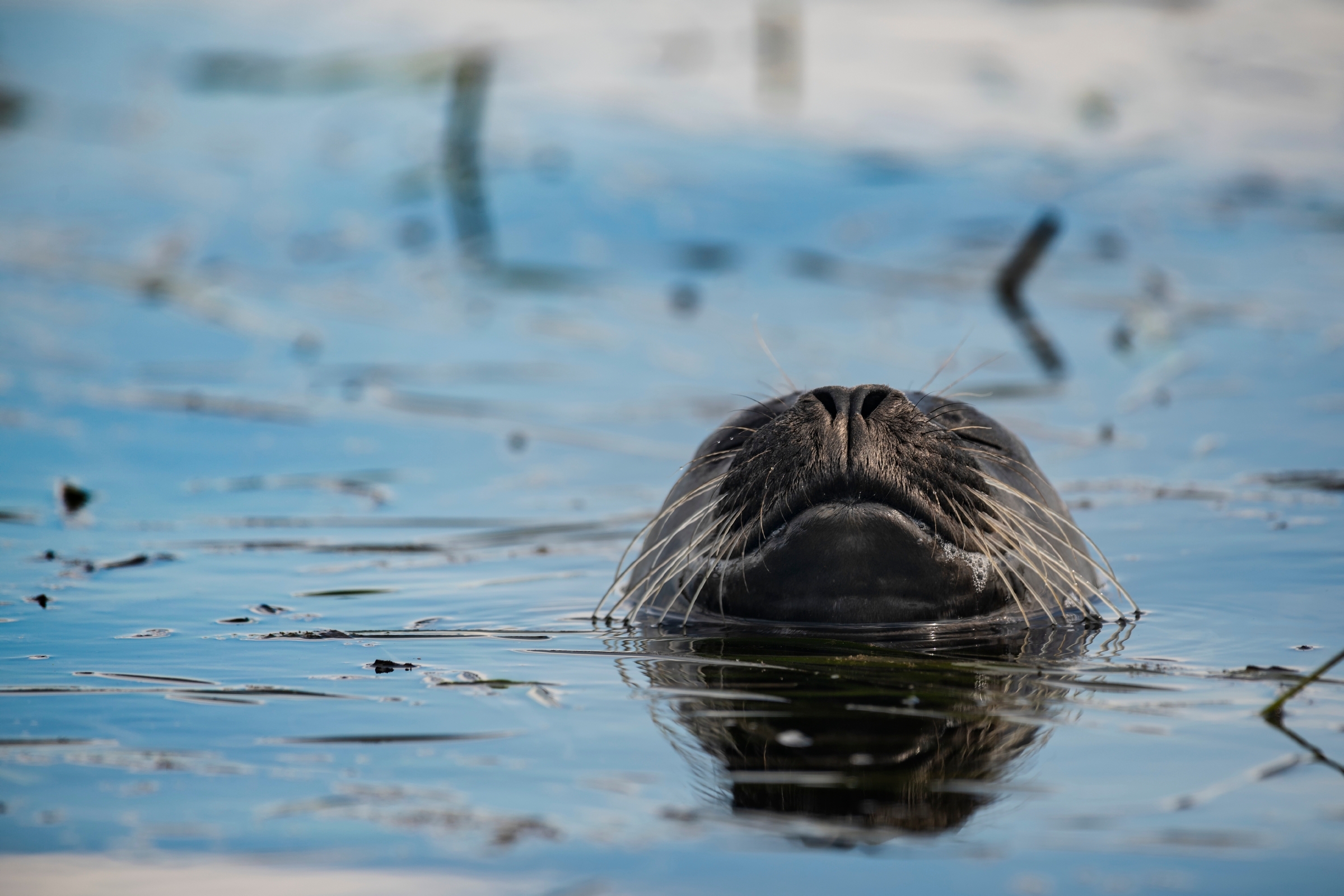
A harbor seal rests with its nose in the air in nearshore waters in Monterey Bay.
Why's the sanctuary special?
The café's got a great menu
Winds drive a process called upwelling that brings cold, nutrient-rich water to the surface where it fuels a vibrant food web—from tiny plankton and copepods to squid and schooling fishes like sardines and mackerel. With a banquet like that, almost everyone can find something to eat here.
Housing galore
In some parts of the world, there's virtually no variation between high tide and low tide while other places see extreme fluctuations. Here, the tides ebb and flow moderately, creating great housing opportunities for animals that live on rocky shores and sandy seafloors.
Where worlds meet
Since Monterey bay is located about halfway between Alaska and Mexico, cooler water from northern currents and warmer water from the south bleed across the boundaries, bringing the animals that thrive in those waters with them. The water temperature is usually from 49 to 55 degrees F (9-13 C), depending on the season.
A much-needed protected space
It wasn't until the 20th century that people began to recognize that ocean habitats and animals need to be protected. Before that time, European arrivals on the West Coast saw ocean wildlife only as a source of wealth, and hunted many animals to near extinction.
Today, thanks to international treaties and national laws, many species are on the rebound. Both legal protections and marine protected areas like Monterey Bay National Marine Sanctuary support the health of our ocean and the animals that call it home.
Filled with deep sea treasures
The Monterey Bay Submarine Canyon is huge. It's the largest undersea canyon on the West Coast of the United States—and begins right offshore. It descends from a depth of about 60 feet (18 m) to nearly 12,000 feet (3,656 m) in a distance of 60 miles (97 km) off the coast.
The canyon creates deep-sea habitats close to shore with a wealth of animals not found in shallower waters. Waters over the submarine canyon attract blue and humpback whales, dolphins and seabirds. At our partner organization, the Monterey Bay Aquarium Research Institute (MBARI), scientists and engineers explore and study the canyon, working together to monitor the pulse of the ocean.
Related videos
Superpod of common dolphins in Monterey Bay

Sanctuary stats
- This federally protected marine area offshore of California's central coast was established in 1992.
- As one of our nation's largest marine sanctuaries, Monterey Bay National Marine Sanctuary stretches from Marin County to Cambria, encompassing a shoreline length of 276 miles (444 km) and 6,094 square miles (15,783 square km) of ocean.
- The deepest point of the sanctuary lies 10,663 feet (3,250 m) below the surface in the Monterey Canyon, which is twice the depth of the Grand Canyon.
- The sanctuary contains our nation's largest kelp forests and one of North America's largest underwater canyons.
- 34 species of marine mammals, more than 180 species of seabirds and shorebirds and at least 525 species of fishes live in this remarkably productive marine environment.
Keep exploring
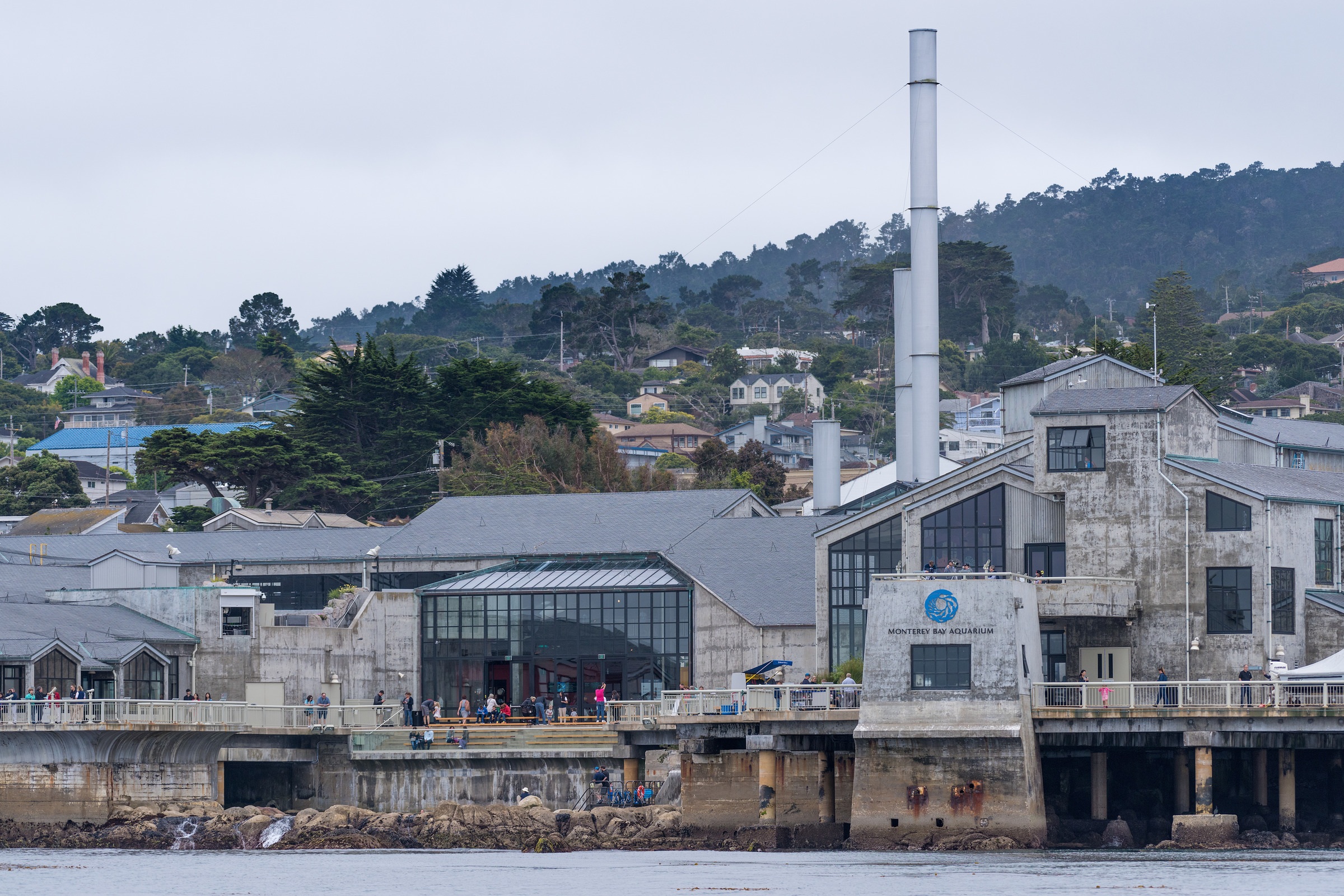
Visit
Other ways to visit
Looking for free tickets to the Monterey Bay Aquarium? See if you qualify for any of these special programs.
Read more – Other ways to visit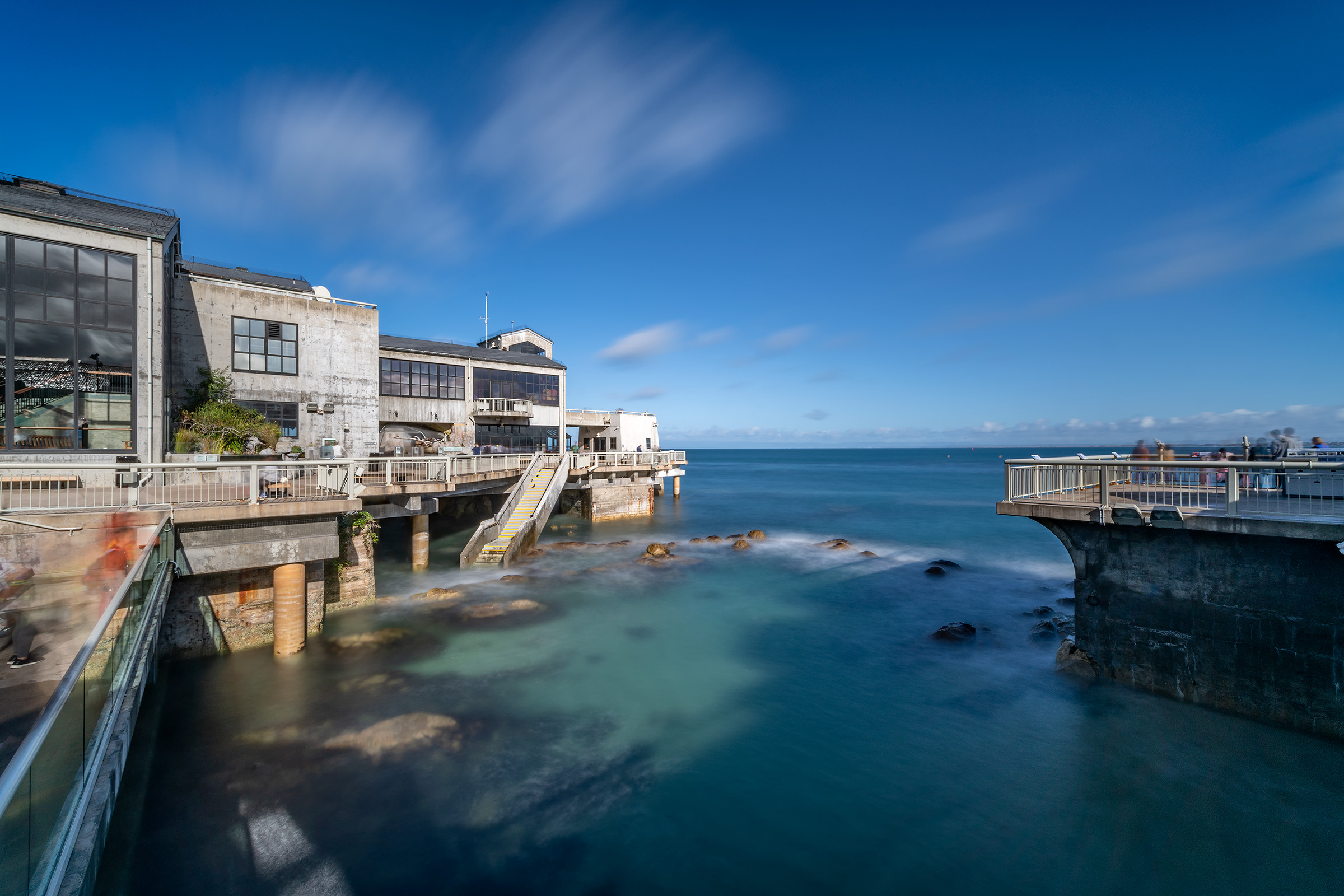
Visit
Exhibits
Explore our exhibits and meet all the amazing and animals that live in waters from the shore to the open sea.
View exhibits – Exhibits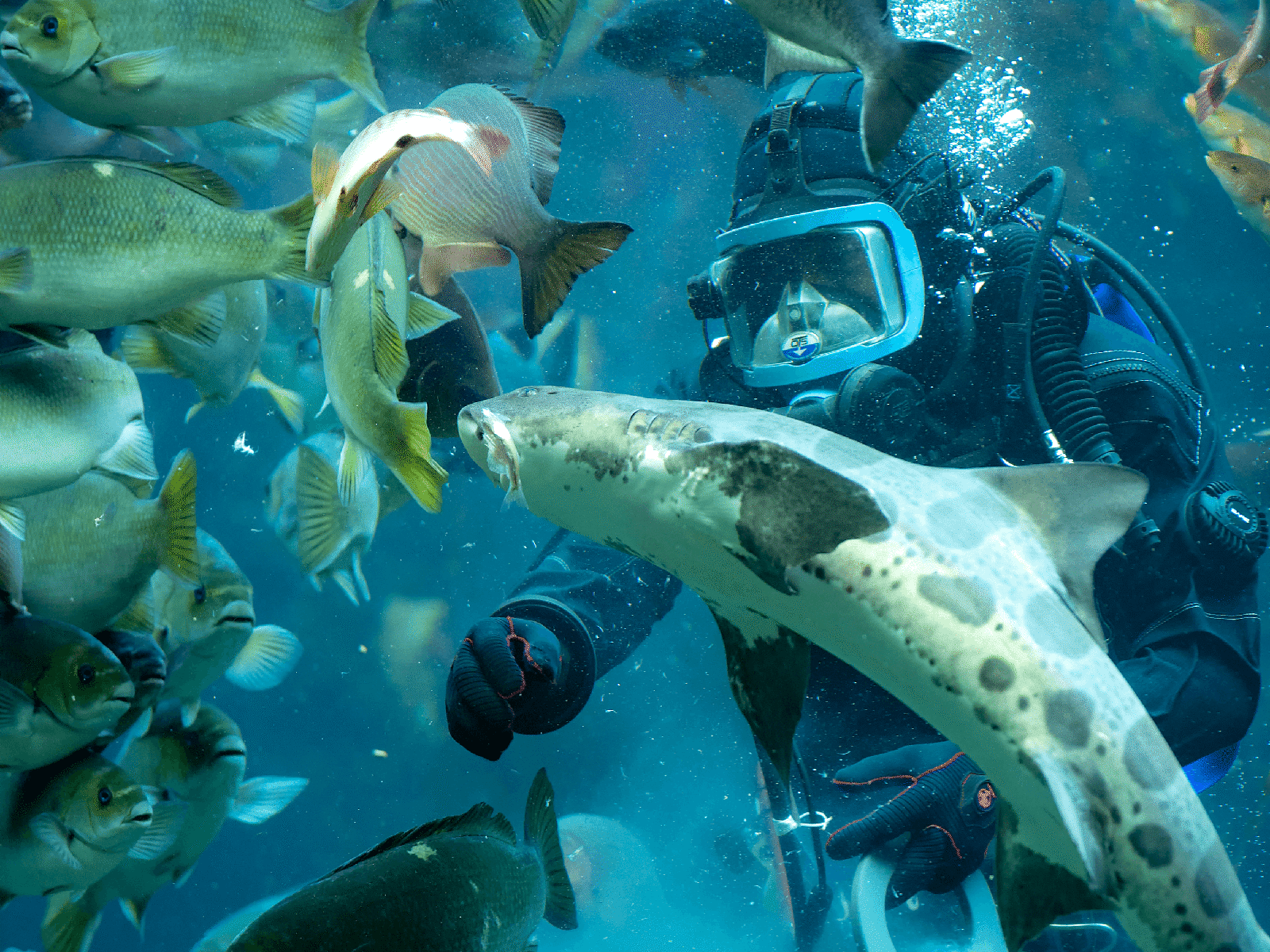
Visit
Schedule
Check our hours, which may vary, along with our daily schedule of feedings, programs, and events.
See what’s on – Schedule