

Prior to being full-time at the Aquarium, Tyson specialized in aviation photography, taking pictures of various aircraft in flight. He even spent a season of his life performing as a wing walker at airshows—which gave him the opportunity to see flight in a whole new way from the wing of a vintage biplane.
Through his photography, he loves showing people a world they’ve never seen, which is why some of his favorite work involves macro photography. Nudibranchs and jellies are among his favorite subjects to explore close-up.
He’s quick to acknowledge that his stunning photographs are reflections of the exceptional work of many Aquarium staff members—from those who care for the animals to the exhibit designers to the folks taking tickets and welcoming guests. Teamwork makes it all possible, and he considers himself lucky to be able to photograph the results.
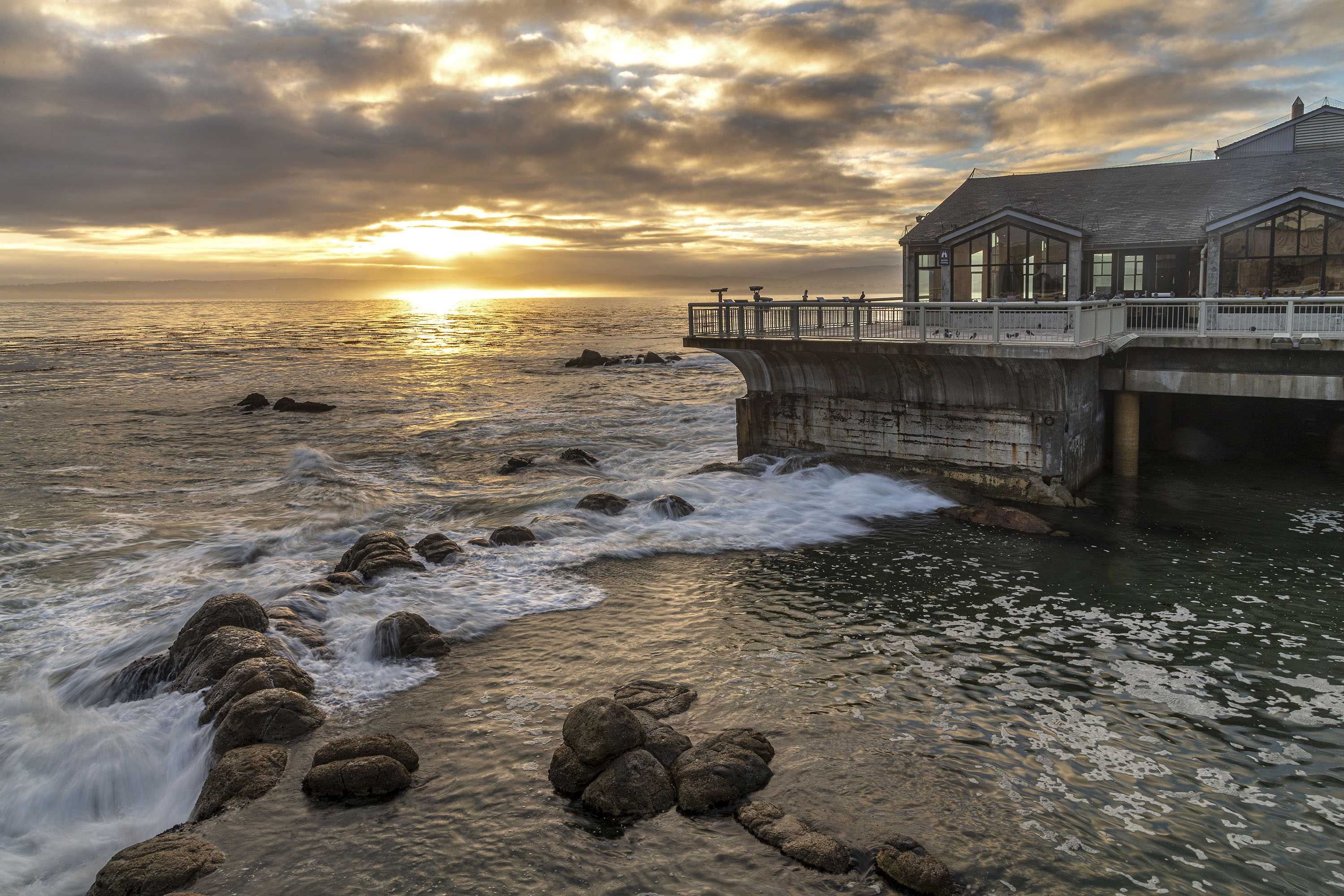
A spectacular sunrise captured by Tyson in the early morning off the back deck of the Aquarium.
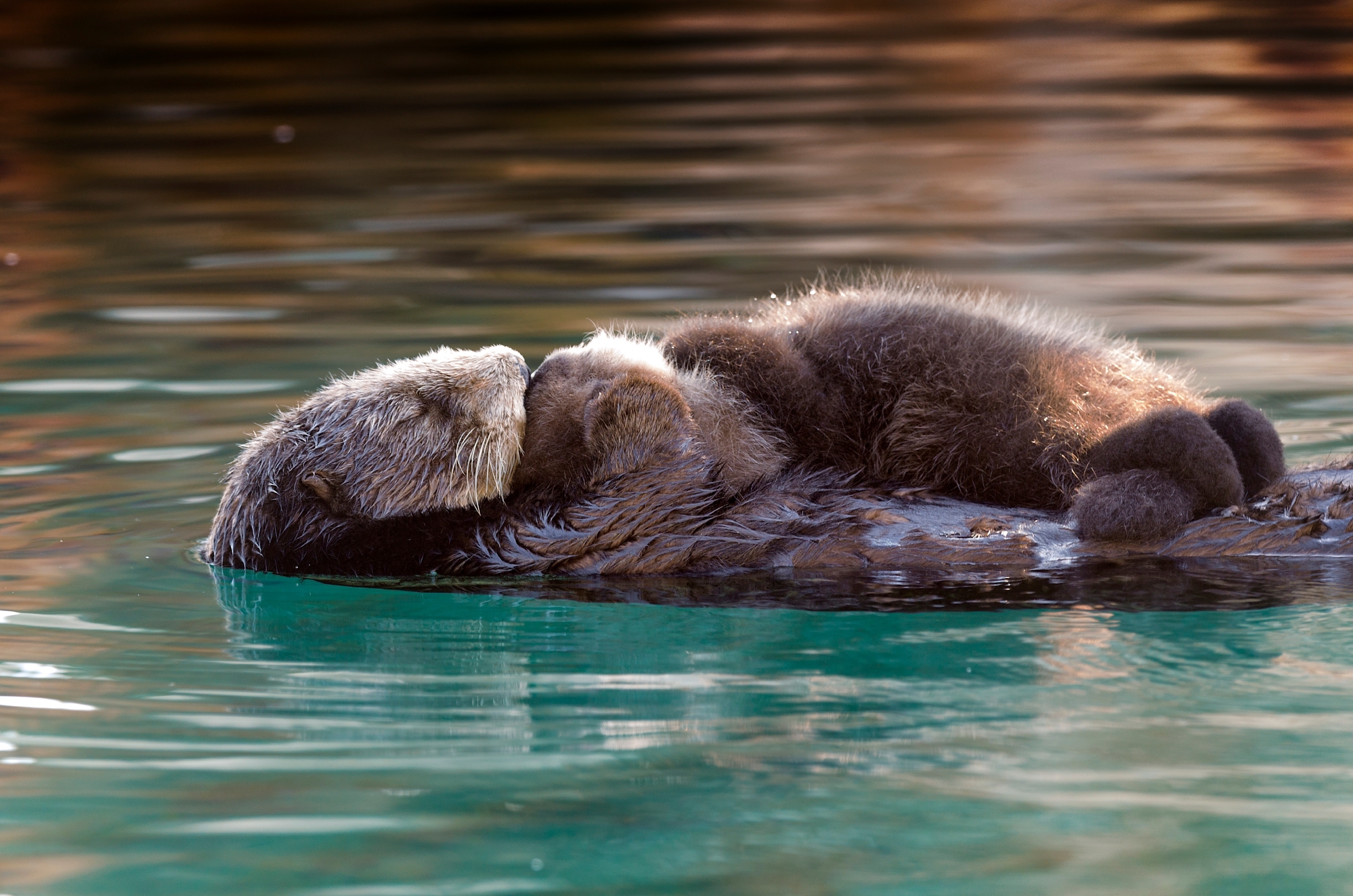
A tender moment of a wild sea otter mom and newborn pup in our Great Tide Pool.
Question: What is your first memory of the ocean?
Answer: I grew up in Port Hueneme, a coastal town just north of Los Angeles. As a kid, I would ride my bike to the beach after school and either surf, fish off the pier, or just hang out with friends. The beach seemed to be the center of all our activities. We’d always just end up there. I really believe there's something about growing up next to the beach that grabs your soul. When I’m in the Midwest or landlocked for any length of time, I begin yearning for the smell of the sea, the crispness of the onshore breeze, and the rhythmic sounds of the crashing waves.
Q: What experiences shaped your passion for ocean conservation?
A: It’s easy to justify protecting the ocean when you live near one. You can often see numerous forms of pollution the moment you get to the beach. When I hear the term, ‘away’ as in, “Throwing something away”, the beach is that ‘away.’ Everything eventually ends up here. Even as a kid, there were types of fish we couldn’t eat due to mercury poisoning, and other fish we didn’t want to eat simply due to the oil-slick-looking water or the amounts of trash that would float by in the same area we were fishing.
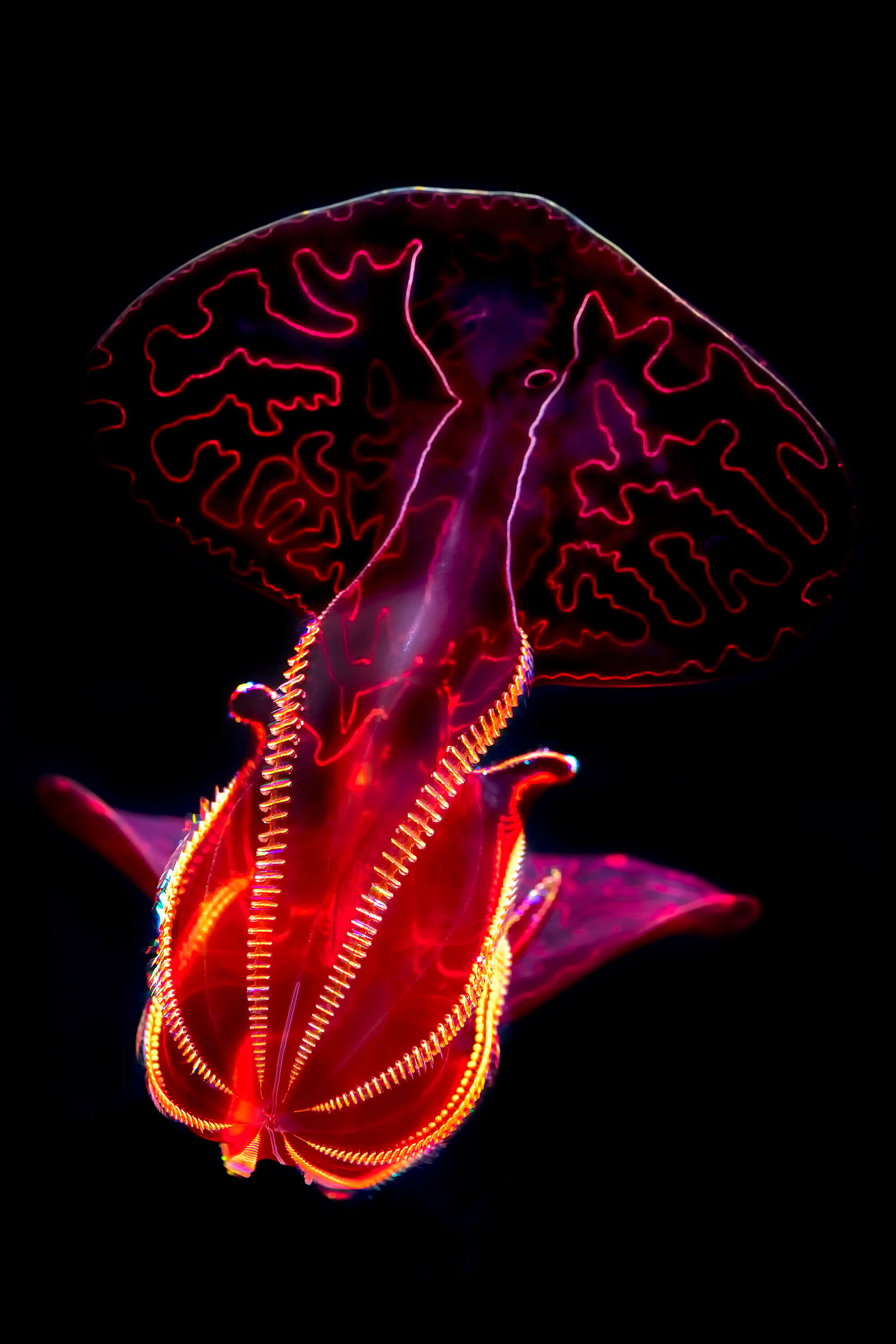
Tyson's macrophotography skills are perfectly displayed here in this dazzling image of a deep-sea bloody-belly comb jelly.
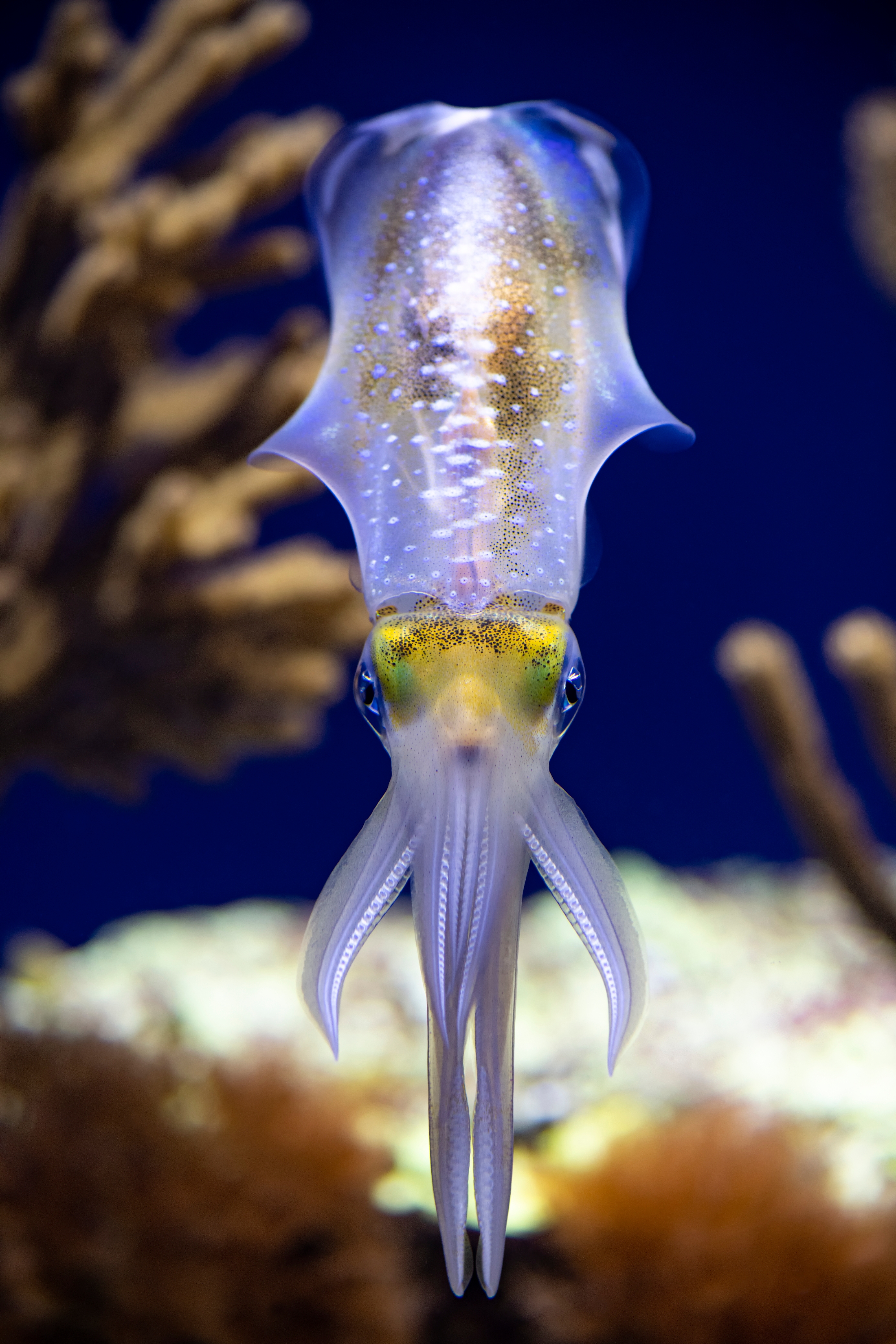
A bigfin reef squid, floating placidly against the blurred backdrop of its warm water home in our Tentacles exhibition.
Q: What have been some of the coolest animals you’ve had the opportunity to photograph at the Aquarium?
A: I have been incredibly fortunate to work with some of the most impressive animals on the planet due to our researchers and scientists. Probably the most memorable was our white shark program. The Monterey Bay Aquarium needs to know how these apex predators tick in order to better understand the behaviors of all the other animals that fall within their food chain. Working with and photographing these sharks gave me a whole new level of respect for them.
I’ve also enjoyed working with our Into the Deep exhibit and many of the fragile animals that few have ever seen. The first deep-sea animal I was presented with were the bloody-belly comb jellies. I was captivated the first time I saw one in our Jellies Lab and couldn’t wait to photograph it. So much was unknown about these jellies at the time. Some of us thought they were just going to turn to mush the first time I added a light. Thankfully they didn’t! As a matter of fact, they thrived under the care of our Jelly Team experts and have become a source of pride with some specimens living for more than a year at the Aquarium.
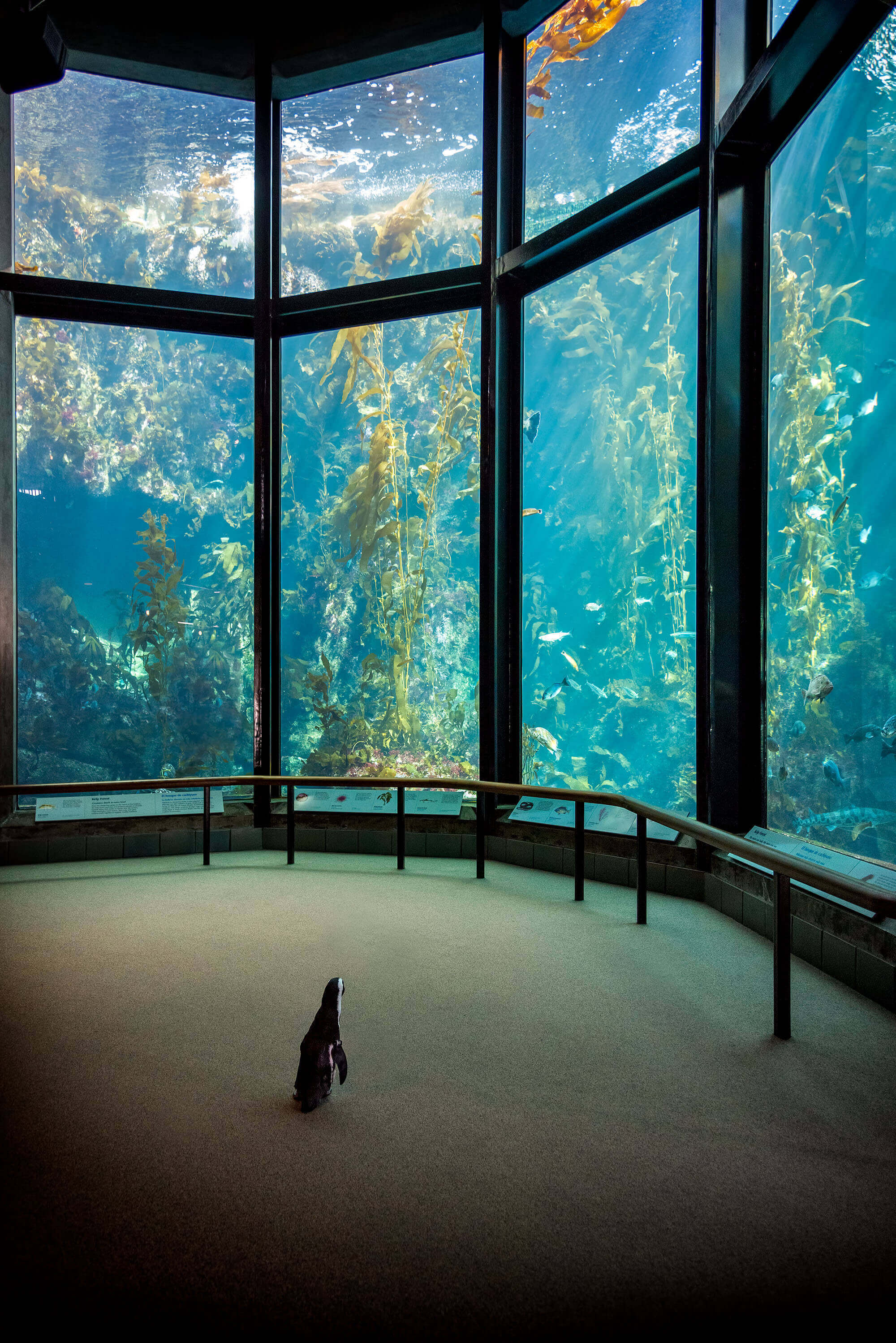
Rey the penguin takes a stroll through the Aquarium and visits the Kelp Forest exhibit.
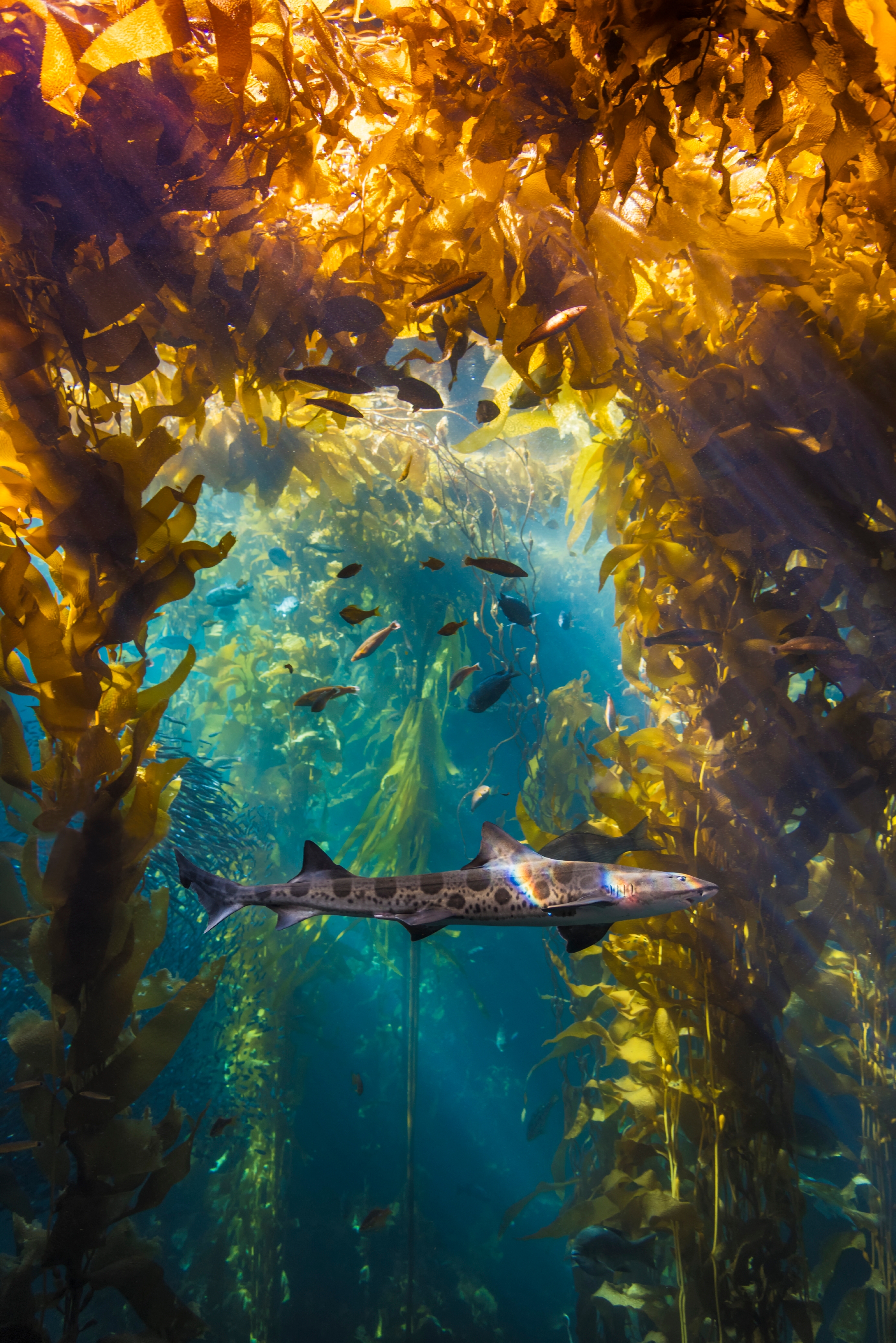
Iconic images of the Kelp Forest exhibit like this are what the Aquarium is known for.
Q: What are some of the challenges of photographing the Aquarium’s exhibits? Can you share any tips or techniques?
A: The Monterey Bay Aquarium has provided some of the best challenges I’ve ever encountered. It’s dark, the acrylic reflects everything, and the animals move. Over time, the use of strobes and lighting equipment has become more frowned upon as they could cause potential harm to an animal. We certainly don’t want that. Fortunately, technological advancements in photographic equipment have enabled us to make use of digital sensors that have a higher sensitivity to light, so working with a moving animal in darkness is now just a little easier, but still requires loads of patience.
I will say, despite the challenges, I am grateful to be able to photograph these animals in a controlled environment. I’m sure there are underwater photographers out there laughing at my meager challenges, but the fact is the challenges faced at the Aquarium versus those in the wild are dramatically different yet equally challenging. The Into the Deep exhibit illustrated that, sort of. Despite these animals not being able to be photographed at such depths by anything other than an underwater submersible, the components that enable the animals to be exhibited became part of the challenge. Extremely thick acrylic meant experimenting with different lenses and optics to find a means of eliminating distortion. With all of our exhibits, the camera needs to be perfectly even with the acrylic; any variation or angle would result in a blurred image. With the thicker acrylic, not only does the camera have to be perpendicular to the exhibit, I now have to determine the optimal distance of the lens to the acrylic for improved sharpness. Believe it or not, it’s a thing.
Ultimately, the health of the animal is number one. Once that has been assured, I can move on to the technical aspects of the situation.
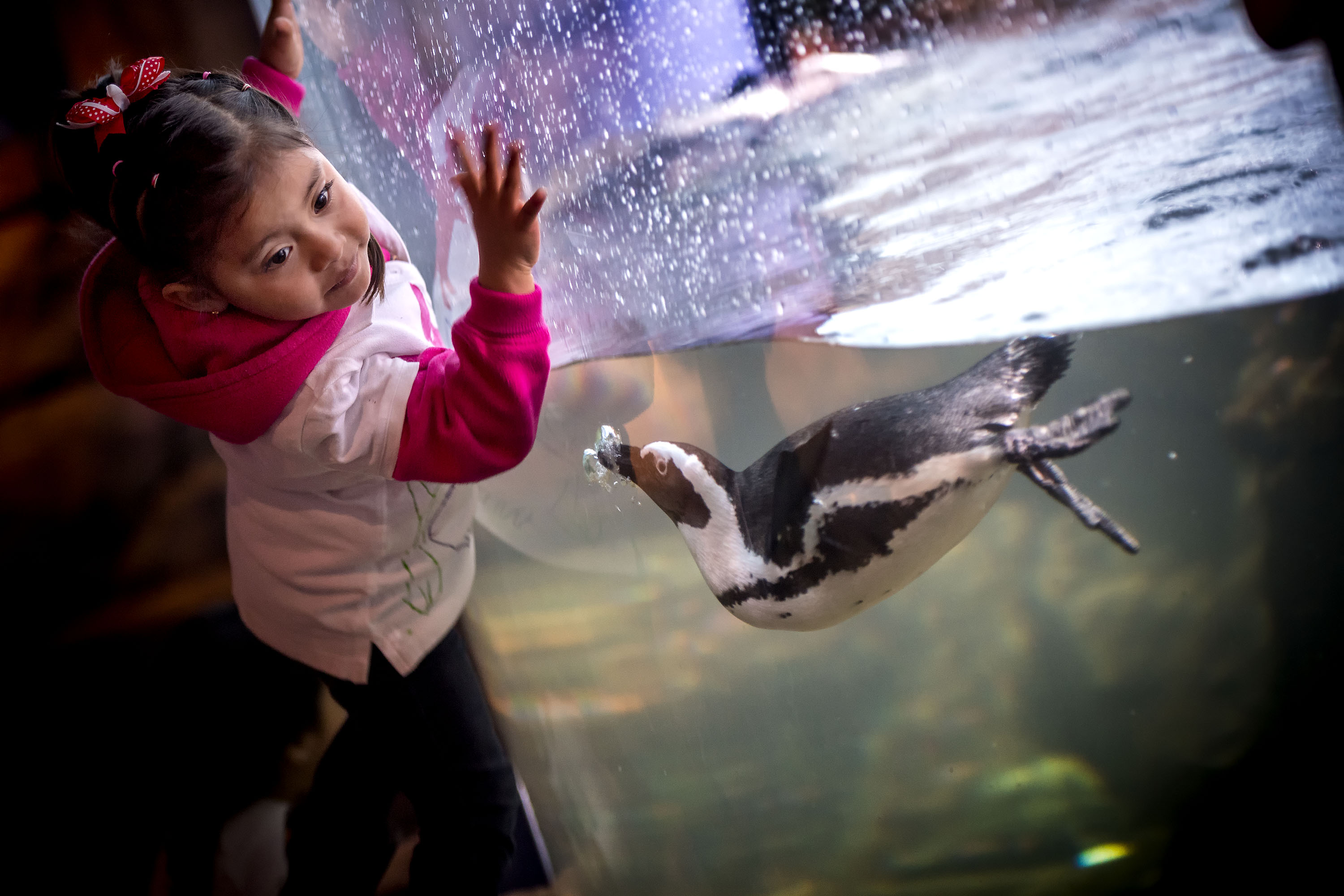
A moment of wonder as a child connects with an African penguin.
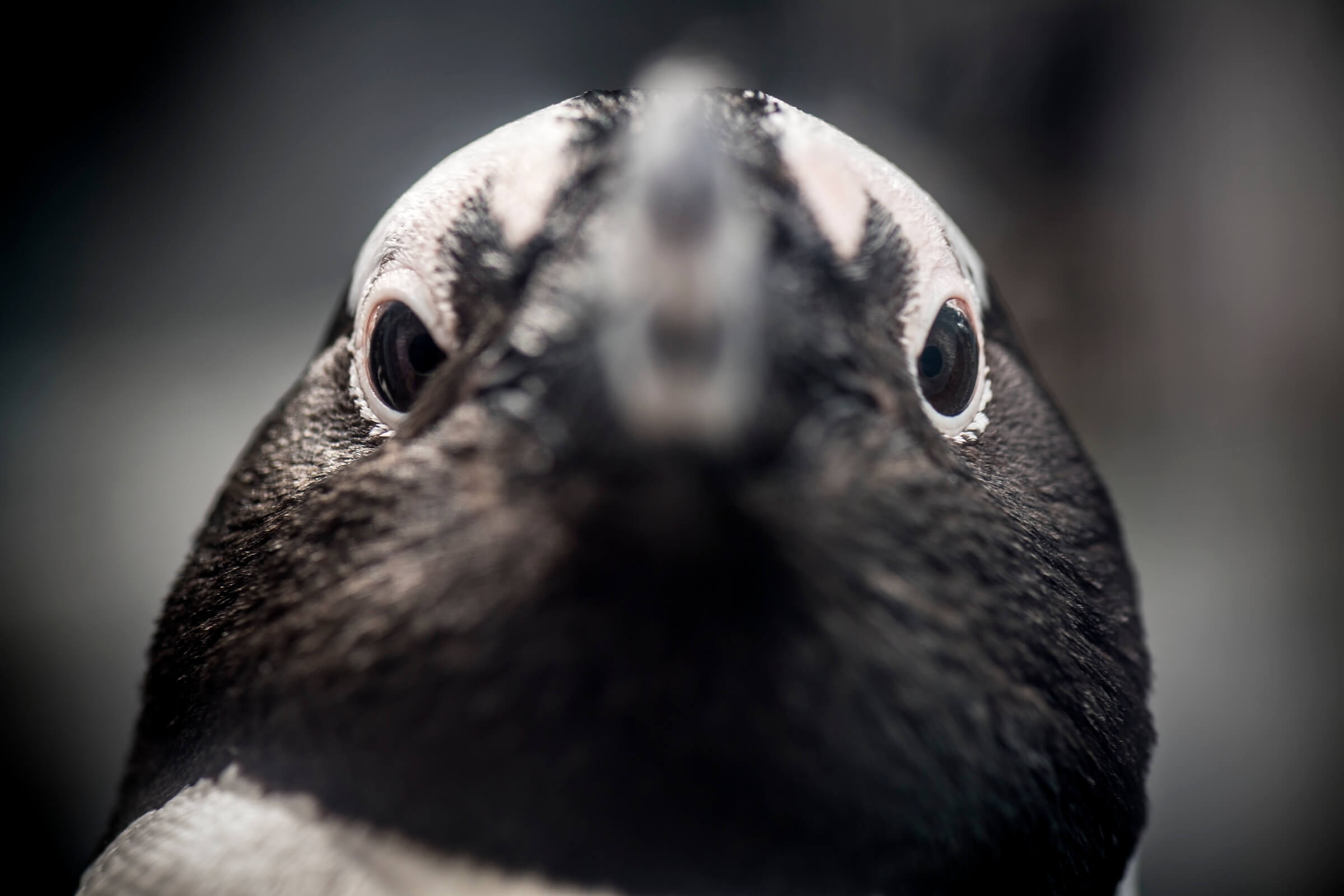
Up close and personal with one of our African penguins.
Q: What projects have you worked on that you are most proud of?
A: During my years as a volunteer, Randy and I worked on quite a few memorable projects. There was once an exhibit where the Aquarium brought visuals from behind the scenes to the main visitor areas. This involved creating life-like and 1:1 scale photos which required being shot on a 4x5 camera with tons of lights. Randy and I were working down in the basement where the primary pumps and filtration system are located; it’s a pretty massive area. We would start around 6 p.m. and call it a day around 4 a.m. It took us three nights and an apology to my boss, Stephen Myrick at Myrick Photographic, as I would arrive at work a few hours later, half asleep. In the end, the graphics were pretty amazing and stayed up for a couple of years.
There have been others, like white shark tagging off the Farallon Islands, working with cephalopods for the opening of the Tentacles exhibit, even a little ‘zoo’ time with reptiles as part of our Viva Baja exhibit.
I think the Into the Deep exhibit was my first true solo project and one that I have really had a lot of fun with. Quite a few of the animals I have had the privilege of photographing don’t even have names yet, so from an artistic perspective, the deep-sea jellies, sea stars, spider crabs, and others have inspired me to try different things and present them in a more science fiction way—since we already have scientists presenting them in a ‘sciency’ way. Of course, these animals still have to be presented in a factual way, but with darkness and a lack of lighting opportunities, why not go in an entirely different direction and showcase these incredible animals in a way that we already imagine them.
Keep exploring
Story
Q&A: Julie Packard and Dr. Jenny Gray
Get to know incoming Chief Executive Officer Jenny Gray in this Q&A with Julie Packard.
Read the Q&A – Q&A: Julie Packard and Dr. Jenny Gray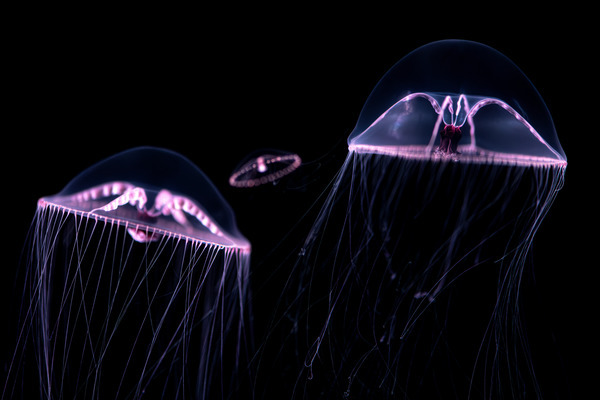
Story
2026 Lucile S. Packard Memorial Award and Youth Award recipients
We’re proud to announce the 2026 Lucile S. Packard Memorial and Youth Awards for outstanding volunteers!
Read story – 2026 Lucile S. Packard Memorial Award and Youth Award recipients
Story
Elevating Black voices in ocean science and conservation
Why representation in ocean science matters.
Read story – Elevating Black voices in ocean science and conservation