

Bloody-belly comb jelly
Lampocteis cruentiventer
- Not on exhibit
- Animal type
- Invertebrates
- Ecosystem
- Deep sea
- Relatives
- Other comb jellies; Family: Lampoctenidae
- Diet
- Unknown
- Range
- Midwater; from 1,200 to 3,280 feet (400-1,000 m)
- Size
- Up to 6 inches (15 cm)
Meet the bloody-belly comb jelly
The vibrant bloody-belly is nearly invisible to predators in the deep sea, where red appears black and blends into the darkness.
At the Aquarium
This ruby-colored jelly was first described 20 years ago by scientists at our research and technology partner MBARI. Using their remotely operated vehicles, MBARI is able to capture images and video of the bloody-belly comb jelly and other mysterious deep-sea species.
Thanks to our unique partnership with MBARI, we're the first aquarium to exhibit Lampocteis in the United States. Our aquarists worked for years to learn about how we could best care for the bloody-belly comb jelly. We’ve been able to extend the captive longevity of this species by reducing oxygen concentrations to mirror their preferred habitat in the oxygen minimum zone.
Related videos
Denizen of the deep
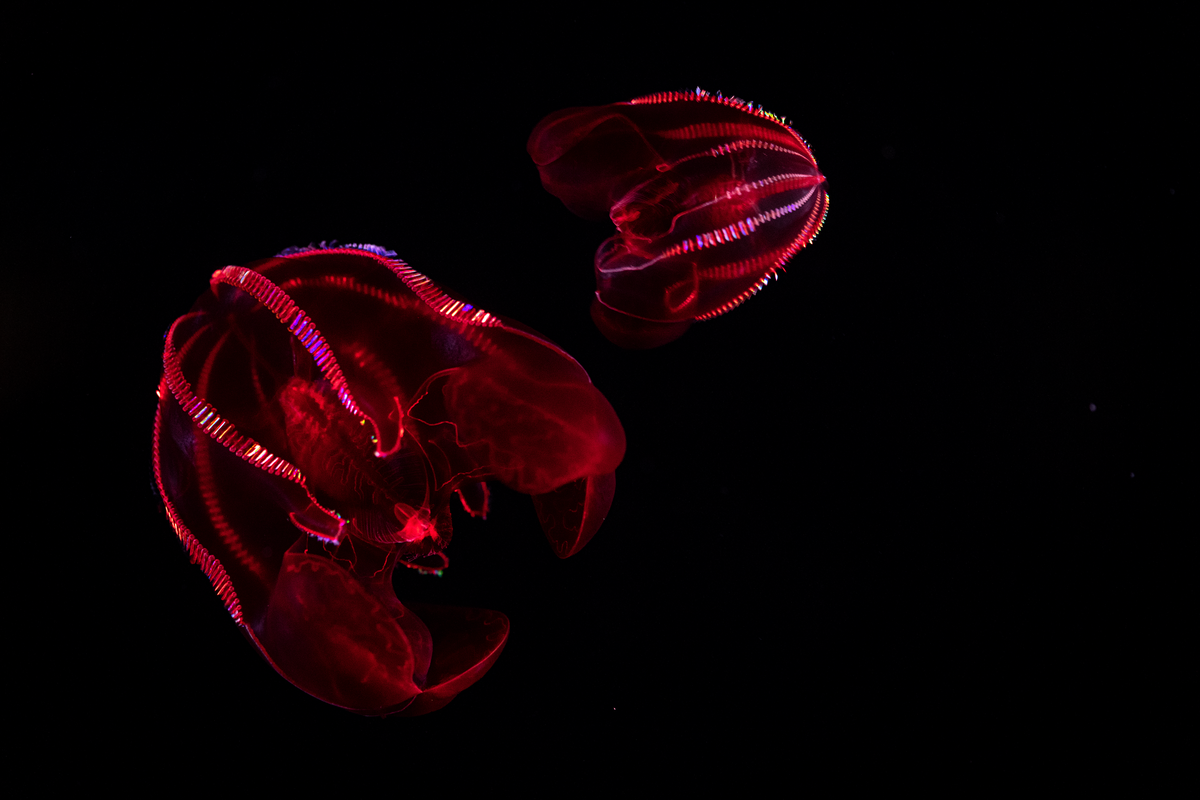
We're the first aquarium in the United States to exhibit this enchanting denizen of the deep.
Natural history
Though they seem to glow and sparkle in their exhibit here at the Aquarium, the bloody-belly comb jelly isn't bioluminescent like some other ctenophore species. The iridescent shimmer you see as they move comes from light diffracting and refracting off their cilia, the tiny hair-like structures that beat continuously to propel the jelly through the water.
The red color that makes the bloody-belly comb jelly seem to glow when illuminated by light acts as camouflage in their deep-sea habitat.
On the visible light spectrum, red light has the longest wavelength and lowest amount of energy. That means it's the first absorbed at the ocean's surface, never reaching the dark depths the bloody-belly comb jelly calls home. The absence of red light in the deep-sea environment means the same hue the makes the bloody-belly look bright and beautiful to humans appears black in the deep sea!
Related videos
The brilliant bloody-belly
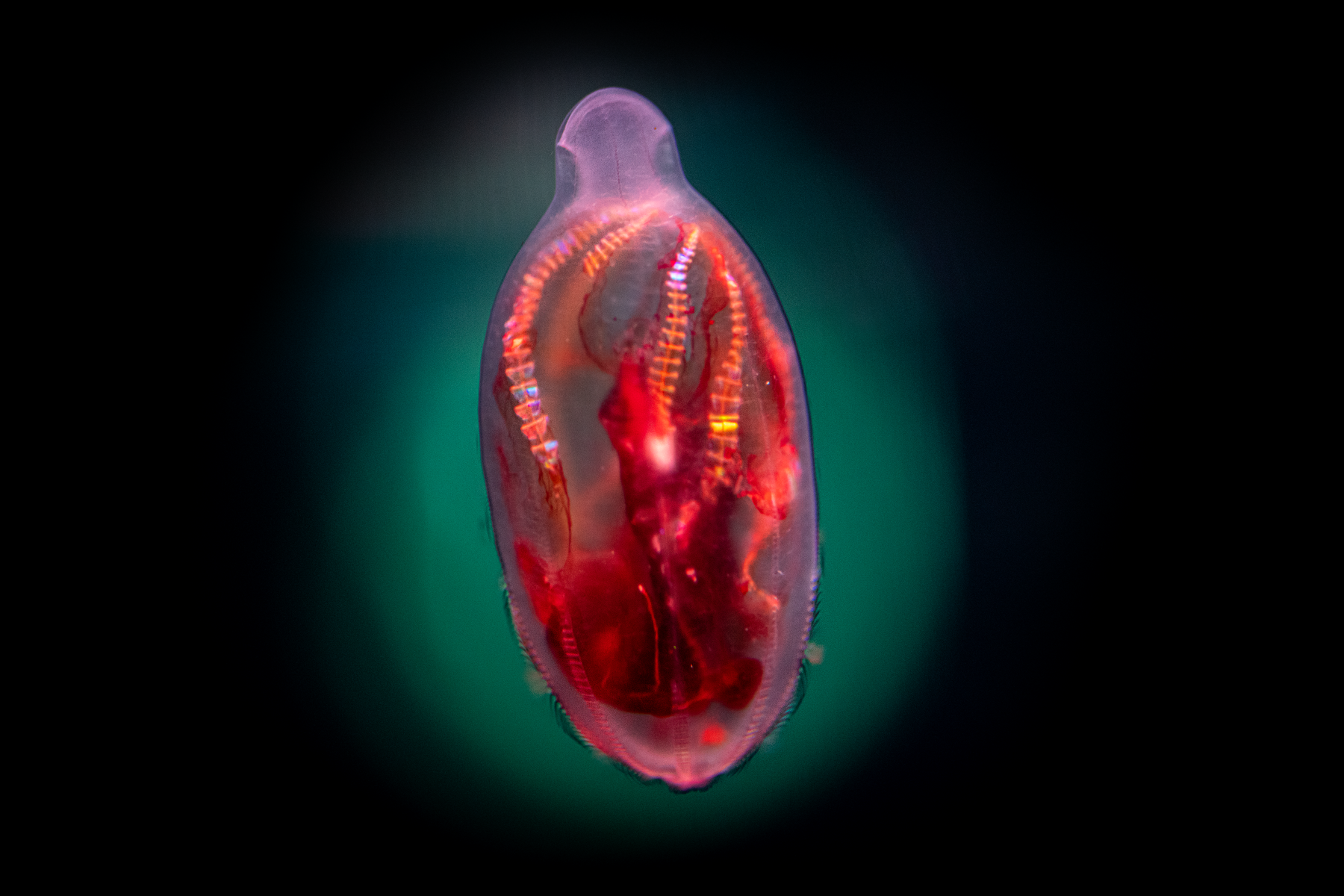
See an iridescent display as light diffracts and refracts off this ctenophore's shimmering cilia.
Conservation
The deep sea may seem distant, but deep sea animals are part of a thriving ecosystem. Our trash and chemicals harm them if we're careless with our waste.
Cool facts
- The genus name Lampocteis derives from the Greek roots for “brilliant comb,” referring to the bright iridescence diffracted from the animal’s comb rows.
- This jelly comes in different shades of red but always has a blood-red stomach. While the bloody-belly isn't bioluminescent, this transparent predator may feed on light-producing prey in the deep sea. The red color of the bloody-belly's stomach helps conceal the glimmering prey in their gut from the prying eyes of other predators!
Related videos
Raising jellies at the Aquarium

Get a front-row seat to see how our amazing aquarists raise the many mesmerizing jellies we have on display.
Up next in deep sea
Animal
Fanfin anglerfish
For some animals, an anglerfish's light is a fatal attraction. For others, it signals a welcome feast.
Keep exploring
Animal
Giant siphonophore
When startled, the giant siphonophore glows with bright blue light.