

Our veterinary extern talks about tube-feeding bat rays, praying for whales—and how she’s using her public platform to inspire others in her field.
A veterinary externship is an opportunity for veterinary students to get hands-on experience outside of the university before completing their degree.
In 2021, we piloted our Diversity Equity & Inclusion Matter: Monterey Bay Aquarium Veterinary Externship as part of our Career Development Pathway Internship & Externship Program which provides veterinary students experience working with sea otters, fish, birds, reptiles, amphibians, and aquatic invertebrates. The program also seeks to increase the diversity of veterinarians involved in conservation and aquatic animal medicine.
Question: Tell us a little bit about yourself.
Answer: I am a fourth-year veterinary student at Auburn University College of Veterinary Medicine. I have an interest in small animal and exotic animal medicine, as well as aquatic animal rescue and rehabilitation—specifically with aquatic mammals. I'm originally from Mobile, Alabama. I attended college at the University of Alabama at Birmingham, where I completed dual Bachelor of Science degrees in biology and psychology, along with a minor in chemistry.
Q: How did you develop a connection to marine animals?
A: I've always loved them. Especially through movies—Free Willy was one of my favorite movies growing up. But this is where representation and exposure play a big role in students developing a love for things. I didn't really pursue aquatic animal medicine early on because I didn't know programs were out there. And I didn't see any veterinarians that looked like me in those roles.
Q: What is your first memory of the ocean?
A: In Mobile, Alabama there's this bay that we would drive over. I can't remember the name of it, but there's a bridge. And every single time we went out over that bridge I would look for a whale.
I'm not sure if there are whales in that bay. I highly doubt it. But I remember looking over and really, really, really, really hoping and praying. I would pray to God to see a whale.
And the second day I got here [to the Aquarium], I went whale-watching. It was a big moment for me. To be a little girl who would pray to see a whale—and then seeing one in person while here. It was the best experience.
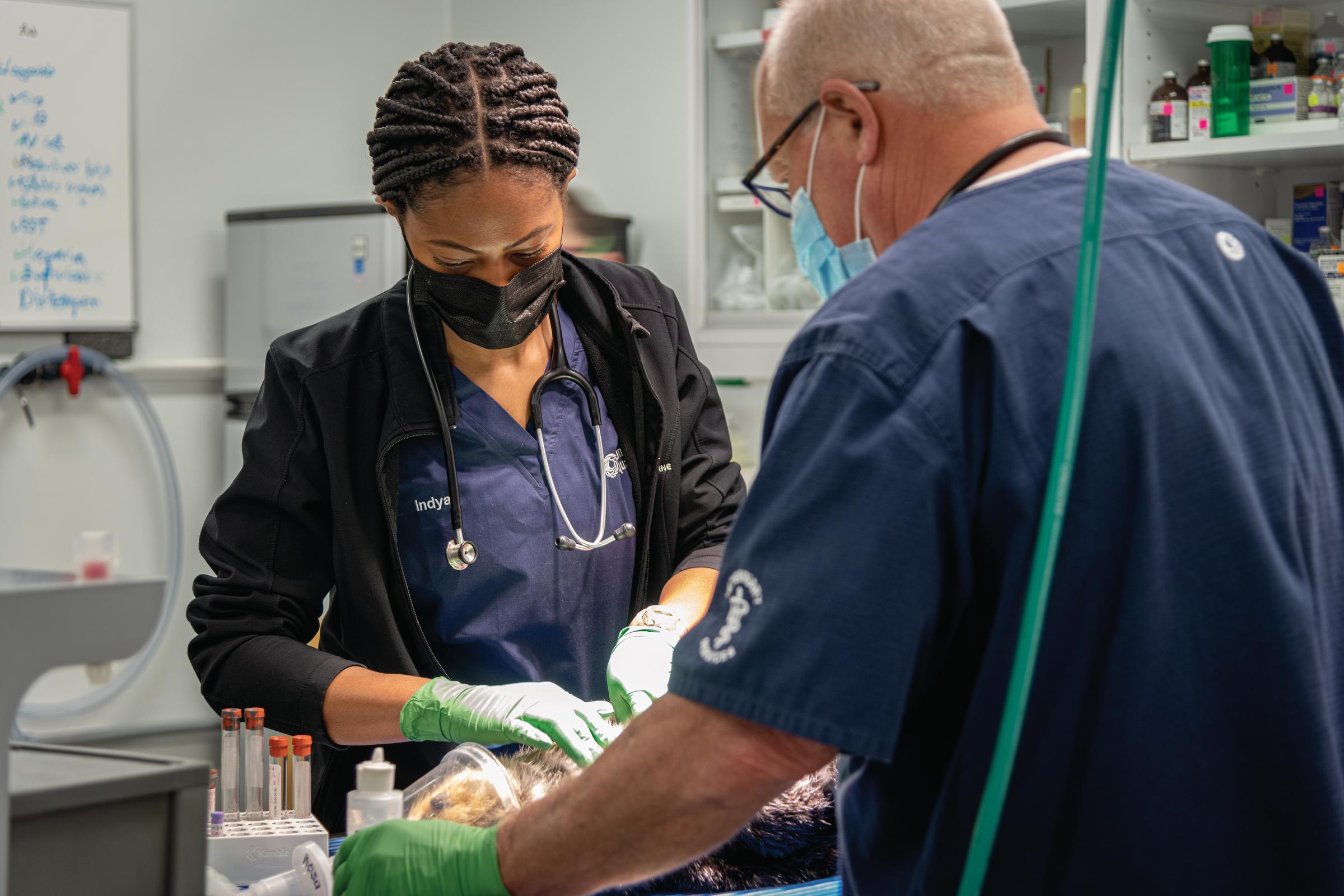
Indya Woods, left, performs a veterinary exam on a sea otter. She spent two weeks at the Monterey Bay Aquarium for a veterinary externship in 2021.
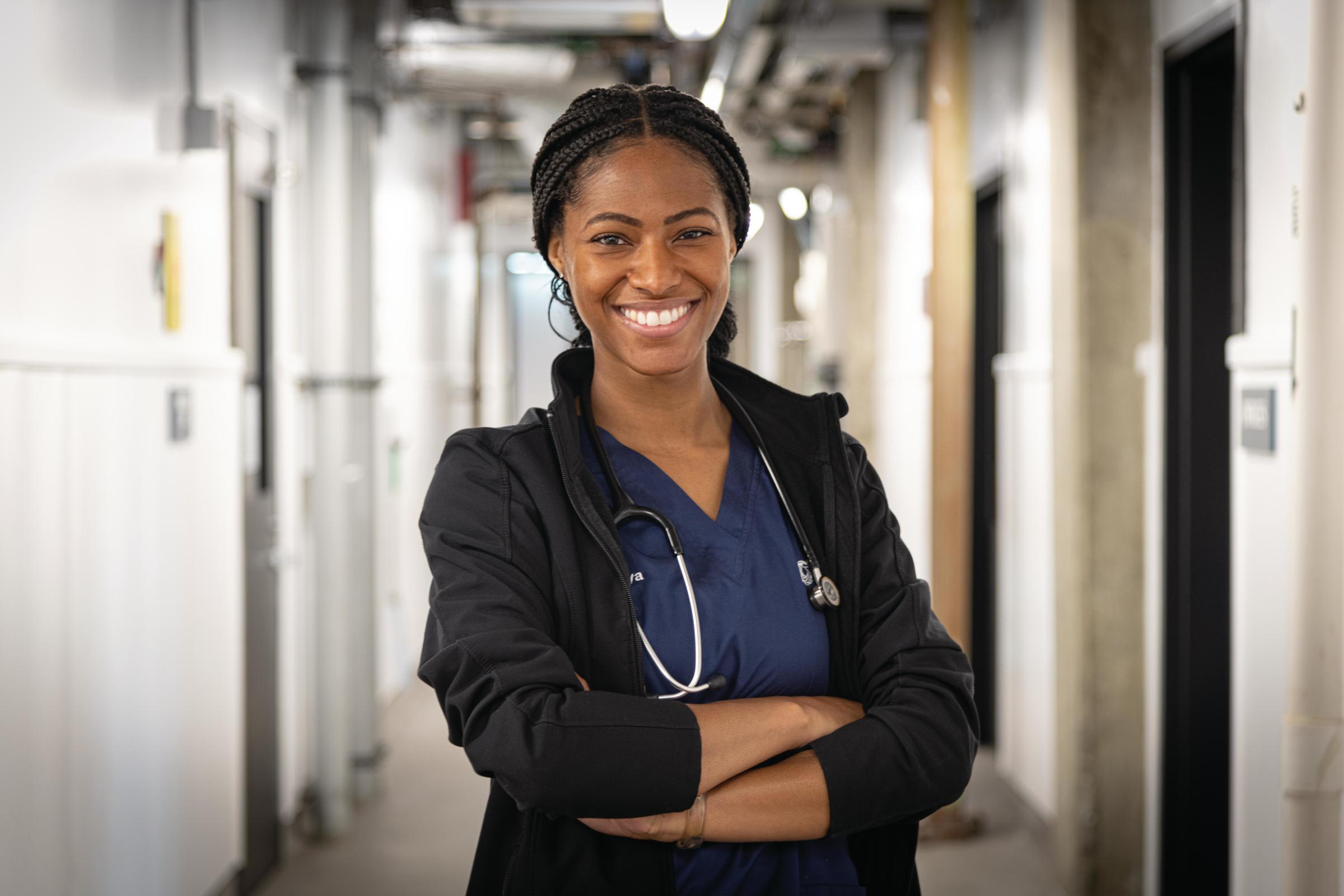
Indya has a special interest in exotic animals and aquatic animal rescue and rehabilitation. "With exotic animal medicine, you're constantly on your toes. I love having a career that’s a constant challenge. I know I’ll never get bored," she says.
It's so easy in veterinary school to get discouraged... but when people reach out and tell me that I give them hope and that I inspire them, it instantly makes me say: "Girl, get up. You have no time to doubt yourself.”
Indya Woods
Q: What did you do during your externship at the Aquarium?
A: I learned so much about the various species at the Aquarium while working closely with the veterinary team.
I learned how to do anesthesia and how to give injections to different fish species, including elasmobranchs. We also did different imaging techniques such as radiology and ultrasound on our fish and marine mammals.
There was a day where I did physical exams on penguins, which was so much fun! And I just finished helping with tube feeding and giving injections to a bat ray. We were able to work with one of the sea otters a little bit, too. I also learned about the different husbandry and care needed for many different species from the amazing aquarists here. There's so much I was able to do throughout the program!
Q: What does this externship mean to you?
A: I wanted more hands-on experience within aquatic animal medicine, and the Monterey Bay Aquarium gave me hands-on experience that I wouldn’t have gotten anywhere else.
I told Dr. Mike that this program seems like a prototype. I think it’s going to be a catalyst for so many other programs like it across zoos and aquariums—to create awareness for why diversity, equity, and inclusion are needed in zoos and aquariums.
African-American veterinarians are less than two percent of the entire veterinary profession. Just imagine how much smaller that is in aquatic animal medicine and in zoo animal medicine.
There's so much work to be done. Conversations are absolutely needed, but we also need to start taking more action to create spaces for individuals from all different identities and backgrounds. Programs like this are an example of when action is taken and when action is taken in the right way.
Q: What advice do you have for young people that want to get into the field?
A: I would say:
Don't get discouraged. It can be easy to become discouraged, especially when you don't see faces that look like you, or don’t see people from the same background as you.
But know that there are so many of us out here rooting for you.
We’re making the connections and building our careers so that we can make it a little bit easier for you to get into this career—and feel like you belong here. Because you do! You have that passion. You have that drive, you have the motivation, and you have the capability and the skills to be in this profession.
There are people working behind the scenes to make sure that it's not hard for you to get here because of your race, your gender, your ethnicity, or whatever you may face.
So, keep staying driven and keep pushing through. Know that there are people advocating for you no matter what walk of life you come from.
Q: Tell us about your Instagram account!
A: I created an Instagram account, @doctorindya, to document my experience in veterinary school in my fourth year—and hopefully the rest of my career. I've had so many students—vet and pre-vet students—reach out and say thank you. And I'm like, “Thank you!” Because this is why I do it.
It's so easy in veterinary school to get discouraged. I'm constantly studying. I'm constantly preparing for something. I constantly feel like I don't know what I'm doing. I'm constantly facing imposter syndrome.
But when people reach out and tell me that I give them hope and that I inspire them, it instantly makes me say: “Girl, get up. You have no time to doubt yourself.”
Q: What keeps you motivated?
A: It's definitely the students who reach out and tell me: “I'm so glad that you're showing up in these spaces. I'm so glad I can see a veterinarian—or future veterinarian—that looks like me.”
It makes me think about myself. I grew up and didn't see an African-American veterinarian until I was in my 20s. But at the time, I didn't even know that that was a problem. And it warms my heart that people are looking up to me and telling me: “I'm so glad that you're showing up and doing these great things.”
Keep exploring
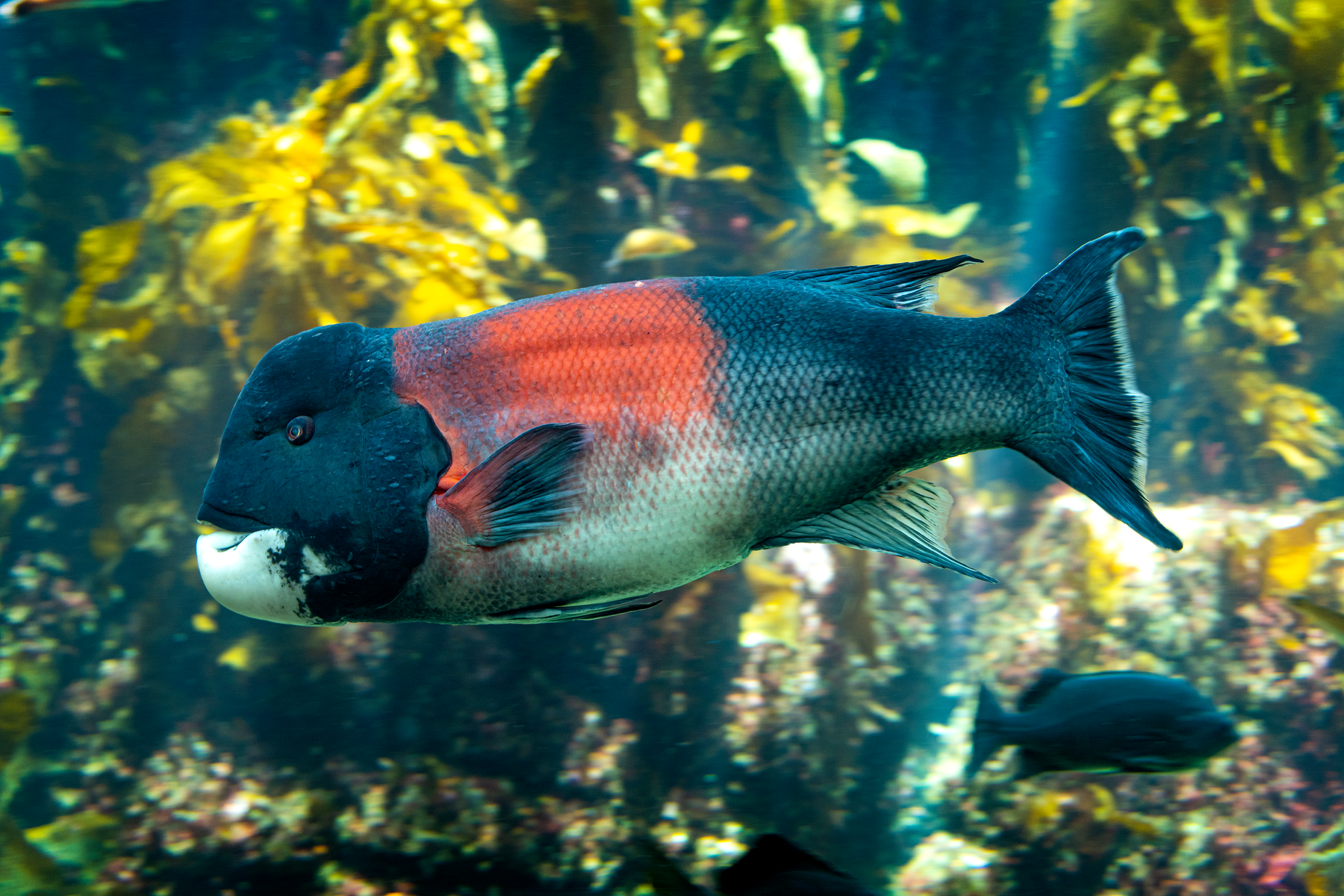
Story
Nature is queer
We’re excited to sea-lebrate the queerness of nature!
Read story – Nature is queer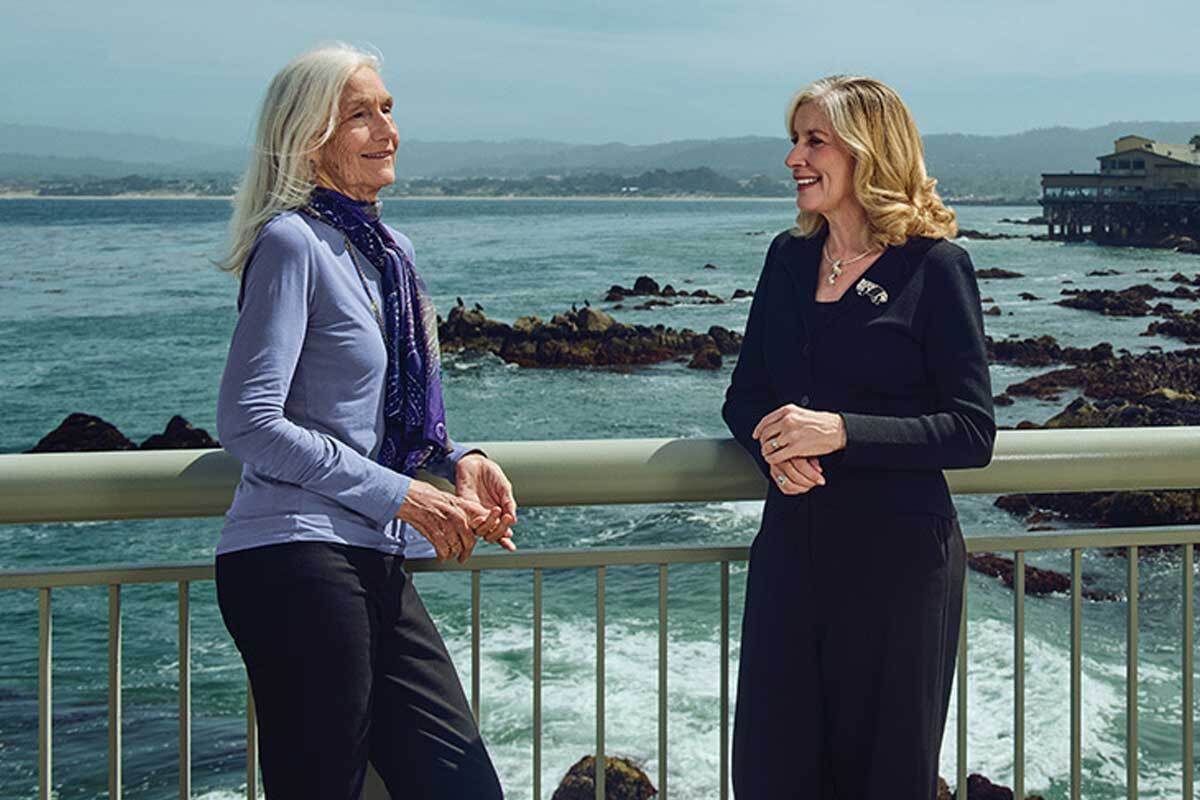
Story
Q&A: Julie Packard and Dr. Jenny Gray
Get to know incoming Chief Executive Officer Jenny Gray in this Q&A with Julie Packard.
Read the Q&A – Q&A: Julie Packard and Dr. Jenny Gray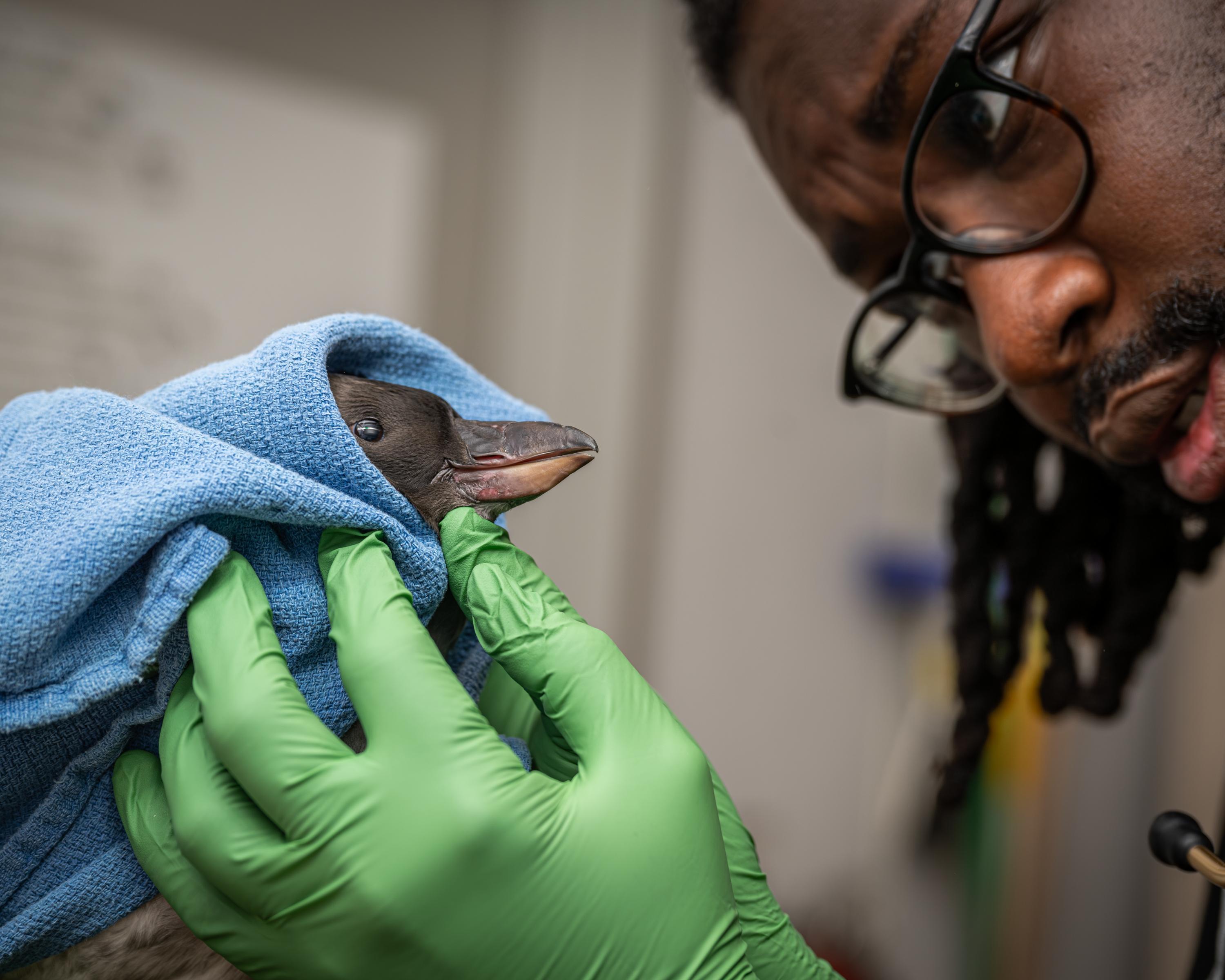
Story
Elevating Black voices in ocean science and conservation
Why representation in ocean science matters.
Read story – Elevating Black voices in ocean science and conservation