

A history of our Sea Otter Program
Our sea otter conservation story
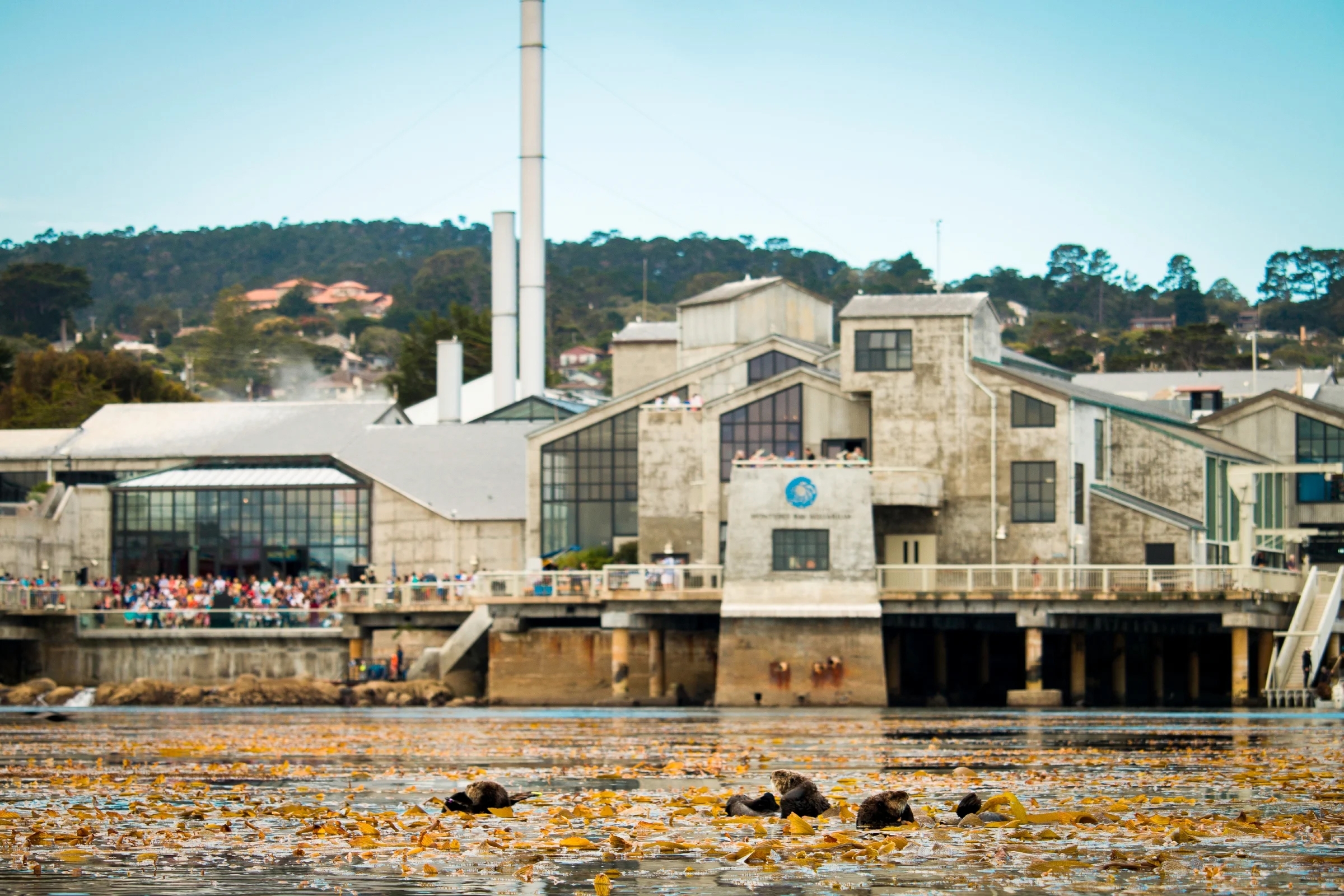
The story of southern sea otters is intimately tied to Monterey Bay. At one point thought to be extinct, the population’s recovery in California can be traced to our own backyard. Our work with this threatened species has been central to the Aquarium’s identity and mission, even before we opened in 1984. Since then, we’ve educated the public with our Sea Otters exhibit and collaborated on research and rehabilitation efforts. Together, we’ve made progress in restoring southern sea otter populations. And yet, there is still much work to be done.
Support sea otter recovery
Your gift large or small will help advance our work to recover California's threatened sea otter population and return sea otters to more of their historical range.
Sea otter populations throughout history. Pre-1700s–1968
Prior to 1700s
Wild sea otter populations thrived around the northern Pacific Rim, from Japan to Russia, across the Aleutian Islands to Alaska, and south along the North American coast to Baja California, Mexico. Overall population estimates varied between 150,000 to 300,000 animals, with an estimated California population of 16,000 to 20,000 animals. Archaeological evidence suggests Indigenous Peoples highly valued sea otters and hunted them throughout their range.
1741
Following the arrival of Russian explorers in Alaska, the Aleutian Islands, and the Commander Islands during the Bering expedition in 1741, maritime fur traders began hunting sea otters commercially across their entire range. Attracted by their incredibly thick pelts, the widespread and lucrative fur business nearly decimated the entire wild sea otter population by the early 1900s.
1911
The signing of the North Pacific Fur Seal Treaty of 1911 protected colonies of fur seals and sea otters in Alaska’s Pribilof Islands from being overhunted. Only a few thousand sea otters remained throughout their original range, scattered throughout remote areas of Russia and Alaska. It was the first international accord to promote wildlife conservation. The treaty also recognized Indigenous culture and customs and allowed continued hunting and use of sea otter parts by Alaska Native Peoples.
1914
The southern sea otter (Enhydra lutris nereis) population, once thought to be extinct, was estimated at approximately 50 individuals after the California Department of Fish and Wildlife (CDFW, formerly California Department of Fish and Game) reported observations of 32 sea otters near Big Sur, and a single raft of 14 individuals. This small stretch of the central California coast is remote and more challenging to access, which may have offered refuge for this remnant population from fur hunters.
1938
The public learns that researchers had recorded a large raft of between 50 and 90 southern sea otters in Big Sur. Overall population abundance was estimated between 100 and 300 individuals.
1957
An aerial survey of the California coastline reported 638 sea otters between Cypress Point and Point Conception. Observers spotted the largest raft, approximately 144 sea otters strong, in Carmel Bay.
1965
From 1965 to 1972, 708 sea otters captured in Alaska were translocated to British Columbia, Washington, and Oregon with varying results. Today, the northern sea otter (Enhydra lutris kenyoni) population encompasses the colonies found in Alaska, British Columbia, and Washington. The Asian sea otter (Enhydra lutris lutris) population includes colonies found in Russia and Japan.
1968
The CDFW begins responding to and systematically documenting southern sea otter strandings to help determine potential threats to the population. Because these strandings were extremely rare, no agency undertook the rehabilitation of sick, injured, or orphaned otters. In addition, no one had developed effective treatment protocols for stranded otters.
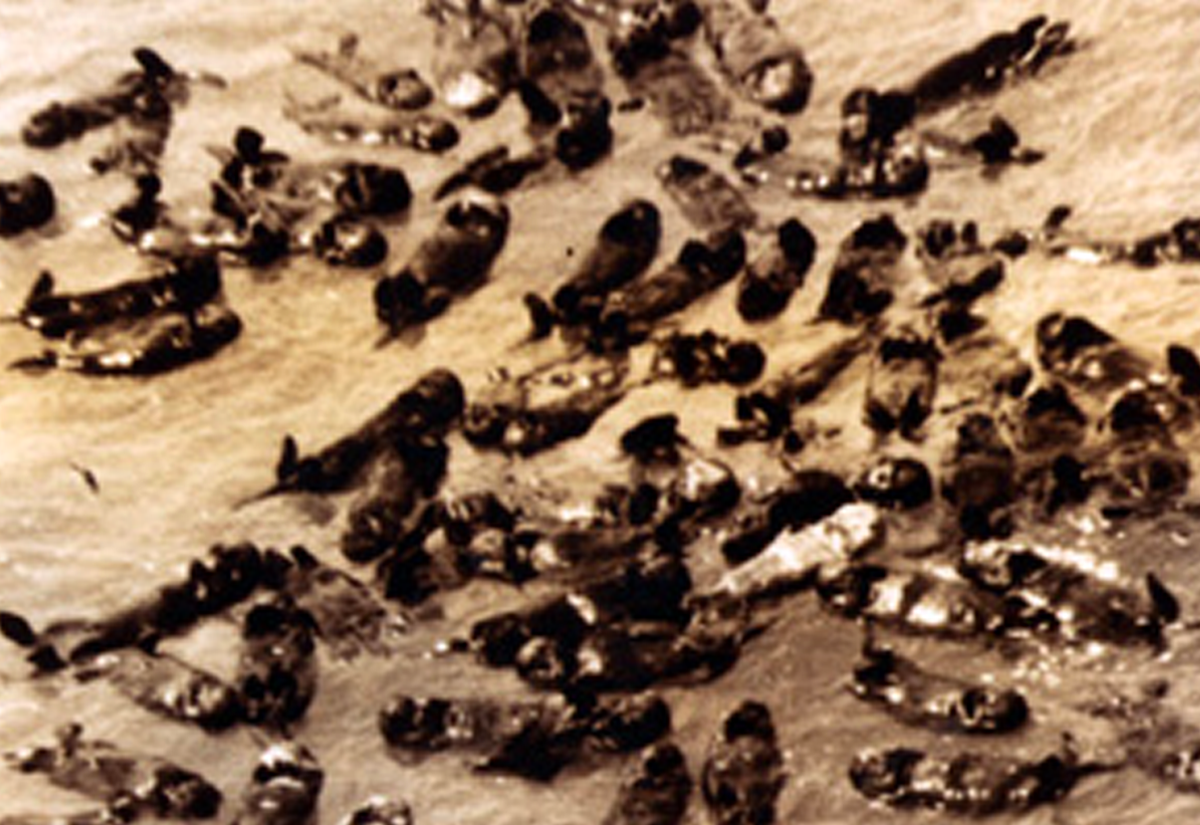
People discovered a raft of southern sea otters, once thought to be extinct, near Bixby Creek in Big Sur in 1938.
© William L. Morgan/California Views Photo Archives
Protections: A pivot point for sea otters
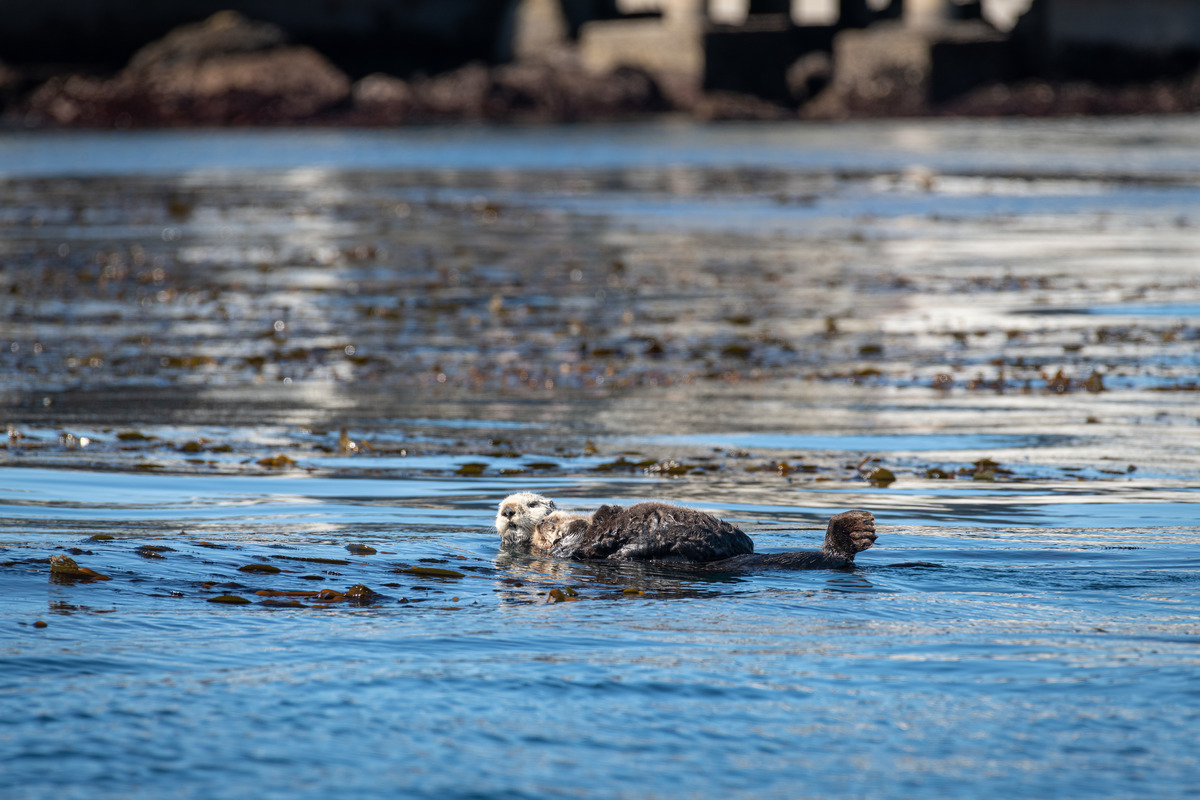
The Marine Mammal Protection Act and the Endangered Species Act were two important pieces of legislation to help protect sea otters.
1970s
The North Pacific Fur Seal Treaty of 1911 opened the door for two landmark wildlife protection laws to be enacted 60 years later: the Marine Mammal Protection Act and the Endangered Species Act.
In 1972, Congress passed the Marine Mammal Protection Act to establish a national policy prohibiting the “take” of marine mammals, including harassment, hunting, capturing, collecting, or killing.
Then, in 1973, Congress passed the Endangered Species Act to conserve endangered and threatened species and their ecosystems. In 1977, southern sea otters were listed as a "threatened" species under this Act.
The very first otter at Monterey Bay Aquarium
1981
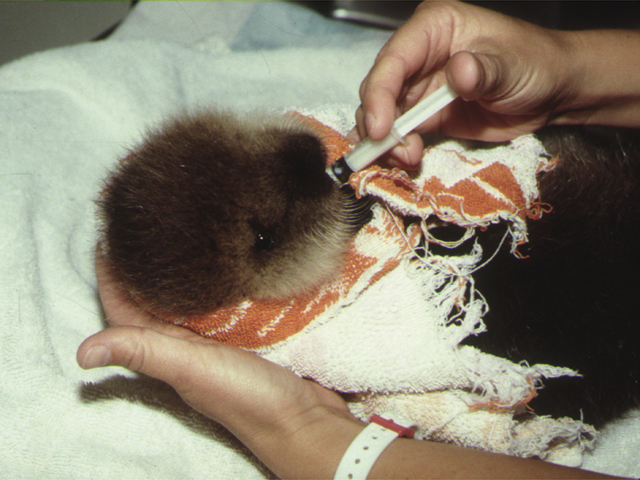
Three years before opening in 1984, the Monterey Bay Aquarium was still very much in its planning stages of becoming…an aquarium. So it came as a bit of a surprise that before we even had seawater or exhibit tanks in the building, a concerned citizen brought us a young male sea otter pup that they had found on the beach. With a modest staff of nine, only our veterinarian had any experience with otters and was the only one who had seen a sea otter pup up close before.
While we didn’t know at the time exactly what we needed to do, we learned early on that sea otter pups required around-the-clock care. This young otter spent time between an inflatable kiddie pool at the Aquarium and the home bathtub of one of the staffers at night. The caretakers became quite familiar with the piercing scream a young otter makes.
Unfortunately, that first sea otter pup died, not from lack of trying, but surely due to our own ignorance. While their efforts to save this pup were ultimately unsuccessful, our staff gained valuable knowledge and a conviction that they could and would do better at the next opportunity.
A recovery plan for southern sea otters
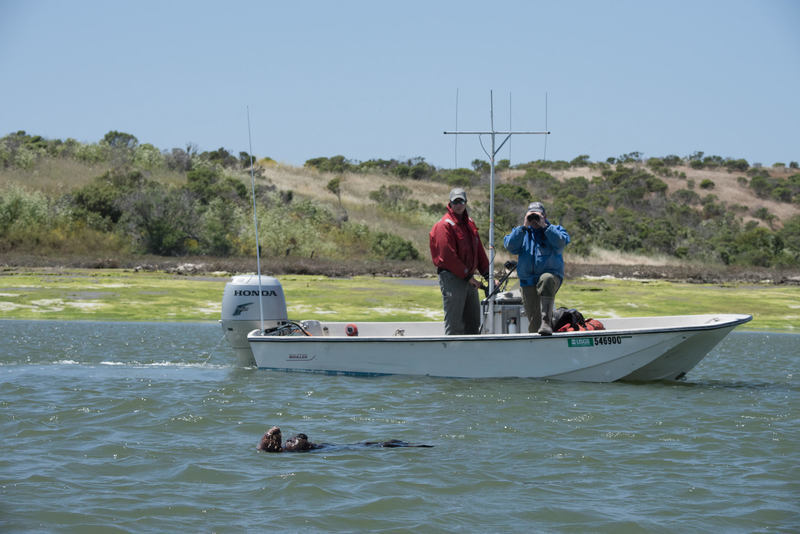
U.S. Geological Survey biologists track wild southern sea otters and observe their behavior in upper Elkhorn Slough.
© Kiliii Yuyan/Kiliii Fish Photography
1982
In 1982, the U.S. Fish and Wildlife Service (USFWS) convened a Southern Sea Otter Recovery Team and created the subspecies' first recovery plan to identify and address threats to the population.
The U.S. Geological Survey (USGS) began systematic monitoring of the overall California sea otter population with help from CDFW, Monterey Bay Aquarium, and others to assess population status and range expansion. This important research continues to this day.
The members of the Sea Otter Recovery Team and several local universities created additional regional monitoring programs to better understand sea otter natural history, ecology, and behavior in the area.
The Aquarium’s first exhibit otters
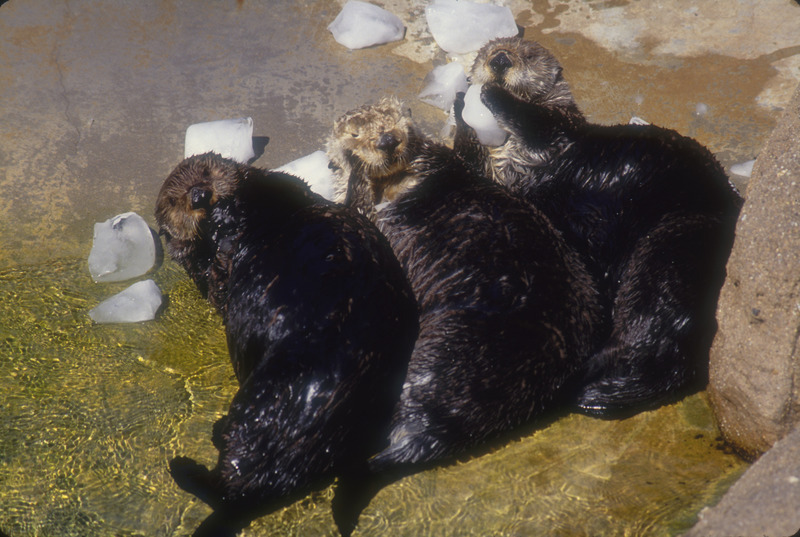
Staff and volunteers raised orphaned sea otter pups for the Aquarium's sea otter exhibit.
1984
In early 1984, our dedicated sea otter staff and volunteers successfully raised four orphaned pups for the Aquarium’s sea otter exhibit. Jiggs, Goldie, and Hailey all stranded locally between Asilomar and Point Lobos within a six-week period during the winter/early spring storm season and were all aged between three- and five-weeks-old. The fourth animal, Milkdud, stranded seven months later near San Simeon as a newborn and twin—a relatively rare occurrence in sea otters that generally leads the mother to abandon one of the pups.
With special permission from the USFWS, Monterey Bay Aquarium staff and volunteers reared these pups onsite. Using makeshift pools and waterbeds configured within the Aquarium's dive lockers, the team raised the otters behind the scenes until they were mature enough to move into the sea otter exhibit holding space. While Jiggs died at a young age from health complications, Goldie, Hailey, and Milkdud all lived into their teens, consistent with the lifespans of their wild counterparts. Over the years, they inspired millions of people with their fuzzy visages and playful antics, and gave visitors, volunteers, and staff alike a closer look into the secret lives of sea otters.
Learning more about sea otter reproduction
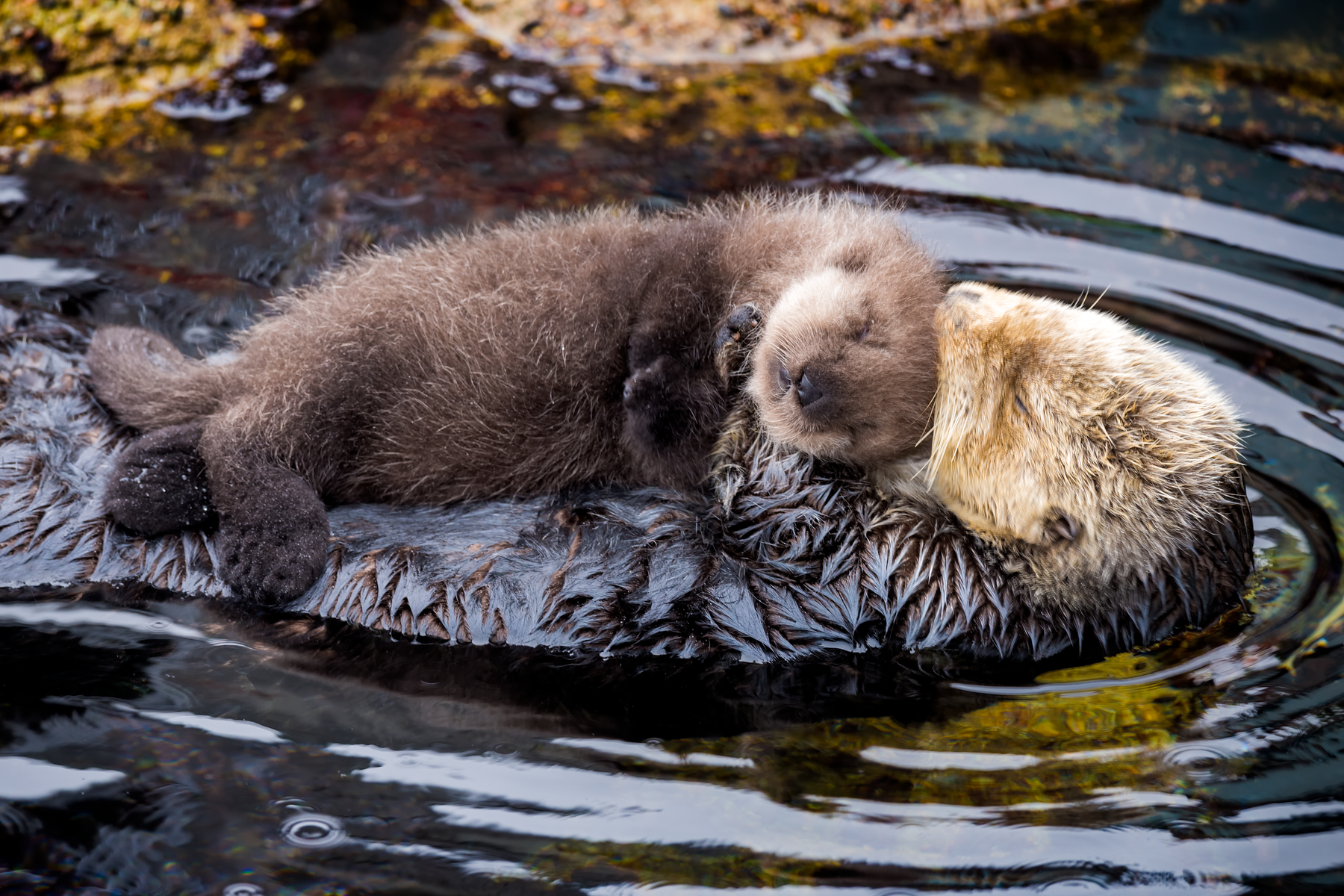
A wild sea otter mom rests with her pup. In a joint study with colleagues at the University of California, Santa Cruz, we studied the reproductive biology and behavior of female sea otters and their pups.
1985–1991
It became clear early on that if we were going to take care of southern sea otters, we needed to learn everything we could about them. Between 1985 and 1991, Aquarium staff and colleagues at the University of California, Santa Cruz conducted joint research on the wild population in California to better understand the threats sea otters face and the limitations to their recovery. During the six-year span, we studied the reproductive biology and behavior of 53 tagged female sea otters and recorded 136 pups born to this group.
This important study, published in 1994, provided a basic understanding of sea otters and their reproductive success, which would set the stage for our future work with sea otter pups in our care.
Roscoe and our first attempt at release
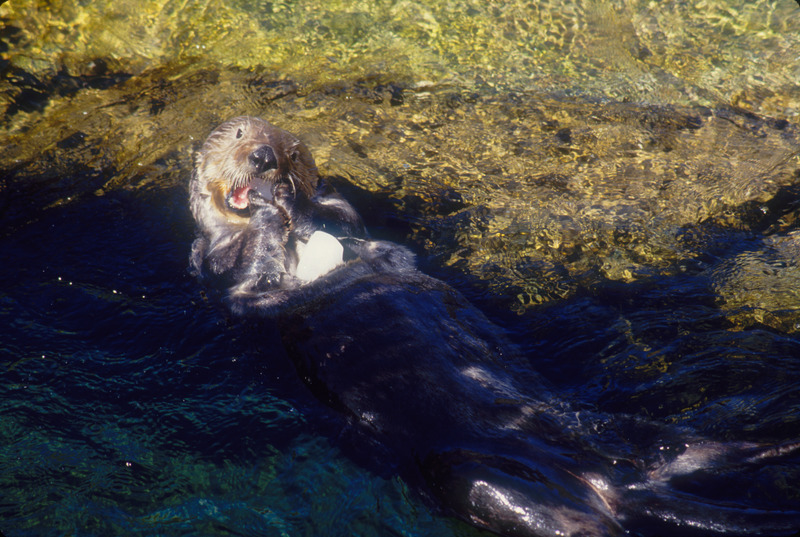
Roscoe the sea otter returned to the Aquarium as an exhibit otter after an unsuccessful first release.
1986
In March 1986, another young male sea otter pup was rescued and came into our care. Reared using similar methods to our three exhibit otters, Roscoe was our first attempt to release a sea otter pup that was hand-raised by humans. At this point, nothing like this had ever been tried. After his release, Aquarium researchers followed Roscoe's movements as he spent a few days hanging around the Aquarium’s Great Tide Pool before hauling out on Fanshell Beach in nearby Pebble Beach. We ultimately decided to recapture Roscoe because people were approaching him on the beach, and he had shown a lack of necessary skills to survive on his own.
We eventually returned Roscoe to the Aquarium, where he received long-term care as an exhibit otter following the passing of Jiggs. This early attempt provided a critical learning experience for our staff and informed our future rehabilitation strategies.
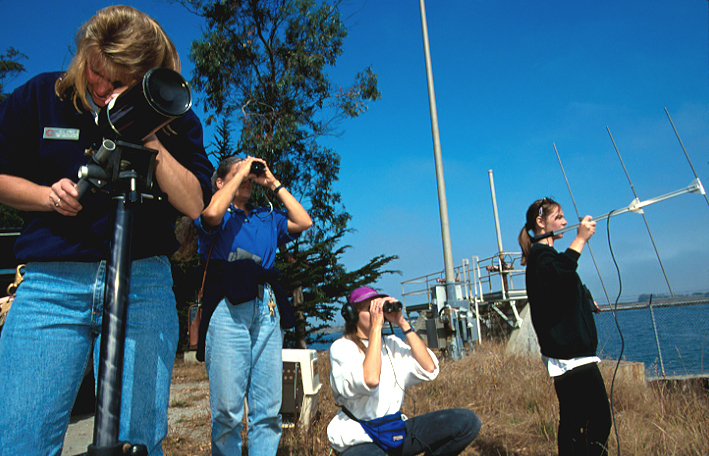
Along with spotting scopes and binoculars, Aquarium researchers can track rehabilitated sea otters after release using radio telemetry receivers and antennas.
This release overlapped with the development of a small radio transmitter that could be surgically implanted into rehabilitated sea otters, creating a way to track them in the wild after release. Our researchers used an antenna-like receiver that would make a noise when a tagged otter was nearby. This technology was incredibly important in our continued research on the wild population of sea otters and released individuals, as it allowed us to more easily track known otters over time. Sea otter tracking continues to be an important tool in monitoring the wild population, even today.
Pico, ocean swims, and our first successful release
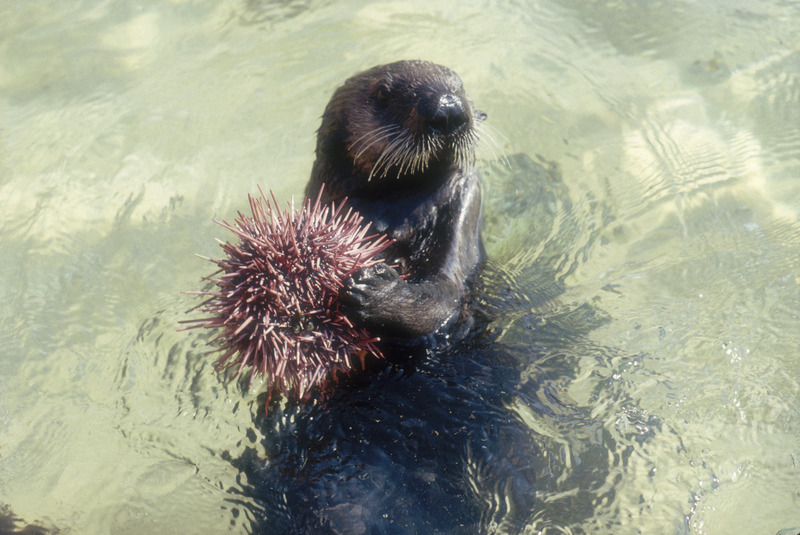
Pico, shown here with a sea urchin, was the first sea otter to undergo ocean swims as part of his pre-release training.
1989
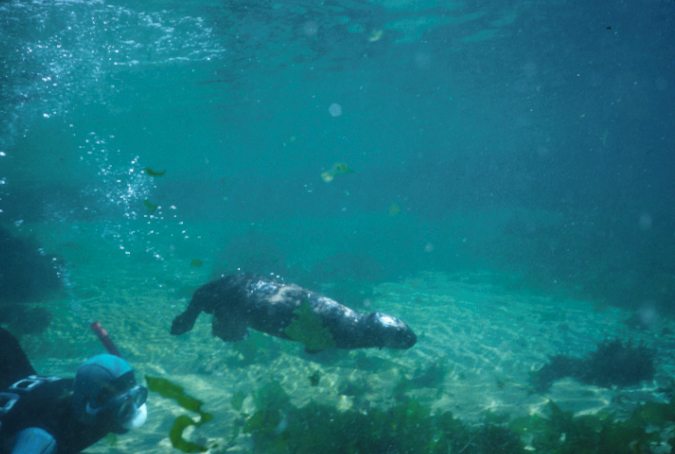
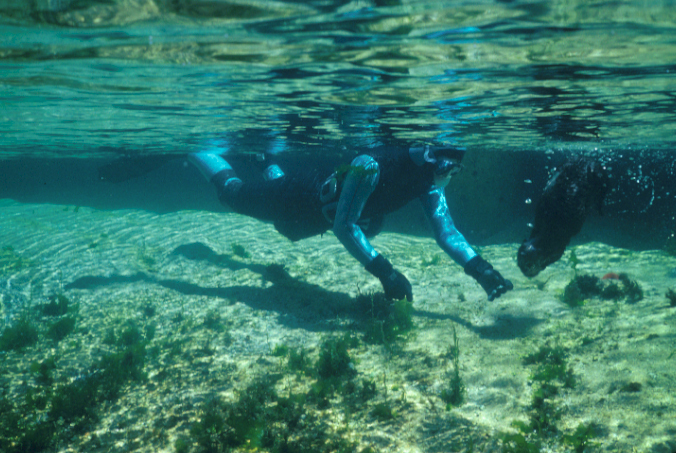
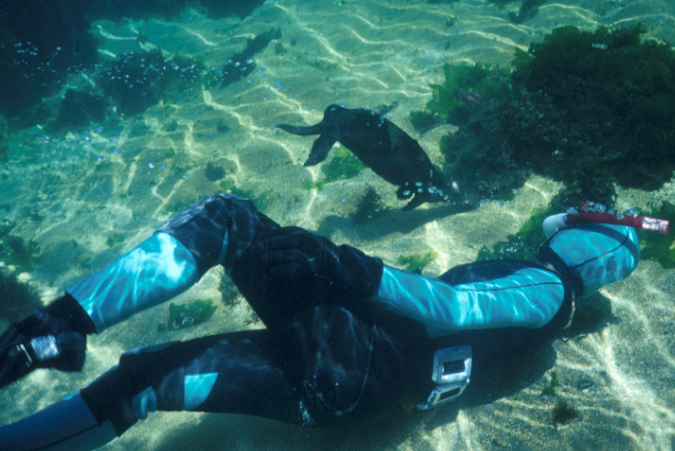
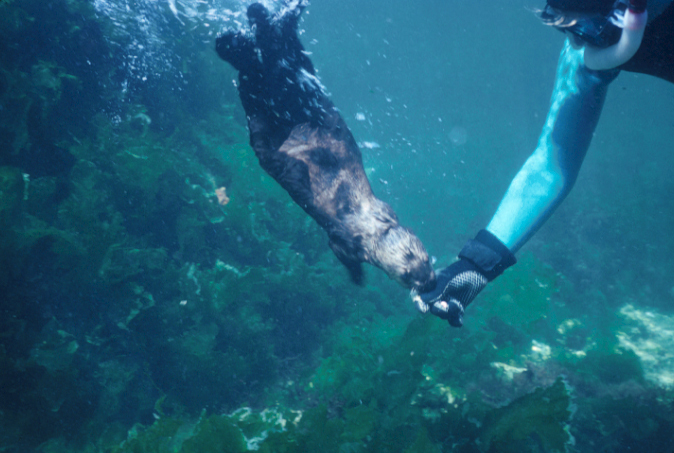
Following Roscoe’s unsuccessful release, we added ocean swims to our hand-rearing techniques to provide enrichments and pre-release training for young sea otters. During ocean swims, pups joined an Aquarium free-diver in the water off the back deck to get familiar with their natural kelp forest environment, learn how to forage on local prey like mussels, urchins, and crabs, and socialize with wild sea otters.
Pico, in 1988, was the first otter to go through this type of training. After his release in 1989, he established himself at Año Nuevo and spotters observed him foraging on large prey.
Creating a key reference on sea otter knowledge
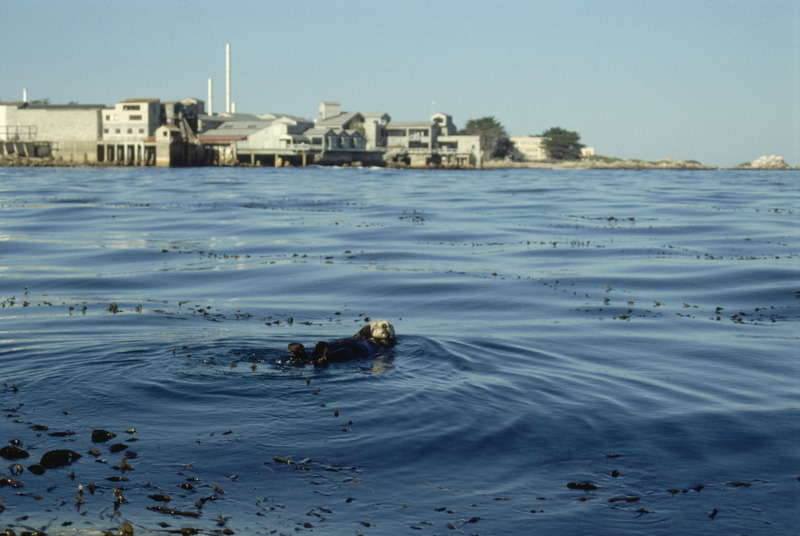
A sea otter floats in the kelp forest canopy offshore from the Monterey Bay Aquarium.
1990
An Aquarium researcher co-authored “The Sea Otter (Enhydra lutris): Behavior, Ecology, and Natural History” along with a renowned ecologist from the University of California, Santa Cruz. The publication became the de facto comprehensive review of sea otter science in California at the time and is a key reference of sea otter knowledge still used regularly today.
Among the findings, we were able to document that sea otter pups acquire their food preferences from their mothers, selecting among more than 50 prey items available to them. This allows sea otters to share the same feeding grounds without competing directly with other otters. This insight was only possible thanks to the extensive field tracking and observations conducted over a period of years by Aquarium staff and volunteers.
Elwood and the first record of wild adoption of an orphaned sea otter pup
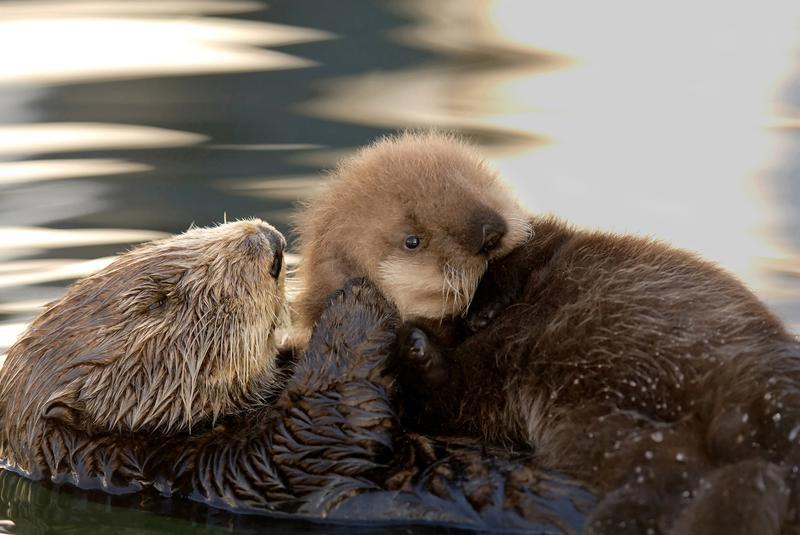
A wild southern sea otter mom and pup.
© Jim Capwell/www.divecentral.com
1991
In early 1991, we were tagging and releasing sea otters as part of the Aquarium’s Sea Otter Field Research Project in conjunction with CDFW when the team captured an older, grizzled otter mom with an otter pup. The feisty mother slipped out of the net, leaving behind a tiny, lifeless female pup—the pup had been dead for about a day, but the causes were unknown. The mother continued to swim around the boat, vocalizing for her pup, and the team of researchers tried to reunite the two, but her mom would not come close enough.
Just prior to that, a young, light-brown male sea otter pup affectionately known as Elwood was rescued and brought to the Aquarium. Unimpressed by our best efforts to take care of him, the young otter continued to vocalize for his mother whenever he wasn't eating or sleeping.
Because we had a pup at the Aquarium vocalizing for his mother, and a wild otter mom actively vocalizing for her pup, we decided to introduce the two. After a bit of discussion and coordination, we were able to bring the pup from the Aquarium out to the bay where we found the female otter still vocalizing for her pup. We approached cautiously, placed the pup in the water, and after a bit of inspection, the mother claimed him as her own!
The next morning, an Aquarium volunteer spotted the pair. Because of the pup’s distinct light-brown coloration, and the identifiable nose scar and grizzled appearance of the mother, Aquarium researchers were able to keep track of the pair for several months.
Witnessing this unlikely and unexpected wild adoption supported a possibility that researchers had only imagined up until that point: surrogate otter moms to help raise abandoned sea otter pups.
Elkhorn Slough: A safe place for sea otters
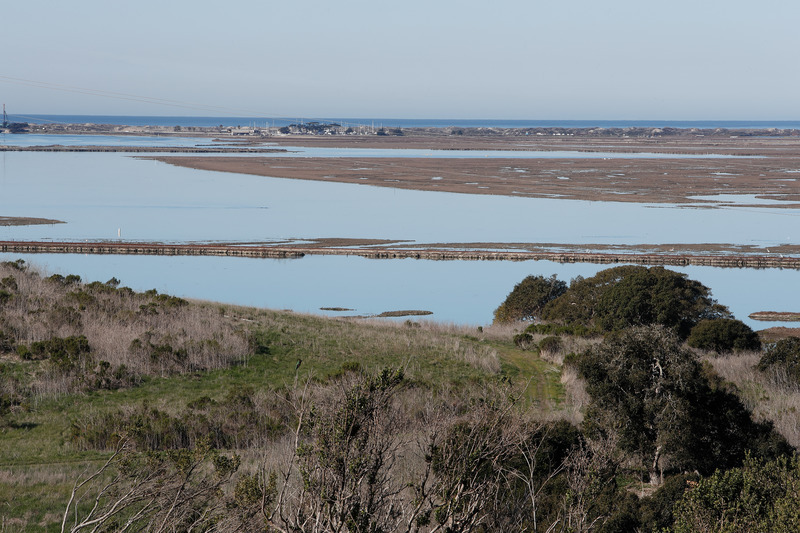
An inland view of Elkhorn Slough National Estuarine Reserve looking out towards Monterey Bay.
1997
Following Pico’s release in 1989, and before we introduced surrogate parenting by female exhibit otters into our rehabilitation efforts in 2001, we successfully rehabilitated and released 85 southern sea otters back to the wild. Most otters were released along the Monterey Peninsula, either near their original stranding location or off the back deck of the Aquarium.
Eventually, we determined that Elkhorn Slough, a seven-mile-long estuary located approximately 20 miles north of the Aquarium, would provide orphaned sea otters with a more gradual transition from long-term care to release. The area was protected from the rough open ocean waters and provided safety from potential predators. There was also an abundance of food available that allowed for easy foraging, making Elkhorn Slough an ideal spot for reintroducing young otters to the wild.
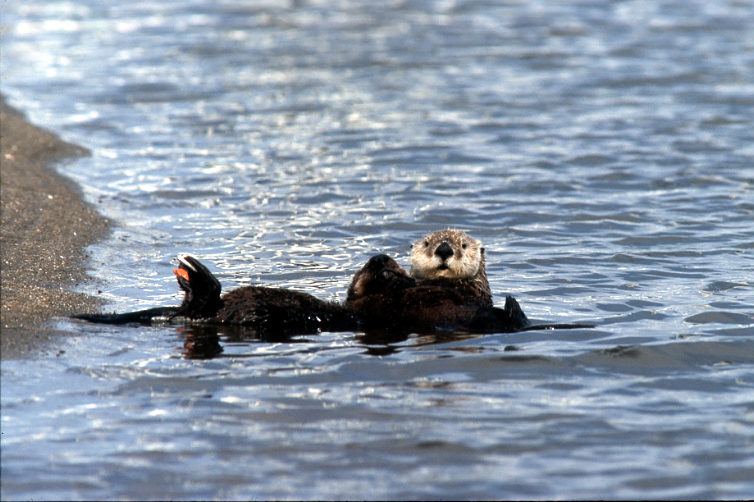
Harmonie came to the Aquarium as a five-week-old pup. A construction crew working near Yankee Point, an area south of Monterey, heard her piercing vocalizations from the ocean below. They climbed over 100 feet down a steep, rocky cliff to find her stranded and alone among the rocks. We quickly responded to their call and brought the young sea otter into our care.
Harmonie’s release in 1997 represents one of the earliest known successful releases of a rehabilitated otter in Elkhorn Slough. The protected slough waters, abundant viewing locations from shore, and use of electronic tracking devices allowed us to follow her progress (and success!) over the years.
In 1999, two years after release, she gave birth to the first pup observed in the slough since the population re-established. She would go on to mother at least 10 other offspring during her 15-year lifespan. Harmonie is considered by some researchers to be the catalyst that transformed the sea otter demographics in Elkhorn Slough from a transient group of bachelor males to a self-sustaining reproductive population.
Understanding the challenges sea otters face in the wild
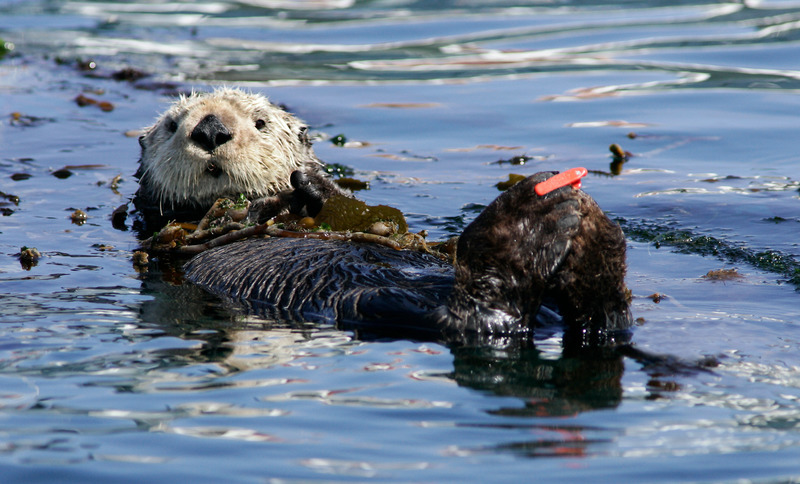
Tagging, tracking, and monitoring wild sea otters helps us gain a better understanding of the challenges they face in the wild.
2000s
As our Sea Otter Program continued to rescue, rehabilitate, and release stranded sea otters, we also needed a better understanding of why these otters were stranding in the first place and, ultimately, the threats and challenges facing the wild population. In collaboration with local universities and state and federal agencies, we helped tag and monitor wild sea otters throughout Monterey Bay. In doing so, we gained a better understanding of their habitat use, survival and reproduction, and diet to inform management strategies.
We became very familiar with one particular animal—Otter 198—during the 2000s as we conducted research on the wild population. She arrived at the Aquarium as an older stranded pup in 2001 and was released after a three-month stay in our care. Otter 198 demonstrated the potential of our rehabilitation efforts to contribute to the wild population along the open coast. Once she reached reproductive age, Otter 198 proved to be a super mom who successfully reared all her pups to weaning age, which is extraordinary for any wild sea otter.
Toola and the start of sea otter surrogacy
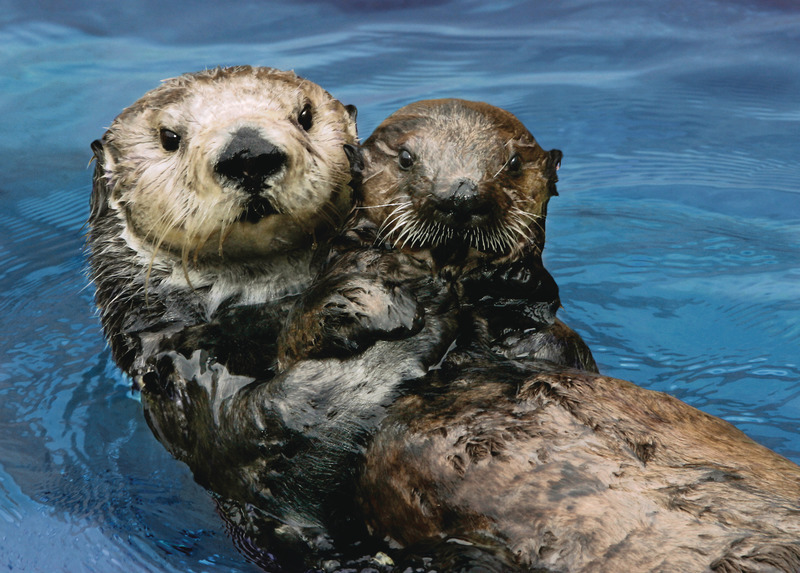
Toola the southern sea otter acts as a surrogate mom to orphaned Pup 327.
2001
Ten years after the first observed adoption of a wild sea otter pup, we were presented with another unique adoption opportunity. After attempts to reunite a two-week-old male pup (Otter 217) with his mother in the wild were unsuccessful, we introduced him to Otter 207 in our care, aka Toola. Toola was undergoing medical treatment at the Aquarium and had just given birth to a stillborn pup. Encouragingly, Toola adopted Otter 217 and raised him until he was weaned at nearly 22 weeks old, a normal timeline for wild otters.
Within four days of his release, and to the surprise and delight of Aquarium trackers, he was found far offshore, foraging for large prey on the sandy seafloor of northern Monterey Bay with other otters. This was quite the feat for a young otter who had only been in the wild for two weeks prior to arriving at the Aquarium! Because he had been so well socialized with Toola, he looked to his wild kin for foraging tips.
Otter 217 frequently returned to Elkhorn Slough, his release site, and eventually established and maintained his own territory near Moss Landing’s north harbor. He survived for nearly eleven years post-release and likely sired many pups of his own.
We initially intended for Toola to be released alongside Otter 217 in Elkhorn Slough to provide a gradual transition to the wild for both otters. But as her neurological symptoms progressed, we determined that Toola would require permanent, ongoing medical treatment. She was deemed non-releasable by the USFWS and became an exhibit otter at the Aquarium. As the first recognized sea otter surrogate mother in our rehabilitation program, Toola would go on to raise 12 more orphaned pups (including Otter 501) during her nearly 16-year lifespan. 10 of these pups successfully reacclimated to the wild and many eventually gave birth to pups of their own.
As unexpected as the relationship between Toola and Otter 217 was, it became a turning point for the Sea Otter Program at the Monterey Bay Aquarium.
Shifting our rehabilitation efforts to surrogacy
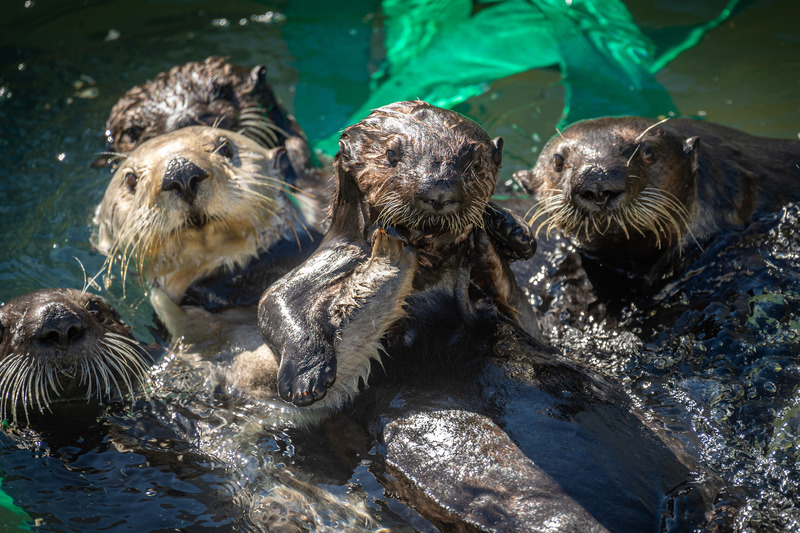
Surrogate sea otter Ivy helps raise a rescued pup as part of the Sea Otter Program.
2003
A 2003 study led by the Aquarium compared the two different approaches to rehabilitation. Traditionally, pups rehabilitated for release had been reared by methods that relied heavily on human care. The study showed that many unsuccessful releases resulted from the failure of pups to reintegrate with the wild population and avoid interactions with humans, ultimately leading to their recapture.
By contrast, surrogate-reared pups hit development milestones at early ages, had greater survival rates overall in the wild, and largely avoided humans post-release. In addition to these practical advantages, the surrogacy program provided insights into the behavioral and physiological development of sea otter pups.
This set the stage for a shift in the preferred method for rearing wild sea otter pups. Moving forward, we would utilize non-releasable female sea otters in our care as surrogate mothers to raise orphaned pups. When successful, surrogacy has shown to reestablish the natural mother-pup bond and provide a critical context for learning not just survival skills, but also social cues and identity. And truly, what better teacher for a sea otter pup trying to figure out their watery world than another experienced sea otter?
Signs of surrogacy program success
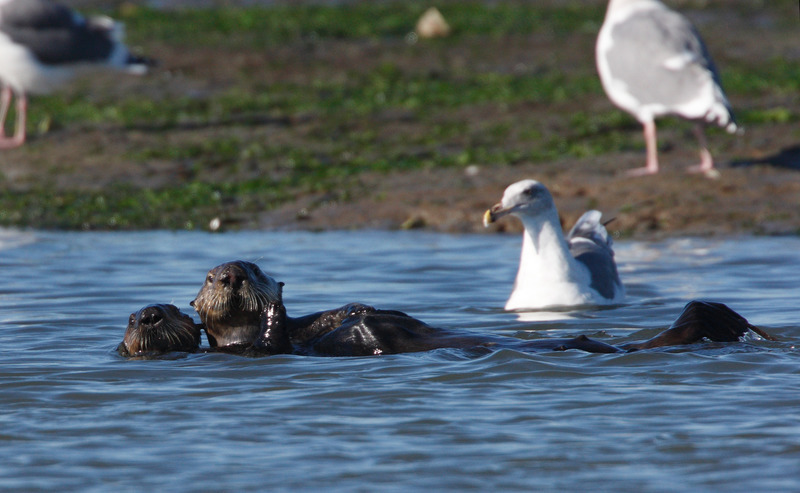
Otter 339, a surrogate-reared female from the Sea Otter Program, swims in the wild with her first pup in Elkhorn Slough.
2008
Building on the success of seeing other previously rescued and released sea otters reproducing in the wild, another important milestone came for the Sea Otter Program in 2008. After four years of living in Elkhorn Slough following her release from the Aquarium, Otter 339 was observed with her first pup! This represented our first record of a surrogate-reared female giving birth in the wild. Further observations confirmed she successfully raised and weaned the pup, just like any other sea otter mom.
We continued to monitor each sea otter we released to better understand their long-term survival and reproduction, and saw many more surrogate-reared females successfully raising their own pups over the years, a mark of success for the surrogacy program.
An unexpected benefit of sea otter releases
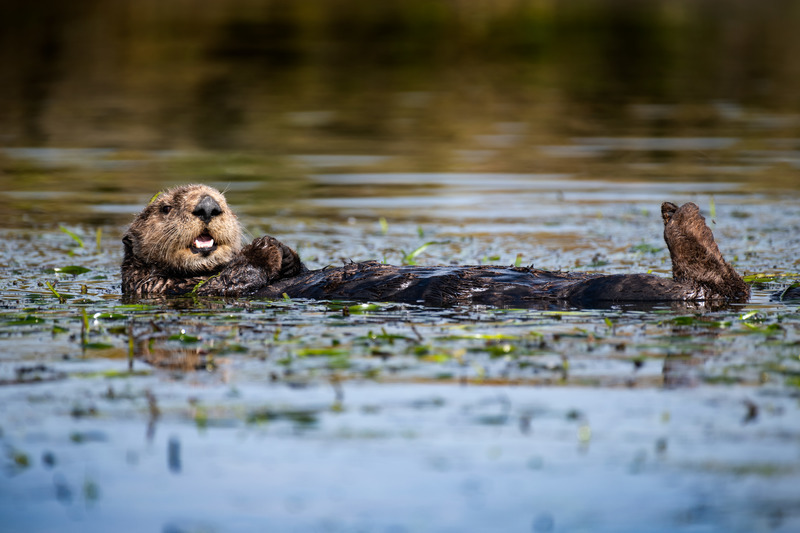
A southern sea otter floats among seagrasses in Elkhorn Slough.
2013
Elkhorn Slough was initially chosen as a release site because its protected location and relatively abundant and accessible food sources provided the best transition for rehabilitated sea otters from long-term care. Sixteen years later, a study determined that the presence of sea otters provided a positive effect on the eelgrass community within the slough.
The introduction of sea otters created a new balance between crabs and sea slugs, which in turn improved the health and density of eelgrass meadows. Compared to earlier measurements, eelgrass extent increased 60 percent! As a result, the water within the slough became clearer, there was more habitat available for fish and invertebrates, and less erosion occurred.
While the important role sea otters play in kelp forests was well known at this point, this was one of the first studies showing sea otters can play a similarly important role in estuary habitats.
Sea otter population growth in Elkhorn Slough
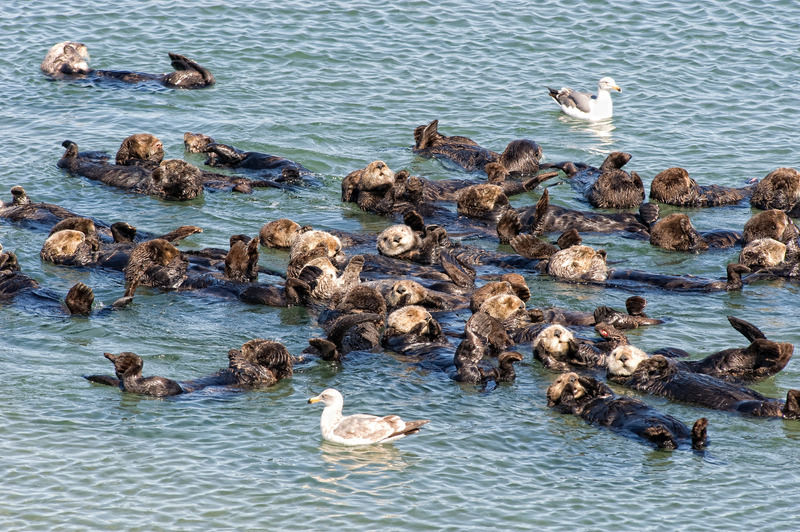
Releasing rehabilitated sea otters from our Sea Otter Program into Elkhorn Slough has caused the otter population in the area to grow.
© Jim Capwell/www.divecentral.com
2015
As a result of several years of sea otter releases in Elkhorn Slough, the population grew from an initial estimate of 20 individuals in 2002 to nearly 150 in 2015! What’s even more incredible is that based on release numbers and demographics, as well as observed and estimated survival and reproductive rates of rehabilitated and wild sea otters, surrogate-reared animals and their offspring were estimated to account for 55 percent of overall population growth in the slough. Not only were rehabilitated animals successfully reintroduced into the wild, they were also successful in contributing to the wild population.
Expanding the range of southern sea otters: The challenge and the goal
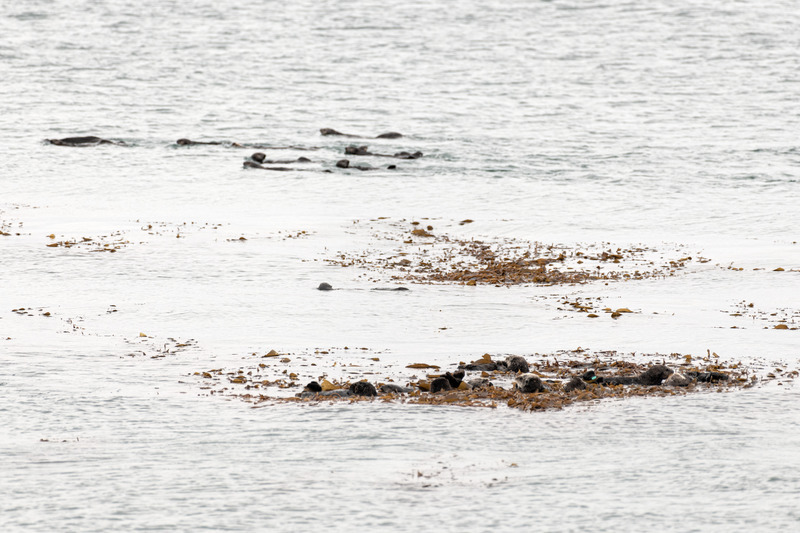
A raft, or group, of sea otters swims past another raft as they look for a bed of kelp in which to rest.
2017
By 2017, following the success of our releases, Elkhorn Slough was considered to have reached its carrying capacity for sea otters, so we redirected release efforts back along Monterey’s open-water coast. A 2018 Aquarium study compiling 30 years of live stranding data revealed that while sea otters thrived in areas of dense kelp canopy cover, gaps between kelp forests impact the population’s ability to expand, especially with increasing mortalities from white shark bites. Further research in 2019 showed that white sharks actively patrolled the edges of kelp forests while hunting seals. Incidental bites to sea otters were occurring throughout a greater portion of every year, intensifying this threat and further preventing the population from expanding geographically. While the continued success of the surrogacy program offered hope for the recovery of the wild population, there were still other challenges from making that goal a reality.
Growing our program to grow the sea otter population
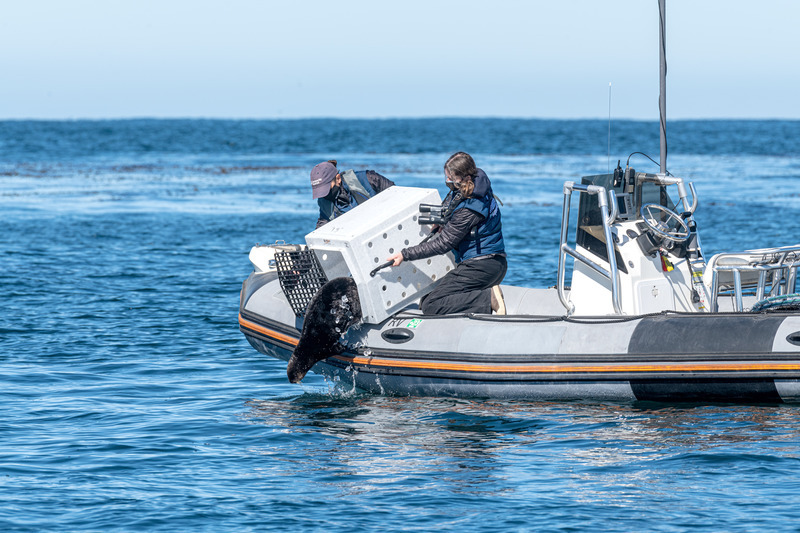
By expanding our surrogacy program to include partner institutions, we can expand the capacity to raise and release rehabilitated pups each year in California.
2020
Based on the success of our surrogacy methods and the ever-present need to rehabilitate wild sea otter pups for release, the Monterey Bay Aquarium Sea Otter Surrogacy Program expanded to include Aquarium of the Pacific (AOP) at Long Beach, California. While still early in its partnership, the staff and facilities at AOP will provide critical capacity to help rear more sea otter pups for release each year along the California coast.
The continued success of the surrogacy program, along with the positive effects it has shown on the wild population and environment, garnered broad support from organizations committed to the conservation and recovery of sea otter populations. In 2020, the Sea Otter Program received its first-ever grants of support from the U.S. Fish and Wildlife Service and from the State of California's Sea Otter Recovery Fund. The two grants totaled $200,000 and provided critical support for the rescue and rehabilitation program, including staff funding, travel costs, purchase of sea otter food, and other essential supplies.
Otters by the numbers
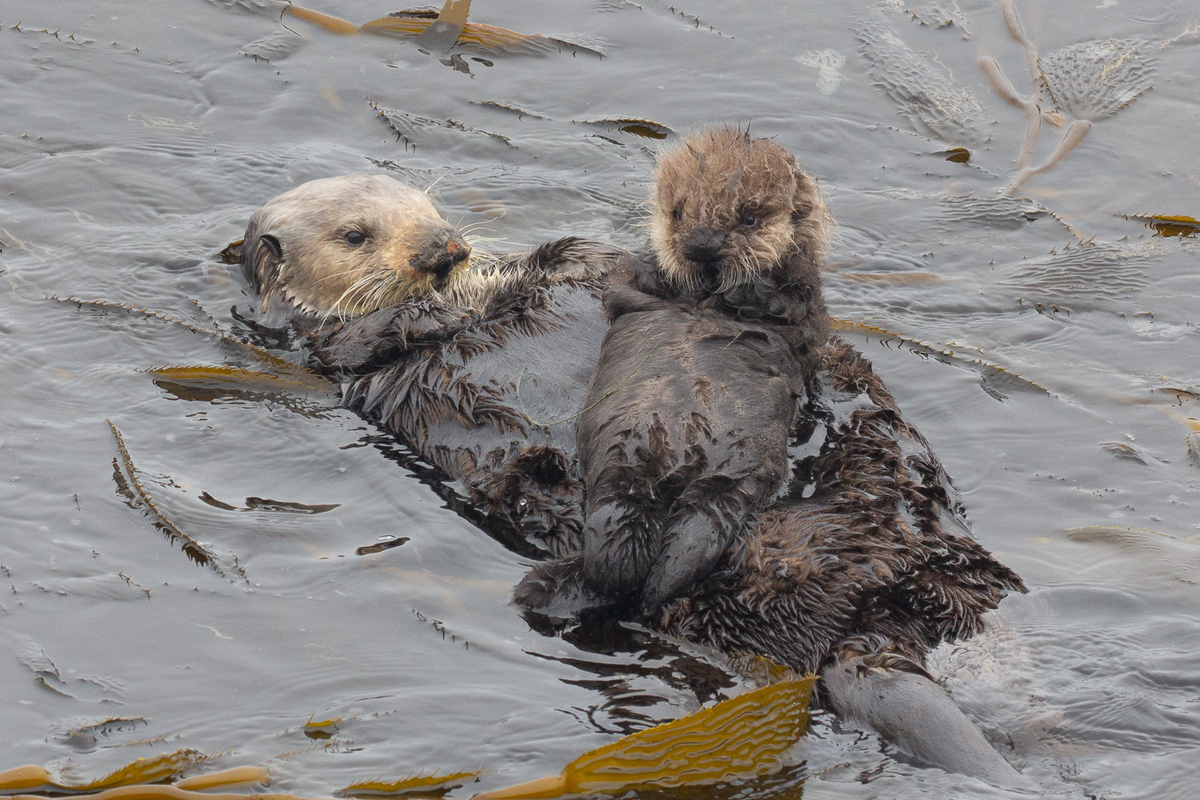
The population of threatened southern sea otters in Monterey Bay has made a significant comeback as a result of Monterey Bay Aquarium’s Sea Otter Program.
2025
Nearly 300 southern sea otters of all ages have been released back to the wild after being cared for in our Sea Otter Program. An additional 98 rehabilitated sea otters have gone on to find homes at zoos and aquariums across the country after being deemed non-releasable by the U.S. Fish and Wildlife Service. Though these otters are unable to return to the wild due to injuries and other factors impacting their survival, they now play an important role as lovable ambassadors for their endangered species.
Since 2001, our staff has released 37 surrogate-reared pups in Elkhorn Slough, an estuary in Monterey Bay. Scientists found that surrogate-raised pups and their offspring from our sea otter program account for more than half of Elkhorn Slough’s otter population growth over a 15 year study period.
Looking ahead
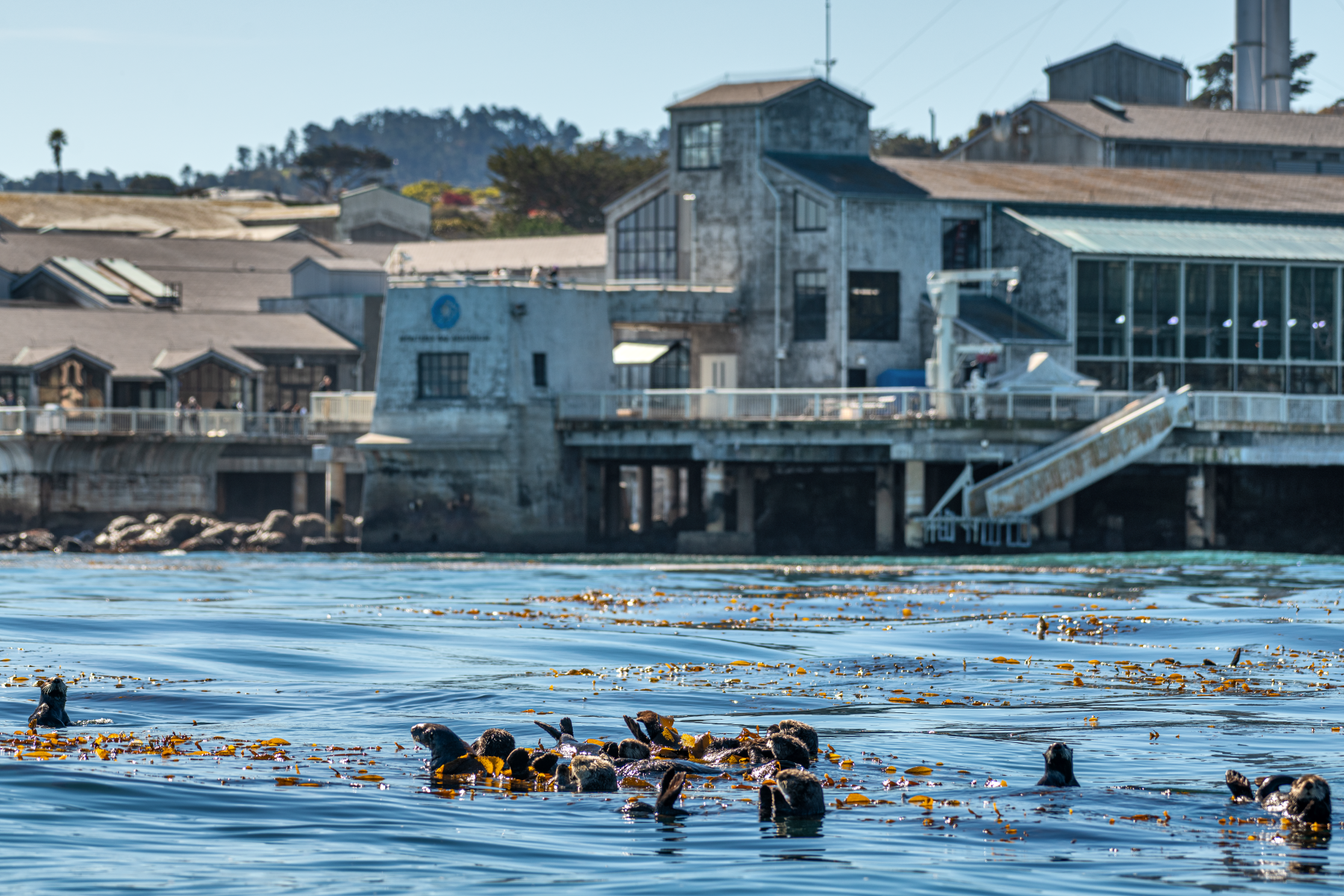
The growth and evolution of the Monterey Bay Aquarium Sea Otter Program has contributed a lot to the growth and evolution of our understanding of the southern sea otter population. As we learn more about otters' impact on coastal environments, we’ll collaborate with government agencies and other institutions committed to protecting this threatened species. We look forward to expanding our rehabilitation and research work to support southern sea otter recovery in California.
Keep exploring
Change & impact
Sea Otter Awareness Week
Sea Otter Awareness Week takes place every year during the last full week of September to celebrate and…
Read more – Sea Otter Awareness Week