

Black oystercatcher
Haematopus bachmani
- On view
- Sandy Shore & Aviary
- Animal type
- Birds
- Ecosystem
- Rocky shore
- Relatives
- Other black oystercatchers
- Diet
- Intertidal marine invertebrates, such as bivalves, limpets, whelks and chitons
- Range
- Along the Pacific coast from the Aleutian Islands to Baja California
- Size
- Up to 18.5 inches (47 cm)
Meet the black oystercatcher
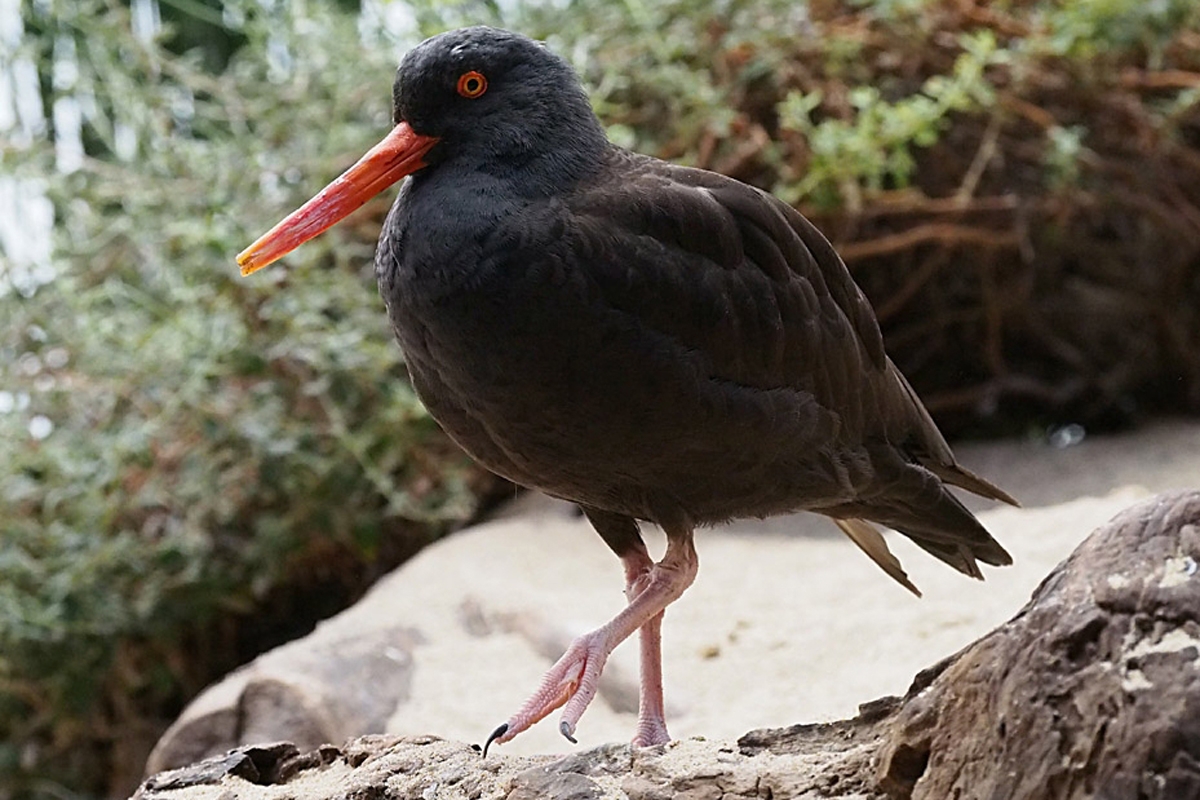
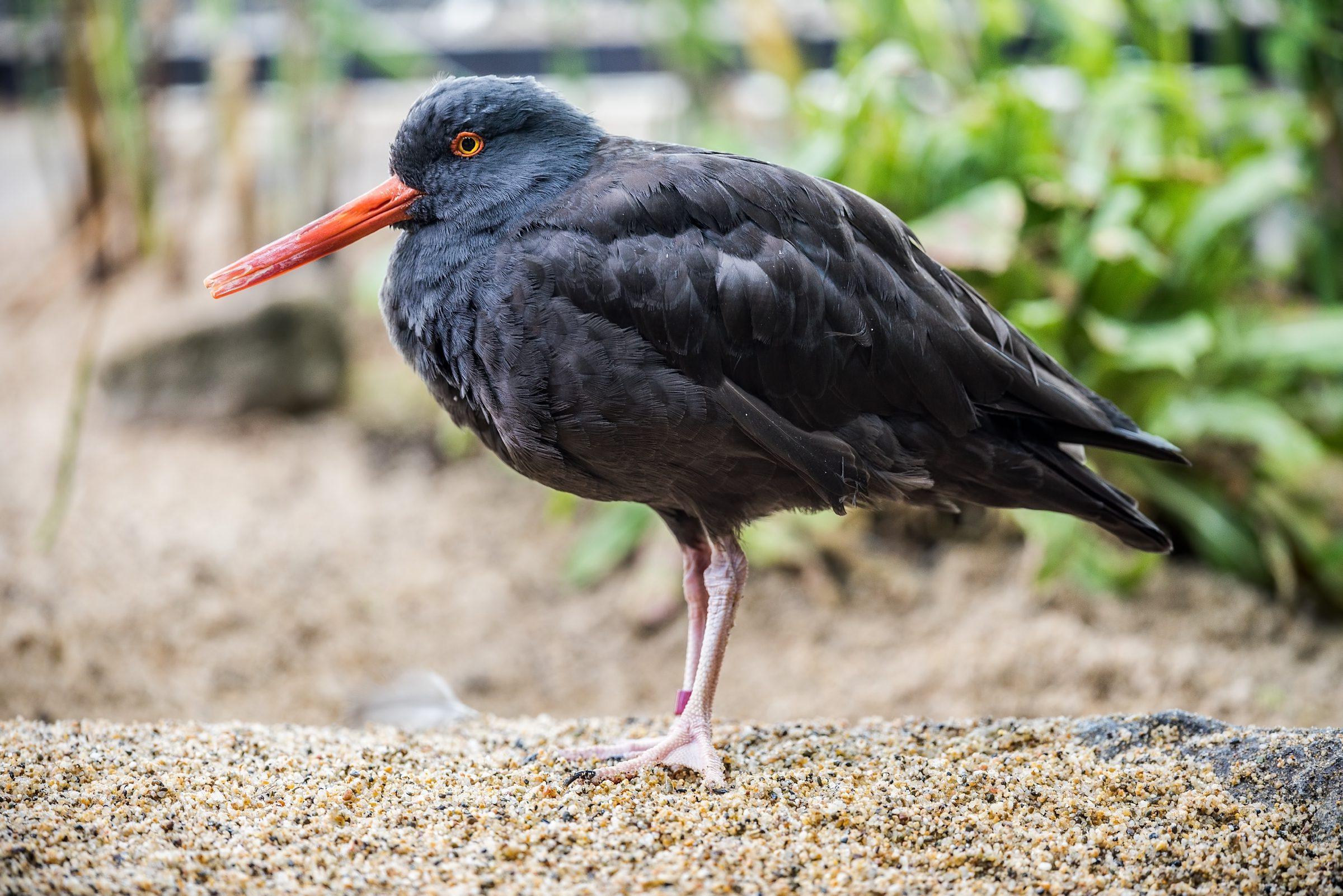
Despite its name, this brownish-black bird with large feet seldom eats oysters. At low tide, it forages along rocky shorelines, looking for other molluscs—mostly limpets and mussels.
Watch in real time
Aviary Cam
Check out this live cam – Aviary CamNatural history
A breeding pair of oystercatchers select a nesting site above the high tide level and near an area with plenty of food. The pair defends the area against other oystercatchers and intertidal foragers. In winter, the oystercatchers gather in flocks that remain close to their breeding sites.
Conservation
According to the U.S. Fish and Wildlife Service, the entire world population of black oystercatchers is estimated at about 11,000 birds—more than 50 percent of that population lives in Alaska. Direct and indirect effects of human disturbances probably have reduced the oystercatcher population from much higher historical levels.
Since oystercatchers breed and forage near the shoreline, they’re highly vulnerable to oil spills.
Cool facts
- Monogamous pairs make their nests by tossing rock flakes, pebbles or shell fragments toward their nest bowl with a sideways or backward flip of their bills. They use the same nest year after year.
- Mussels have a strong muscle that holds the two shells tightly together—yet an oystercatcher can easily and quickly pry them open. The birds also sneak up on open mussels, quickly stab their beaks between the shells, sever the muscle, shake it free, and swallow it. With sharp jabs of their bill tips, oystercatchers dislodge limpets and chitons from rocks. Then they turn the molluscs over and eat the soft tissue.
Up next in rocky shore
Animal
Monkeyface prickleback
This fish doesn’t move around much, seldom traveling more than 15 feet (4.6 m) from its home.
Keep exploring
Animal
African penguin
Not all penguins live in snow—African penguins thrive along South Africa's coast in a mild climate.