

Big skate
Beringraja binoculata
- On view
- Monterey Bay Habitats
- Animal type
- Fishes
- Ecosystem
- Sandy seafloor
- Relatives
- Sharks, rays; Family: Rajidae (skates)
- Diet
- Shrimp, worms, clams, some fishes
- Range
- Western coast of North America, from central Baja California to the Bering Sea; on the seafloor, found commonly at depths of 10 to 360 feet (3 to 109.7 m)
- Size
- Up to 8 feet long (2.4 m)
Meet the big skate
The big skate has two large, black spots on its fins, which resemble large eyes. Scientists think these “eyes” might confuse predators or make a small skate look larger and less vulnerable to a hungry shark.
Watch in real time
Shark Cam
Check out this live cam – Shark CamNatural history
The big skate hides in the sand and mud on the seafloor, with only its eyes protruding. Its gray, mottled body blends into the seafloor. This camouflage protects it from larger predators like sharks.
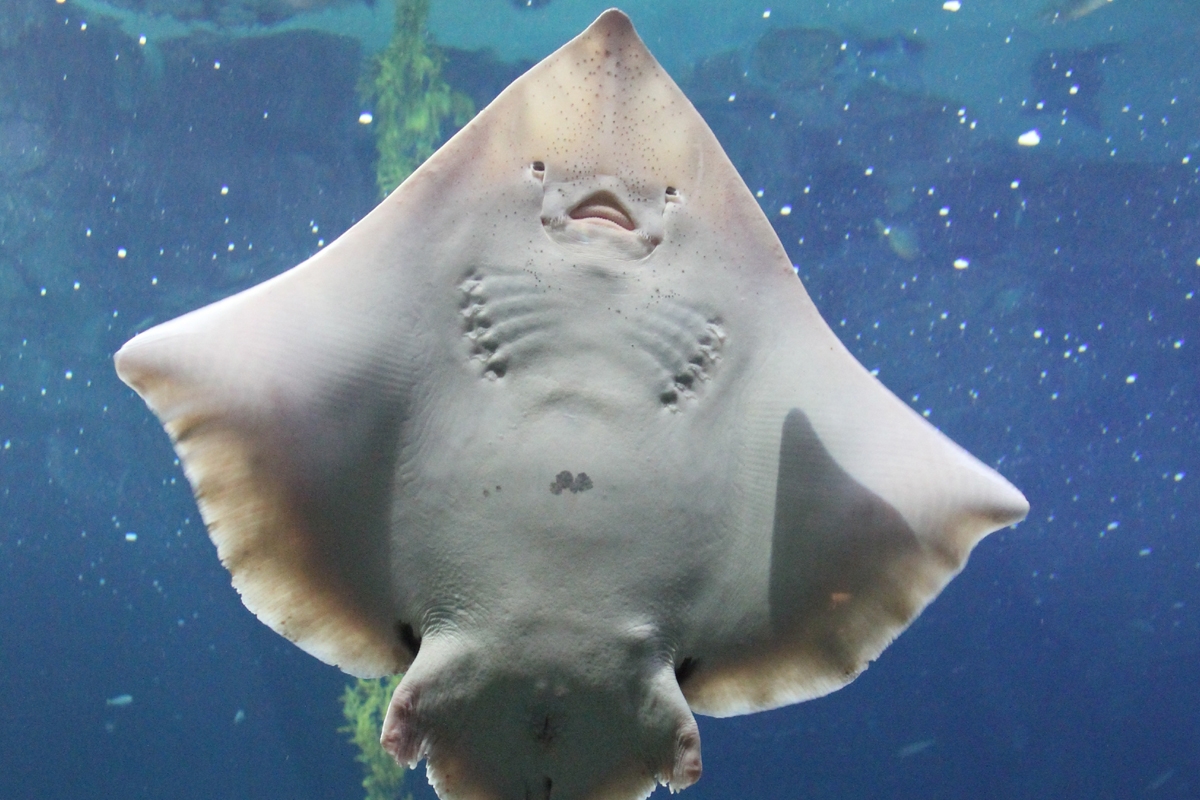
A juvenile female big skate (Beringraja binoculata) in the Monterey Habitats exhibit.
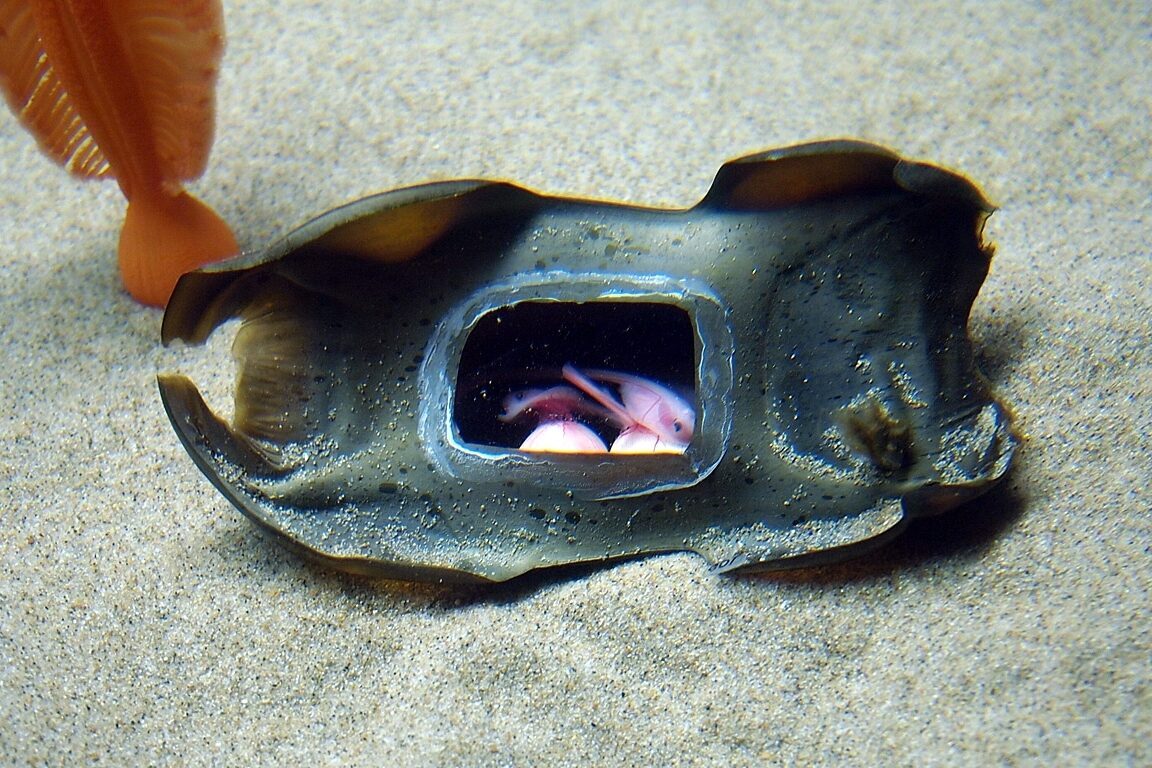
Big skate embryos in egg case. Photo credit: © Charlene Boarts
Conservation
Sharks, skates and rays live longer and produce fewer offspring than most other kinds of fishes, and that makes them particularly vulnerable to overfishing. Declining catch rates indicate that shark populations are rapidly decreasing in many parts of the world.
The big skate is a species of “Least Concern” according to the International Union for the Conservation of Nature and Natural Resources (IUCN).
Cool facts
- It is the largest skate in North America. The largest big skate on record was eight feet (2.4 m) long!
- Egg cases from this skate can measure up to 12 inches (30 cm) and may contain one to seven embryos.
- Big skates are known to live for as long as 26 years.
Up next in sandy seafloor
Animal
California halibut
California halibut hide by burying themselves up to their eyes in the sandy seafloor.
Keep exploring
Animal
Bat ray
A bat ray flaps its batlike wings to swim through the water to help it uncover prey hiding in the sand.