

Giant isopod
Bathynomus giganteus
- On view
- Into the Deep
- Animal type
- Invertebrates
- Ecosystem
- Deep sea
- Relatives
- Krill, lobster, barnacles, amphipods, shrimp, and crabs
- Diet
- Marine snow; fish, crabs
- Range
- Indo West Pacific and Western Atlantic ocean at 550-7000 feet (170–2100 m) deep
- Size
- Up to 16 inches (40 cm)
Meet the giant isopod
The roly poly backyard pillbug has a colossal cousin that lives in the ocean’s darkest depths! The giant isopod roams the deep seafloor feasting on fish carcasses and other debris that fall from above.
Of thousands of species of isopods, the giant isopod is the largest—and among the most mysterious. Though they were discovered in 1879, scientists have yet to conduct extensive studies on this animal’s biology and behavior. More research will help us better understand this fascinating deep-sea creature.
Anatomy
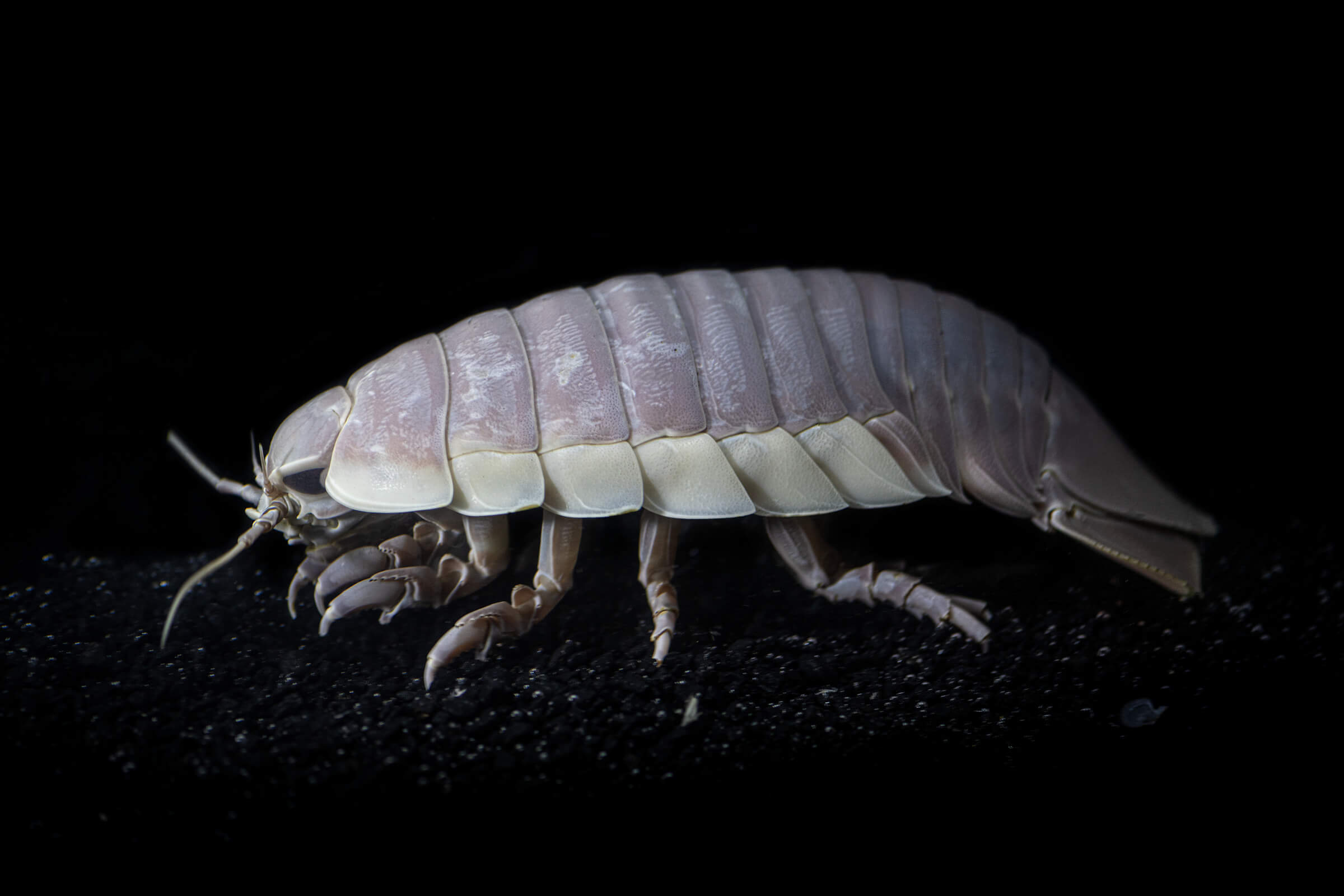
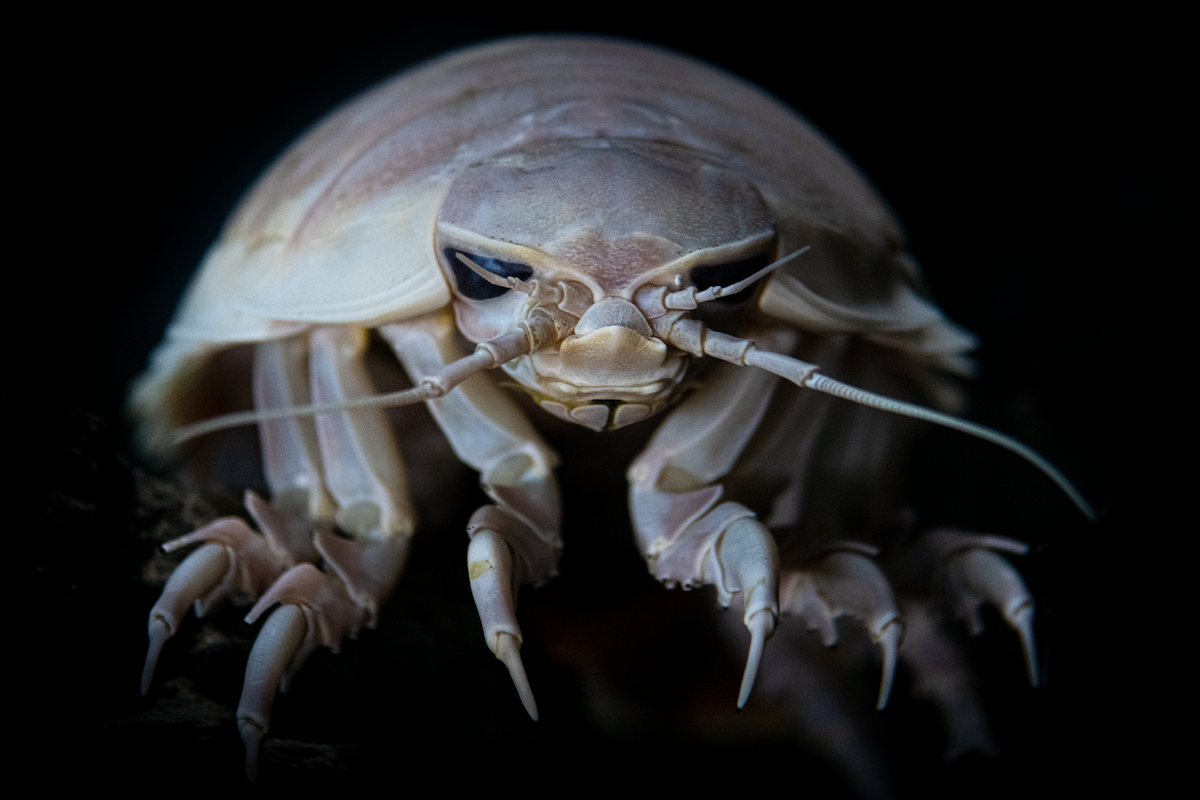
As crustaceans, giant isopods are the distant cousins of crabs and lobsters. They have jointed legs and a hard exterior called an exoskeleton, with three segments make up their bodies: the head, or cephalon.
- Head (cephalon).
- Thorax (pereon).
- Abdomen. (pleon).
The giant isopod’s 14 legs help them explore the ocean floor. To swim, they use a fan-like tail called a uropod and fluttering swimmerets called pleopods. Pleopods are also used for respiration, helping giant isopods breathe. They sense their surroundings with large eyes and two sets of antennae: one short pair and one long pair. These spindly sensors reach nearly half the length of their bodies!
Size
A giant isopod grows up to 16 inches (40 cm). They’re much bigger than their terrestrial relative, the pillbug, which is less than an inch (2.5 cm) long. Their large size is an example of deep-sea gigantism, a phenomenon in which deep-sea animals evolve to a much larger size than their relatives in other habitats
Habitat
The giant isopod lives on the deep seafloor. They can live more than 1600 feet (500 m) below the ocean’s surface—extreme depths with immense pressure and less than one-millionth of the sunlight found at the surface.

Diet
With sparse plant and animal life on the seafloor to snack on, the giant isopod evolved to become a scavenger. Like many animals that live in the deep sea, they eat falling debris that floats down from the surface. They scavenge for falling fishheads, crab bits, marine snow, or marine worms. If they get lucky, a giant isopod will enjoy a whale fall feast—a special occasion, since large carcasses don’t always sink all the way down to the deep.
Conservation
Though giant isopods live in the deep sea miles below human life, our actions still impact them. A study by our research and technology partners at MBARI showed microplastics–plastic debris less than 5 millimeters across–are found all the way from the water’s surface to the deep seafloor at the ocean’s darkest depths. The study also found that animals like pelagic crabs and giant larvaceans ingest microplastics. These animals are in turn eaten by other animals like tuna. Microplastic make their way into ocean food webs from the surface, eventually cascading all the way down to the deep sea.
Most microplastic, the study reports, comes from consumer products. While the issue of plastic pollution in the ocean may seem overwhelming, it’s something we can all tackle together. Each one of us can make a difference by using less single-use plastic in our everyday lives. We can also use our time, our voices, and wallets to support policies and businesses that are advancing solutions to the ocean plastic problem. Learn how you can cut down on ocean plastic.
Cool facts
- The giant isopod is one of an estimated 10,000 species of isopods!
- The giant isopod has no spine.
- Isopods can be tiny or huge. The giant isopod grows up to 16 inches, making it the largest isopod, while the smallest isopods are just millimeters long.
Want to see amazing deep-sea creatures up close?
Visit our exhibition, Into the Deep: Exploring Our Undiscovered Ocean
Up next in deep sea
Animal
Sea angel
This celestial swimming snail flutters through the open ocean with the rhythmic flapping of their wings.
Keep exploring
Animal
Giant siphonophore
When startled, the giant siphonophore glows with bright blue light.