

Cabezon
Scorpaenichthys marmoratus
- Not on exhibit
- Animal type
- Fishes
- Ecosystem
- Rocky shore
- Relatives
- Sculpins; Phylum: Chordata; Family: Cottidae
- Diet
- Crustaceans, fishes and molluscs
- Range
- Southeast Alaska to Baja California
- Size
- Up to 3.2 feet (99 cm)
Meet the cabezon
Cabezon means “large head” in Spanish, and this sculpin gulps some good-sized prey. An indiscriminate predator, a cabezon will eat whatever fits in its mouth.
Watch in real time
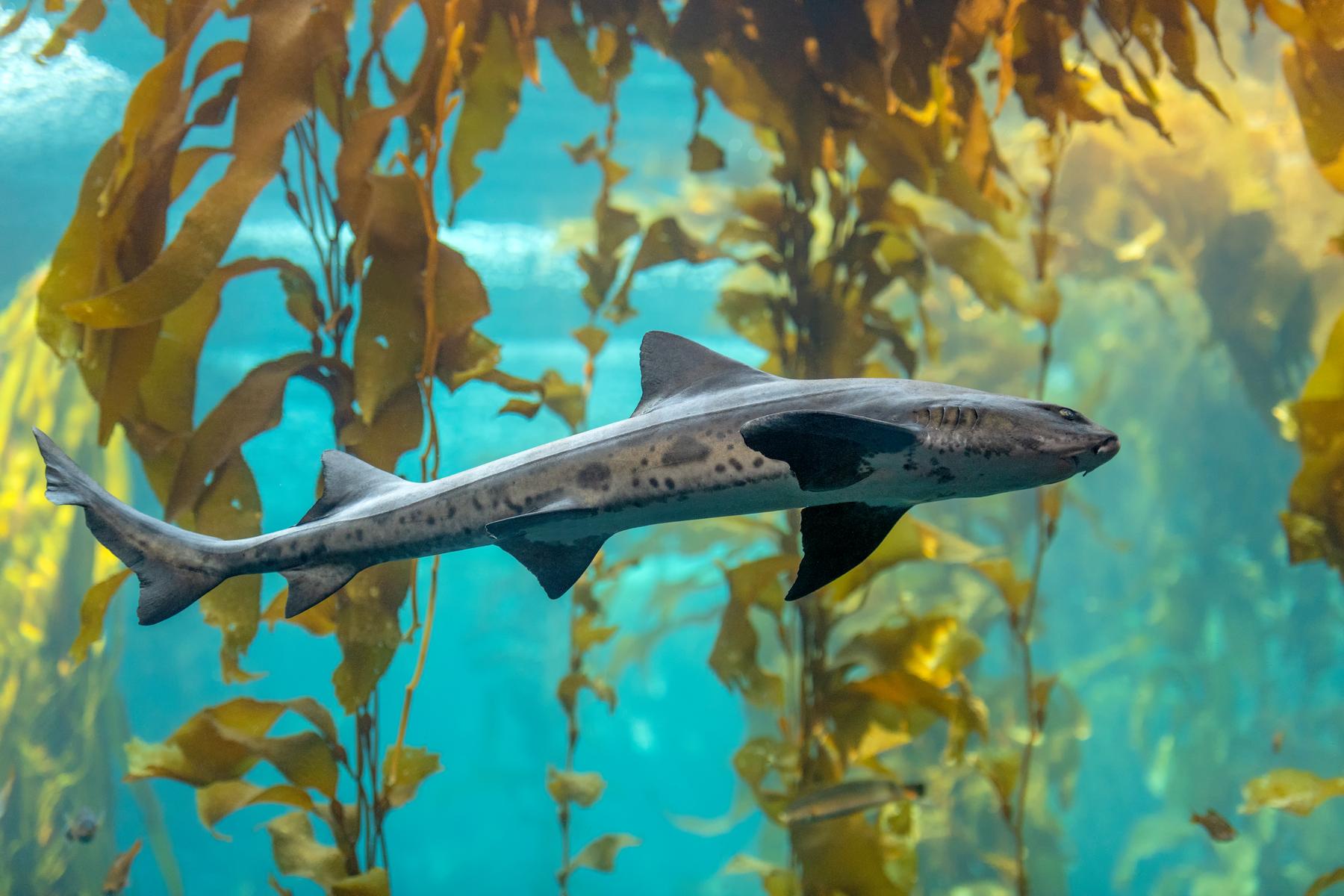
Kelp Forest Cam
Check out this live cam – Kelp Forest CamNatural history
A cabezon’s life cycle takes it offshore and back. An adult spawns on rocky outcrops, and the male guards the eggs until they hatch. The larval young drift out to sea, then develop into small, silvery fish that often hide under mats of drifting kelp. As a cabezon grows older, it settles into tide pools, then moves to reefs and kelp forests.
Conservation
This fish is easily caught while the male sits on its nest. Cabezon make up a large component of the shallow water rockfish fishery. Unless properly regulated, this species can easily become overfished.
Cool facts
- The eggs of a cabezon are poisonous to humans and many other mammals and birds.
- This is the largest member of the sculpin family in the Monterey Bay area.
Up next in rocky shore
Animal
California mussel
When exposed to air, mussels clamp shut and become protective fortresses. Under water, their shells open to…
Keep exploring
Animal
African penguin
Not all penguins live in snow—African penguins thrive along South Africa's coast in a mild climate.