

California sea lion
Zalophus californianus
- Not on exhibit
- Animal type
- Marine mammals
- Ecosystem
- Rocky shore
- Relatives
- Galapagos sea lion, steller sea lion; Order: Carnivora; Family: Otariidae
- Diet
- Squid, fishes and octopuses
- Range
- North Pacific from British Columbia to Baja California in Mexico
- Size
- Males up to 8 feet (2.4 m) long and 800 pounds (363 kg); females up to 6 feet (1.8 m) and 240 pounds (109 kg)
Meet the California sea lion
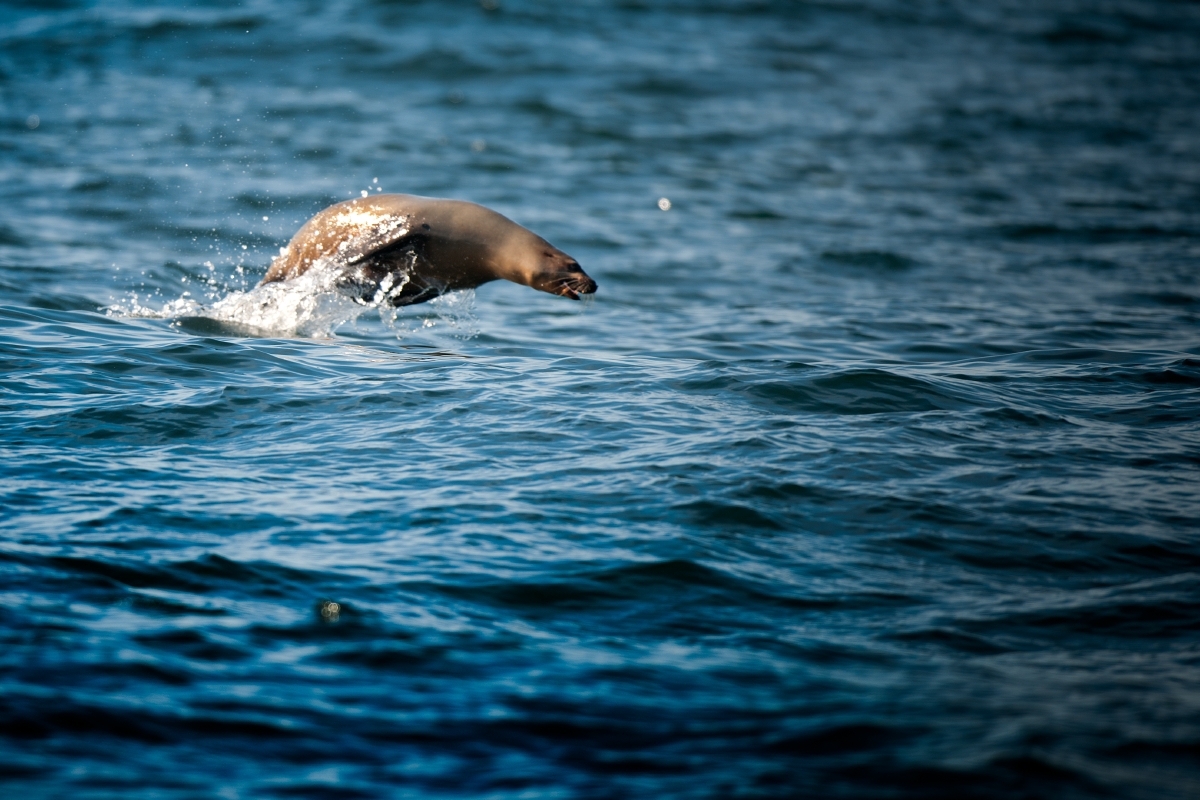
The California sea lion is a member of the “eared seal” family. This pinniped is adept at leaping out of the water. It’s often found sitting on top of rocks, floating docks, and beams under fishing piers—even balancing on floating buoys.
Watch in real time
Monterey Bay Cam
Check out this live cam – Monterey Bay CamNatural history
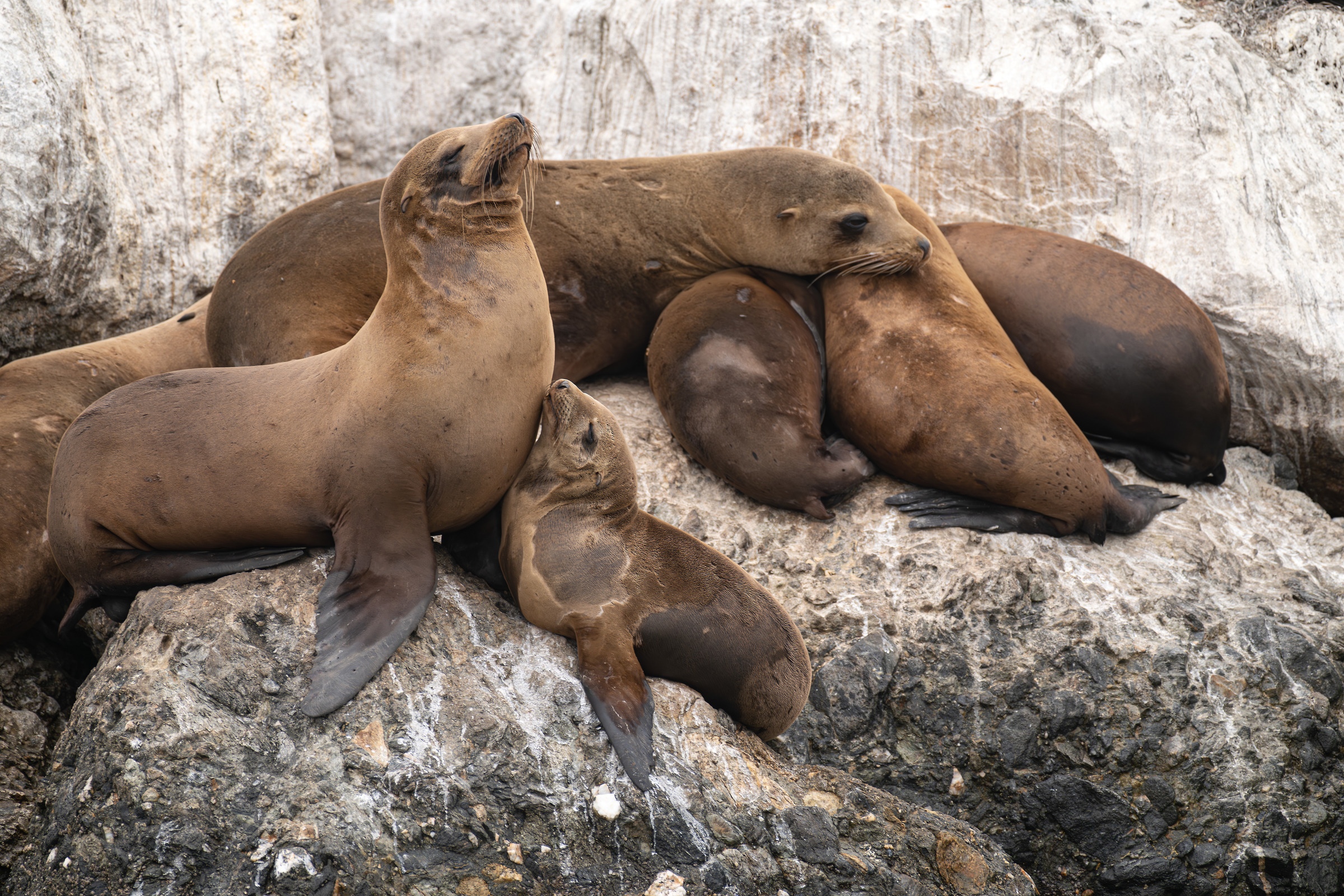
Highly social, sea lions form groups of several hundred to several thousand animals in colonies onshore. They even stick together in the water. It’s not unusual to see dozens of sea lions rafted up on the surface of the bay, “jugging”(sticking their flippers up out of the water in a jug handle shape). Scientists suspect this behavior may help them maintain a warm internal body temperature.
In Monterey Bay
The California sea lion population in this area fluctuates during the year. Some mature animals migrate to southern California breeding grounds in late spring, and then return to Monterey Bay in the summer—often accompanied by more young animals from southern California.
Historically, more juvenile and male sea lions came to the Monterey Bay area, while mature females may have stayed closer to the breeding colonies in southern California. But as the California sea lion population expands, a growing number of adult females and juveniles are seen more frequently in Monterey Bay.
Their loud barking and boisterous acrobatics make sea lions noticeable neighbors. Always looking for an easy meal, a sea lion will follow fishing boats, hoping to take advantage of fishes that spill from nets. They’ll also trail humpback whales and dolphins to feed on fishes gathered together by these animals.
Historically, the number of California sea lions declined north of Monterey Bay, and their larger cousin, the Steller sea lion, was more common. In recent decades, the number of Steller sea lions has declined dramatically. Today, California sea lions are the more common species throughout California and many parts of Oregon and Washington.
Conservation
Although once depleted, California sea lion populations have rebounded due to the protections afforded by the Marine Mammal Protection Act. Of the six remaining species of sea lions worldwide (one species, the Japanese sea lion, is now extinct), the California sea lion is the only one whose population is expanding. Other species are either in decline or limited to small populations.
A sea lion that gets too close to a fishing boat may become entangled in fishing gear. Every year, sea lions have to be captured to remove lures, nets, or fishing lines that injure and entangle the animals. Sadly, sea lions are also sometimes treated for gunshot wounds.
Cool facts
- A fast and agile swimmer, the sea lion can spend several days at a time at sea, diving almost continually.
- Groups of sea lions can be very noisy; their constant, piercing barking can be heard from quite a distance.
- Sea lions often body surf.
- The sea lion is on the menu for both orcas and white sharks that may enter the bay in search of a meal. Occasionally, a lucky sea lion is observed with bite marks indicating it escaped from one of these top predators.
- Sometimes confused with seals, a sea lion has external ear flaps and can rotate its back flippers underneath its body to walk or run on land.
- Sea lions are frequently seen swimming by the Aquarium, heading out to hunt for squid in the afternoons or returning to haul out and rest along our shores in the morning hours.
Up next in rocky shore
Animal
Giant green anemone
The giant green anemone gets much of its namesake color from the symbiotic relationship it has with the…
Keep exploring
Animal
African penguin
Not all penguins live in snow—African penguins thrive along South Africa's coast in a mild climate.