

Hermit crab
Pagurus spp.
- On view
- Kelp Forest, Rocky Shore
- Animal type
- Invertebrates
- Ecosystem
- Rocky shore
- Relatives
- Sand crabs, ghost shrimp, porcelain crabs; Class: Malacostraca
- Diet
- Scavenges plant material and dead matter
- Range
- From Alaska to Baja, California, and from the Bering Strait to Northern Japan
- Size
- Up to .75 inches (19 mm)
Meet the hermit crab
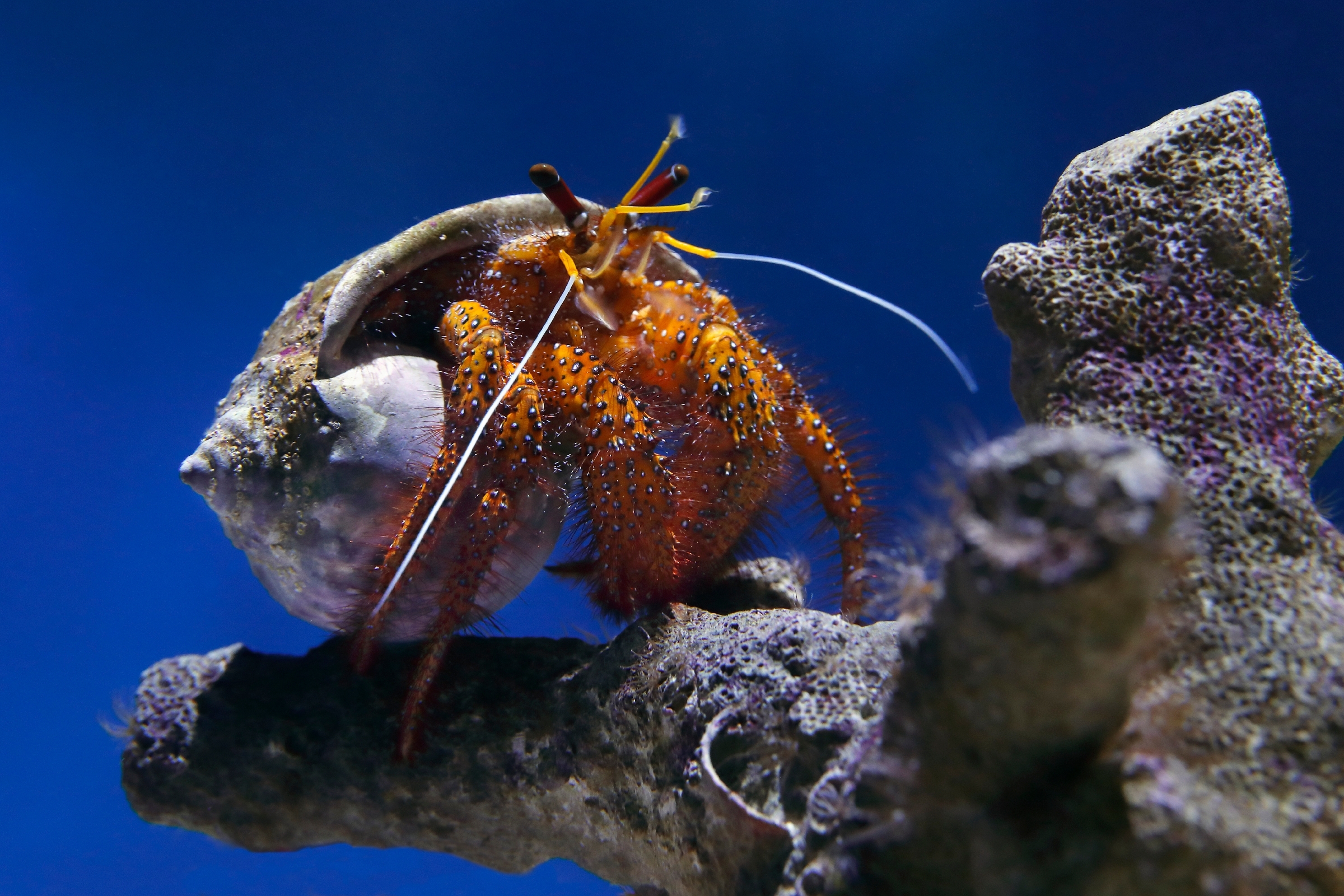
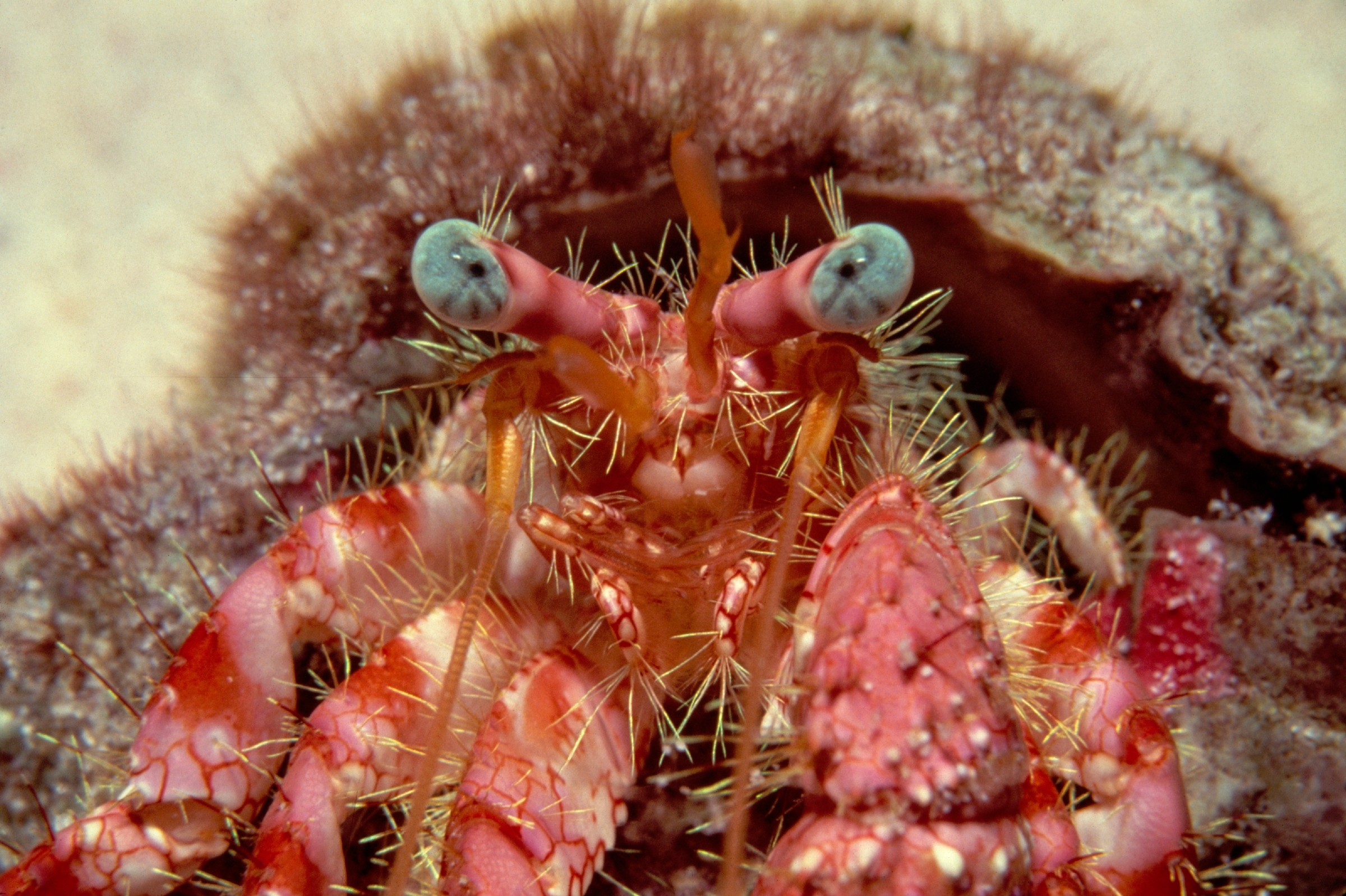
If you see a snail walking across the touch table in our Kelp Forest exhibit, look closer—it's a hermit crab in a discarded snail shell! The hermit crab wears a shell to protect its soft abdomen, which is asymmetrical and curved to fit the spiral shape of its shell.
Natural history
Like all crabs, the hermit crab is a decapod—it has five pairs of legs, including a pair of claws. The hermit crab uses its claws for defense and food shredding as well as eating. The second and third pairs of legs help the crab walk, and the last two pairs hold the hermit crab in its shell.
Conservation
The hermit crab is abundant in tide pools. If you go, it's important to follow tidepool etiquette—look, but don't disturb or collect, which is illegal on many shores. Because the number of empty shells in a tide pool ensures the survival of hermit crabs, please leave all empty shells where you find them. And take care of yourself—remember that rocks in the tide pool are slippery. Face the ocean—unexpected large waves can easily sweep you into the water.
Cool facts
- The hermit crab prefers certain shells. Pagurus samuelis, a common tide pool hermit crab, prefers the shell of the black turban snail.
- A hermit crab moves into larger shells as it grows—fighting with other hermit crabs for the shells if necessary—but it doesn’t harm healthy snails.
Up next in rocky shore
Animal
African penguin
Not all penguins live in snow—African penguins thrive along South Africa's coast in a mild climate.
Keep exploring
Animal
Hopkin's rose
This pink nudibranch seasonally brightens local tide pools. Its vibrant color may ward off predators.