

Japanese spider crab
Macrocheira kaempferi
- On view
- Into the Deep
- Animal type
- Invertebrates
- Ecosystem
- Deep sea
- Relatives
- Other crabs, shrimp, lobster; Order: Decapoda
- Diet
- Decaying fish, crustaceans, invertebrates, and algae
- Range
- From 660 to 1,800 ft. (200 to 550 m) in the northwestern Pacific Ocean
- Size
- Carapace up to 12 inches (30 cm) across, legs span up to 12 feet (3.8 m) from claw to claw.
Meet the Japanese spider crab
A spider crab travels easily over the mud on long limber legs. This seafloor scavenger is quick to lunch on leftover scraps or dead animals that fall from above.
Watch in real time
Spider Crab Cam
Check out this live cam – Spider Crab CamSize
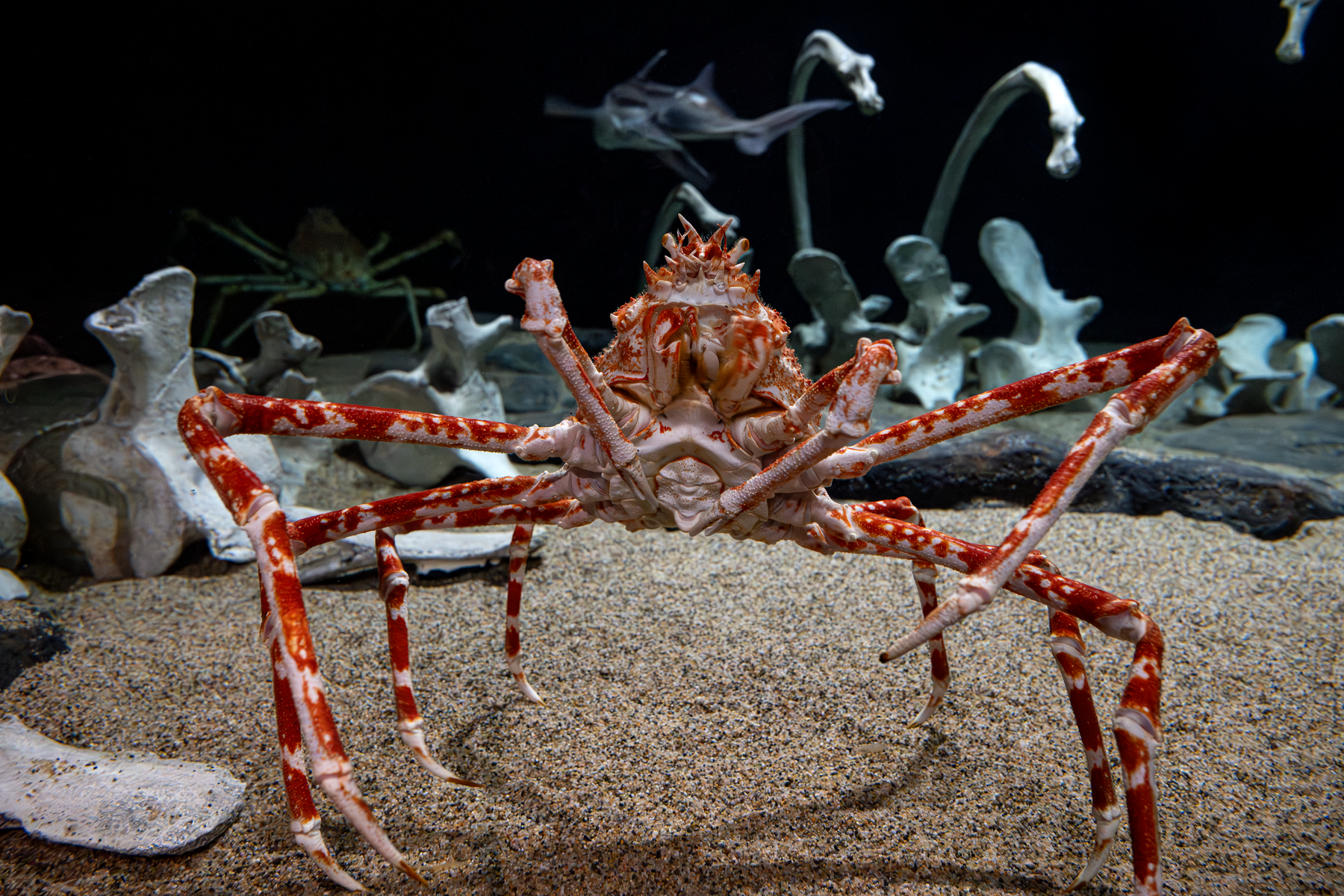
The massive leg span of the Japanese spider crabs make it the world’s largest living crab. The carapace (main body cavity) of the Japanese spider crab is 12 inches (30 centimeters) across. But its legs, which continue to grow even once it reaches adulthood, can span up to 12 feet (3.8 meters) from claw to claw.

Anatomy of a Japanese spider crab
How many legs does a spider crab have?
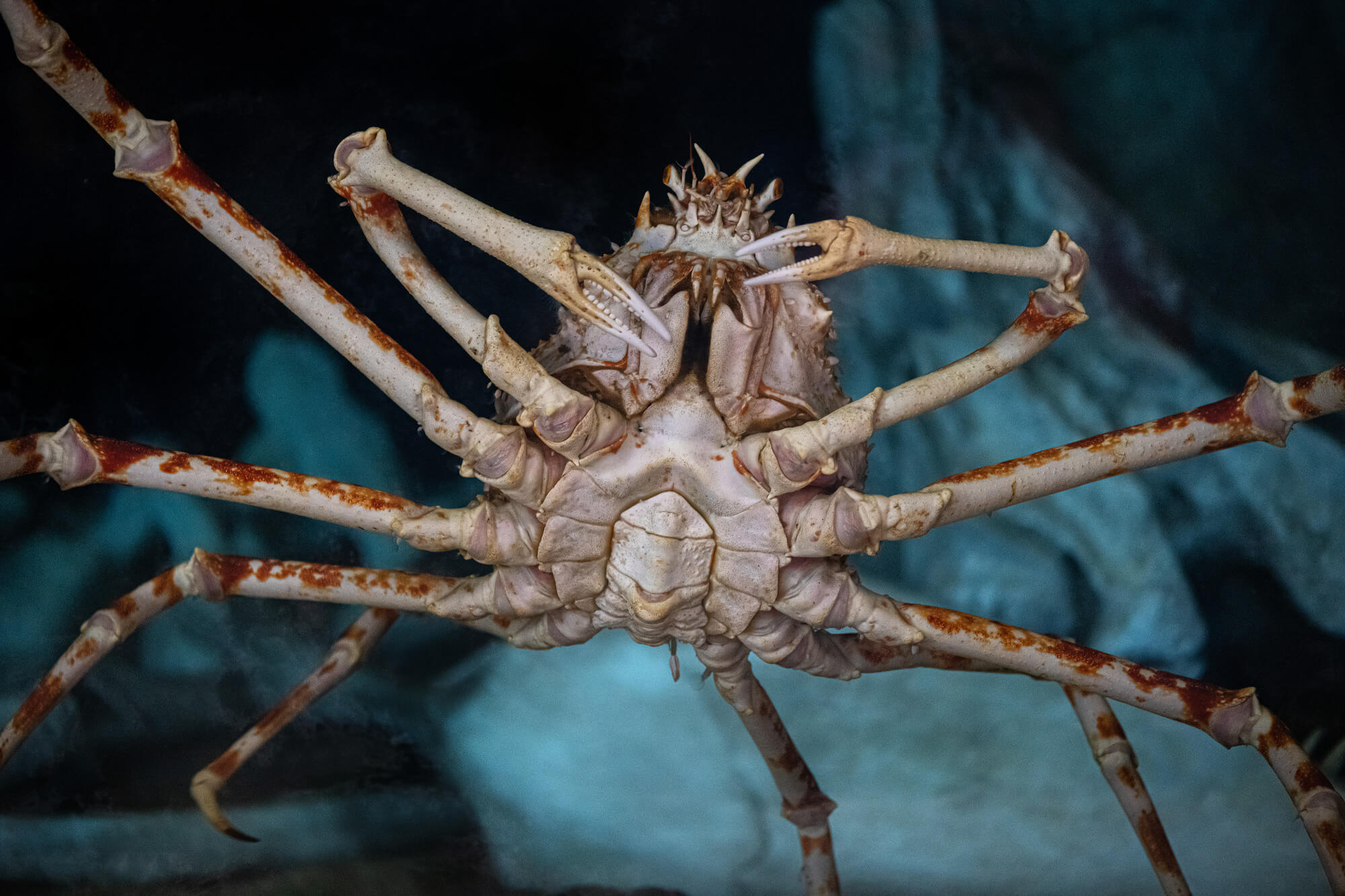
The Japanese spider leg has ten legs: eight walking legs and two legs that have claws (known as chelipeds). The chelipeds of an adult male are considerably longer than his walking legs, while an adult female has chelipeds shorter than her walking legs. Japanese spider crabs may lose one or more of their legs if torn off by a predator or trawl net. These missing legs can regrow when the crab molts.
Where do spider crabs live?
Japanese spider crabs live on the seafloor along Japan’s Pacific coast. They are found primarily on the sandy and rocky continental shelf and slope.
When adult crabs are ready to spawn, they migrate to shallower waters, about 160 feet (50 meters) deep. Younger crabs also live in shallower, warmer waters, and migrate down to deeper waters as adults.
What do spider crabs eat?
These slow-moving crabs spend much of their time walking on the seafloor searching for food—they do not swim. Instead of hunting, these scavengers look for dead and decaying matter along the seafloor. Their diet includes dead or decaying fish, invertebrates, and algae. While most of what they eat is dead, they are known to sometimes pry open mollusks, tear and eat live algae, and catch small marine invertebrates.
Predators
The large size and armored exoskeleton of Japanese spider crabs discourages most ocean predators, but a hungry octopus or a trawling net may snag and tear off one of the crab’s long, delicate limbs. Japanese spider crabs are most vulnerable to predators right after molting—after they shed their exoskeleton and before the new shell hardens.
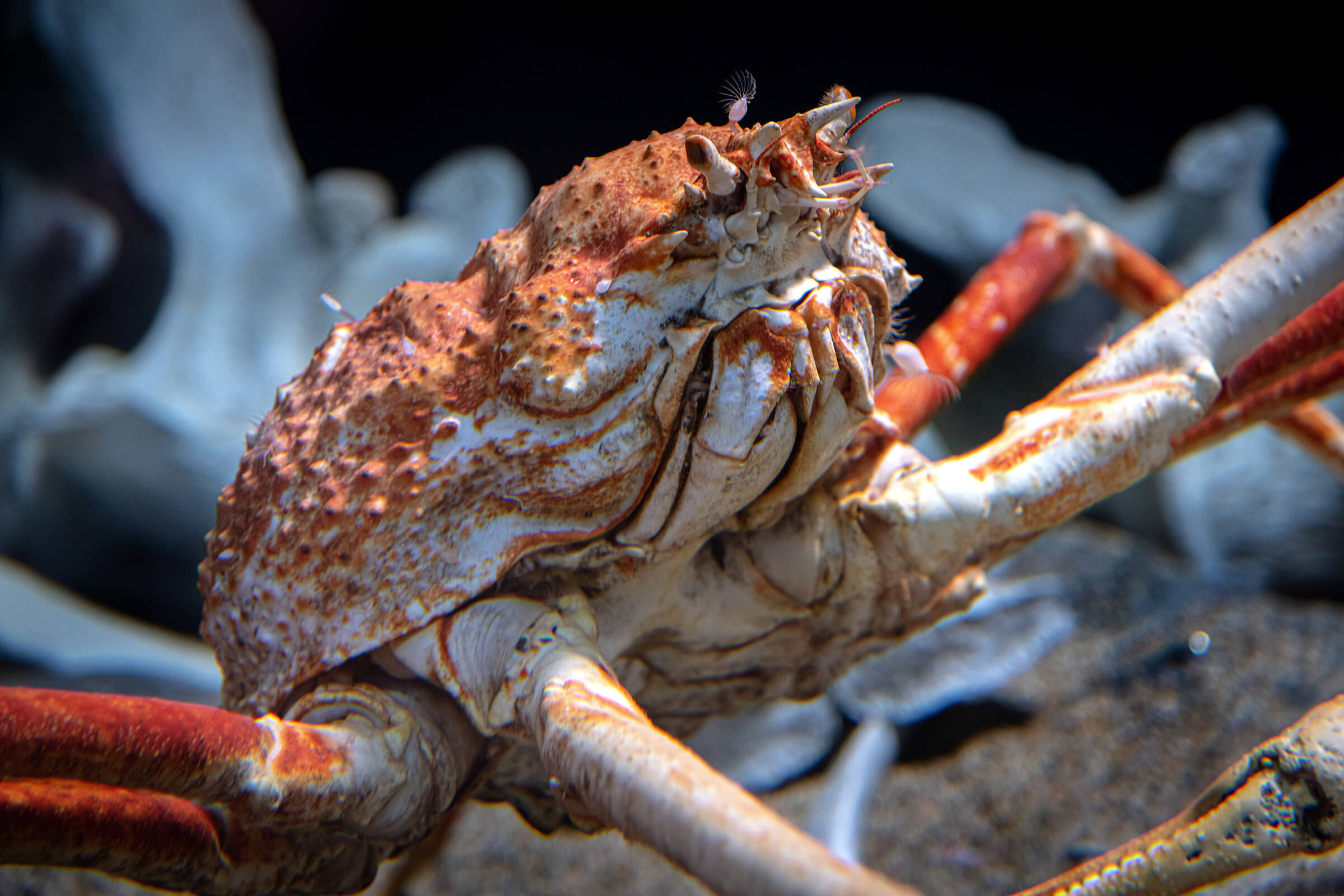
Giant spider crabs also use camouflage—their bumpy shell helps them blend into the rocky ocean floor. Juvenile spider crabs will also decorate their shells with sponges or kelp to better camouflage themselves from predators. Full-grown Japanese spider crabs rely more on their size and their claws to ward off predators.
Humans eat these crabs as a delicacy during crab-fishing season. But, since adult crabs live deep in the water, they are challenging for humans to catch. Efforts are being made to protect these animals and their populations from the danger of overfishing.
At the Aquarium
When one of our crabs shows signs of molting, we move them to their own private penthouse so they can shed their old exoskeleton and let their new exoskeleton harden in peace.
Since Japanese spider crabs are opportunistic scavengers, our aquarists feed them a variety of diet items, in a variety of sizes.
Conservation
Over the past 40 years, the catch of Japanese spider crabs has declined. To help the population recover, Japanese law bans fishing for this species during its mating season.
Rising ocean temperatures due to climate change may negatively impact this species by reducing the number of larvae that survive to become adults and by degrading seaweed beds that could reduce the amount of food that falls to the seafloor where the crabs live.
Cool facts
- This crab’s carapace stays the same size once it becomes an adult, but the legs keep growing.
- These crabs are thought to live 50 to 100 years.
- Female Japanese spider crabs can lay up to 1.5 million eggs in a season, but only a few survive.
Up next in deep sea
Animal
Hatchetfish
Hatchetfish have light-producing organs in their bellies that shine a pale blue light, helping them to evade…
Keep exploring
Animal
Giant siphonophore
When startled, the giant siphonophore glows with bright blue light.