

Pacific spiny dogfish
Squalus suckleyi
- On view
- Monterey Bay Habitats
- Animal type
- Fishes
- Ecosystem
- Coastal waters
- Relatives
- Pygmy shark, sleeper shark; Family: Squalidae
- Diet
- Squid, fishes, crabs, shrimp and other invertebrates
- Range
- Alaska to Baja California and worldwide in temperate and subarctic waters; in depths from the surface to 3,000 feet (900 m)
- Size
- From 3 to 4 feet (.9-1.2 m)
Meet the Pacific spiny dogfish
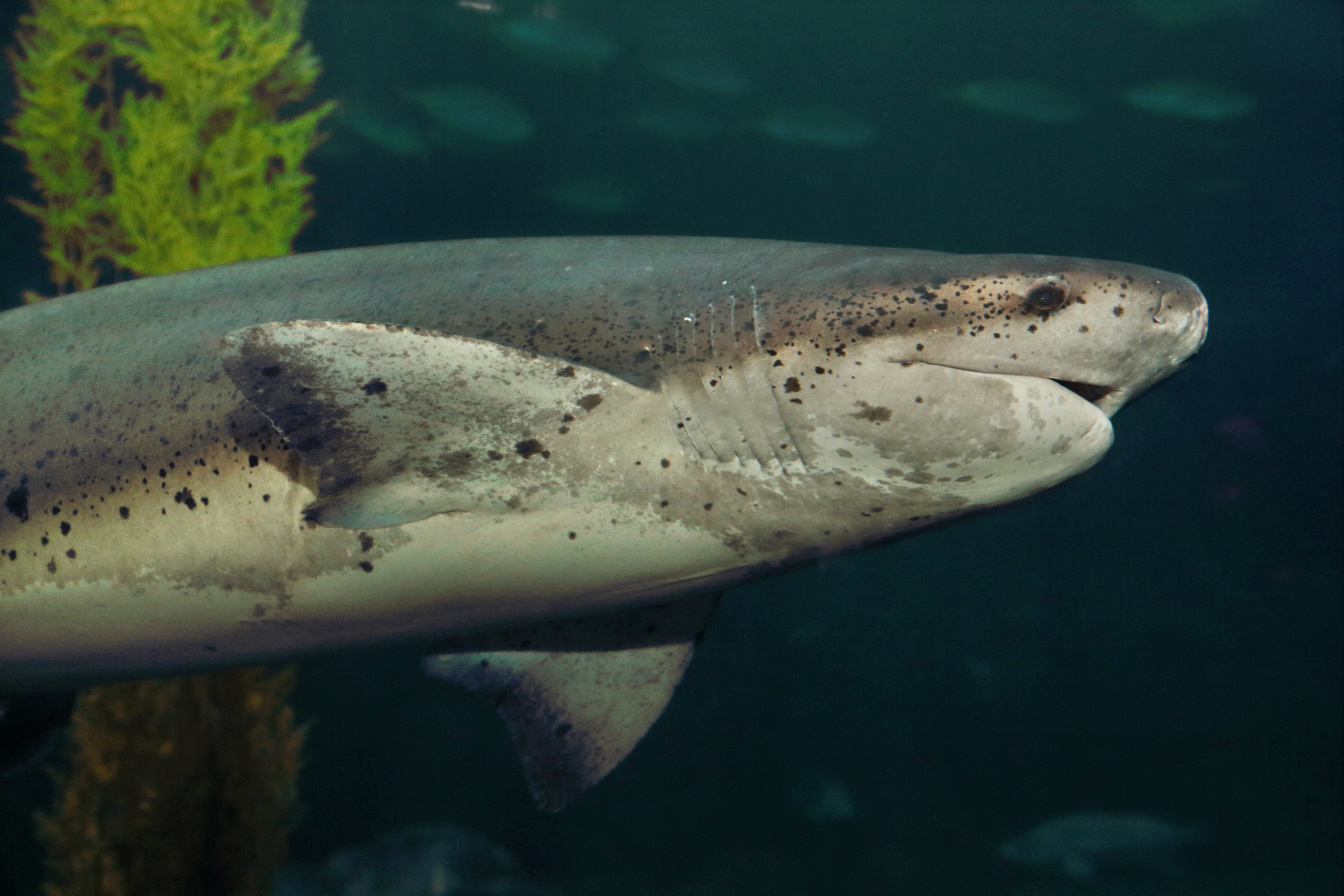
As their name suggests, spiny dogfish sharks sport sharp, venomous (poisonous) spines in front of each dorsal fin. Their bodies are dark gray above and white below, often with white spotting on the sides.
Watch in real time
Shark Cam
Check out this live cam – Shark CamNatural history
Despite their small size, spiny dogfish are aggressive and have a reputation of relentlessly pursuing their prey. The name "dogfish" stems from their habit of feeding in packs—sometimes numbering in the hundreds or thousands. Gathered together, they sweep an area, eating the fishes in front of them. They'll eat almost anything they can get their strong jaws and teeth on. Newborn dogfish will even attack fishes two to three times their size.
Cool facts
- All sharks have unique skin. It's covered with toothlike scales called denticles—unique to sharks and very similar to the teeth of all vertebrates—which make the skin rough and abrasive. In fact, shark skin was once dried and then used as sandpaper to polish wood. Today, shark skin is still cured and, after the denticles are removed, used as leather.
- This shark probably has the longest gestation (pregnancy) period of any vertebrate—22 to 24 months.
- Spiny dogfish sharks are long-distance travelers. One spiny dogfish tagged and released from Washington State showed up off the coast of Japan—a 5,000-mile (8,047 km) journey.
Up next in coastal waters
Animal
Upside-down jelly
This jelly rests upside-down, stubby oral arms pointed toward the sun, giving them the appearance of a flower.
Keep exploring
Animal
Sea otter
Beyond their cute faces and fluffy fur, sea otters play an irreplaceable role in their coastal habitats.