

Pacific angel shark
Squatina californica
- Not on exhibit
- Animal type
- Fishes
- Ecosystem
- Coastal waters
- Relatives
- Other angel sharks; Family: Squatinidae
- Diet
- Small fish, molluscs
- Range
- From southern Alaska to Baja California, the Gulf of California; and from Ecuador to South Chile
- Size
- Up to 5 feet (1.5 m)
Meet the Pacific angel shark
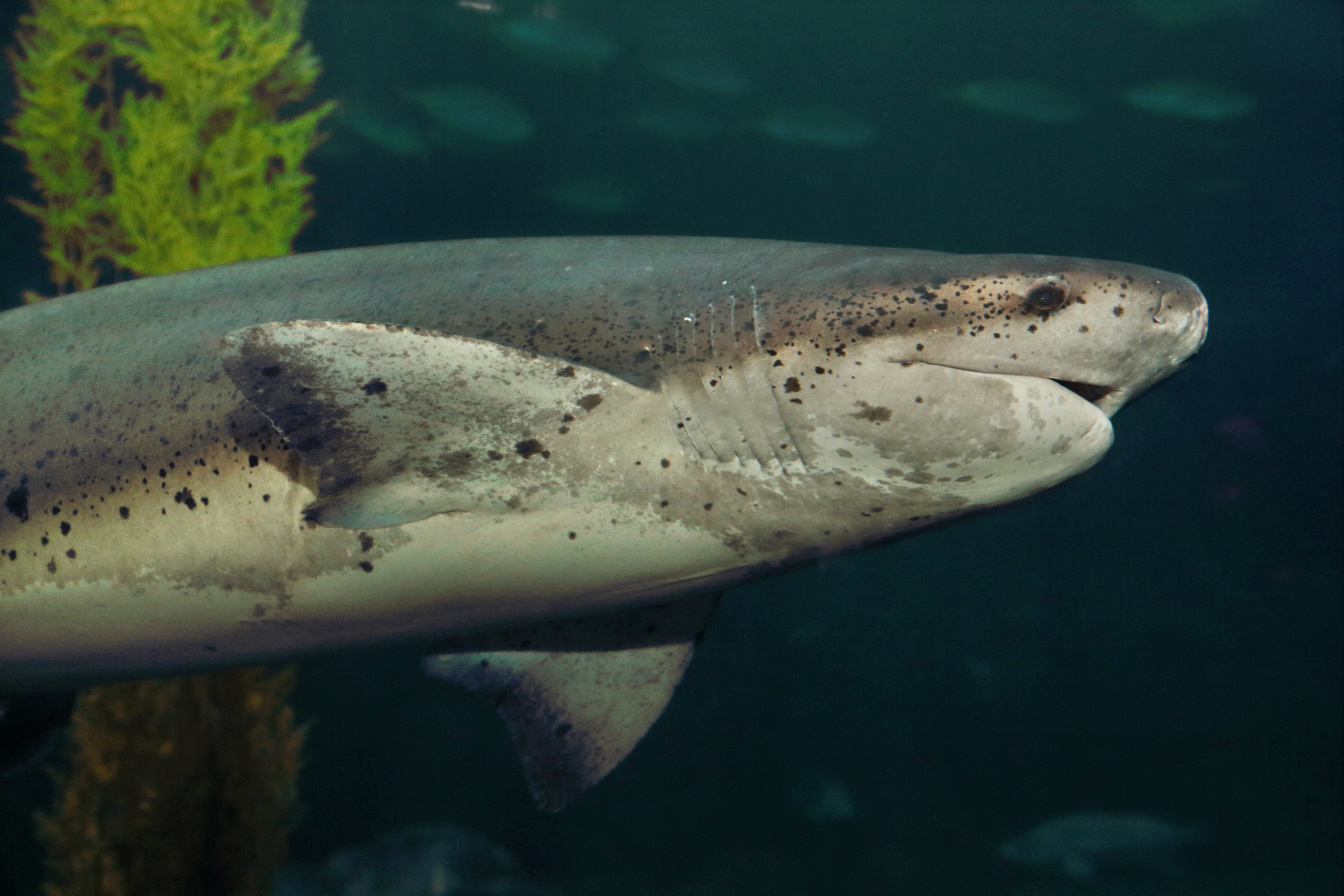
At first glance, this shark looks like its cousins—rays and skates—with its flattened body and large pectoral fins. But unlike those animals, an angel shark's pectoral fins aren't totally attached to its body, its gill slits wrap around the side of its head and it has a large mouth in front (rather than on the bottom of its head).
Watch in real time
Shark Cam
Check out this live cam – Shark CamDid you know?
An angel shark spends its day buried in the sand, perfectly camouflaged by its gray, brown and black coloring. It lies there in ambush, waiting for small fishes to swim within gulping distance. When an unsuspecting fish comes near, the shark lunges upward, sucks the fish into its huge mouth and swallows it whole.
Conservation
Before 1978, angel sharks were usually thrown back when caught. But this changed dramatically when a Santa Barbara fish processor decided to promote the angel shark as a tasty morsel. After a slow start, the angel shark became so popular that the 366 pound (166 kg) catch in 1977 increased to 350 tons (318 metric tons) in 1984. As a result, the population of angel sharks rapidly decreased. Now there are limits on the minimum catchable size for angel sharks, and gillnet fishing is banned inshore of three miles (4.8 km).
Good news: Pacific angel shark populations are recovering.
Cool facts
- To get enough water flowing over their gills, some sharks—like hammerheads—must swim to breathe. However, most bottom-dwelling sharks, like angel sharks, have muscles that pump water over their gills and through spiracles (holes) in their heads. This allows bottom-dwelling sharks to snooze quietly on the bottom or wait in ambush for prey without moving.
- Even though bottom-dwelling sharks are usually gentle, picking up what appears to be a ray or a dead angel shark can be dangerous. The shark will probably raise its head and quickly inflict a painful wound with its sharp teeth.
Up next in coastal waters
Animal
Hawaiian bobtail squid
Native to the Pacific Ocean, the Hawaiian bobtail squid buries itself in sand or muddy areas by day and…
Keep exploring
Animal
Sea otter
Beyond their cute faces and fluffy fur, sea otters play an irreplaceable role in their coastal habitats.